Puns in Headlines and Signs
Written by Adi Ackerman, Head Teacher
"Puns in Headlines and Signs" is written for 8th Grade (Ages 13-14), and it covers Common Core L.8.5.A. A 7th grader who is already steady on figurative language can use it too, and an older student can use it as a short review.
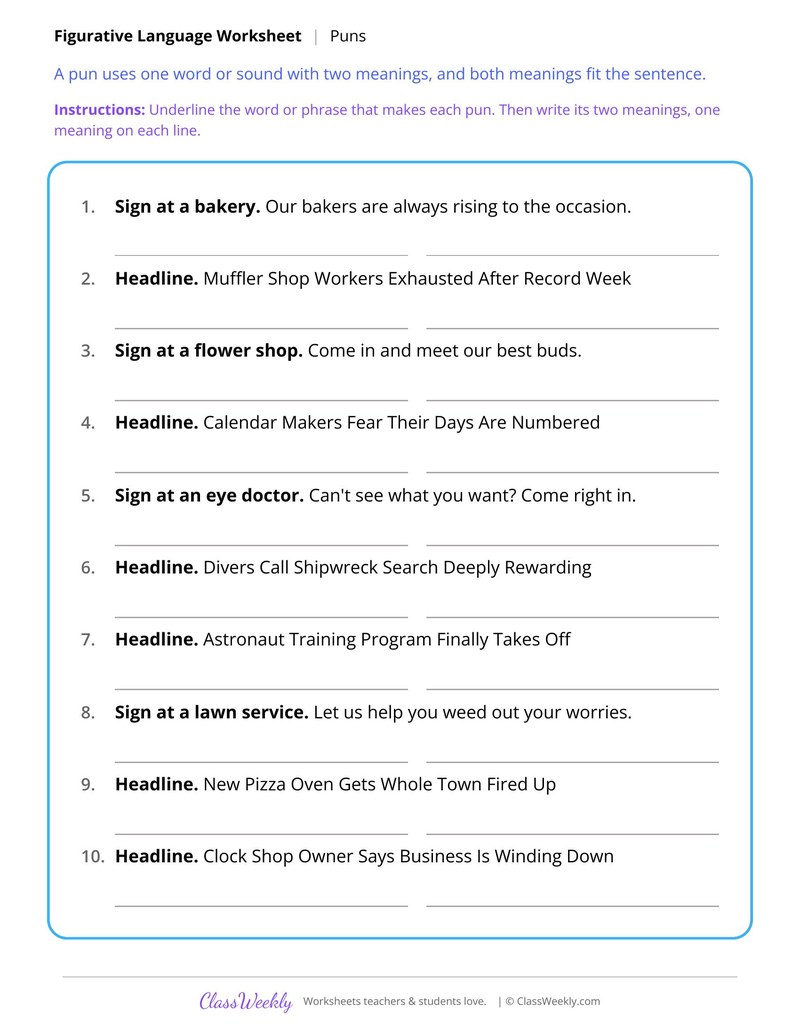
8th grade vocabulary worksheet: find the two meanings in ten puns, from a bakery sign to a clock shop headline. Answer key included. Part of our figurative language practice collection. Aligned to Common Core standards.
How do I use this worksheet?
Hand out the reference chart first and keep it on desks. Use the pun and irony sheets as short warm ups, then assign one passage sheet so students practice naming devices in context.
What students will practice
- Students will recognize a pun as one word or sound with two meanings that both fit.
- Students will underline the word or phrase that makes each pun in signs and headlines.
- Students will write both meanings of each pun on separate lines.
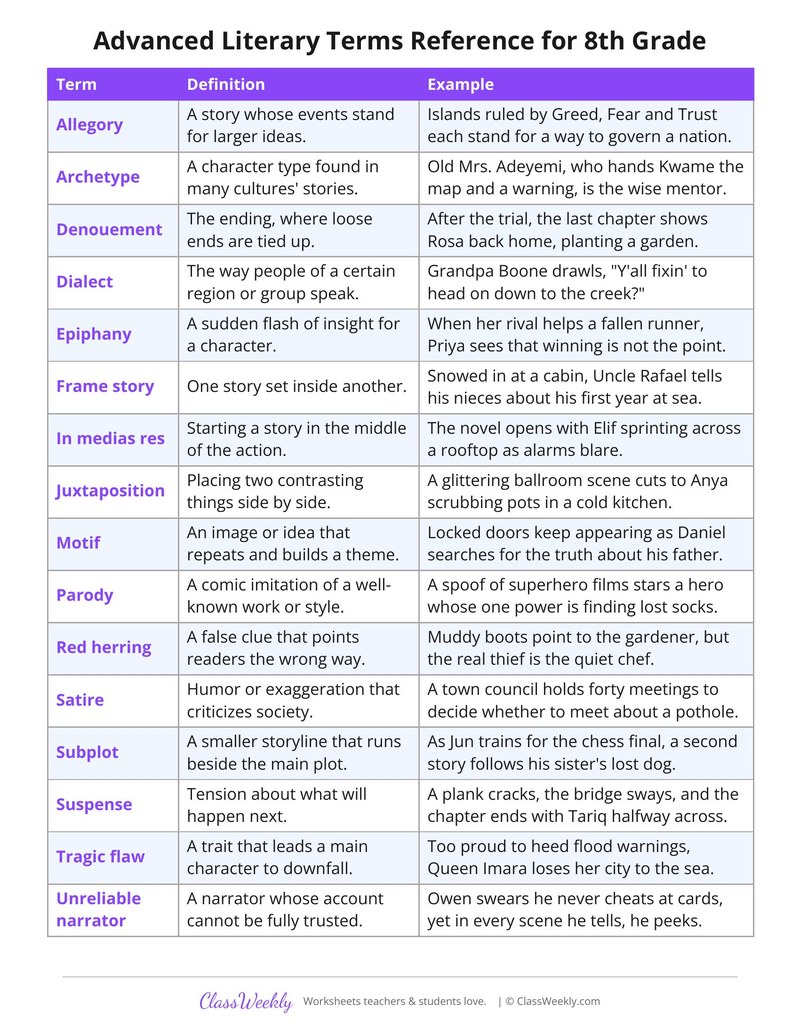
Advanced Literary Terms Reference for 8th Grade
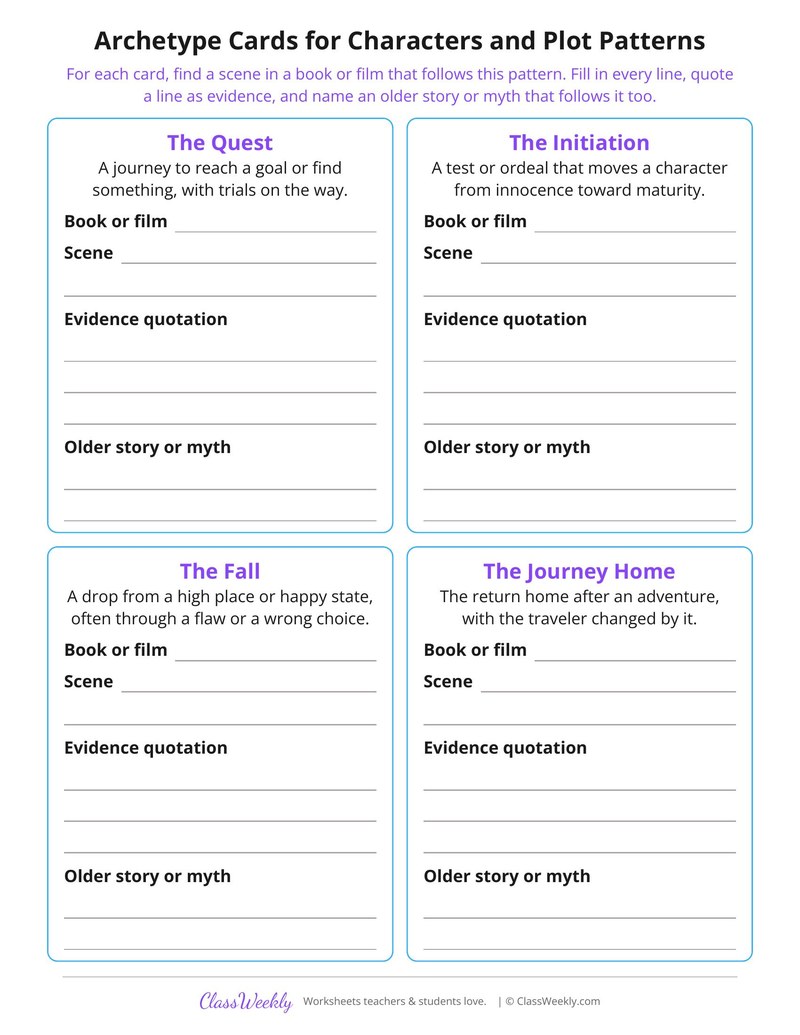
Archetype Cards for Characters and Plot Patterns
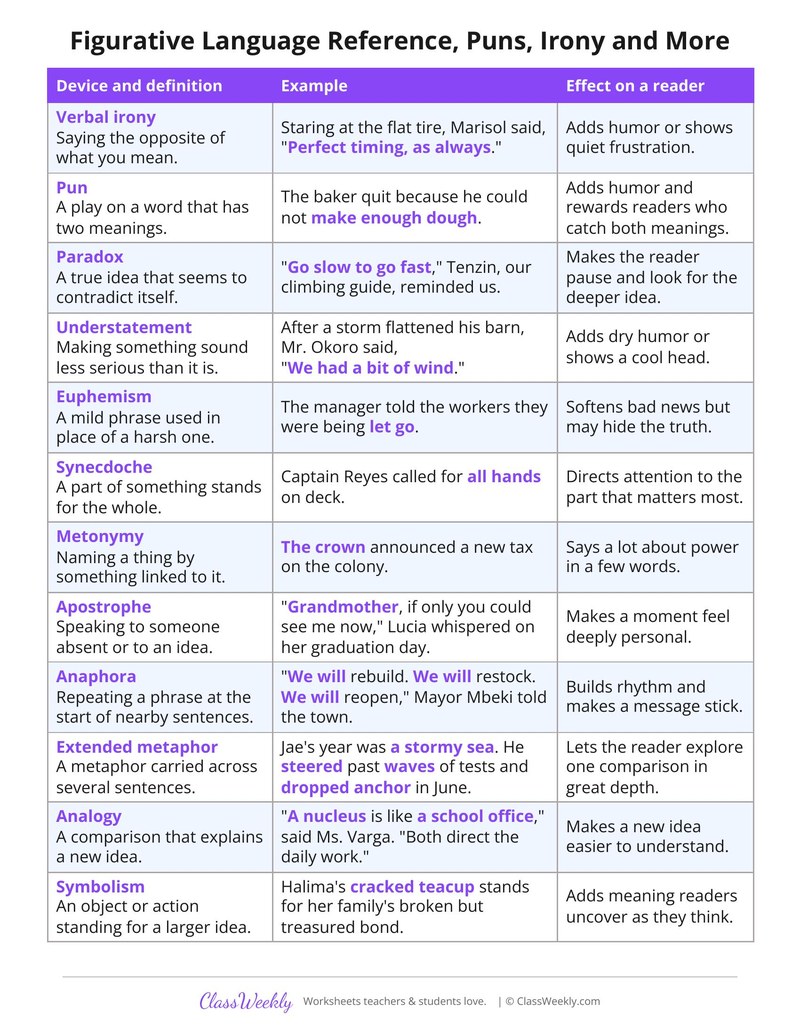
Figurative Language Reference, Puns, Irony and More
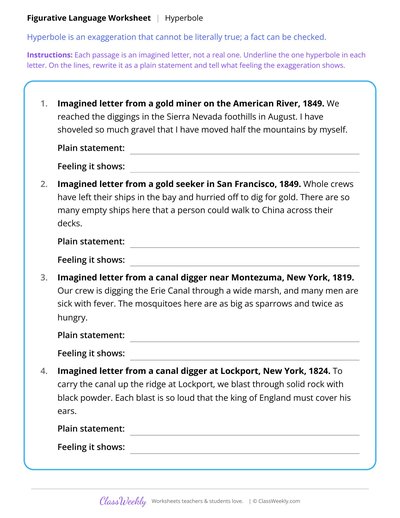
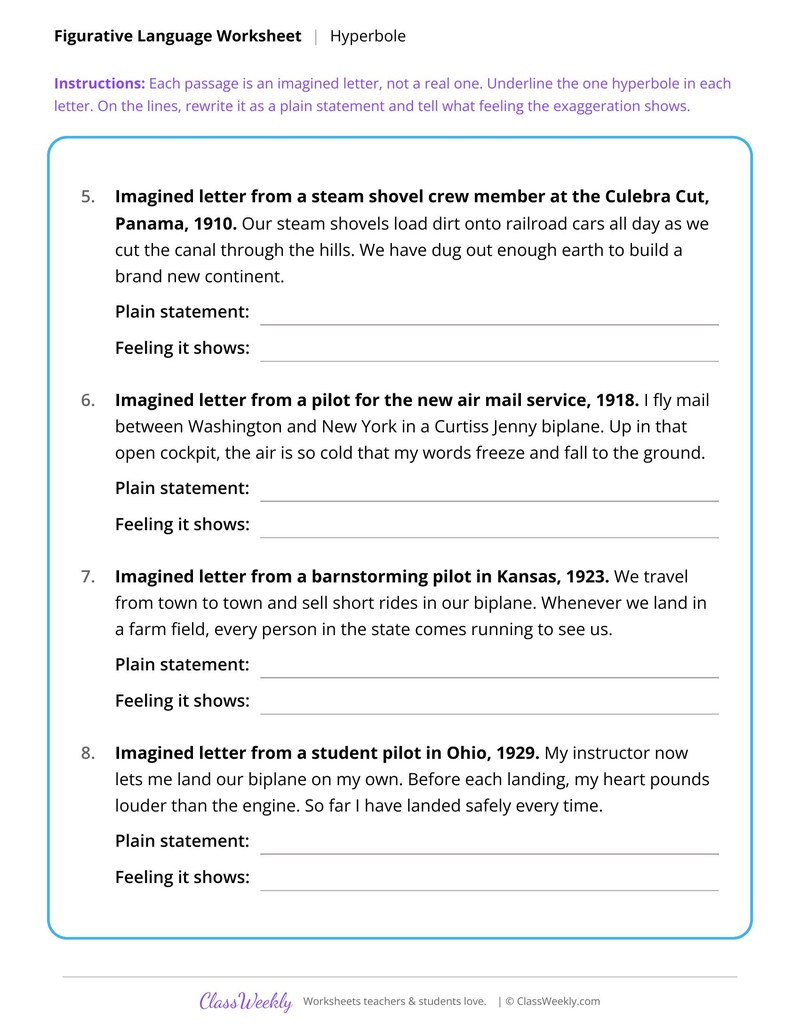
Spot Hyperbole in Historical Accounts
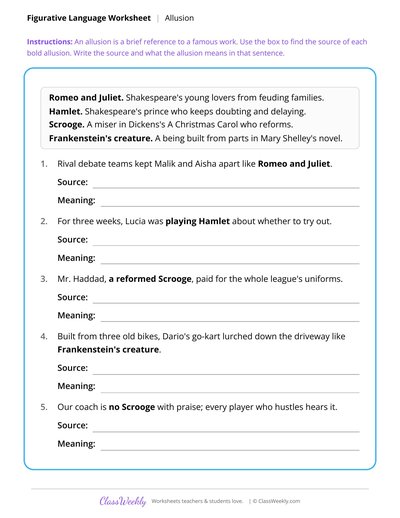
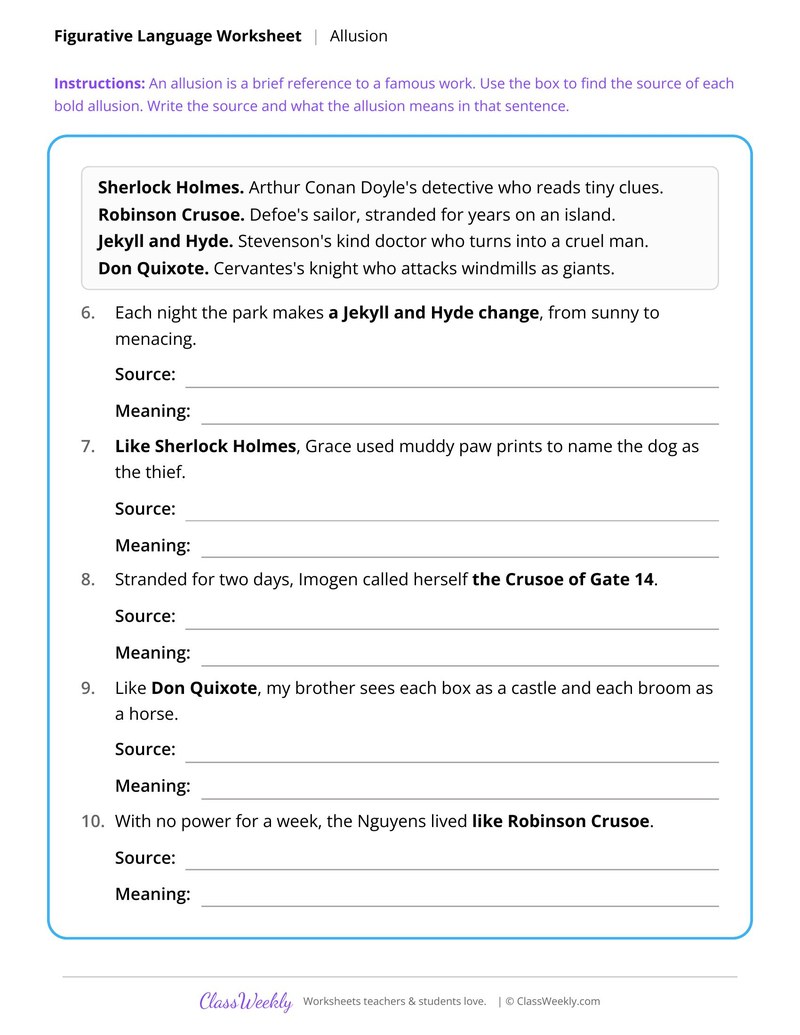
Allusions to Shakespeare and Classic Novels
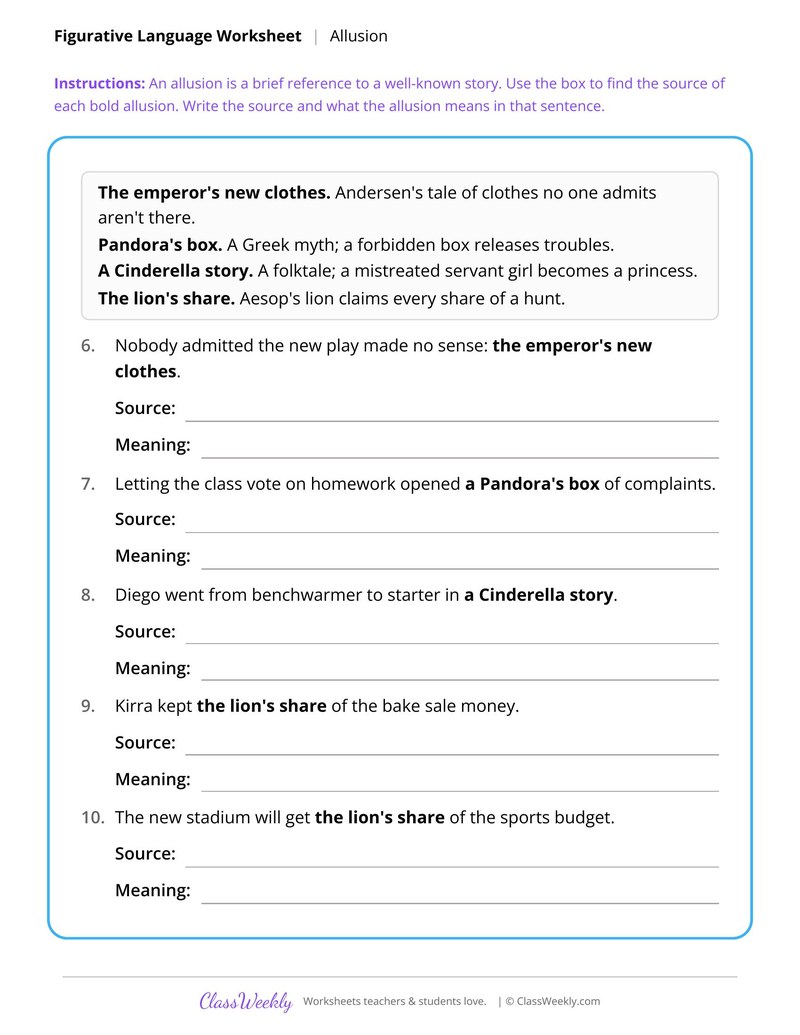
Allusions From Fables and Folktales
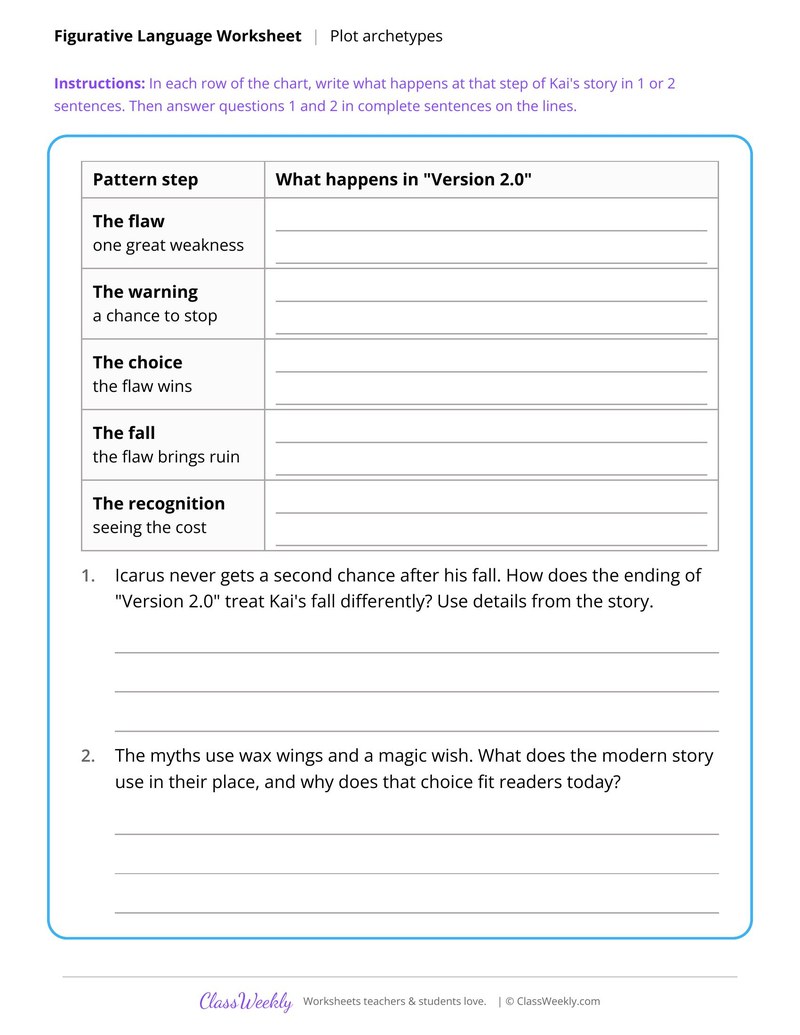
Tragic Flaw Plots Then and Now
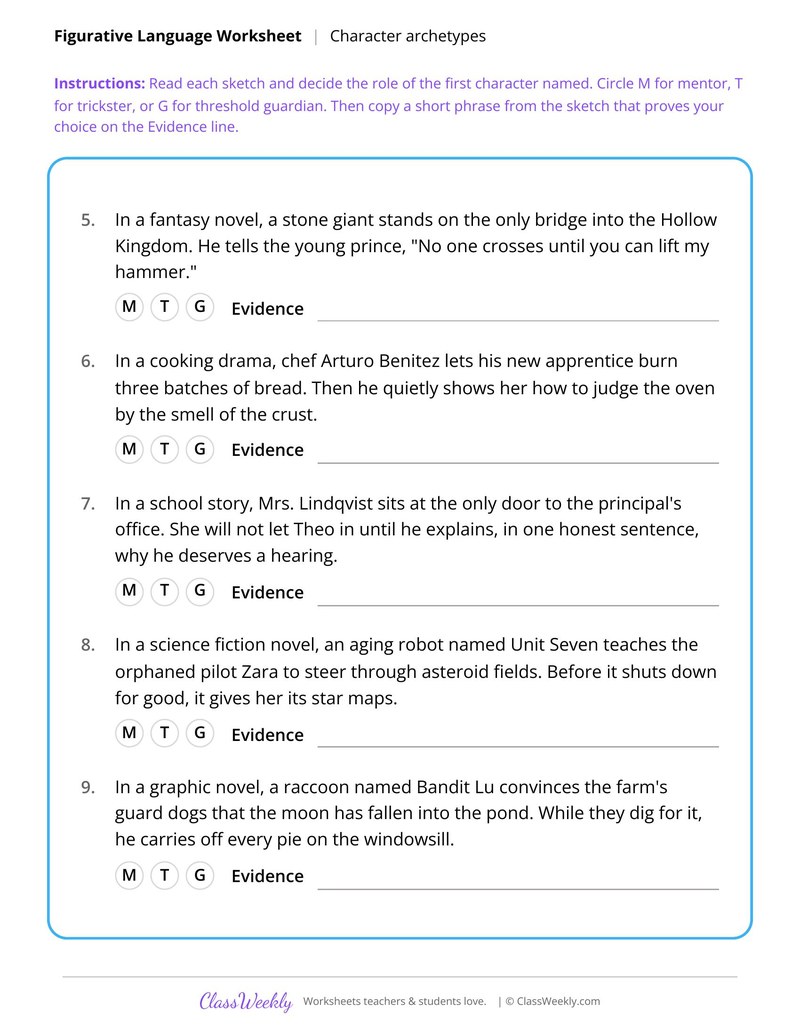
Mentor, Trickster and Guardian Archetypes
Curriculum Links
Common Core State Standards
Language · 8th Grade
Standard: Interpret figures of speech (e.g. verbal irony, puns) in context.
View all L.8.5.A worksheets →Find this in the curriculum
Browse the grade, subject, and topic this belongs to.
FAQ
How do I use this figurative language practice worksheet?
⌄
Hand out the reference chart first and keep it on desks. Use the pun and irony sheets as short warm ups, then assign one passage sheet so students practice naming devices in context.
What does this worksheet teach?
⌄
Find the two meanings in ten puns, from a bakery sign to a clock shop headline. A pun uses one word or sound with two meanings, and both meanings fit the sentence. The directions on the page read: Underline the word or phrase that makes each pun. Then write its two meanings, one meaning on each line. An answer key is included.
Can I use this figurative language practice worksheet for homeschool or classroom?
⌄
Yes, both. We made it for 8th grade figurative language, and it works the same at home or at school. At home, a student can work through it alone and then go over it with you, which shows quickly what is solid and what needs another look. In class it works as independent practice, homework or a warm-up, and you can print one copy or a full set.
What is verbal irony?
⌄
Verbal irony is when a speaker says the opposite of what is really meant, often to joke or complain. Saying perfect day for a picnic during a thunderstorm is an example. Verbal Irony in Dialogue asks students to explain what each speaker really means.
How do you explain a pun?
⌄
Find the word with two meanings and show that both fit the sentence. In the headline Calendar Makers Fear Their Days Are Numbered, numbered means both printed with numbers and coming to an end.
What is the difference between hyperbole and understatement?
⌄
Hyperbole exaggerates far beyond the truth, like a backpack that weighs as much as a school bus. Understatement makes something sound smaller, like calling a hurricane breezy. Hyperbole or Understatement Path Puzzle sorts examples of both.
Ratings & Reviews
No reviews yet. Be the first to share what you think.
Reviews are for ClassWeekly members.
Make a Request
Spotted something to fix, or want a worksheet we don't have yet? Tell us and we'll make it.
Worksheet Details
| Grade | 8th Grade |
| Subject | Vocabulary |
| Topic | Figurative Language |
| Standard | L.8.5.A |
| Pages | 1 page |
| Difficulty | Medium |
What is ClassWeekly?
ClassWeekly offers free worksheets and printable learning resources for kids, from preschool up. All worksheets are aligned to Common Core, NGSS, and C3 Framework standards and designed by educators. Become a member to access the full library and download unlimited PDFs.
Advanced Literary Terms Reference for 8th Grade
Archetype Cards for Characters and Plot Patterns
Figurative Language Reference, Puns, Irony and More
Spot Hyperbole in Historical Accounts
Allusions to Shakespeare and Classic Novels
Allusions From Fables and Folktales
Tragic Flaw Plots Then and Now
Mentor, Trickster and Guardian Archetypes