Seasons as Symbols in Stories
Written by Adi Ackerman, Head Teacher
"Seasons as Symbols in Stories" is written for 8th Grade (Ages 13-14), and it covers Common Core RL.8.2. A 7th grader who is already steady on figurative language can use it too, and an older student can use it as a short review.
2 pages in this set
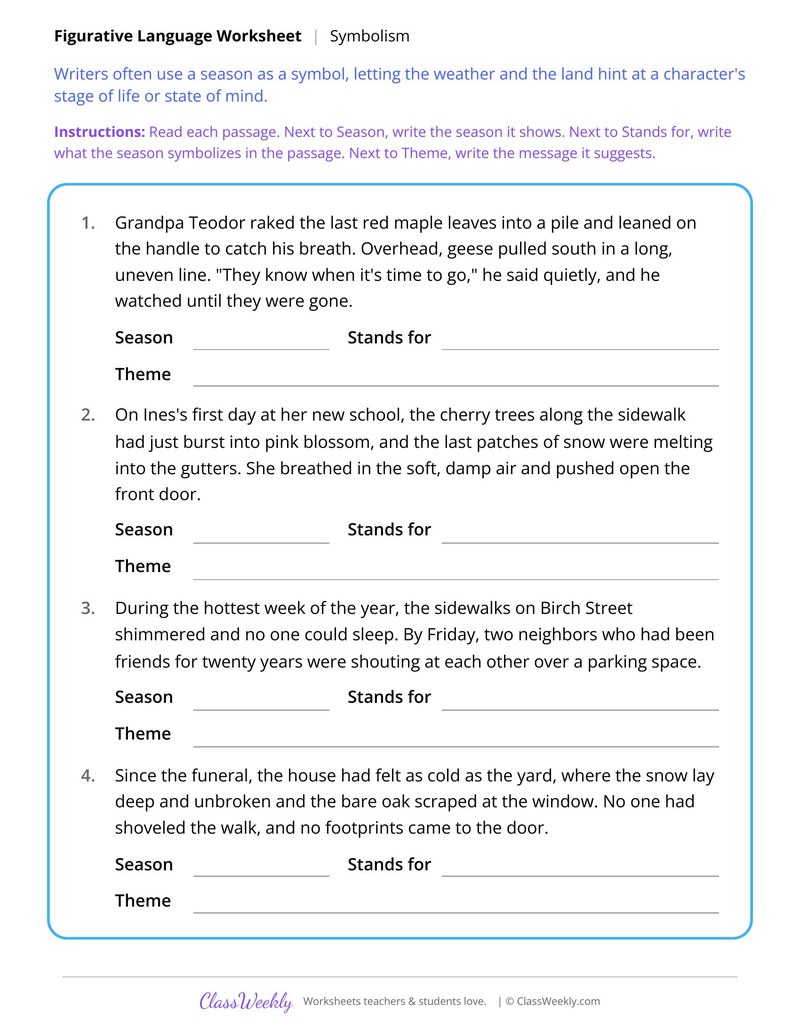
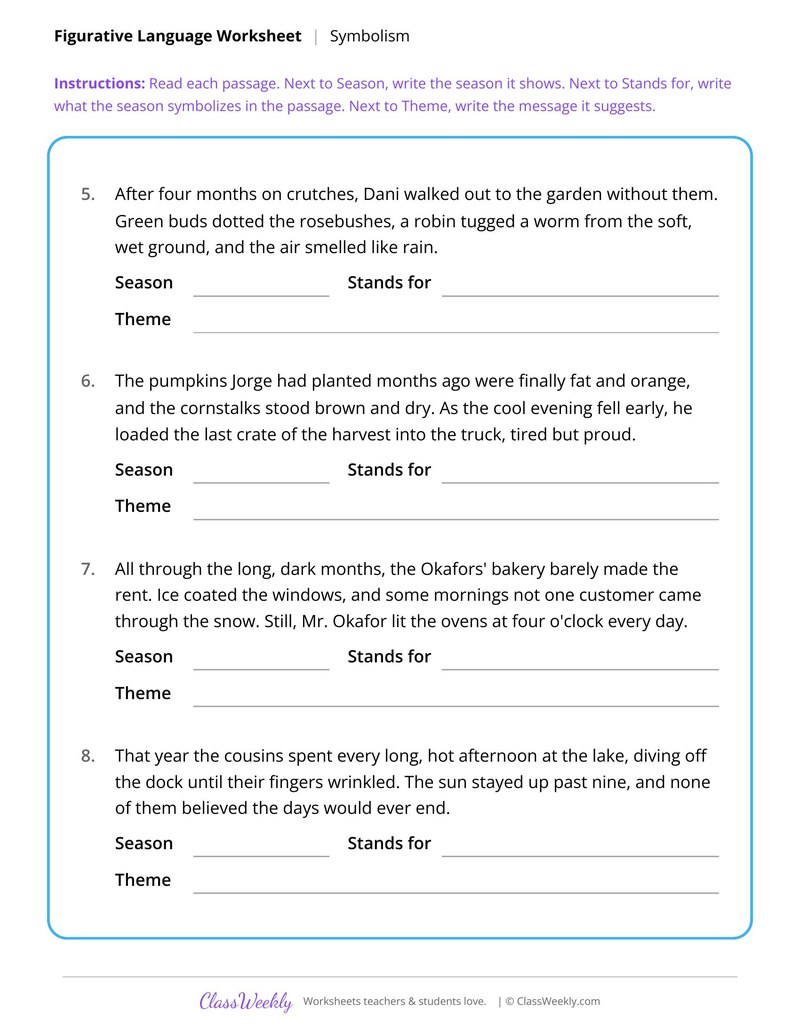
8th grade vocabulary worksheet: name the season in six passages and tell what each stands for, from maple leaves to harvest. Answer key included. Part of our literary devices figurative language collection. Aligned to Common Core standards.
How do I use this worksheet?
Pair a device sheet with the novel your class is reading, such as foreshadowing before a mystery. Keep the literary terms reference in student folders for discussions and essays.
What students will practice
- Students will name the season each passage shows.
- Students will explain what the season symbolizes about a character's life or mind.
- Students will state the theme each passage suggests.
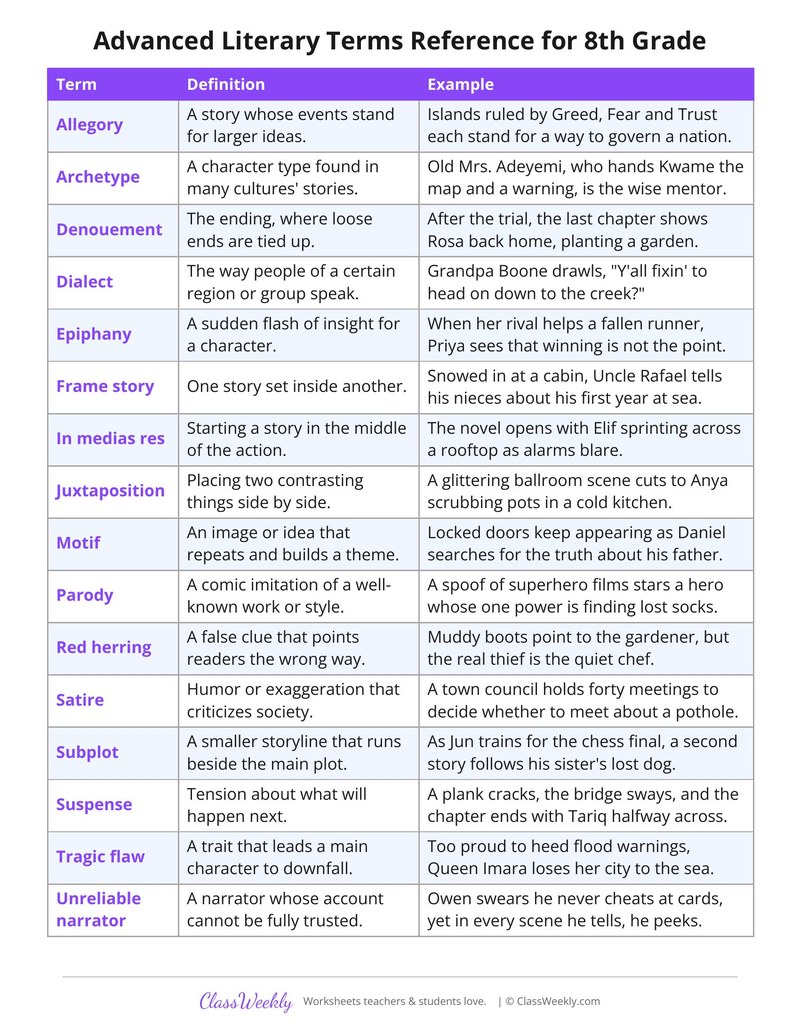
Advanced Literary Terms Reference for 8th Grade
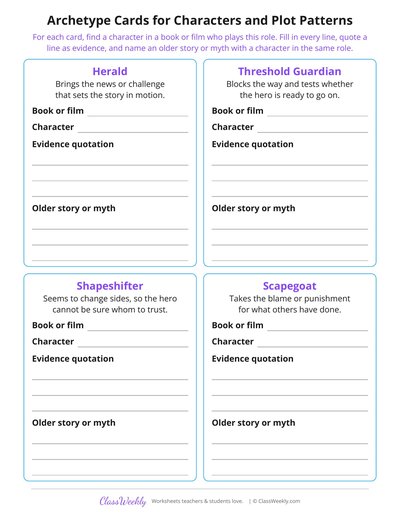
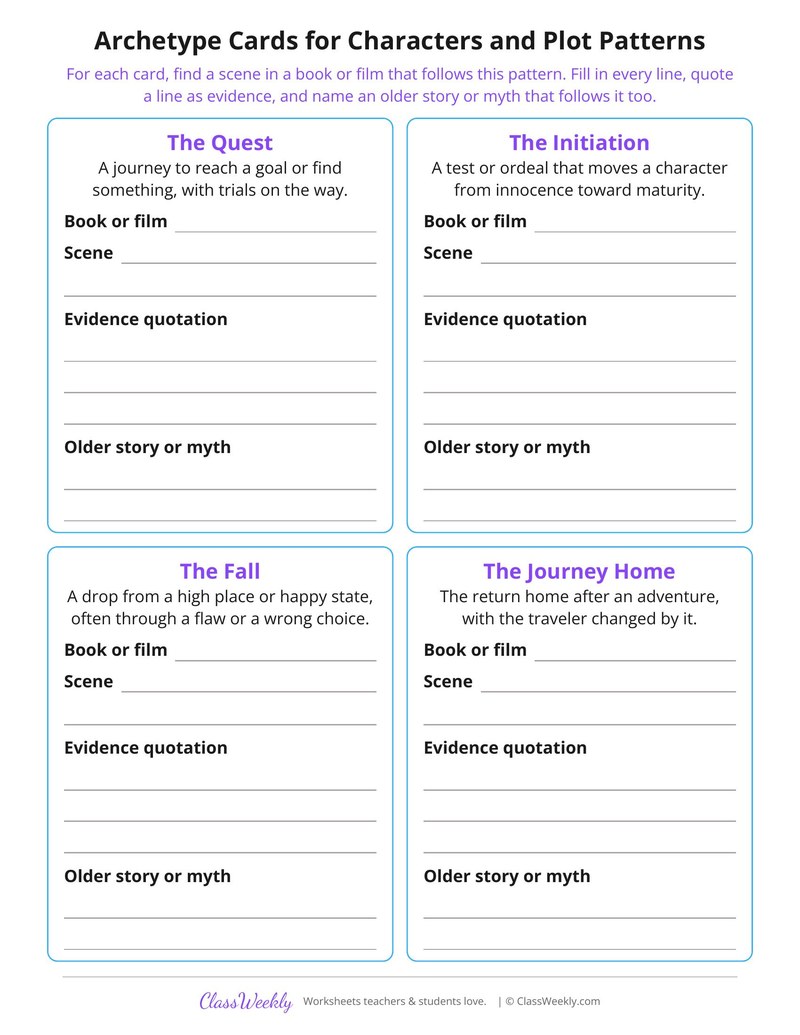
Archetype Cards for Characters and Plot Patterns
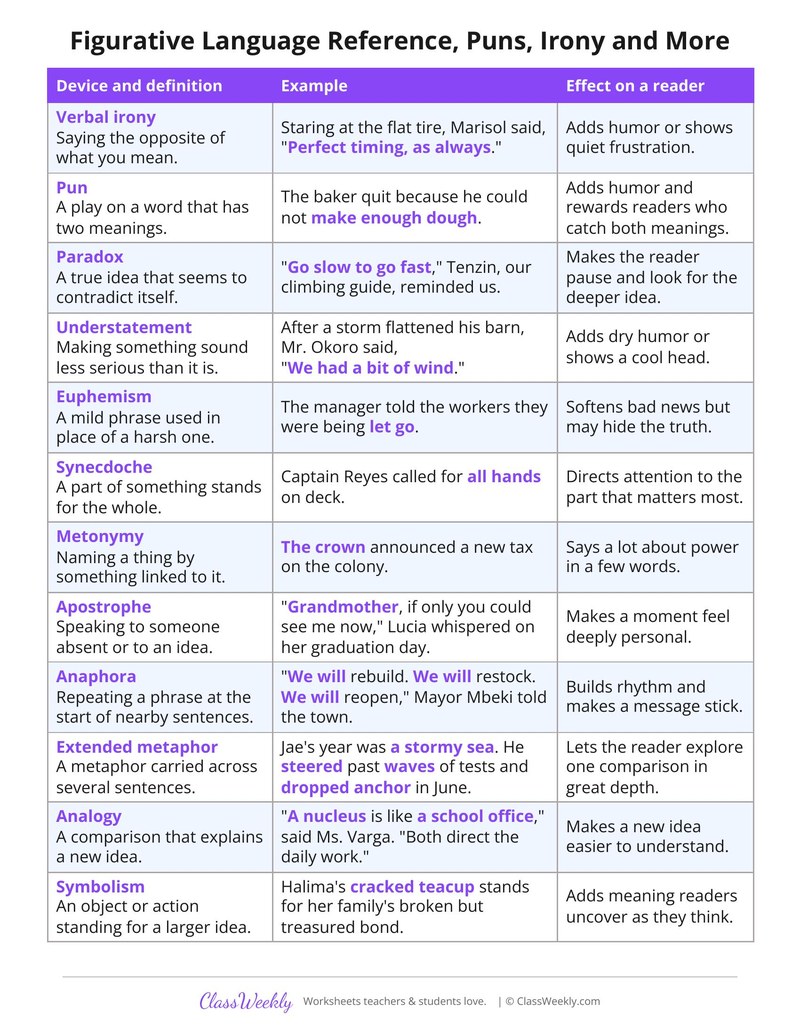
Figurative Language Reference, Puns, Irony and More
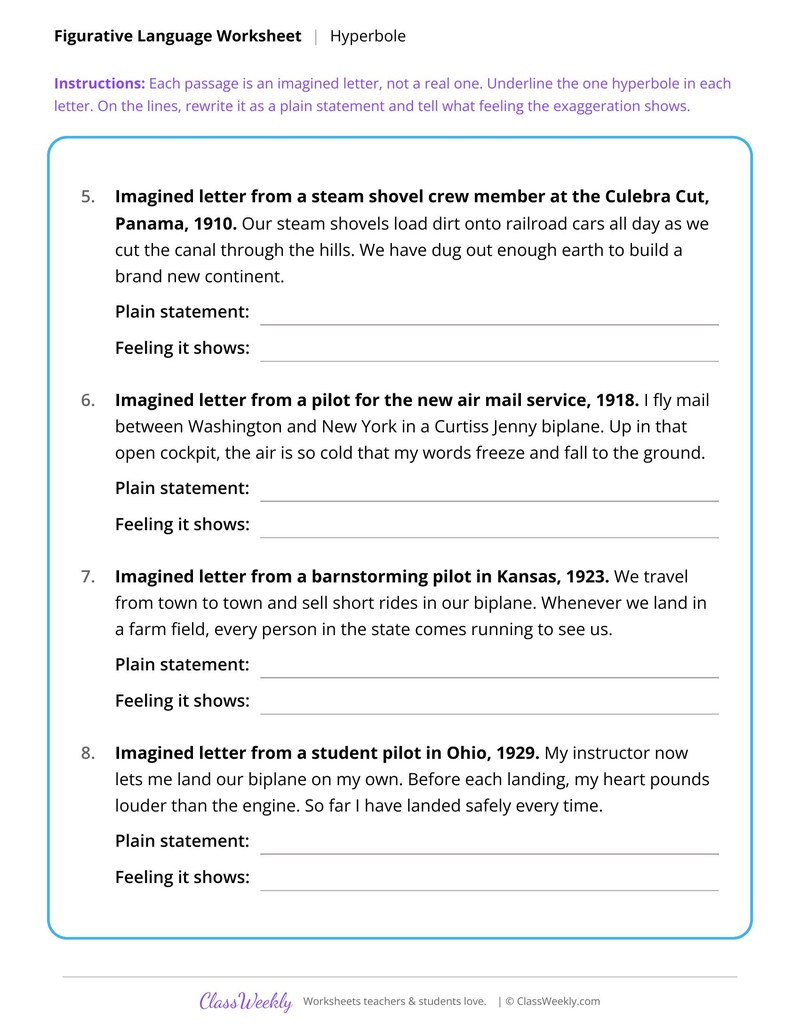
Spot Hyperbole in Historical Accounts
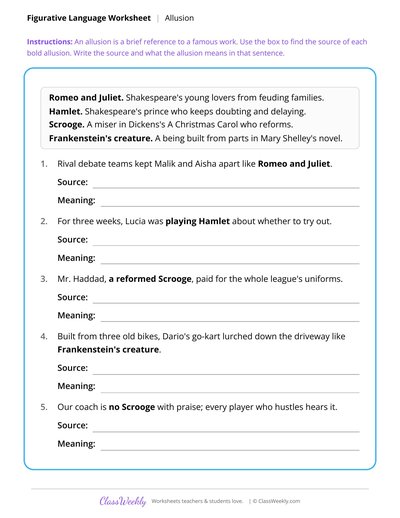
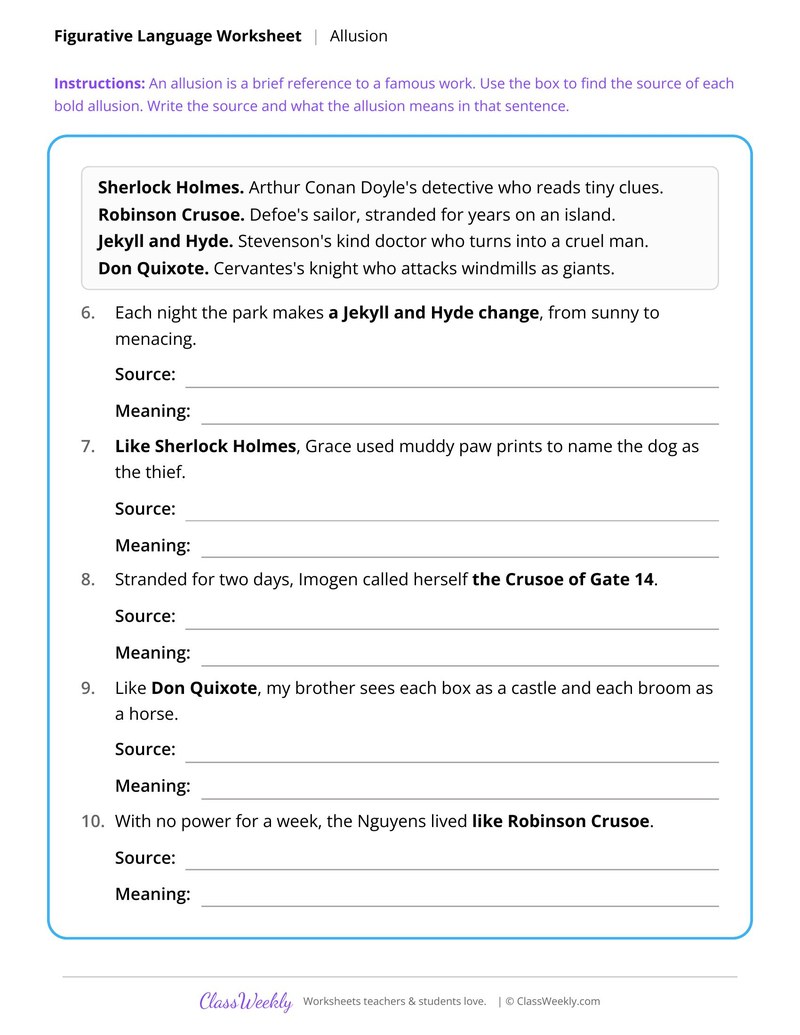
Allusions to Shakespeare and Classic Novels
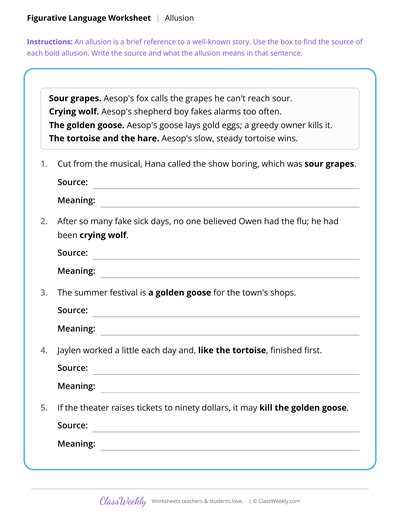
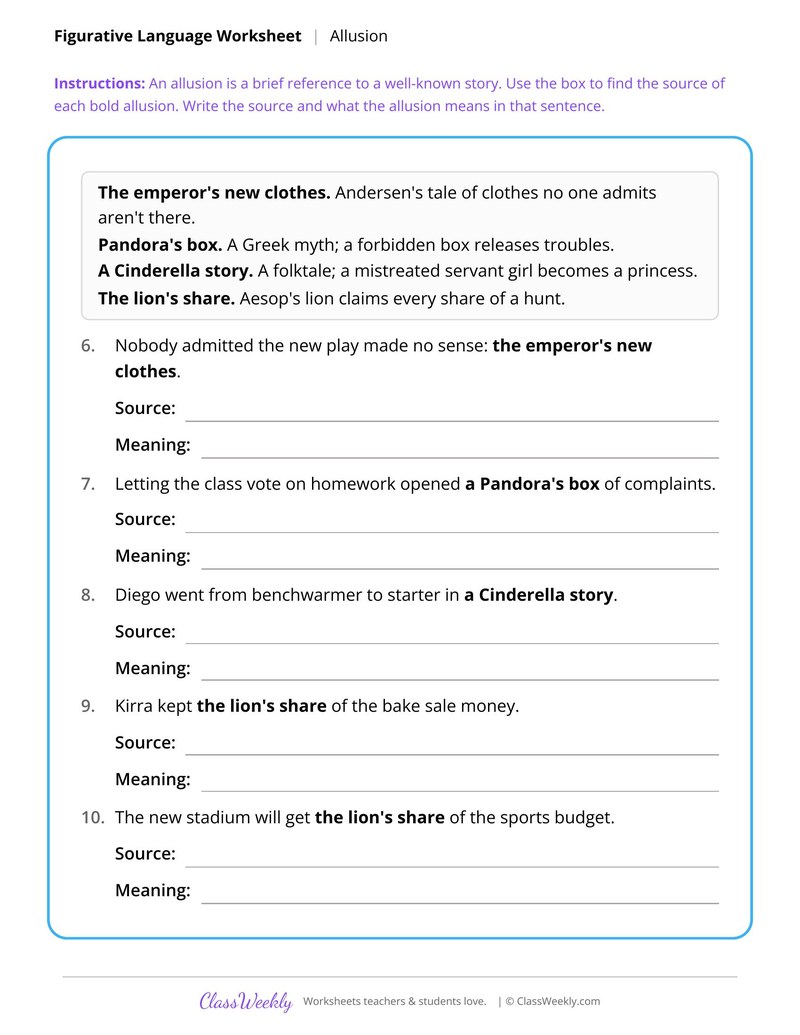
Allusions From Fables and Folktales
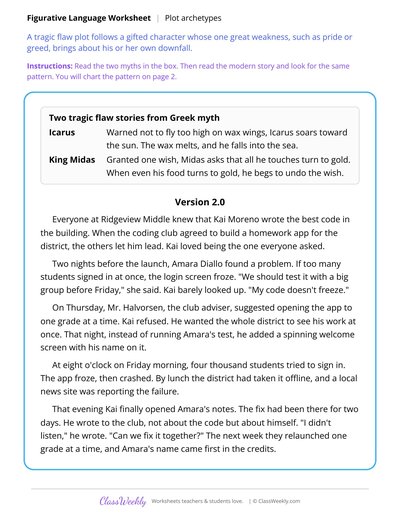
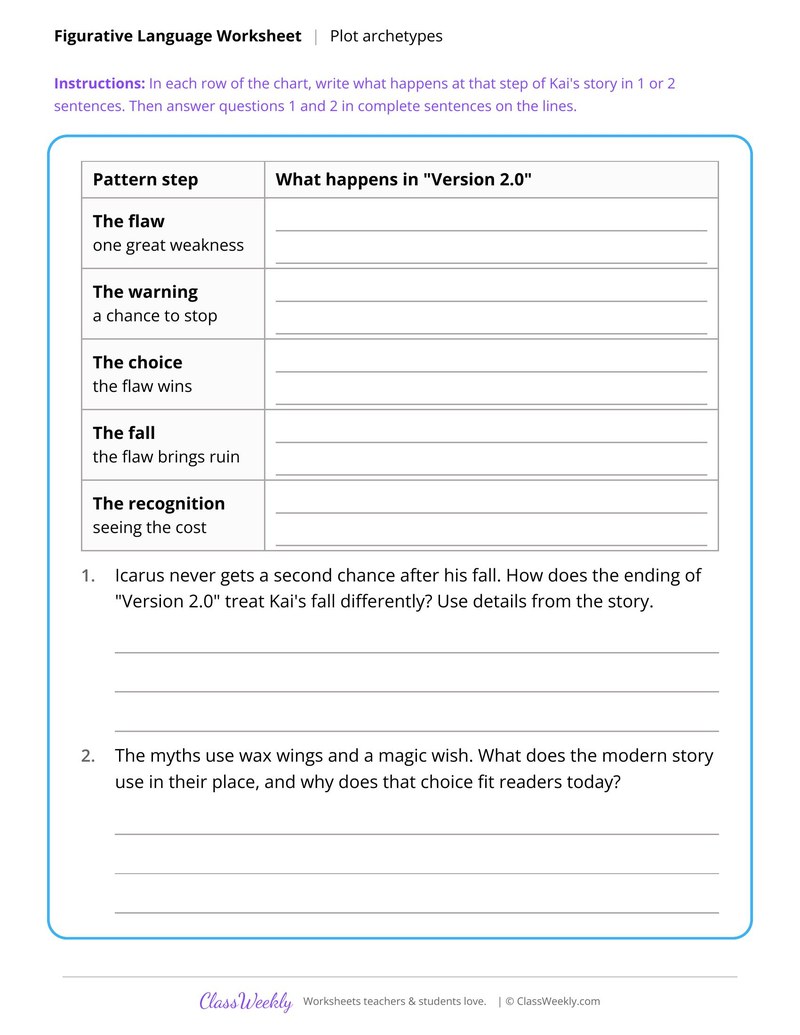
Tragic Flaw Plots Then and Now
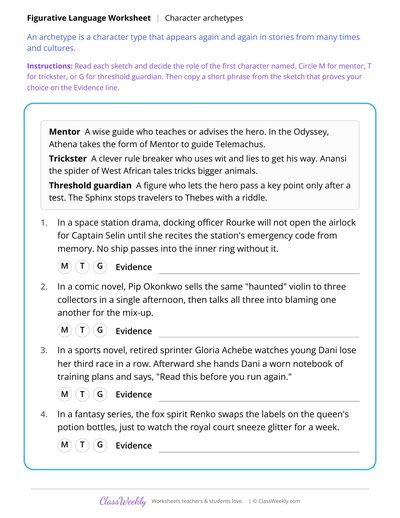
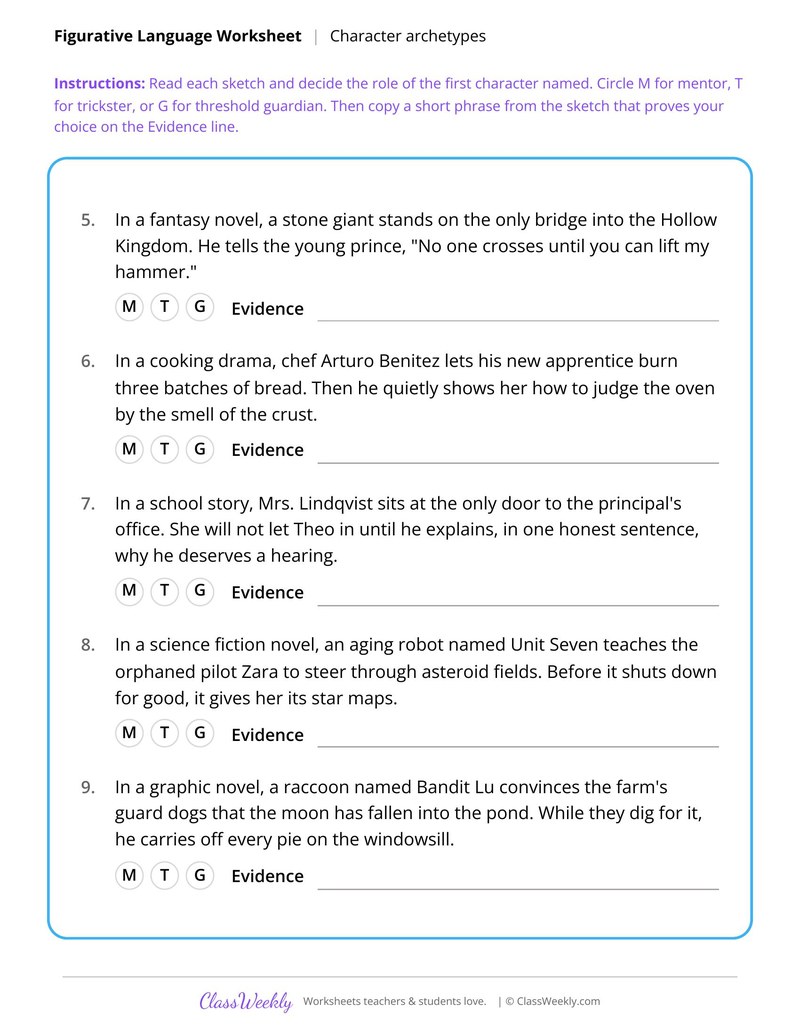
Mentor, Trickster and Guardian Archetypes
Curriculum Links
Common Core State Standards
Reading: Literature · 8th Grade
Standard: Determine a theme or central idea of a text and analyze its development over the course of the text, including its relationship to the characters, setting, and plot; provide an objective summary of the text.
View all RL.8.2 worksheets →Find this in the curriculum
Browse the grade, subject, and topic this belongs to.
FAQ
How do I use this literary devices worksheet?
⌄
Pair a device sheet with the novel your class is reading, such as foreshadowing before a mystery. Keep the literary terms reference in student folders for discussions and essays.
What does this worksheet teach?
⌄
Name the season in six passages and tell what each stands for, from maple leaves to harvest. Writers often use a season as a symbol, letting the weather and the land hint at a character's stage of life or state of mind. The directions on the page read: Read each passage. Next to Season, write the season it shows. Next to Stands for, write what the season symbolizes in the passage. Next to Theme, write the message it suggests. An answer key is included.
Can I use this literary devices worksheet for homeschool or classroom?
⌄
Yes, both. We made it for 8th grade figurative language, and it works the same at home or at school. At home, a student can work through it alone and then go over it with you, which shows quickly what is solid and what needs another look. In class it works as independent practice, homework or a warm-up, and you can print one copy or a full set.
What is the hero's journey?
⌄
The hero's journey is a story pattern in which a hero leaves ordinary life, faces trials with help from others and returns changed. The Hero's Journey in a Modern Story lists eight stages, from the ordinary world to the return, and has students quote a story about a student named Lia for each one.
What is a symbolic setting?
⌄
A symbolic setting is a place that stands for something larger, such as a feeling, a choice or a stage of life. In Symbolic Settings in Short Scenes, a crossroads stands for a choice and a locked greenhouse for grief. Students write what each setting symbolizes and the theme it points to.
How do modern stories borrow from myths?
⌄
Modern writers often reuse a myth's plot, character or lesson. Myth Figures in Modern Story Plots gives six Greek myth figures, such as Prometheus and Narcissus, and asks students to match modern stories to them. Tragic Flaw Plots Then and Now compares Icarus and King Midas with a story about a student coder.
Ratings & Reviews
No reviews yet. Be the first to share what you think.
Reviews are for ClassWeekly members.
Make a Request
Spotted something to fix, or want a worksheet we don't have yet? Tell us and we'll make it.
Worksheet Details
| Grade | 8th Grade |
| Subject | Vocabulary |
| Topic | Figurative Language |
| Standard | RL.8.2 |
| Pages | 2 pages |
| Difficulty | Medium |
What is ClassWeekly?
ClassWeekly offers free worksheets and printable learning resources for kids, from preschool up. All worksheets are aligned to Common Core, NGSS, and C3 Framework standards and designed by educators. Become a member to access the full library and download unlimited PDFs.
Advanced Literary Terms Reference for 8th Grade
Archetype Cards for Characters and Plot Patterns
Figurative Language Reference, Puns, Irony and More
Spot Hyperbole in Historical Accounts
Allusions to Shakespeare and Classic Novels
Allusions From Fables and Folktales
Tragic Flaw Plots Then and Now
Mentor, Trickster and Guardian Archetypes