Figurative Language Reference With Examples
Written by Adi Ackerman, Head Teacher
"Figurative Language Reference With Examples" is written for 7th Grade (Ages 12-13), and it covers Common Core L.7.5.A. It also works a grade below or above, as a tool for a student who is ready for it or a quick refresher for an older one.
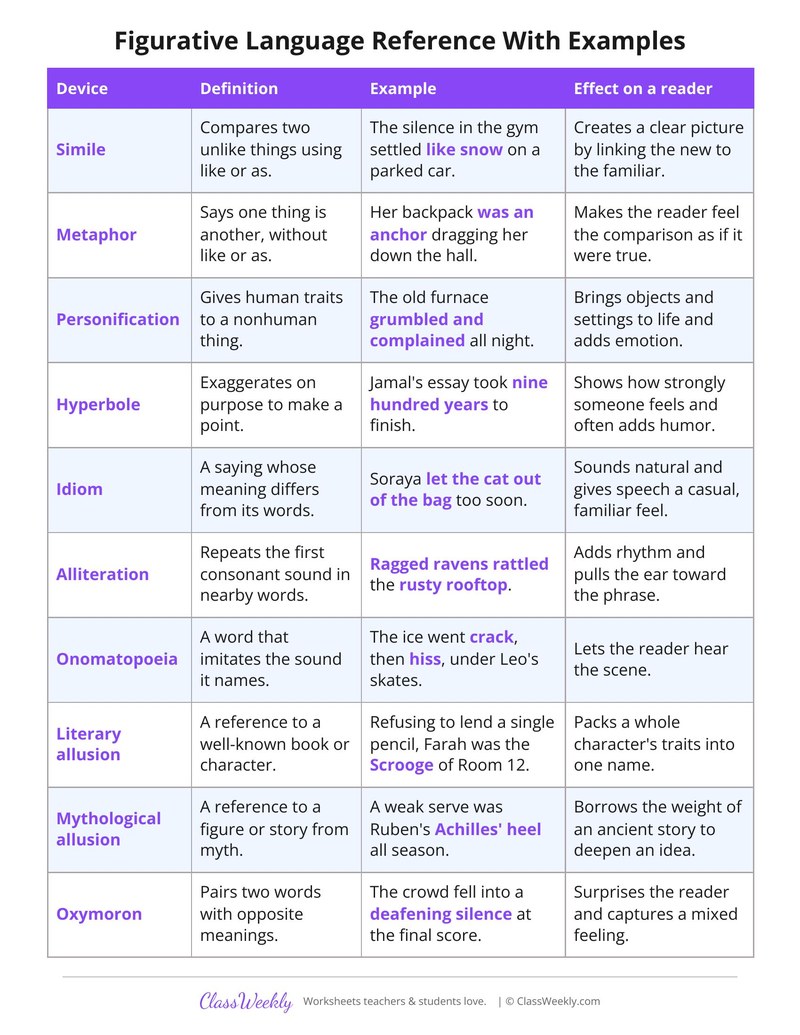
7th grade vocabulary resource: look up figurative language devices in a chart with definitions, examples and effects on a reader. Part of our figurative language practice collection. Aligned to Common Core standards.
How do I use this resource?
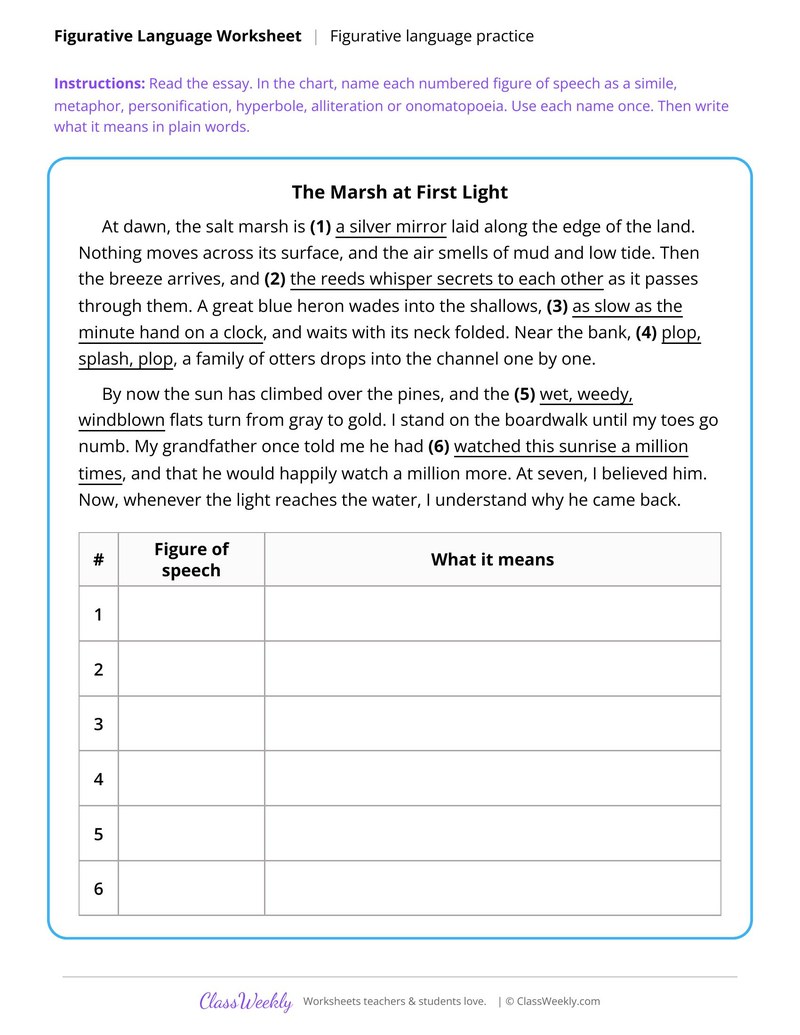
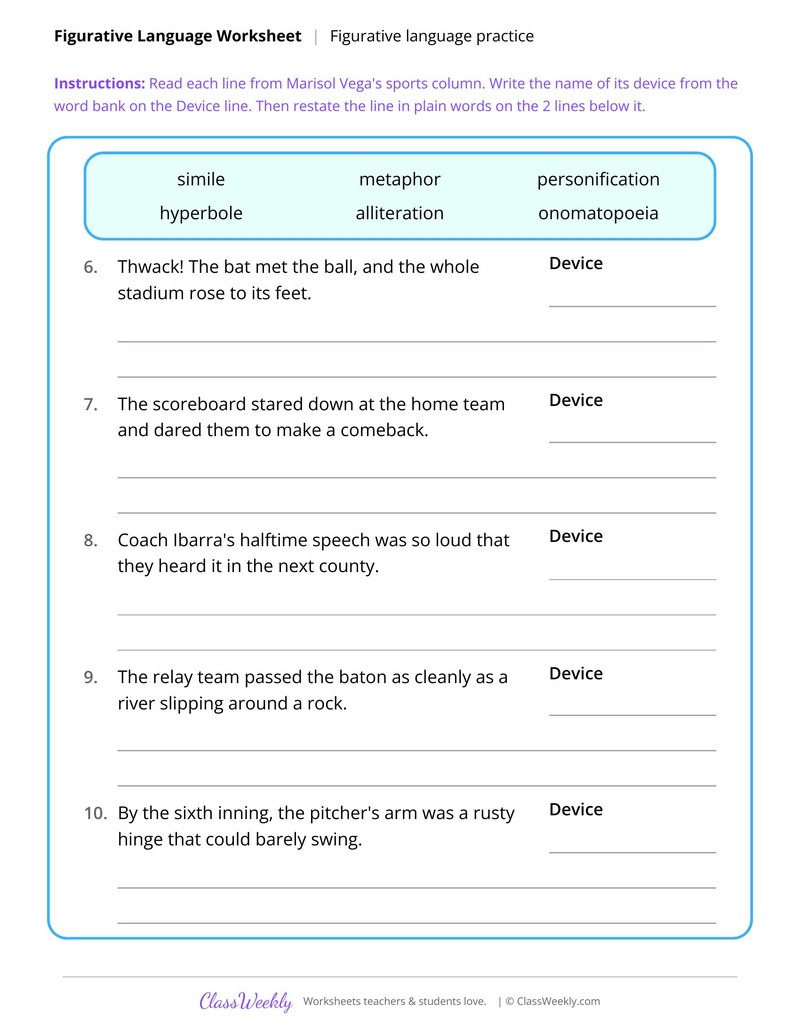
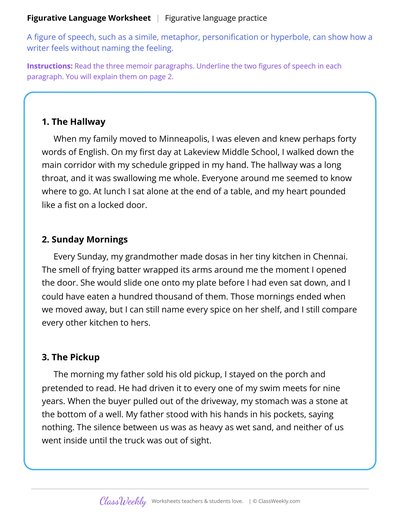
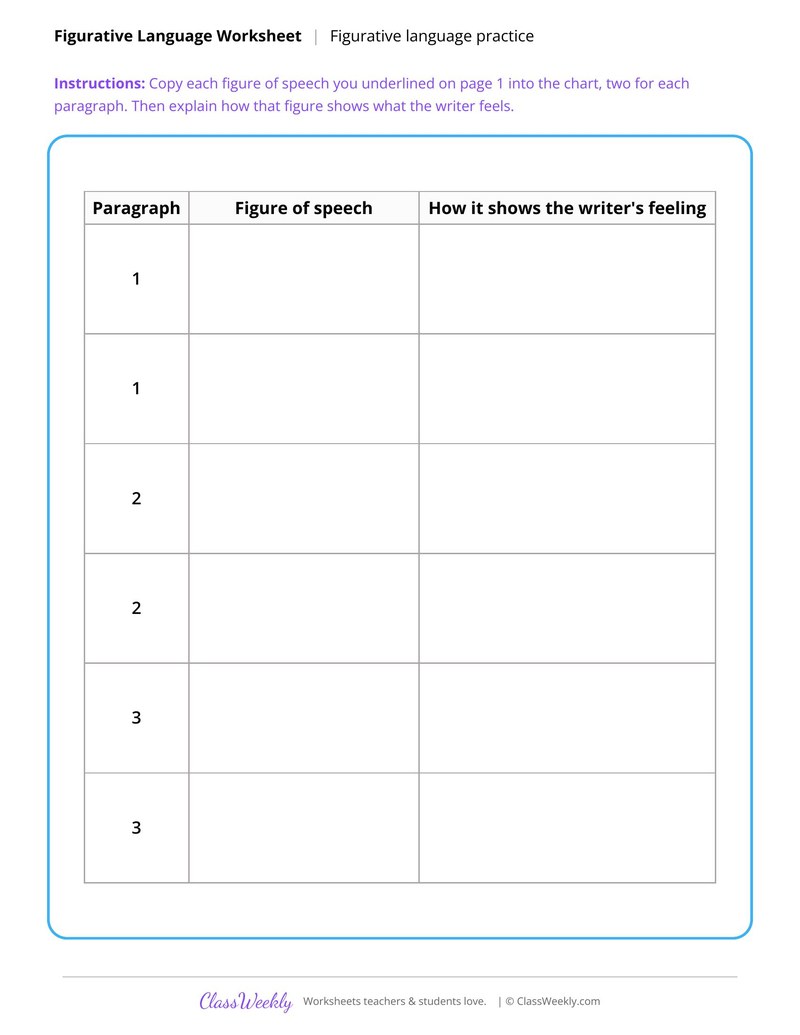
Begin with Figurative Language Types Review to set the vocabulary, then move to the passage sheets. Keep the reference chart at hand for students who need examples.
What students will practice
- Students will review the definition of each figurative device.
- Students will study an example sentence for simile, metaphor, personification, hyperbole and idiom.
- Students will note the effect each device has on a reader.
Curriculum Links
Common Core State Standards
Language · 7th Grade
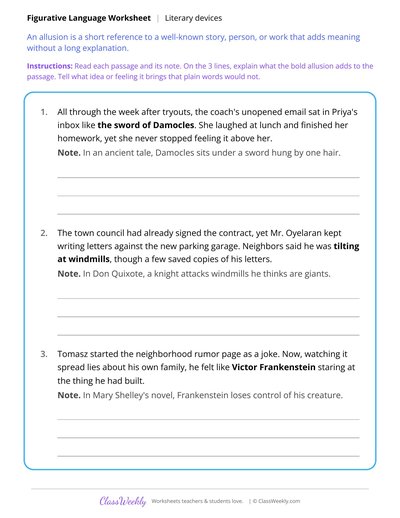
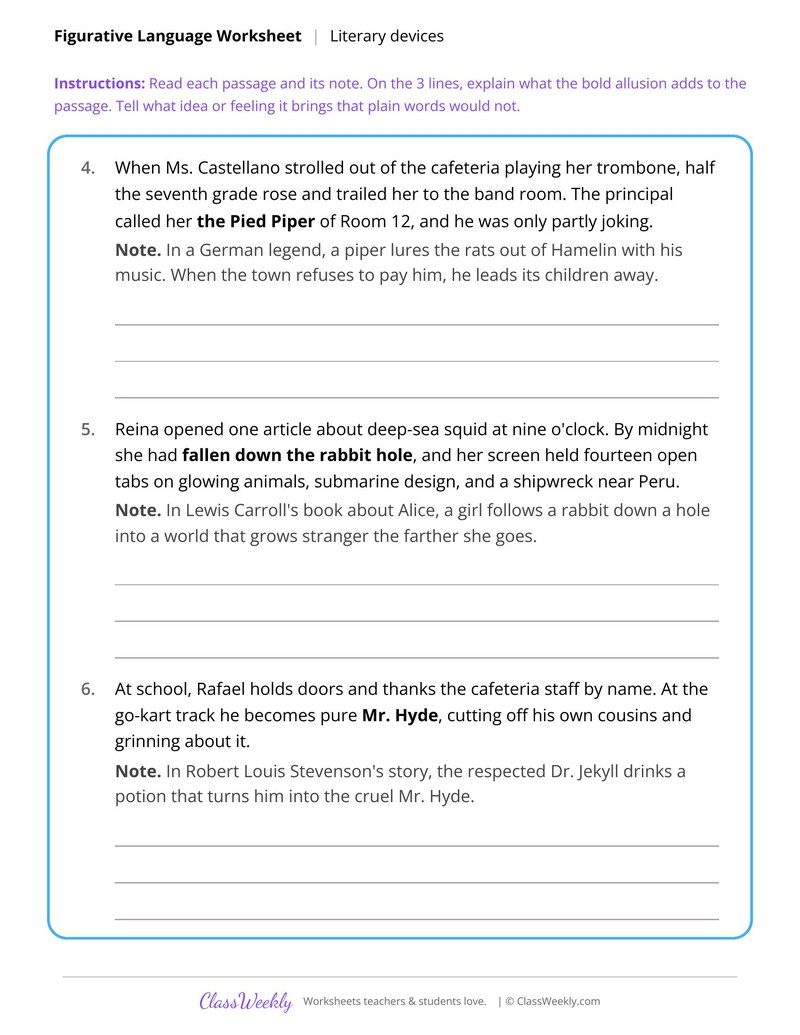
Standard: Interpret figures of speech (e.g., literary, biblical, and mythological allusions) in context.
View all L.7.5.A worksheets →Find this in the curriculum
Browse the grade, subject, and topic this belongs to.
FAQ
How do I use the Figurative Language Reference With Examples?
⌄
Begin with Figurative Language Types Review to set the vocabulary, then move to the passage sheets. Keep the reference chart at hand for students who need examples.
What are the Figurative Language Reference With Examples?
⌄
Look up figurative language devices in a chart with definitions, examples and effects on a reader.
Can I use the Figurative Language Reference With Examples at home and in the classroom?
⌄
Yes. We made it for 7th Grade figurative language, and it works the same at home or at school. At home a student can print it and keep it with their school work. Teachers print a copy per student or one for the whole room, whichever the day needs.
What are the types of figurative language?
⌄
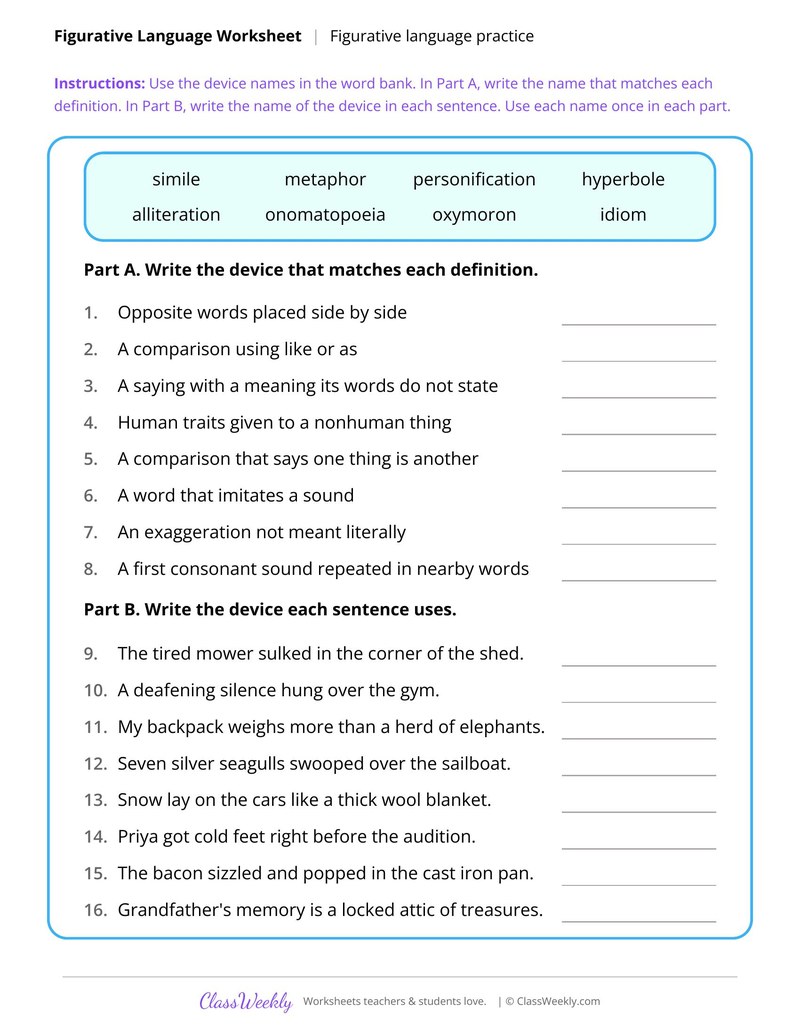
This set covers simile, metaphor, personification, hyperbole, alliteration, onomatopoeia, oxymoron and idiom. Figurative Language Types Review lists all eight in a word bank. Students match them to definitions and then name the device in sentences.
What is the difference between hyperbole and a literal statement?
⌄
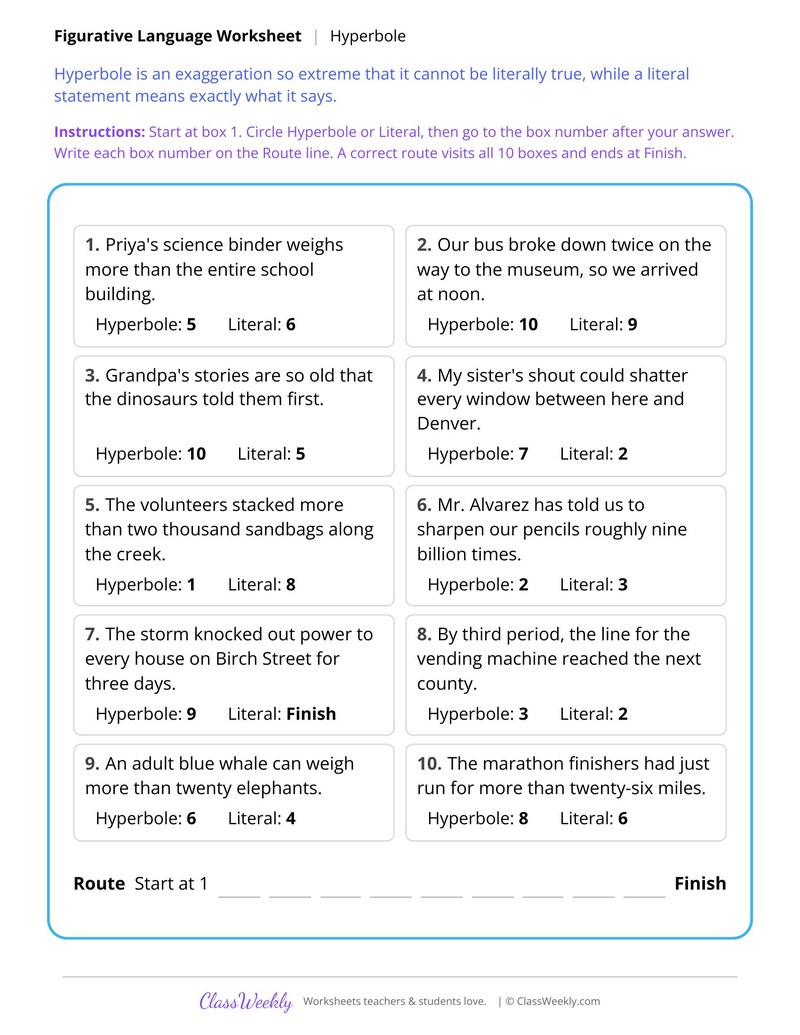
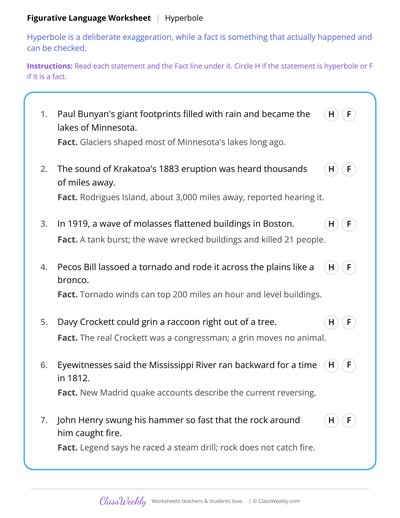
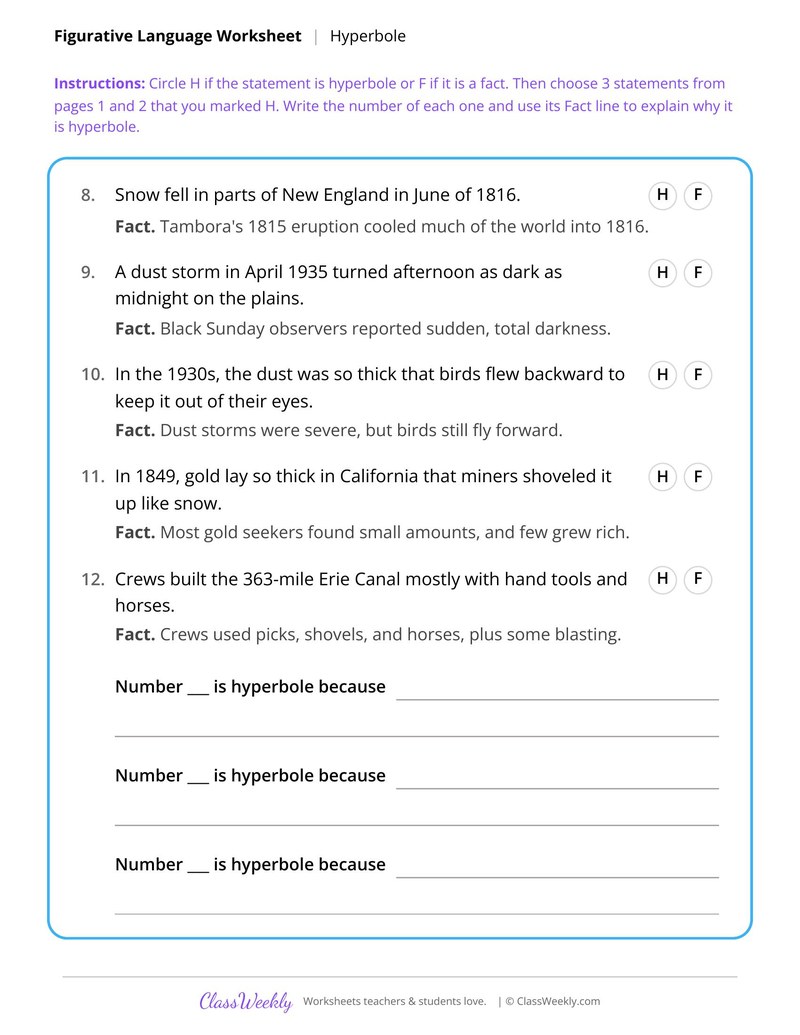
Hyperbole is an exaggeration so extreme that it cannot be literally true, while a literal statement means exactly what it says. Hyperbole or Literal Path Puzzle has students circle one or the other. The box number after each answer builds a route that checks the work.
What is a pun?
⌄
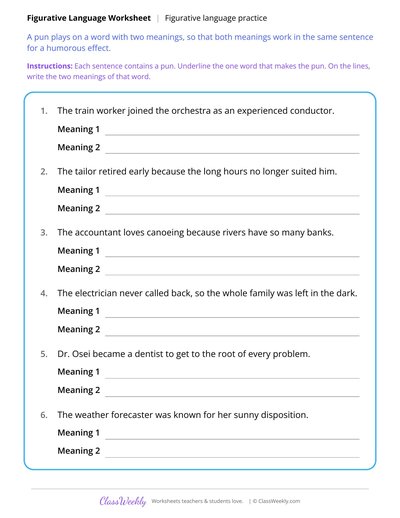
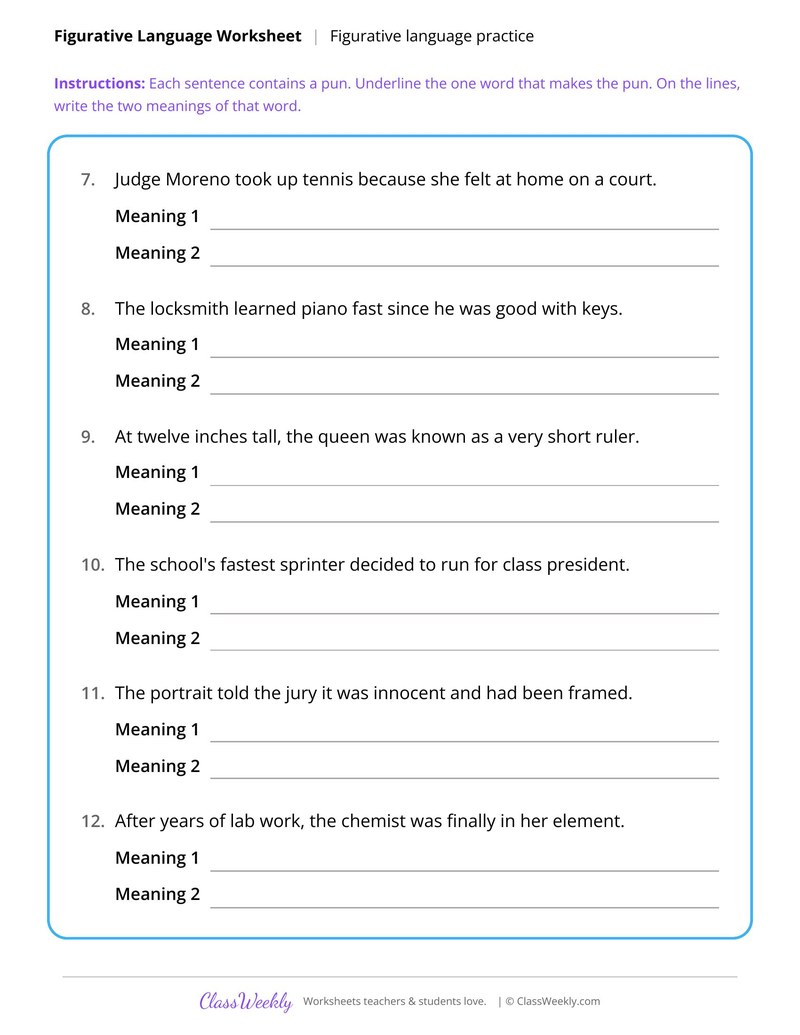
A pun plays on a word with two meanings so that both work in the same sentence. In Explain the Pun, students underline the one word that makes each pun and write both meanings. One sentence plays on conductor and another on suited.
Which figurative language sheet has no answer key?
⌄
The Figurative Language Reference With Examples is a chart of devices with definitions, examples and effects on a reader. It is a reference page, so it has no answer key. The other 7 sheets include one.
Ratings & Reviews
No reviews yet. Be the first to share what you think.
Reviews are for ClassWeekly members.
Make a Request
Spotted something to fix, or want a worksheet we don't have yet? Tell us and we'll make it.
Worksheet Details
| Grade | 7th Grade |
| Subject | Vocabulary |
| Topic | Figurative Language |
| Standard | L.7.5.A |
| Pages | 1 page |
| Difficulty | Medium |
What is ClassWeekly?
ClassWeekly offers free worksheets and printable learning resources for kids, from preschool up. All worksheets are aligned to Common Core, NGSS, and C3 Framework standards and designed by educators. Become a member to access the full library and download unlimited PDFs.