Foreshadowing in a Ferry Crossing Story
Written by Adi Ackerman, Head Teacher
"Foreshadowing in a Ferry Crossing Story" is written for 7th Grade (Ages 12-13), and it covers Common Core RL.7.3. A 6th grader who is already steady on figurative language can use it too, and an older student can use it as a short review.
2 pages in this set
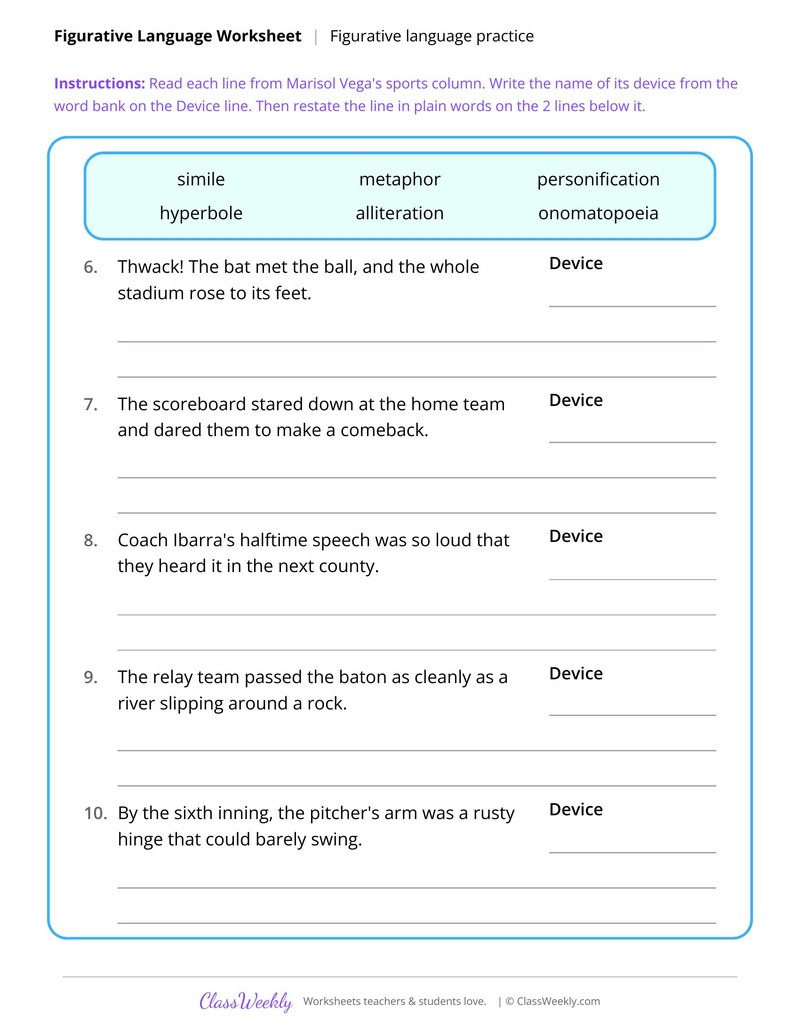
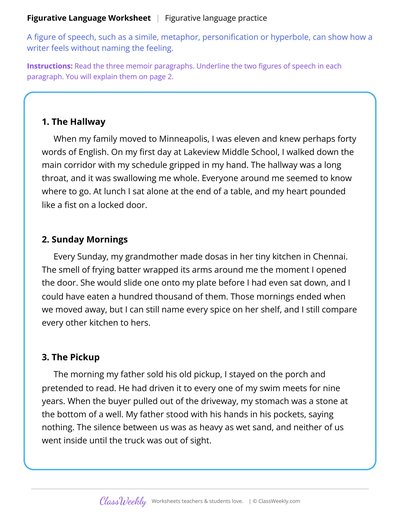
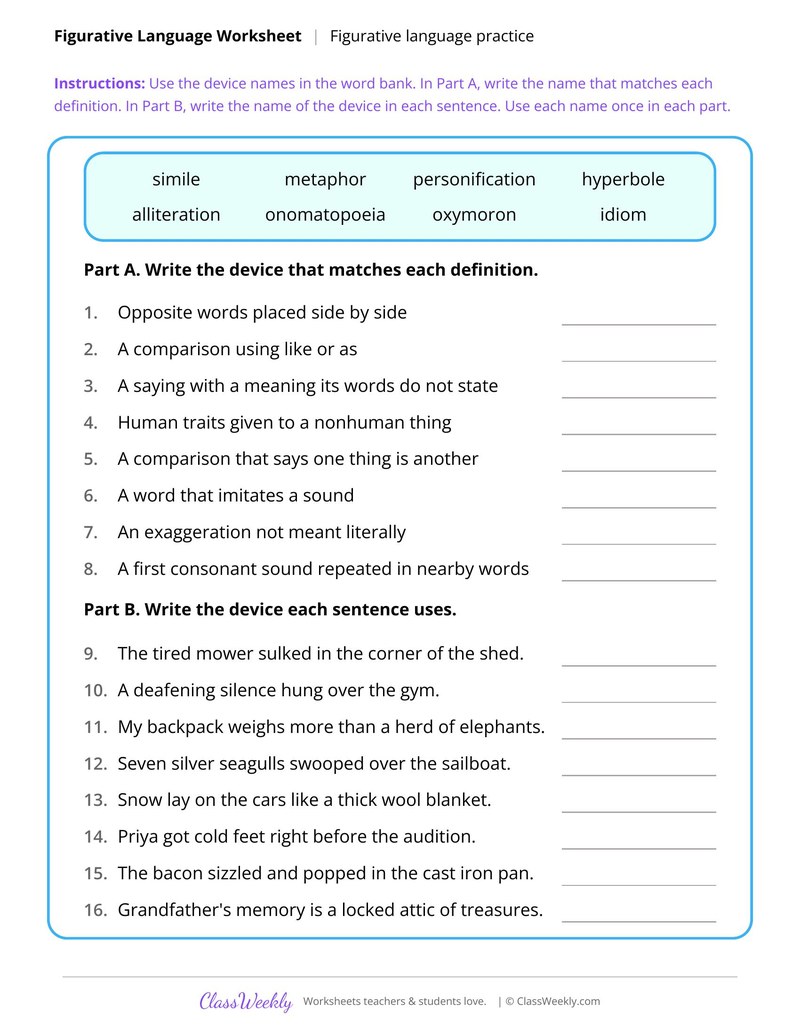
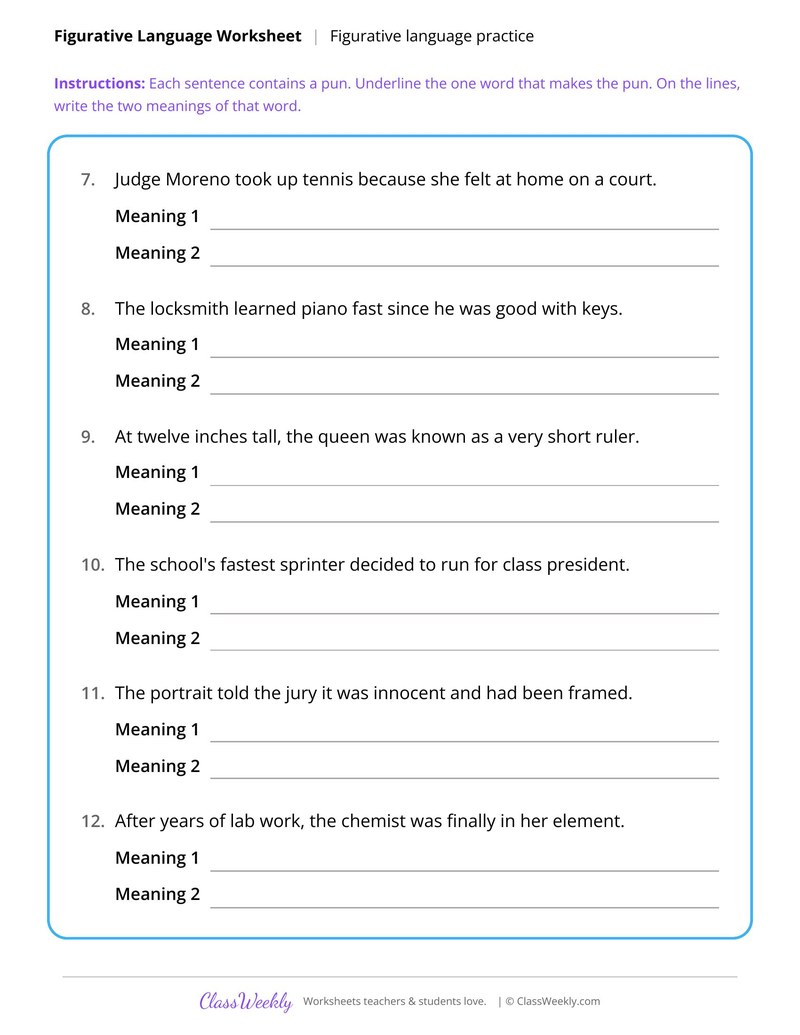
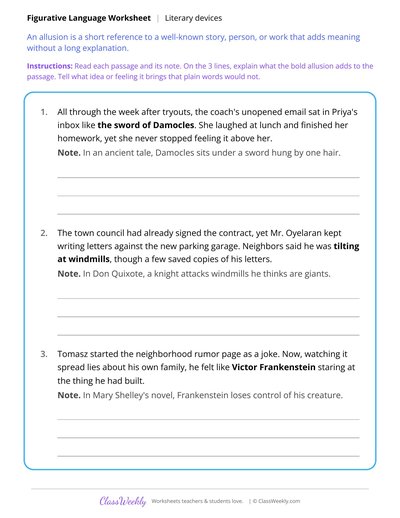
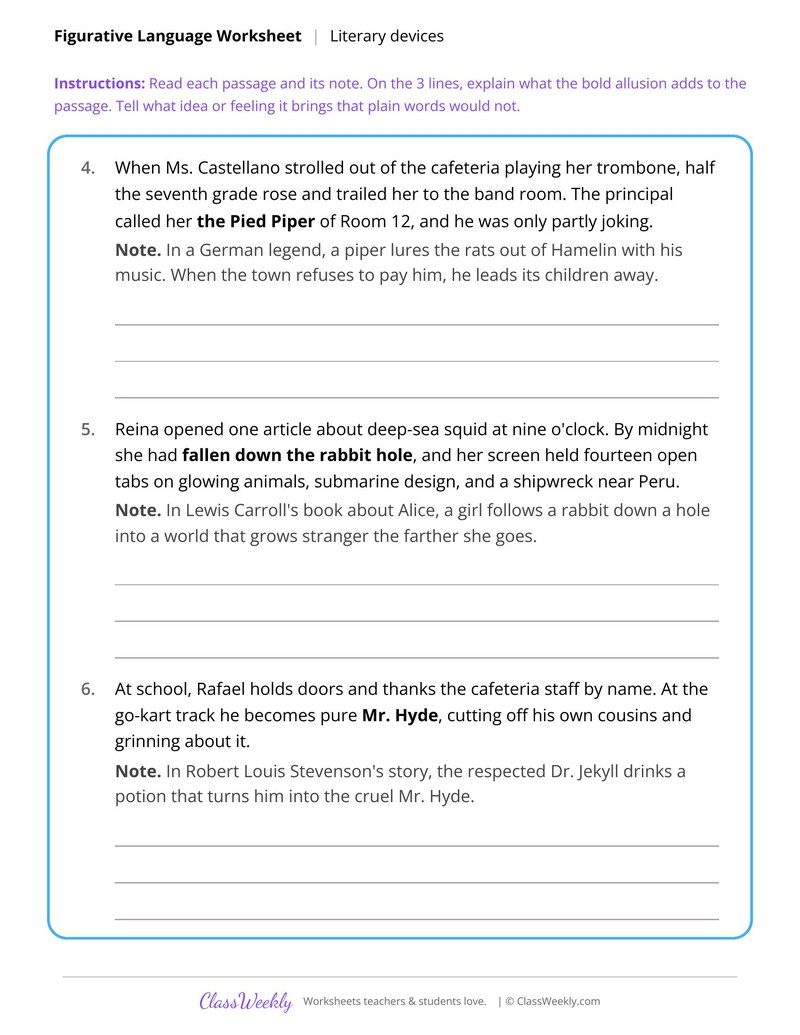
7th grade vocabulary worksheet: sort details from a ferry crossing story into foreshadowing or plain description. Answer key included. Part of our literary devices figurative language collection. Aligned to Common Core standards.
How do I use this worksheet?
Teach allusions first, then archetypes, then foreshadowing and irony. Use the archetype cards and the terms reference with a novel the class is reading.
What students will practice
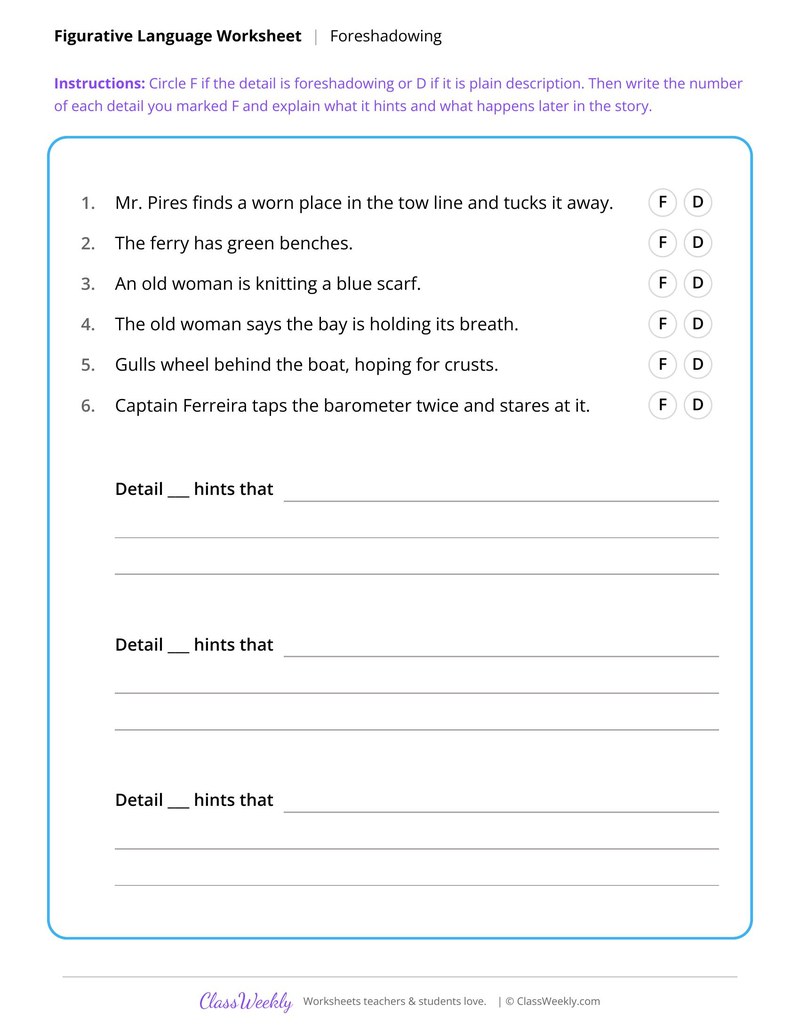
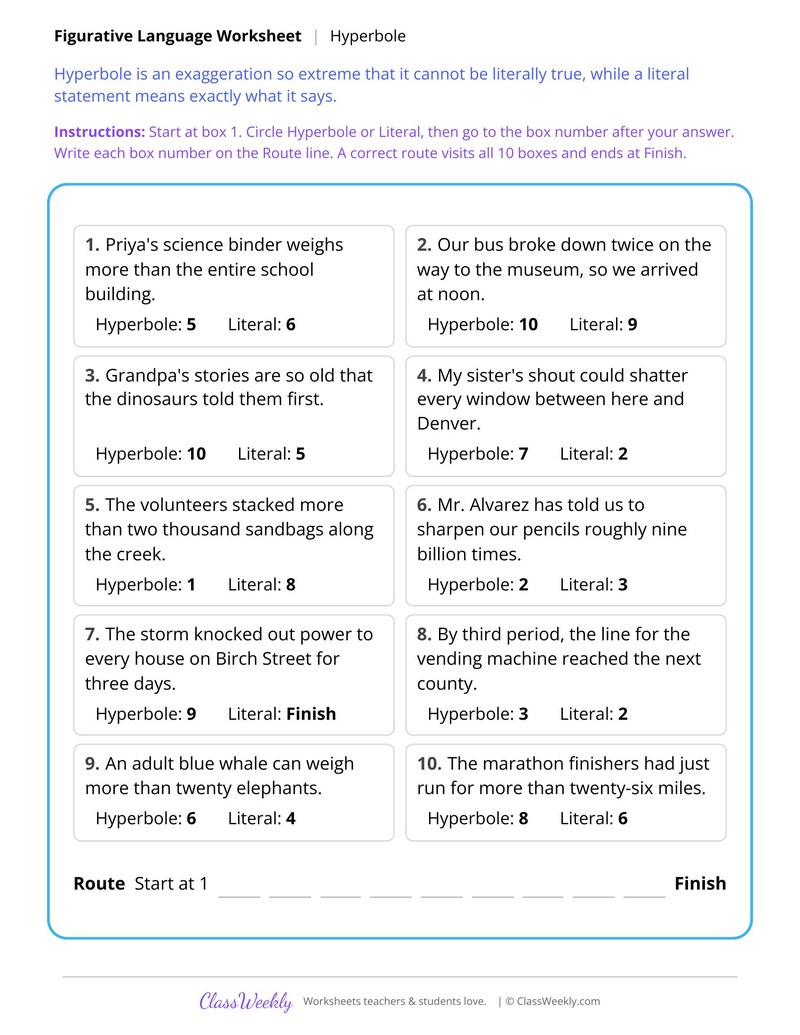
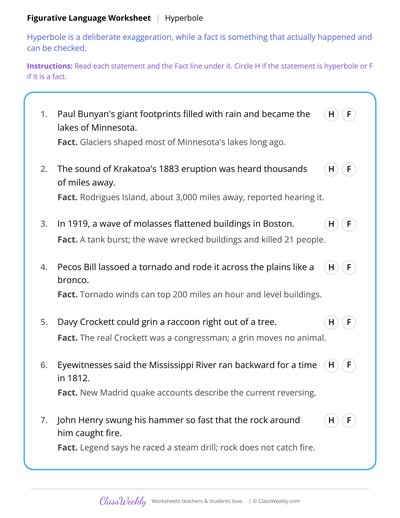
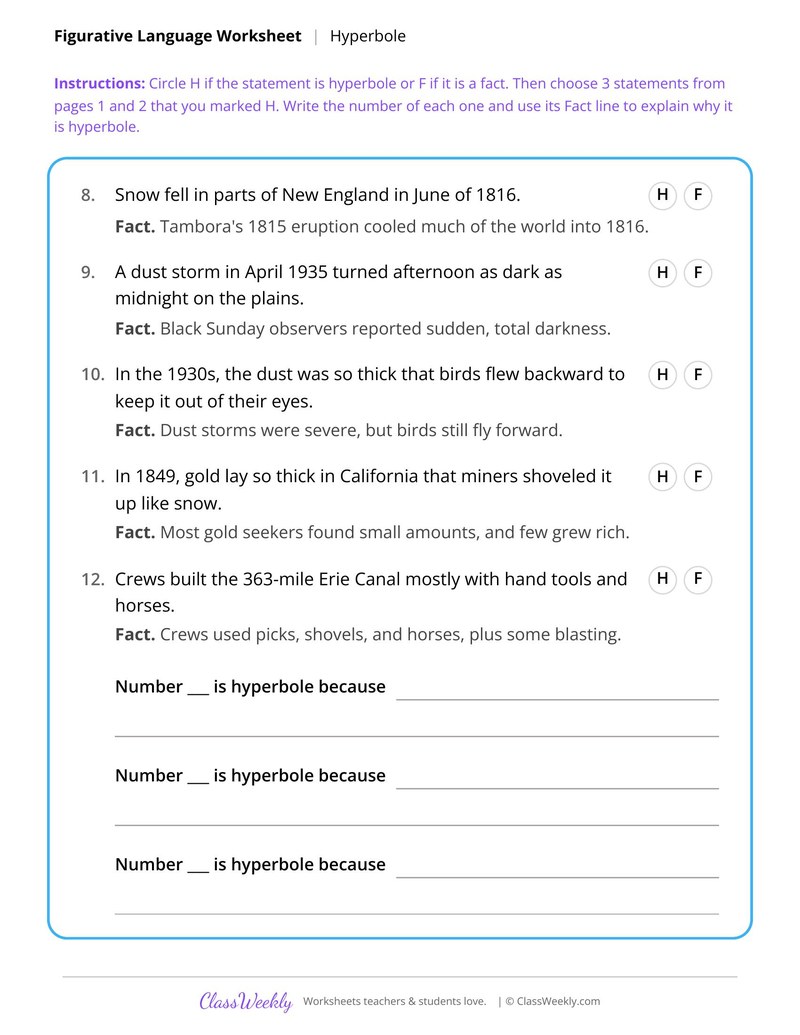
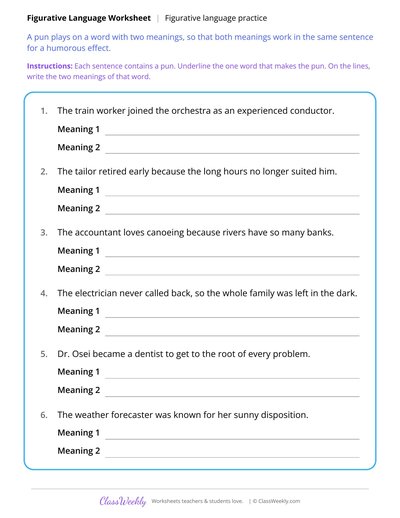
- Students will decide whether each detail is foreshadowing or plain description.
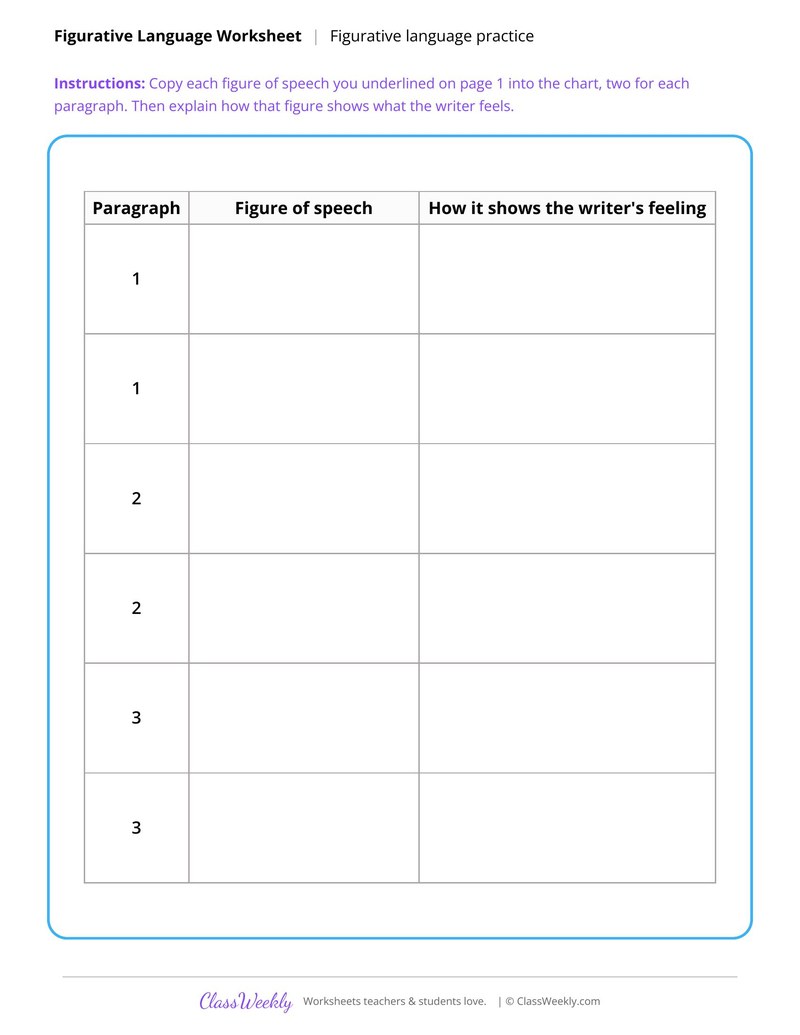
- Students will list the details marked as foreshadowing.
- Students will explain what each hint suggests and what happens later.
Curriculum Links
Common Core State Standards
Reading: Literature · 7th Grade
Standard: Analyze how particular elements of a story or drama interact (e.g., how setting shapes the characters or plot).
View all RL.7.3 worksheets →Find this in the curriculum
Browse the grade, subject, and topic this belongs to.
FAQ
How do I use this literary devices worksheet?
⌄
Teach allusions first, then archetypes, then foreshadowing and irony. Use the archetype cards and the terms reference with a novel the class is reading.
What does this worksheet teach?
⌄
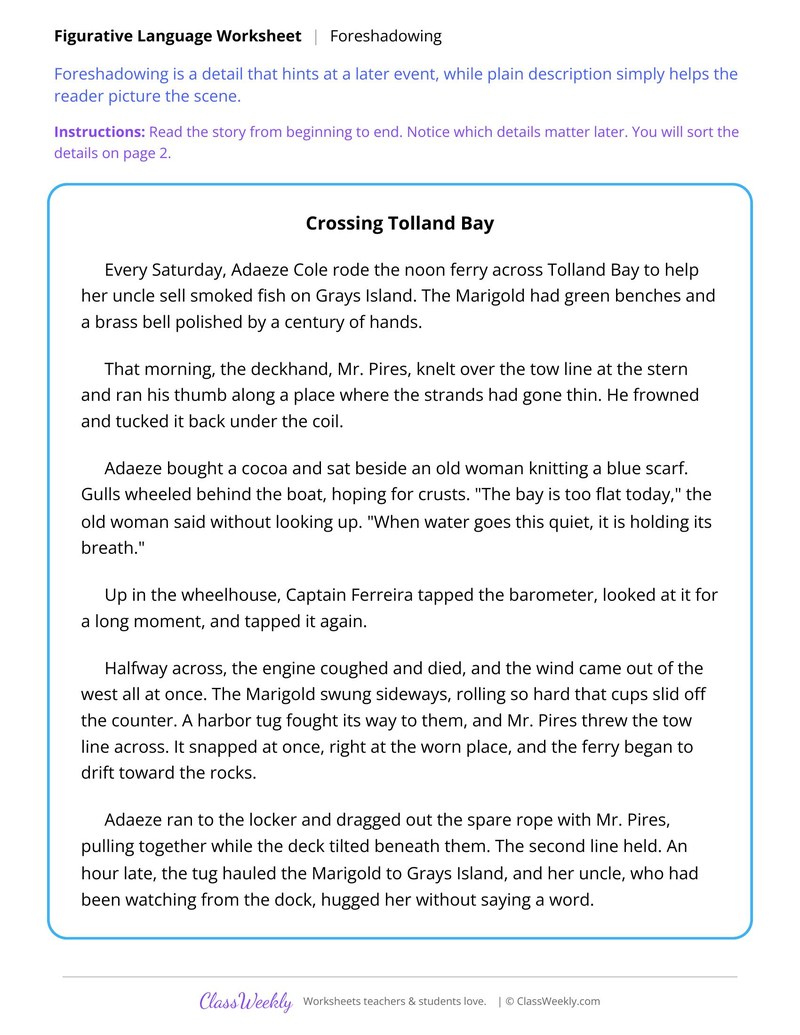
Sort details from a ferry crossing story into foreshadowing or plain description. Foreshadowing is a detail that hints at a later event, while plain description simply helps the reader picture the scene. The directions on the page read: Read the story from beginning to end. Notice which details matter later. You will sort the details on page 2. An answer key is included.
Can I use this literary devices worksheet for homeschool or classroom?
⌄
Yes, both. We made it for 7th grade figurative language, and it works the same at home or at school. At home, a student can work through it alone and then go over it with you, which shows quickly what is solid and what needs another look. In class it works as independent practice, homework or a warm-up, and you can print one copy or a full set.
What is an archetype in literature?
⌄
An archetype is a recurring character type or plot pattern found in stories from many times and cultures. The character sheets cover the innocent, explorer, rebel, shadow, herald and shapeshifter. The plot sheets cover the quest, rags to riches, voyage and return, overcoming the monster and rebirth.
What are the six stages of a quest?
⌄
The quest sheet lists the call, setting out, the helper, the trials, the goal and the return. Students read a story about a valley clinic nurse and write what happens at each stage. The stage list is printed on page 1 as a reference.
What are the three kinds of irony?
⌄
Verbal irony says the opposite of what is meant, situational irony is an outcome opposite to what was expected, and dramatic irony lets readers know what a character does not. Students circle V, S or D for each scene. They then write what was expected, said or believed and what is actually true.
How do students find foreshadowing clues?
⌄
Students read a story and look for a warning, an odd detail or a shift in mood or behavior. Three stories use a science fair, a chess tournament and a ferry crossing. On each, students explain what the clue hints at and how the ending shows it.
Ratings & Reviews
No reviews yet. Be the first to share what you think.
Reviews are for ClassWeekly members.
Make a Request
Spotted something to fix, or want a worksheet we don't have yet? Tell us and we'll make it.
Worksheet Details
| Grade | 7th Grade |
| Subject | Vocabulary |
| Topic | Figurative Language |
| Standard | RL.7.3 |
| Pages | 2 pages |
| Difficulty | Medium |
What is ClassWeekly?
ClassWeekly offers free worksheets and printable learning resources for kids, from preschool up. All worksheets are aligned to Common Core, NGSS, and C3 Framework standards and designed by educators. Become a member to access the full library and download unlimited PDFs.