
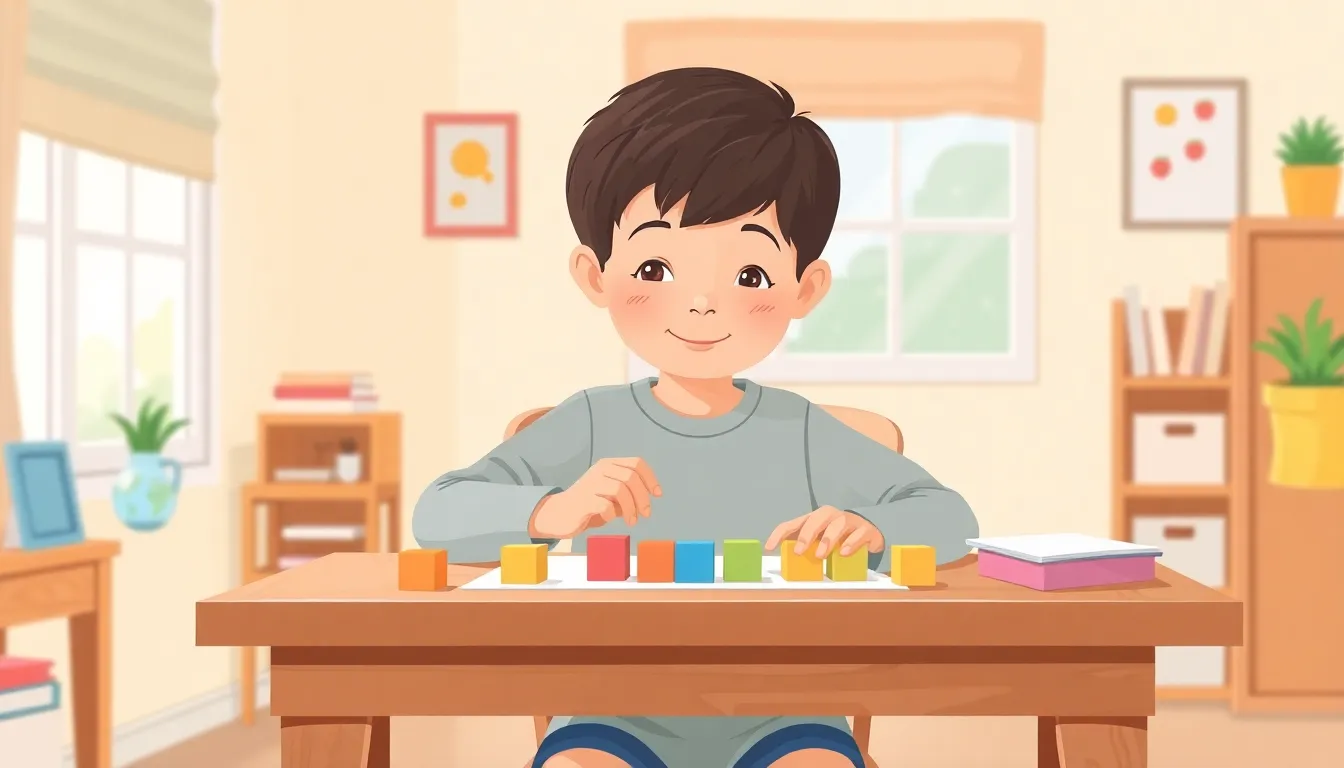
Homeschool 2nd Grade Math: Teaching Multiplication
Get 30 days of free worksheet downloads
Key Takeaways
- Multiplication starts as repeated addition in second grade, not memorized times tables, and that order really matters.
- Arrays (rows and columns of objects) give kids a visual model that makes multiplication click faster than numbers alone.
- The tables of 2, 5, and 10 come first because their skip counting patterns are the easiest for kids to hear and remember.
- Missing factor problems (2 times __ = 8) build the same backward thinking kids need for division later on.
Multiplication is a genuinely exciting milestone in second grade. After two years of addition and subtraction, kids finally get a new operation, and there's something satisfying about watching them realize it's really just addition in a faster outfit.
We tell homeschool parents all the time: don't rush to times tables and flashcards. The kids who understand multiplication deeply, not just recite it, are the ones who spent real time with arrays and repeated addition first.
Here's the order that tends to work best for building real multiplication sense in second grade.
Free 2nd Grade Multiplication Worksheets


What 2nd Grade Multiplication Actually Covers
The unit opens with the meaning of multiplication itself, framing it as repeated addition: 3 times 4 means three groups of four, or 4 + 4 + 4. This framing matters enormously, because kids who see multiplication as "just another kind of adding" adapt to it far more easily than kids who are handed an abstract new symbol with no context.
Multiplication sentences follow, teaching kids to read and write equations like 3 x 4 = 12 using the vocabulary they'll need going forward. Rows, columns, and arrays introduce the visual model: objects arranged in a grid, where counting the rows and columns shows the multiplication happening in real time. Multiplication with arrays builds directly on this, using the array picture to solve actual problems.
From there, kids move into specific times tables, starting with the tables of 2 and 3, then 5 and 10. These particular tables come first because of their skip counting patterns, most kids can already count by 2s, 5s, and 10s before multiplication formally starts, so the times tables feel like a natural extension rather than brand new information.
Tables 2 through 5 practice and tables 2, 5, 10 practice give kids mixed review across these early tables, building speed and confidence. Finally, missing factor problems appear for both the table of 2 and the table of 5, like 2 times __ = 10, which ask kids to work backward from a known product to find the missing number being multiplied.
How to Teach It Step by Step
Step 1: Build the repeated addition connection first. Show your child 3 groups of 4 blocks and have them add 4 + 4 + 4 before ever writing 3 x 4. The multiplication symbol should feel like shorthand for something they already know how to do.
Step 2: Move to arrays using real objects. Arrange counters, buttons, or cereal pieces into rows and columns. Have your child count rows, count columns, then count the total, connecting all three numbers in the multiplication sentence.
Step 3: Practice the table of 2 through skip counting. Since most kids already skip count by 2s, connect that existing skill directly to 2 x 1, 2 x 2, 2 x 3, and so on. Do the same for the table of 5 and table of 10.
Step 4: Mix tables 2, 5, and 10 together for review. Once each table is solid on its own, practice them mixed up. This is where real fluency starts to show, since kids can no longer rely on momentum from counting in order.
Step 5: Introduce missing factor problems using arrays your child can still see. Show an array with one dimension covered up and ask "how many columns must there be if there are 10 total and 2 rows?" This keeps the missing factor concept visual before it becomes purely numerical.
Common Mistakes and How to Know They've Got It
The most common mistake is kids memorizing a times table in order (2, 4, 6, 8, 10) but freezing when asked an out of order question like "what's 2 times 7." That's a sign they've memorized a sequence, not the underlying multiplication facts. Mixed practice, not just the table in order, is the fix.
Missing factor problems are the other sticking point. Kids often try to guess and check randomly instead of using what they know about the times table. Redirect them back to skip counting: "count by 5s until you reach 20, how many times did you count?"
You'll know your child has mastered second grade multiplication when they can explain what a multiplication sentence means in their own words, not just calculate the answer. A child who says "3 times 4 means 3 groups of 4 things" understands it. A child who only says "12" might just have a memorized fact without the concept behind it.
FAQ
Should my 2nd grader memorize times tables, or understand the concept first? Concept first, always. If a child memorizes that 3 times 4 equals 12 without understanding it means three groups of four, they'll struggle the moment a problem looks different from what they memorized. Build the meaning with arrays and repeated addition, then let memorization follow naturally from repeated practice.
Why do we start with the 2, 5, and 10 times tables specifically? These three tables have the most predictable skip counting patterns. Counting by 2s, 5s, and 10s is something kids often already do before formal multiplication starts, so these tables connect to a skill they already have rather than asking them to learn something completely new.
What's the point of teaching arrays if my child can just multiply the numbers? Arrays are the visual proof behind the numbers. A child who can multiply 4 times 3 but can't draw or picture what that looks like as rows and columns doesn't have a deep understanding yet, just a memorized fact. Arrays also directly connect to how multiplication is taught in later grades with area models.
How do I teach missing factor problems like 5 times __ = 20? Connect it to the times table your child already knows by asking them to count up the multiples of 5 until they hit 20, then count how many groups of 5 that took. This builds toward division thinking, since a missing factor problem is really a division problem in disguise.
Keep Reading
Multiplication is a fun one to teach precisely because kids can feel themselves leveling up. Let the arrays and skip counting do the heavy lifting early on, and the times tables will start feeling like old friends instead of a wall to climb. 😊

Adi Ackerman
Head Teacher
Adi is the Head Teacher at ClassWeekly, with years of experience teaching elementary students. She designs our curriculum-aligned worksheets and writes practical guides for teachers and parents.
Keep Reading
Ready to download? Try ClassWeekly free for 30 days.
Unlimited worksheets for PreK through 5th grade. Cancel anytime.