
Homeschool Kindergarten Grammar: Teaching Prepositions
Get 30 days of free worksheet downloads
Key Takeaways
- Prepositions of place, words like in, on, under, and behind, are the easiest entry point since they describe something a child can physically demonstrate.
- Acting out location with real objects works better for this skill than any worksheet alone, because prepositions describe relationships kids can move through.
- Simple sentences using one preposition at a time keep the focus on the word itself instead of getting lost in a complicated sentence.
- Writing practice with prepositions should come after a child can confidently use them out loud in conversation.
Prepositions are one of those grammar topics that sound intimidating on paper but turn out to be some of the easiest, most physical fun a kindergartner can have. In, on, under, behind: these are words your child already uses correctly in everyday conversation, they just don't know the label for them yet.
That's actually the best part about teaching prepositions this early. You're not introducing a brand new concept, you're naming something your child already understands intuitively and giving them a little more control over it in their own sentences and early writing.
Here's how we like to build preposition skills in a kindergarten homeschool, keeping things hands-on and moving before ever picking up a pencil.
Free Kindergarten Prepositions Worksheets


What Prepositions Cover at This Level
Prepositions of place make up almost the entire kindergarten preposition curriculum, and that's exactly right for this age. Words like in, on, under, behind, next to, and between describe location, something a five-year-old can act out with their own body or a toy.
Location as a broader concept ties directly in. A basic preposition worksheet often shows a picture, like a cat on a chair or a ball under a table, and asks a child to pick or write the correct word describing where the object is.
Sentences using prepositions come next, once the individual words feel comfortable. This might be as simple as "The dog is ___ the box," with a picture providing the answer. Keeping it to one preposition per sentence at this stage avoids overwhelming a child with too many moving parts.
Writing practice with prepositions is the final layer, and it should come after plenty of spoken practice. Even something as short as labeling a simple picture with "The cat is on the bed" is a solid win at this age.
How to Teach It Step by Step
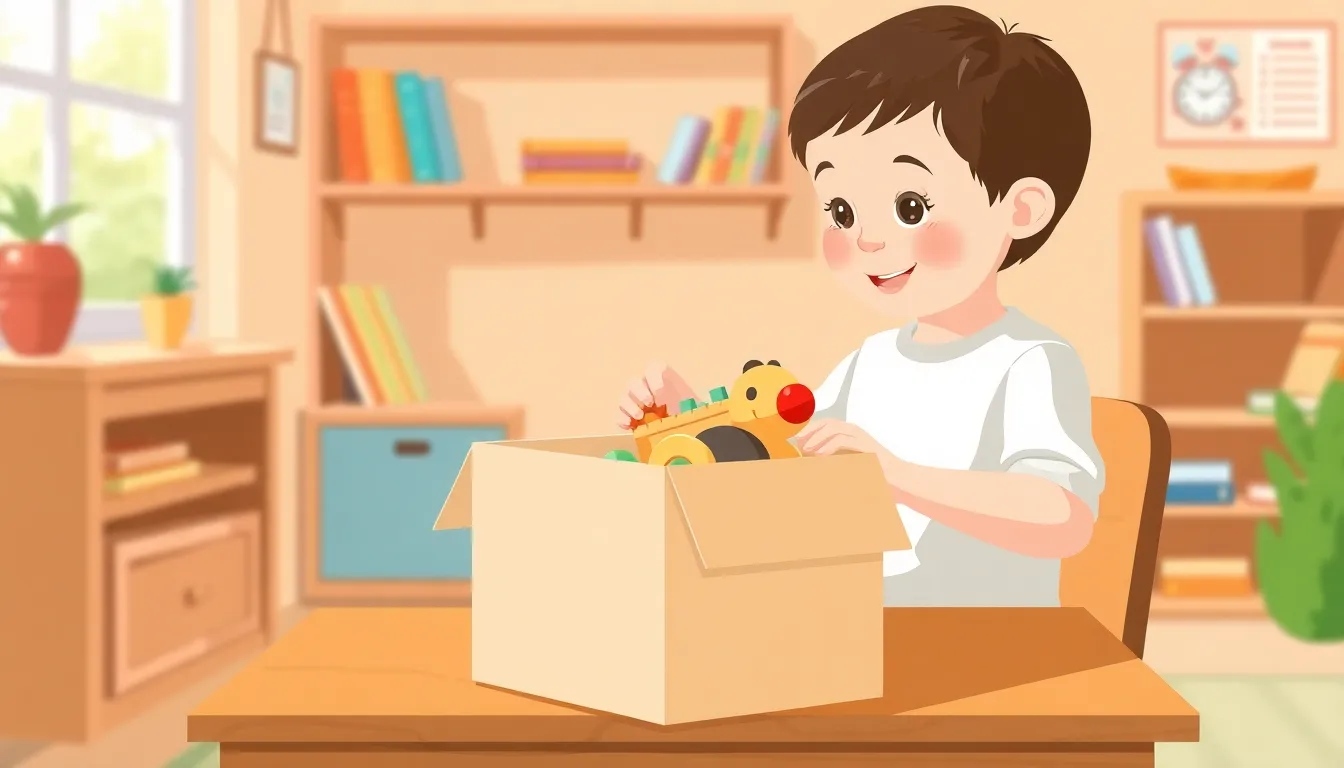
Step 1: Use a toy and a container to demonstrate physically. Put a small toy in a box, then on the box, then under the box, then behind the box, saying the preposition clearly each time. Let your child take a turn moving the toy while you say the word, then reverse roles.
Step 2: Play a simple following-directions game. Tell your child "put the book under the table" or "stand behind the chair," and watch to make sure they respond correctly. This checks understanding without any pencil involved yet.
Step 3: Move to pictures once the physical version feels easy. Show a picture and ask "where is the ball?" letting your child answer out loud using the preposition correctly.
Step 4: Introduce simple one-preposition sentences. Fill-in-the-blank style works well here: "The bird is ___ the tree," with a picture showing the answer.
Step 5: Add writing once speaking feels solid. Have your child label a simple drawing or fill in a short sentence in writing, using a preposition they've already mastered out loud.
What Mastery Looks Like
A kindergartner has really got this when they can correctly follow a two-step direction involving a preposition, like "put the crayon in the cup and next to the paper," without needing the words repeated or demonstrated.
A second sign is spontaneous, correct use in everyday talk, saying things like "my shoes are under the bed" without being prompted or corrected. That natural, unprompted use tells you the concept has moved past worksheet practice and into real understanding.
If your child mixes up similar prepositions, like confusing "behind" and "next to," don't worry, this is common and usually clears up with more physical demonstration rather than more written correction. Go back to the toy-and-box game for a quick refresher whenever confusion pops up.
FAQ
What are prepositions and why do kindergartners need to learn them? Prepositions are small words like in, on, under, and behind that describe where something is in relation to something else. Kindergartners need them because they show up constantly in everyday sentences and in the simple stories kids are starting to read.
What's the easiest way to introduce prepositions to a five-year-old? Use a small toy and a box. Put the toy in the box, on the box, under the box, and behind the box, naming the preposition out loud each time. Physical demonstration works far better than a definition at this age.
How many prepositions should I teach at once? Stick to two or three at a time, usually starting with in, on, and under since they're the most common and the easiest to physically demonstrate. Add more, like behind, next to, and between, once those first few feel solid.
My child understands prepositions out loud but struggles with them in writing. Is that a problem? Not at all, that's the expected order at this age. Speaking comes before writing for almost every language skill in kindergarten, so keep building oral confidence and let the written practice follow naturally.
Keep Reading
Prepositions are one of those rare grammar topics you can teach entirely by playing, no worksheet required at first. Grab a toy, a box, and a little patience, and your kiddo will be using these words correctly before they even realize they're learning grammar 😊

Adi Ackerman
Head Teacher
Adi is the Head Teacher at ClassWeekly, with years of experience teaching elementary students. She designs our curriculum-aligned worksheets and writes practical guides for teachers and parents.
Keep Reading
Ready to download? Try ClassWeekly free for 30 days.
Unlimited worksheets for PreK through 5th grade. Cancel anytime.