Career Research Organizer
Written by Adi Ackerman, Head Teacher
"Career Research Organizer" is written for 7th Grade (Ages 12-13), and it covers Common Core W.7.7. It also works a grade below or above, as a tool for a student who is ready for it or a quick refresher for an older one.
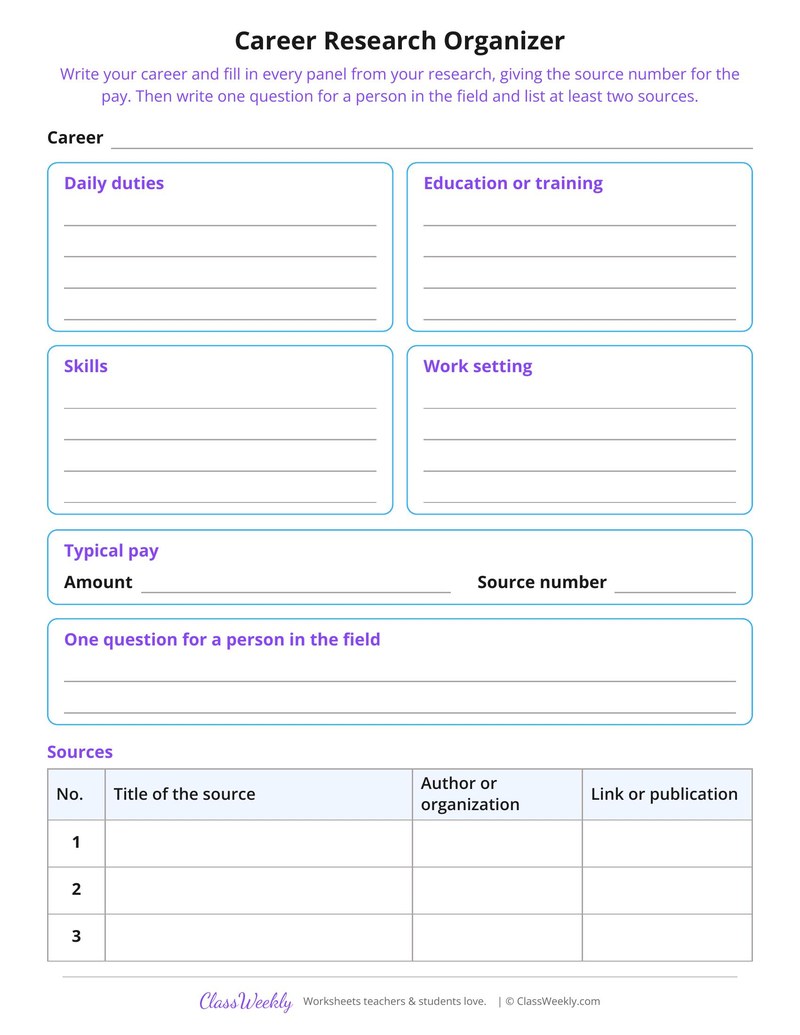
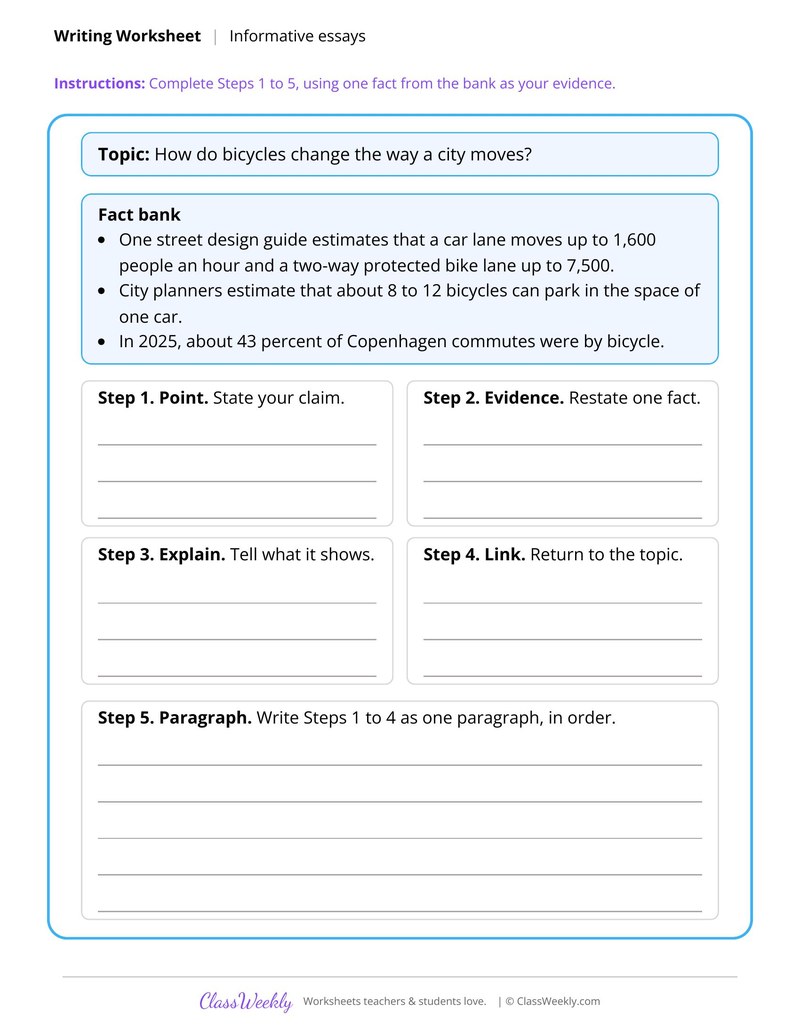
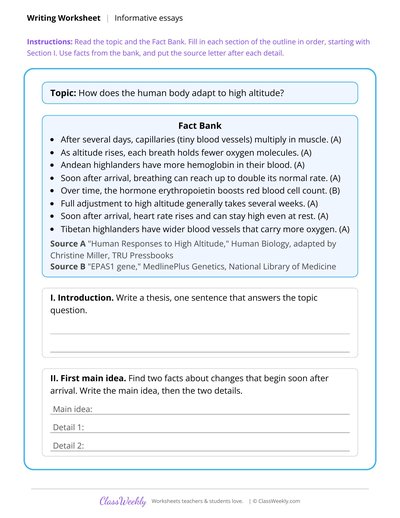
7th grade grammar resource: record a career's duties, training, skills and pay with sources, plus one question for a person in the field. Part of our research and citations informative writing collection. Aligned to Common Core standards.
How do I use this resource?
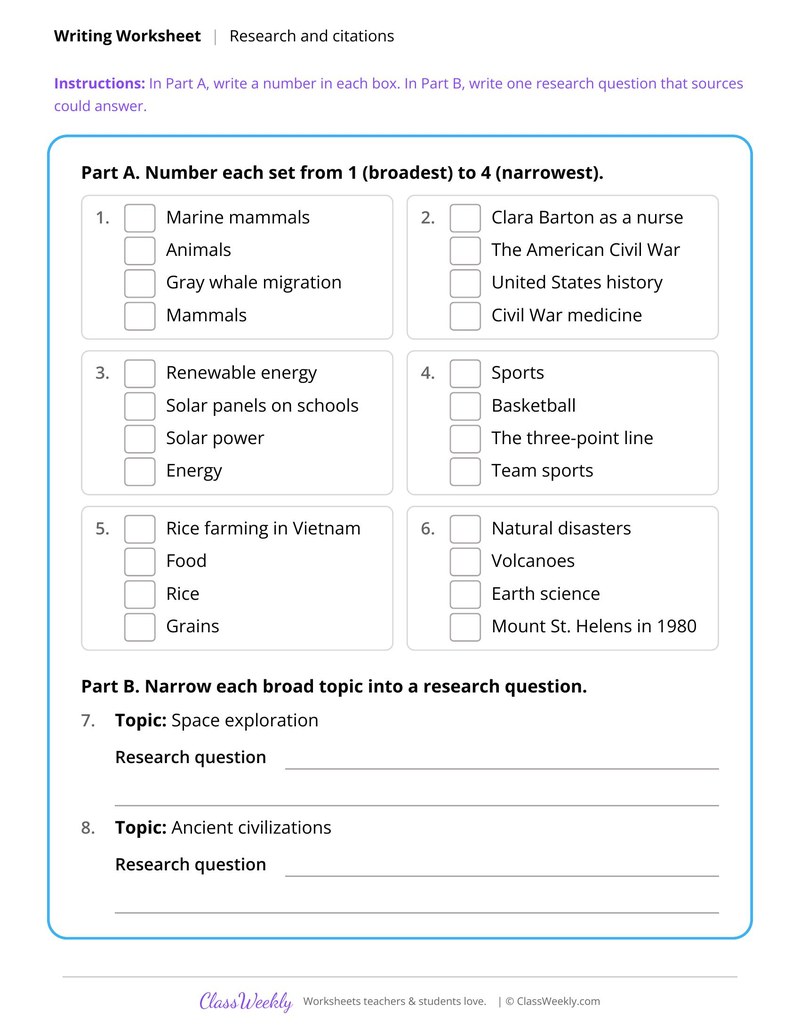
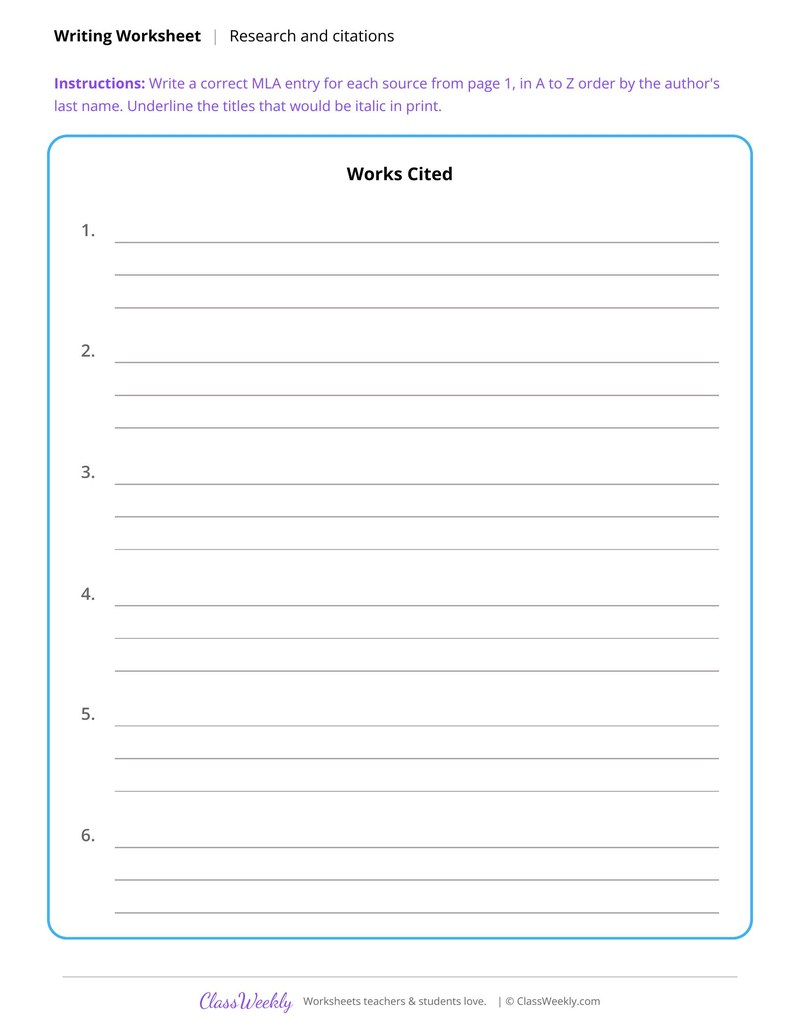
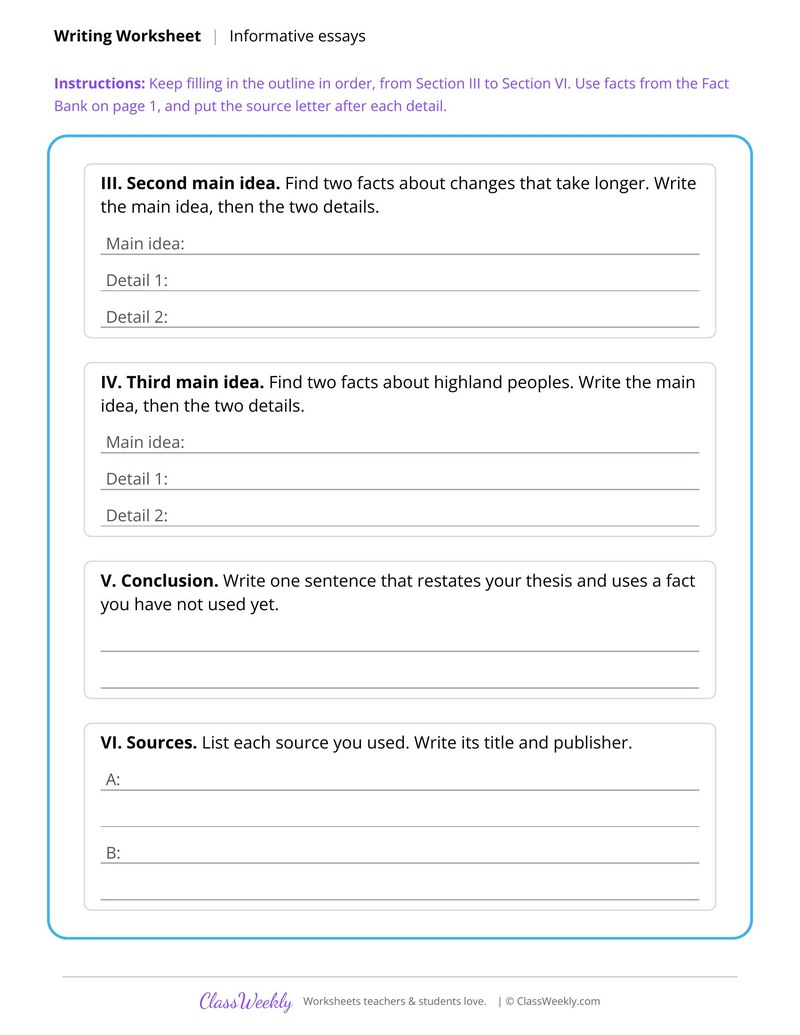
Use the topic narrowing sheet first, then the note taking and paraphrase pages while students research. Pull out the credibility checklist and Works Cited sheet when they choose and cite sources.
What students will practice
- Students will record a career's daily duties, education, skills and work setting.
- Students will note typical pay and the number of the source that gave it.
- Students will write a question for a person in the field and list at least two sources.
Curriculum Links
Common Core State Standards
Writing · 7th Grade
Standard: Conduct short research projects to answer a question, drawing on several sources and generating additional related, focused questions for further research and investigation.
View all W.7.7 worksheets →Find this in the curriculum
Browse the grade, subject, and topic this belongs to.
FAQ
How do I use the Career Research Organizer?
⌄
Use the topic narrowing sheet first, then the note taking and paraphrase pages while students research. Pull out the credibility checklist and Works Cited sheet when they choose and cite sources.
What is the Career Research Organizer?
⌄
Record a career's duties, training, skills and pay with sources, plus one question for a person in the field.
Can I use the Career Research Organizer at home and in the classroom?
⌄
Yes. We made it for 7th Grade informative writing, and it works the same at home or at school. At home a student can print it and keep it with their school work. Teachers print a copy per student or one for the whole room, whichever the day needs.
How do you paraphrase a source?
⌄
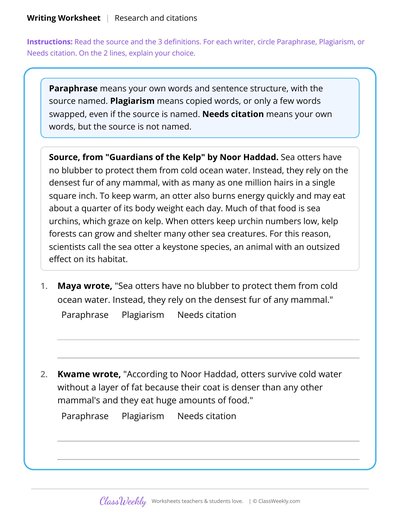
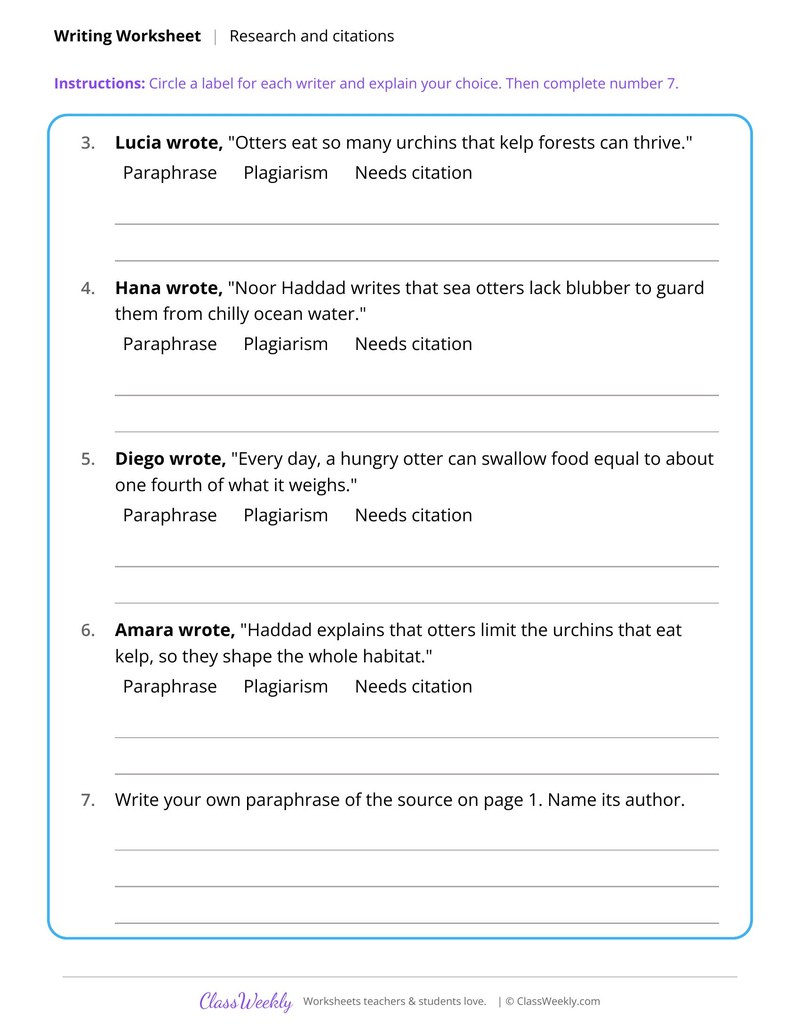
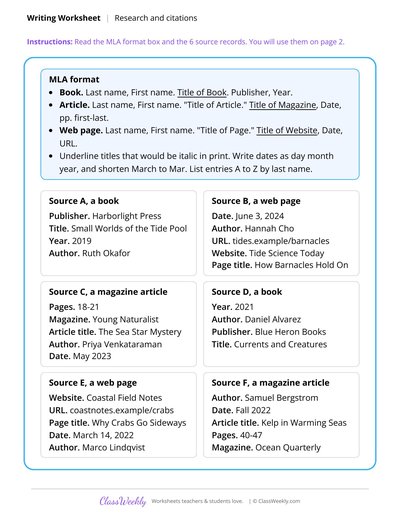
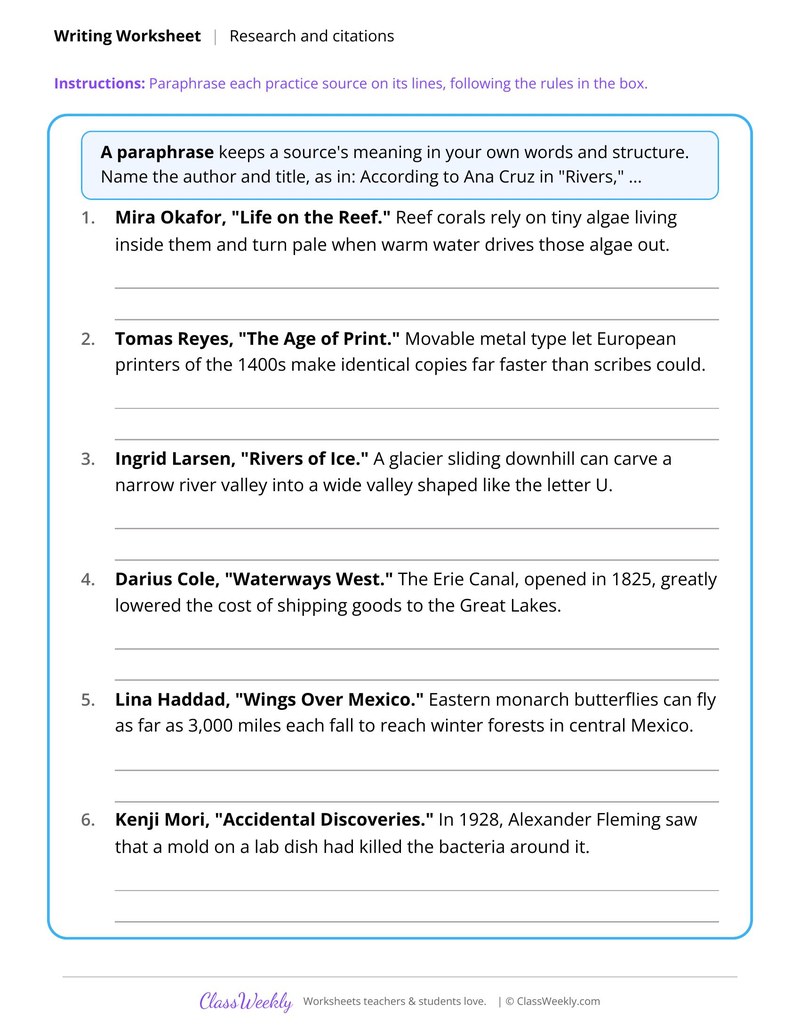
Keep the source's meaning but use your own words and sentence structure, and name the author and title. Paraphrase Research Notes in Your Own Words gives sources on reef coral, printing, glaciers and the Erie Canal to restate.
How do you know if a source is credible?
⌄
Check the author's expertise, the publisher, the date, the purpose, the evidence and whether other sources agree. Source Credibility Checklist for Two Sources lays these out so students can compare two sources side by side.
How do you take research notes without plagiarizing?
⌄
Put exact words in quotation marks and paraphrase everything else, and record the source number for each note. Research Notes With Quote and Paraphrase Columns has five columns for this.
Which sheets here have answer keys?
⌄
4 of the 7 do: Narrow a Topic From Broad to Specific, Paraphrase or Plagiarism?, Build a Works Cited Page and Paraphrase Research Notes in Your Own Words. The three tools are for students' own research.
Ratings & Reviews
No reviews yet. Be the first to share what you think.
Reviews are for ClassWeekly members.
Make a Request
Spotted something to fix, or want a worksheet we don't have yet? Tell us and we'll make it.
Worksheet Details
| Grade | 7th Grade |
| Subject | Grammar & Writing |
| Topic | Informative Writing |
| Standard | W.7.7 |
| Pages | 1 page |
| Difficulty | Medium |
What is ClassWeekly?
ClassWeekly offers free worksheets and printable learning resources for kids, from preschool up. All worksheets are aligned to Common Core, NGSS, and C3 Framework standards and designed by educators. Become a member to access the full library and download unlimited PDFs.