Shade a Path of Values Equal to One Eighth
Written by Adi Ackerman, Head Teacher
"Shade a Path of Values Equal to One Eighth" is written for 8th Grade (Ages 13-14), and it covers Common Core 8.EE.A.1. A 7th grader who is already steady on exponents can use it too, and an older student can use it as a short review.
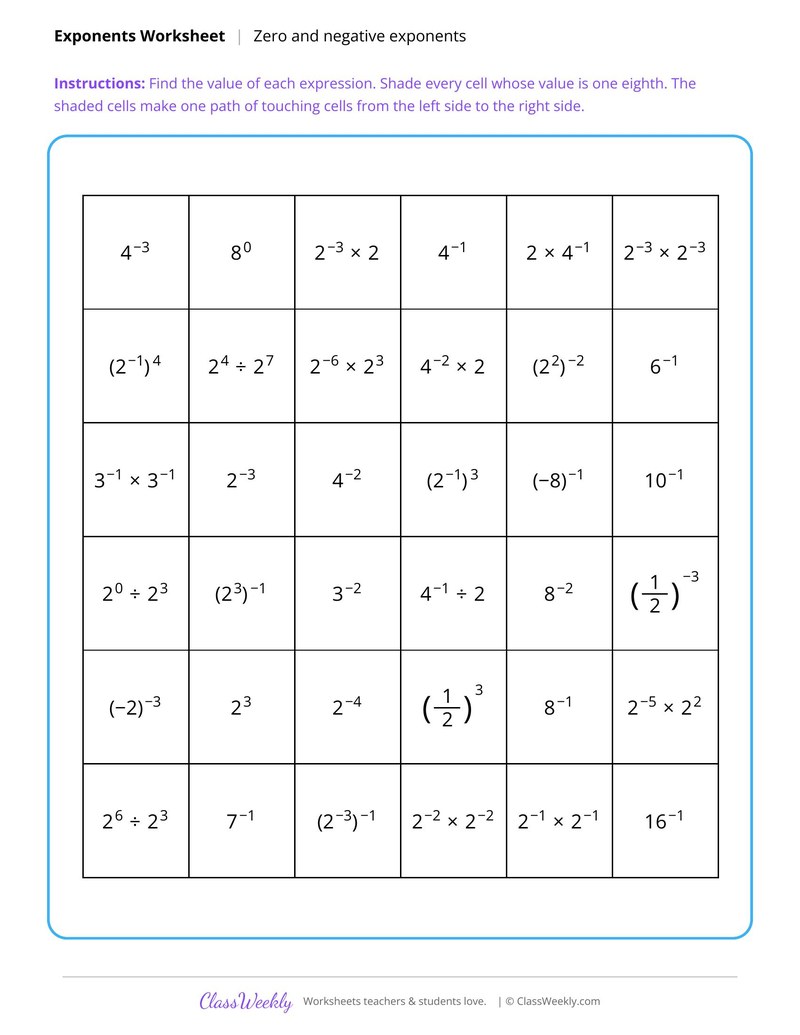
8th grade math worksheet: evaluate cells like 2⁻³ and (2⁻¹)³ and shade every one equal to one eighth to make a path. Answer key included. Part of our zero and negative exponents collection. Aligned to Common Core standards.
How do I use this worksheet?
Begin with Evaluate Zero and Negative Exponents so students see values as fractions. Then move to rewriting and variable expressions, and use the one eighth path as a check.
What students will practice
- Students will evaluate powers with zero and negative exponents.
- Students will recognize different expressions that equal one eighth.
- Students will shade a path of touching cells from the left side to the right.
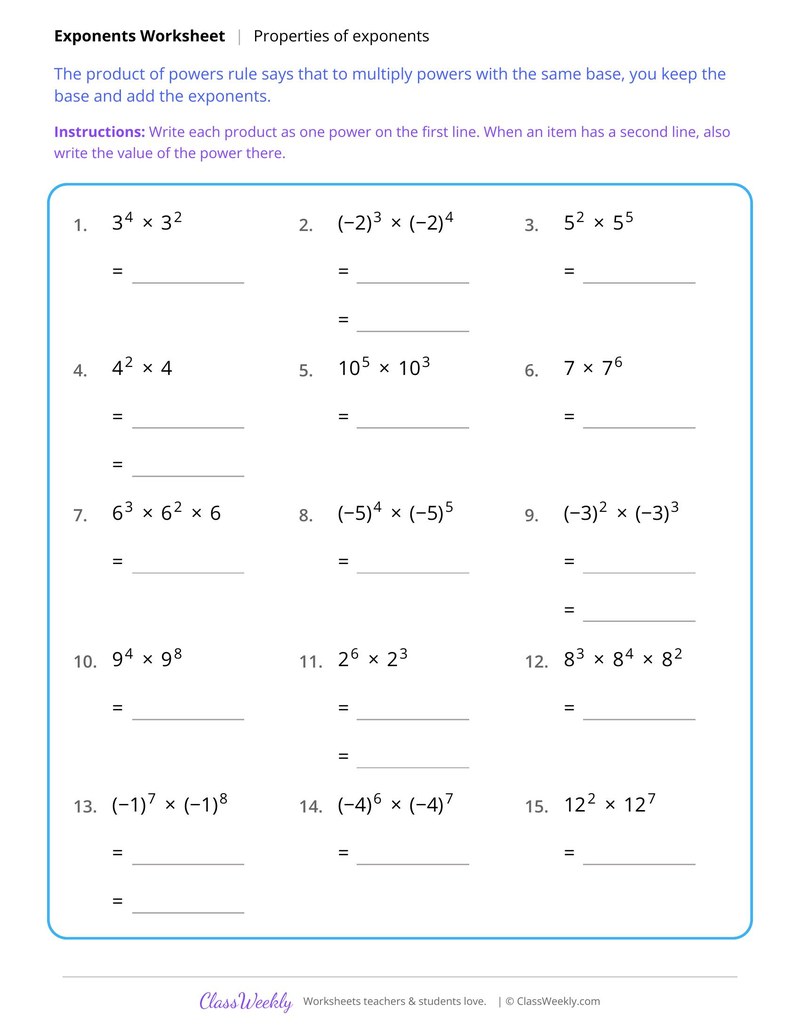
Product of Powers With Integer Bases
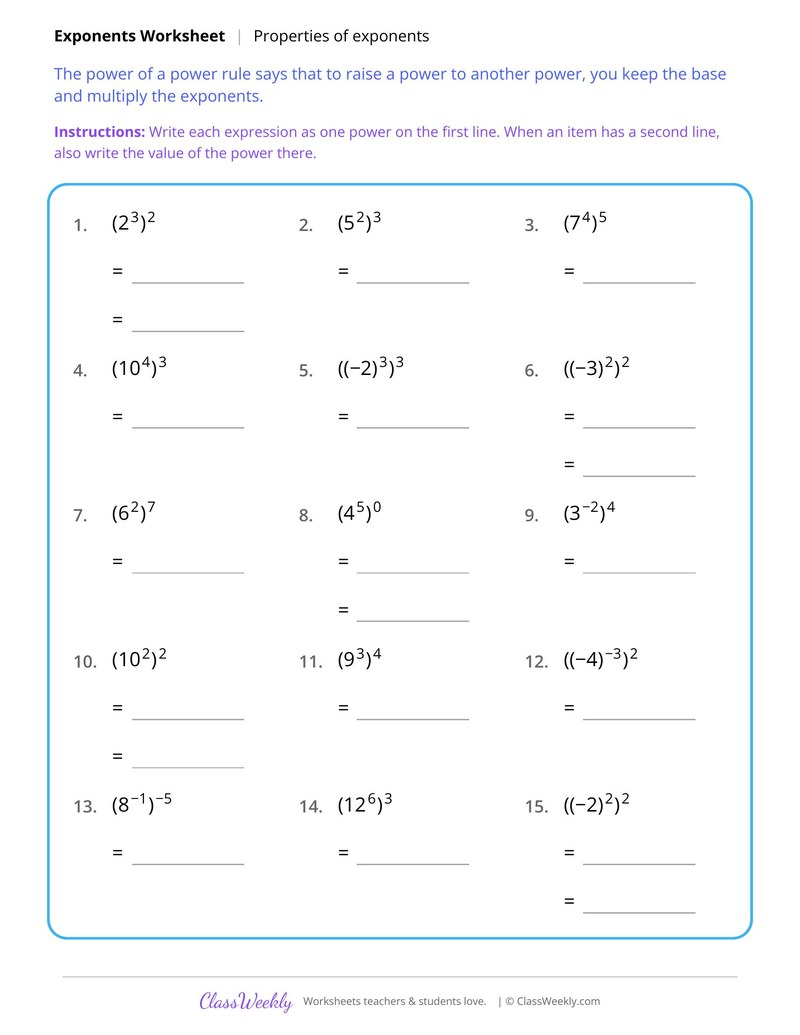
Power of a Power Property Practice
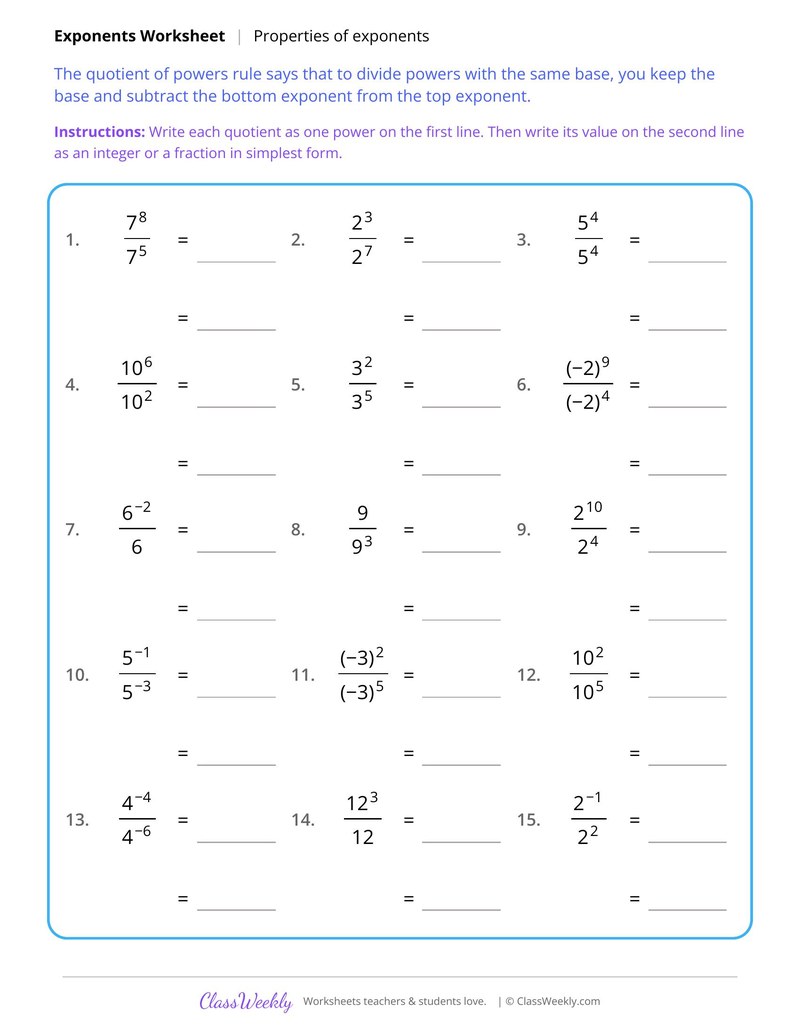
Quotient of Powers Property Practice
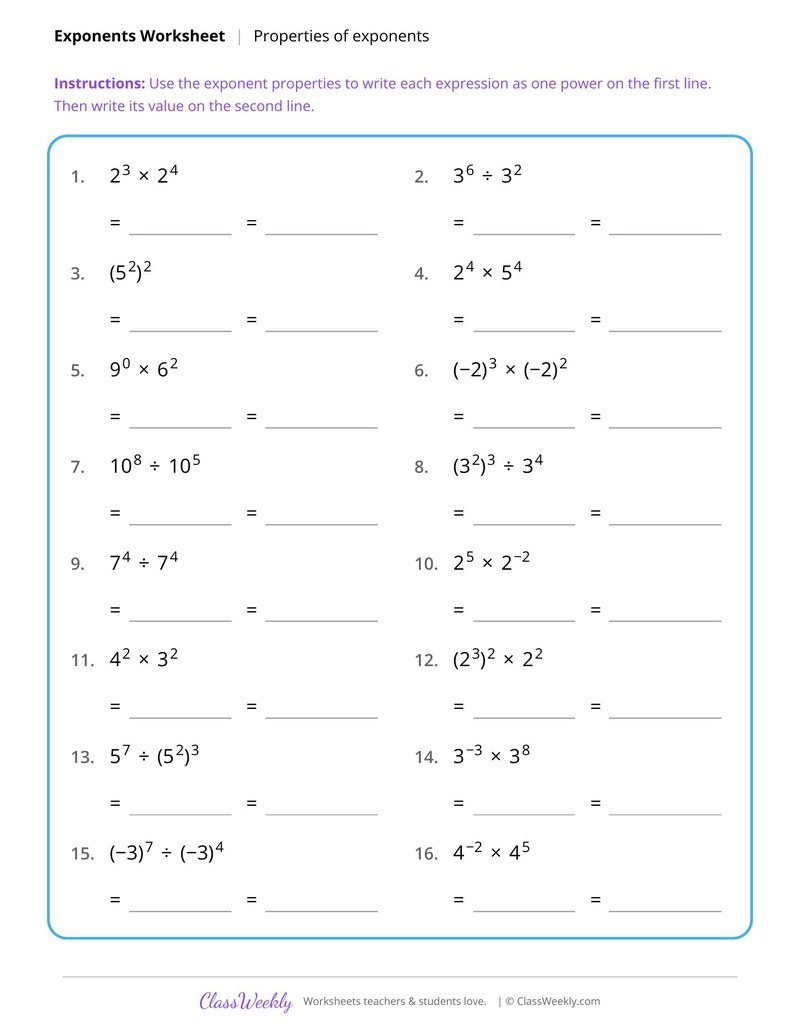
Apply All Exponent Properties, Numeric Bases
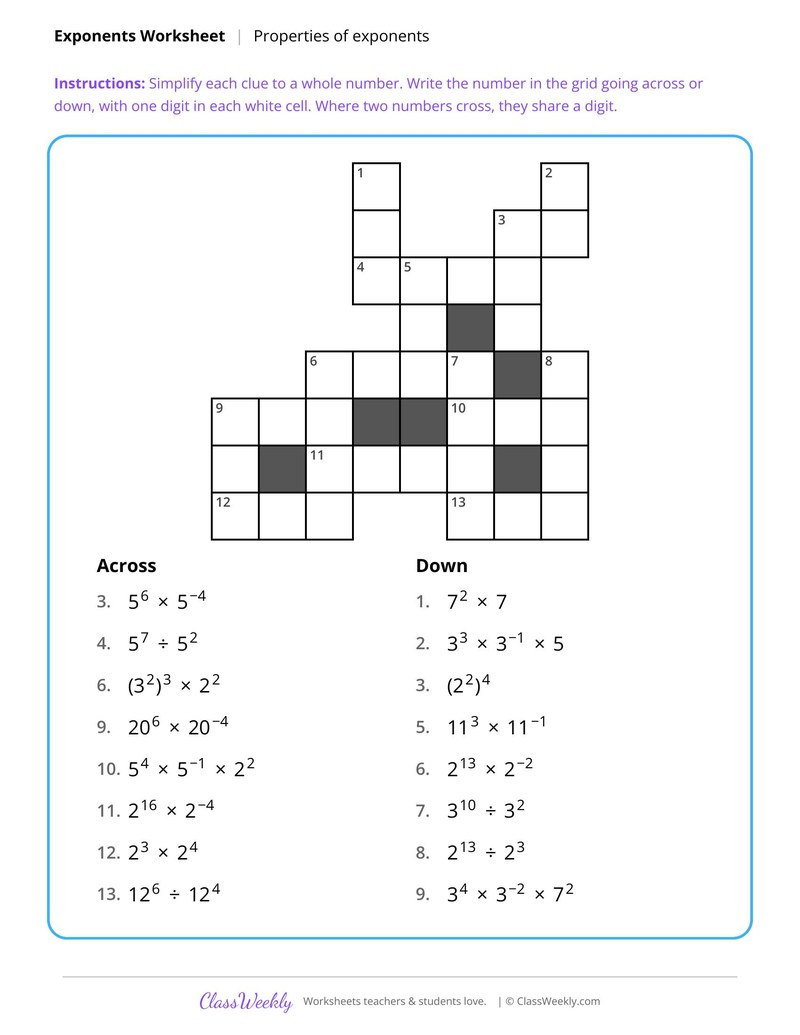
Exponent Properties Cross-Number Puzzle
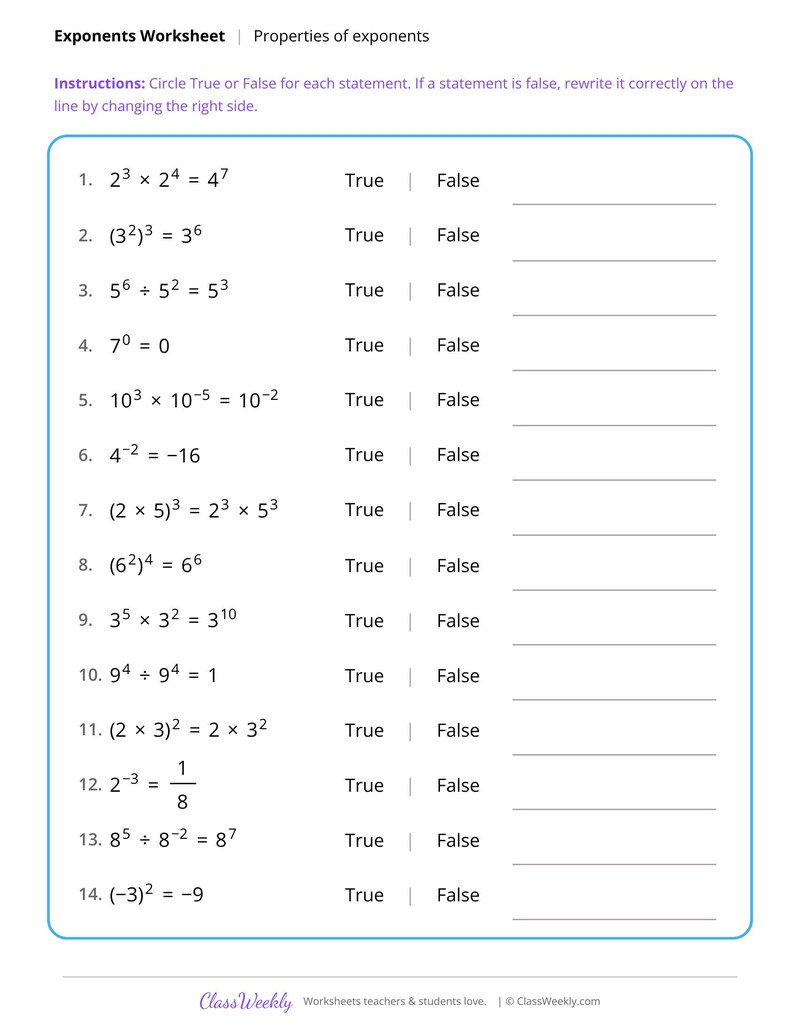
True or False, Exponent Property Statements
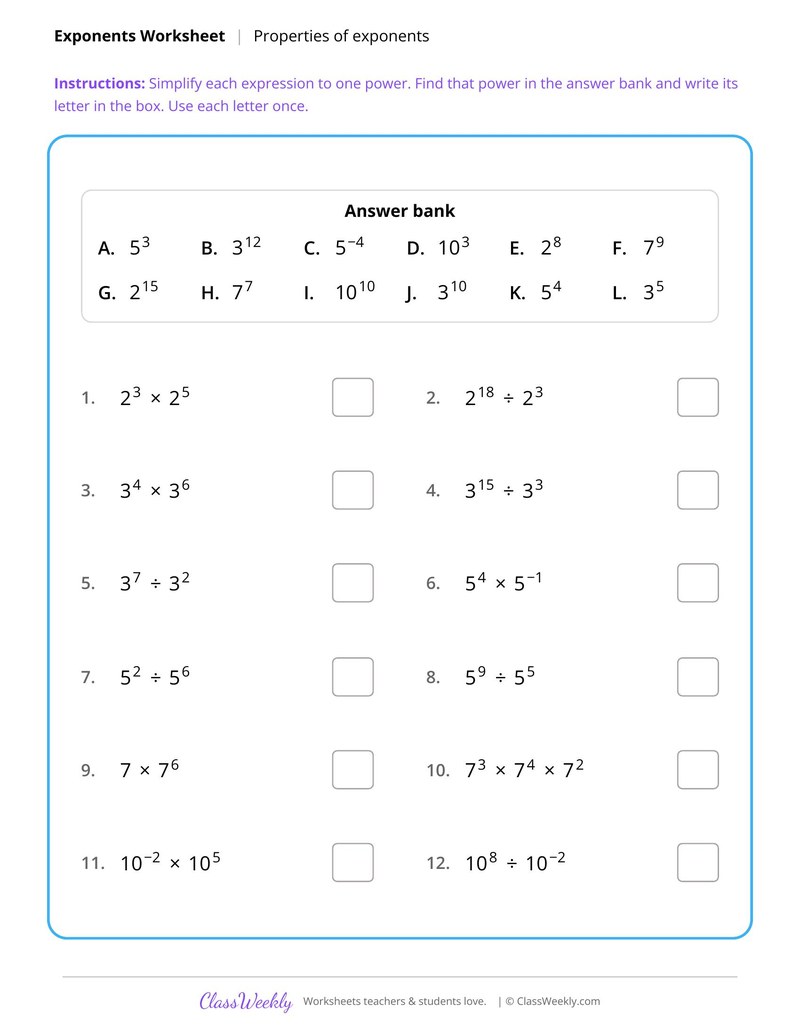
Match Products and Quotients of Powers
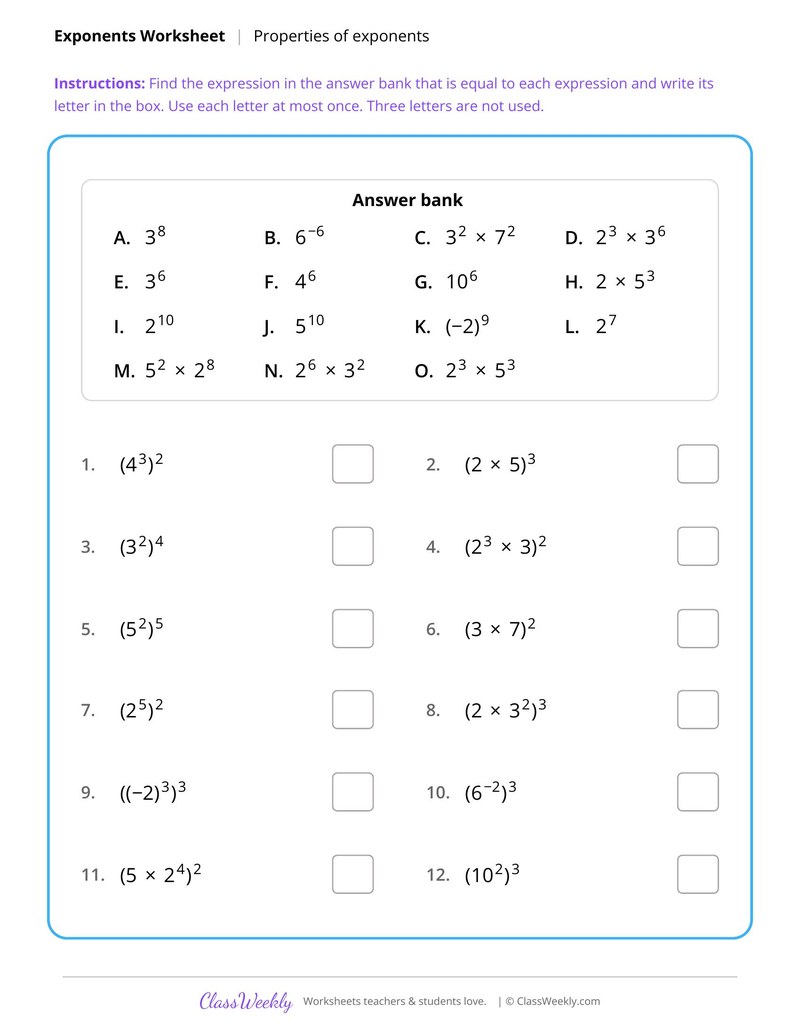
Match Powers of Powers and Products
Curriculum Links
Common Core State Standards
Expressions and Equations · 8th Grade
Standard: Know and apply the properties of integer exponents to generate equivalent numerical expressions.
View all 8.EE.A.1 worksheets →Find this in the curriculum
Browse the grade, subject, and topic this belongs to.
FAQ
How do I use this zero and negative exponents worksheet?
⌄
Begin with Evaluate Zero and Negative Exponents so students see values as fractions. Then move to rewriting and variable expressions, and use the one eighth path as a check.
What does this worksheet teach?
⌄
Evaluate cells like 2⁻³ and (2⁻¹)³ and shade every one equal to one eighth to make a path. The directions on the page read: Find the value of each expression. Shade every cell whose value is one eighth. The shaded cells make one path of touching cells from the left side to the right side. An answer key is included.
Can I use this zero and negative exponents worksheet for homeschool or classroom?
⌄
Yes, both. We made it for 8th grade exponents, and it works the same at home or at school. At home, a student can work through it alone and then go over it with you, which shows quickly what is solid and what needs another look. In class it works as independent practice, homework or a warm-up, and you can print one copy or a full set.
How do you evaluate a negative exponent?
⌄
Rewrite it as the reciprocal of the positive power, then evaluate. For example, 4⁻² = 1/4² = 1/16. Answers on Evaluate Zero and Negative Exponents are written as integers or fractions in simplest form.
Is a number to a negative exponent negative?
⌄
No. A negative exponent makes a reciprocal, not a negative number, so 4⁻² is 1/16, not −16. The sign of the value depends on the base, so (−2)⁻³ is −1/8.
How do you simplify variable expressions with negative exponents?
⌄
Use the exponent rules to combine powers, then move any factor with a negative exponent across the fraction bar so its exponent is positive. Simplify Variable Expressions With Negative Exponents asks for answers with only positive exponents.
Ratings & Reviews
No reviews yet. Be the first to share what you think.
Reviews are for ClassWeekly members.
Make a Request
Spotted something to fix, or want a worksheet we don't have yet? Tell us and we'll make it.
Learn More
What is ClassWeekly?
ClassWeekly offers free worksheets and printable learning resources for kids, from preschool up. All worksheets are aligned to Common Core, NGSS, and C3 Framework standards and designed by educators. Become a member to access the full library and download unlimited PDFs.
Product of Powers With Integer Bases
Power of a Power Property Practice
Quotient of Powers Property Practice
Apply All Exponent Properties, Numeric Bases
Exponent Properties Cross-Number Puzzle
True or False, Exponent Property Statements
Match Products and Quotients of Powers
Match Powers of Powers and Products