Longfellow's Midnight Ride Ballad (Poem Excerpt)
Written by Adi Ackerman, Head Teacher
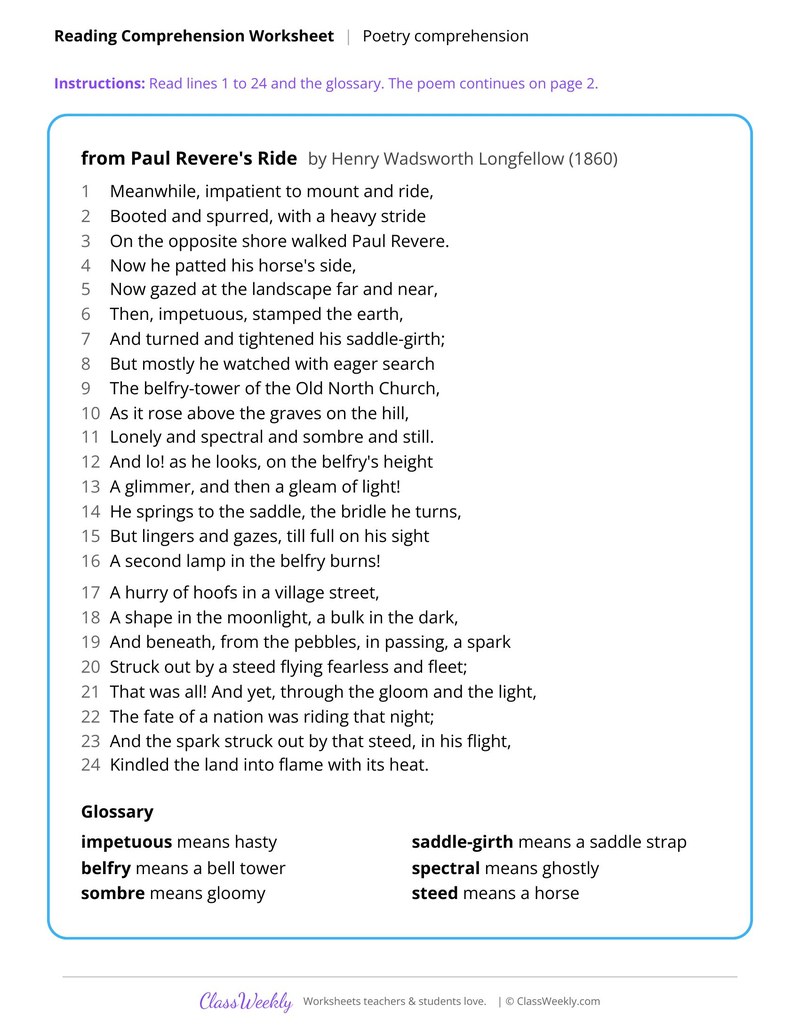
"Longfellow's Midnight Ride Ballad (Poem Excerpt)" is written for 8th Grade (Ages 13-14), and it covers Common Core RL.8.4. A 7th grader who is already steady on poetry can use it too, and an older student can use it as a short review.
3 pages in this set
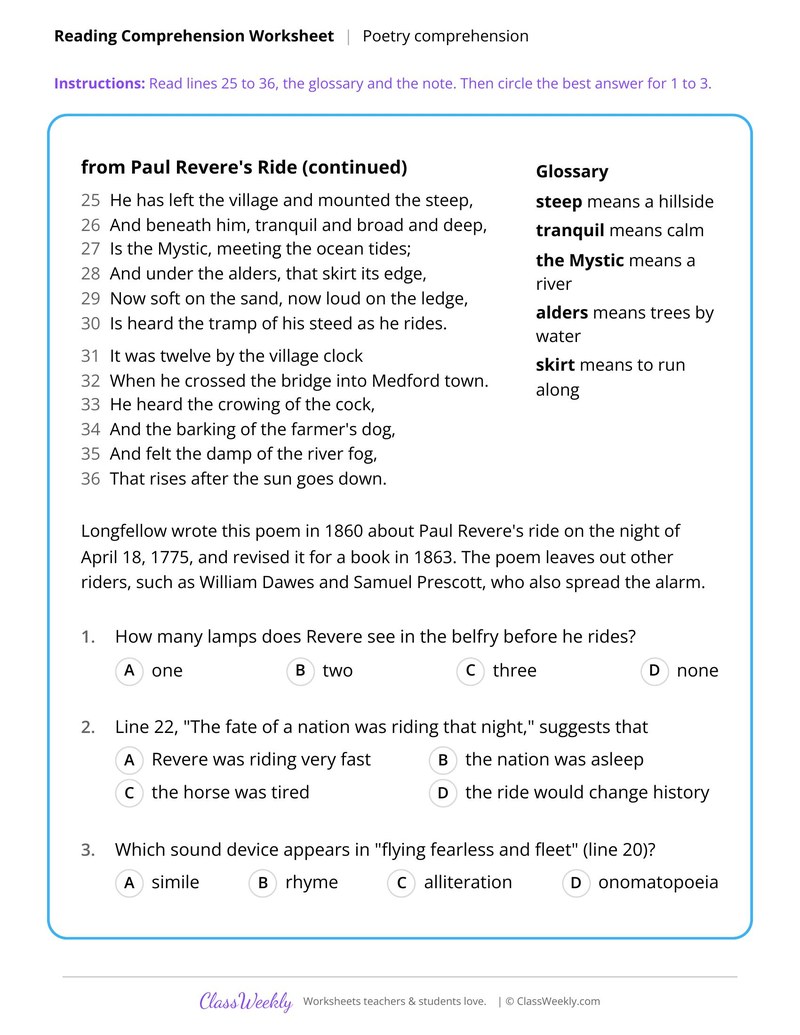
8th grade reading worksheet: analyze suspense, rhythm and imagery in lines from Longfellow's Paul Revere's Ride. Answer key included. Part of our poetry comprehension collection. Aligned to Common Core standards.
How do I use this worksheet?
Read the poem aloud first, then have students read any glossary or note before answering. Ask them to cite line numbers in every written answer.
What students will practice
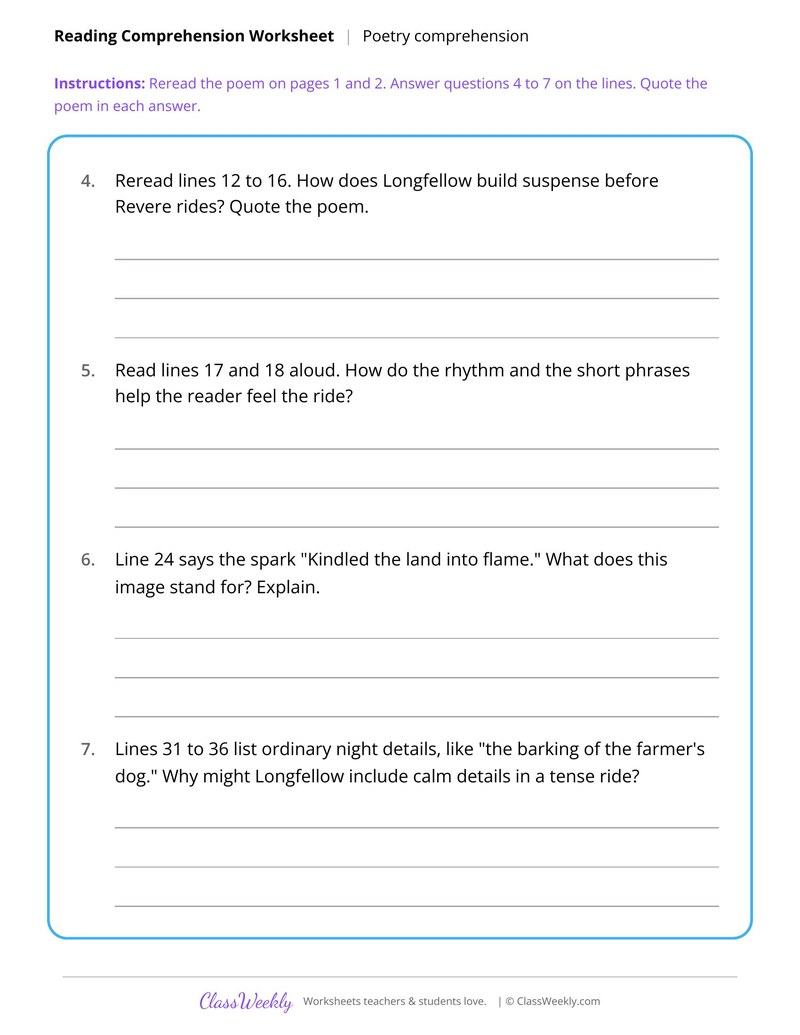
- Students will explain how Longfellow builds suspense before Paul Revere rides.
- Students will describe how rhythm and short phrases help a reader feel the ride.
- Students will interpret the spark that kindled the land into flame and the calm night details.
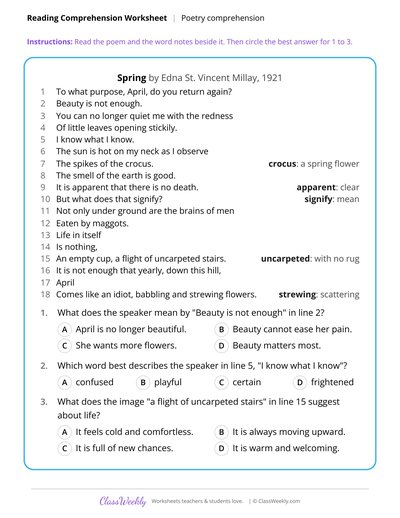
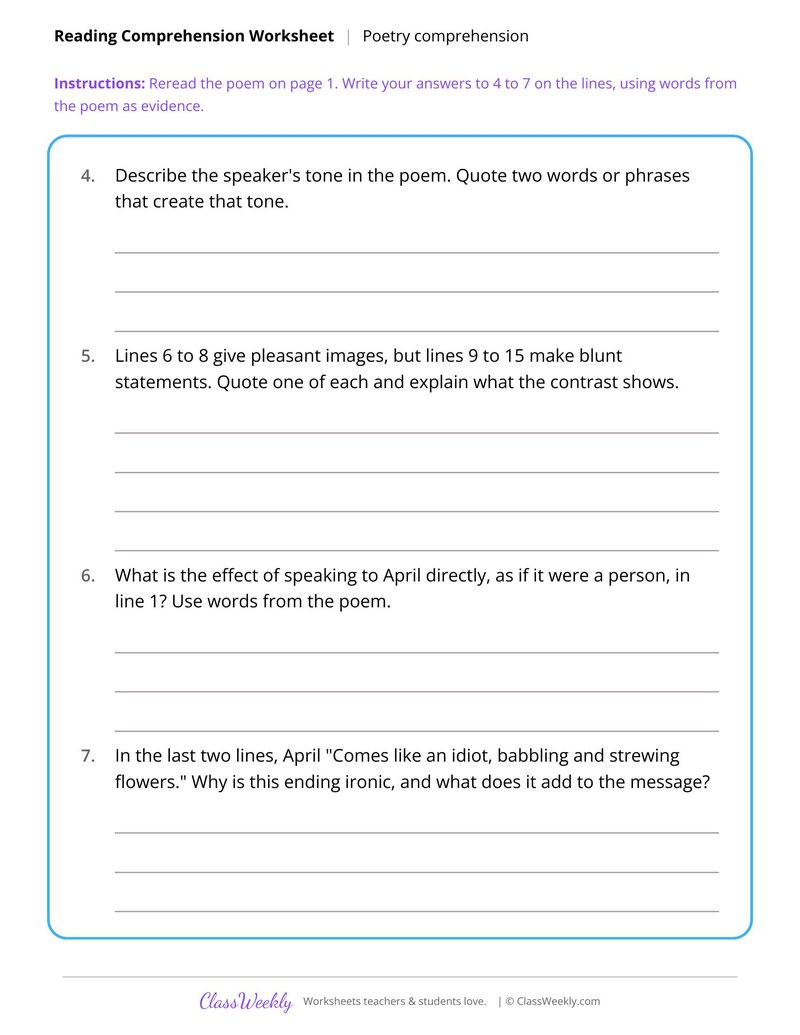
Spring by Edna St. Vincent Millay (Poem)
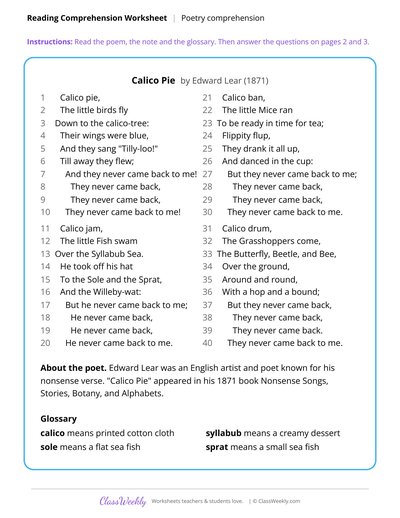
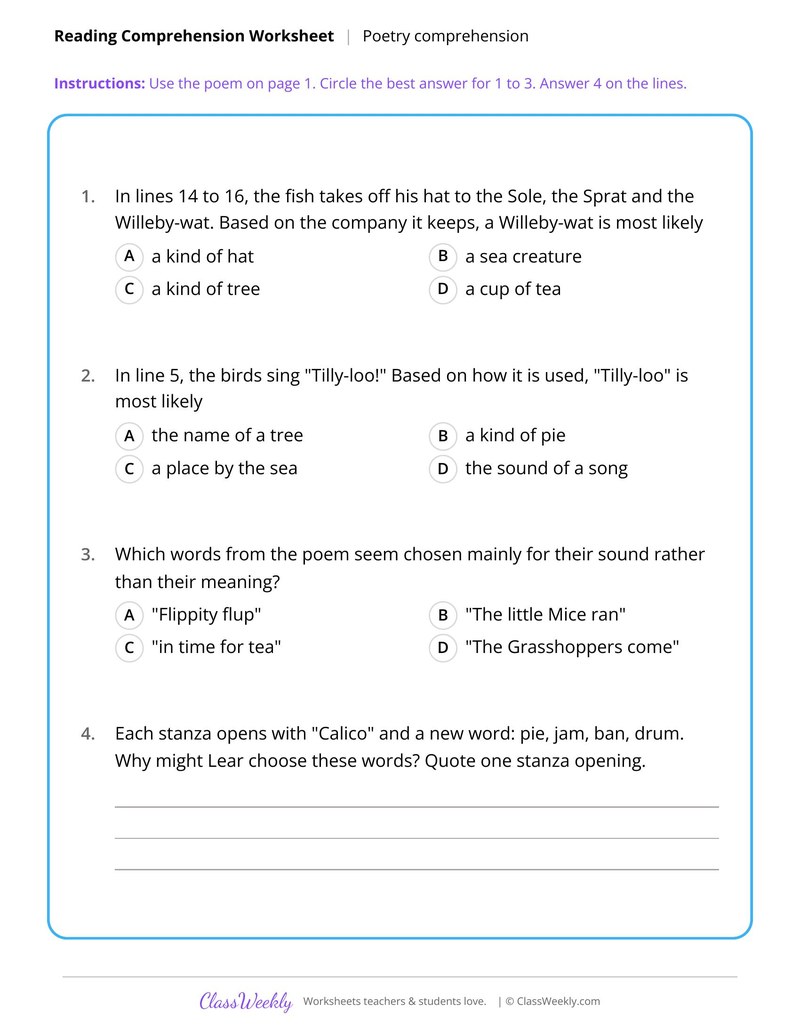
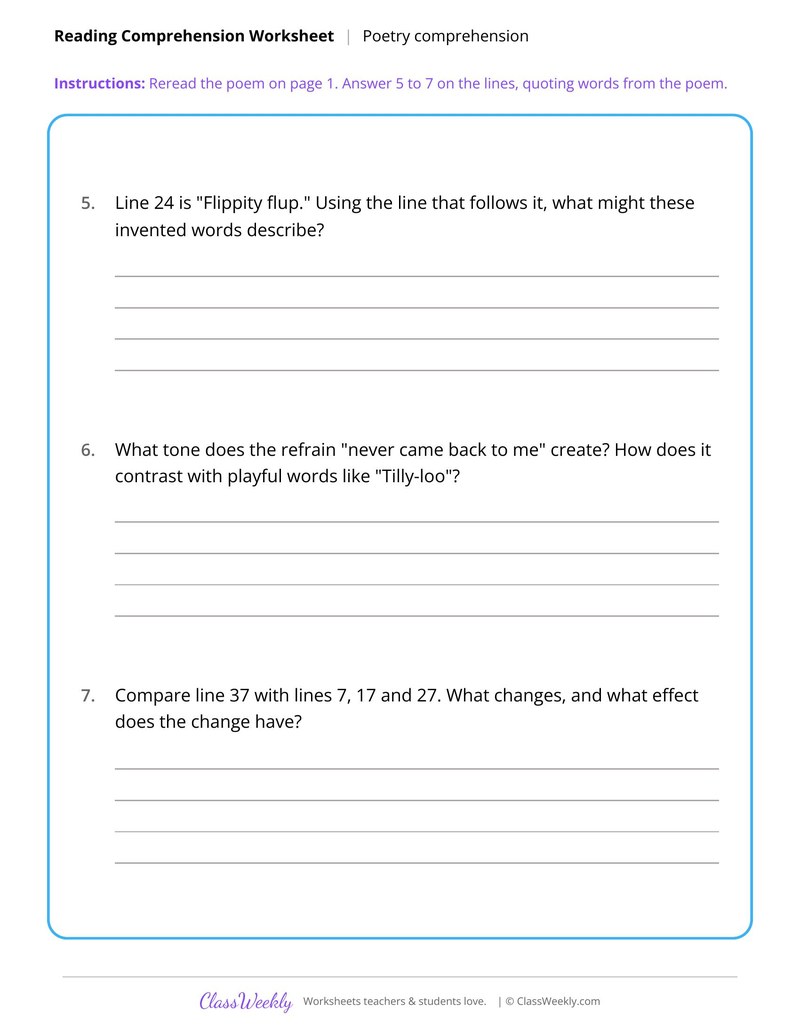
Invented Words in Lear's Calico Pie (Poem)
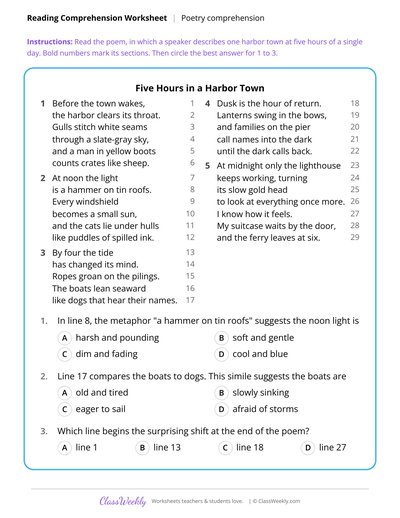
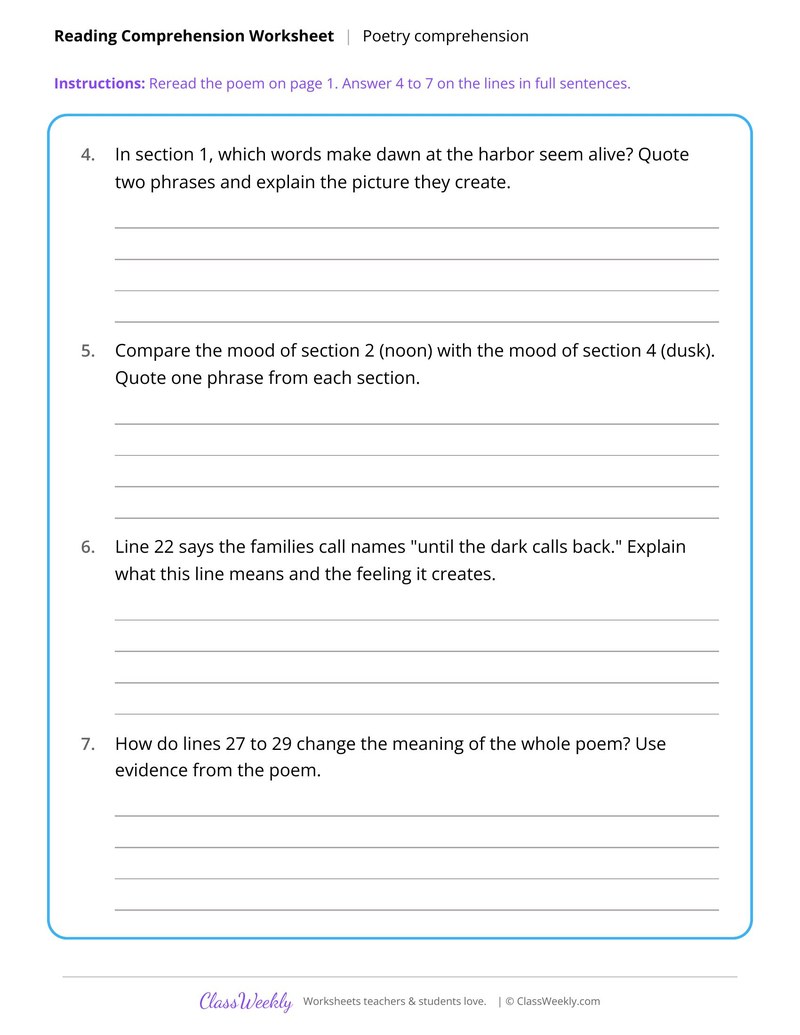
Five Impressions of a Harbor Town (Poem)
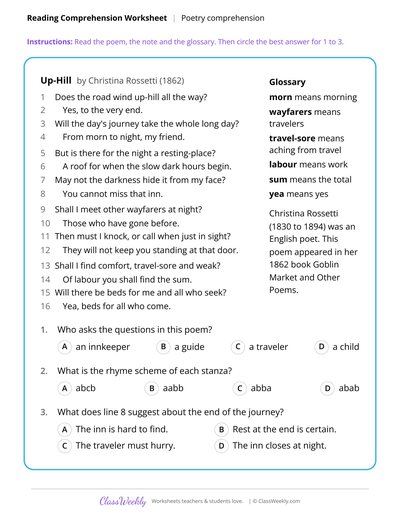
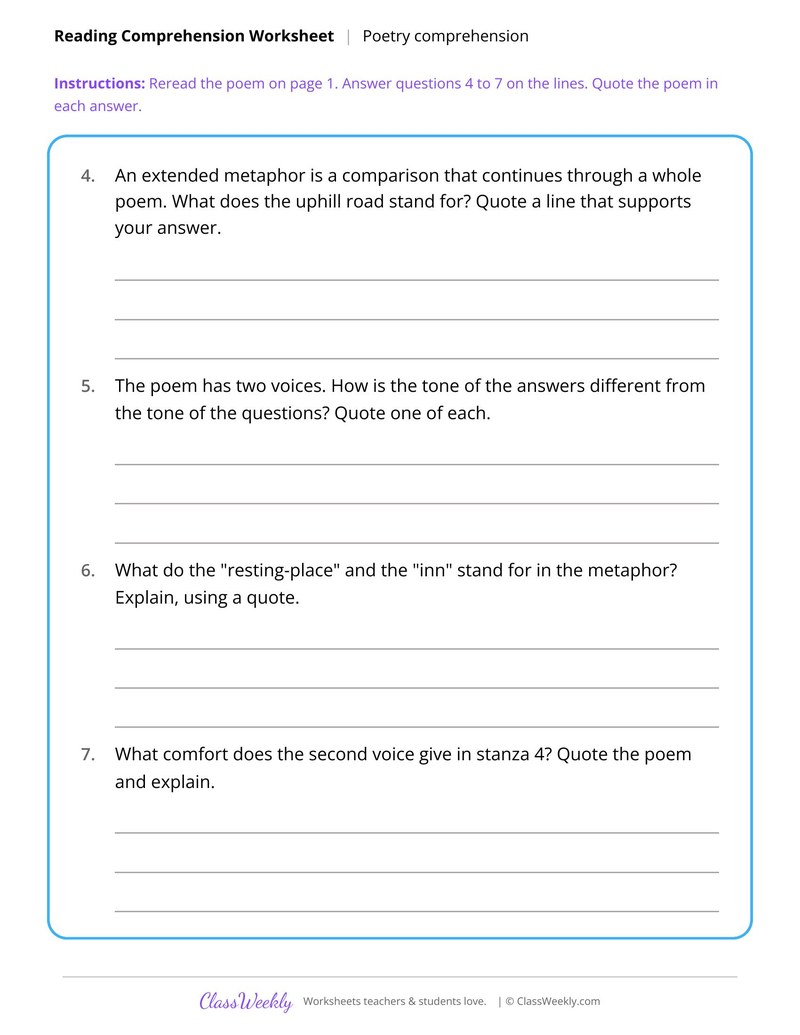
A Traveler's Questions in Rossetti's Up-Hill (Poem)
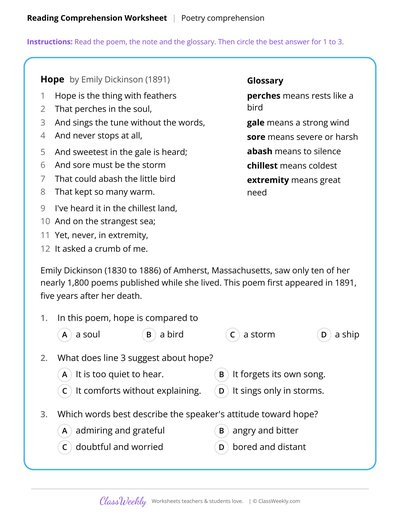
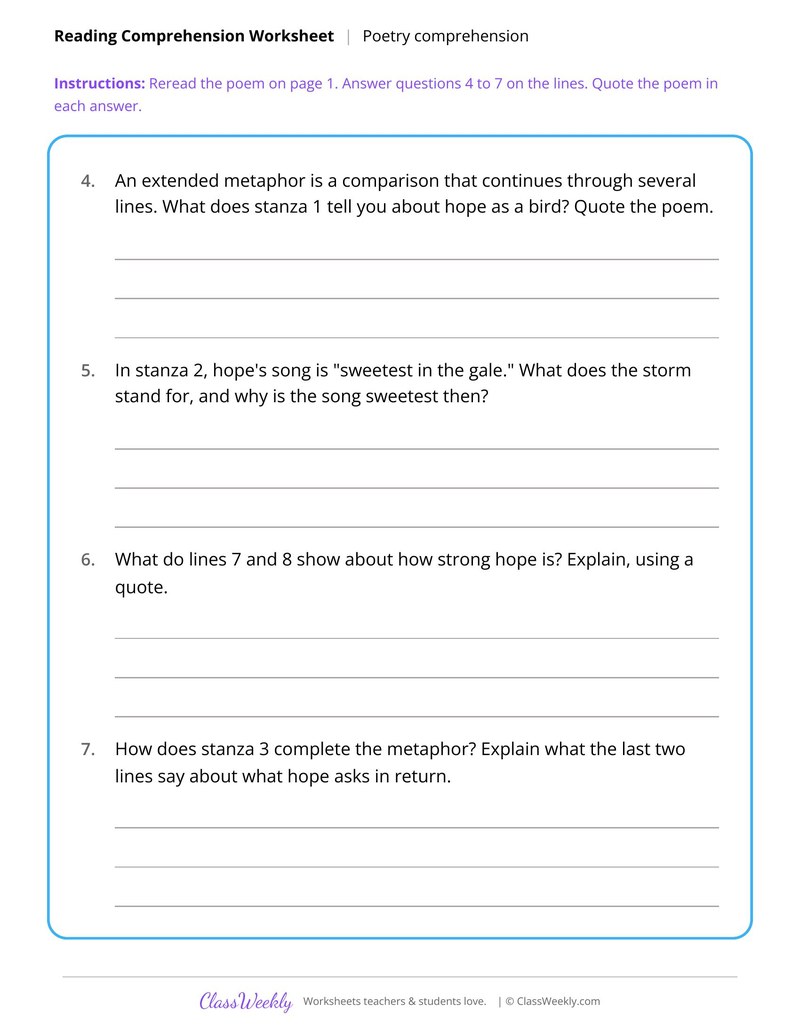
Hope as a Small Bird (Poem by Dickinson)
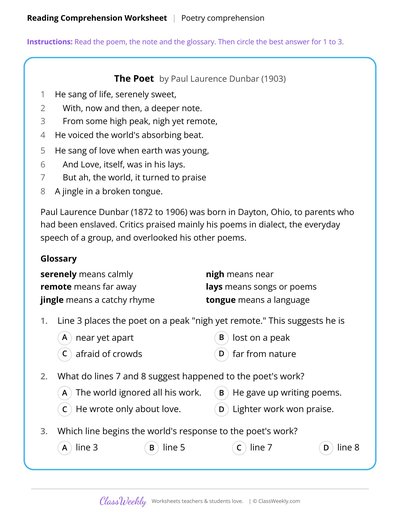
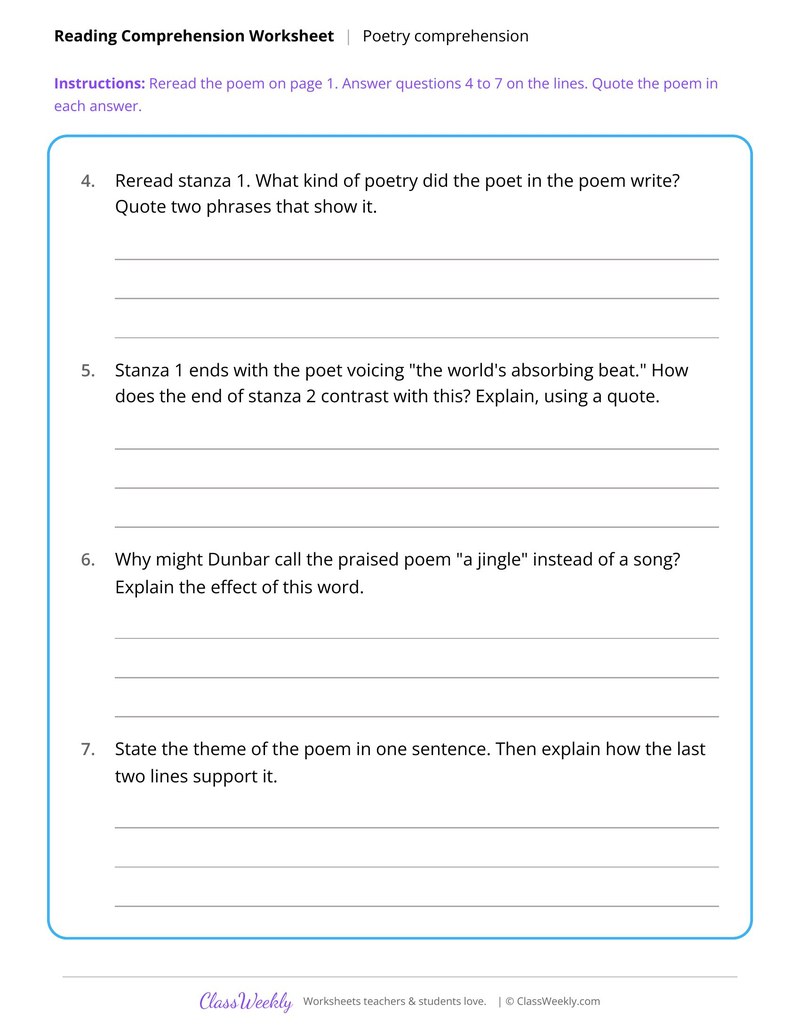
A Poet the World Misread (Poem by Dunbar)
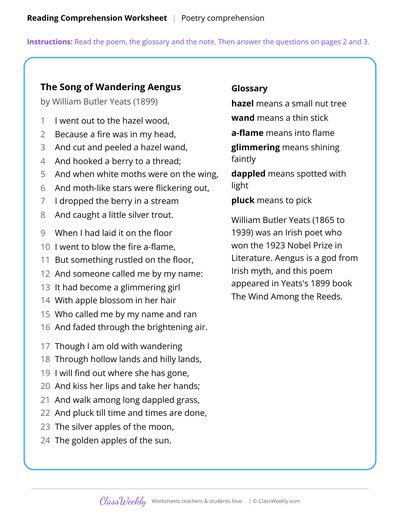
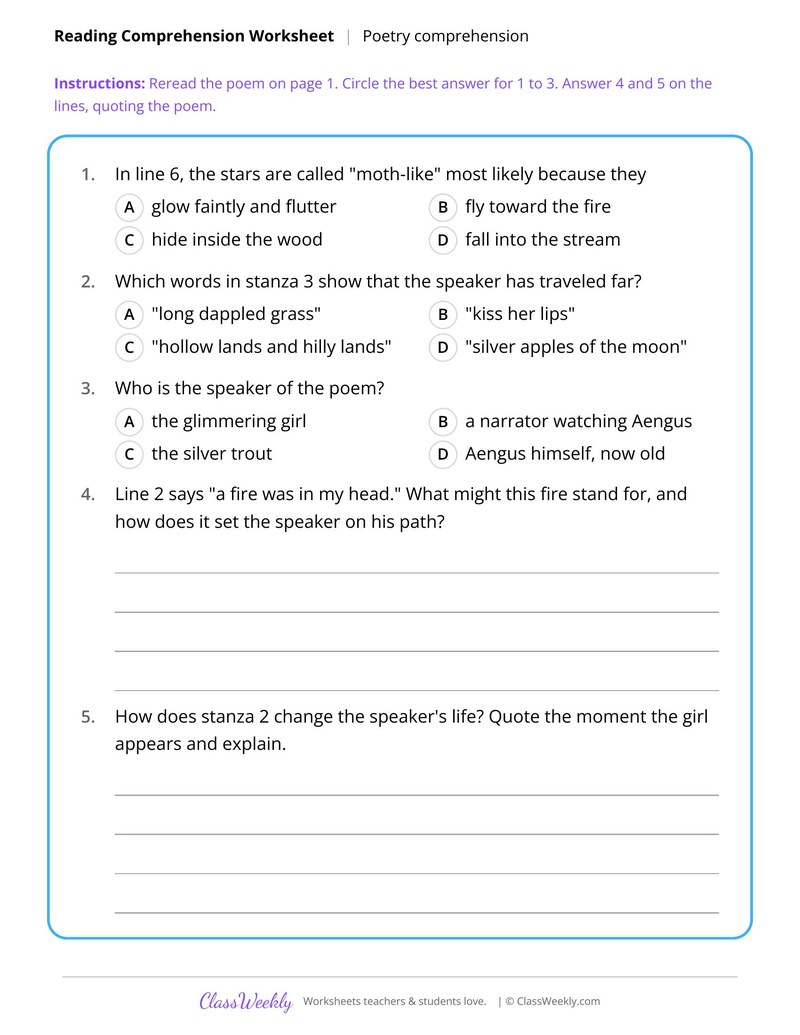
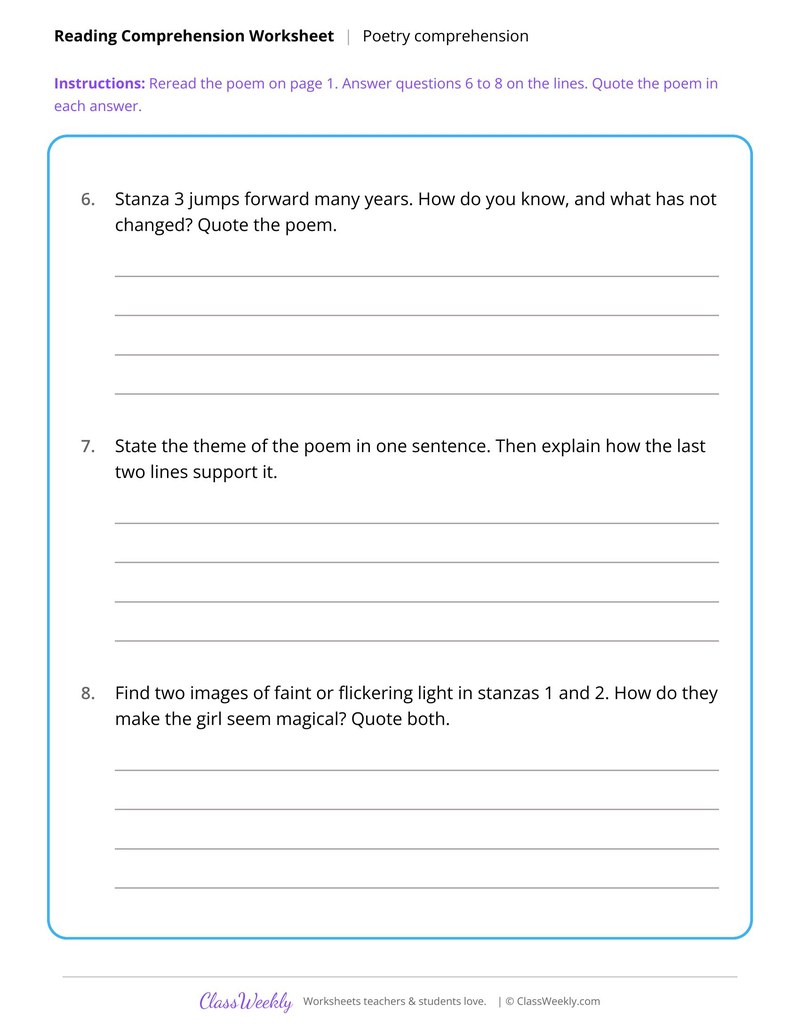
A Wanderer's Lifelong Quest (Poem by Yeats)
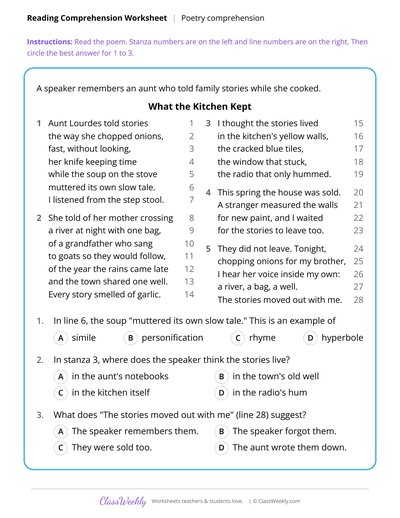
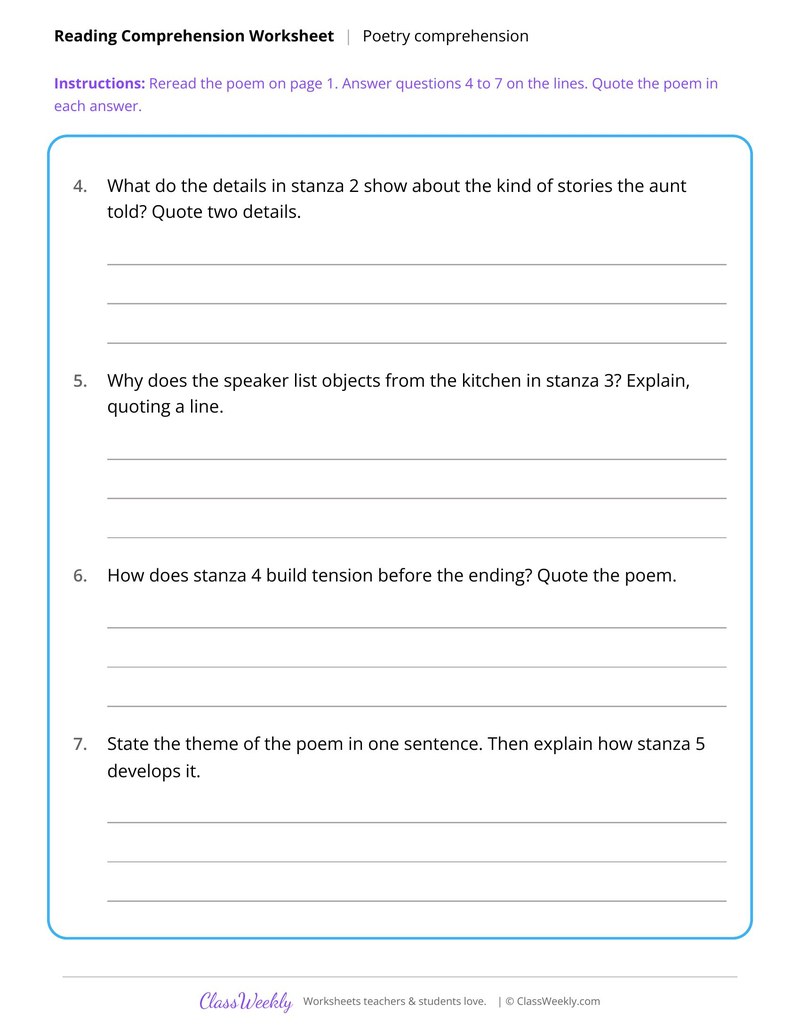
The Stories in My Aunt's Kitchen (Poem)
Curriculum Links
Common Core State Standards
Reading: Literature · 8th Grade
Standard: Determine the meaning of words and phrases as they are used in a text, including figurative and connotative meanings; analyze the impact of specific word choices on meaning and tone, including analogies or allusions to other texts.
View all RL.8.4 worksheets →Find this in the curriculum
Browse the grade, subject, and topic this belongs to.
FAQ
How do I use this poetry comprehension worksheet?
⌄
Read the poem aloud first, then have students read any glossary or note before answering. Ask them to cite line numbers in every written answer.
What does this worksheet teach?
⌄
Analyze suspense, rhythm and imagery in lines from Longfellow's Paul Revere's Ride. The directions on the page read: Read lines 1 to 24 and the glossary. The poem continues on page 2. An answer key is included.
Can I use this poetry comprehension worksheet for homeschool or classroom?
⌄
Yes, both. We made it for 8th grade poetry, and it works the same at home or at school. At home, a student can work through it alone and then go over it with you, which shows quickly what is solid and what needs another look. In class it works as independent practice, homework or a warm-up, and you can print one copy or a full set.
How do you quote a poem as evidence?
⌄
Put the exact words in quotation marks and give the line number. Then explain what the words show. Every sheet prints line numbers so students can cite them.
What is irony in a poem?
⌄
Irony is a gap between what is expected and what happens or is said. In Millay's Spring, April arrives babbling and strewing flowers while the speaker insists beauty is not enough.
Why do poets use invented words?
⌄
Invented words can add sound, humor or mystery. In Calico Pie, Edward Lear uses words like Tilly-loo and Willeby-wat that readers work out from context.
Ratings & Reviews
No reviews yet. Be the first to share what you think.
Reviews are for ClassWeekly members.
Make a Request
Spotted something to fix, or want a worksheet we don't have yet? Tell us and we'll make it.
What is ClassWeekly?
ClassWeekly offers free worksheets and printable learning resources for kids, from preschool up. All worksheets are aligned to Common Core, NGSS, and C3 Framework standards and designed by educators. Become a member to access the full library and download unlimited PDFs.
Spring by Edna St. Vincent Millay (Poem)
Invented Words in Lear's Calico Pie (Poem)
Five Impressions of a Harbor Town (Poem)
A Traveler's Questions in Rossetti's Up-Hill (Poem)
Hope as a Small Bird (Poem by Dickinson)
A Poet the World Misread (Poem by Dunbar)
A Wanderer's Lifelong Quest (Poem by Yeats)
The Stories in My Aunt's Kitchen (Poem)