Hawaiian Island Ages and Plate Speed
Written by Adi Ackerman, Head Teacher
"Hawaiian Island Ages and Plate Speed" is written for 8th Grade (Ages 13-14), and it covers NGSS MS-ESS2-3. A 7th grader who is already steady on Earth science can use it too, and an older student can use it as a short review.
2 pages in this set
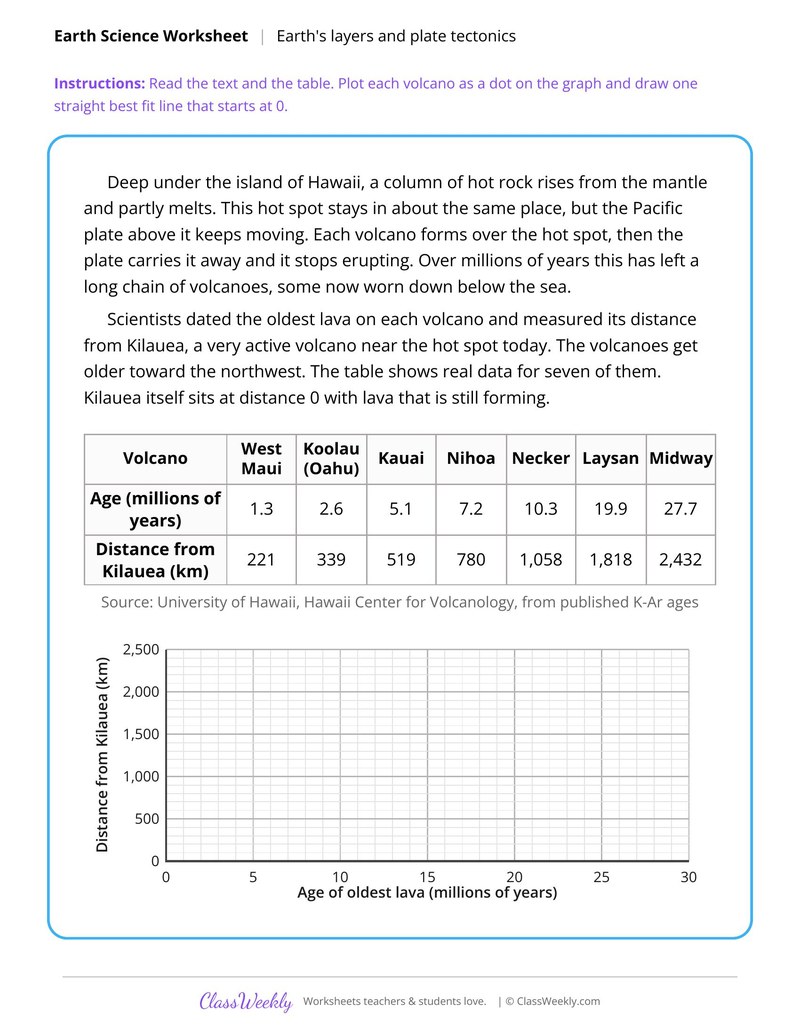
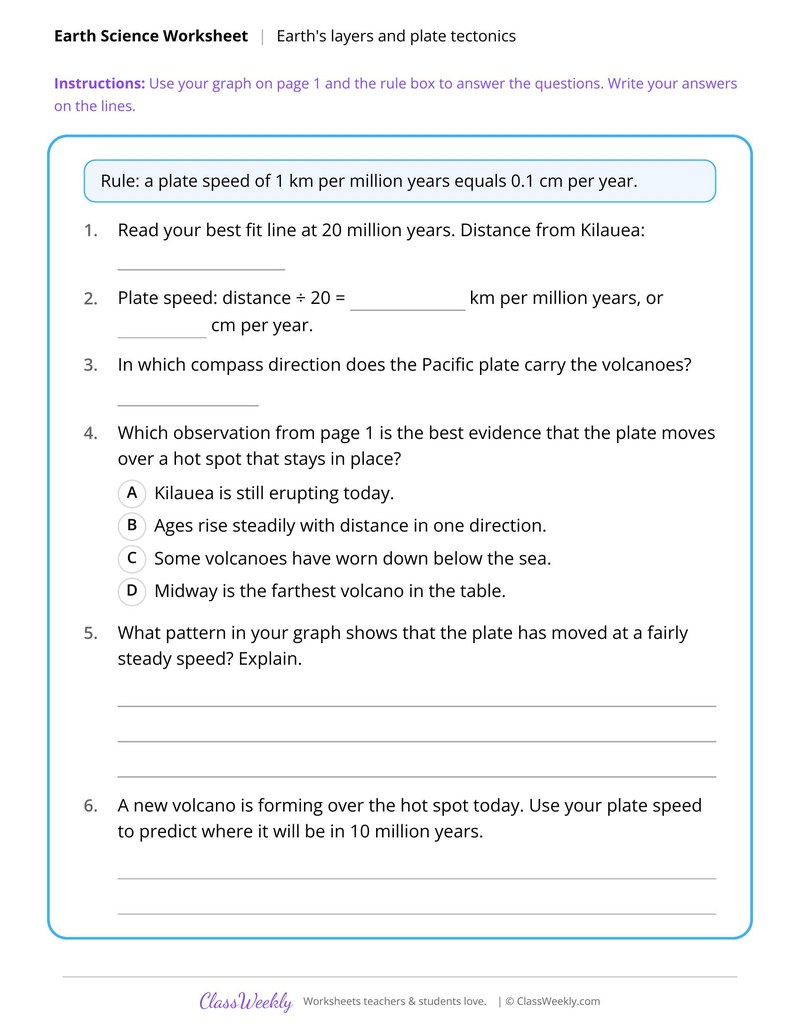
8th grade science worksheet: graph Hawaiian volcano ages against distance from Kilauea and find the Pacific plate speed. Answer key included. Part of our Earth's layers and plate tectonics collection. Aligned to NGSS standards.
How do I use this worksheet?
Start with the mantle convection diagram for the big picture. Use the Hawaii and subduction sheets as graphing labs, and save the epicenter sheet for a compass activity.
What students will practice
- Students will plot volcano age against distance from Kilauea and draw a best fit line.
- Students will use the slope to find the Pacific plate speed in centimeters per year.
- Students will explain how a fixed hot spot and a moving plate build a chain of volcanoes.
Map Earthquake Depths Across a Subduction Zone
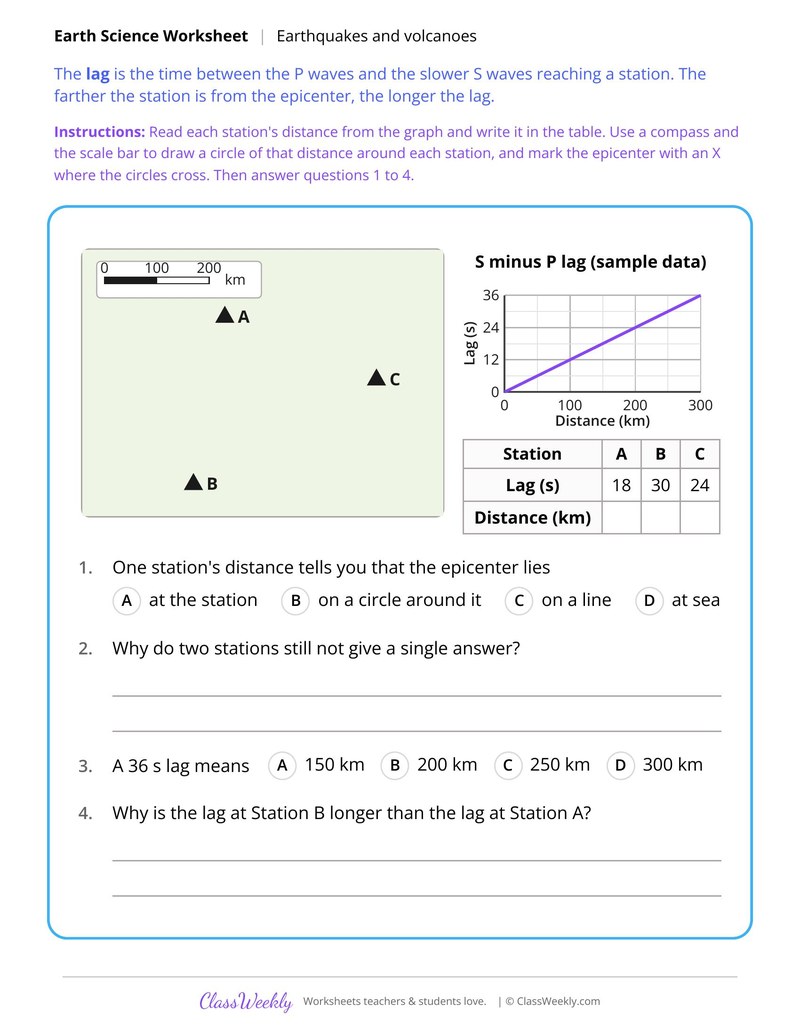
Locate an Epicenter From Three Stations
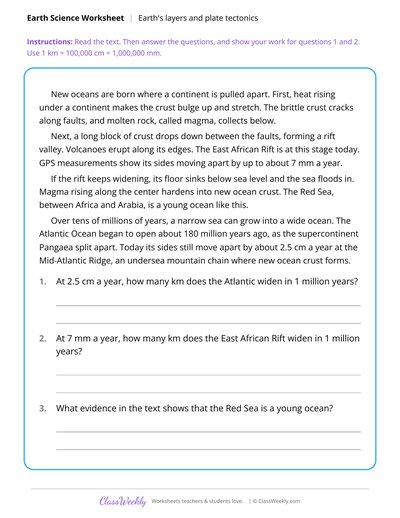
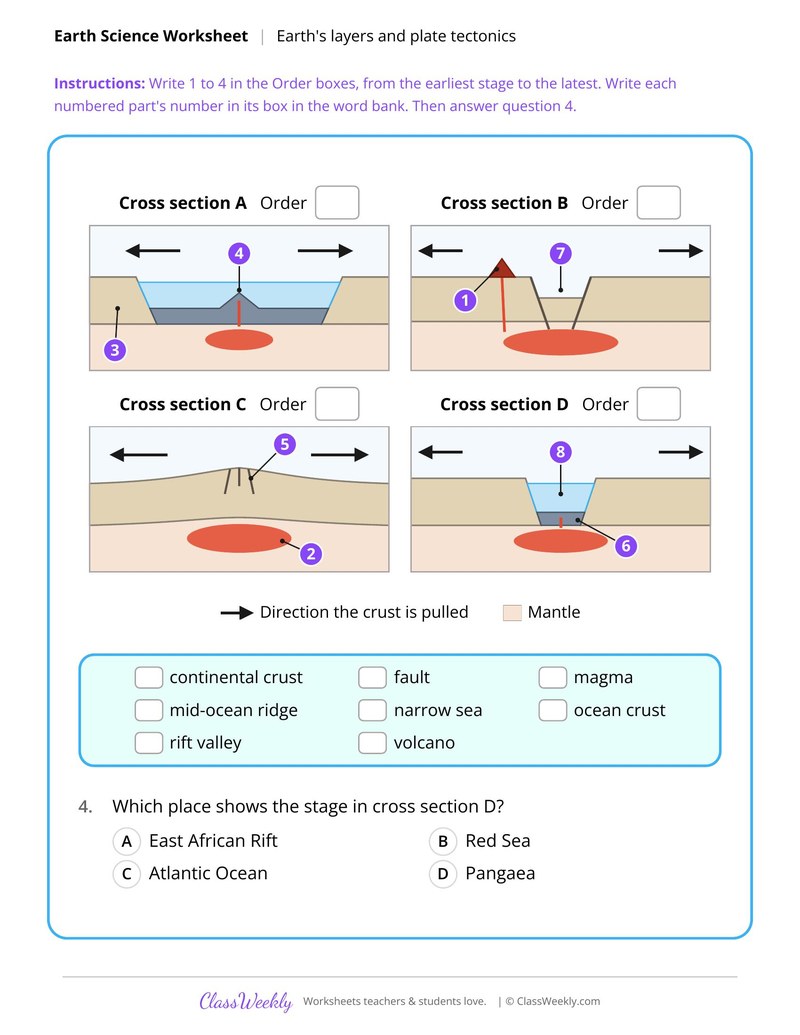
Label the Stages From Rift Valley to Ocean
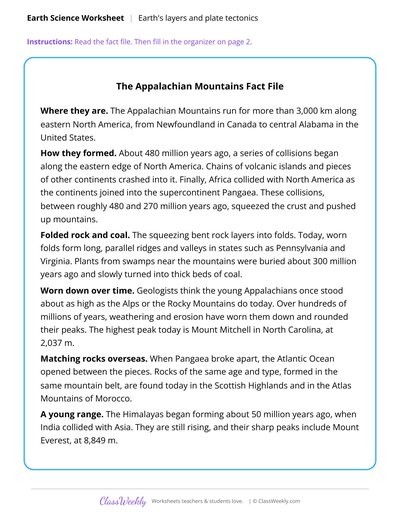
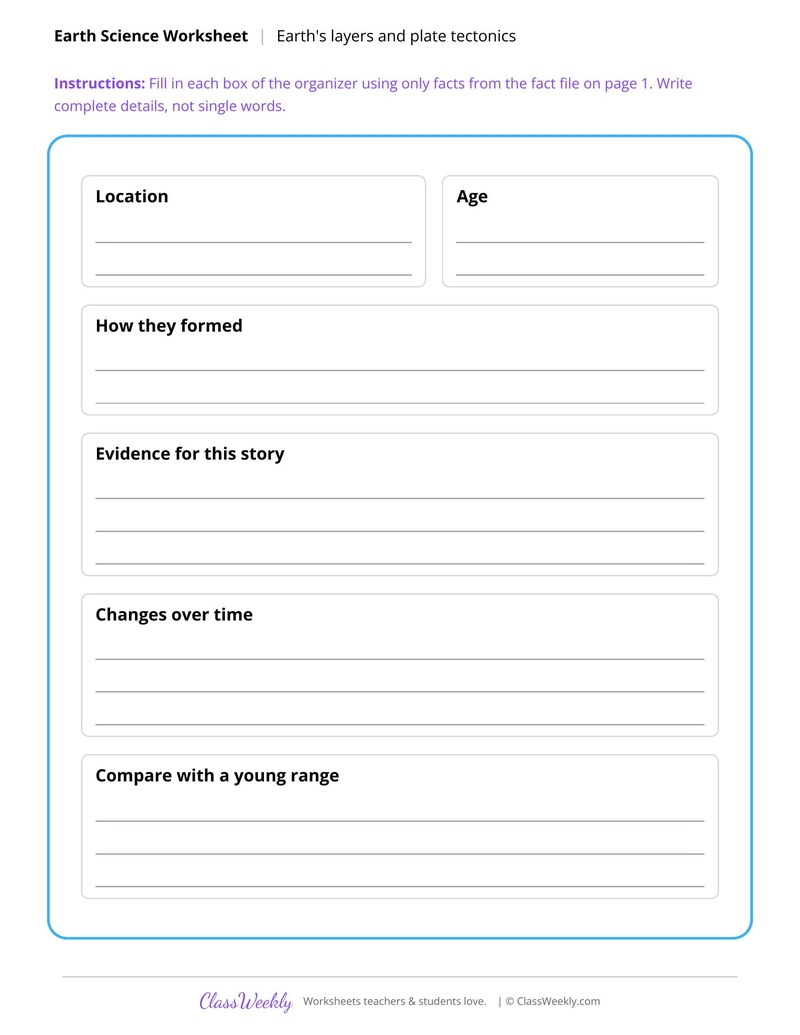
Appalachian Mountains Fact File Organizer
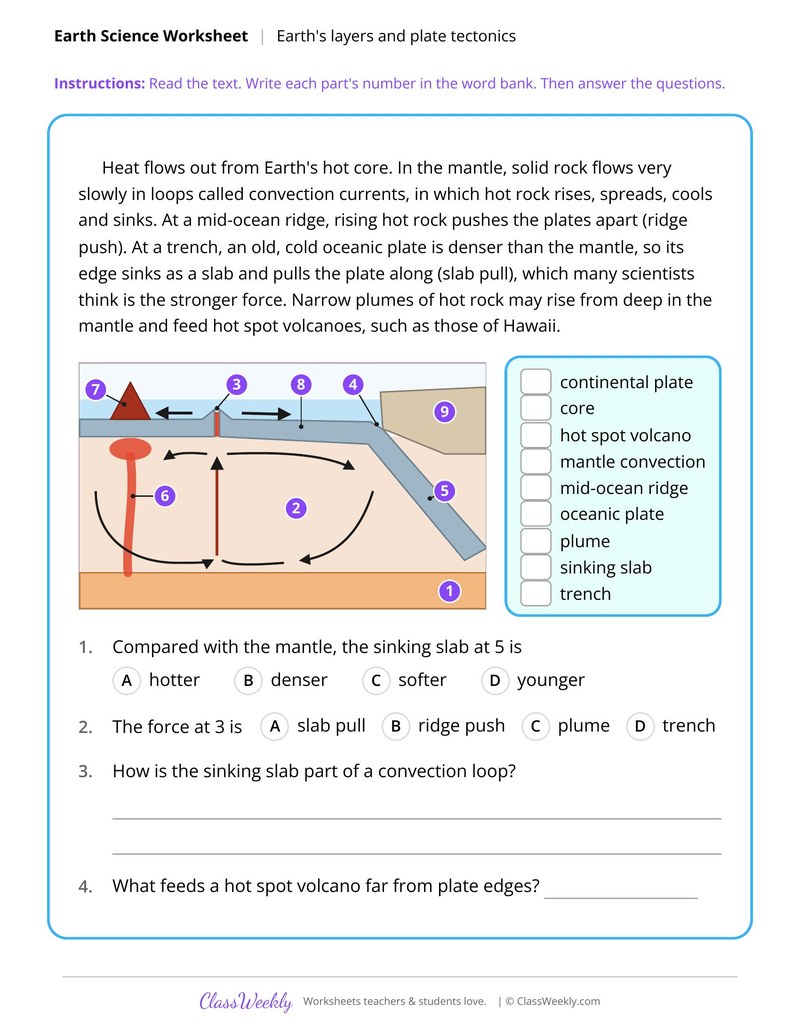
Label Mantle Convection and Plate Motion
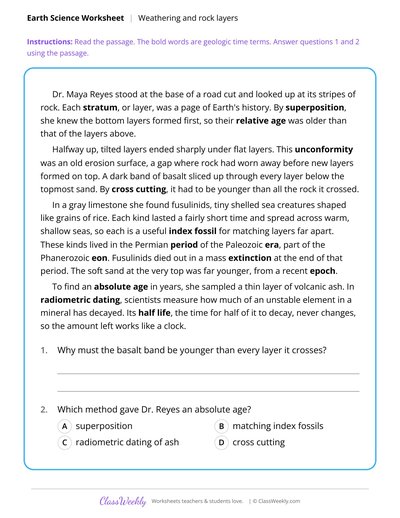
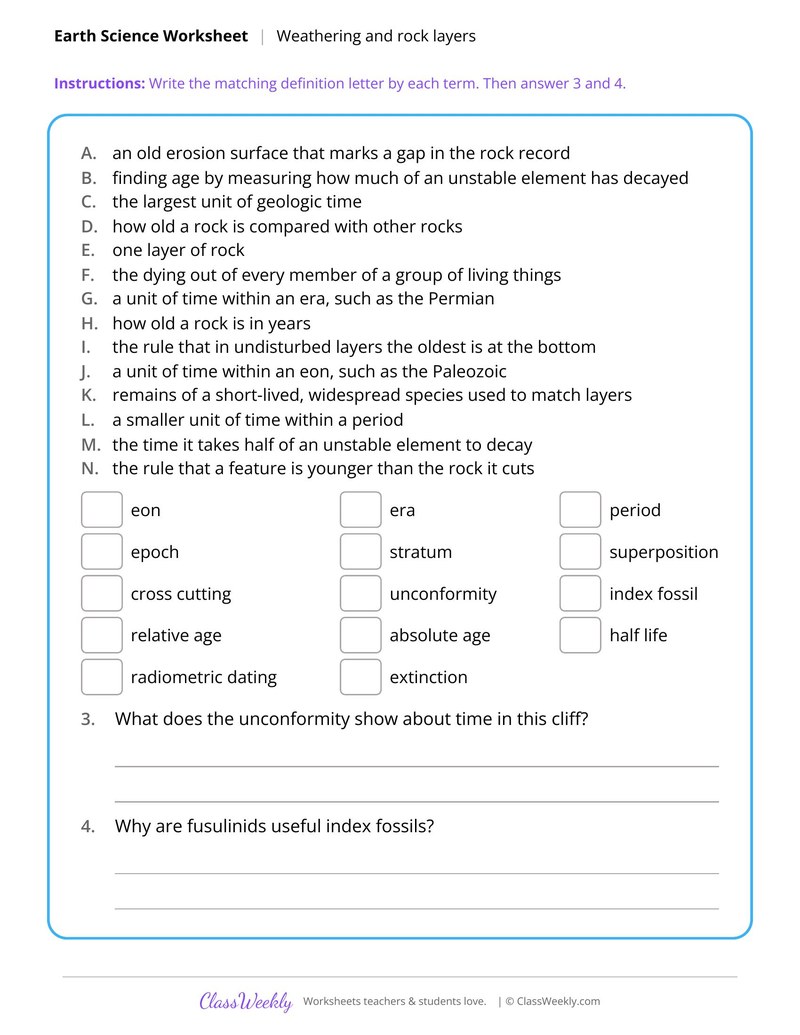
Geologic Time Terms in Context
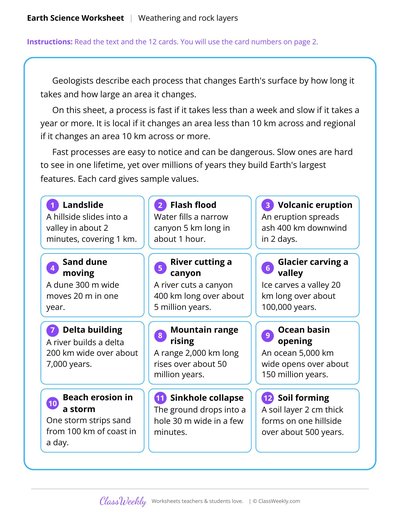
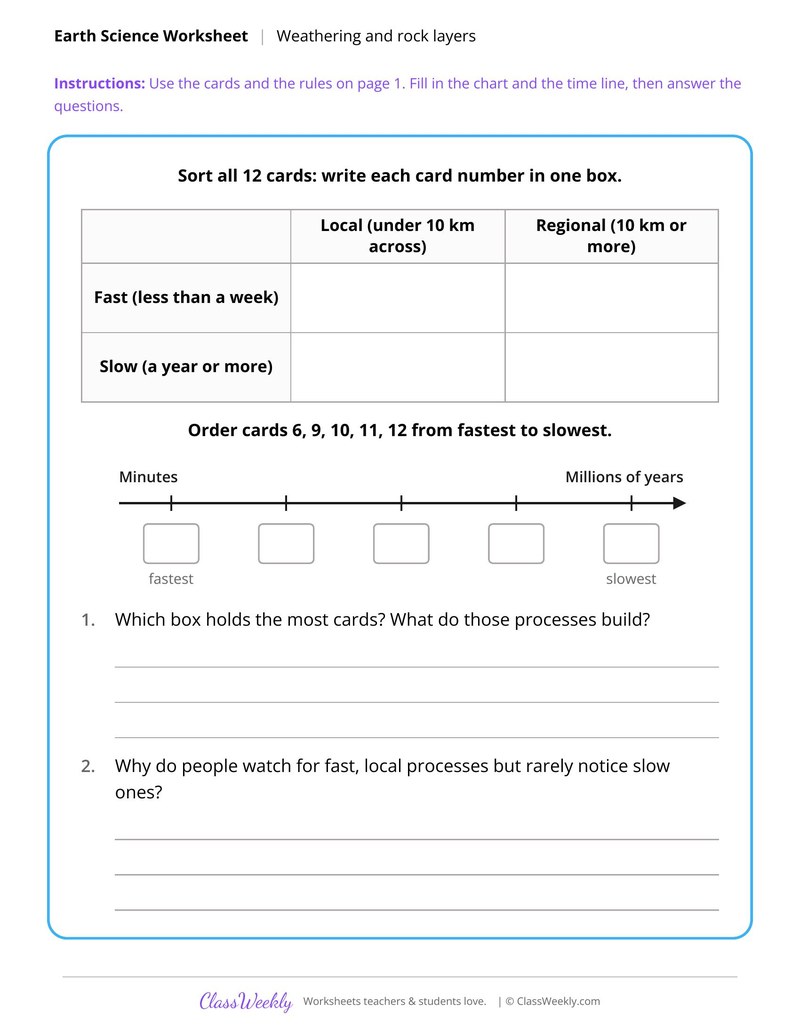
Sort Earth Processes by Time and Size
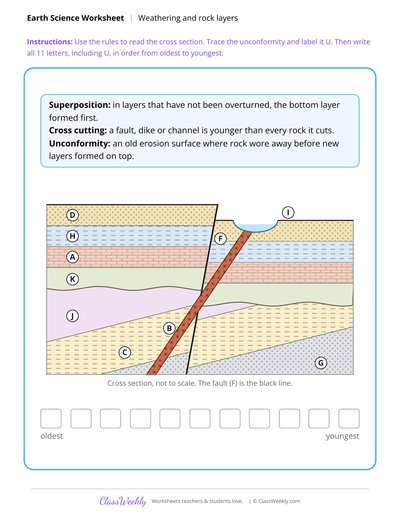
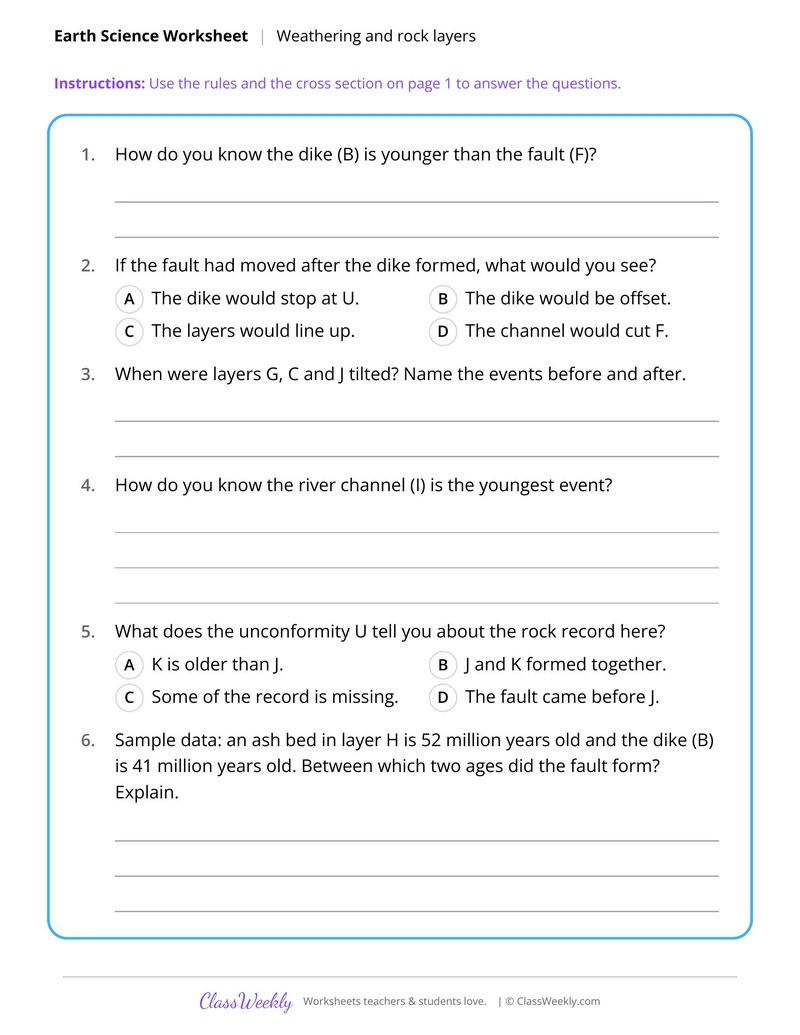
Order Rock Events Using Cross Cutting
Curriculum Links
Next Generation Science Standards
Science · 8th Grade
Find this in the curriculum
Browse the grade, subject, and topic this belongs to.
FAQ
How do I use this Earth's layers and plate tectonics worksheet?
⌄
Start with the mantle convection diagram for the big picture. Use the Hawaii and subduction sheets as graphing labs, and save the epicenter sheet for a compass activity.
What does this worksheet teach?
⌄
Graph Hawaiian volcano ages against distance from Kilauea and find the Pacific plate speed. The directions on the page read: Read the text and the table. Plot each volcano as a dot on the graph and draw one straight best fit line that starts at 0. An answer key is included.
Can I use this Earth's layers and plate tectonics worksheet for homeschool or classroom?
⌄
Yes, both. We made it for 8th grade Earth science, and it works the same at home or at school. At home, a student can work through it alone and then go over it with you, which shows quickly what is solid and what needs another look. In class it works as independent practice, homework or a warm-up, and you can print one copy or a full set.
How does a hot spot make a chain of islands?
⌄
A column of hot rock rises from the mantle and stays in about the same place while the plate above moves. Each volcano forms over the hot spot and is carried away. In Hawaii, the volcanoes get older toward the northwest.
Why do earthquakes get deeper away from a trench?
⌄
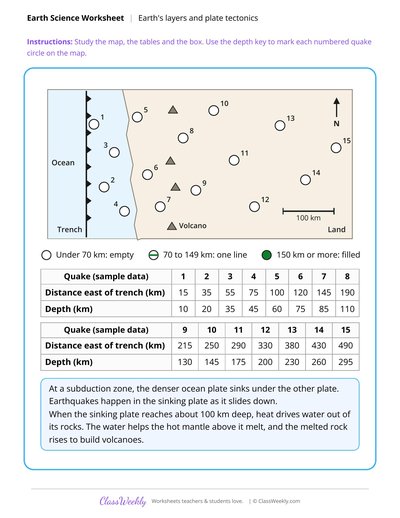
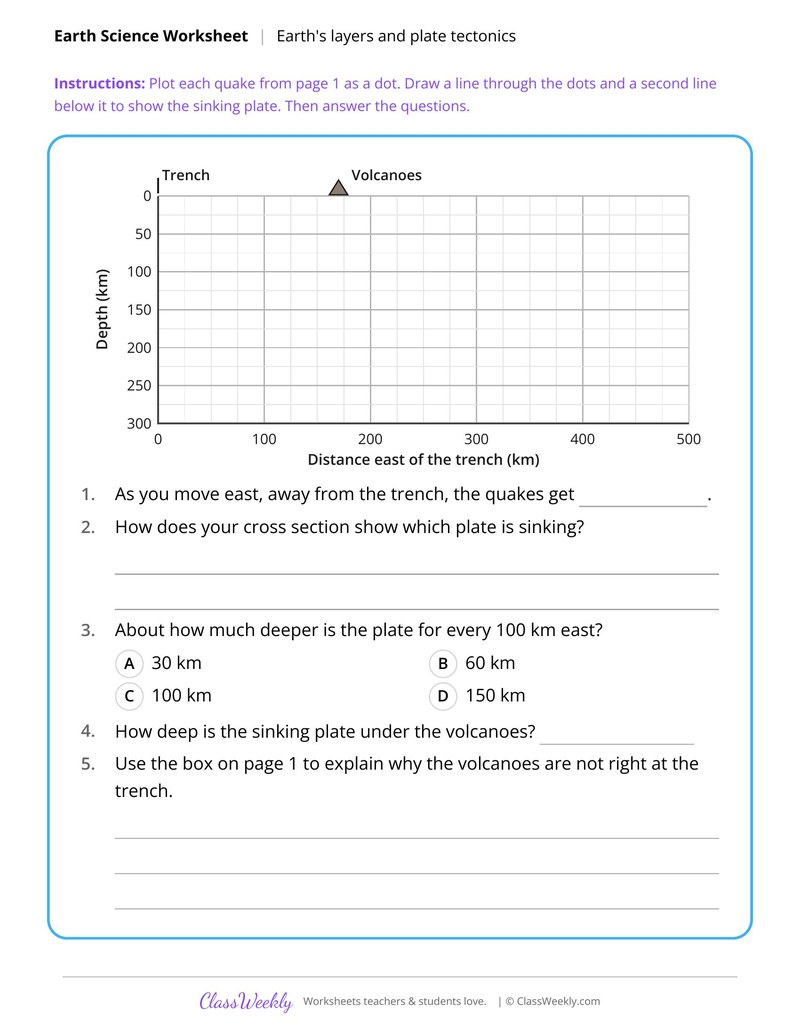
At a subduction zone, the denser ocean plate sinks under the other plate at an angle. Quakes happen along the sinking plate, so they are deeper the farther they are from the trench. The subduction sheet plots depth against distance.
What drives plate motion?
⌄
Heat from the core drives slow convection currents in the mantle. Rising rock at a mid-ocean ridge pushes plates apart, and a cold sinking slab at a trench pulls its plate along. Label Mantle Convection and Plate Motion labels both.
Ratings & Reviews
No reviews yet. Be the first to share what you think.
Reviews are for ClassWeekly members.
Make a Request
Spotted something to fix, or want a worksheet we don't have yet? Tell us and we'll make it.
Worksheet Details
| Grade | 8th Grade |
| Subject | Science |
| Topic | Earth Science |
| Standard | MS-ESS2-3 |
| Pages | 2 pages |
| Difficulty | Medium |
What is ClassWeekly?
ClassWeekly offers free worksheets and printable learning resources for kids, from preschool up. All worksheets are aligned to Common Core, NGSS, and C3 Framework standards and designed by educators. Become a member to access the full library and download unlimited PDFs.
Map Earthquake Depths Across a Subduction Zone
Locate an Epicenter From Three Stations
Label the Stages From Rift Valley to Ocean
Appalachian Mountains Fact File Organizer
Label Mantle Convection and Plate Motion
Geologic Time Terms in Context
Sort Earth Processes by Time and Size
Order Rock Events Using Cross Cutting