Score Self Heating Pouch Designs in a Matrix
Written by Adi Ackerman, Head Teacher
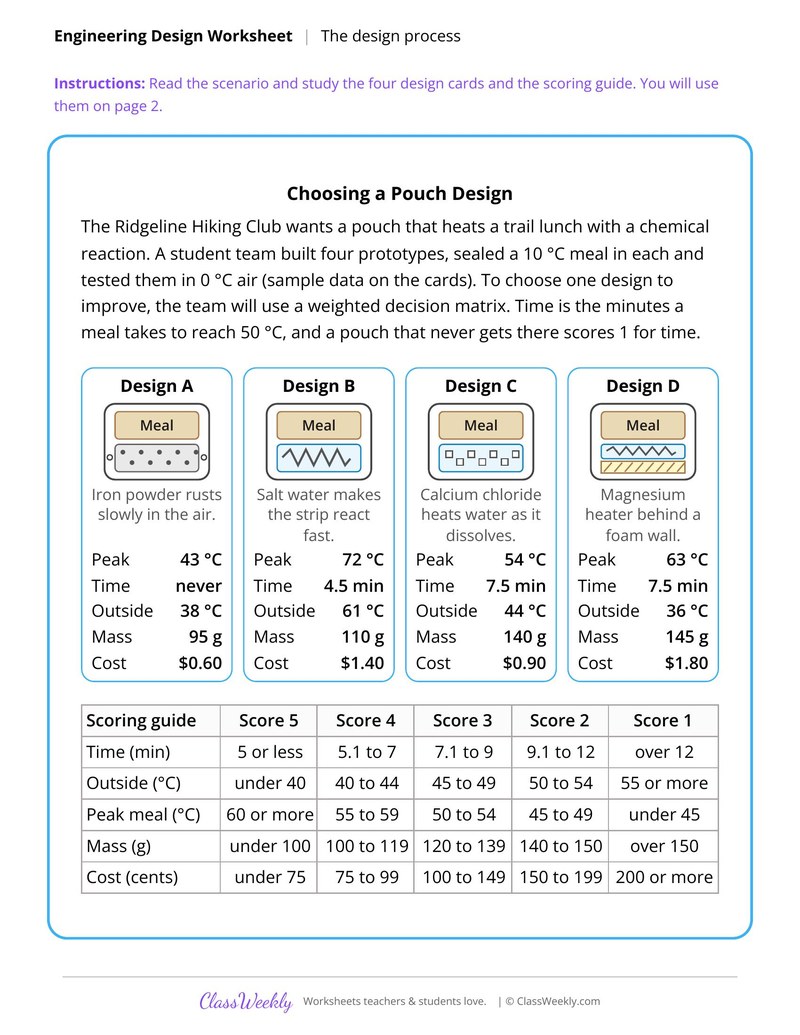
"Score Self Heating Pouch Designs in a Matrix" is written for 8th Grade (Ages 13-14), and it covers NGSS MS-ETS1-2. A 7th grader who is already steady on engineering and design can use it too, and an older student can use it as a short review.
2 pages in this set
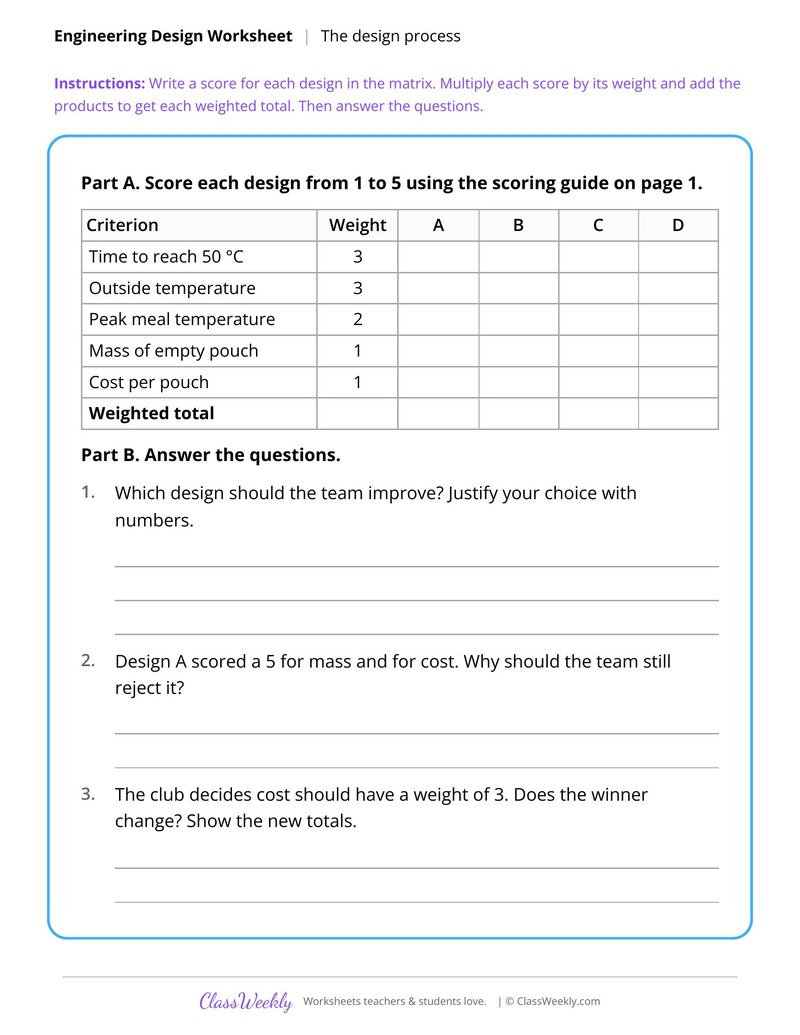
8th grade science worksheet: score four heater pouch prototypes in a weighted decision matrix using peak, time, mass and cost. Answer key included. Part of our design process collection. Aligned to NGSS standards.
How do I use this worksheet?
Teach the sheets in order as a short unit. Ask students to keep their answers from each sheet, since later sheets build on the same four pouches.
What students will practice
- Students will score four pouch designs from 1 to 5 using a scoring guide.
- Students will multiply each score by its weight and add the weighted totals.
- Students will choose a design to improve and explain the tradeoffs.
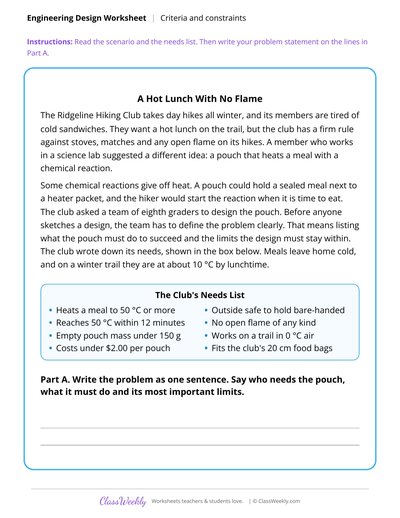
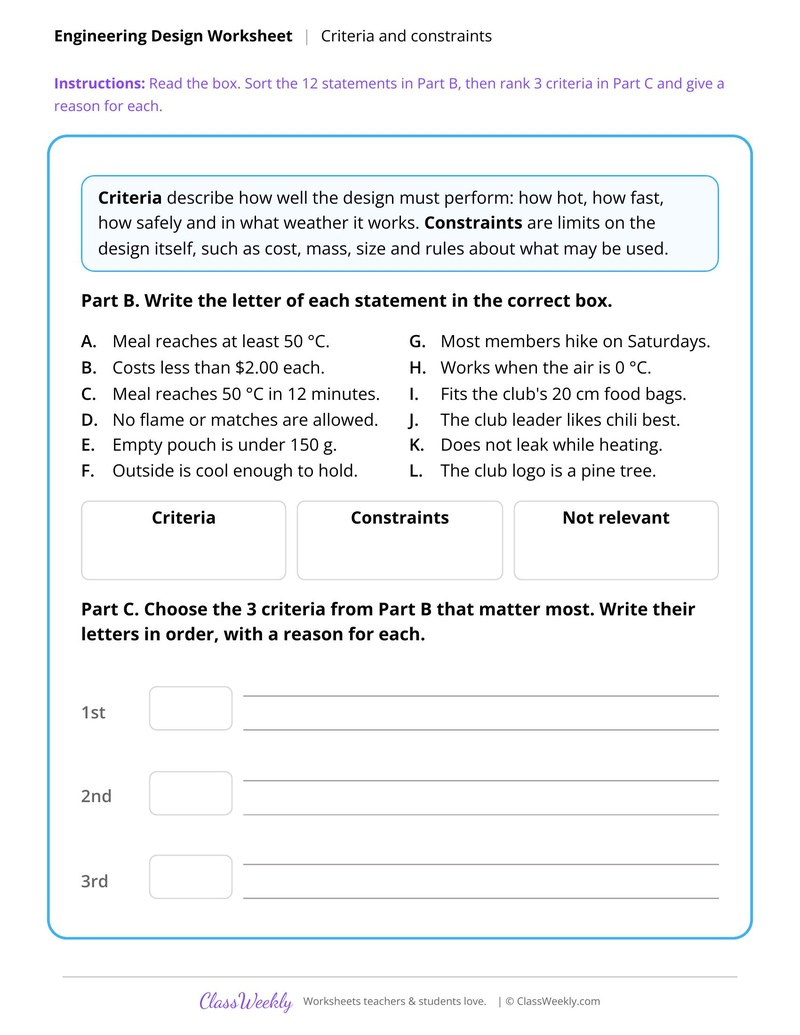
Criteria and Constraints for a Self Heating Pouch
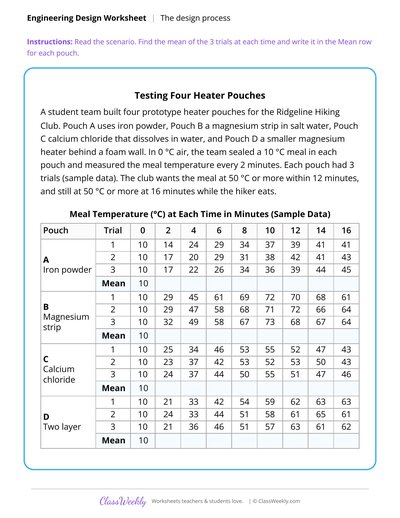
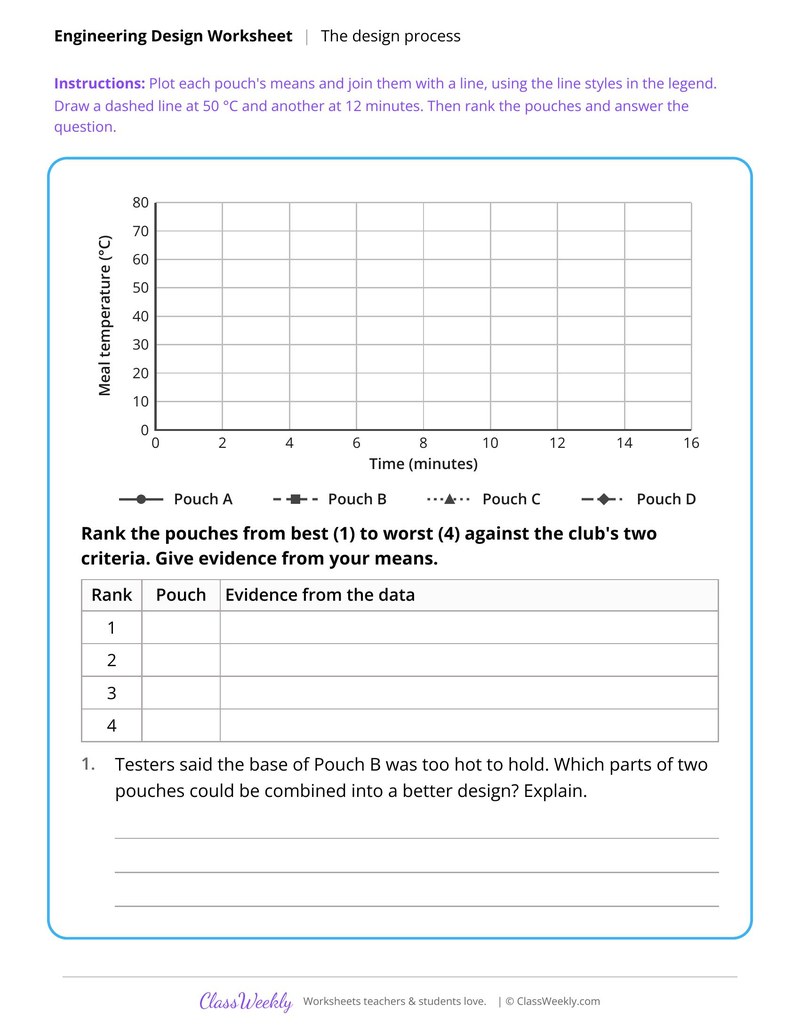
Test Self Heating Pouch Prototypes
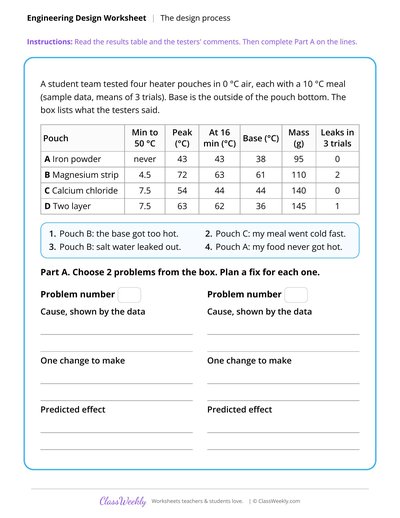
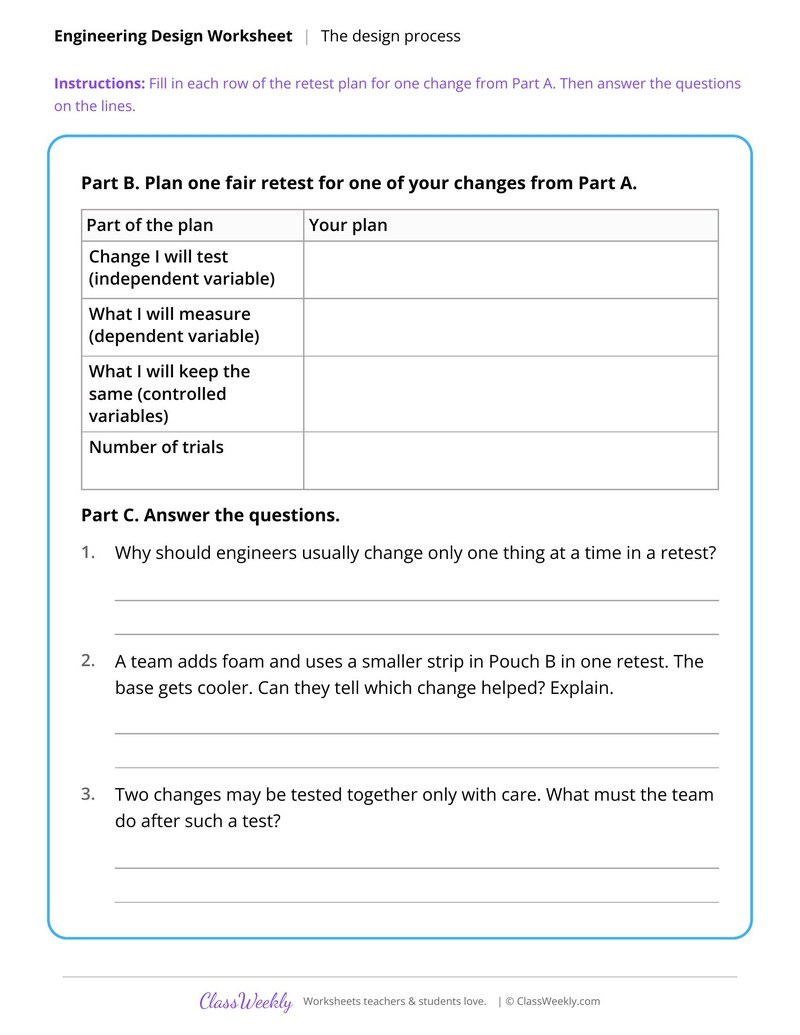
Redesign the Self Heating Pouch From Test Data
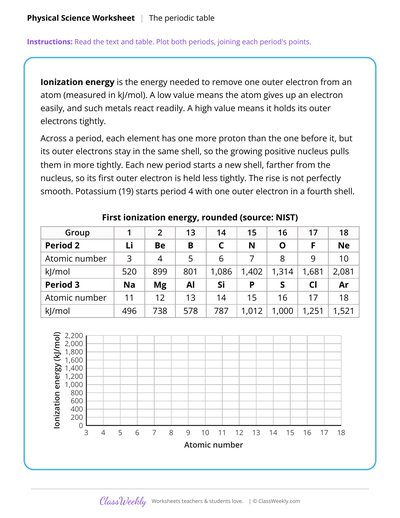
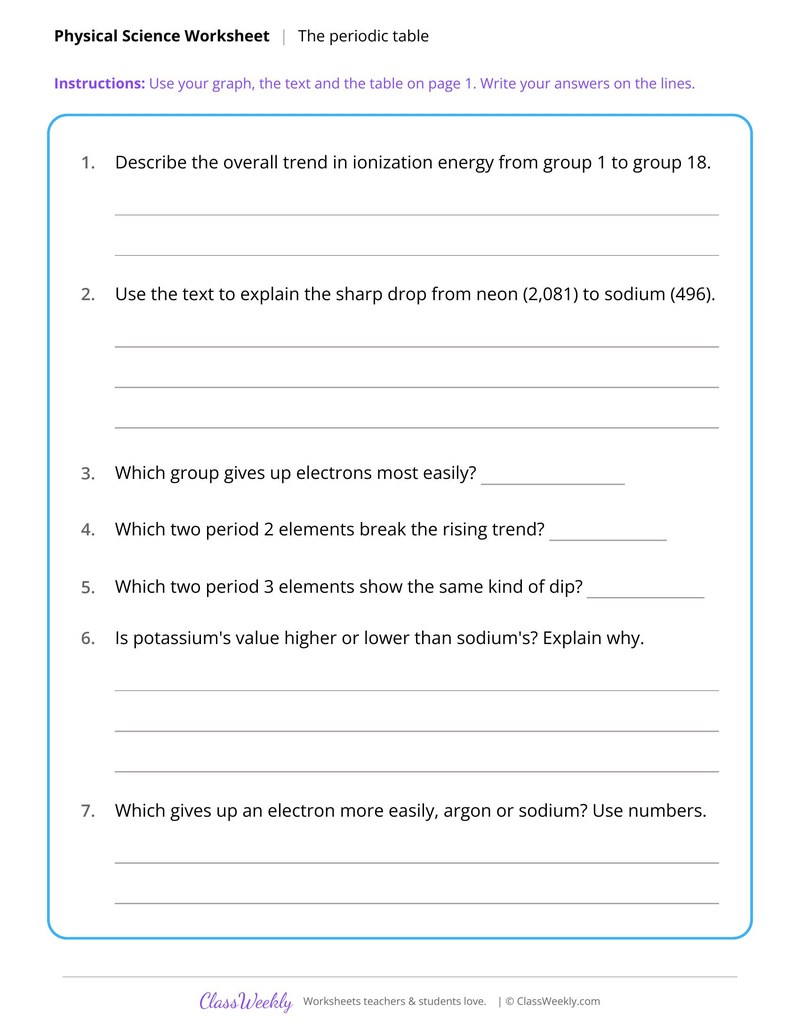
Graph First Ionization Energy Across Periods 2 and 3
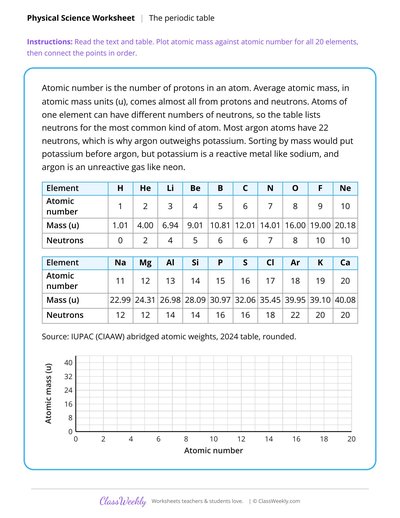
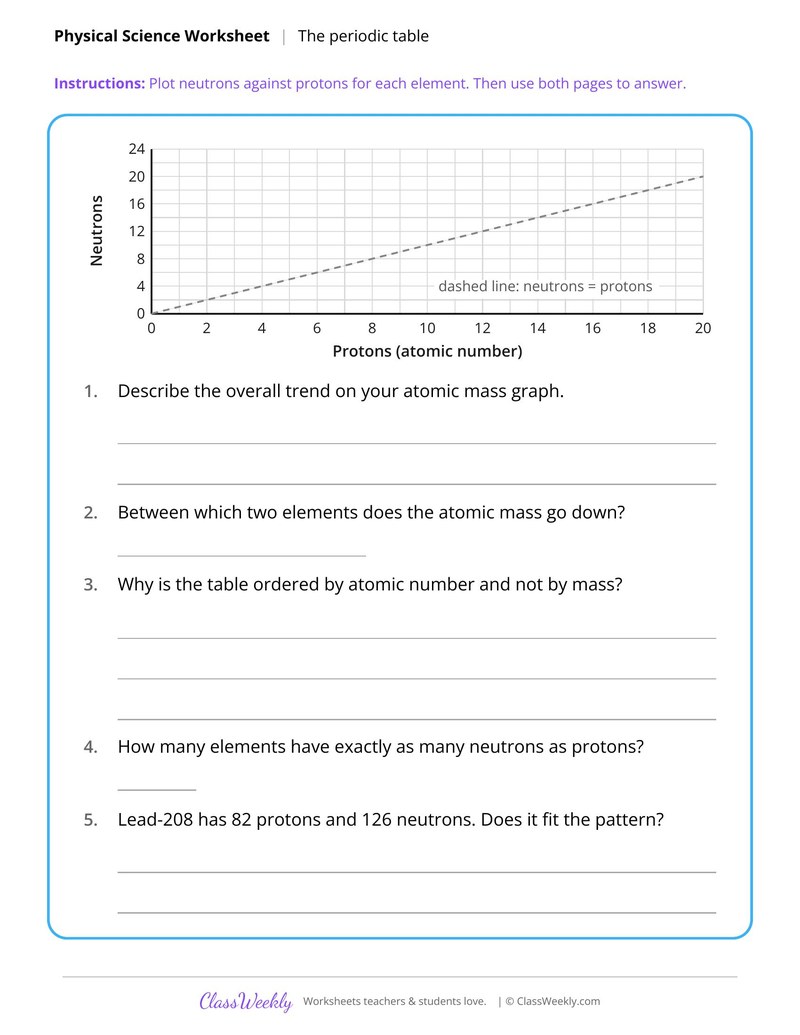
Graph Atomic Mass Against Atomic Number
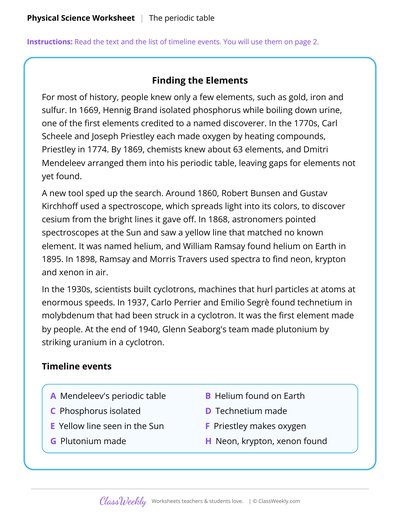
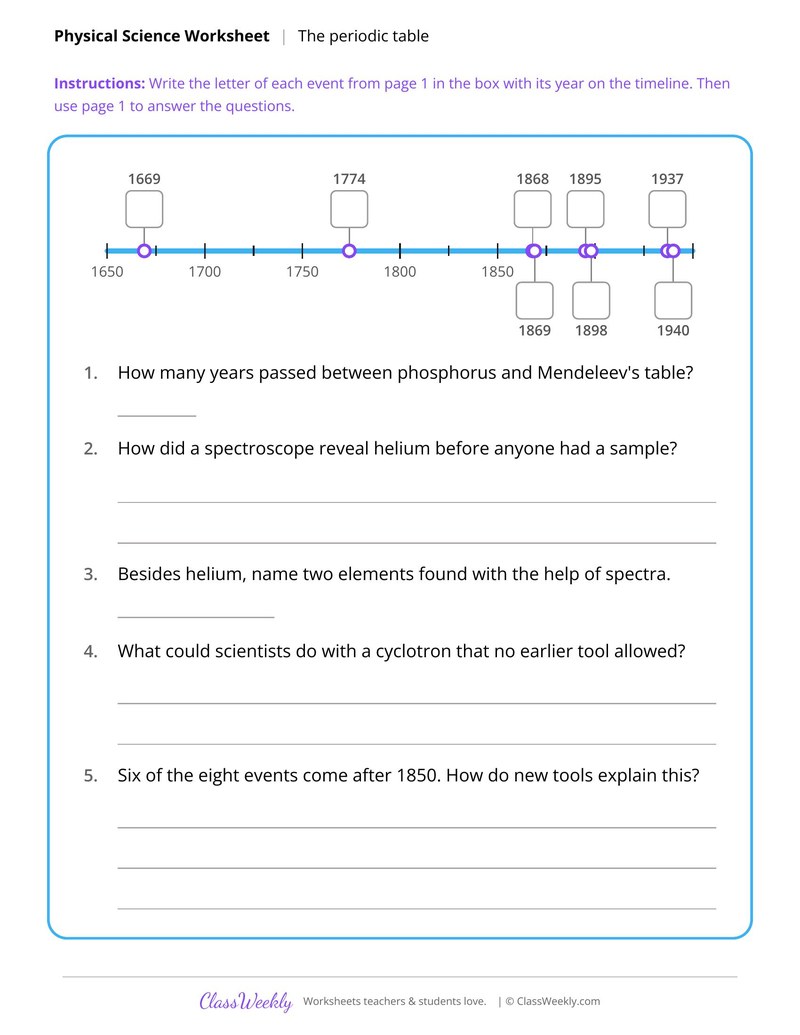
Element Discoveries Through Time
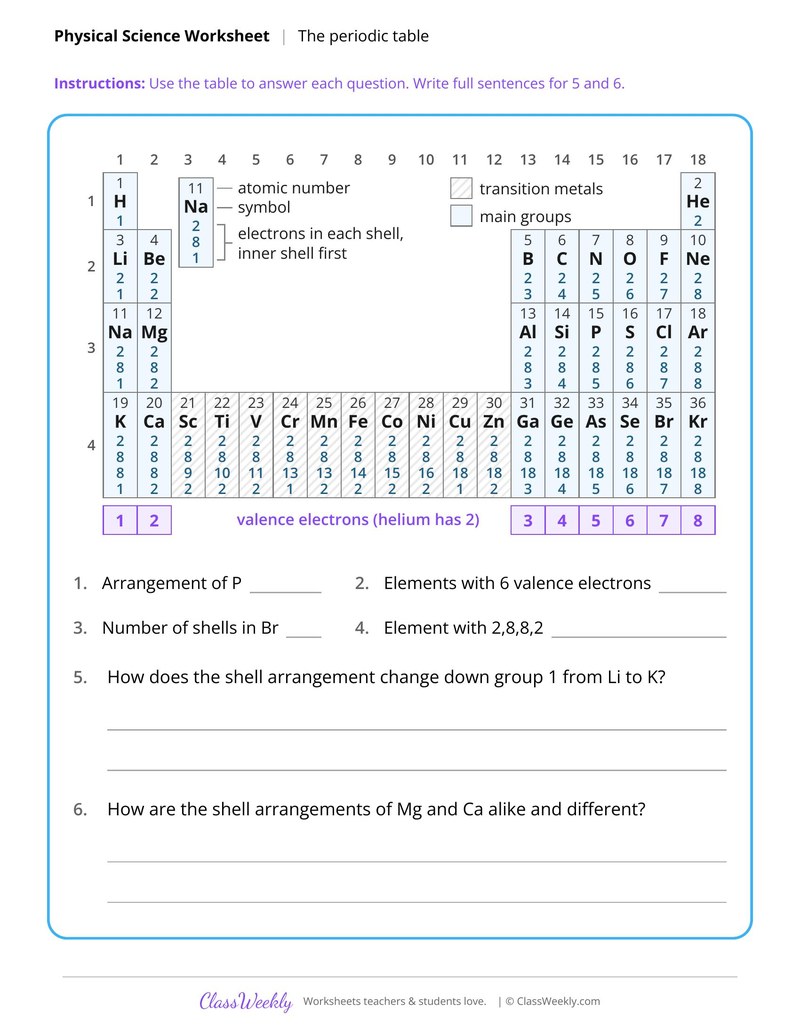
Periodic Table With Valence Electron Counts
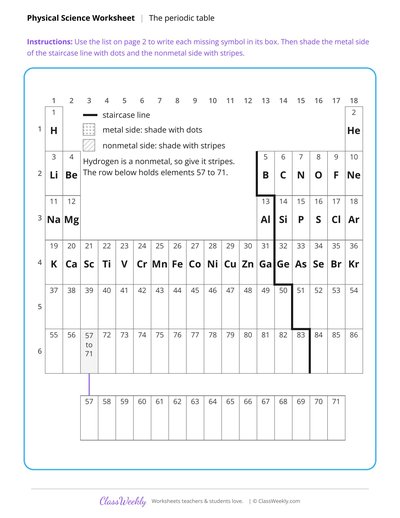
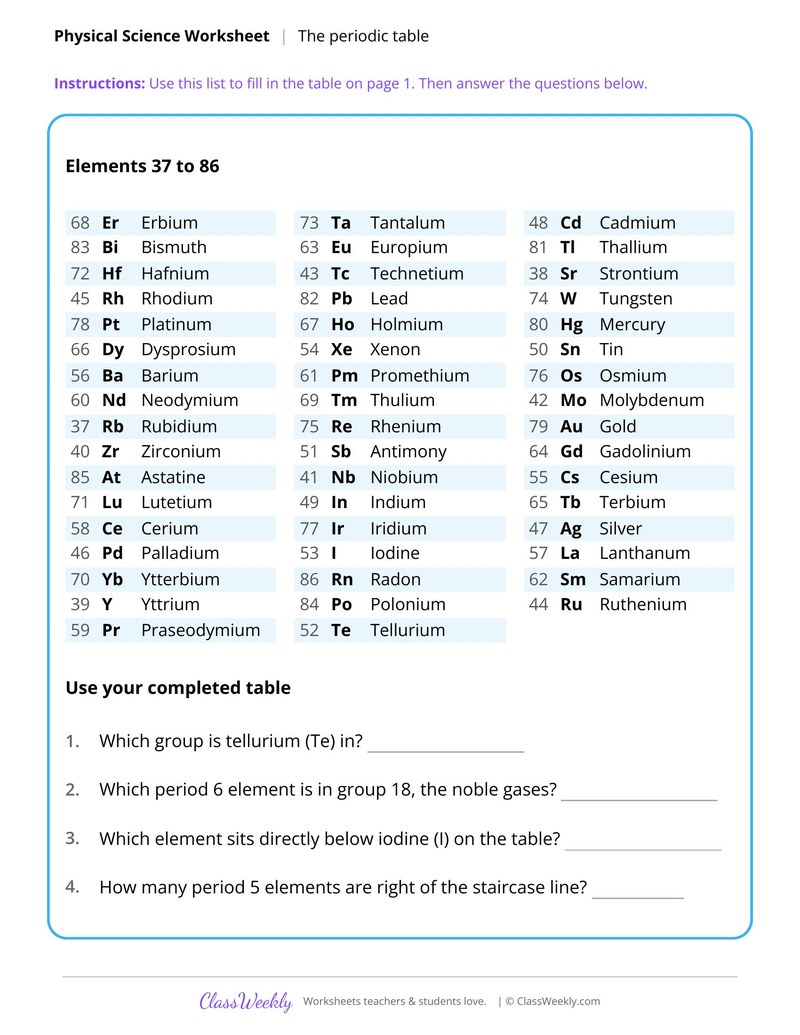
Complete Periods 5 and 6 on a Blank Table
Curriculum Links
Next Generation Science Standards
Science · 8th Grade
Find this in the curriculum
Browse the grade, subject, and topic this belongs to.
FAQ
How do I use this design process worksheet?
⌄
Teach the sheets in order as a short unit. Ask students to keep their answers from each sheet, since later sheets build on the same four pouches.
What does this worksheet teach?
⌄
Score four heater pouch prototypes in a weighted decision matrix using peak, time, mass and cost. The directions on the page read: Read the scenario and study the four design cards and the scoring guide. You will use them on page 2. An answer key is included.
Can I use this design process worksheet for homeschool or classroom?
⌄
Yes, both. We made it for 8th grade engineering and design, and it works the same at home or at school. At home, a student can work through it alone and then go over it with you, which shows quickly what is solid and what needs another look. In class it works as independent practice, homework or a warm-up, and you can print one copy or a full set.
What are the steps of the engineering design process?
⌄
Define the problem with criteria and constraints, compare possible designs, test prototypes and use the results to improve the best design. The four pouch sheets follow these steps in order. Each sheet builds on the last.
Why run three trials of each test?
⌄
Repeated trials show whether a result is reliable, and the mean smooths out random differences. Test Self Heating Pouch Prototypes has students average three trials at each time. They then graph the means against the 50 °C goal.
What makes a retest fair?
⌄
Change only one thing, the independent variable, and keep everything else the same. Measure the dependent variable the same way each time. The redesign sheet has students fill in a retest plan with each variable named.
Ratings & Reviews
No reviews yet. Be the first to share what you think.
Reviews are for ClassWeekly members.
Make a Request
Spotted something to fix, or want a worksheet we don't have yet? Tell us and we'll make it.
Worksheet Details
| Grade | 8th Grade |
| Subject | Science |
| Topic | Engineering and Design |
| Standard | MS-ETS1-2 |
| Pages | 2 pages |
| Difficulty | Medium |
What is ClassWeekly?
ClassWeekly offers free worksheets and printable learning resources for kids, from preschool up. All worksheets are aligned to Common Core, NGSS, and C3 Framework standards and designed by educators. Become a member to access the full library and download unlimited PDFs.
Criteria and Constraints for a Self Heating Pouch
Test Self Heating Pouch Prototypes
Redesign the Self Heating Pouch From Test Data
Graph First Ionization Energy Across Periods 2 and 3
Graph Atomic Mass Against Atomic Number
Element Discoveries Through Time
Periodic Table With Valence Electron Counts
Complete Periods 5 and 6 on a Blank Table