Force Pairs on a Snowboard Run
Written by Adi Ackerman, Head Teacher
"Force Pairs on a Snowboard Run" is written for 8th Grade (Ages 13-14), and it covers NGSS MS-PS2-1. A 7th grader who is already steady on forces and motion can use it too, and an older student can use it as a short review.
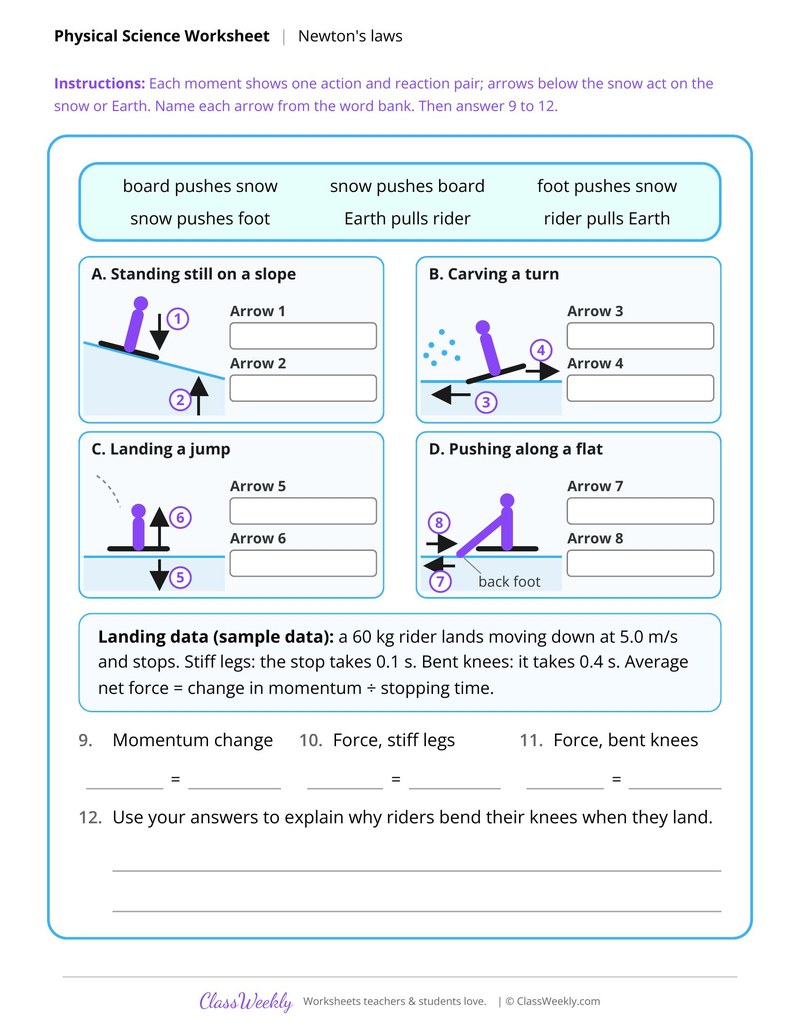
8th grade science worksheet: name action and reaction pairs on a snowboard run and find landing forces with stiff or bent knees. Answer key included. Part of our Newton's laws forces and motion collection. Aligned to NGSS standards.
How do I use this worksheet?
Use the elevator sheet first to set up balanced and unbalanced forces. Then use the graph and ski slope sheets for F = m × a, and finish with the two force pair sheets.
What students will practice
- Students will name each force in four action and reaction pairs from a word bank.
- Students will calculate the momentum change of a 60 kg rider landing at 5.0 m/s.
- Students will compare stopping forces over 0.1 s and 0.4 s to explain why riders bend their knees.
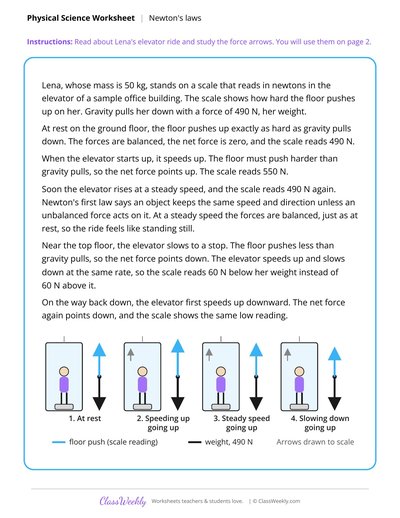
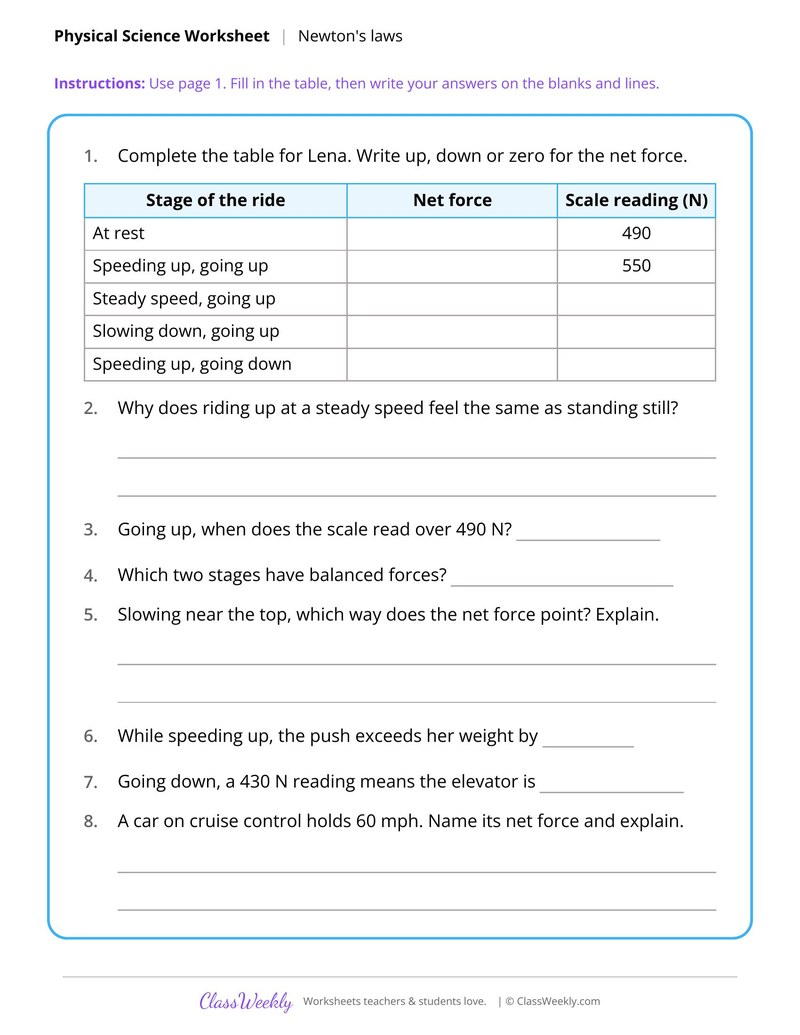
Newton's First Law on an Elevator Ride
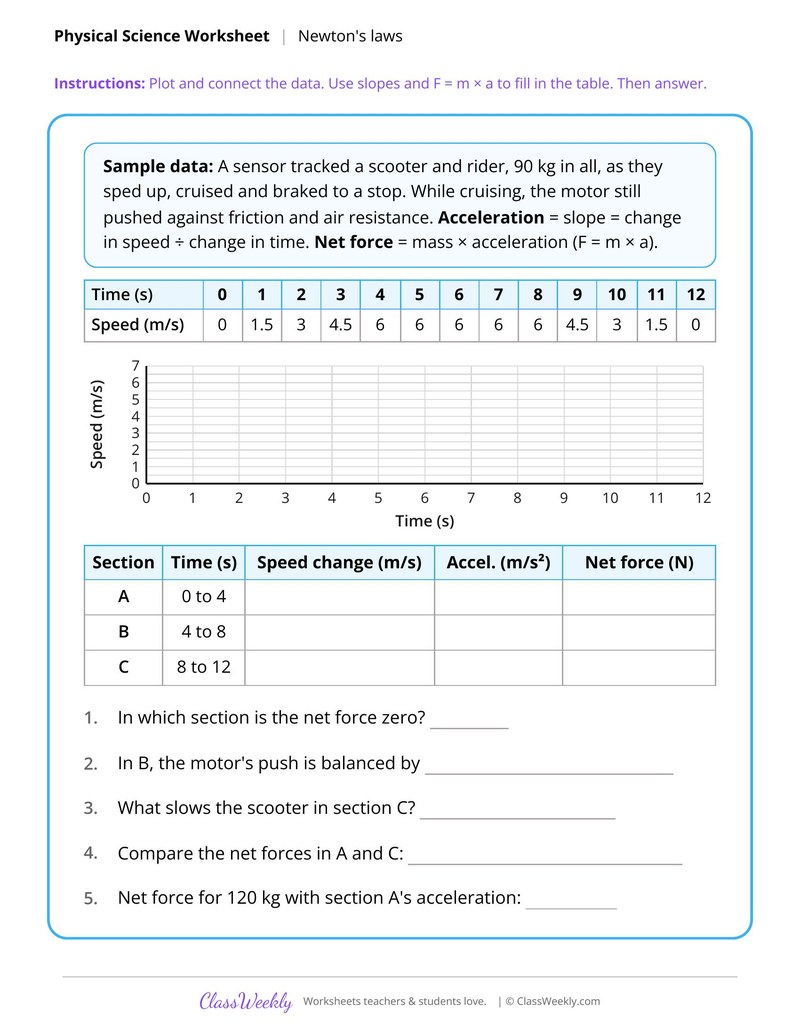
Find Net Force From a Speed Time Graph
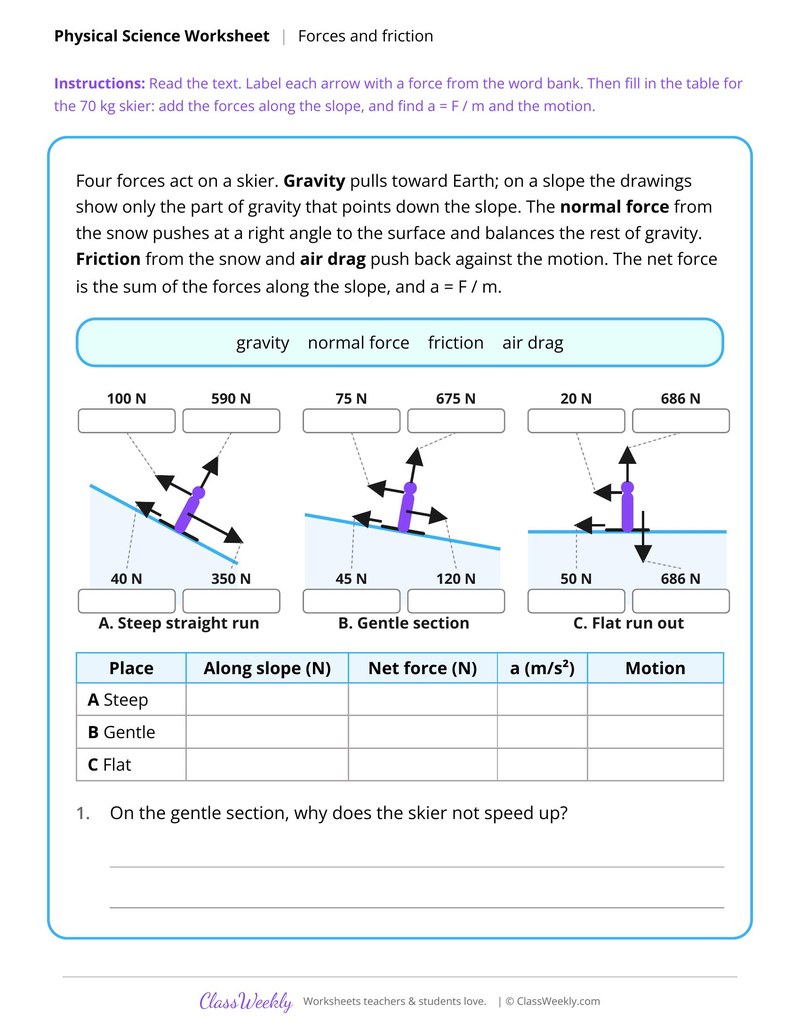
Net Force Diagrams Down a Ski Slope
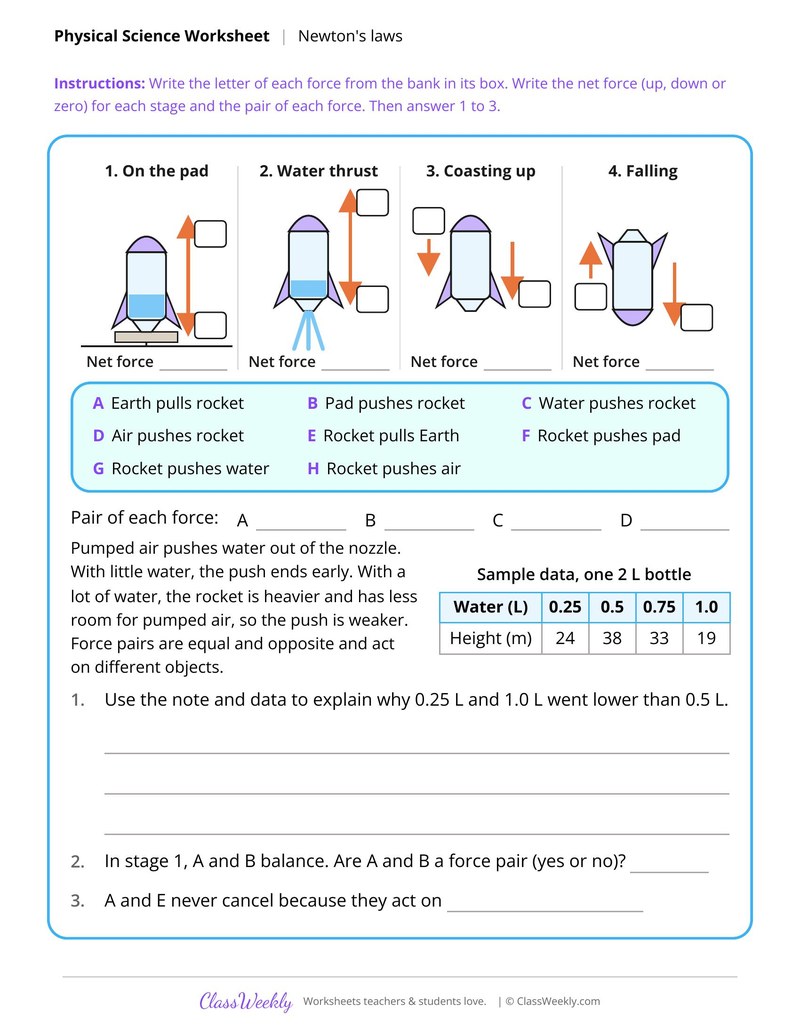
Force Pairs in a Water Rocket Launch
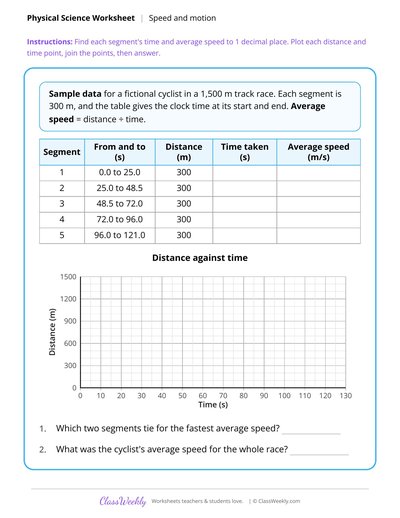
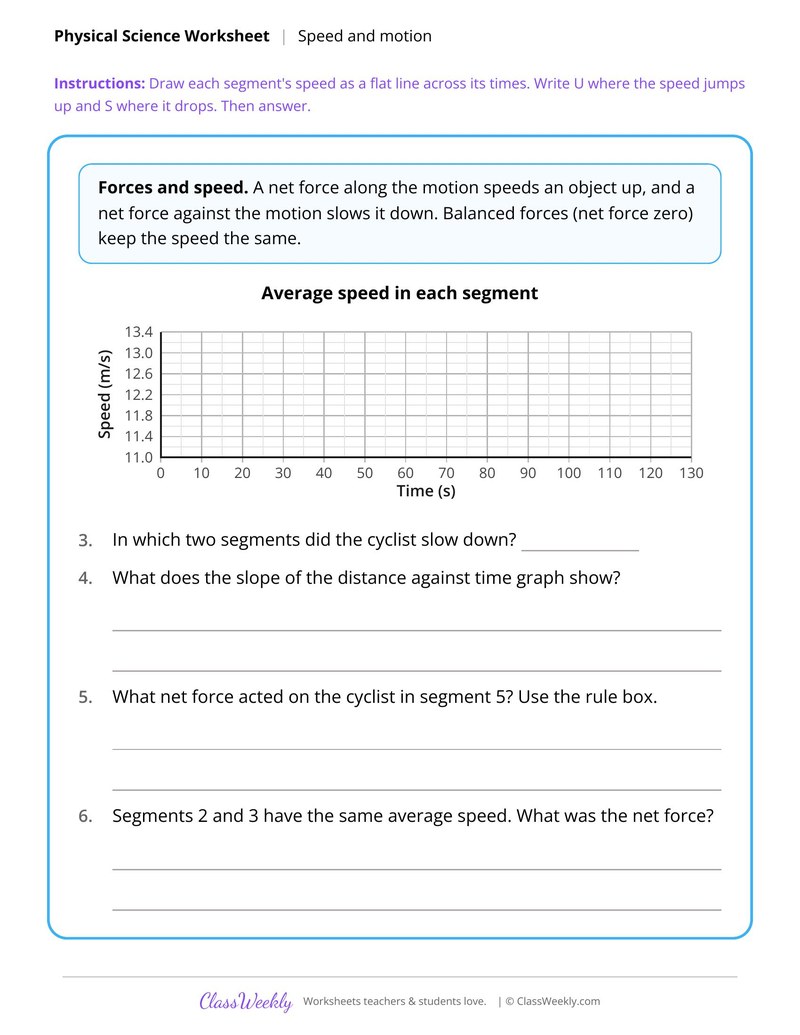
Position and Speed Graphs of a Cycling Race
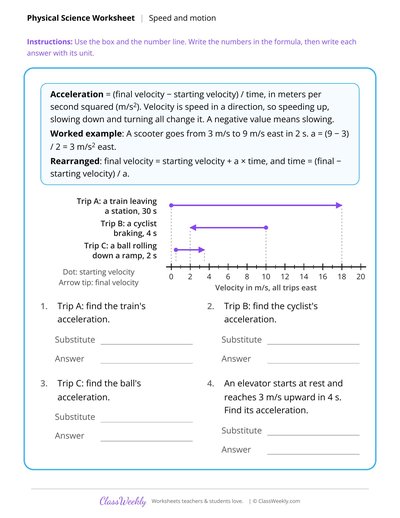
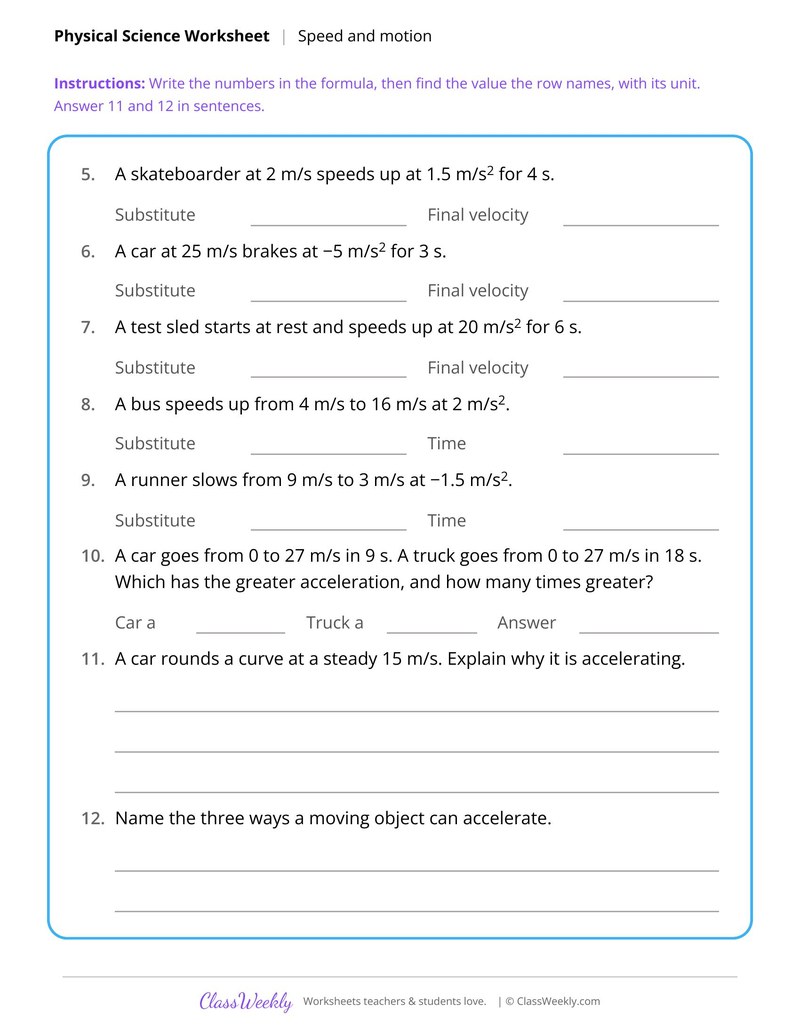
Calculate Acceleration From Velocity Changes
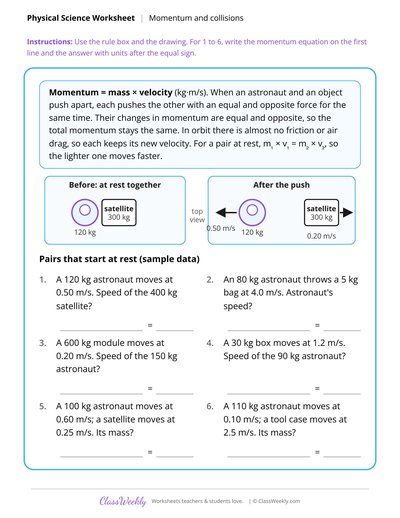
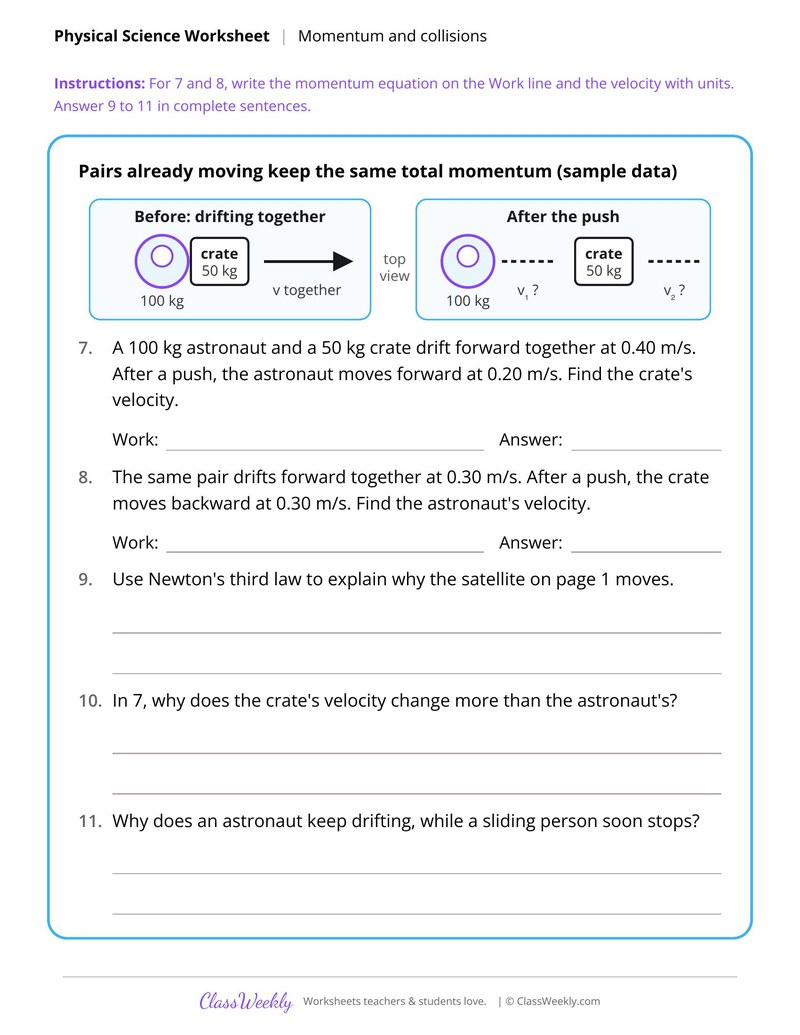
Momentum When an Astronaut Pushes Off in Space
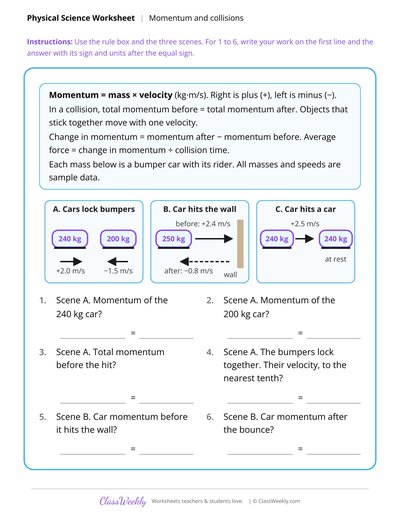
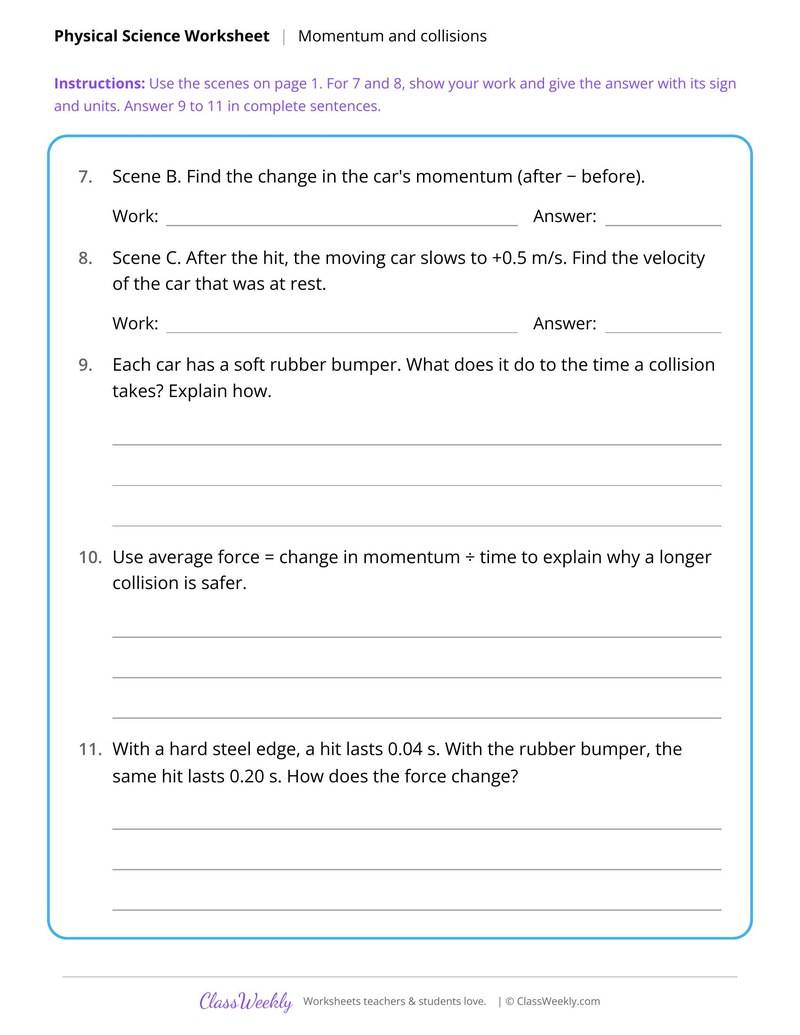
Momentum in Bumper Car Collisions
Curriculum Links
Next Generation Science Standards
Science · 8th Grade
Find this in the curriculum
Browse the grade, subject, and topic this belongs to.
FAQ
How do I use this Newton's laws worksheet?
⌄
Use the elevator sheet first to set up balanced and unbalanced forces. Then use the graph and ski slope sheets for F = m × a, and finish with the two force pair sheets.
What does this worksheet teach?
⌄
Name action and reaction pairs on a snowboard run and find landing forces with stiff or bent knees. The directions on the page read: Each moment shows one action and reaction pair; arrows below the snow act on the snow or Earth. Name each arrow from the word bank. Then answer 9 to 12. An answer key is included.
Can I use this Newton's laws worksheet for homeschool or classroom?
⌄
Yes, both. We made it for 8th grade forces and motion, and it works the same at home or at school. At home, a student can work through it alone and then go over it with you, which shows quickly what is solid and what needs another look. In class it works as independent practice, homework or a warm-up, and you can print one copy or a full set.
What is net force?
⌄
Net force is the sum of all the forces on an object, with direction. When it is zero, the object keeps the same speed and direction. When it is not zero, the object speeds up, slows down or turns, with a = F / m.
Why do action and reaction forces not cancel?
⌄
The two forces in a pair are equal and opposite, but they act on different objects. On a water rocket, Earth pulls the rocket and the rocket pulls Earth, so the forces never cancel on either one. Force Pairs in a Water Rocket Launch makes this point.
Why does an elevator feel heavier when it starts going up?
⌄
While it speeds up, the floor must push harder than gravity pulls, so the scale reading rises. On the elevator sheet, Lena's 490 N weight reads 550 N while the elevator speeds up. At a steady speed it reads 490 N again.
Ratings & Reviews
No reviews yet. Be the first to share what you think.
Reviews are for ClassWeekly members.
Make a Request
Spotted something to fix, or want a worksheet we don't have yet? Tell us and we'll make it.
Worksheet Details
| Grade | 8th Grade |
| Subject | Science |
| Topic | Forces and Motion |
| Standard | MS-PS2-1 |
| Pages | 1 page |
| Difficulty | Medium |
What is ClassWeekly?
ClassWeekly offers free worksheets and printable learning resources for kids, from preschool up. All worksheets are aligned to Common Core, NGSS, and C3 Framework standards and designed by educators. Become a member to access the full library and download unlimited PDFs.
Newton's First Law on an Elevator Ride
Find Net Force From a Speed Time Graph
Net Force Diagrams Down a Ski Slope
Force Pairs in a Water Rocket Launch
Position and Speed Graphs of a Cycling Race
Calculate Acceleration From Velocity Changes
Momentum When an Astronaut Pushes Off in Space
Momentum in Bumper Car Collisions