Thermal Energy and Particles in a Cooling Curve
Written by Adi Ackerman, Head Teacher
"Thermal Energy and Particles in a Cooling Curve" is written for 8th Grade (Ages 13-14), and it covers NGSS MS-PS1-4. A 7th grader who is already steady on matter can use it too, and an older student can use it as a short review.
2 pages in this set
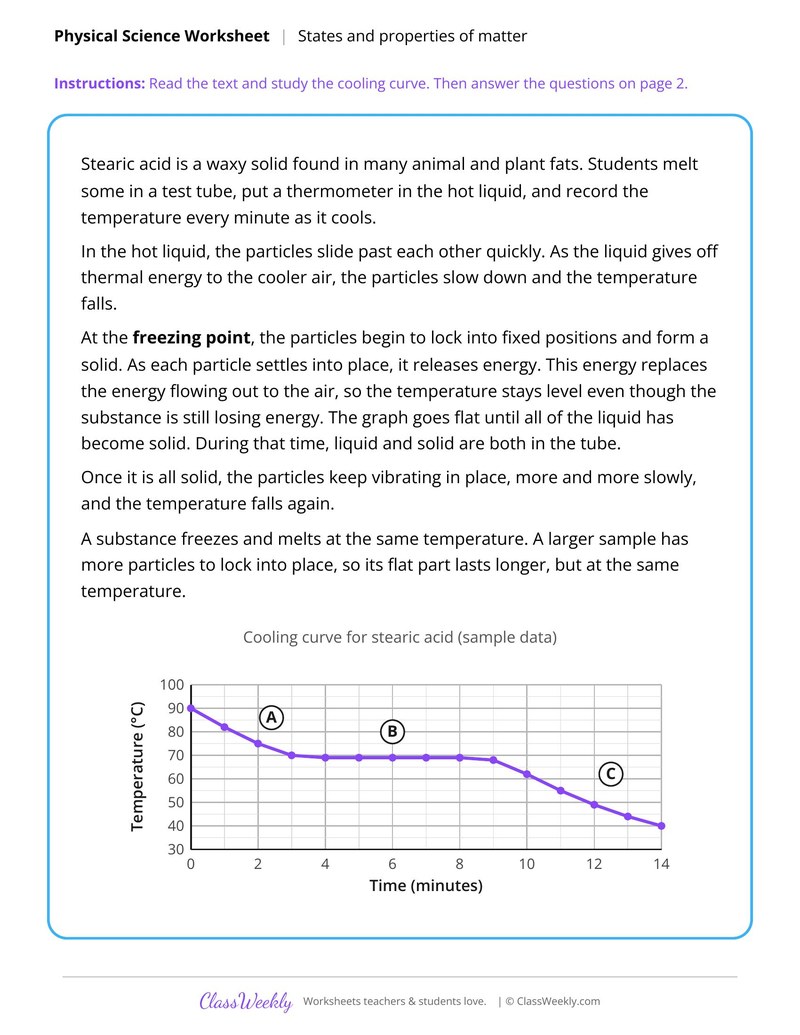
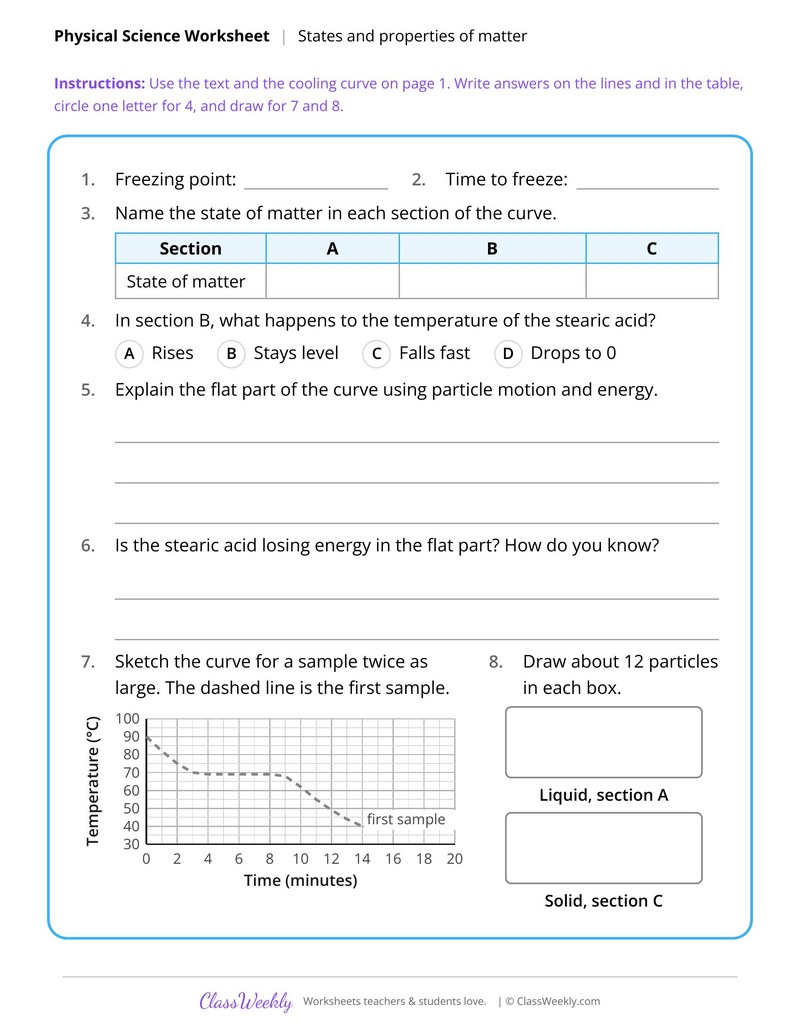
8th grade science worksheet: read a stearic acid cooling curve to find its freezing point and explain the flat part with particles. Answer key included. Part of our states and properties of matter collection. Aligned to NGSS standards.
How do I use this worksheet?
Use the cooling curve sheet alongside lessons on states of matter and thermal energy. The pH, soap and plastics sheets each stand alone and work as follow ups to a short demonstration.
What students will practice
- Students will read the freezing point and freezing time from a cooling curve.
- Students will name the state of matter in each section of the curve.
- Students will explain why the temperature stays level while energy still flows out.
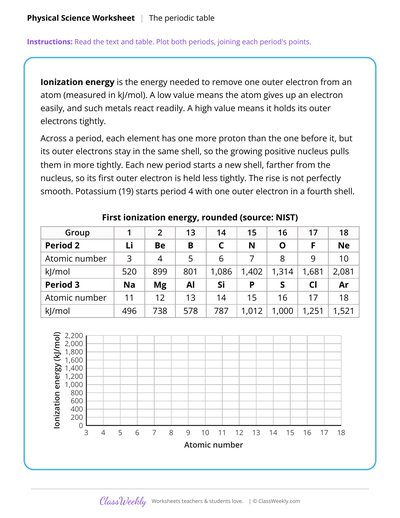
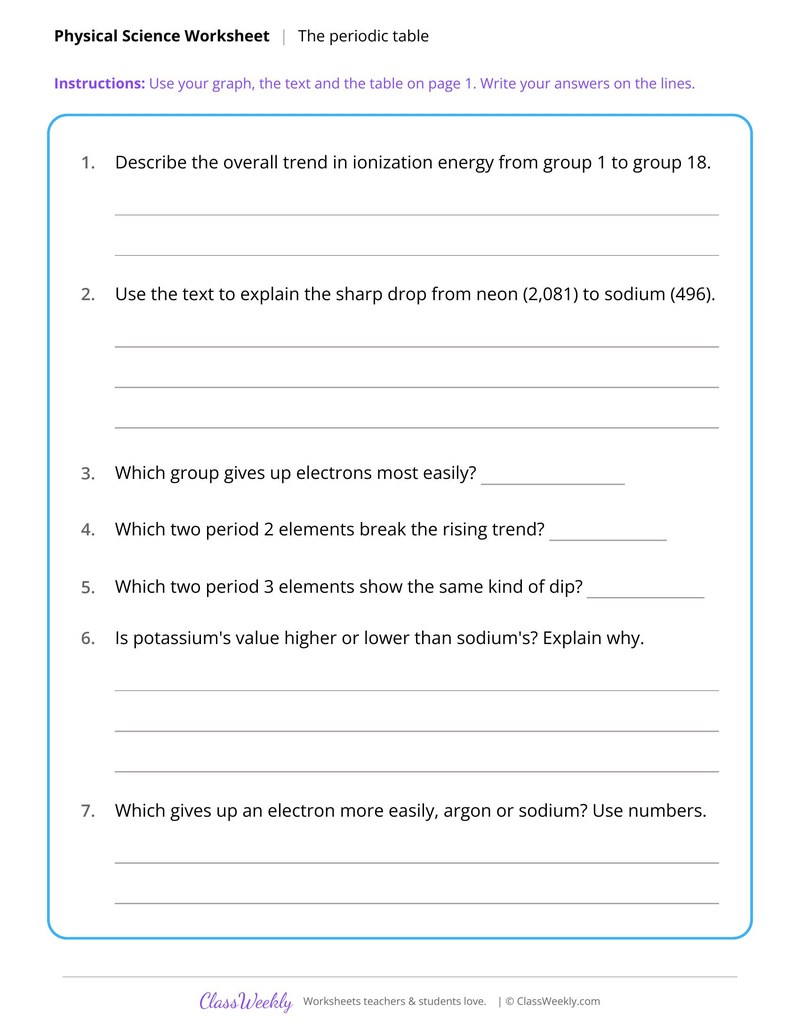
Graph First Ionization Energy Across Periods 2 and 3
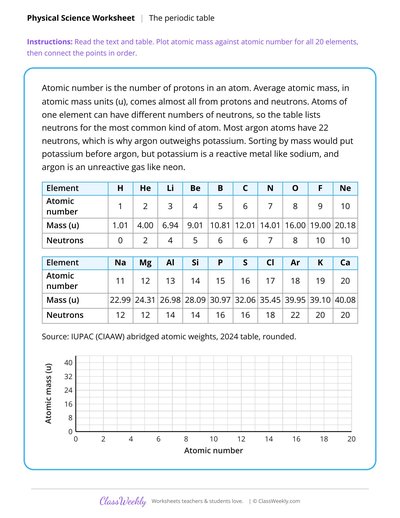
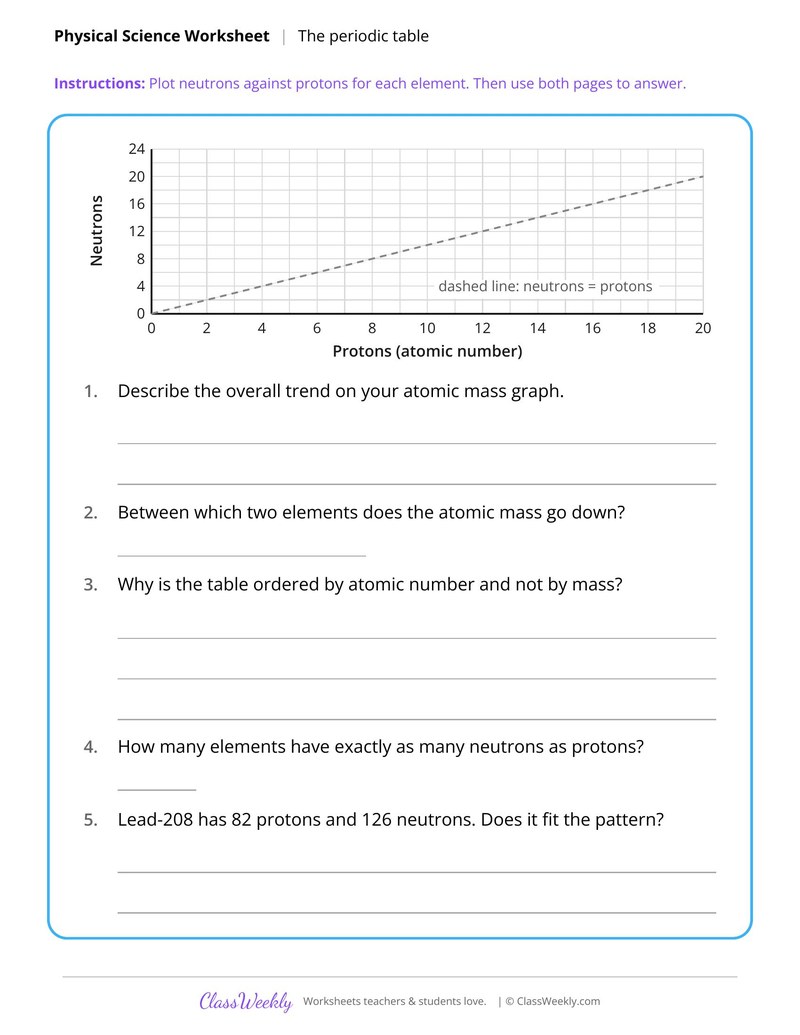
Graph Atomic Mass Against Atomic Number
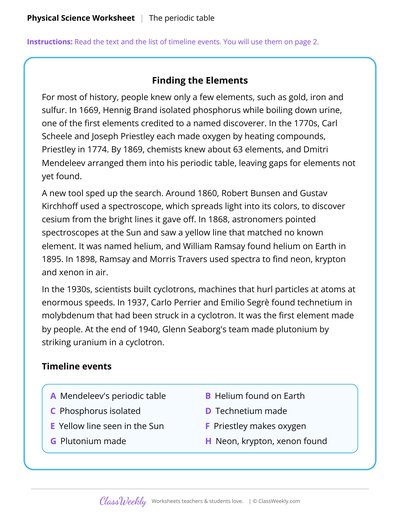
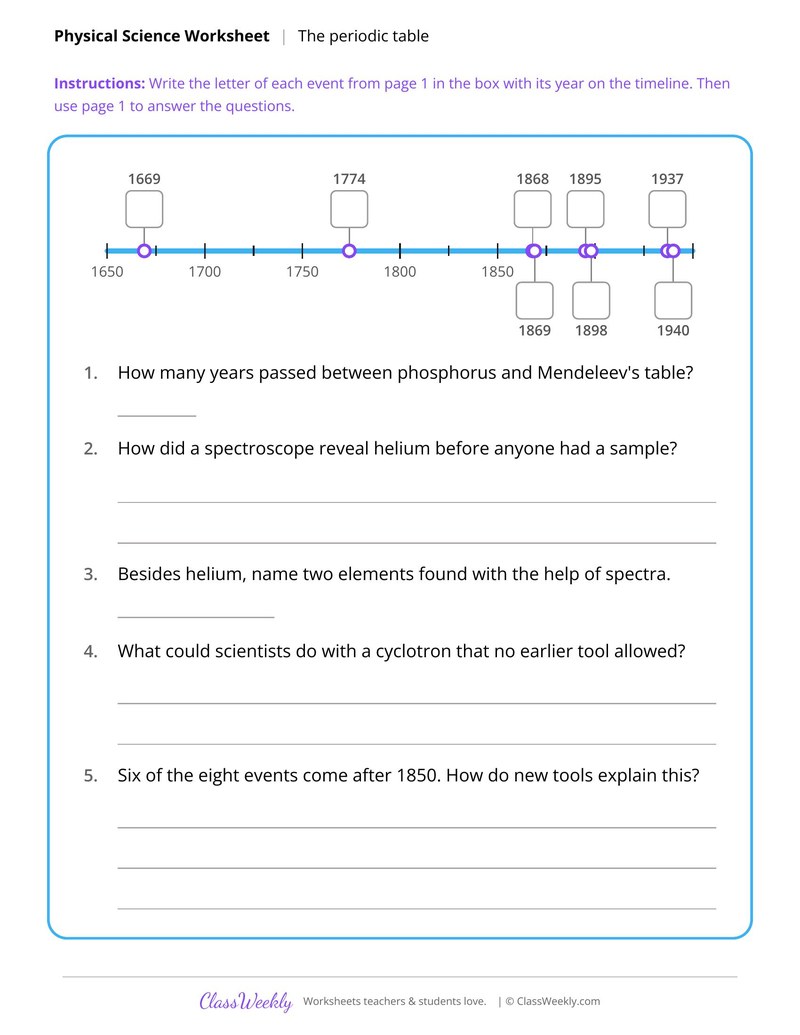
Element Discoveries Through Time
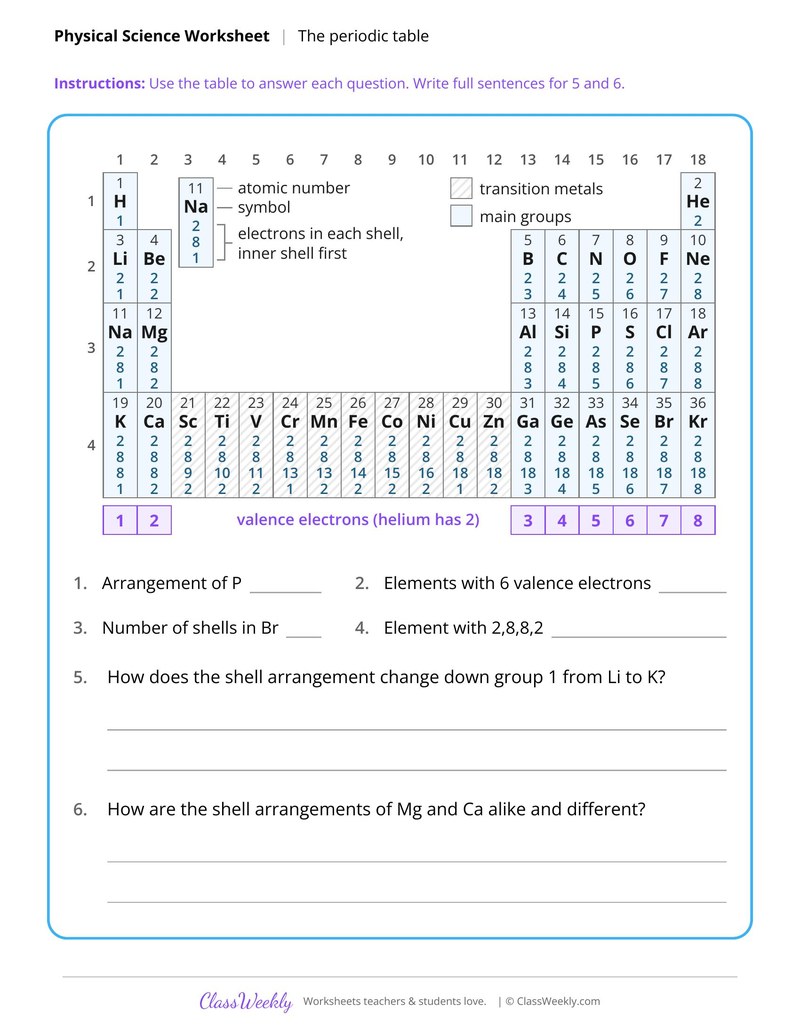
Periodic Table With Valence Electron Counts
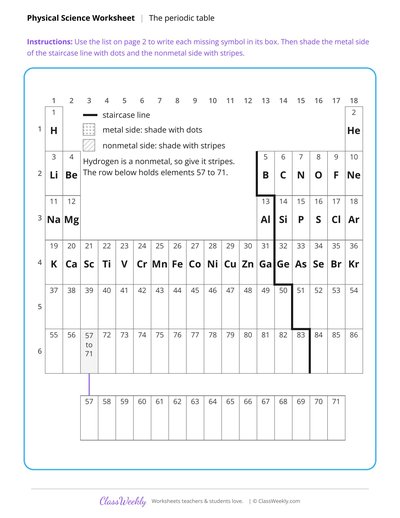
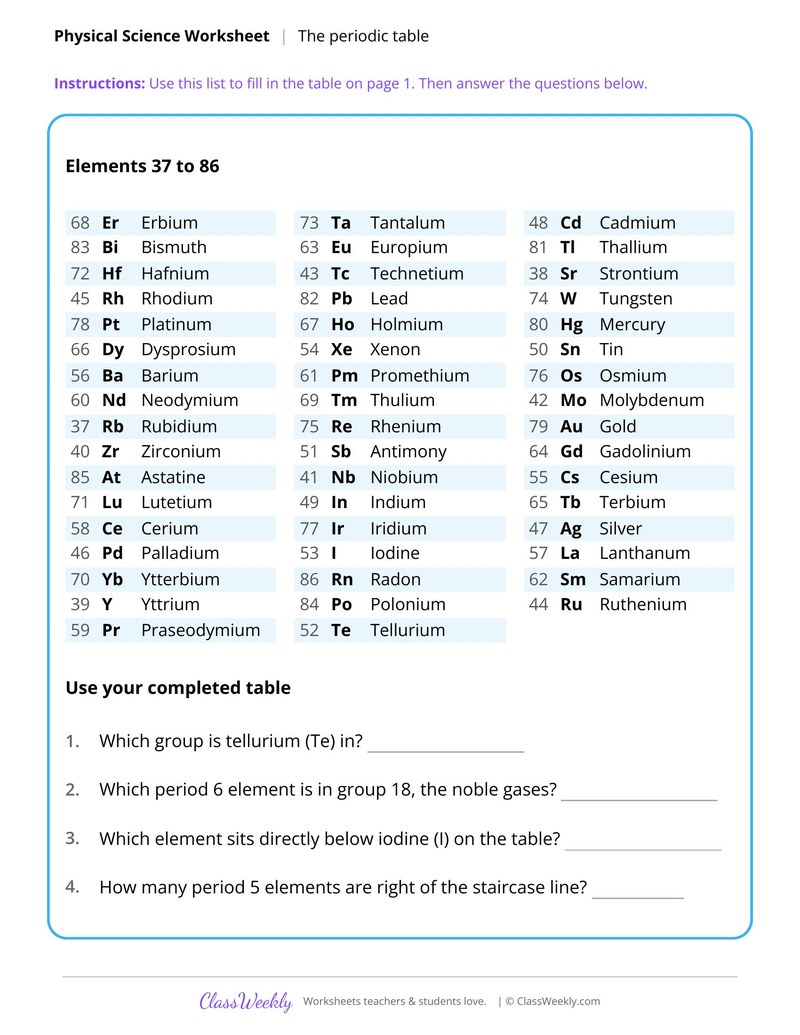
Complete Periods 5 and 6 on a Blank Table
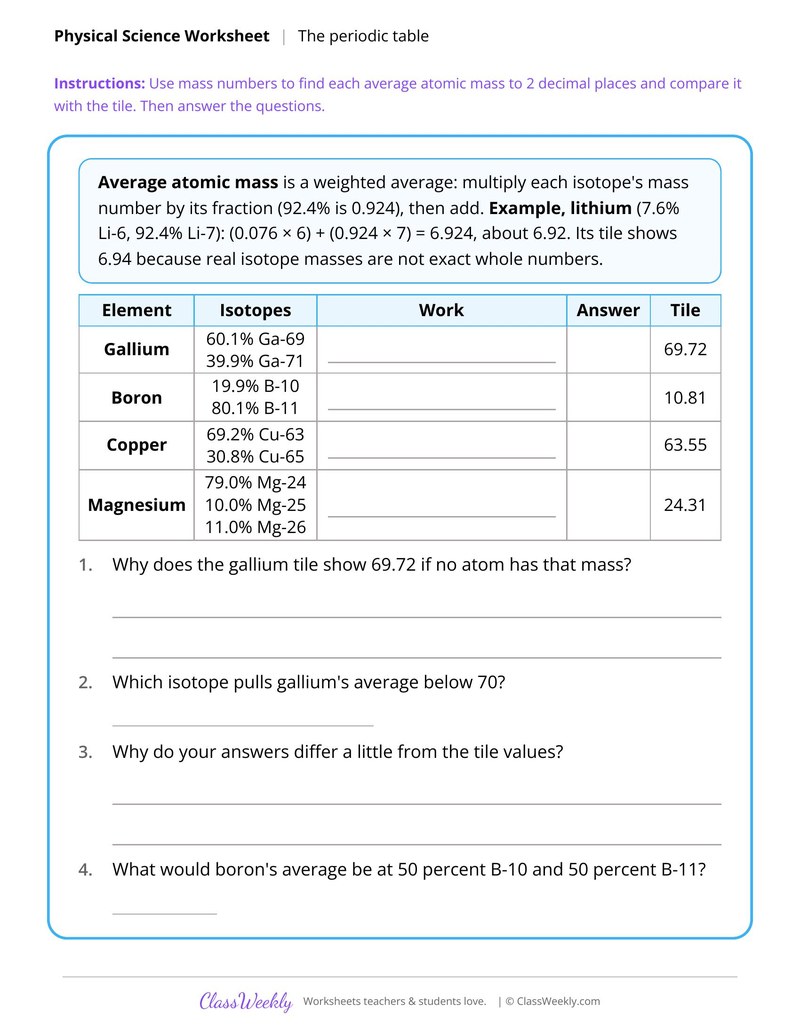
Calculate Average Atomic Mass From Isotopes
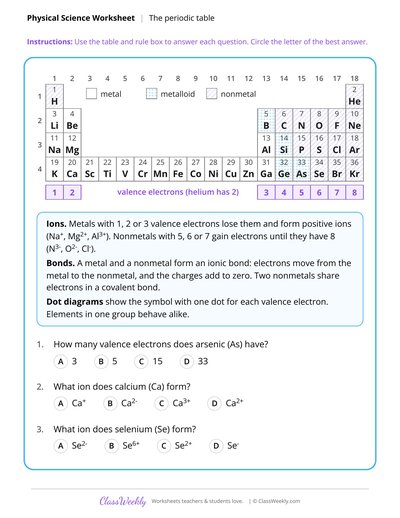
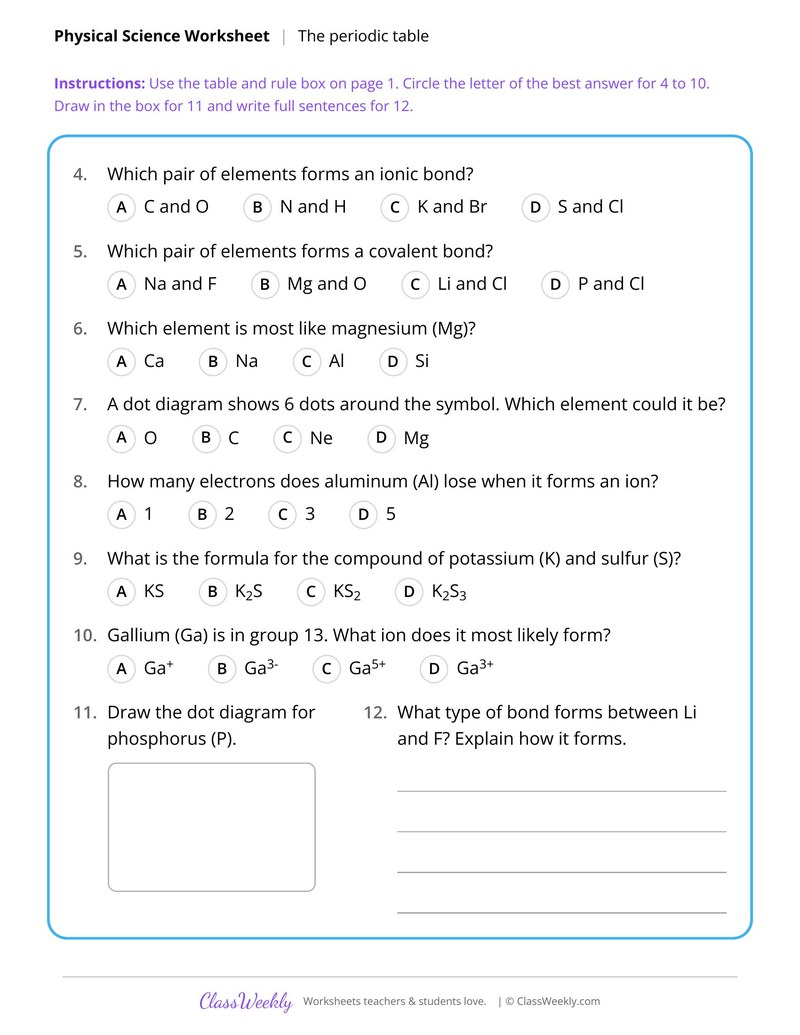
Periodic Table and Bonding Review Quiz
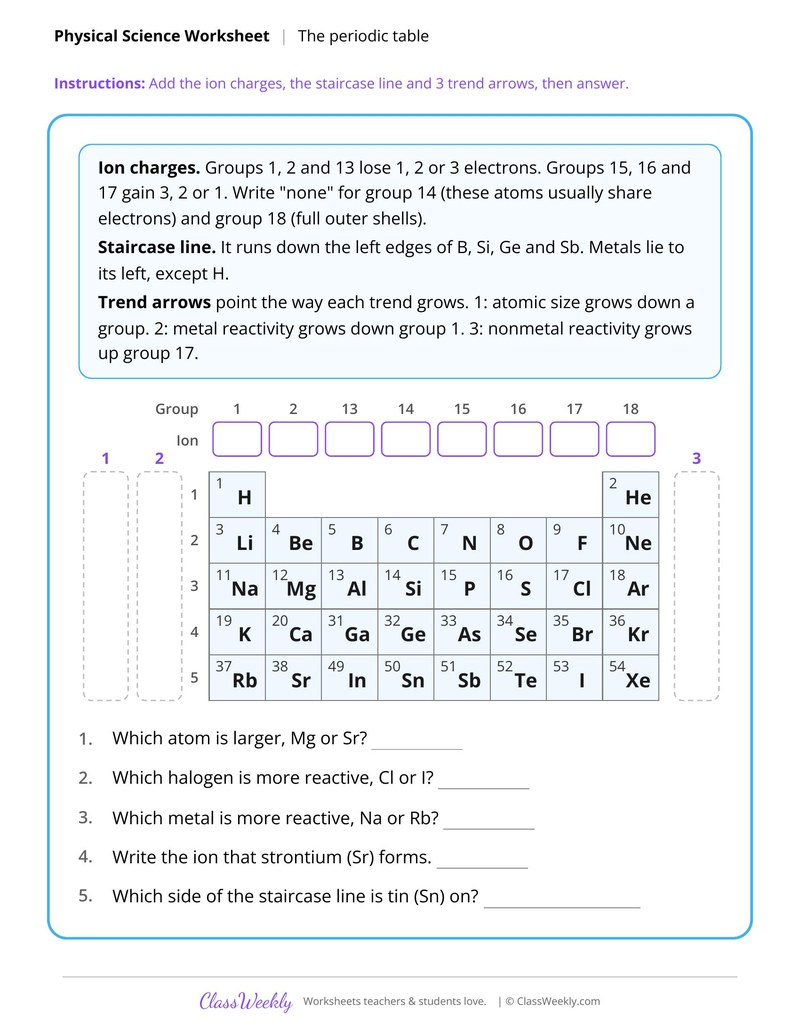
Label Ion Charges and Trends on the Table
Curriculum Links
Next Generation Science Standards
Science · 8th Grade
Find this in the curriculum
Browse the grade, subject, and topic this belongs to.
FAQ
How do I use this states and properties of matter worksheet?
⌄
Use the cooling curve sheet alongside lessons on states of matter and thermal energy. The pH, soap and plastics sheets each stand alone and work as follow ups to a short demonstration.
What does this worksheet teach?
⌄
Read a stearic acid cooling curve to find its freezing point and explain the flat part with particles. The directions on the page read: Read the text and study the cooling curve. Then answer the questions on page 2. An answer key is included.
Can I use this states and properties of matter worksheet for homeschool or classroom?
⌄
Yes, both. We made it for 8th grade matter, and it works the same at home or at school. At home, a student can work through it alone and then go over it with you, which shows quickly what is solid and what needs another look. In class it works as independent practice, homework or a warm-up, and you can print one copy or a full set.
Why does a cooling curve have a flat part?
⌄
At the freezing point, particles lock into place and release energy as they settle. That energy replaces the energy flowing out, so the temperature stays level until all the liquid is solid. Thermal Energy and Particles in a Cooling Curve has students read this flat part for stearic acid.
What does the pH scale measure?
⌄
The pH scale shows how acidic or basic a solution is, from 0 to 14, with 7 as neutral. Each step is a tenfold change in hydrogen ions, so pH 3 has 100 times as many as pH 5. Acids, Bases and Neutralization Reactions practices these comparisons.
How does soap remove grease?
⌄
A soap molecule has a head that is attracted to water and a tail that mixes with oil. The tails push into a grease drop while the heads stay in the water, forming a micelle that rinses away. How Soap Molecules Lift Oil From Water also explains surface tension with a floating paper clip.
Ratings & Reviews
No reviews yet. Be the first to share what you think.
Reviews are for ClassWeekly members.
Make a Request
Spotted something to fix, or want a worksheet we don't have yet? Tell us and we'll make it.
What is ClassWeekly?
ClassWeekly offers free worksheets and printable learning resources for kids, from preschool up. All worksheets are aligned to Common Core, NGSS, and C3 Framework standards and designed by educators. Become a member to access the full library and download unlimited PDFs.
Graph First Ionization Energy Across Periods 2 and 3
Graph Atomic Mass Against Atomic Number
Element Discoveries Through Time
Periodic Table With Valence Electron Counts
Complete Periods 5 and 6 on a Blank Table
Calculate Average Atomic Mass From Isotopes
Periodic Table and Bonding Review Quiz
Label Ion Charges and Trends on the Table