Personal Safety Incident Reports
Written by Adi Ackerman, Head Teacher
"Personal Safety Incident Reports" is written for 8th Grade (Ages 13-14). A 7th grader who is already steady on scientific method can use it too, and an older student can use it as a short review.
2 pages in this set
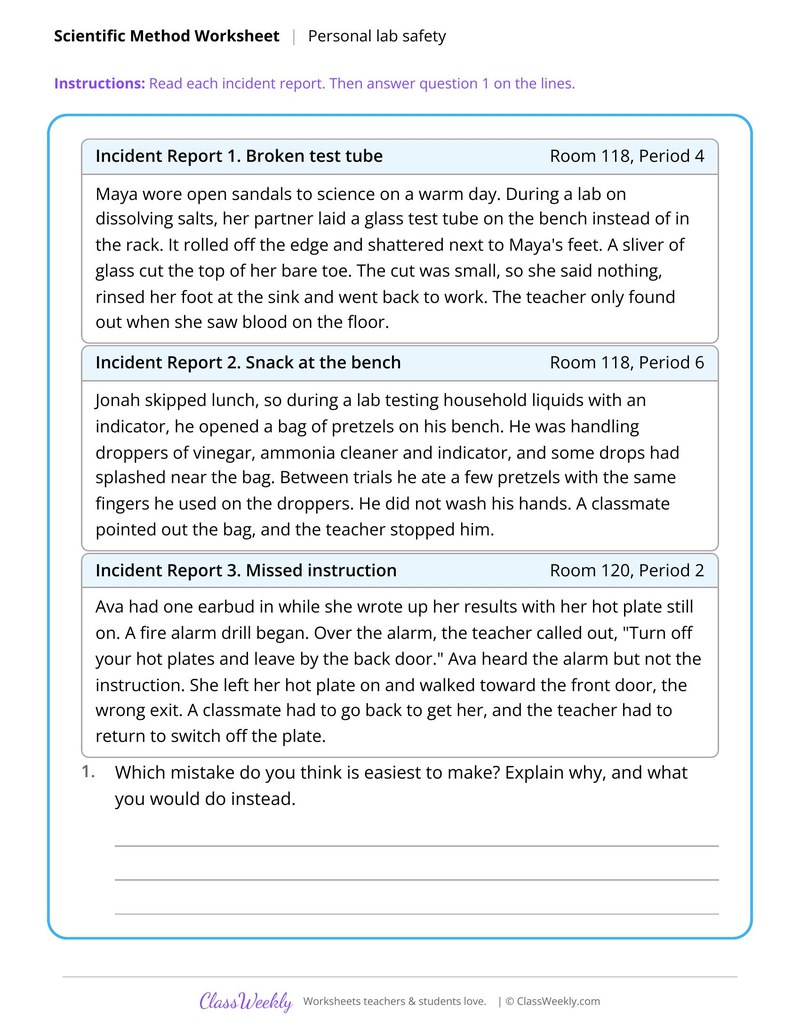
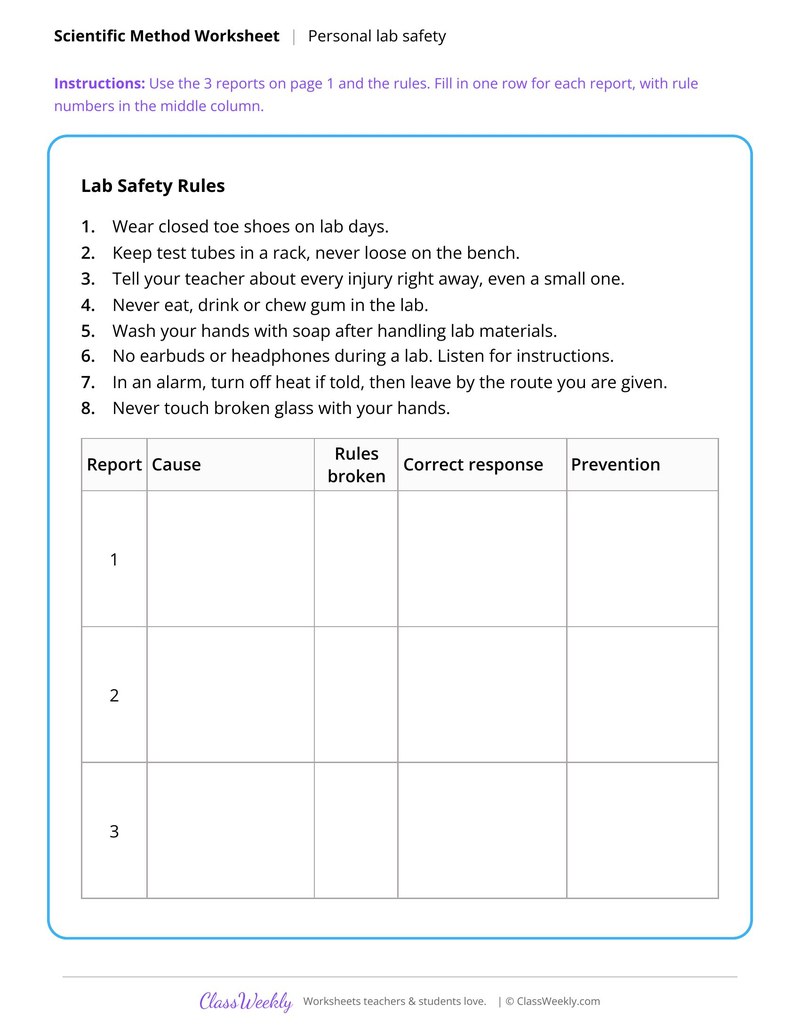
8th grade science worksheet: match lab safety rules to three incident reports, including open sandals and a snack at the bench. Answer key included. Part of our lab safety and measurement scientific method collection.
How do I use this worksheet?
Use the safety data sheet and storage sheets before a lab with chemicals. Pair the precision and scale bar sheets with real tools, and use the incident reports for discussion of what went wrong.
What students will practice
- Students will read three lab incident reports and find what went wrong in each.
- Students will match each report to the numbered lab safety rules that were broken.
- Students will explain what each student should have done to stay safe.
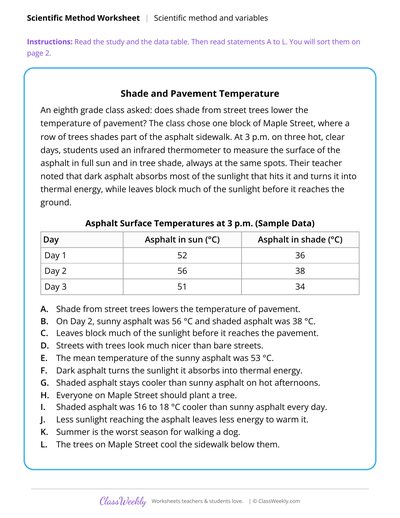
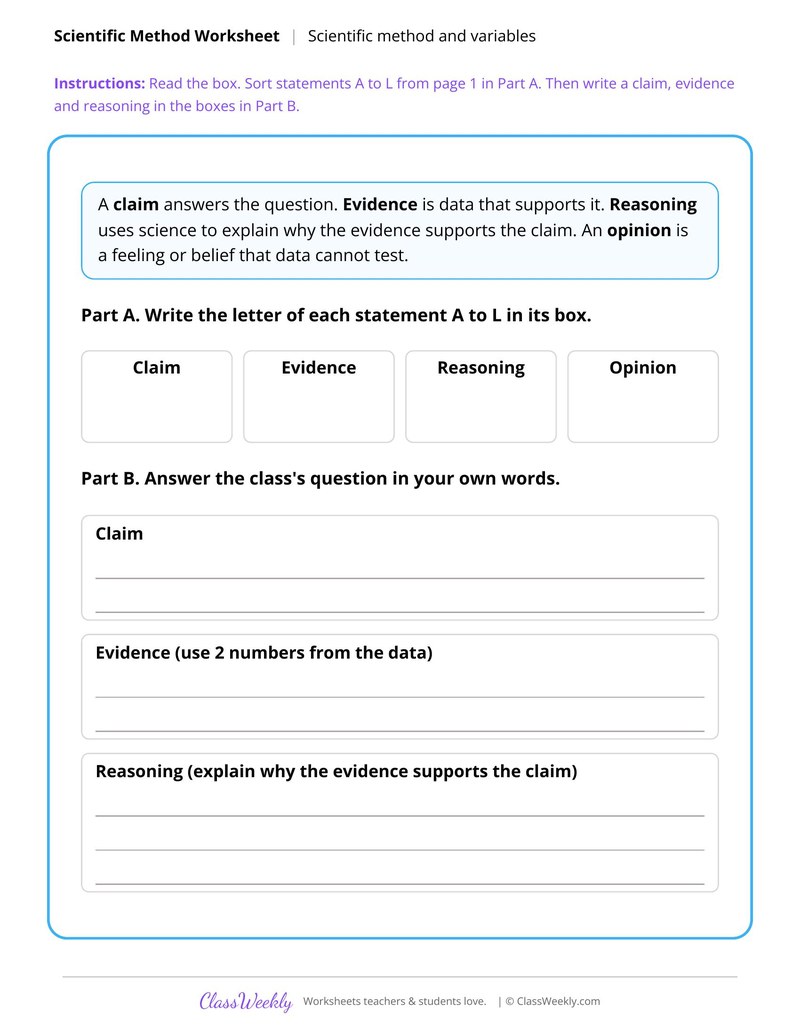
Sort Claims, Evidence and Reasoning
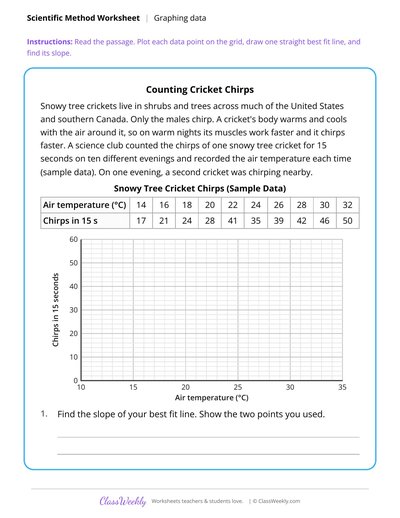
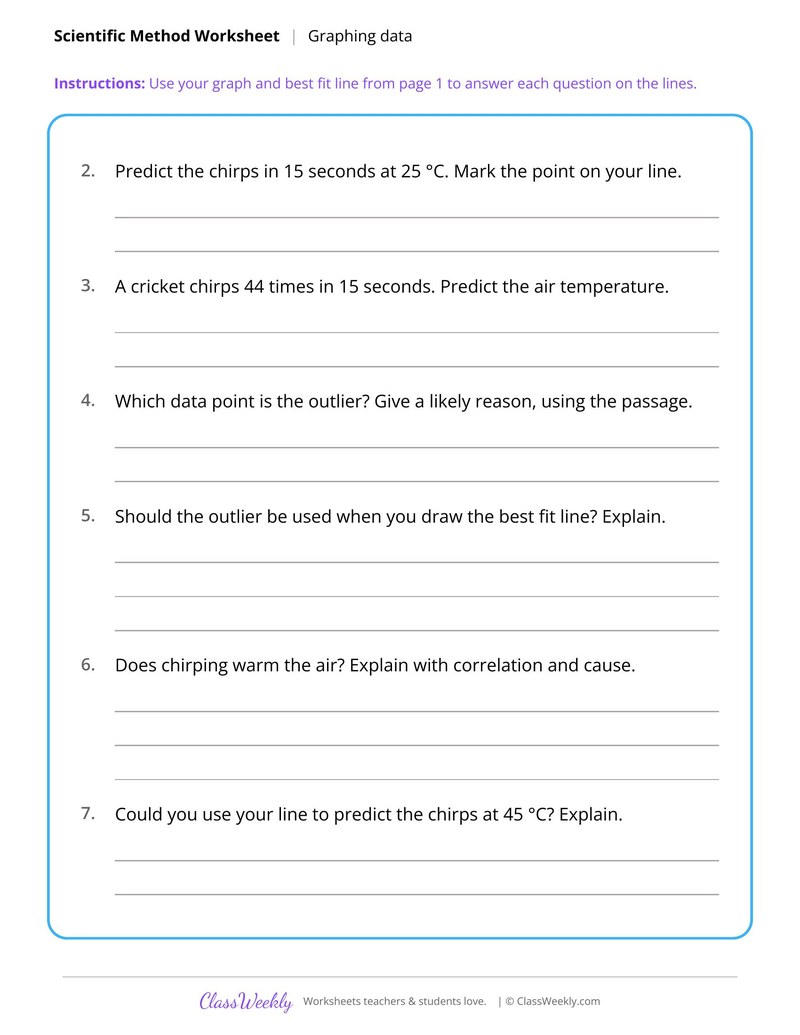
Draw a Best Fit Line and Predict From It
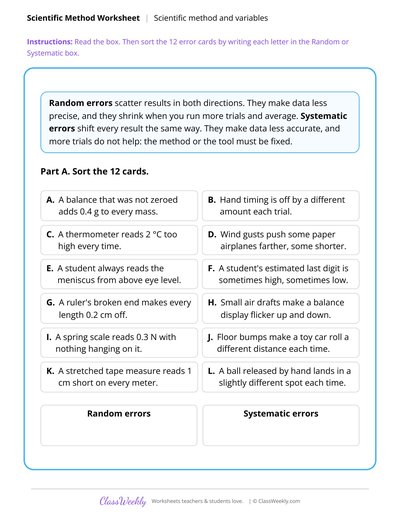
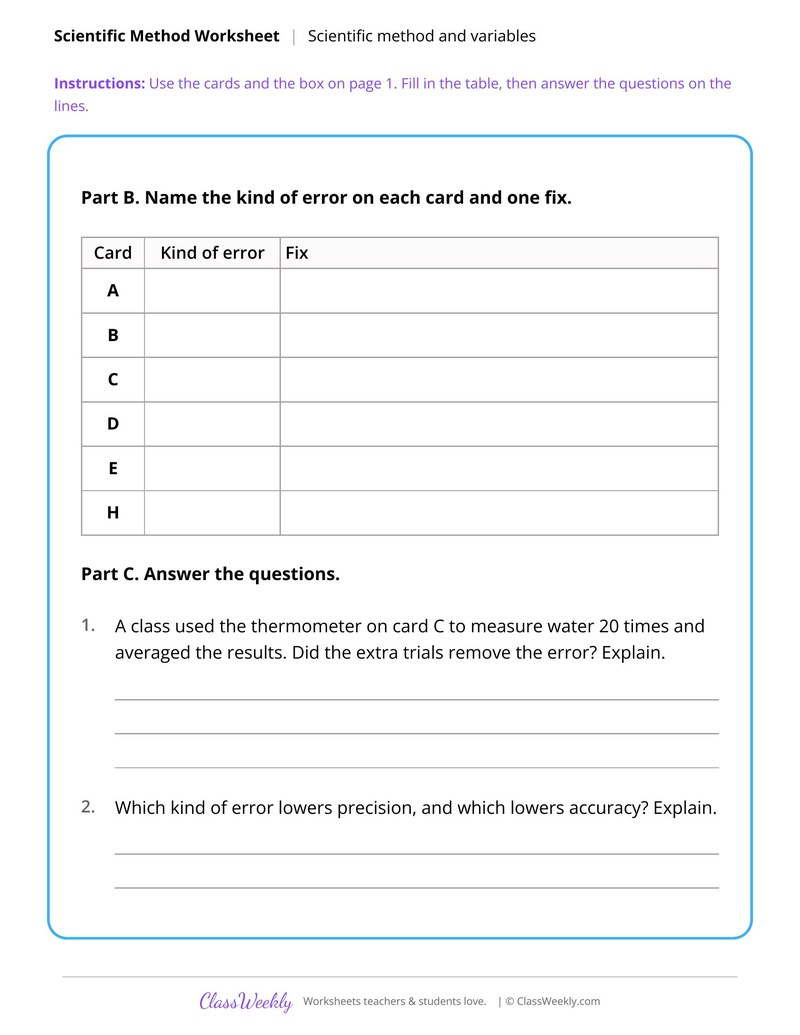
Sort Errors as Random or Systematic
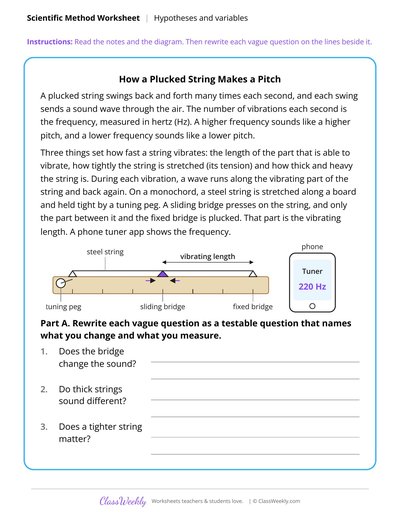
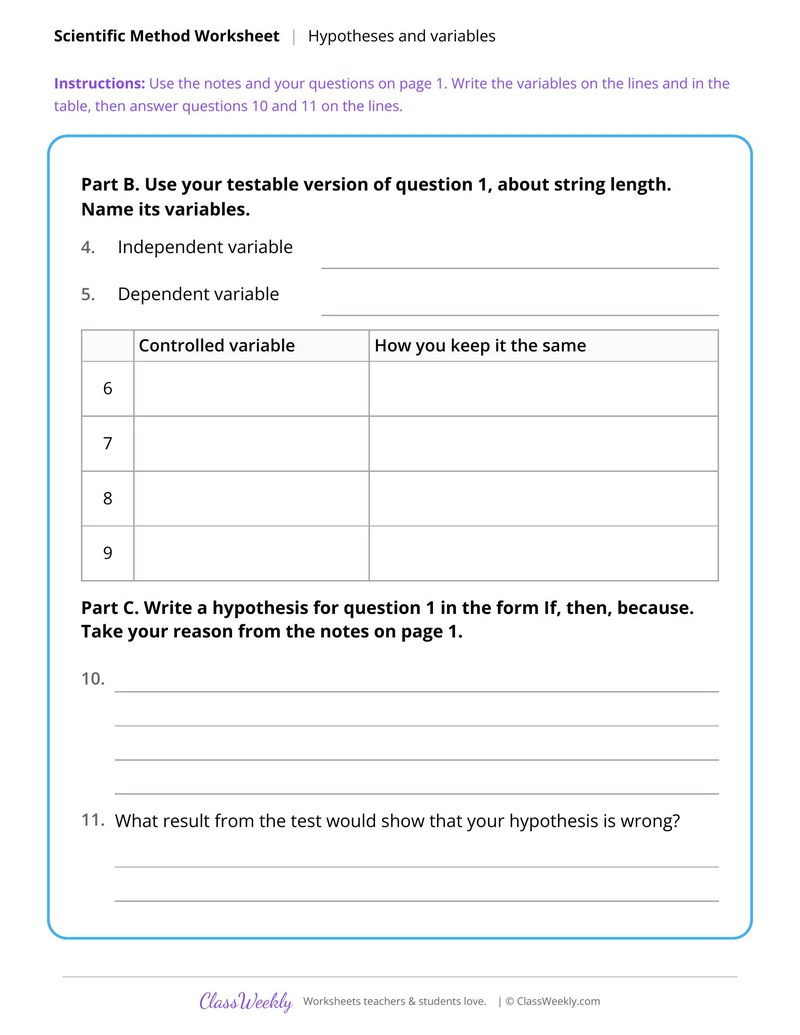
Write a Hypothesis About String Length and Pitch
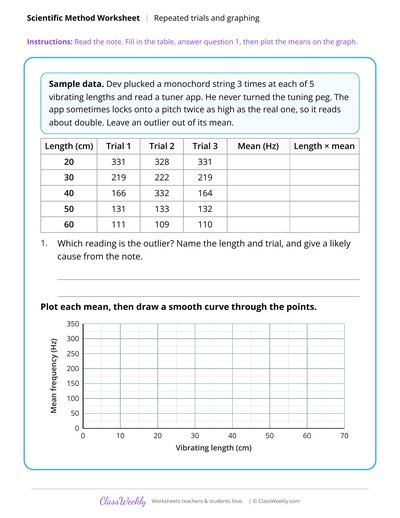
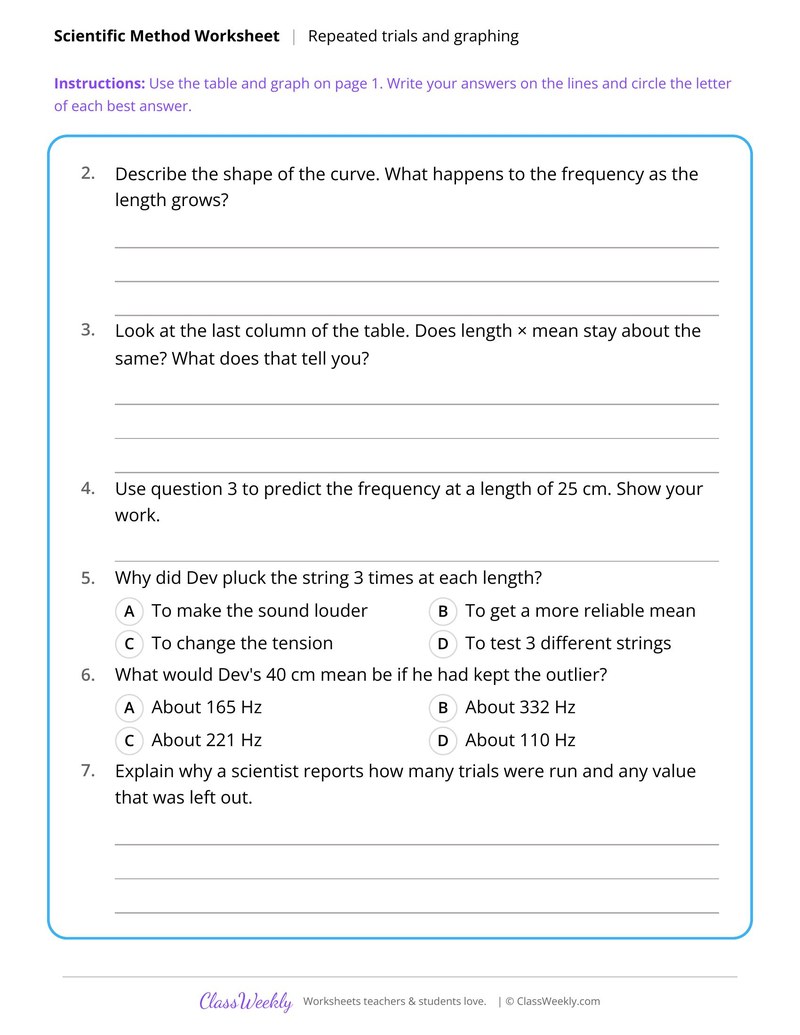
Test String Length and Pitch With Repeated Trials
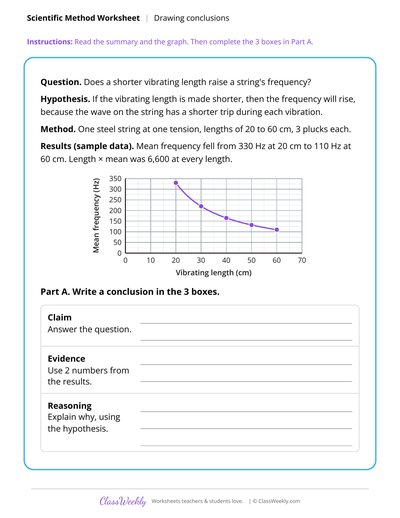
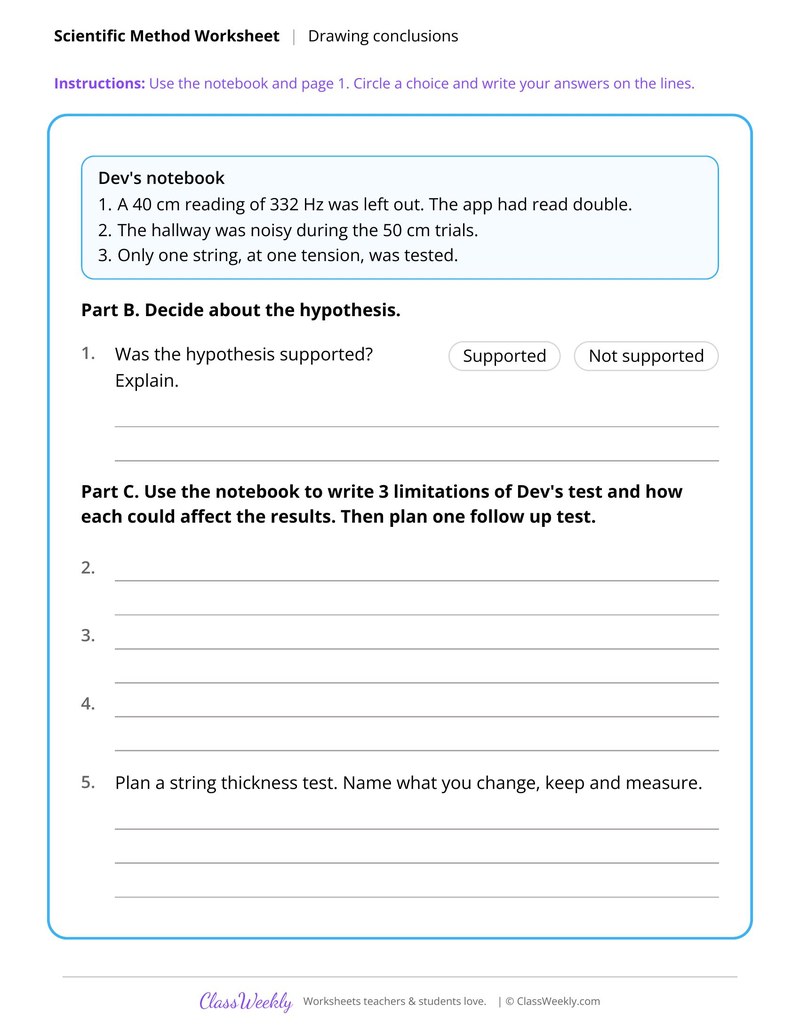
Conclude From String Length and Pitch Data
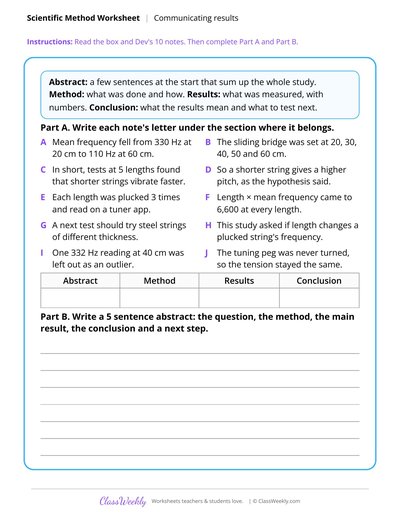
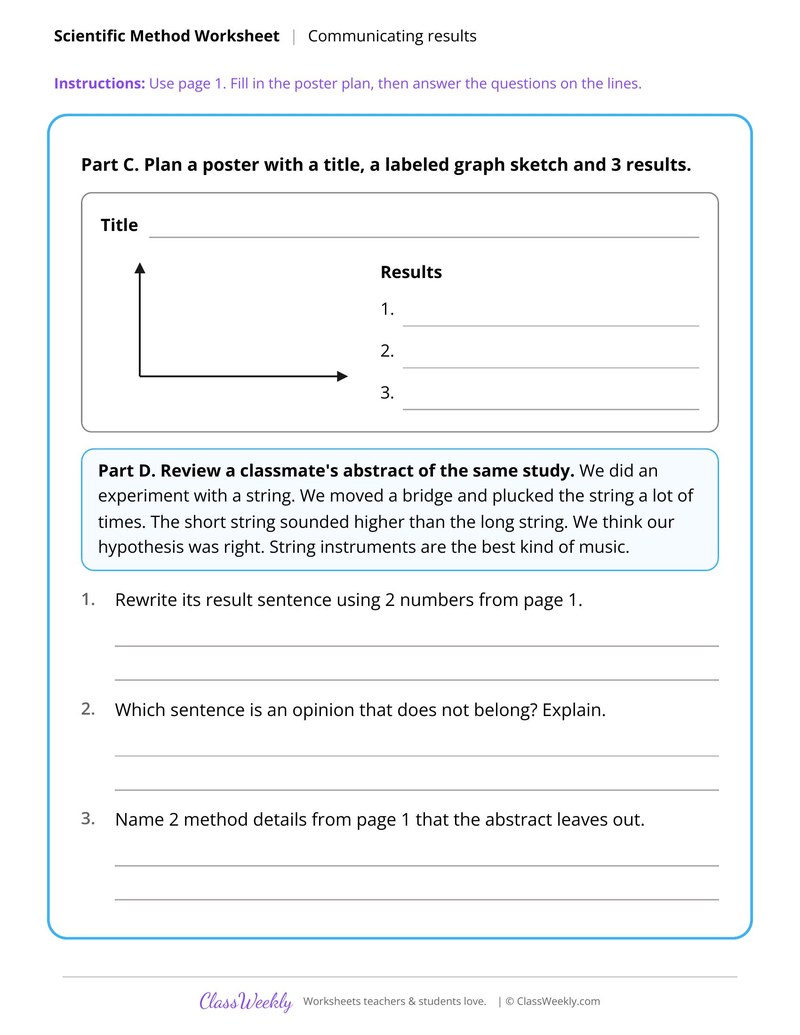
Present String Length and Pitch Findings
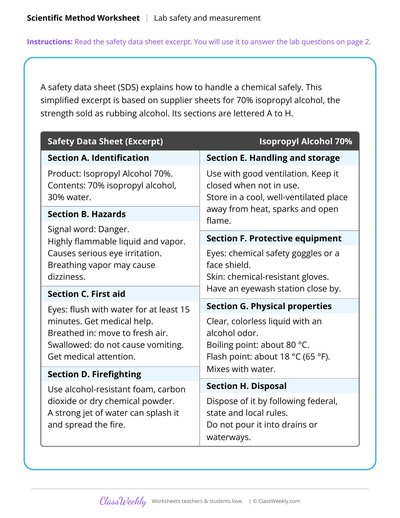
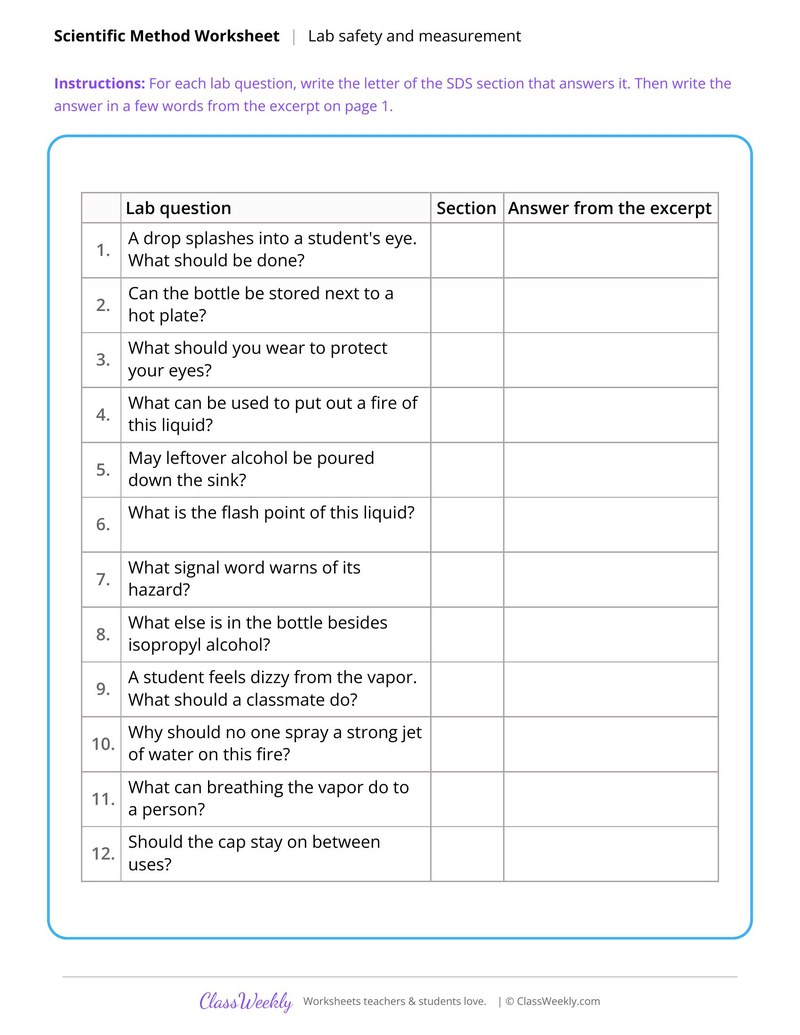
Match Safety Data Sheet Sections to Questions
Curriculum Links
Find this in the curriculum
Browse the grade, subject, and topic this belongs to.
FAQ
How do I use this lab safety and measurement worksheet?
⌄
Use the safety data sheet and storage sheets before a lab with chemicals. Pair the precision and scale bar sheets with real tools, and use the incident reports for discussion of what went wrong.
What does this worksheet teach?
⌄
Match lab safety rules to three incident reports, including open sandals and a snack at the bench. The directions on the page read: Read each incident report. Then answer question 1 on the lines. An answer key is included.
Can I use this lab safety and measurement worksheet for homeschool or classroom?
⌄
Yes, both. We made it for 8th grade scientific method, and it works the same at home or at school. At home, a student can work through it alone and then go over it with you, which shows quickly what is solid and what needs another look. In class it works as independent practice, homework or a warm-up, and you can print one copy or a full set.
How do you read a lab scale to the estimated digit?
⌄
Record every digit you are sure of from the marks, plus one estimated digit between the two closest marks. Read a liquid at the bottom of its curved surface, the meniscus, with your eye level with it.
What is a safety data sheet?
⌄
A safety data sheet, or SDS, explains how to handle a chemical safely, with sections on hazards, first aid and firefighting. Match Safety Data Sheet Sections to Questions uses a simplified excerpt for 70% isopropyl alcohol.
Why do you add acid to water and not water to acid?
⌄
Mixing them releases heat. Pouring water into concentrated acid can make the mixture hiss, grow very hot and spatter, as in one of the chemical handling incident reports.
How should lab chemicals be stored?
⌄
Group them so chemicals that react stay apart. The storage sheet sorts 12 chemicals into acids, bases, flammables, oxidizers and general salts, and explains why hydrochloric acid and sodium hydroxide never share a shelf.
Ratings & Reviews
No reviews yet. Be the first to share what you think.
Reviews are for ClassWeekly members.
Make a Request
Spotted something to fix, or want a worksheet we don't have yet? Tell us and we'll make it.
Worksheet Details
| Grade | 8th Grade |
| Subject | Science |
| Topic | Scientific Method |
| Pages | 2 pages |
| Difficulty | Medium |
What is ClassWeekly?
ClassWeekly offers free worksheets and printable learning resources for kids, from preschool up. All worksheets are aligned to Common Core, NGSS, and C3 Framework standards and designed by educators. Become a member to access the full library and download unlimited PDFs.
Sort Claims, Evidence and Reasoning
Draw a Best Fit Line and Predict From It
Sort Errors as Random or Systematic
Write a Hypothesis About String Length and Pitch
Test String Length and Pitch With Repeated Trials
Conclude From String Length and Pitch Data
Present String Length and Pitch Findings
Match Safety Data Sheet Sections to Questions