Analyze Repeated Trials and Outliers
Written by Adi Ackerman, Head Teacher
"Analyze Repeated Trials and Outliers" is written for 7th Grade (Ages 12-13). A 6th grader who is already steady on scientific method can use it too, and an older student can use it as a short review.
2 pages in this set
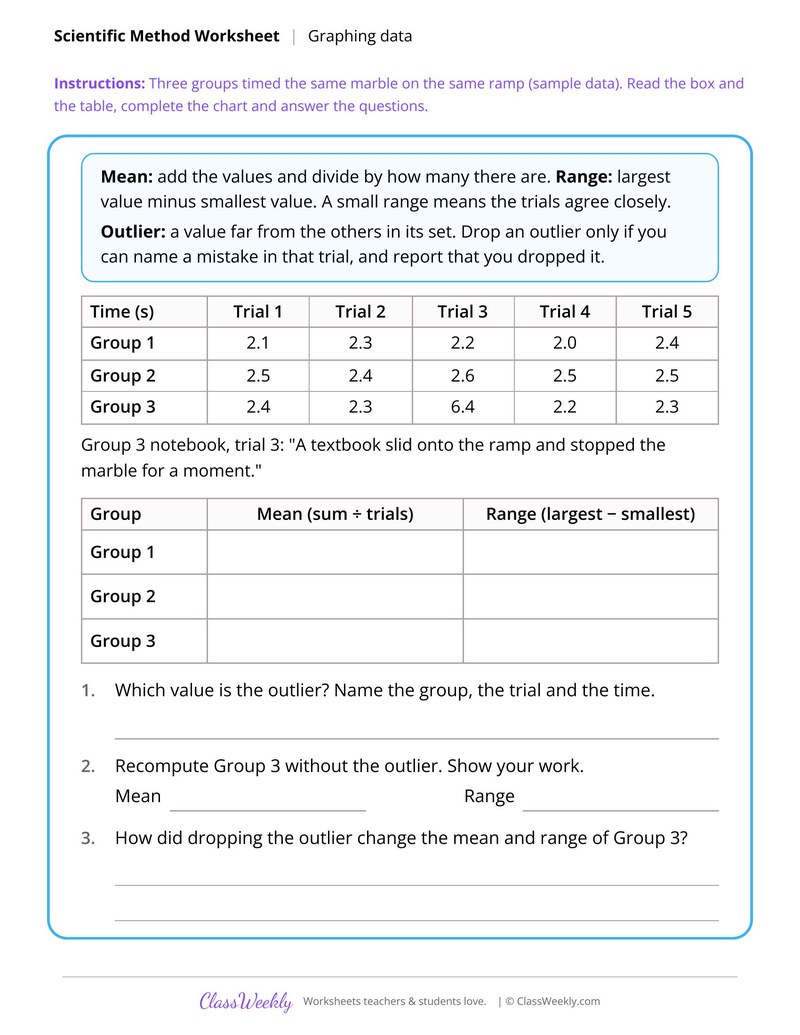
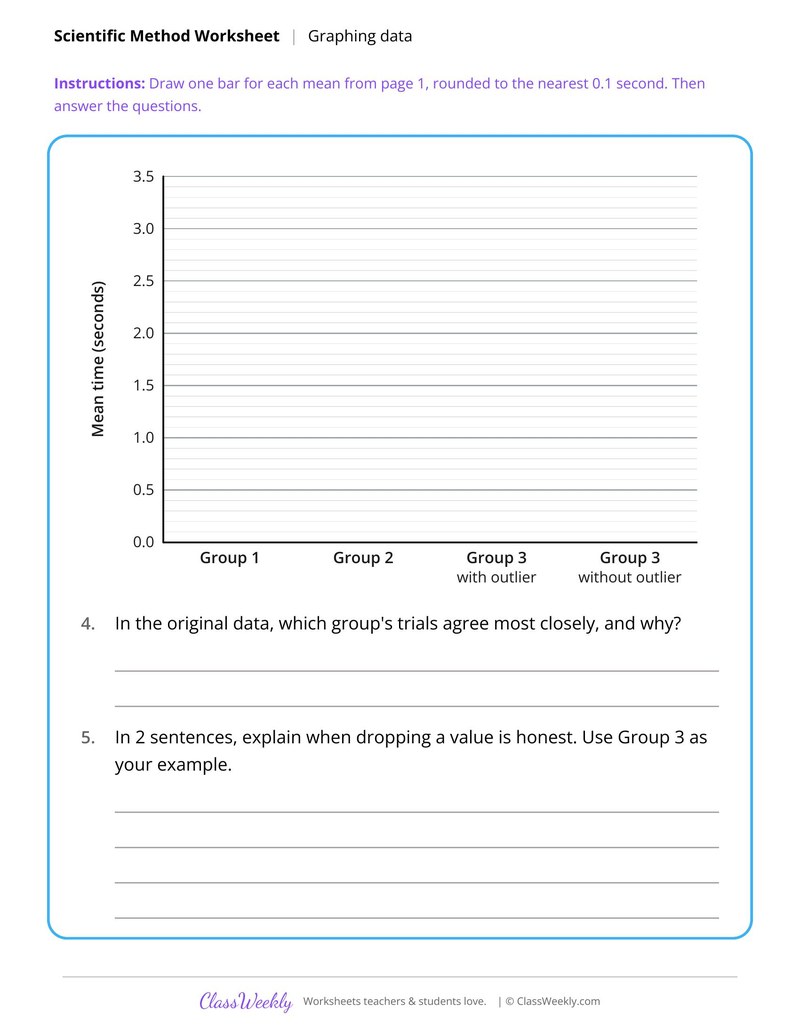
7th grade science worksheet: find means and ranges for marble ramp times from three groups and decide what to do with an outlier. Answer key included. Part of our scientific method and variables collection.
How do I use this worksheet?
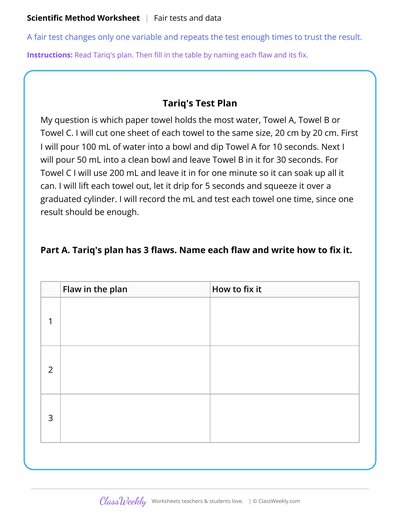
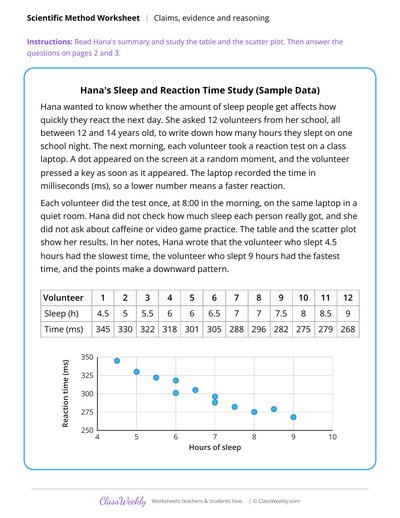
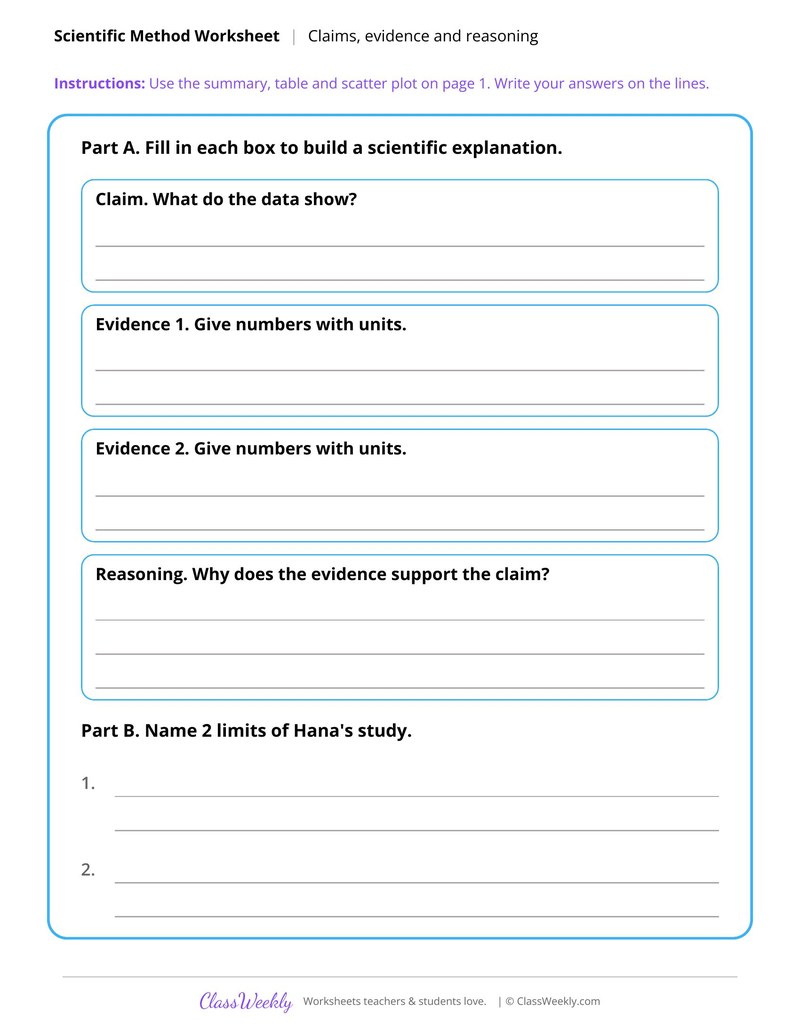
Start with the two question sheets, then move to Plan a Fair Test and Analyze Its Data. Draw a Conclusion From Claim and Evidence is the longest sheet at 3 pages, so allow extra time.
What students will practice
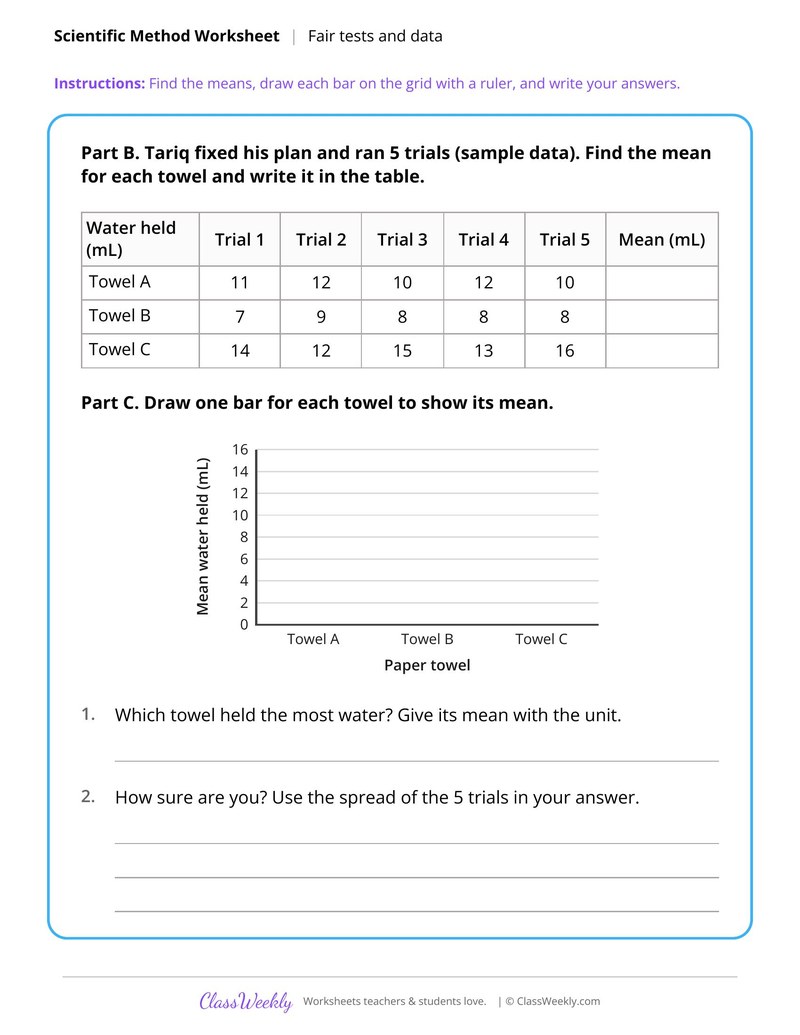
- Students will find the mean and range of five trials for each of three groups.
- Students will tell which group's trials agree most closely using the range.
- Students will draw bars for the means and compare results with and without an outlier.
Curriculum Links
Find this in the curriculum
Browse the grade, subject, and topic this belongs to.
FAQ
How do I use this scientific method and variables worksheet?
⌄
Start with the two question sheets, then move to Plan a Fair Test and Analyze Its Data. Draw a Conclusion From Claim and Evidence is the longest sheet at 3 pages, so allow extra time.
What does this worksheet teach?
⌄
Find means and ranges for marble ramp times from three groups and decide what to do with an outlier. The directions on the page read: Three groups timed the same marble on the same ramp (sample data). Read the box and the table, complete the chart and answer the questions. An answer key is included.
Can I use this scientific method and variables worksheet for homeschool or classroom?
⌄
Yes, both. We made it for 7th grade scientific method, and it works the same at home or at school. At home, a student can work through it alone and then go over it with you, which shows quickly what is solid and what needs another look. In class it works as independent practice, homework or a warm-up, and you can print one copy or a full set.
What makes a question testable?
⌄
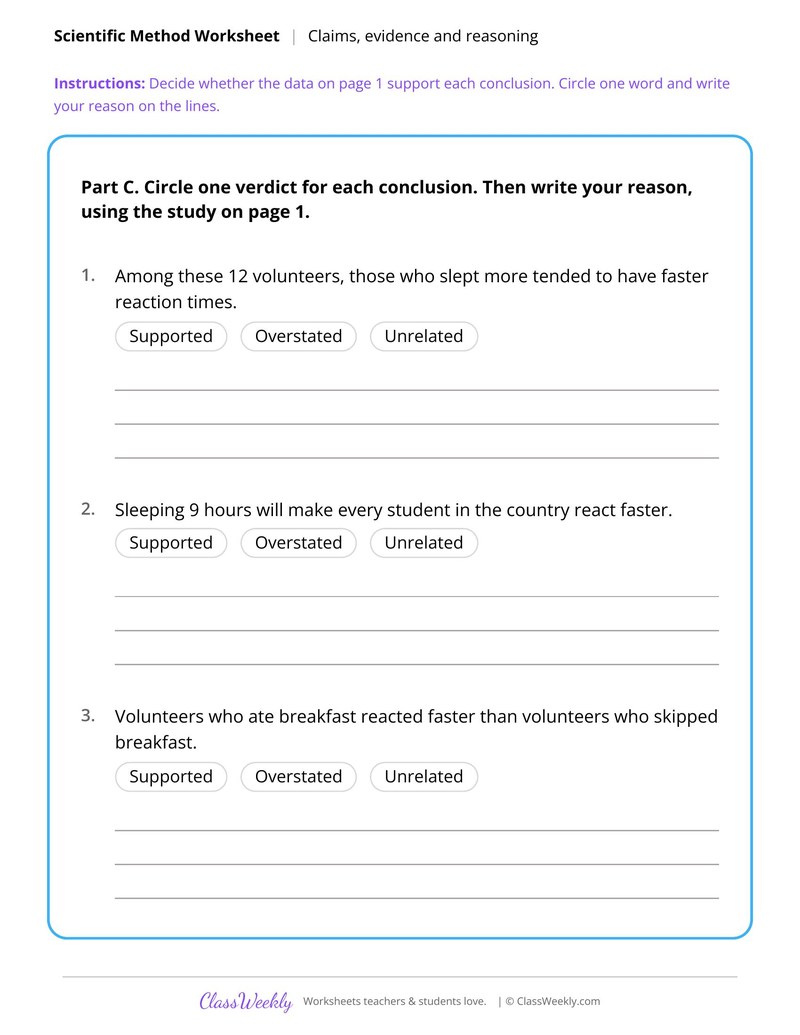
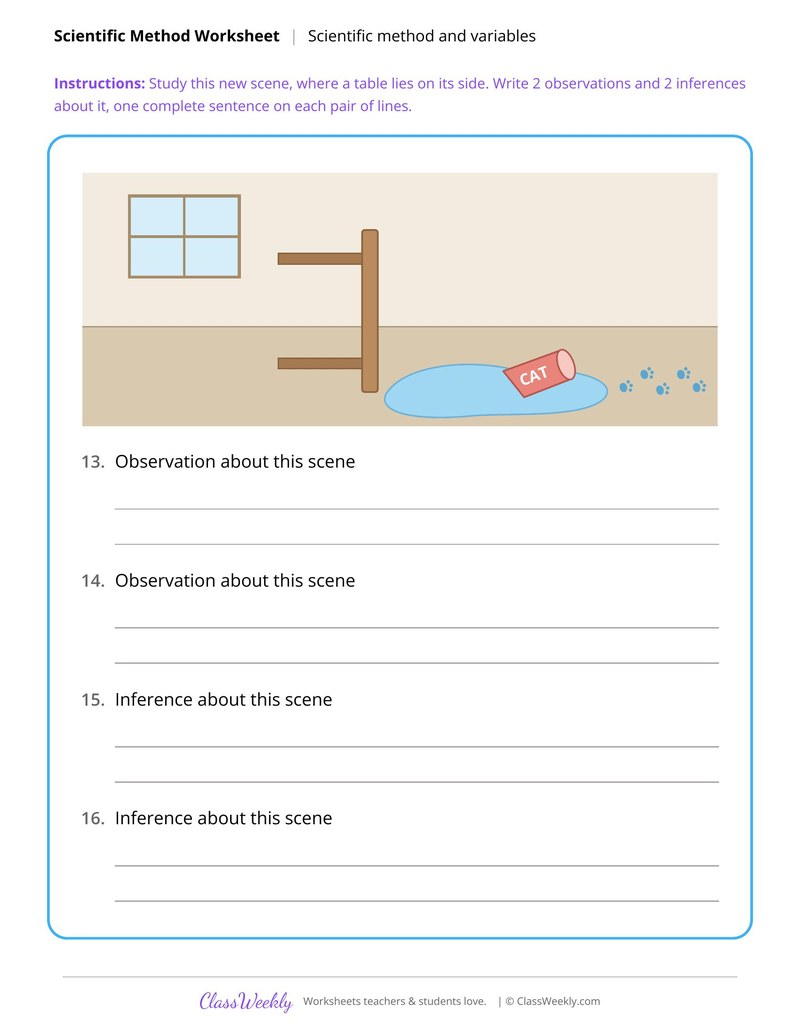
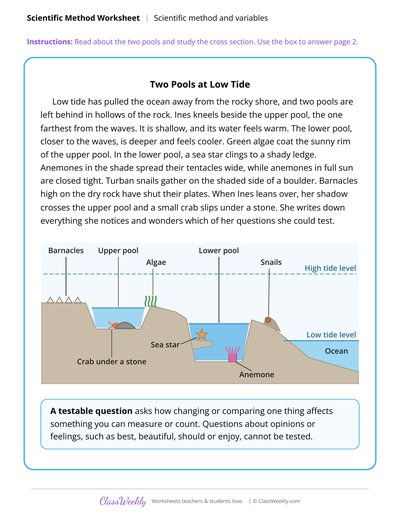
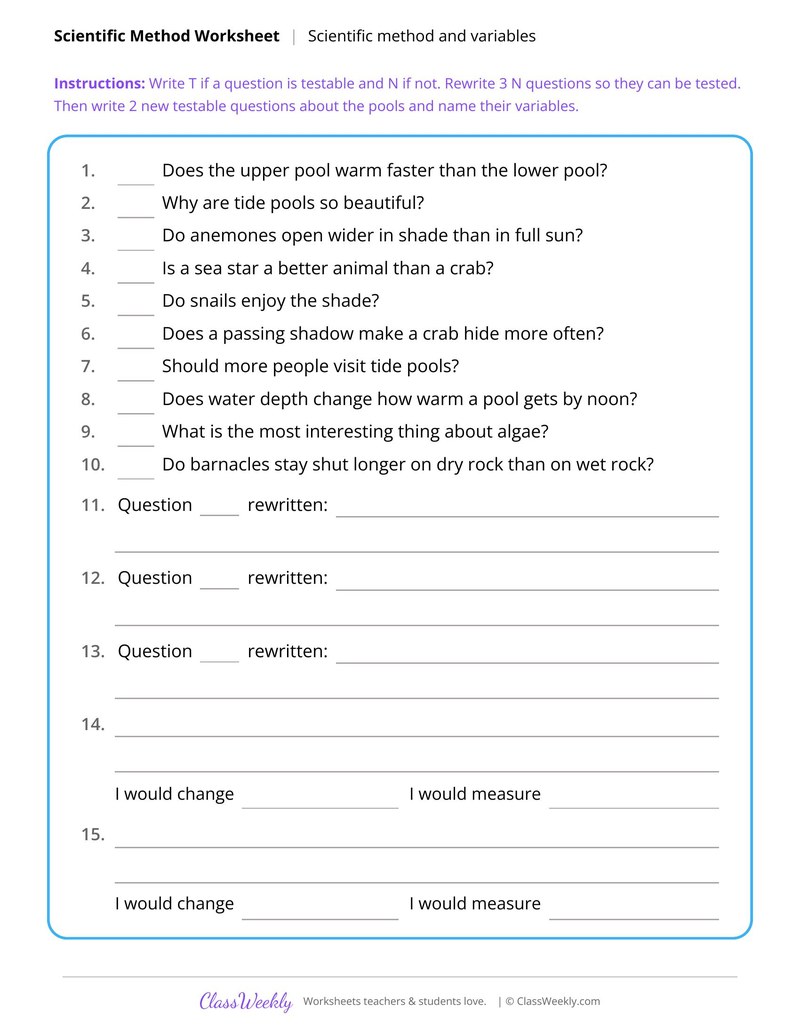
A testable question can be answered by an experiment that measures something. Turn Observations Into Testable Questions has students mark questions testable or not and rewrite the ones that cannot be tested.
What are independent, dependent and controlled variables?
⌄
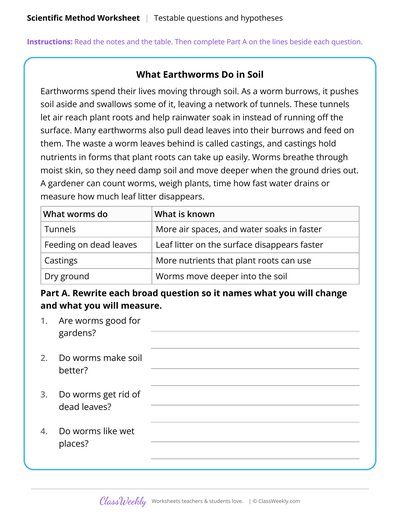
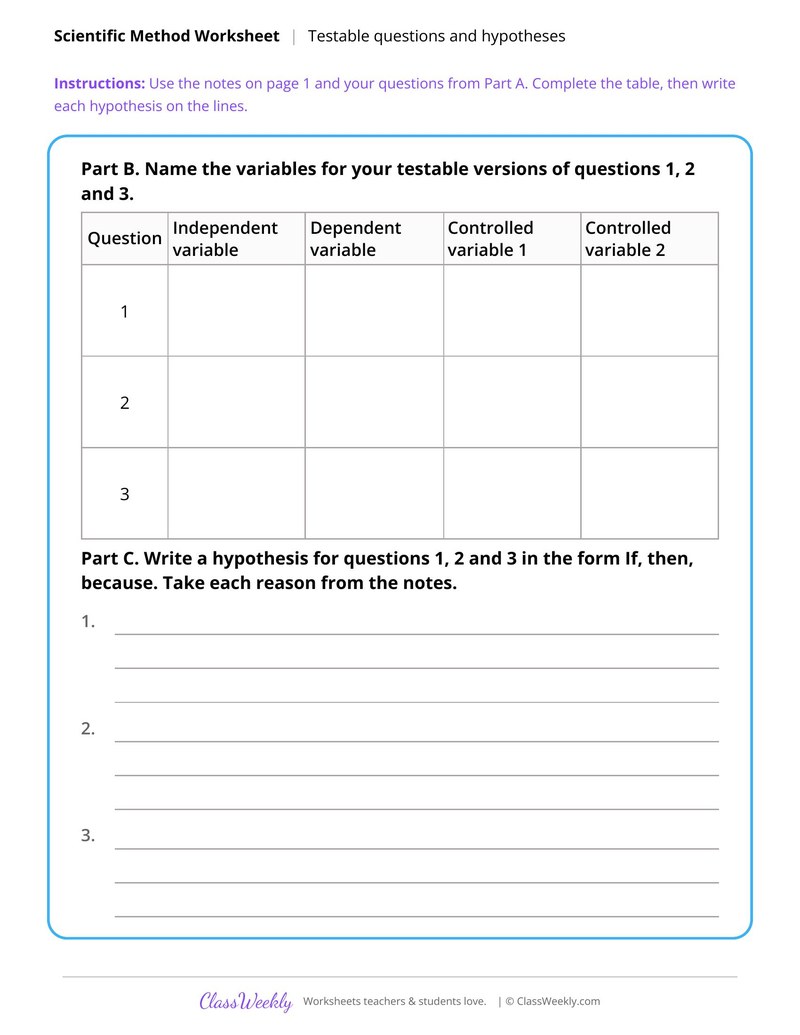
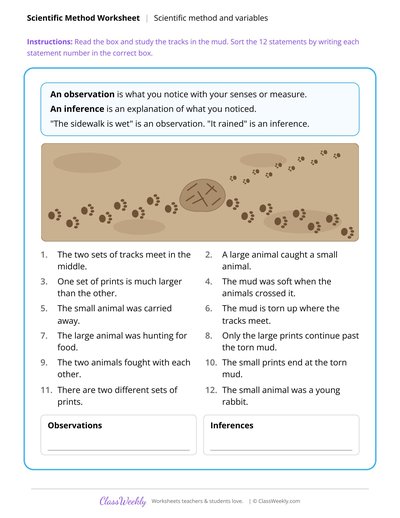
The independent variable is what you change, and the dependent variable is what you measure. Controlled variables are kept the same. Turn a Question Into a Testable Hypothesis has students name all three for earthworm questions.
What should you do with an outlier?
⌄
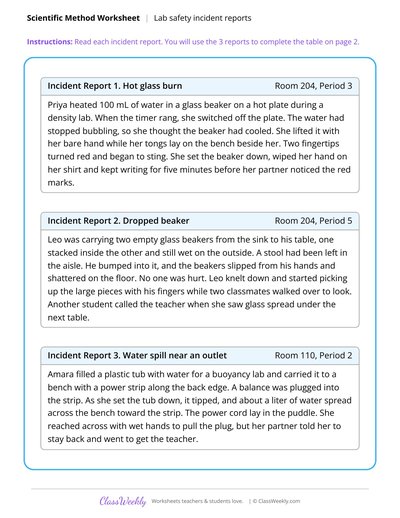
Drop an outlier only if you can name a mistake in that trial, and report that you dropped it. Analyze Repeated Trials and Outliers finds means and ranges with and without an outlier.
How do you write a lab report Results section?
⌄
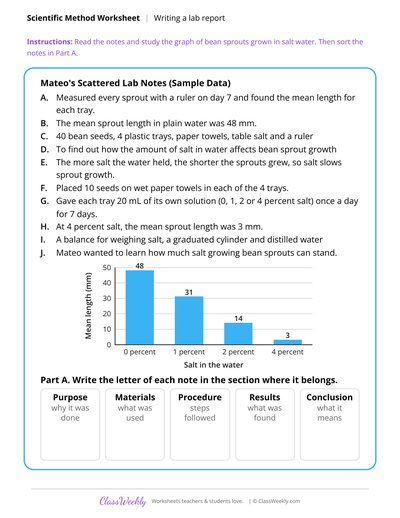
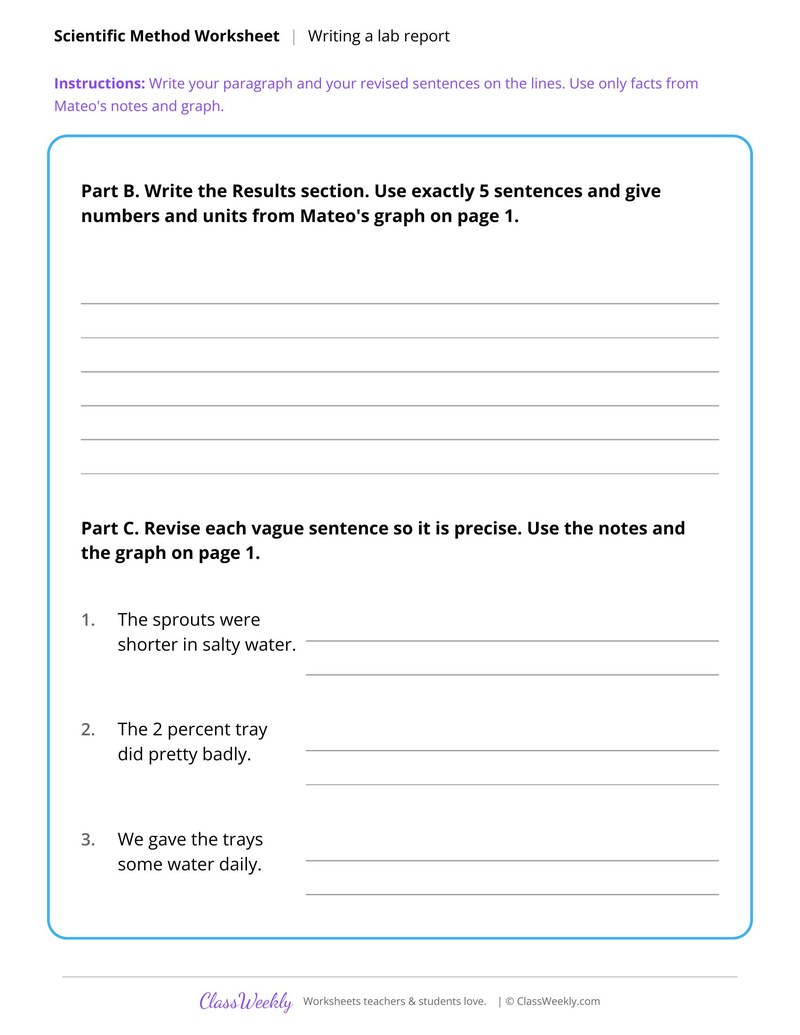
Use exact numbers and units from the data. Write a Lab Report Results Section has students sort scattered notes, write exactly 5 sentences from a bean sprout graph and revise vague sentences.
Ratings & Reviews
No reviews yet. Be the first to share what you think.
Reviews are for ClassWeekly members.
Make a Request
Spotted something to fix, or want a worksheet we don't have yet? Tell us and we'll make it.
Worksheet Details
| Grade | 7th Grade |
| Subject | Science |
| Topic | Scientific Method |
| Pages | 2 pages |
| Difficulty | Medium |
What is ClassWeekly?
ClassWeekly offers free worksheets and printable learning resources for kids, from preschool up. All worksheets are aligned to Common Core, NGSS, and C3 Framework standards and designed by educators. Become a member to access the full library and download unlimited PDFs.