Arguing From the Declaration of Sentiments
Written by Adi Ackerman, Head Teacher
"Arguing From the Declaration of Sentiments" is written for 8th Grade (Ages 13-14), and it covers C3 Framework D4.1.6-8. A 7th grader who is already steady on A New Nation Grows can use it too, and an older student can use it as a short review.
2 pages in this set
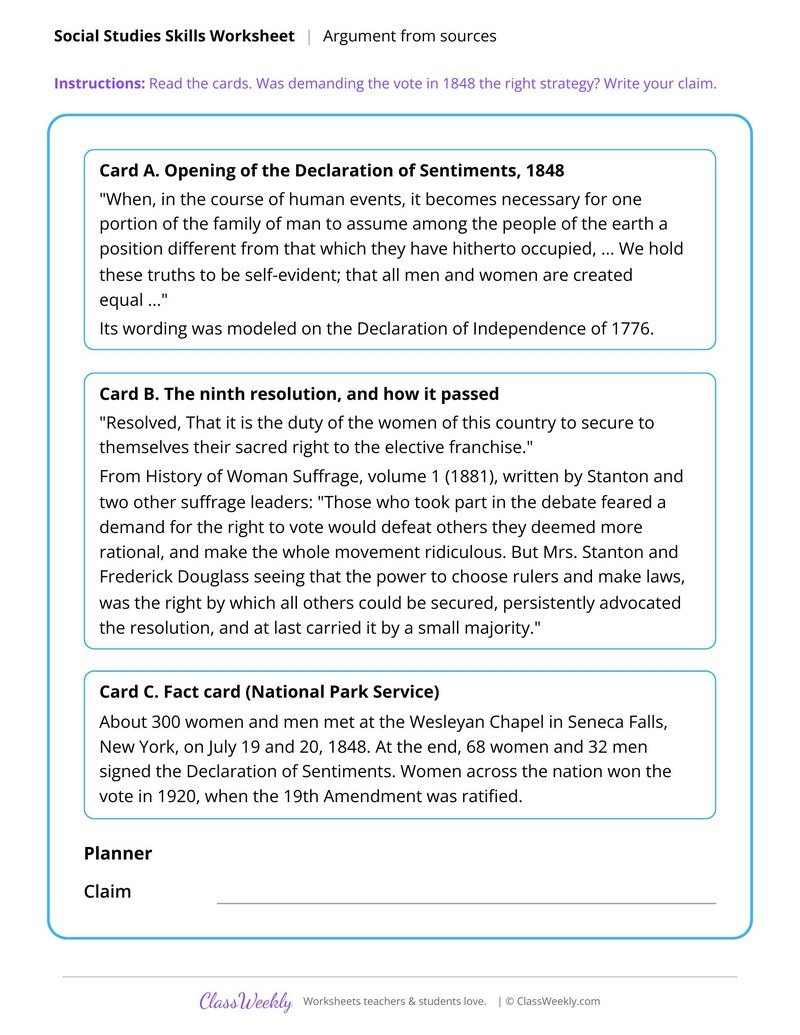
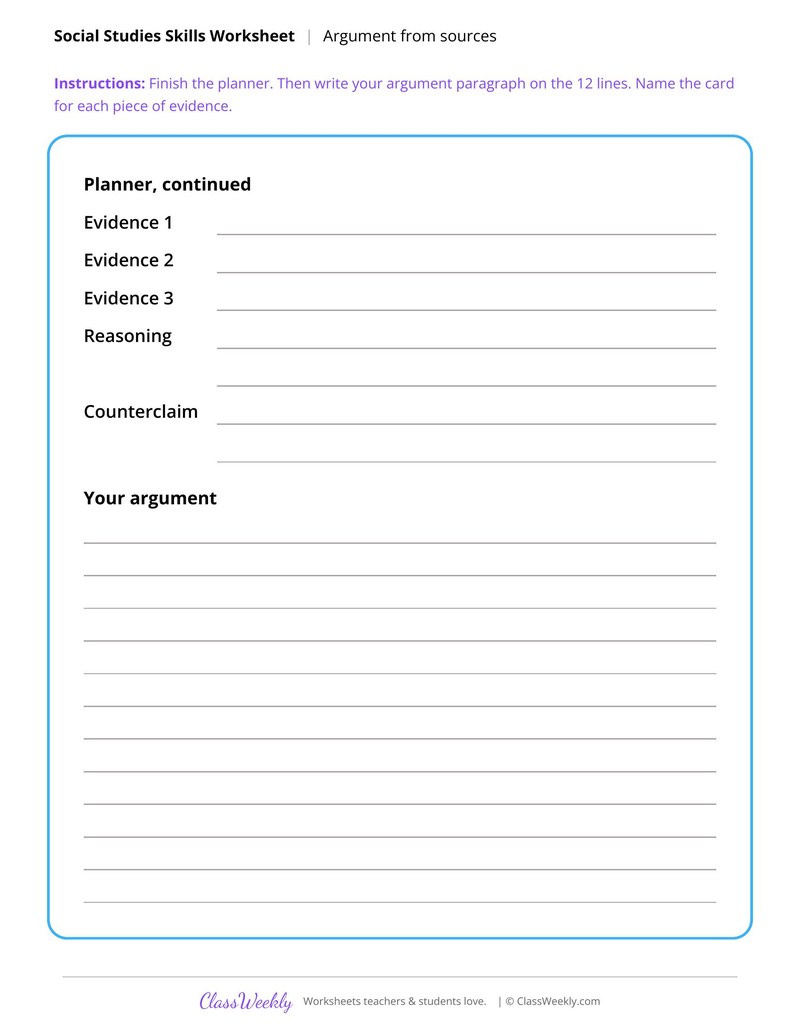
8th grade social studies worksheet: argue whether demanding the vote at Seneca Falls in 1848 was the right strategy. Answer key included. Part of our reform and culture new nation grows collection. Aligned to C3 Framework standards.
How do I use this worksheet?
Start with the timeline so students see the order of events, then use the organizer to compare movements. Finish with the argument sheet, which asks students to name the card behind each piece of evidence.
What students will practice
- Students will read source cards on the 1848 Declaration of Sentiments and its ninth resolution.
- Students will plan a claim with three pieces of evidence, reasoning and a counterclaim.
- Students will write an argument paragraph that names the card behind each piece of evidence.
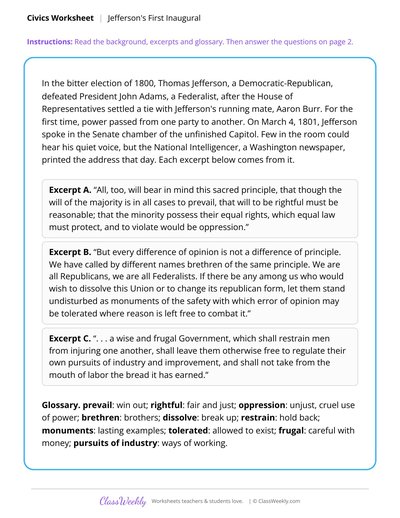
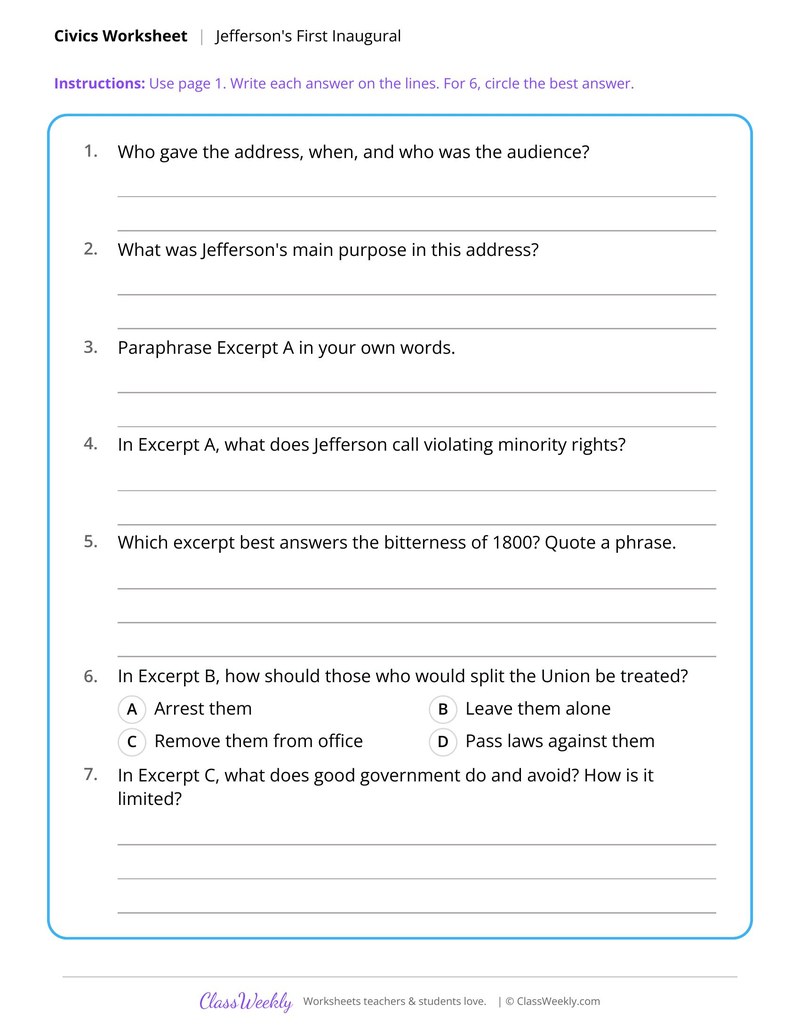
Jefferson's First Inaugural Address of 1801
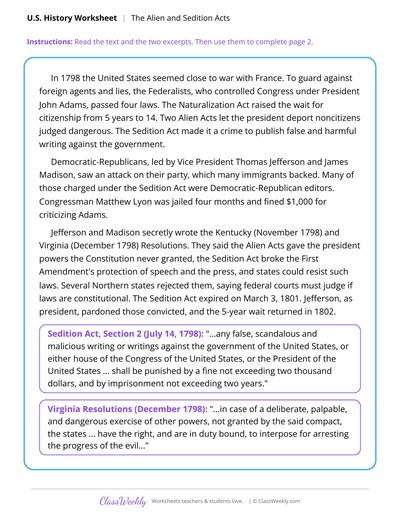
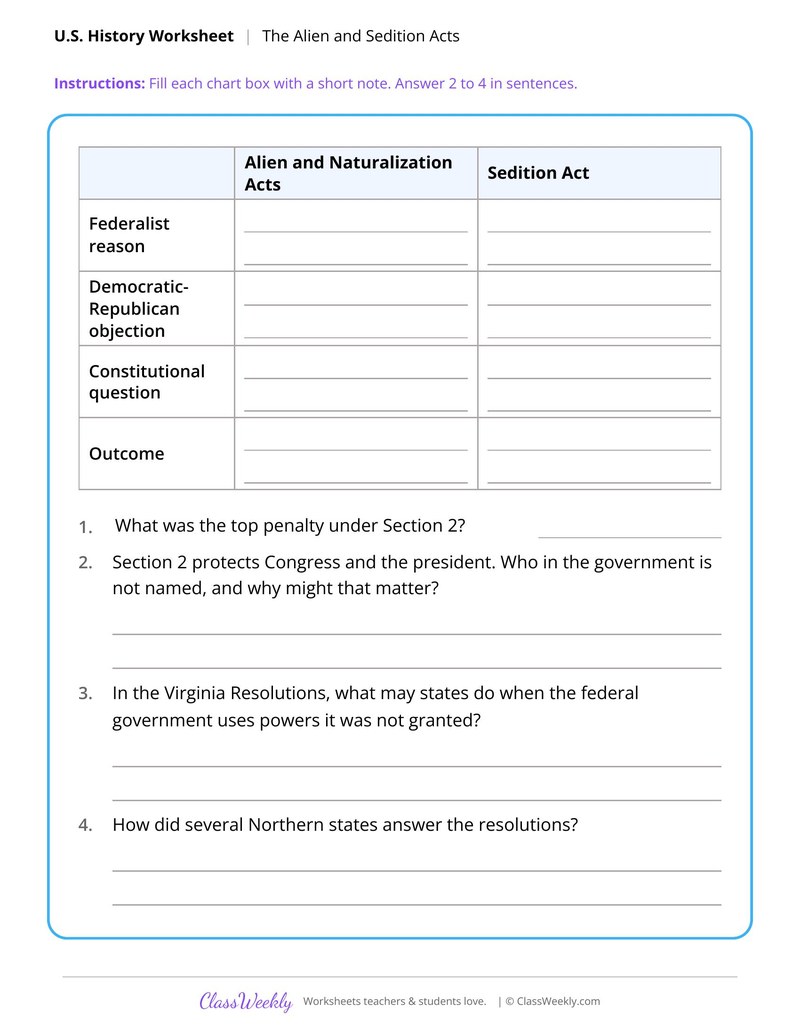
The Sedition Act of 1798 and the States' Answer
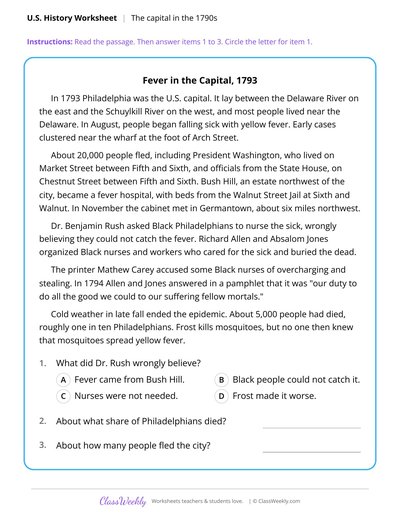
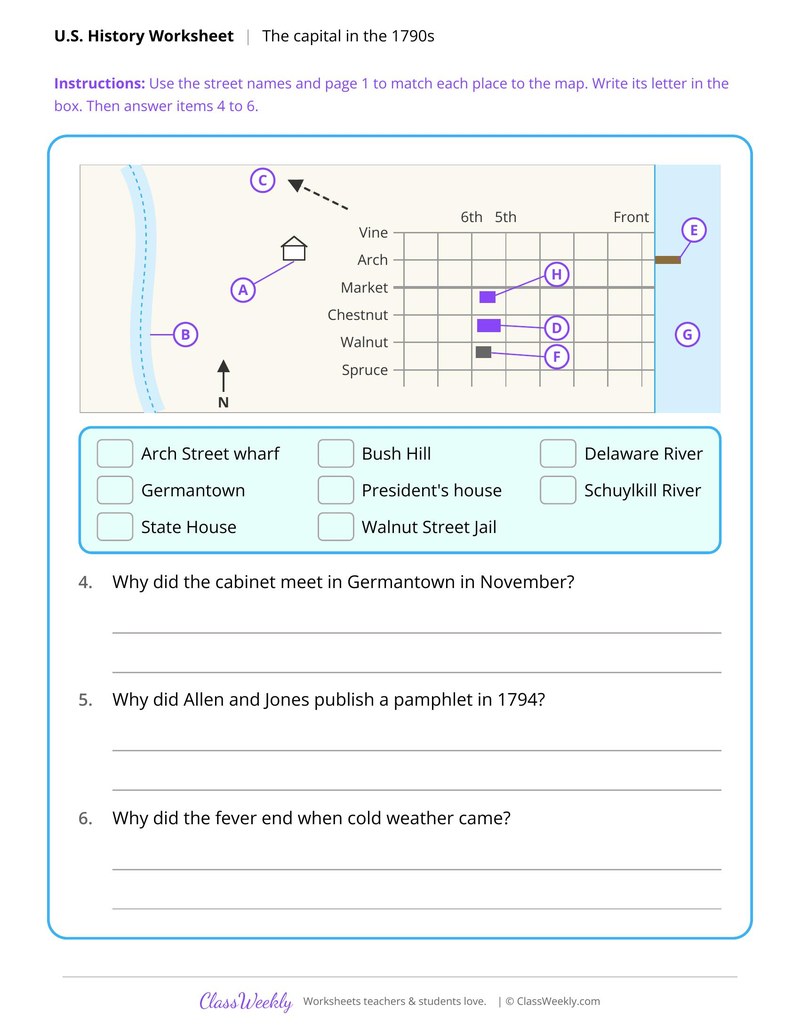
The 1793 Yellow Fever Epidemic in Philadelphia
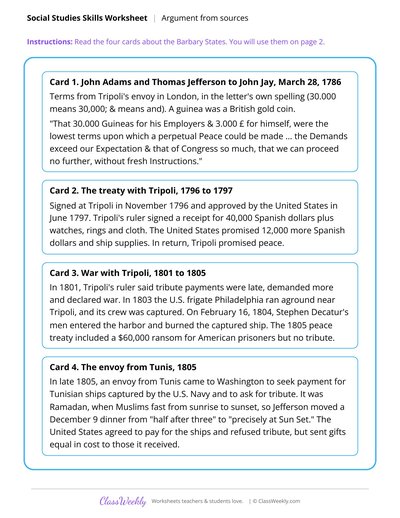
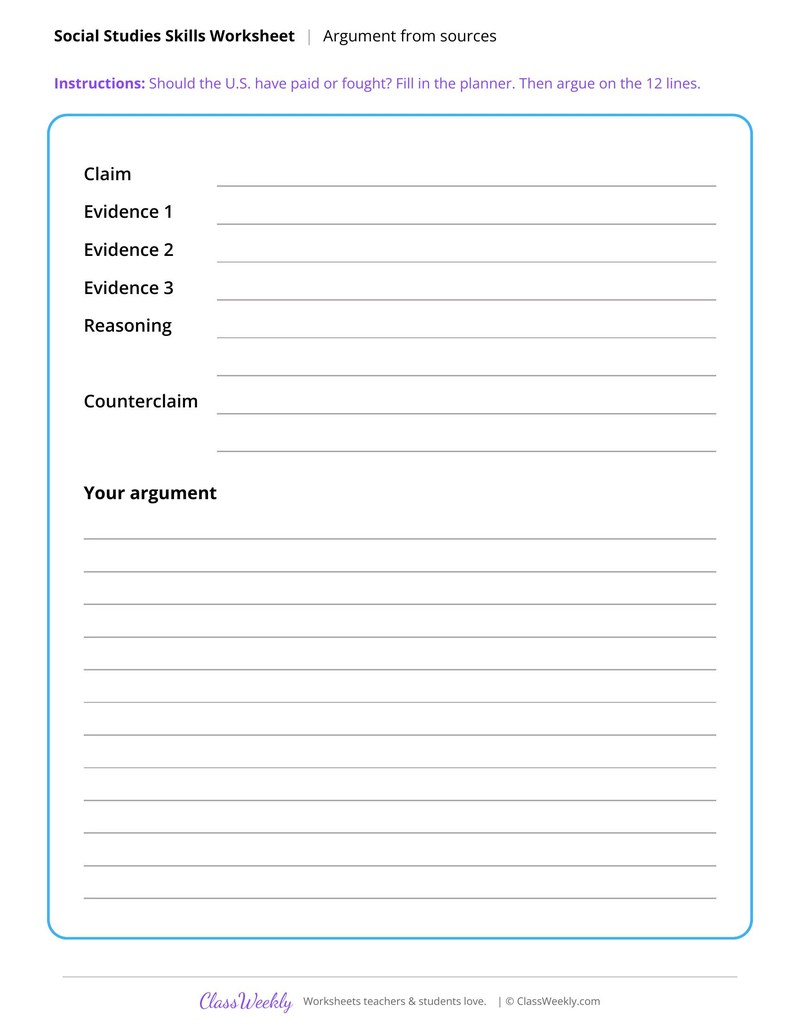
Argument on Paying Tribute to the Barbary States
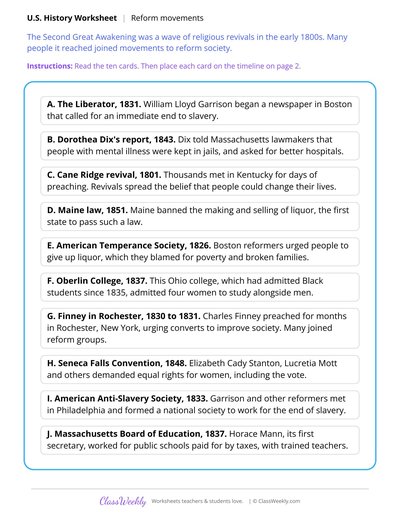
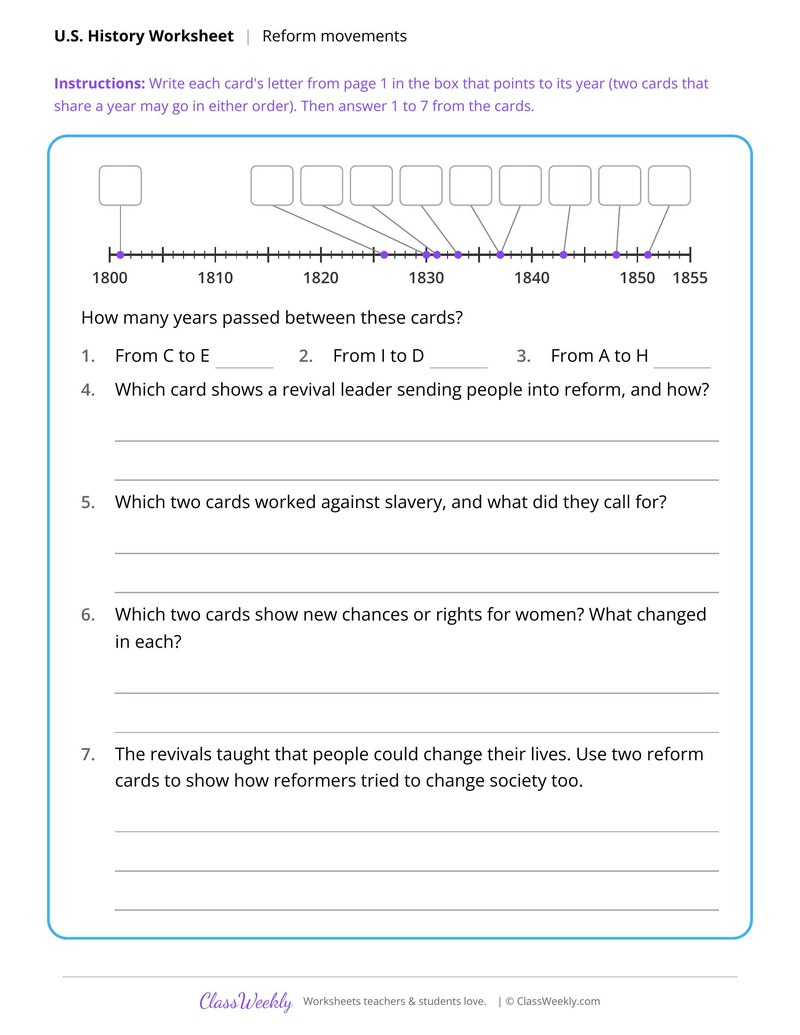
Second Great Awakening and Reform Timeline
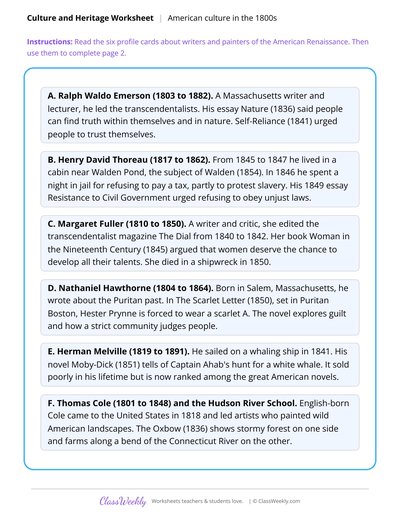
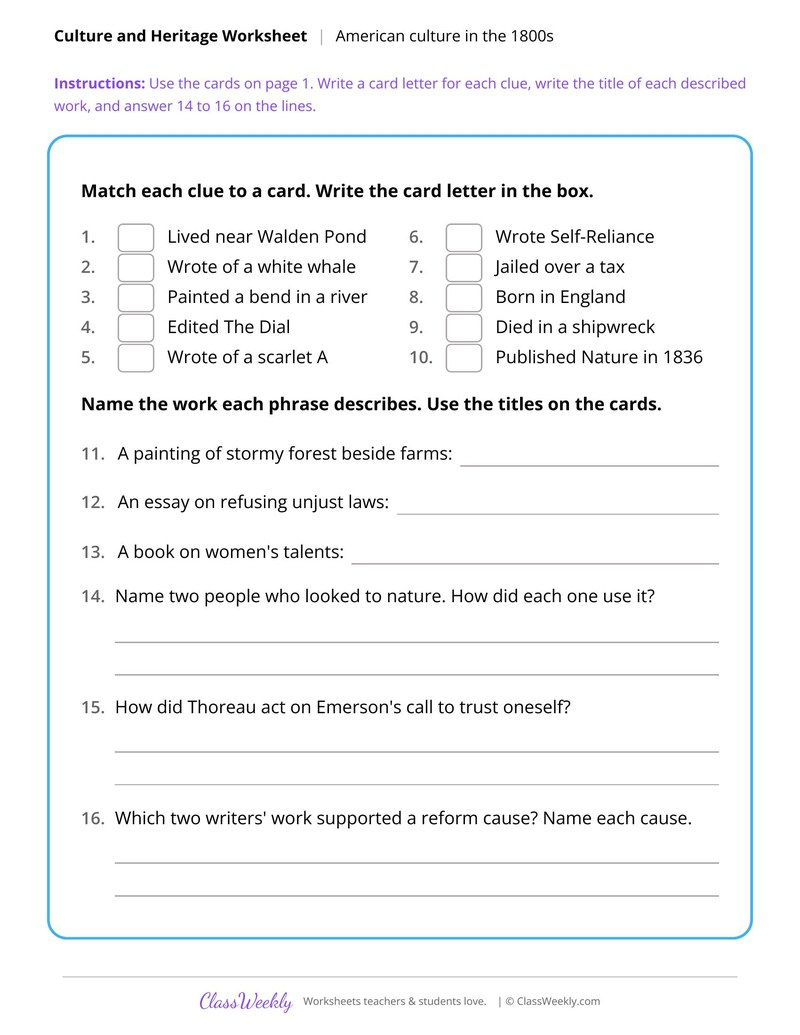
Writers and Painters of the American Renaissance
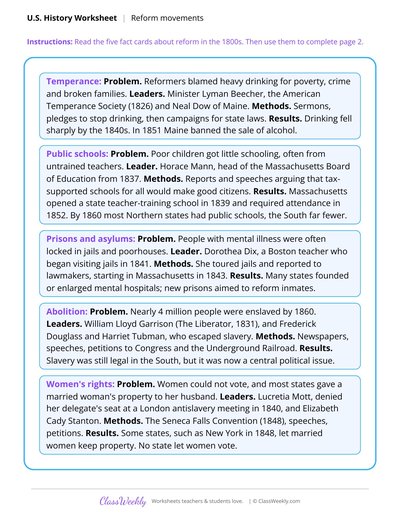
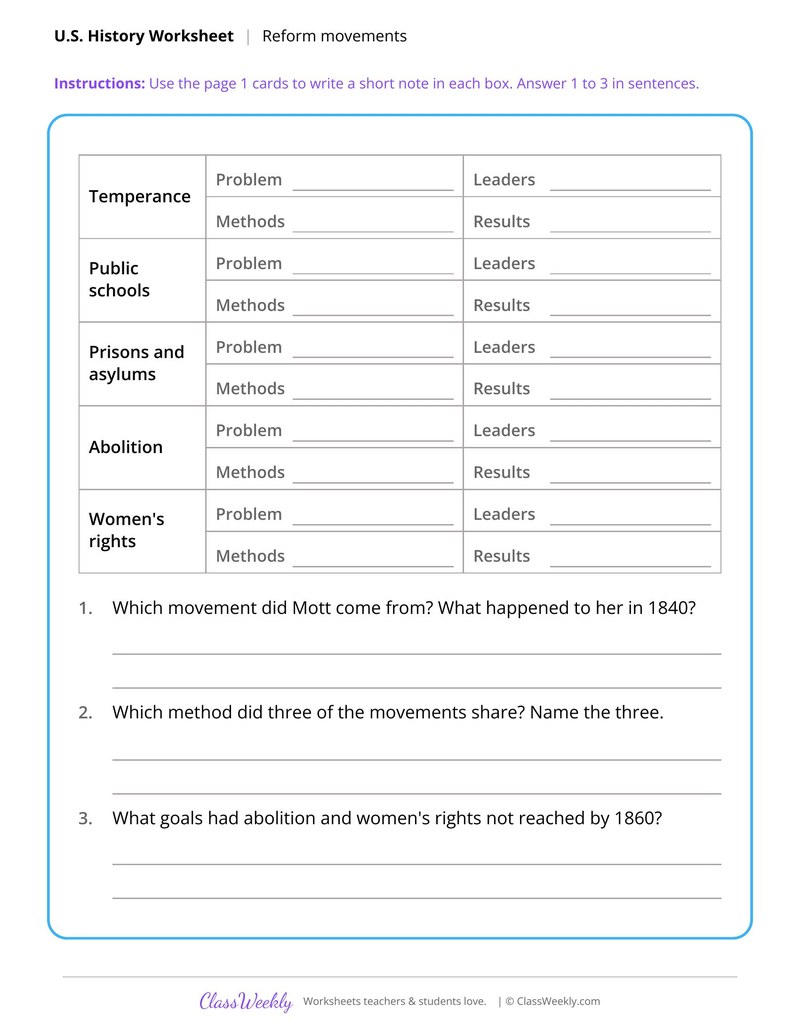
Reform Movements of the 1800s Organizer
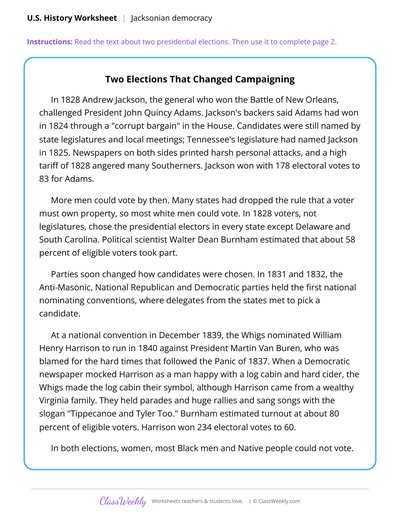
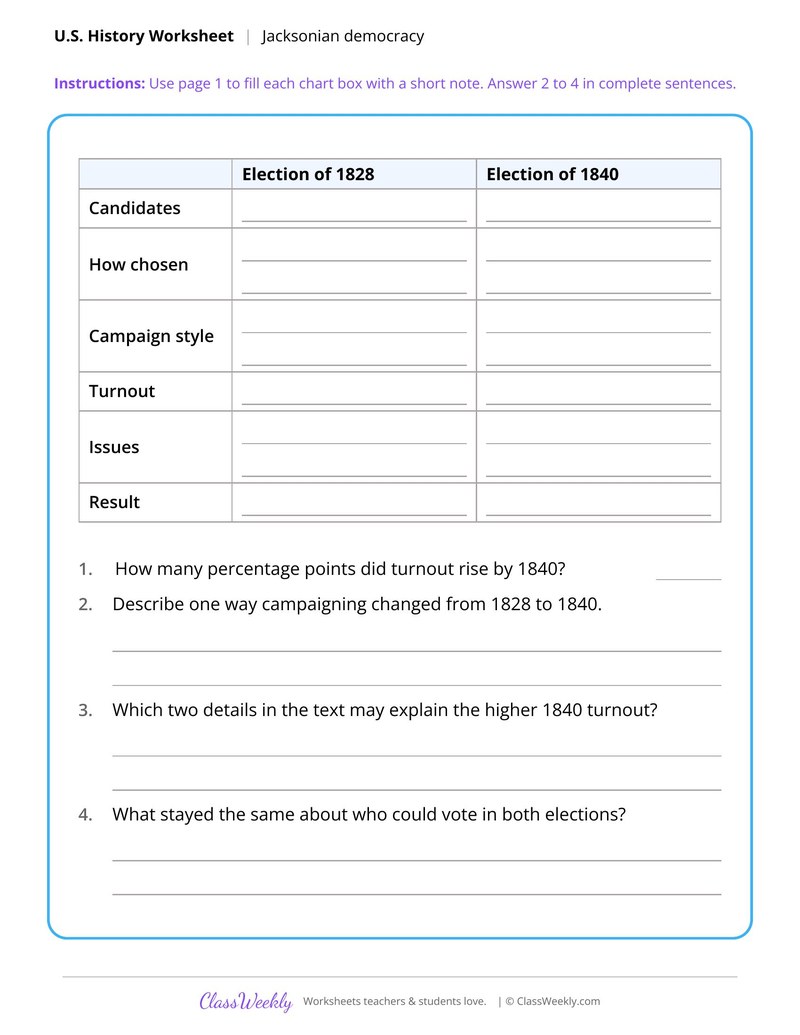
The Elections of 1828 and 1840 Compared
Curriculum Links
C3 Framework for Social Studies State Standards
Social Studies · 8th Grade
Find this in the curriculum
Browse the grade, subject, and topic this belongs to.
FAQ
How do I use this reform and culture worksheet?
⌄
Start with the timeline so students see the order of events, then use the organizer to compare movements. Finish with the argument sheet, which asks students to name the card behind each piece of evidence.
What does this worksheet teach?
⌄
Argue whether demanding the vote at Seneca Falls in 1848 was the right strategy. The directions on the page read: Read the cards. Was demanding the vote in 1848 the right strategy? Write your claim. An answer key is included.
Can I use this reform and culture worksheet for homeschool or classroom?
⌄
Yes, both. We made it for 8th grade A New Nation Grows, and it works the same at home or at school. At home, a student can work through it alone and then go over it with you, which shows quickly what is solid and what needs another look. In class it works as independent practice, homework or a warm-up, and you can print one copy or a full set.
How did the Second Great Awakening lead to reform?
⌄
The revivals taught that people could change their lives, and many people they reached joined movements to change society too. The timeline sheet links the Cane Ridge revival of 1801 to temperance, abolition and women's rights cards.
What were the main reform movements of the 1800s?
⌄
The organizer covers temperance, public schools, prisons and asylums, abolition and women's rights. For each, students record the problem, leaders, methods and results from fact cards.
What was the Declaration of Sentiments?
⌄
It was the statement adopted at Seneca Falls in 1848, worded on the model of the Declaration of Independence. Its ninth resolution called for women's right to vote, and one sheet asks students to argue whether that demand was the right strategy.
Ratings & Reviews
No reviews yet. Be the first to share what you think.
Reviews are for ClassWeekly members.
Make a Request
Spotted something to fix, or want a worksheet we don't have yet? Tell us and we'll make it.
Worksheet Details
| Grade | 8th Grade |
| Subject | Social Studies |
| Topic | A New Nation Grows |
| Standard | D4.1.6-8 |
| Pages | 2 pages |
| Difficulty | Medium |
What is ClassWeekly?
ClassWeekly offers free worksheets and printable learning resources for kids, from preschool up. All worksheets are aligned to Common Core, NGSS, and C3 Framework standards and designed by educators. Become a member to access the full library and download unlimited PDFs.
Jefferson's First Inaugural Address of 1801
The Sedition Act of 1798 and the States' Answer
The 1793 Yellow Fever Epidemic in Philadelphia
Argument on Paying Tribute to the Barbary States
Second Great Awakening and Reform Timeline
Writers and Painters of the American Renaissance
Reform Movements of the 1800s Organizer
The Elections of 1828 and 1840 Compared