Supply or Demand Shifts in American History
Written by Adi Ackerman, Head Teacher
"Supply or Demand Shifts in American History" is written for 8th Grade (Ages 13-14), and it covers C3 Framework D2.Eco.6.6-8. A 7th grader who is already steady on Economics and Money can use it too, and an older student can use it as a short review.
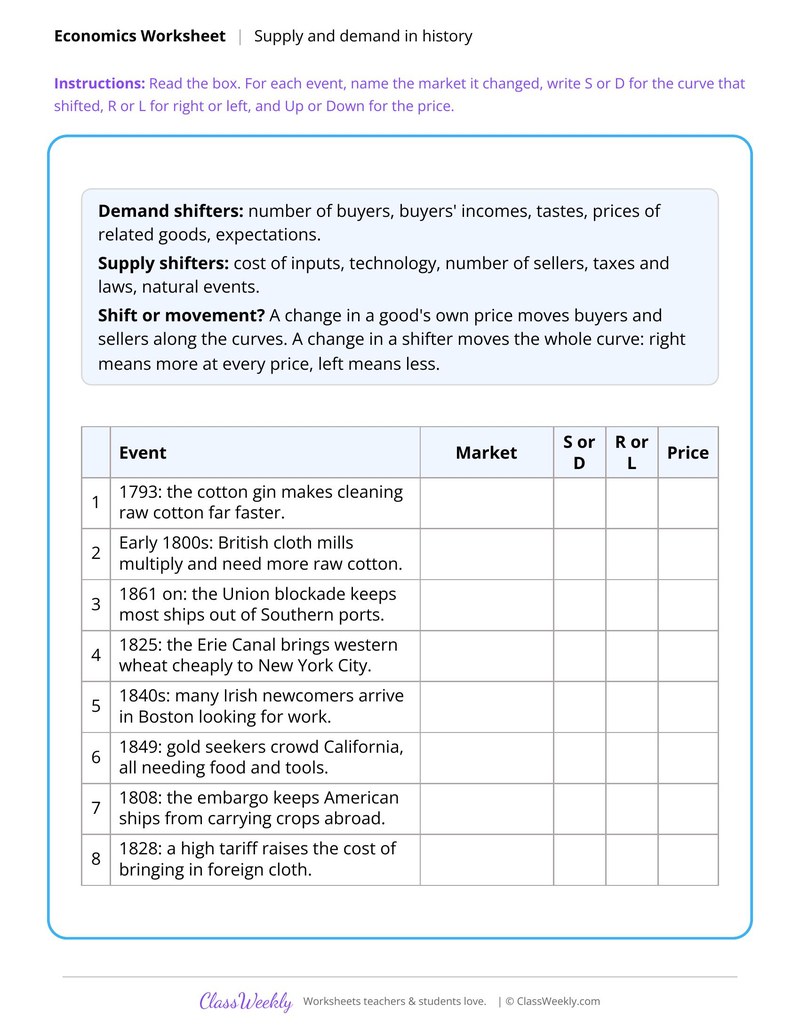
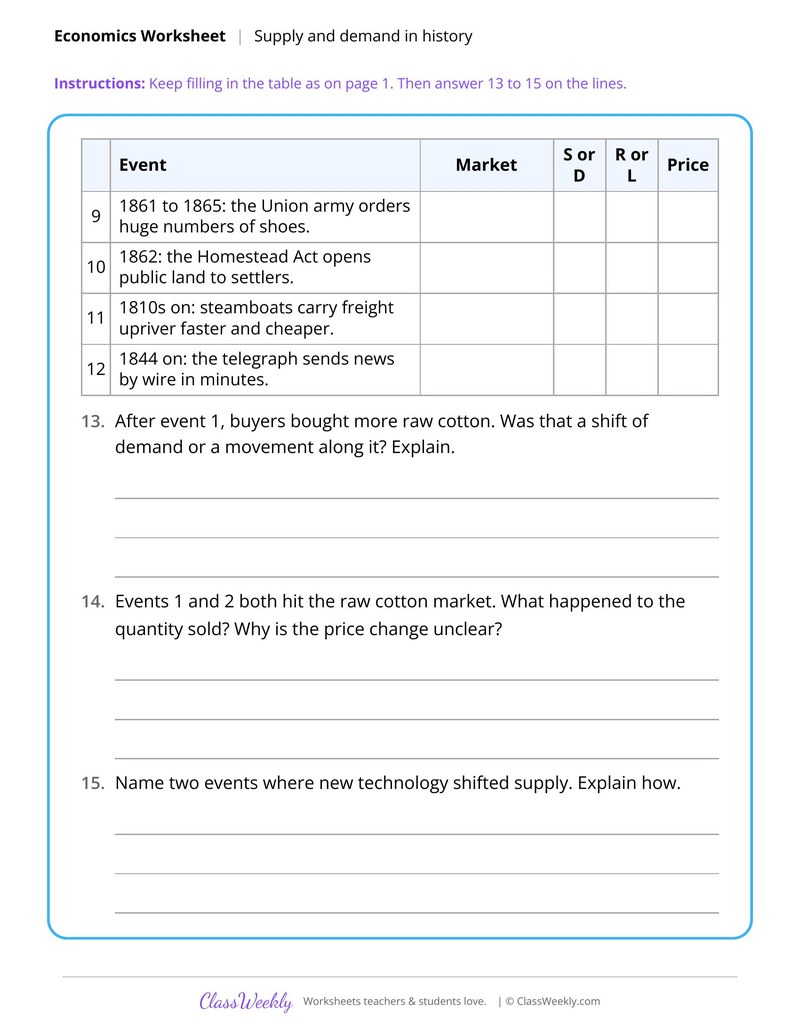
2 pages in this set
8th grade social studies worksheet: tell which curve shifted for events from the cotton gin to the telegraph and how prices moved. Answer key included. Part of our supply and demand economics and money collection. Aligned to C3 Framework standards.
How do I use this worksheet?
Start with the salt market table, then graph with the Gold Rush sheet. Use the shifts sheet as review and the scarcity sheet for discussion.
What students will practice
- Students will name the market, curve, direction and price change for historical events.
- Students will tell a shift of demand from a movement along the curve.
- Students will explain how technology such as steamboats shifted supply.
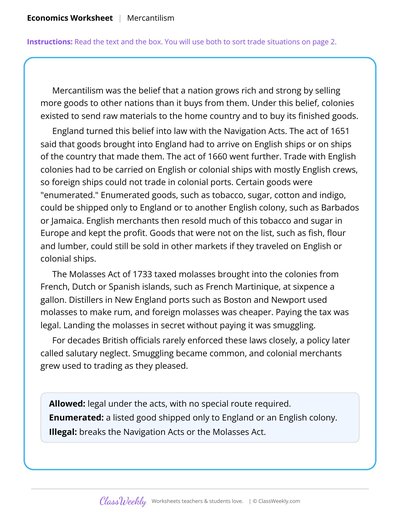
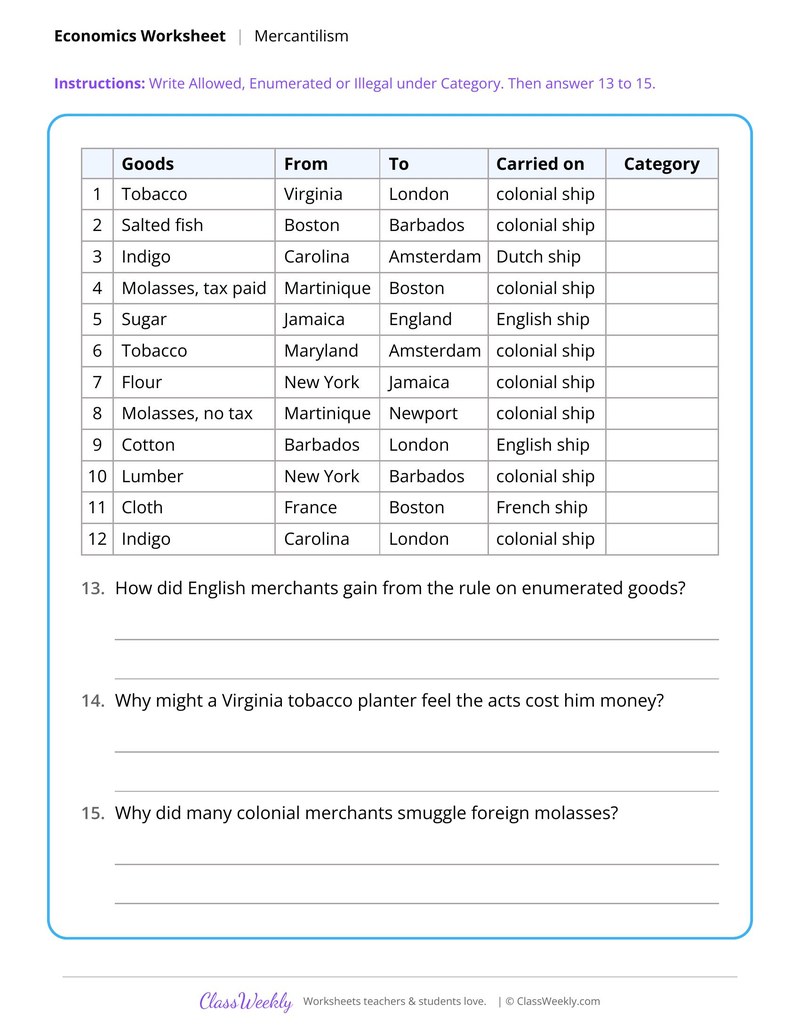
Mercantilism and the Navigation Acts
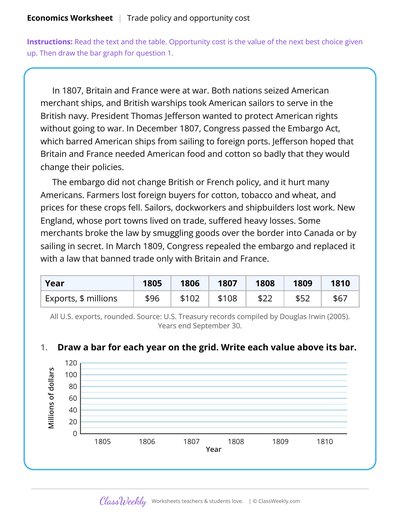
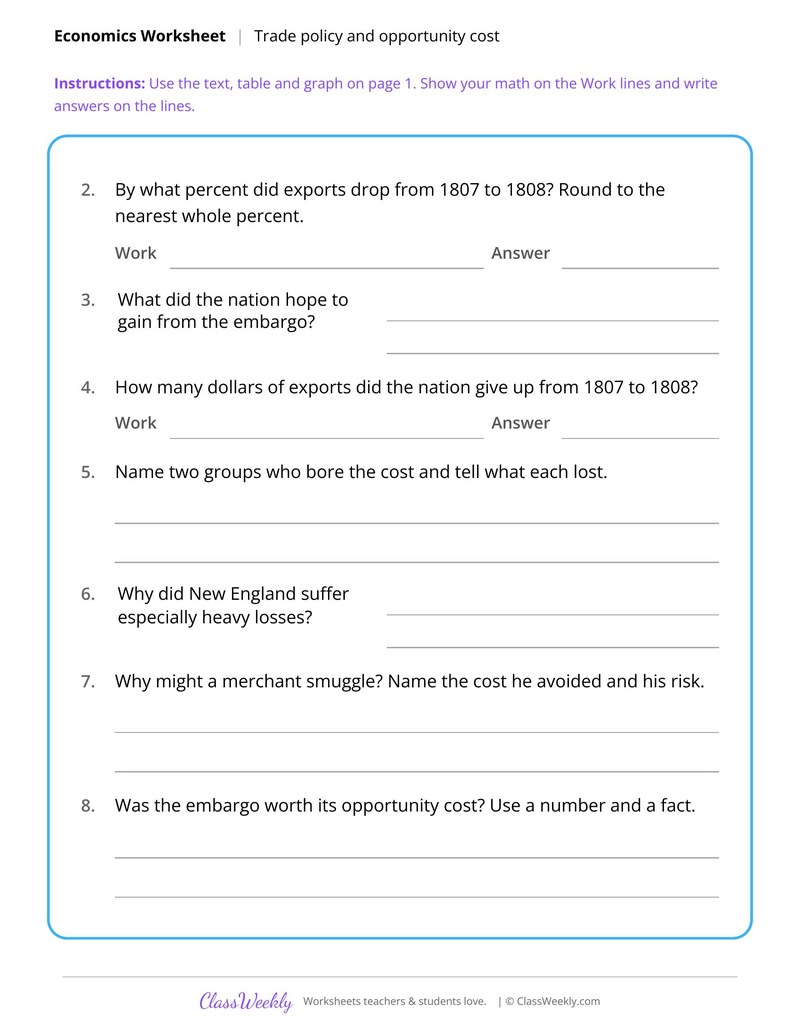
The Embargo of 1807 and Its Cost
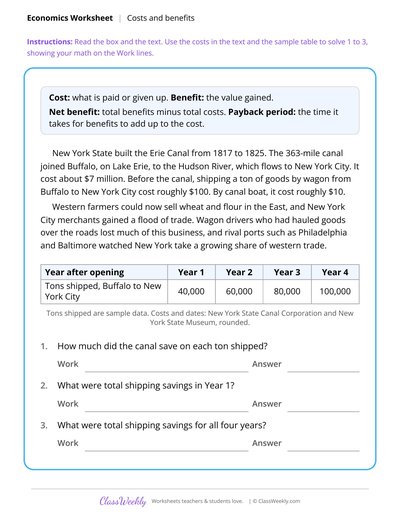
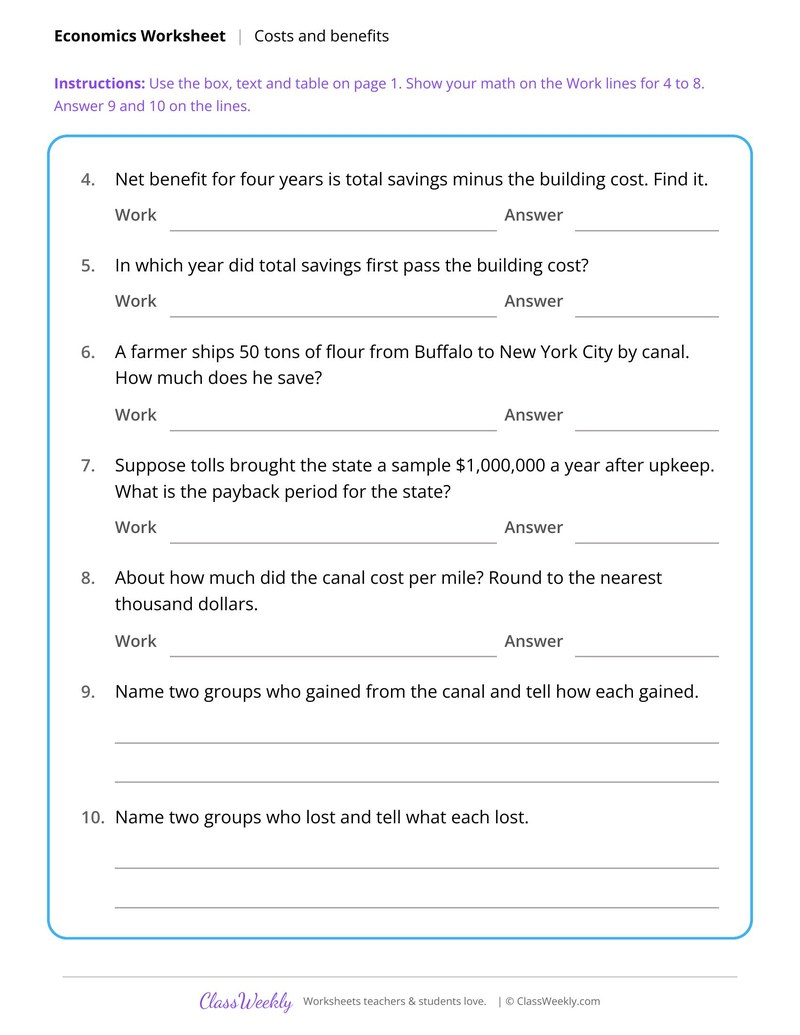
Costs and Benefits of the Erie Canal
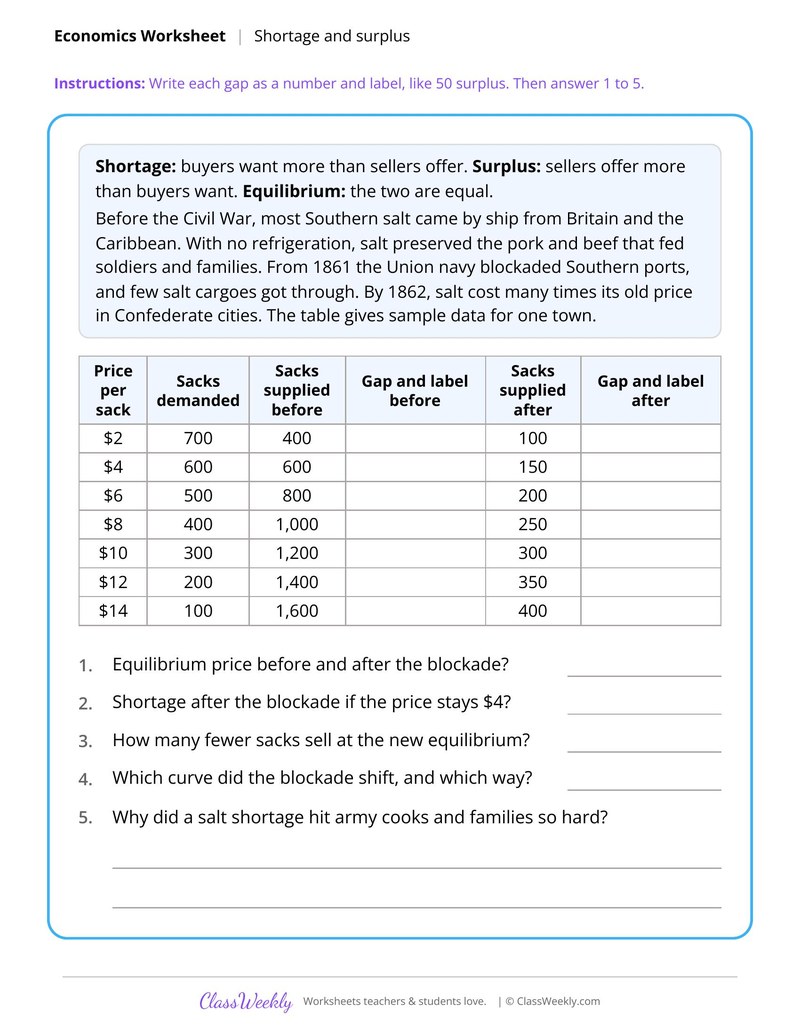
Shortage and Surplus in a Confederate Salt Market
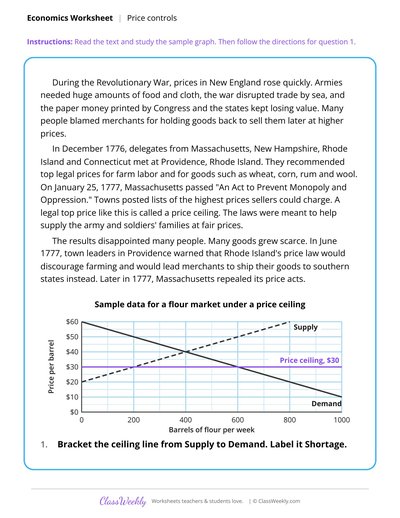
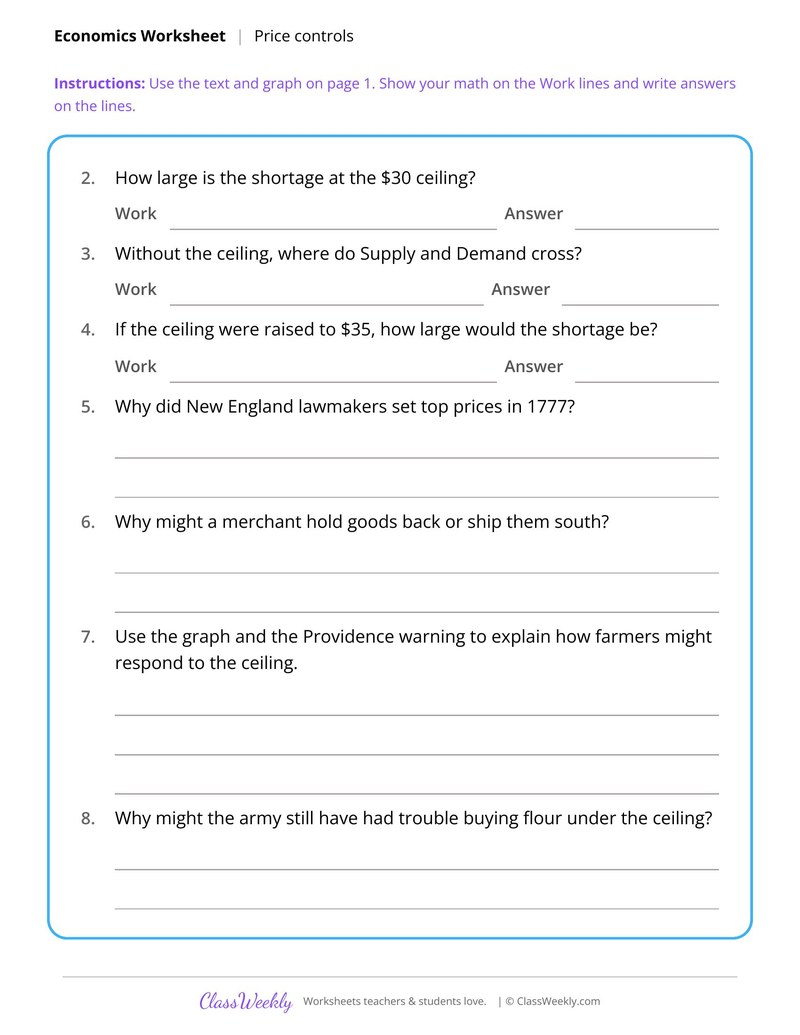
Price Controls During the American Revolution
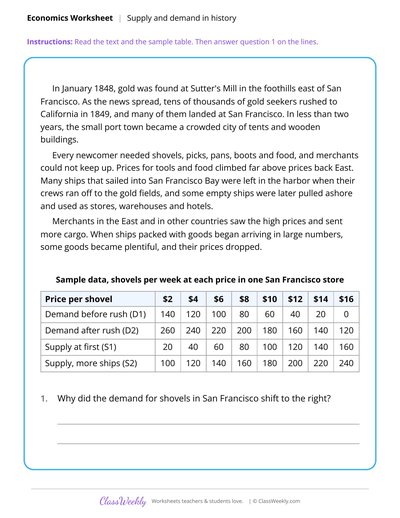
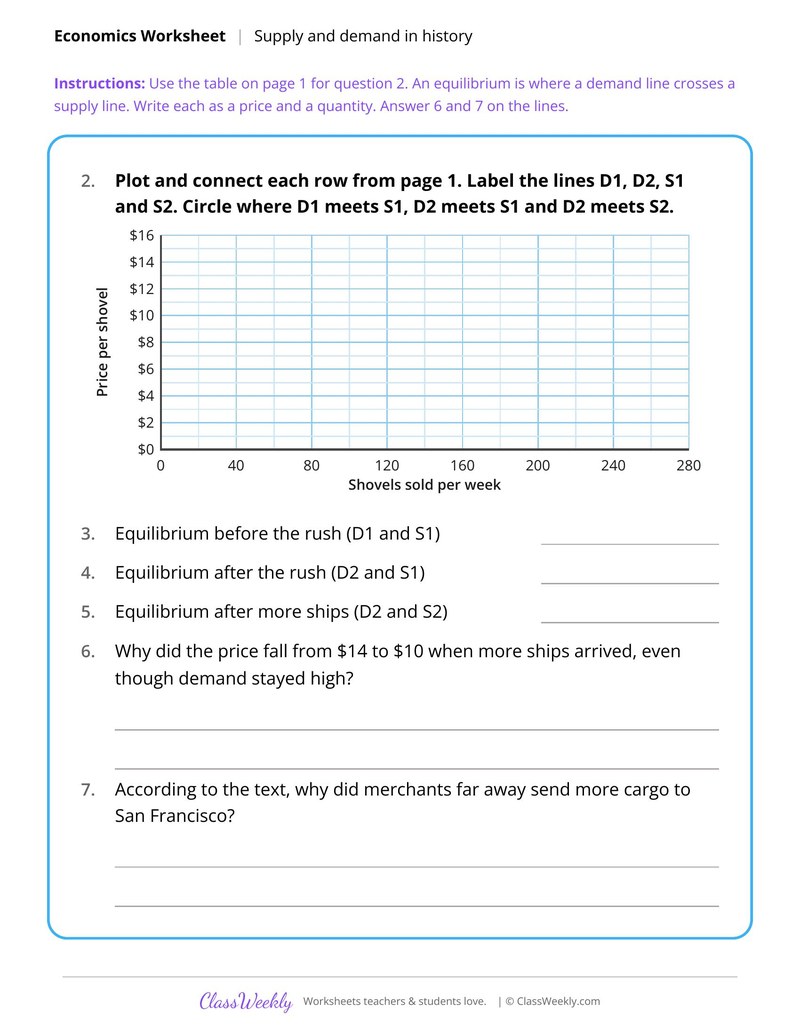
Supply and Demand in Gold Rush San Francisco
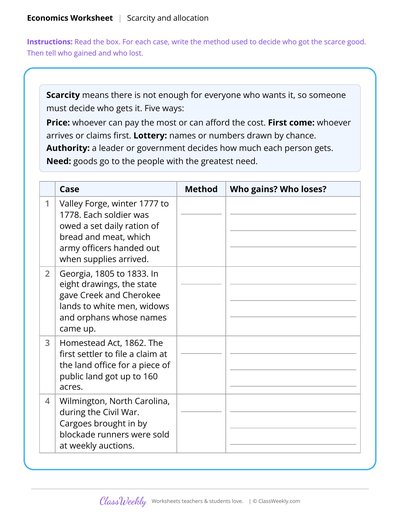
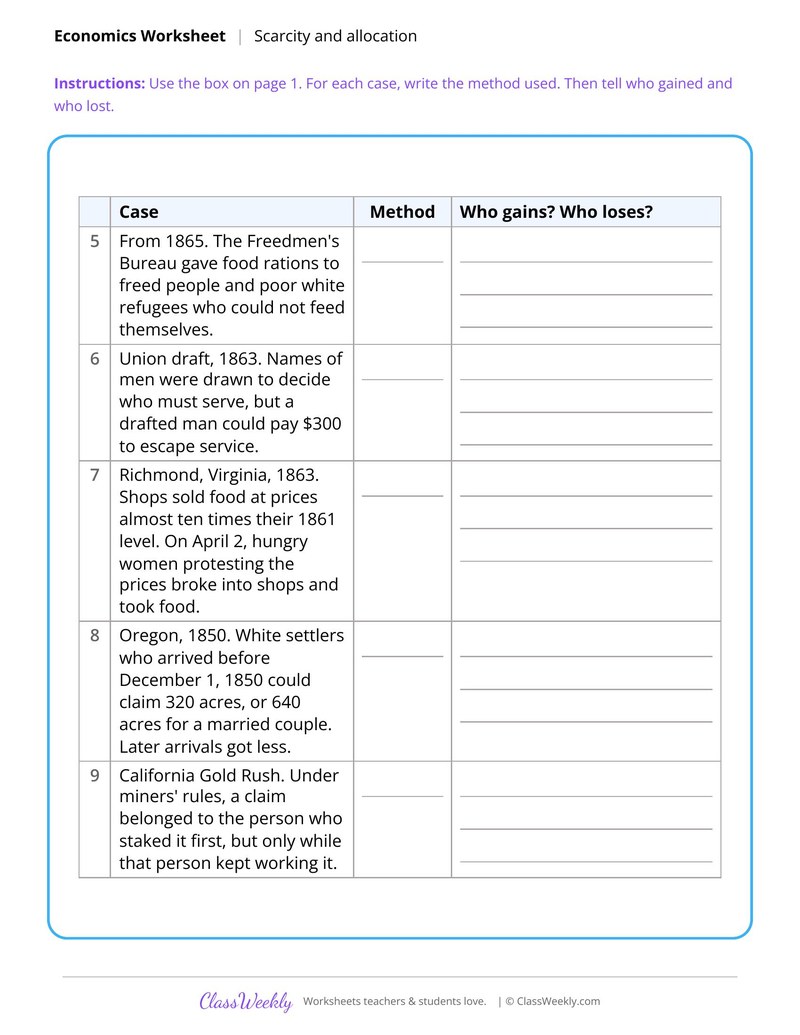
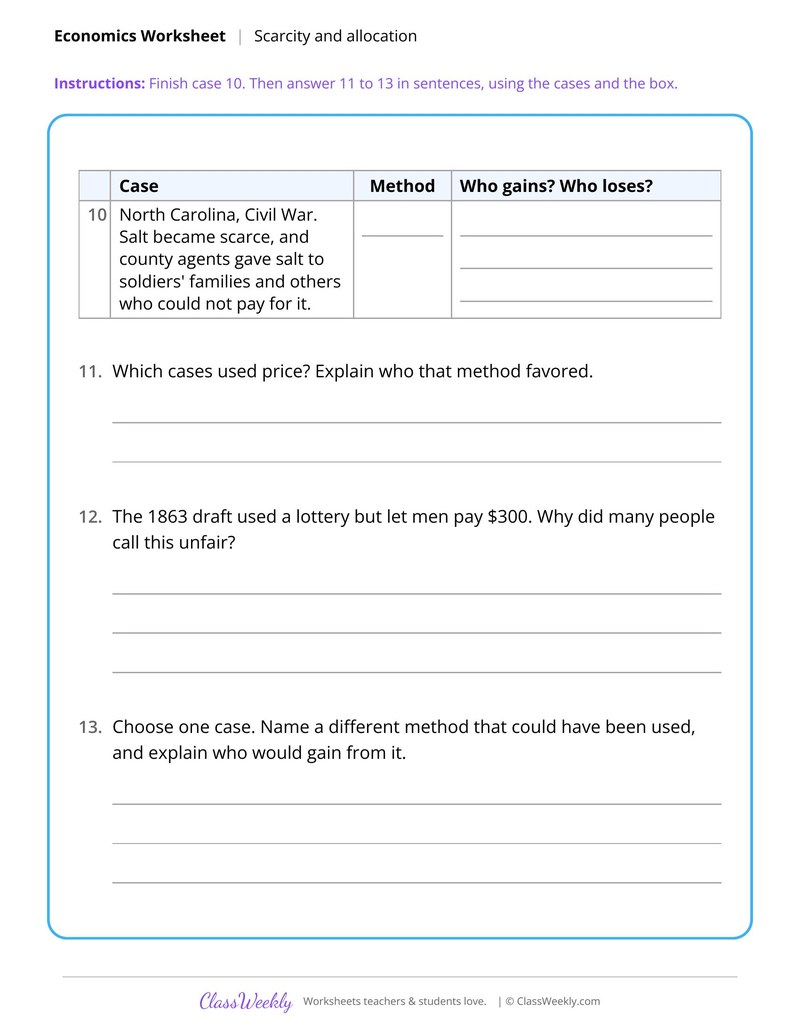
Scarcity and Rationing in American History
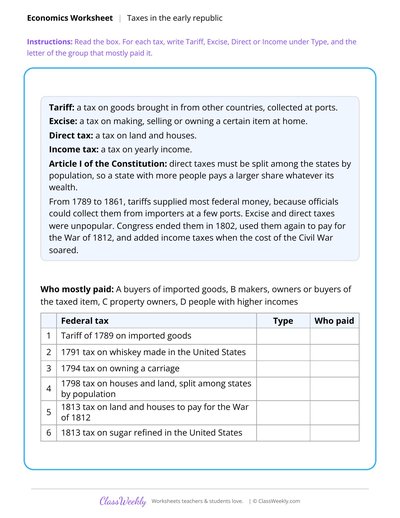
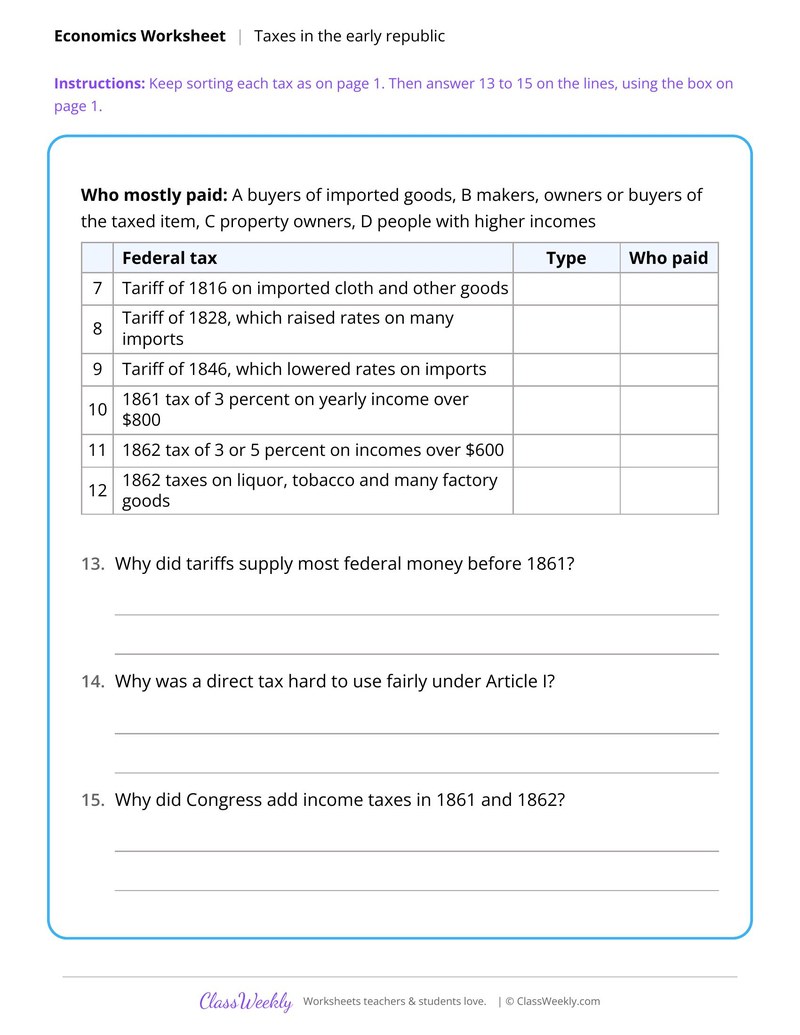
Tariffs, Excise and Direct Taxes, 1789 to 1862
Curriculum Links
C3 Framework for Social Studies State Standards
Social Studies · 8th Grade
Find this in the curriculum
Browse the grade, subject, and topic this belongs to.
FAQ
How do I use this supply and demand worksheet?
⌄
Start with the salt market table, then graph with the Gold Rush sheet. Use the shifts sheet as review and the scarcity sheet for discussion.
What does this worksheet teach?
⌄
Tell which curve shifted for events from the cotton gin to the telegraph and how prices moved. The directions on the page read: Read the box. For each event, name the market it changed, write S or D for the curve that shifted, R or L for right or left, and Up or Down for the price. An answer key is included.
Can I use this supply and demand worksheet for homeschool or classroom?
⌄
Yes, both. We made it for 8th grade Economics and Money, and it works the same at home or at school. At home, a student can work through it alone and then go over it with you, which shows quickly what is solid and what needs another look. In class it works as independent practice, homework or a warm-up, and you can print one copy or a full set.
What is a shortage?
⌄
A shortage is when buyers want more than sellers offer at a price. The salt market sheet finds the shortage at each price after the Union blockade cut supply.
What happens when a price ceiling is set below equilibrium?
⌄
Buyers want more than sellers will offer, so there is a shortage. The price controls sheet finds the shortage at a $30 ceiling on a sample graph.
What is the difference between a shift and a movement along a curve?
⌄
A change in a good's own price moves buyers and sellers along the curves. A change in a shifter, such as new technology, moves the whole curve.
Ratings & Reviews
No reviews yet. Be the first to share what you think.
Reviews are for ClassWeekly members.
Make a Request
Spotted something to fix, or want a worksheet we don't have yet? Tell us and we'll make it.
Worksheet Details
| Grade | 8th Grade |
| Subject | Social Studies |
| Topic | Economics and Money |
| Standard | D2.Eco.6.6-8 |
| Pages | 2 pages |
| Difficulty | Medium |
What is ClassWeekly?
ClassWeekly offers free worksheets and printable learning resources for kids, from preschool up. All worksheets are aligned to Common Core, NGSS, and C3 Framework standards and designed by educators. Become a member to access the full library and download unlimited PDFs.
Mercantilism and the Navigation Acts
The Embargo of 1807 and Its Cost
Costs and Benefits of the Erie Canal
Shortage and Surplus in a Confederate Salt Market
Price Controls During the American Revolution
Supply and Demand in Gold Rush San Francisco
Scarcity and Rationing in American History
Tariffs, Excise and Direct Taxes, 1789 to 1862