State Constitutions of 1776 and 1780 Compared
Written by Adi Ackerman, Head Teacher
"State Constitutions of 1776 and 1780 Compared" is written for 8th Grade (Ages 13-14), and it covers C3 Framework D2.Civ.5.6-8. A 7th grader who is already steady on State and Local Government can use it too, and an older student can use it as a short review.
2 pages in this set
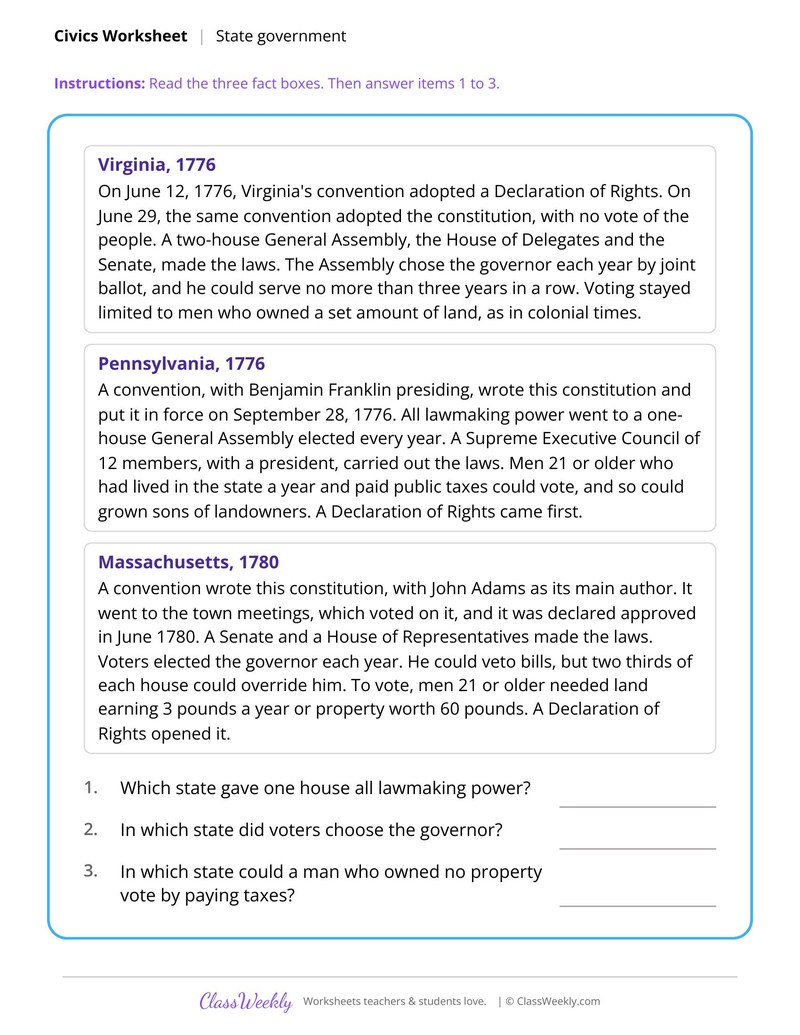
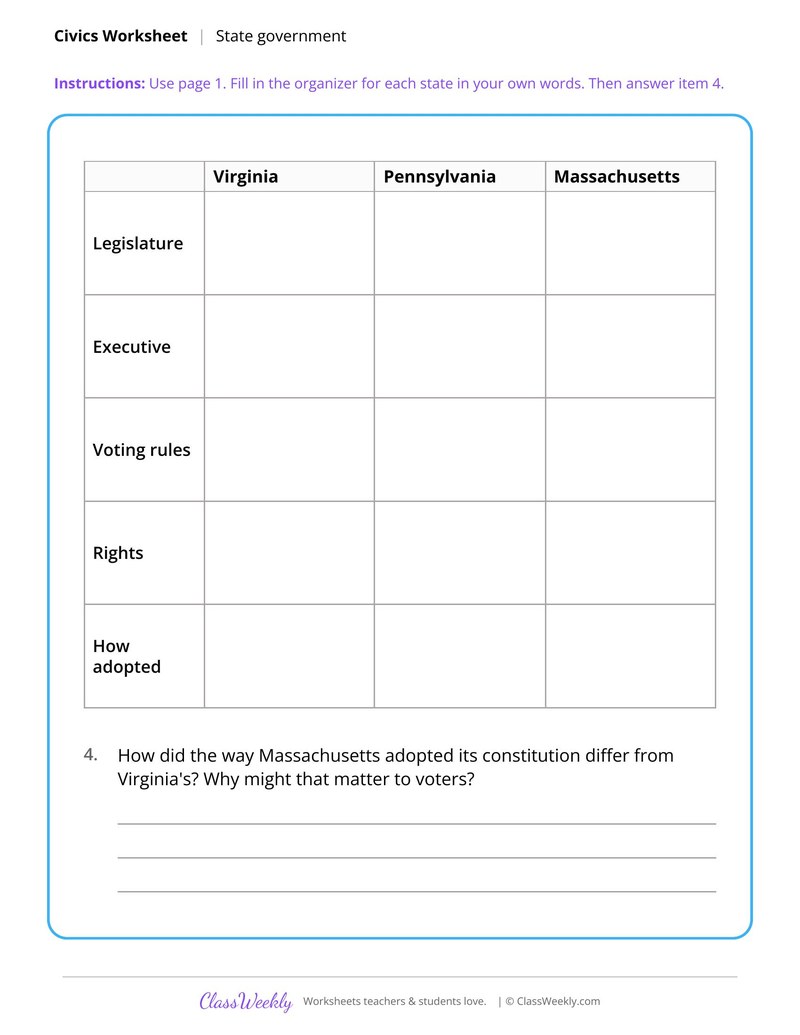
8th grade social studies worksheet: compare the first constitutions of Virginia, Pennsylvania and Massachusetts on voting. Answer key included. Part of our towns, townships and states state and local government collection. Aligned to C3 Framework standards.
How do I use this worksheet?
Begin with town meetings, then the township grid and the school tax, which both deal with schools. End with the state constitutions organizer.
What students will practice
- Students will read fact boxes on the constitutions of Virginia, Pennsylvania and Massachusetts.
- Students will organize each state's legislature, executive, voting rules and rights.
- Students will explain how the way Massachusetts adopted its constitution differed from Virginia's.
New England Town Meetings in the Colonial Era
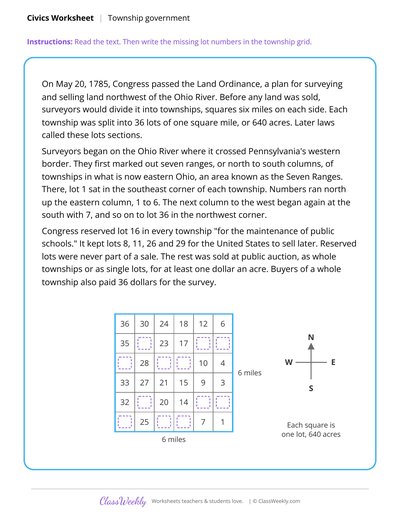
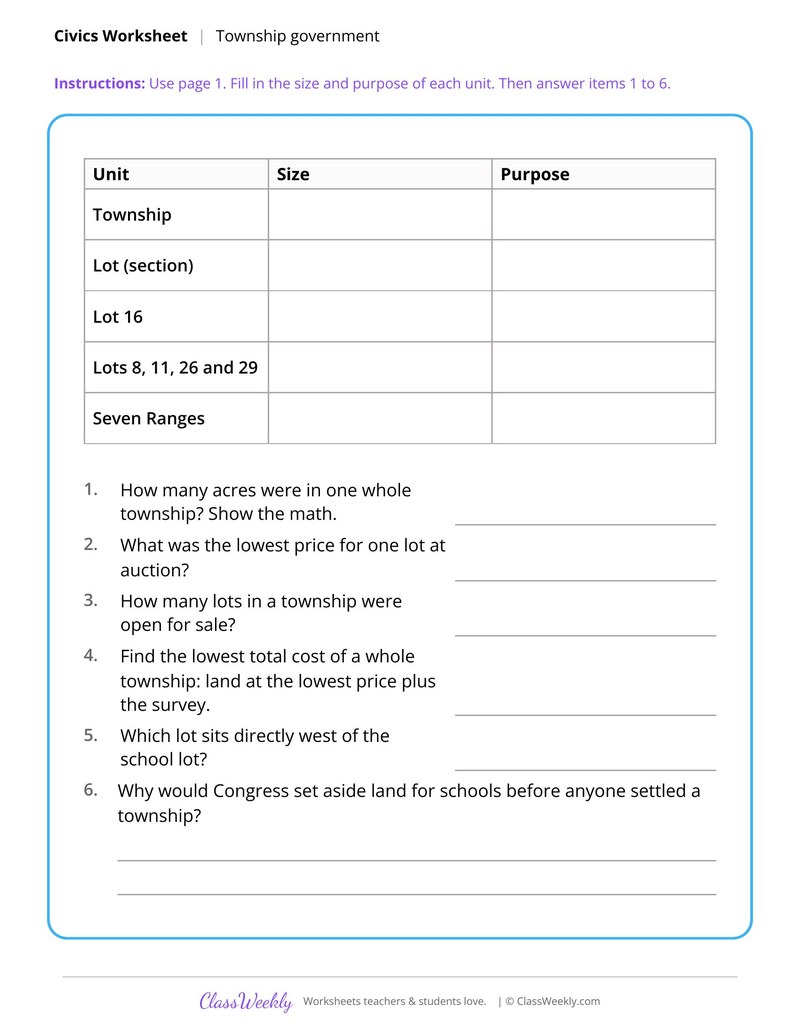
Townships and Schools Under the Land Ordinance
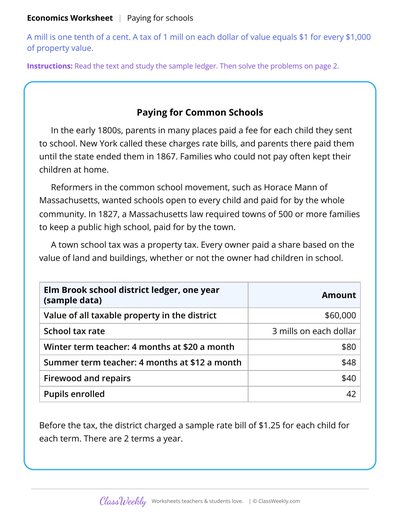
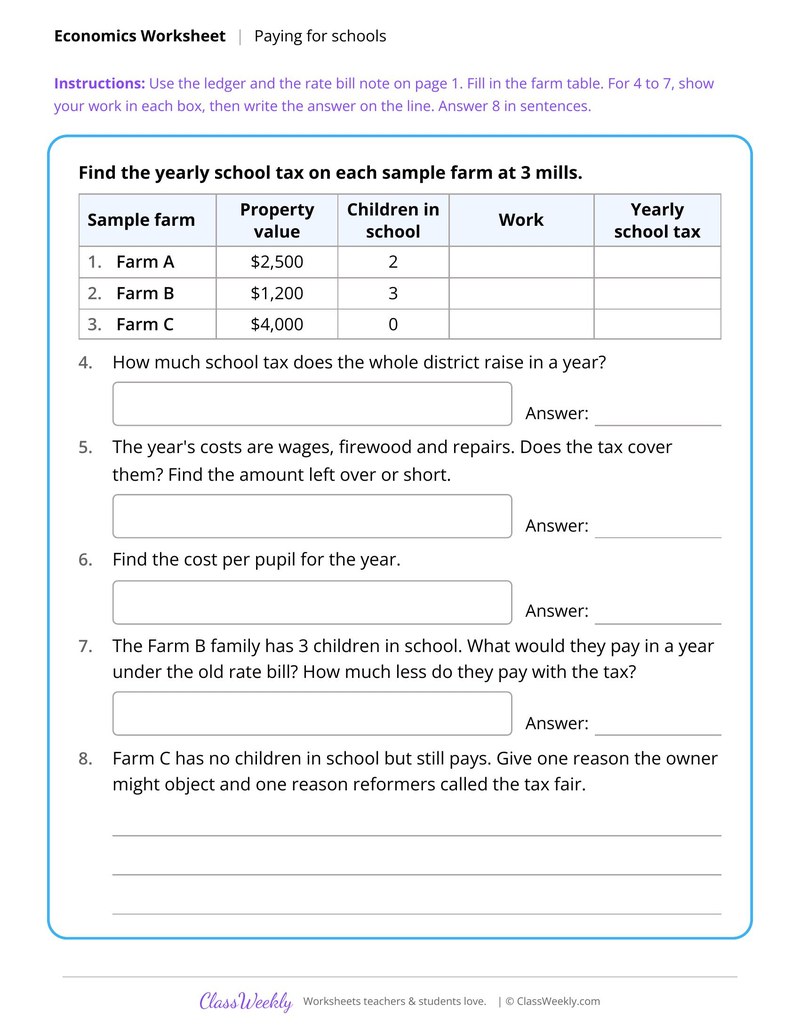
Paying for Common Schools With Local Taxes
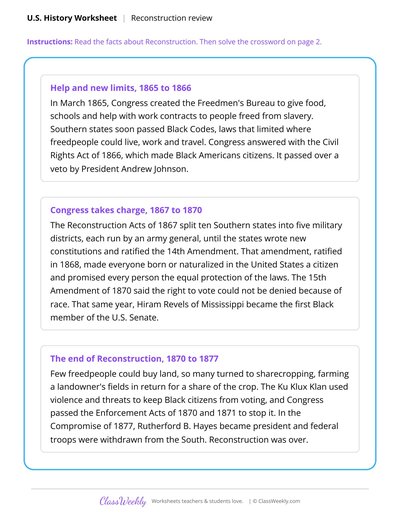
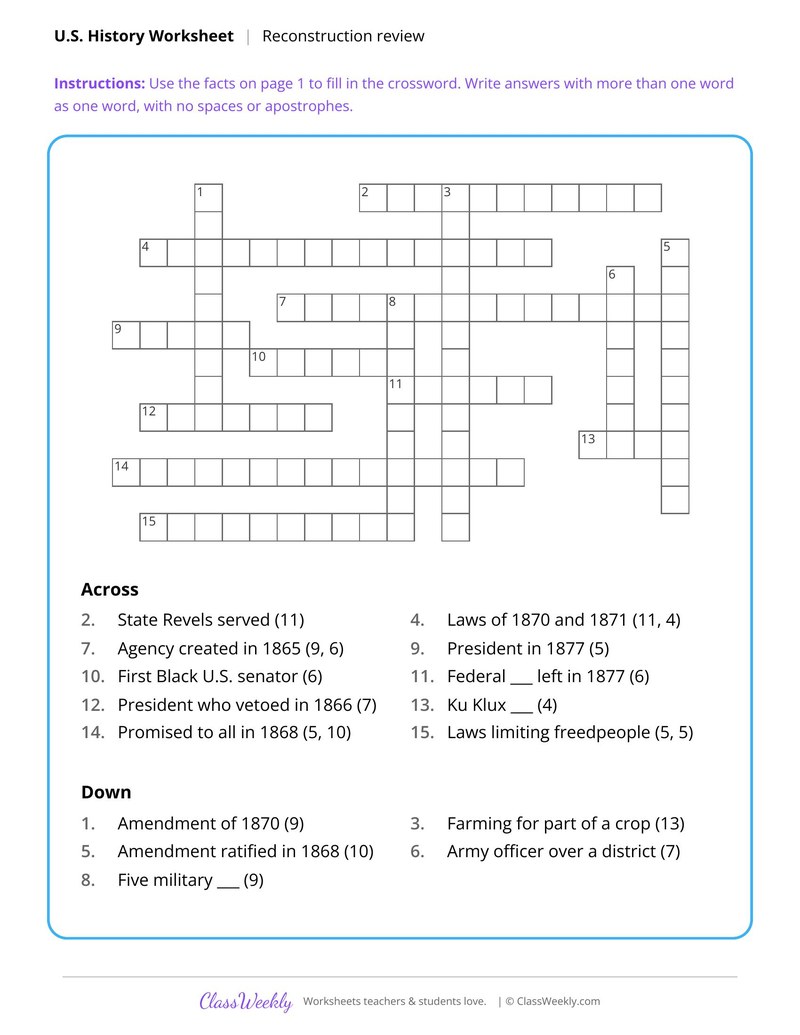
Reconstruction Era Crossword
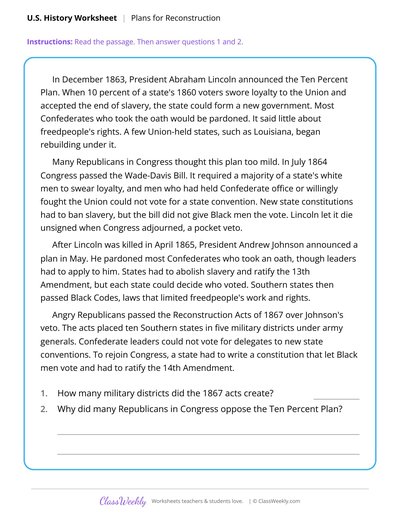
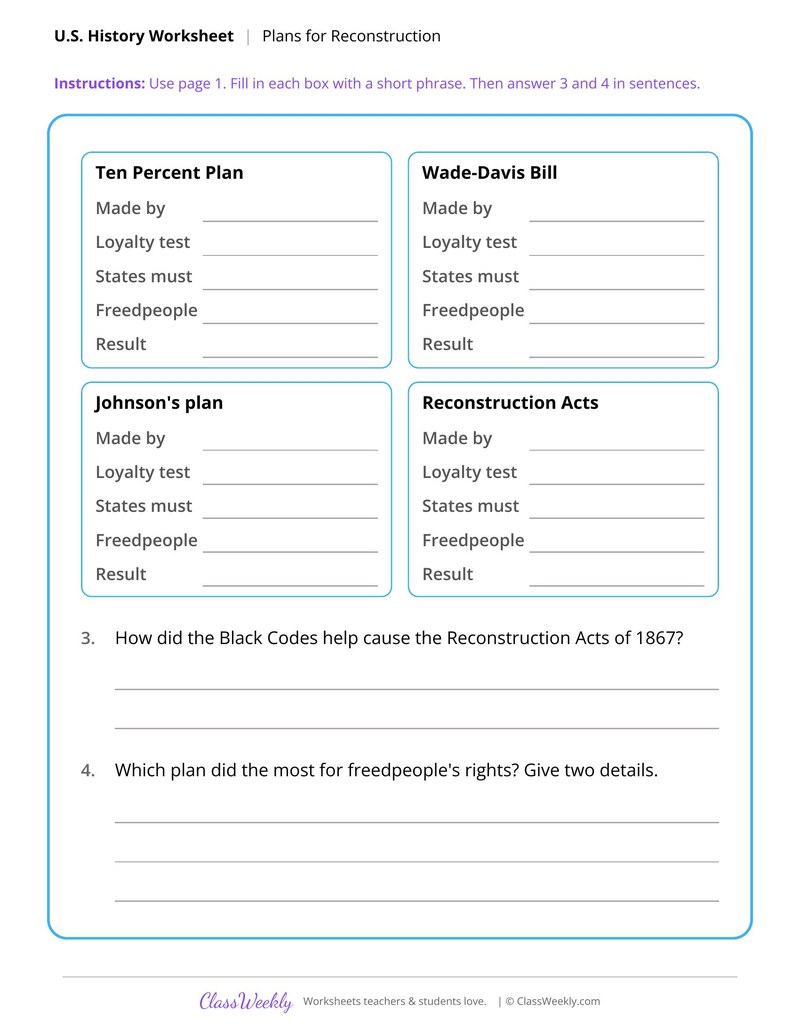
Reconstruction Plans of Lincoln, Johnson and Congress
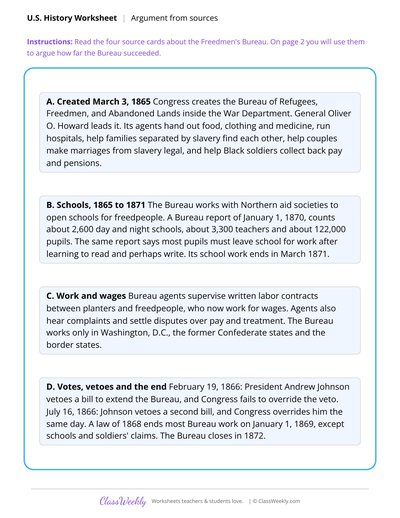
Argument on the Freedmen's Bureau's Record
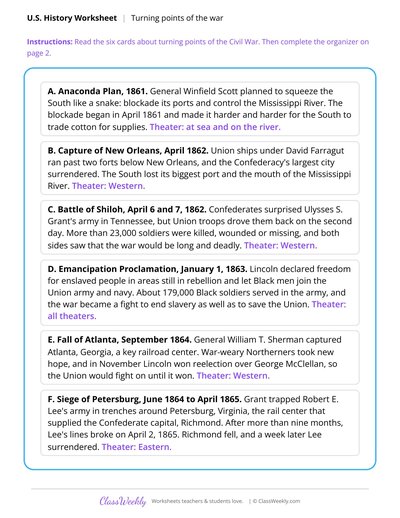
Turning Points of the Civil War Organizer
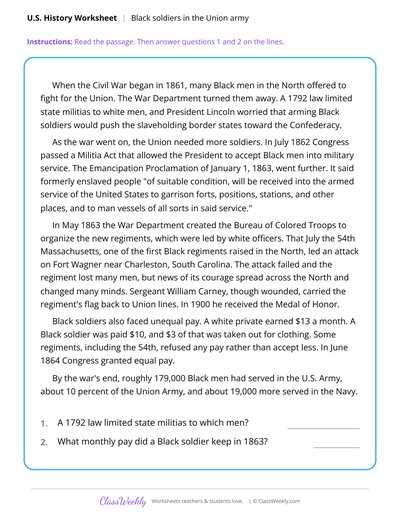
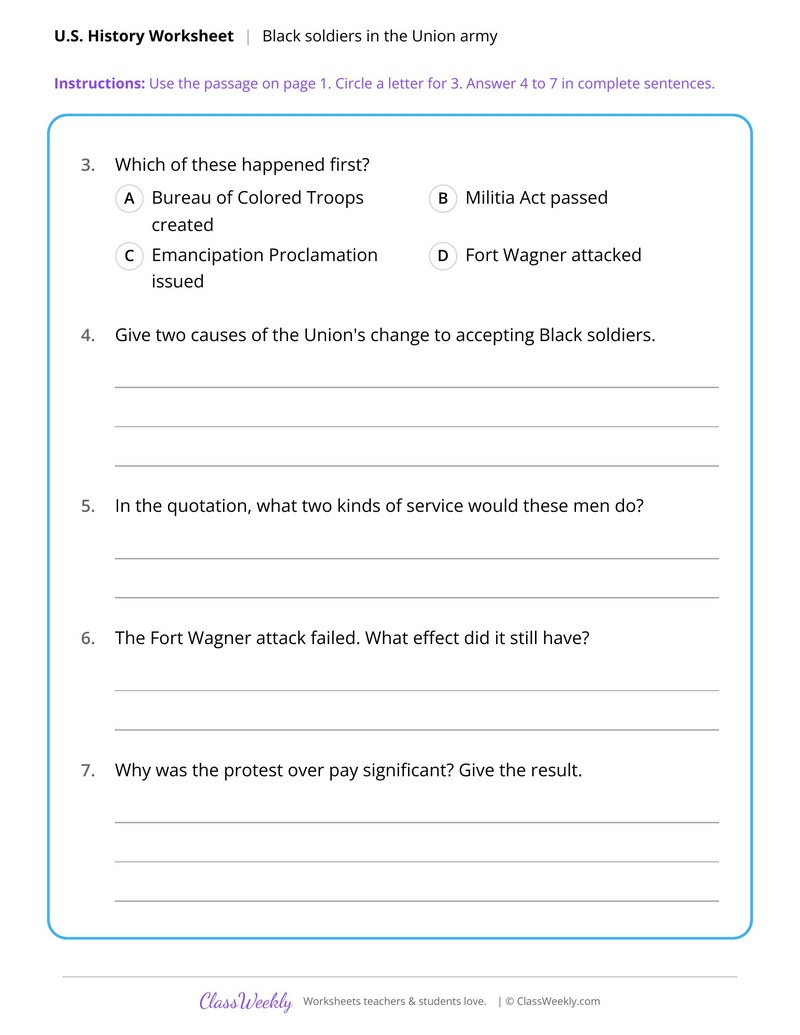
Black Soldiers in the Union Army
Curriculum Links
C3 Framework for Social Studies State Standards
Social Studies · 8th Grade
Find this in the curriculum
Browse the grade, subject, and topic this belongs to.
FAQ
How do I use this towns, townships and states worksheet?
⌄
Begin with town meetings, then the township grid and the school tax, which both deal with schools. End with the state constitutions organizer.
What does this worksheet teach?
⌄
Compare the first constitutions of Virginia, Pennsylvania and Massachusetts on voting. The directions on the page read: Read the three fact boxes. Then answer items 1 to 3. An answer key is included.
Can I use this towns, townships and states worksheet for homeschool or classroom?
⌄
Yes, both. We made it for 8th grade State and Local Government, and it works the same at home or at school. At home, a student can work through it alone and then go over it with you, which shows quickly what is solid and what needs another look. In class it works as independent practice, homework or a warm-up, and you can print one copy or a full set.
What were selectmen?
⌄
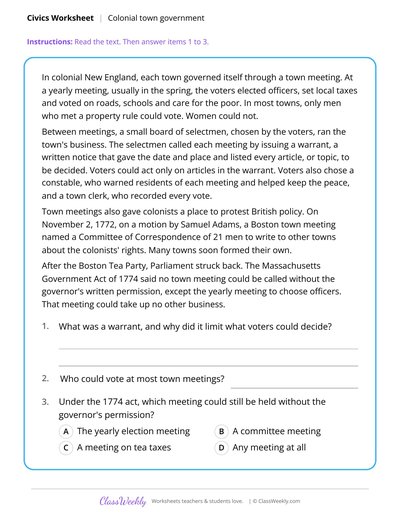
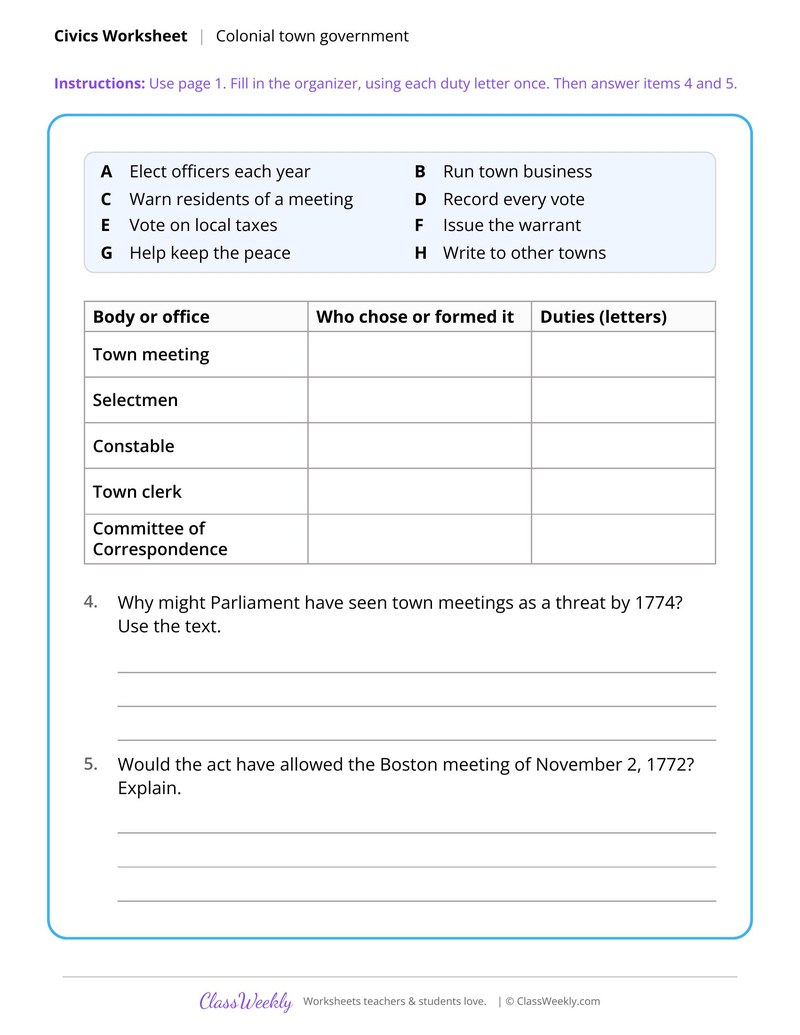
Selectmen were a small board chosen by voters to run a New England town between meetings. They called each meeting by issuing a warrant that listed every topic.
What is a mill in a property tax?
⌄
A mill is one tenth of a cent. A tax of 1 mill on each dollar of value equals $1 for every $1,000 of property value, and the school tax sheet uses a sample rate of 3 mills.
Which lot was set aside for schools in a township?
⌄
Congress reserved lot 16 in every township for public schools. Lots 8, 11, 26 and 29 were kept for the United States to sell later.
Ratings & Reviews
No reviews yet. Be the first to share what you think.
Reviews are for ClassWeekly members.
Make a Request
Spotted something to fix, or want a worksheet we don't have yet? Tell us and we'll make it.
Worksheet Details
| Grade | 8th Grade |
| Subject | Social Studies |
| Topic | State and Local Government |
| Standard | D2.Civ.5.6-8 |
| Pages | 2 pages |
| Difficulty | Medium |
What is ClassWeekly?
ClassWeekly offers free worksheets and printable learning resources for kids, from preschool up. All worksheets are aligned to Common Core, NGSS, and C3 Framework standards and designed by educators. Become a member to access the full library and download unlimited PDFs.
New England Town Meetings in the Colonial Era
Townships and Schools Under the Land Ordinance
Paying for Common Schools With Local Taxes
Reconstruction Era Crossword
Reconstruction Plans of Lincoln, Johnson and Congress
Argument on the Freedmen's Bureau's Record
Turning Points of the Civil War Organizer
Black Soldiers in the Union Army