Atlantic Trade Routes and the Colonies
Written by Adi Ackerman, Head Teacher
"Atlantic Trade Routes and the Colonies" is written for 8th Grade (Ages 13-14), and it covers C3 Framework D2.His.14.6-8. A 7th grader who is already steady on The Thirteen Colonies can use it too, and an older student can use it as a short review.
2 pages in this set
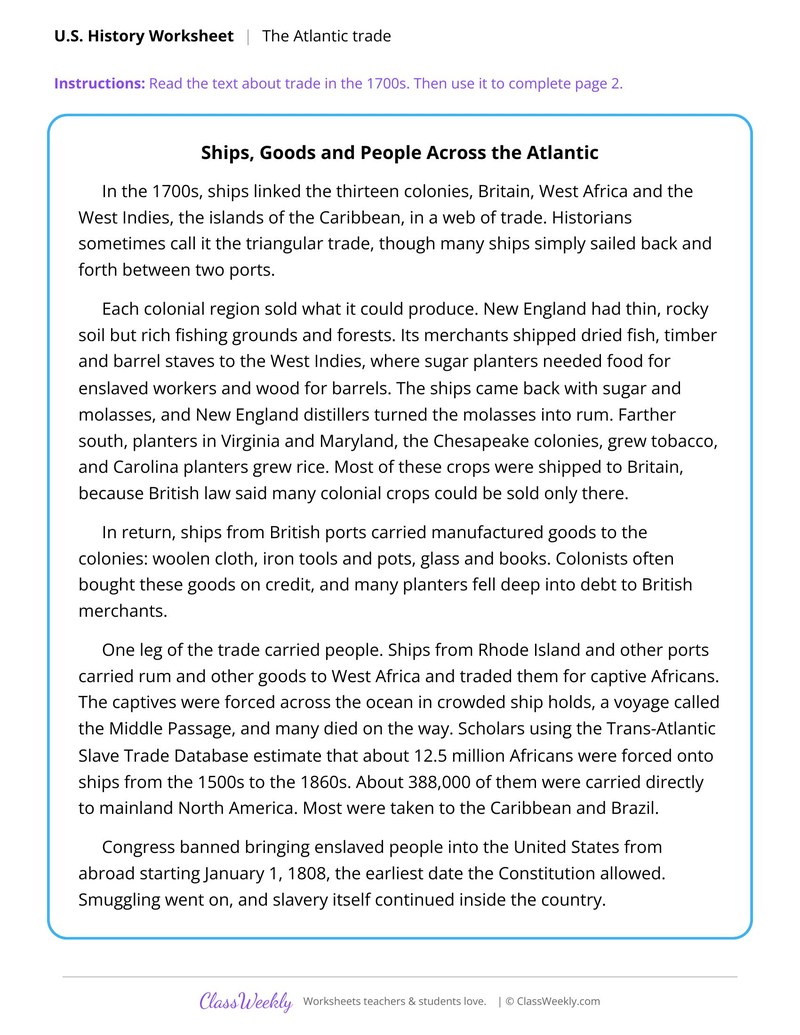
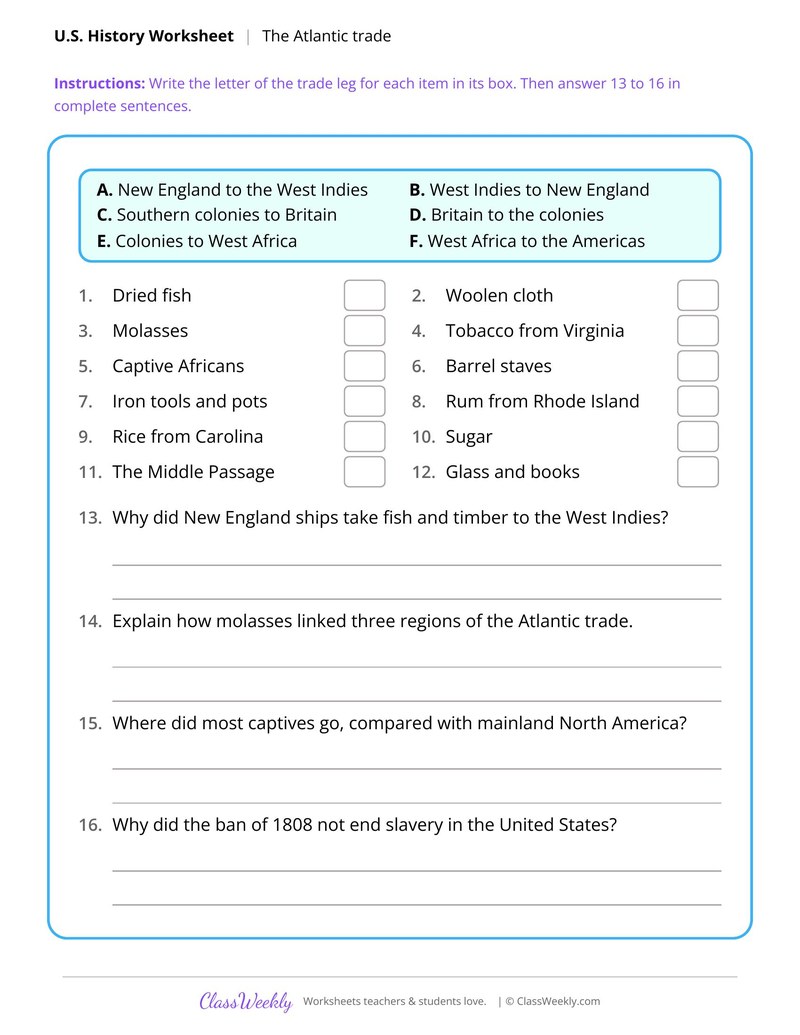
8th grade social studies worksheet: sort goods such as molasses, rice and woolen cloth onto six Atlantic trade legs of the 1700s. Answer key included. Part of our colonial government and society thirteen colonies collection. Aligned to C3 Framework standards.
How do I use this worksheet?
Start with the two governments, then the colony types. Use the trade routes and social groups sheets to show how colonists lived and worked.
What students will practice
- Students will match twelve goods and events to six legs of Atlantic trade.
- Students will explain how molasses linked three regions of the trade.
- Students will explain why the 1808 ban did not end slavery in the United States.
Curriculum Links
C3 Framework for Social Studies State Standards
Social Studies · 8th Grade
Find this in the curriculum
Browse the grade, subject, and topic this belongs to.
FAQ
How do I use this colonial government and society worksheet?
⌄
Start with the two governments, then the colony types. Use the trade routes and social groups sheets to show how colonists lived and worked.
What does this worksheet teach?
⌄
Sort goods such as molasses, rice and woolen cloth onto six Atlantic trade legs of the 1700s. The directions on the page read: Read the text about trade in the 1700s. Then use it to complete page 2. An answer key is included.
Can I use this colonial government and society worksheet for homeschool or classroom?
⌄
Yes, both. We made it for 8th grade The Thirteen Colonies, and it works the same at home or at school. At home, a student can work through it alone and then go over it with you, which shows quickly what is solid and what needs another look. In class it works as independent practice, homework or a warm-up, and you can print one copy or a full set.
What were the Fundamental Orders?
⌄
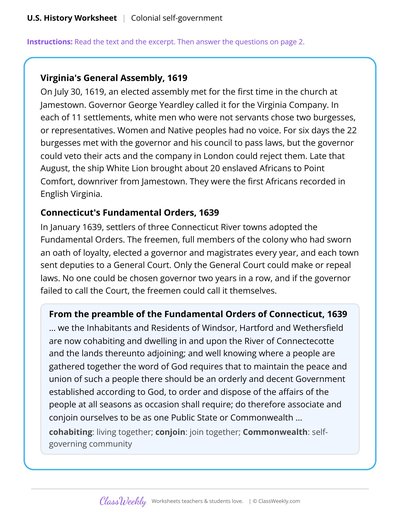
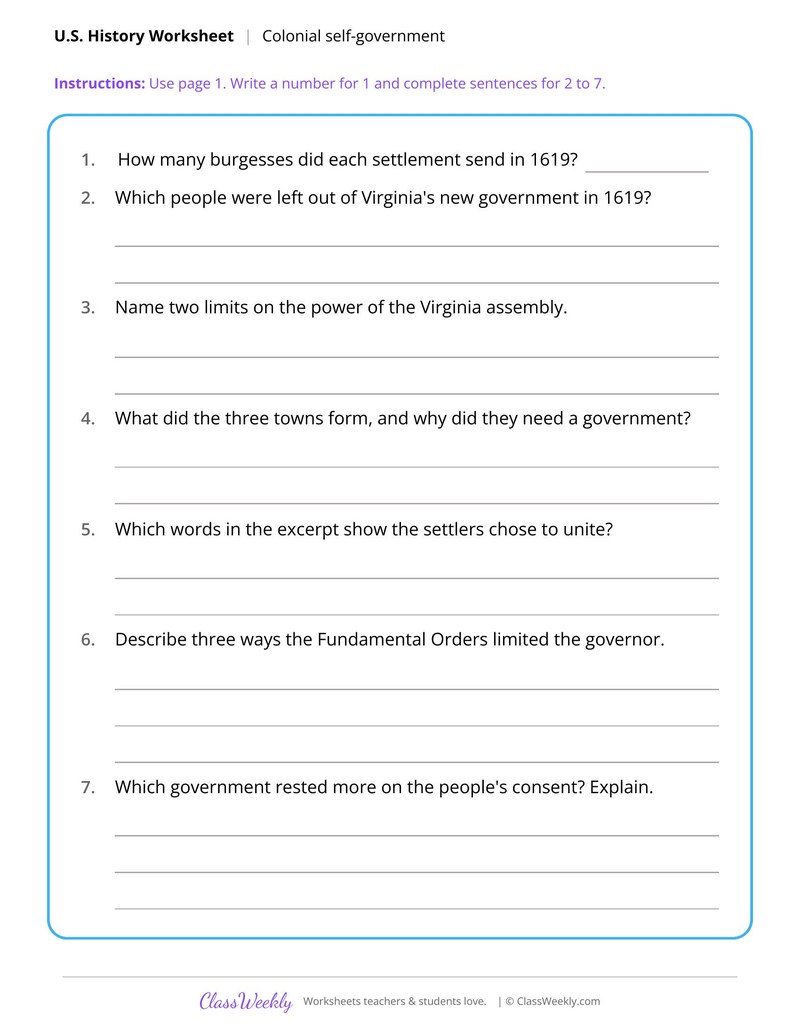
In January 1639 settlers of three Connecticut River towns adopted the Fundamental Orders. Freemen elected a governor and magistrates every year, and each town sent deputies to a General Court.
Who were indentured servants?
⌄
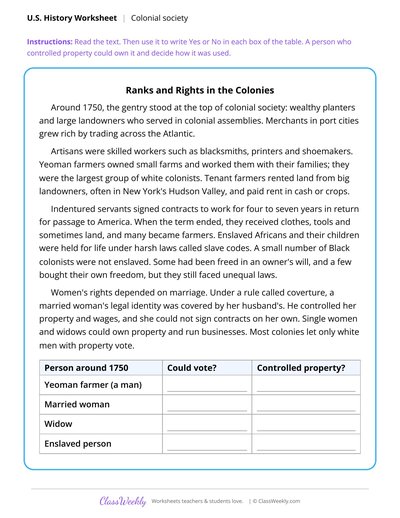
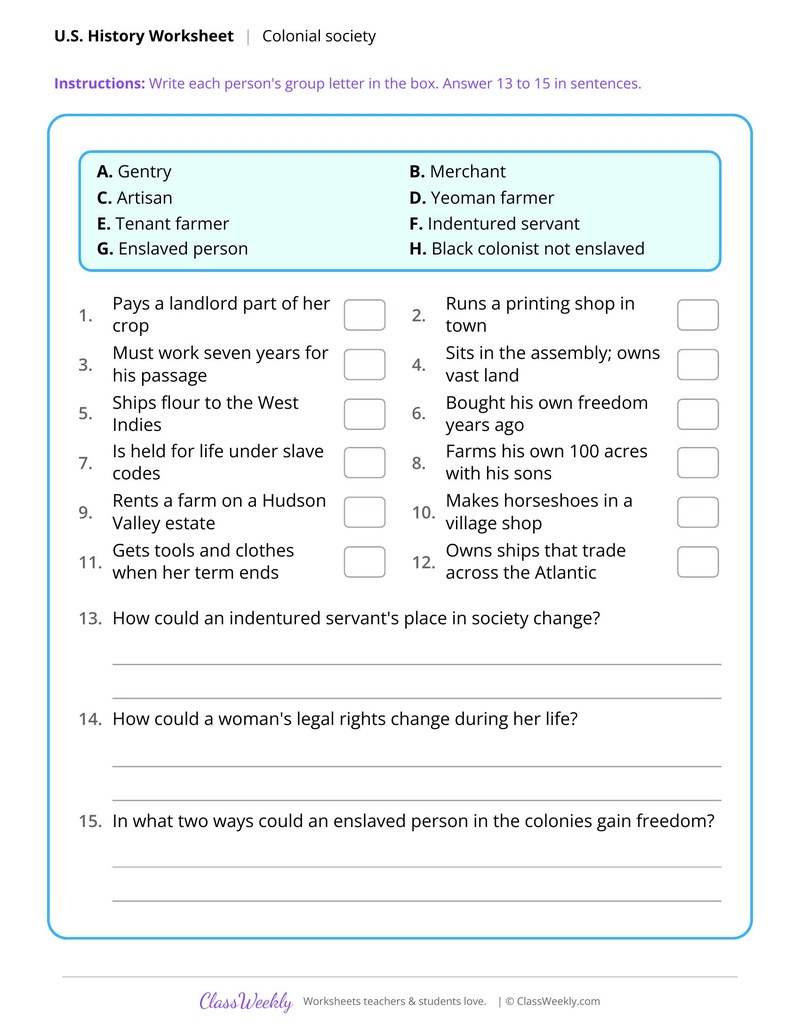
They signed contracts to work for four to seven years in return for passage to America. The social groups sheet compares their rights with those of gentry, artisans, yeoman farmers and others around 1750.
Who chose the governor in a charter colony?
⌄
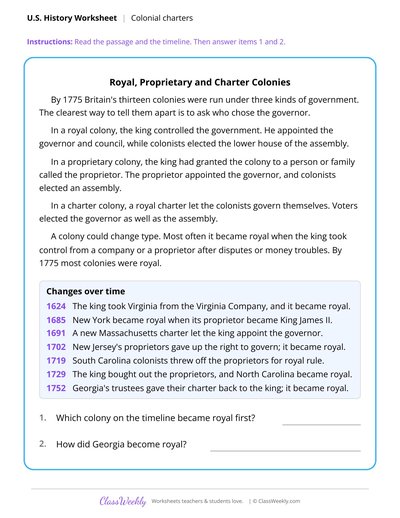
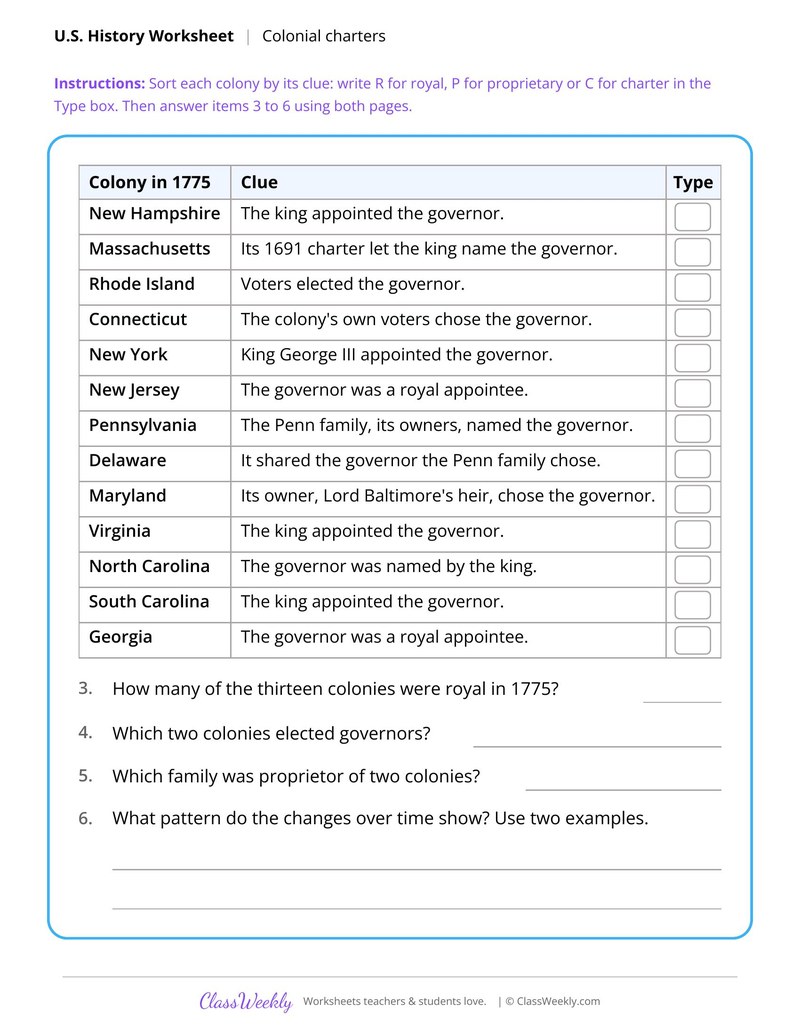
In a charter colony, voters elected the governor as well as the assembly. In a royal colony the king appointed the governor, and in a proprietary colony the proprietor did.
Ratings & Reviews
No reviews yet. Be the first to share what you think.
Reviews are for ClassWeekly members.
Make a Request
Spotted something to fix, or want a worksheet we don't have yet? Tell us and we'll make it.
Worksheet Details
| Grade | 8th Grade |
| Subject | Social Studies |
| Topic | The Thirteen Colonies |
| Standard | D2.His.14.6-8 |
| Pages | 2 pages |
| Difficulty | Medium |
What is ClassWeekly?
ClassWeekly offers free worksheets and printable learning resources for kids, from preschool up. All worksheets are aligned to Common Core, NGSS, and C3 Framework standards and designed by educators. Become a member to access the full library and download unlimited PDFs.