Checks and Balances From 1803 to 1861
Written by Adi Ackerman, Head Teacher
"Checks and Balances From 1803 to 1861" is written for 8th Grade (Ages 13-14), and it covers C3 Framework D2.Civ.4.6-8. A 7th grader who is already steady on Three Branches and Checks can use it too, and an older student can use it as a short review.
2 pages in this set
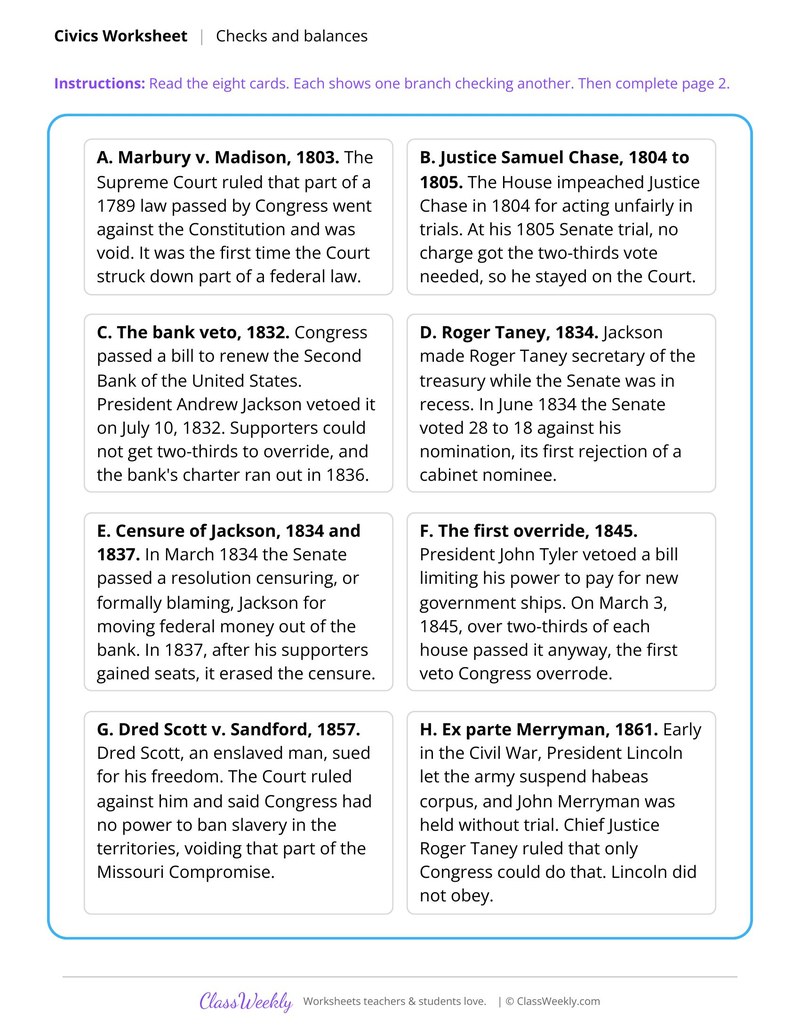
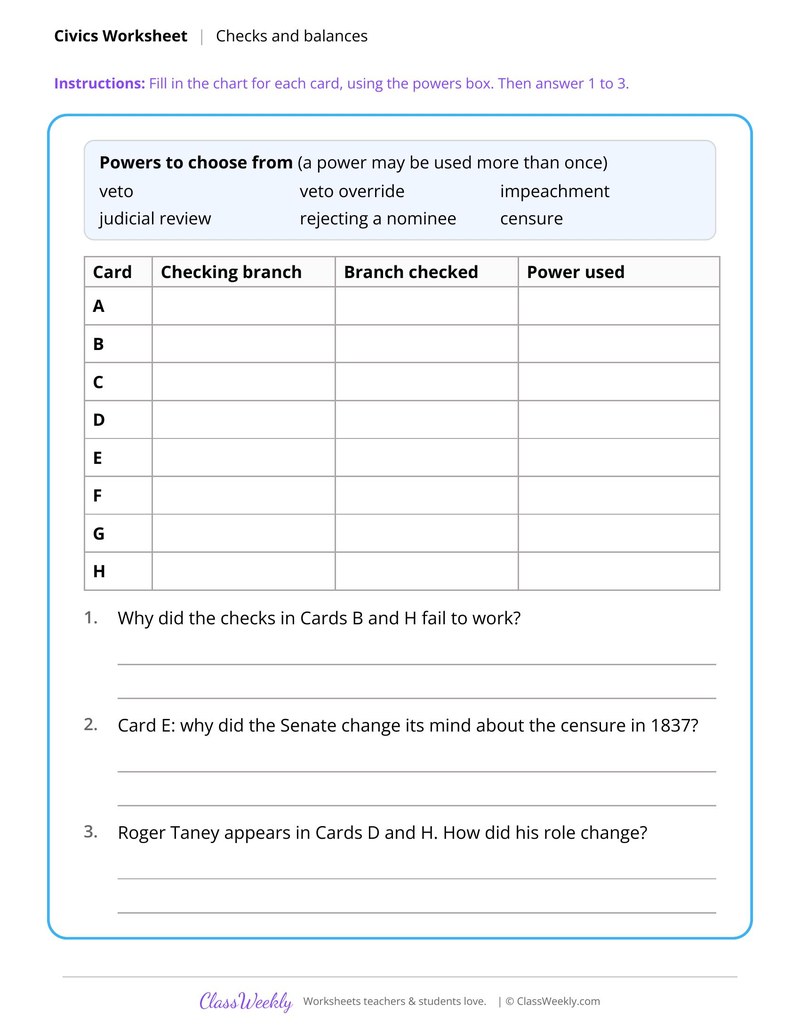
8th grade social studies worksheet: chart eight checks from 1803 to 1861, from Marbury v. Madison to Jackson's bank veto. Answer key included. Part of our courts and checks on power collection. Aligned to C3 Framework standards.
How do I use this worksheet?
Start with the Judiciary Act diagram to set up the courts, then the Marshall Court cases. Finish with the checks chart, which mixes all three branches.
What students will practice
- Students will name the checking branch, the branch checked and the power used on eight cards.
- Students will explain why the impeachment of Justice Chase failed.
- Students will trace how Roger Taney's role changed between two cards.
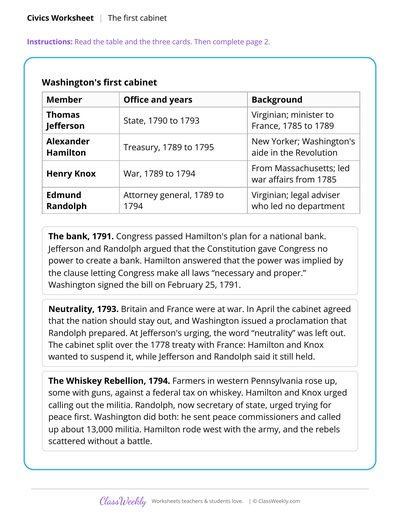
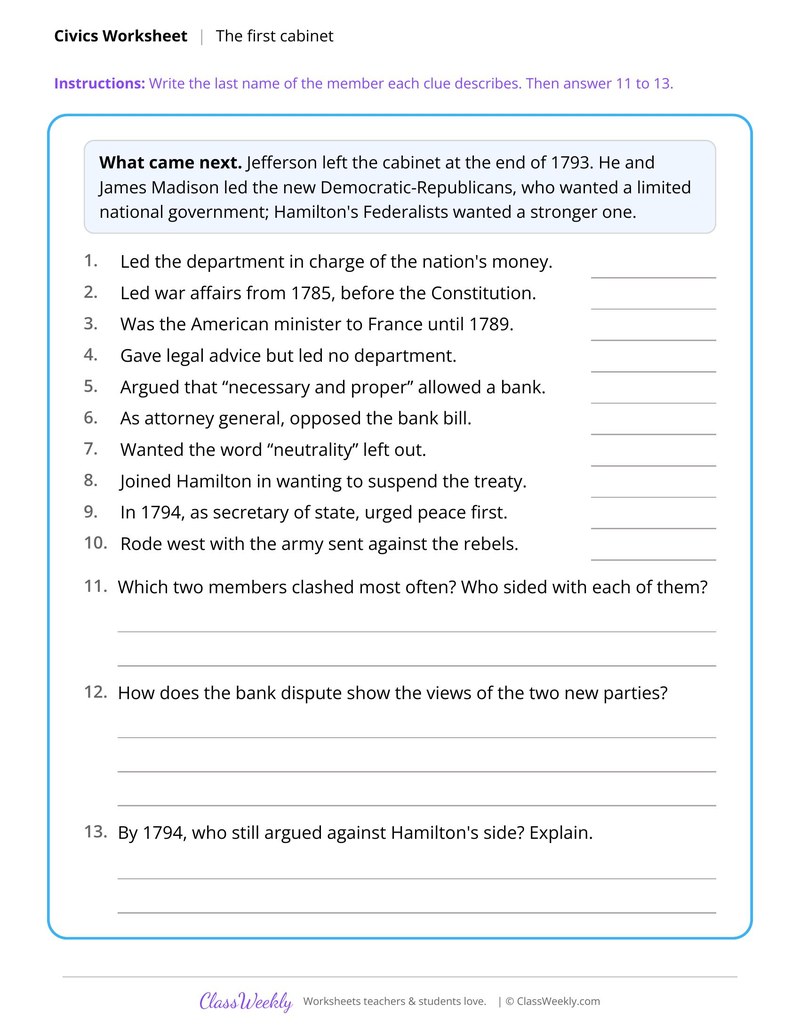
Washington's First Cabinet and Its Disputes
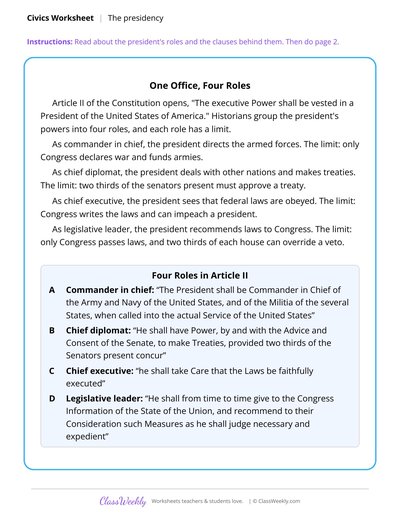
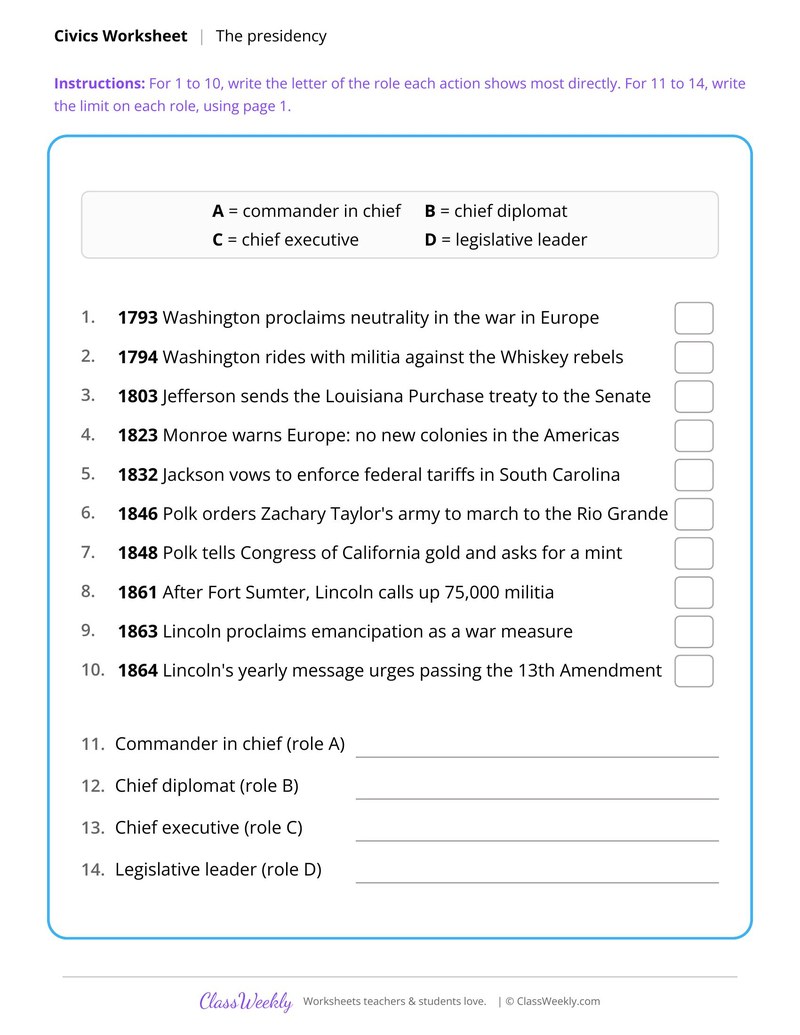
Presidential Roles From Washington to Lincoln
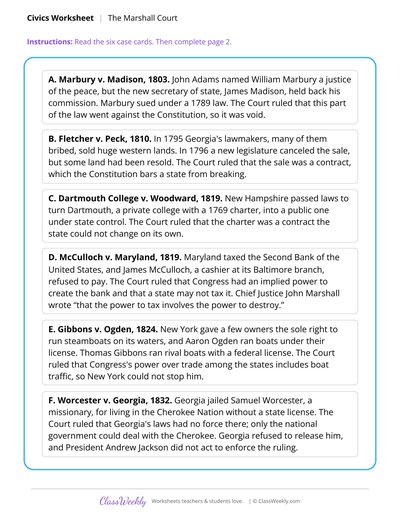
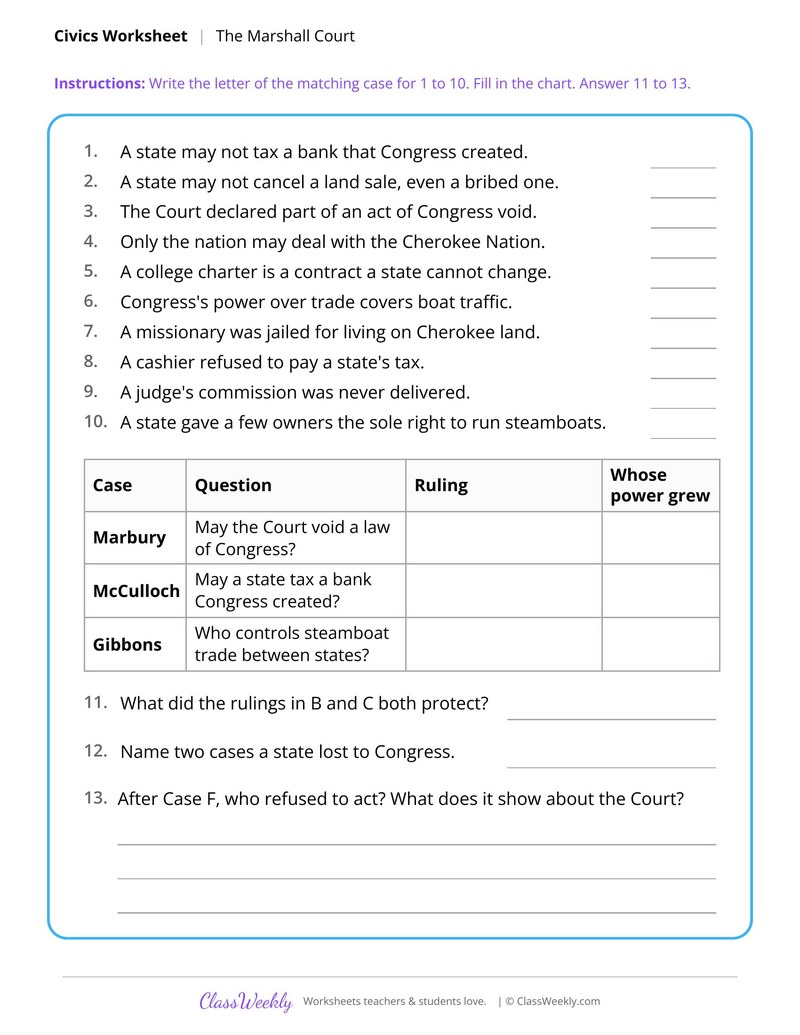
Marshall Court Cases That Shaped Federal Power
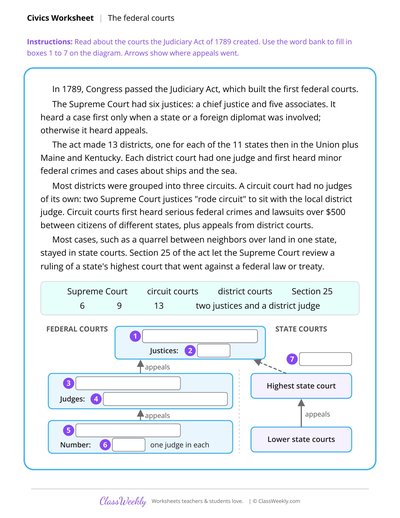
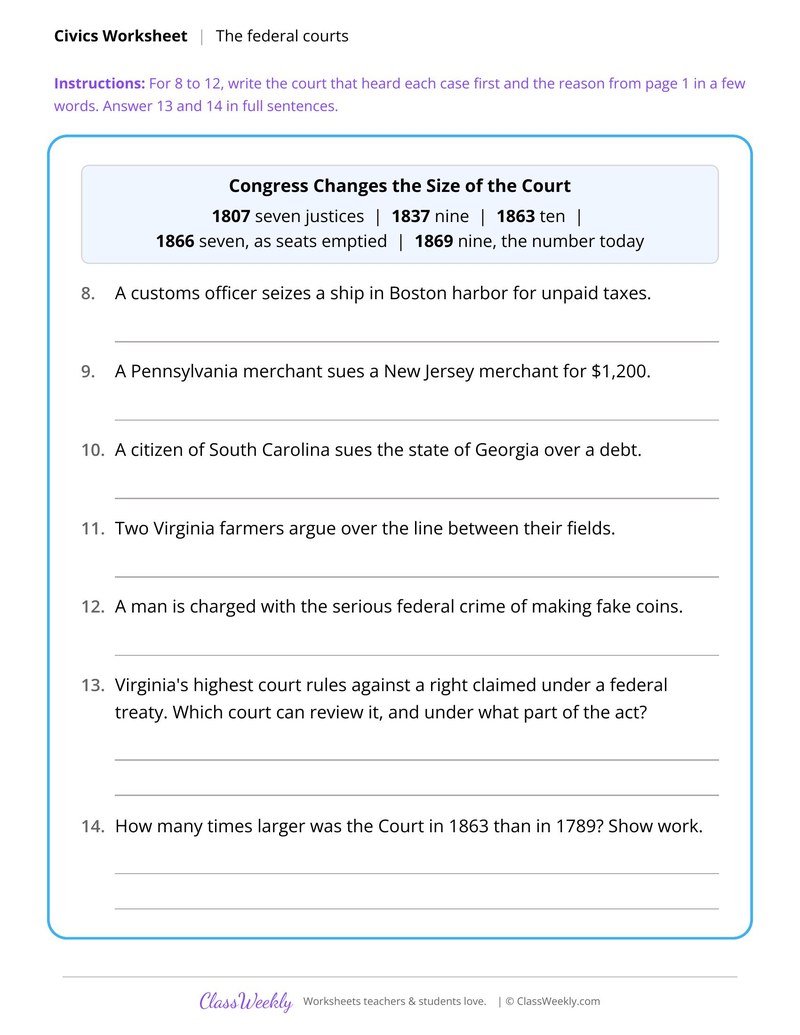
Federal Courts Under the Judiciary Act of 1789
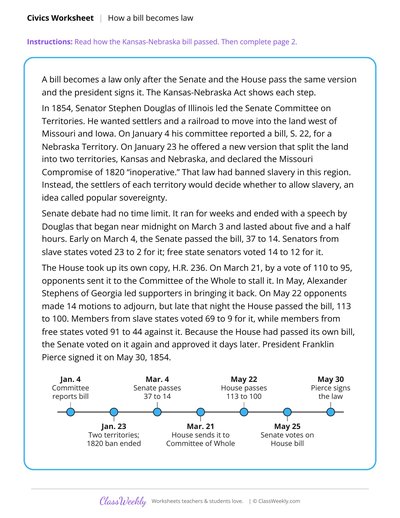
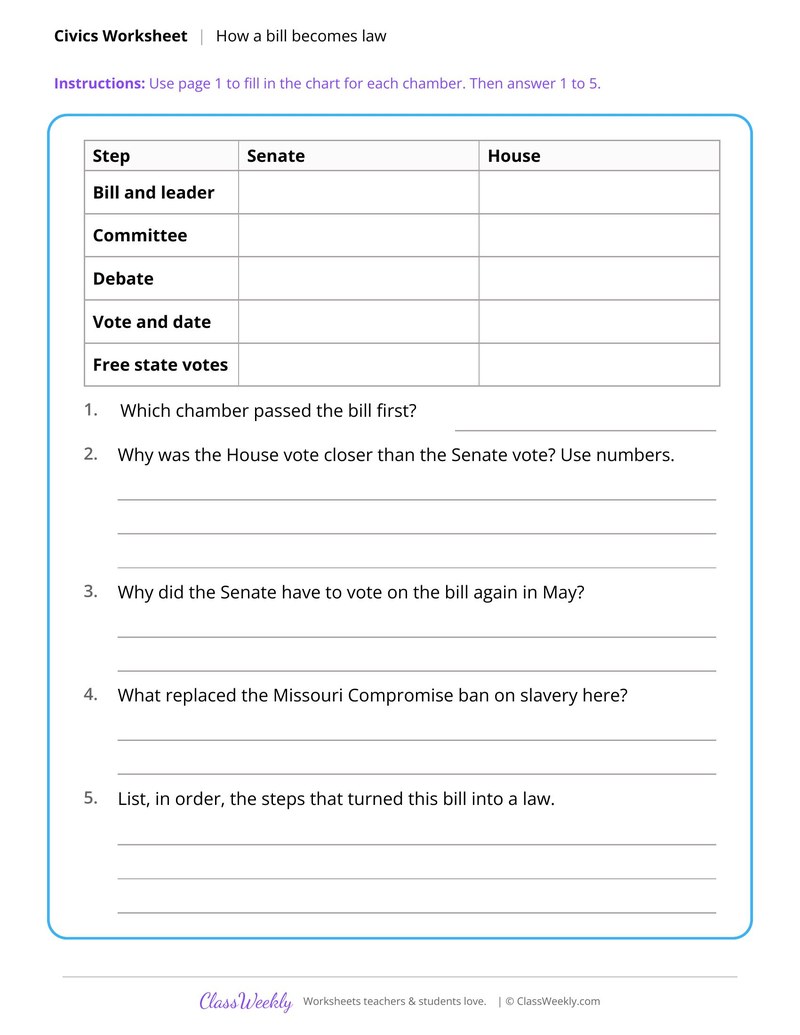
How the 1854 Nebraska Bill Passed Both Houses
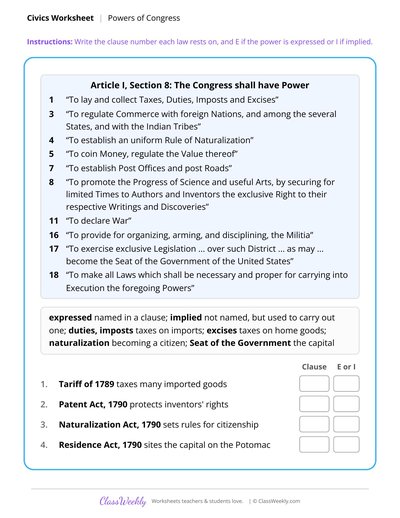
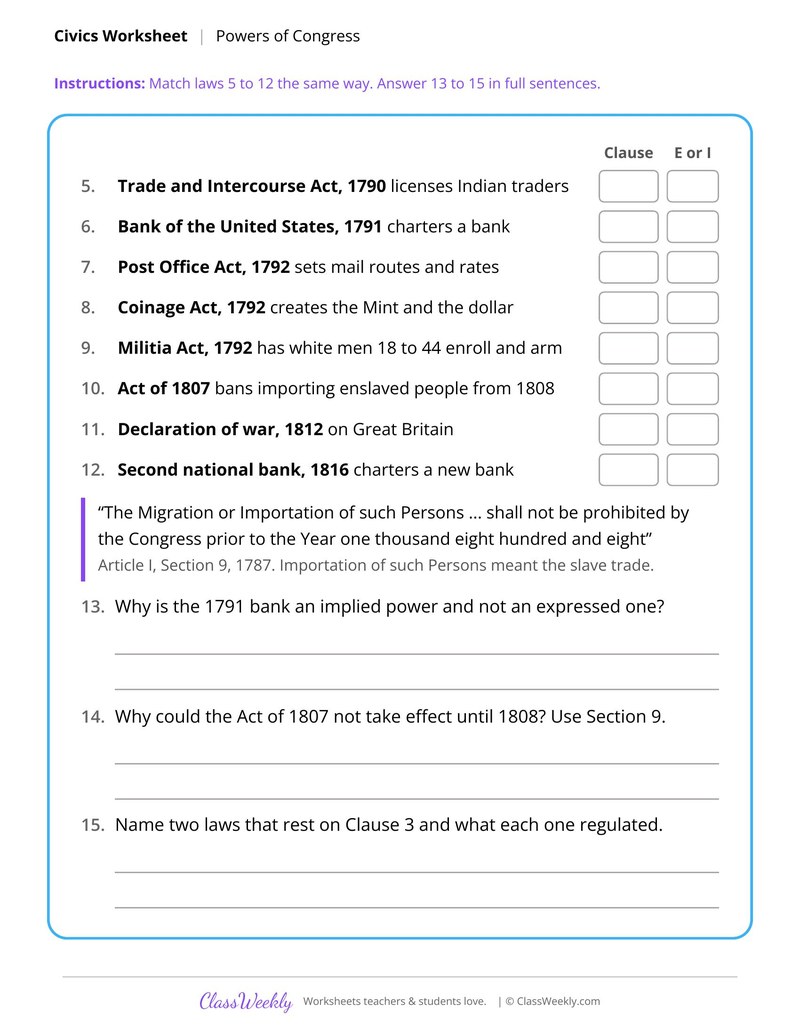
Early Laws and the Powers of Congress Behind Them
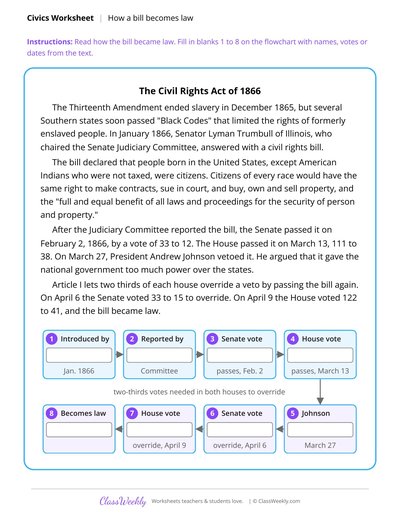
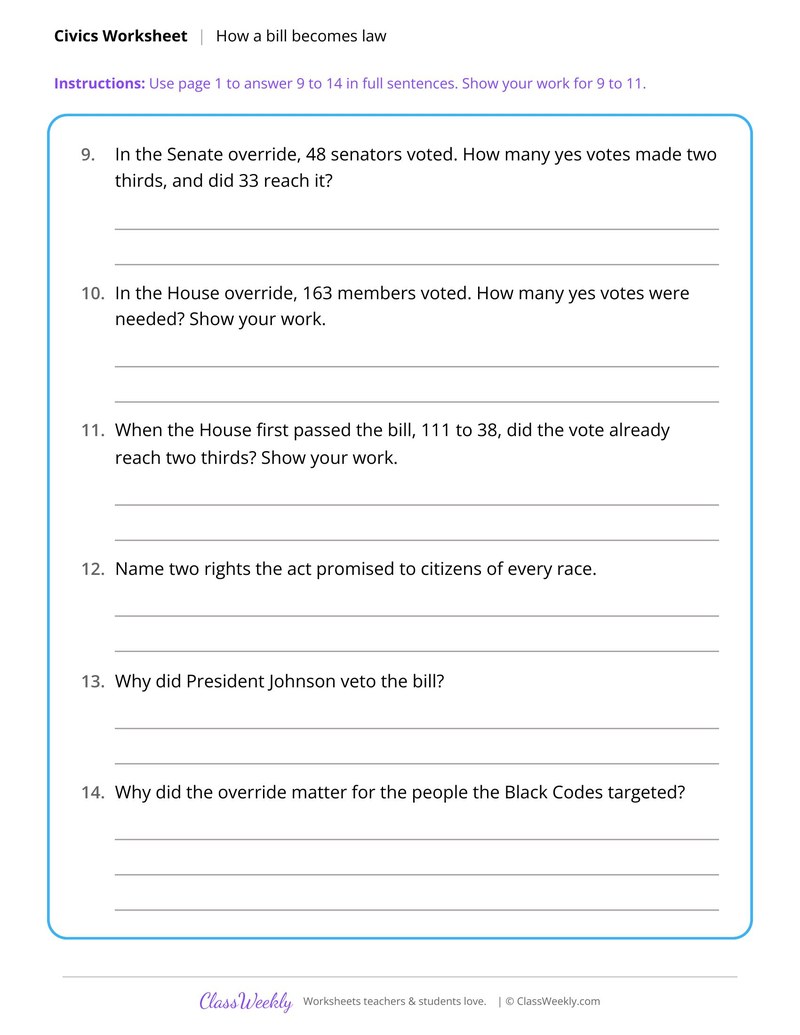
How the Civil Rights Act of 1866 Became Law
Curriculum Links
C3 Framework for Social Studies State Standards
Social Studies · 8th Grade
Find this in the curriculum
Browse the grade, subject, and topic this belongs to.
FAQ
How do I use this courts and checks on power worksheet?
⌄
Start with the Judiciary Act diagram to set up the courts, then the Marshall Court cases. Finish with the checks chart, which mixes all three branches.
What does this worksheet teach?
⌄
Chart eight checks from 1803 to 1861, from Marbury v. Madison to Jackson's bank veto. The directions on the page read: Read the eight cards. Each shows one branch checking another. Then complete page 2. An answer key is included.
Can I use this courts and checks on power worksheet for homeschool or classroom?
⌄
Yes, both. We made it for 8th grade Three Branches and Checks, and it works the same at home or at school. At home, a student can work through it alone and then go over it with you, which shows quickly what is solid and what needs another look. In class it works as independent practice, homework or a warm-up, and you can print one copy or a full set.
What was decided in Marbury v. Madison?
⌄
In 1803 the Supreme Court ruled that part of a 1789 law passed by Congress went against the Constitution and was void. It was the first time the Court struck down part of a federal law.
What courts did the Judiciary Act of 1789 create?
⌄
It set up a Supreme Court of six justices, 13 district courts and three circuit courts. Supreme Court justices rode circuit to sit with district judges.
What is an example of a check on the president?
⌄
In 1834 the Senate rejected Roger Taney as secretary of the treasury, its first rejection of a cabinet nominee. Jackson's bank veto in 1832 was a check by the president on Congress.
Ratings & Reviews
No reviews yet. Be the first to share what you think.
Reviews are for ClassWeekly members.
Make a Request
Spotted something to fix, or want a worksheet we don't have yet? Tell us and we'll make it.
Worksheet Details
| Grade | 8th Grade |
| Subject | Social Studies |
| Topic | Three Branches and Checks |
| Standard | D2.Civ.4.6-8 |
| Pages | 2 pages |
| Difficulty | Medium |
What is ClassWeekly?
ClassWeekly offers free worksheets and printable learning resources for kids, from preschool up. All worksheets are aligned to Common Core, NGSS, and C3 Framework standards and designed by educators. Become a member to access the full library and download unlimited PDFs.
Washington's First Cabinet and Its Disputes
Presidential Roles From Washington to Lincoln
Marshall Court Cases That Shaped Federal Power
Federal Courts Under the Judiciary Act of 1789
How the 1854 Nebraska Bill Passed Both Houses
Early Laws and the Powers of Congress Behind Them
How the Civil Rights Act of 1866 Became Law