Social Classes in Ancient Rome
Written by Adi Ackerman, Head Teacher
"Social Classes in Ancient Rome" is written for 7th Grade (Ages 12-13). A 6th grader who is already steady on Ancient History can use it too, and an older student can use it as a short review.
3 pages in this set
7th grade social studies worksheet: sort patricians, plebeians, equites, freed people and enslaved people by rights and roles. Answer key included. Part of our Ancient Rome collection.
How do I use this worksheet?
Pair the three organizers with a unit on engineering and the three government sheets with a unit on the republic. Social Classes in Ancient Rome and Roman Offices and U.S. Offices Side by Side each run 3 pages.
What students will practice
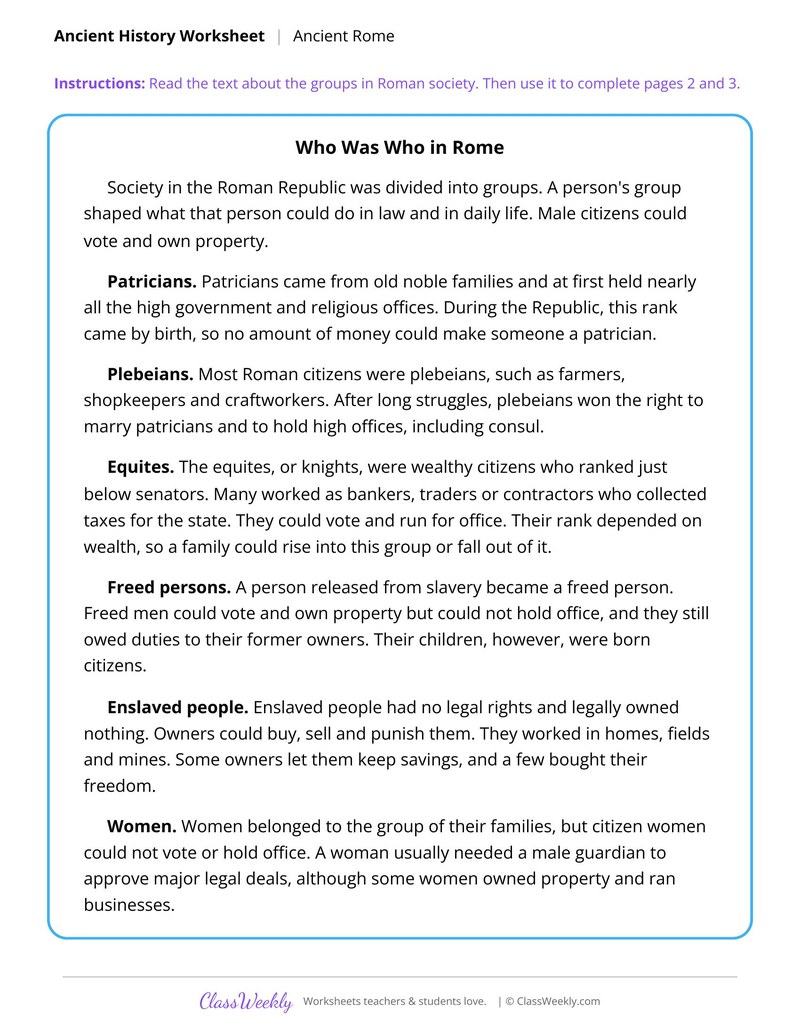
- Students will describe the groups in Roman society and what each could do in law and daily life.
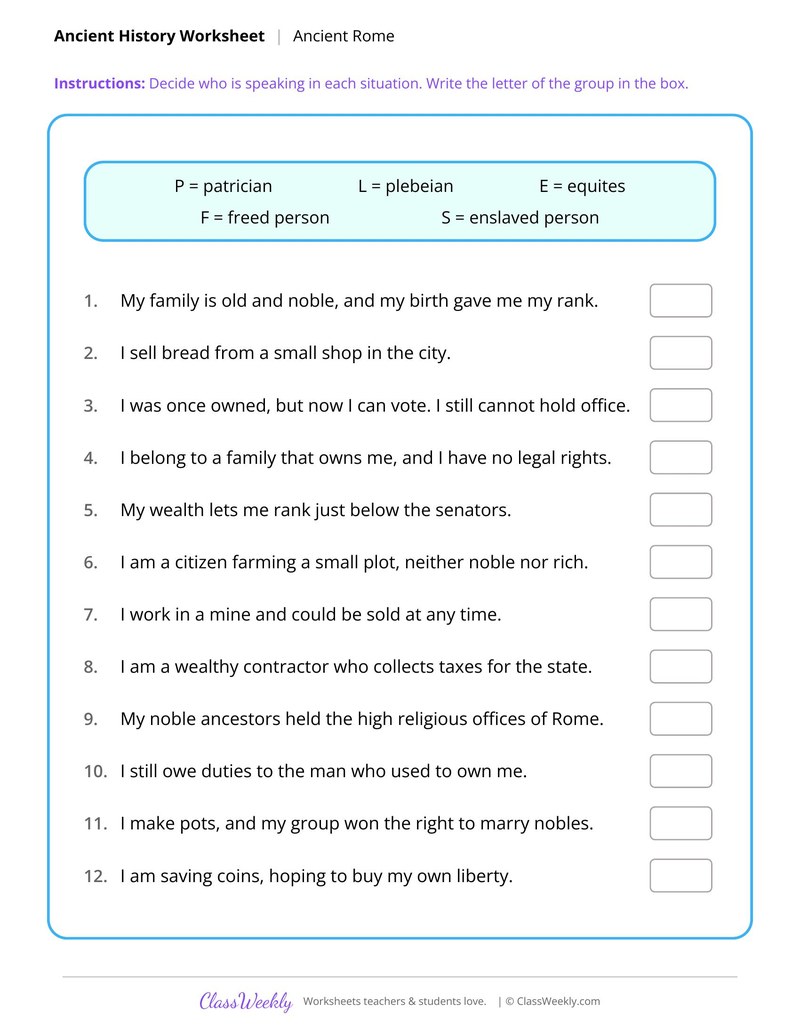
- Students will identify the group of a speaker in each situation.
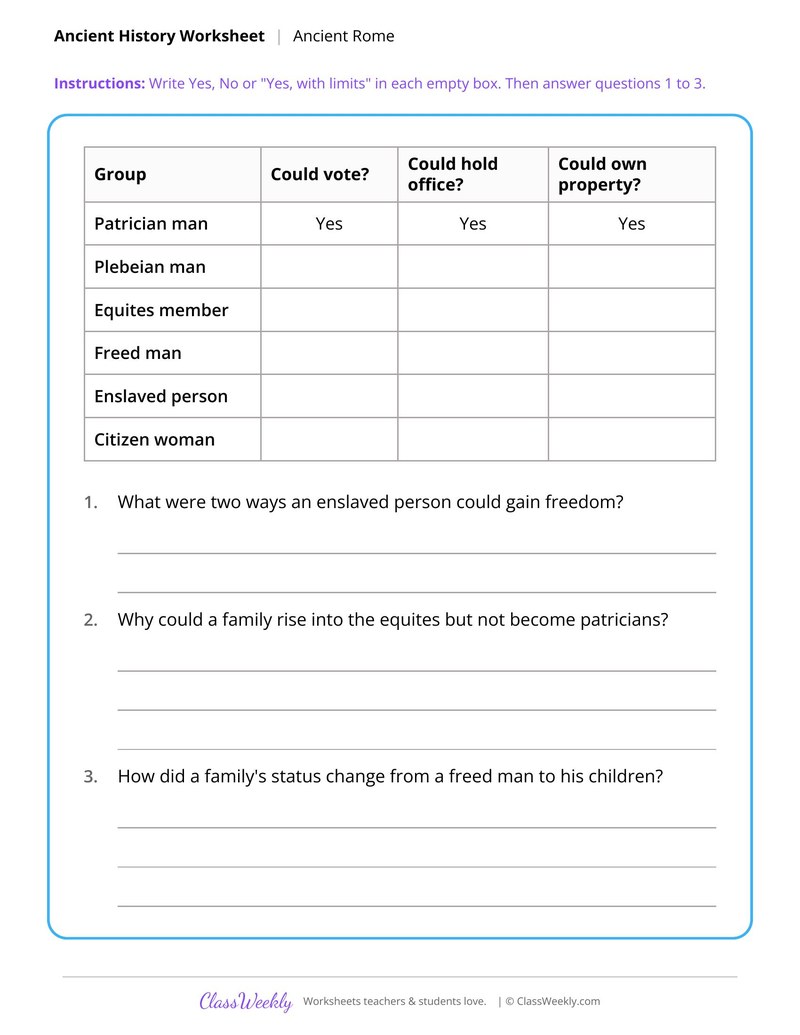
- Students will fill in a table of who could vote, hold office and own property.
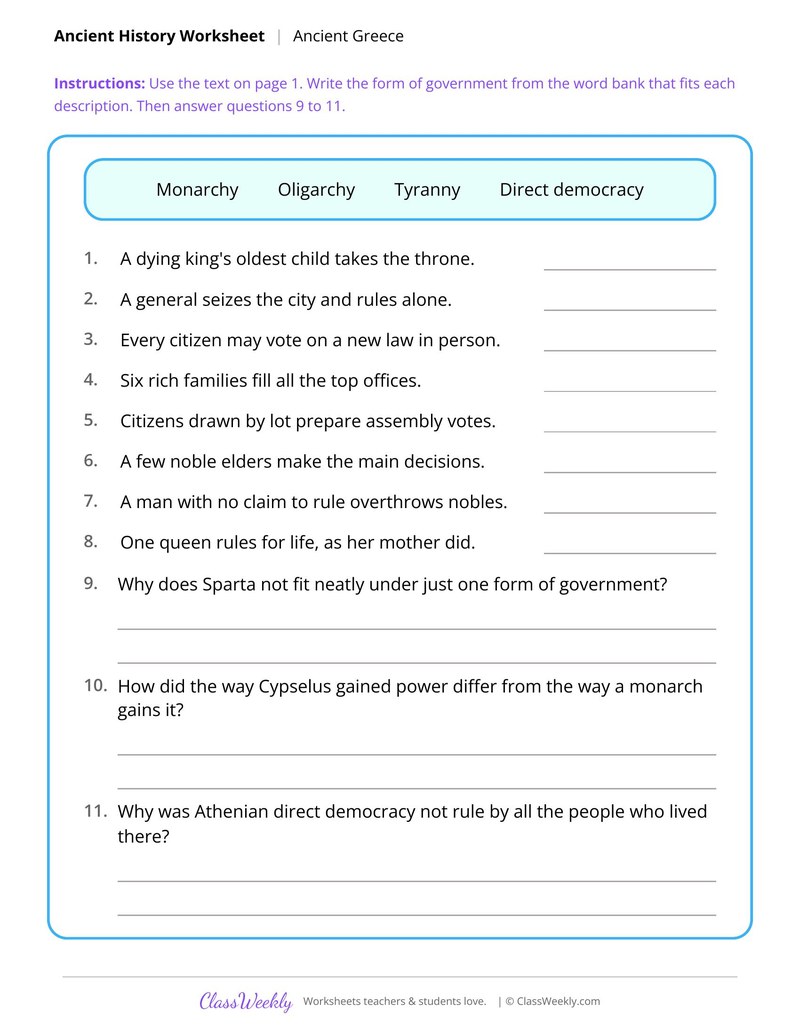
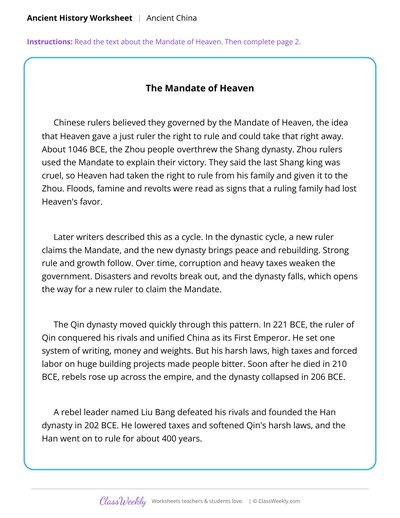
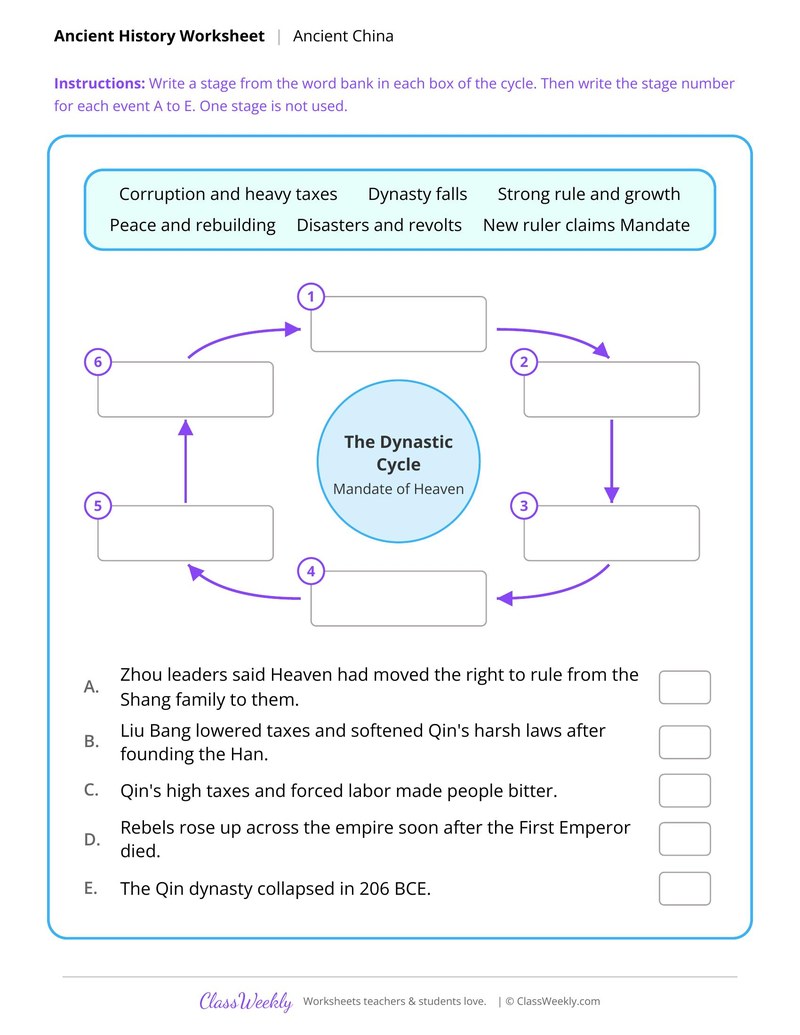
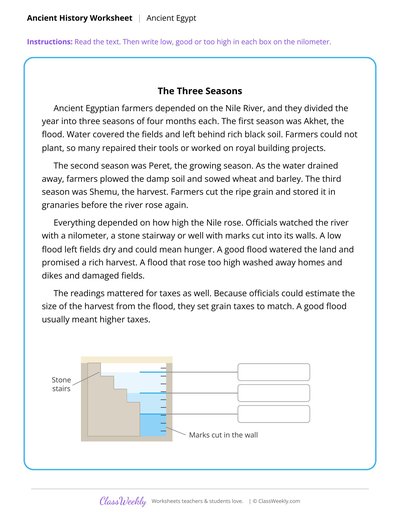
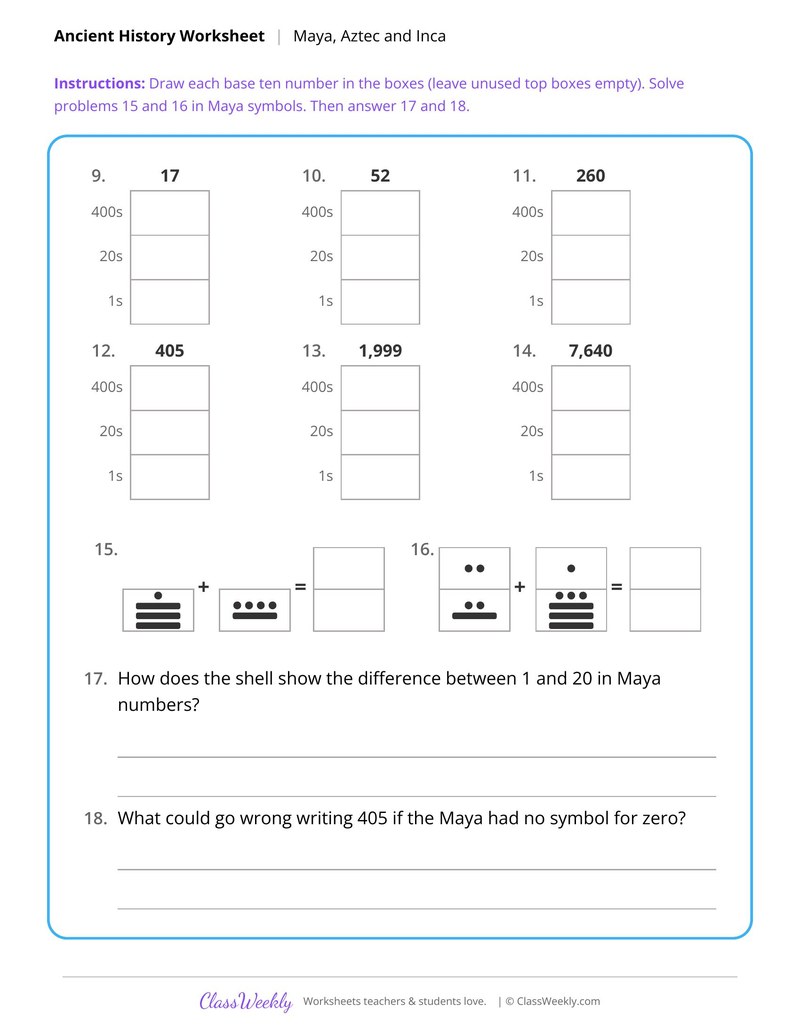
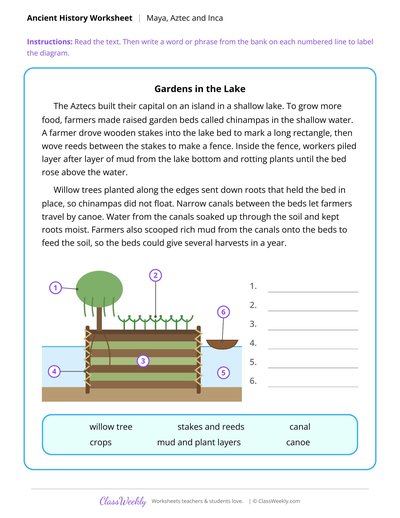
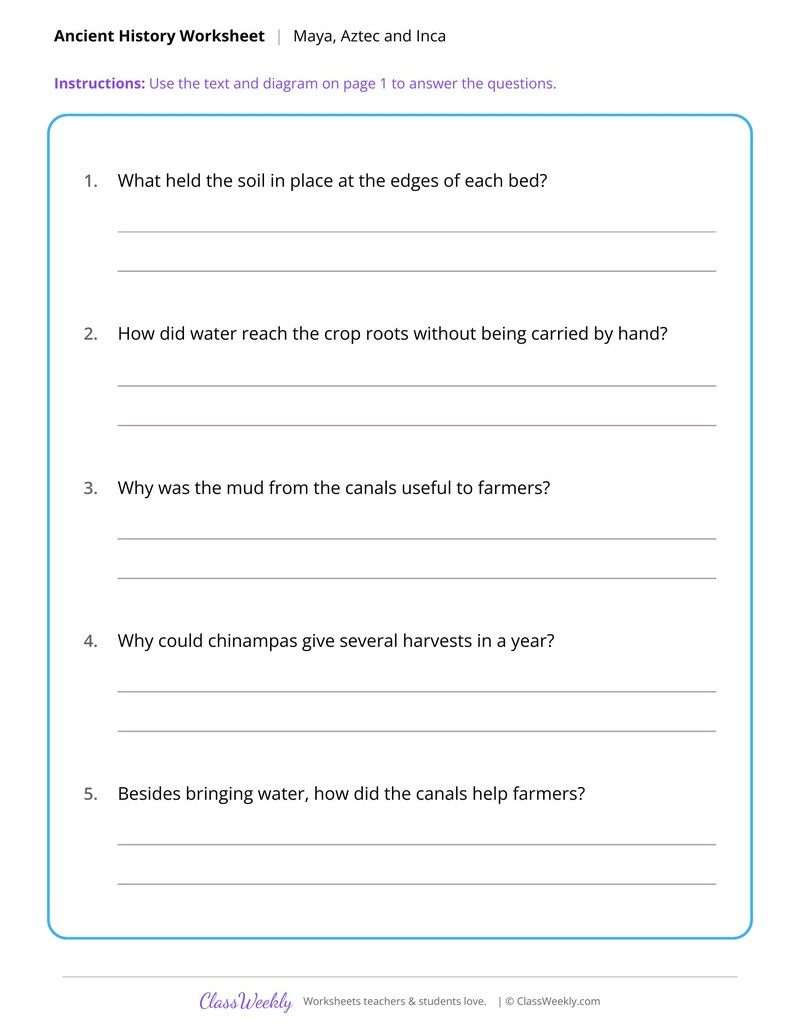
Curriculum Links
Find this in the curriculum
Browse the grade, subject, and topic this belongs to.
FAQ
How do I use this Ancient Rome worksheet?
⌄
Pair the three organizers with a unit on engineering and the three government sheets with a unit on the republic. Social Classes in Ancient Rome and Roman Offices and U.S. Offices Side by Side each run 3 pages.
What does this worksheet teach?
⌄
Sort patricians, plebeians, equites, freed people and enslaved people by rights and roles. The directions on the page read: Read the text about the groups in Roman society. Then use it to complete pages 2 and 3. An answer key is included.
Can I use this Ancient Rome worksheet for homeschool or classroom?
⌄
Yes, both. We made it for 7th grade Ancient History, and it works the same at home or at school. At home, a student can work through it alone and then go over it with you, which shows quickly what is solid and what needs another look. In class it works as independent practice, homework or a warm-up, and you can print one copy or a full set.
How did Roman aqueducts work?
⌄
They had no pumps. Water moved only by gravity, so each aqueduct ran gently downhill from its source to the city.
What were the four layers of a Roman road?
⌄
A well-made road could have four layers, starting with the statumen of large stones, then the rudus, the nucleus and the paved top. Roman Road Layers and Network Organizer has students label them.
What was the cursus honorum?
⌄
It was a ladder of elected offices in the late Roman Republic, with a minimum age for each step. The first step was quaestor, at age 30 or older.
How did Roman and U.S. offices differ?
⌄
Two consuls served one year terms and could veto each other, while a U.S. President serves four years and can be impeached. Roman Offices and U.S. Offices Side by Side compares them in a chart.
Ratings & Reviews
No reviews yet. Be the first to share what you think.
Reviews are for ClassWeekly members.
Make a Request
Spotted something to fix, or want a worksheet we don't have yet? Tell us and we'll make it.
Worksheet Details
| Grade | 7th Grade |
| Subject | Social Studies |
| Topic | Ancient History |
| Pages | 3 pages |
| Difficulty | Medium |
What is ClassWeekly?
ClassWeekly offers free worksheets and printable learning resources for kids, from preschool up. All worksheets are aligned to Common Core, NGSS, and C3 Framework standards and designed by educators. Become a member to access the full library and download unlimited PDFs.