Story of a Mistake That Led to a Discovery
Written by Adi Ackerman, Head Teacher
"Story of a Mistake That Led to a Discovery" is written for 7th Grade (Ages 12-13), and it covers Common Core W.7.3. A 6th grader who is already steady on narrative writing can use it too, and an older student can use it as a short review.
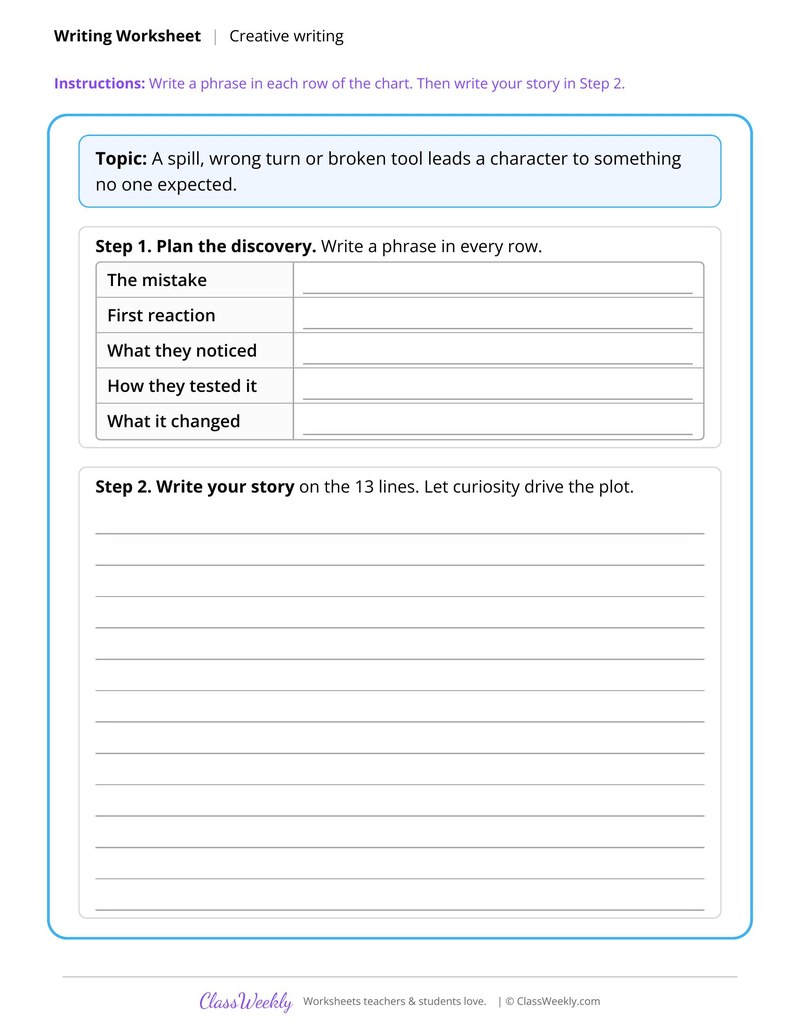
7th grade grammar worksheet: tell how a spill, wrong turn or broken tool leads a character to an unexpected discovery. Part of our creative writing collection. Aligned to Common Core standards.
How do I use this worksheet?
Choose the sheet that matches the season or the technique you are teaching. Students plan in Step 1 and write in full sentences. Finish with the rubric for self and peer review.
What students will practice
- Students will plan the mistake, the first reaction and what the character noticed.
- Students will plan how the character tested it and what it changed.
- Students will let curiosity drive the plot across thirteen lines.
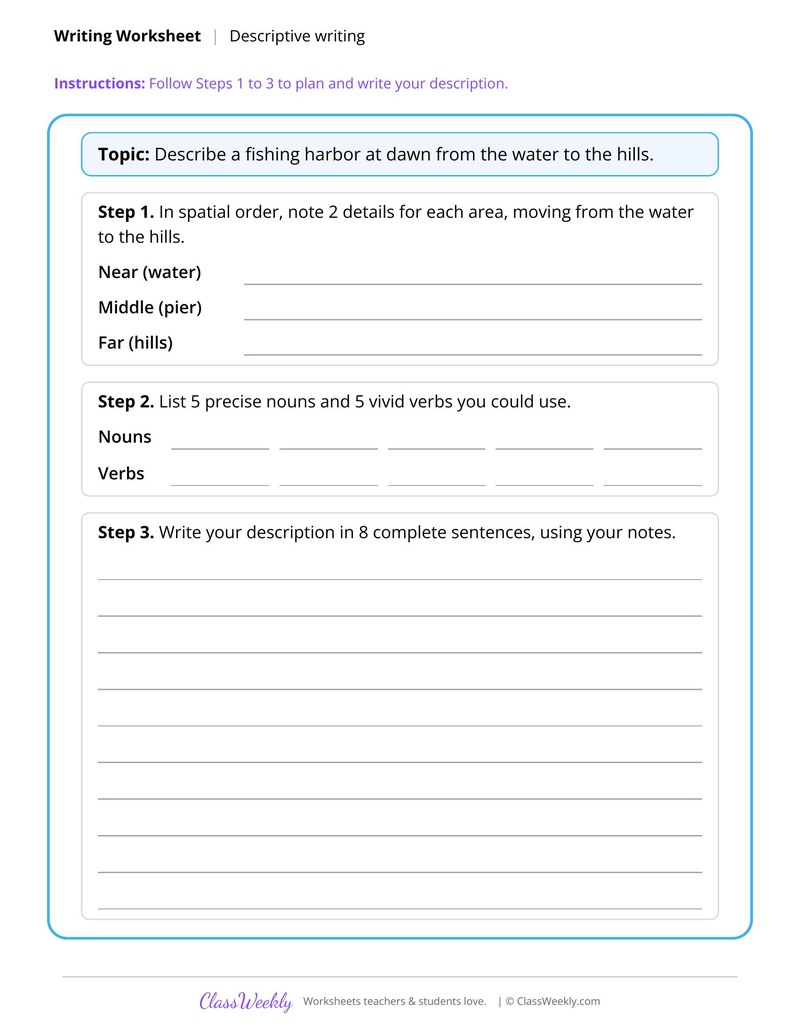
Describe a Harbor at Dawn Using Spatial Order
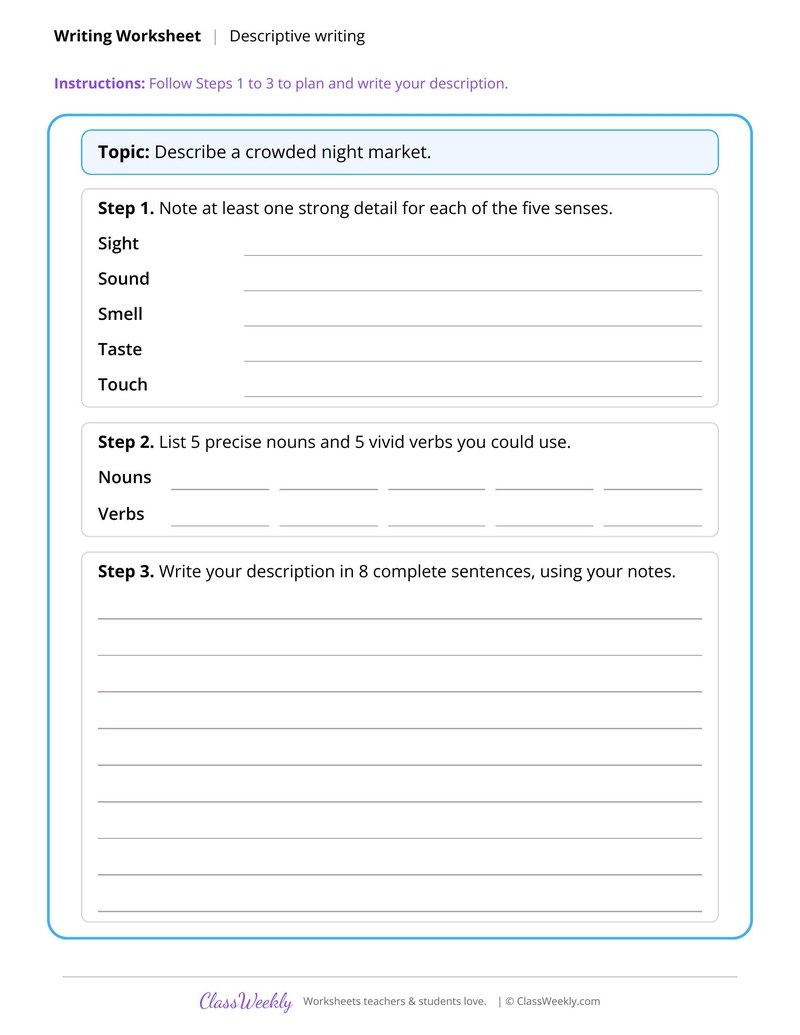
Describe a Night Market With All Five Senses
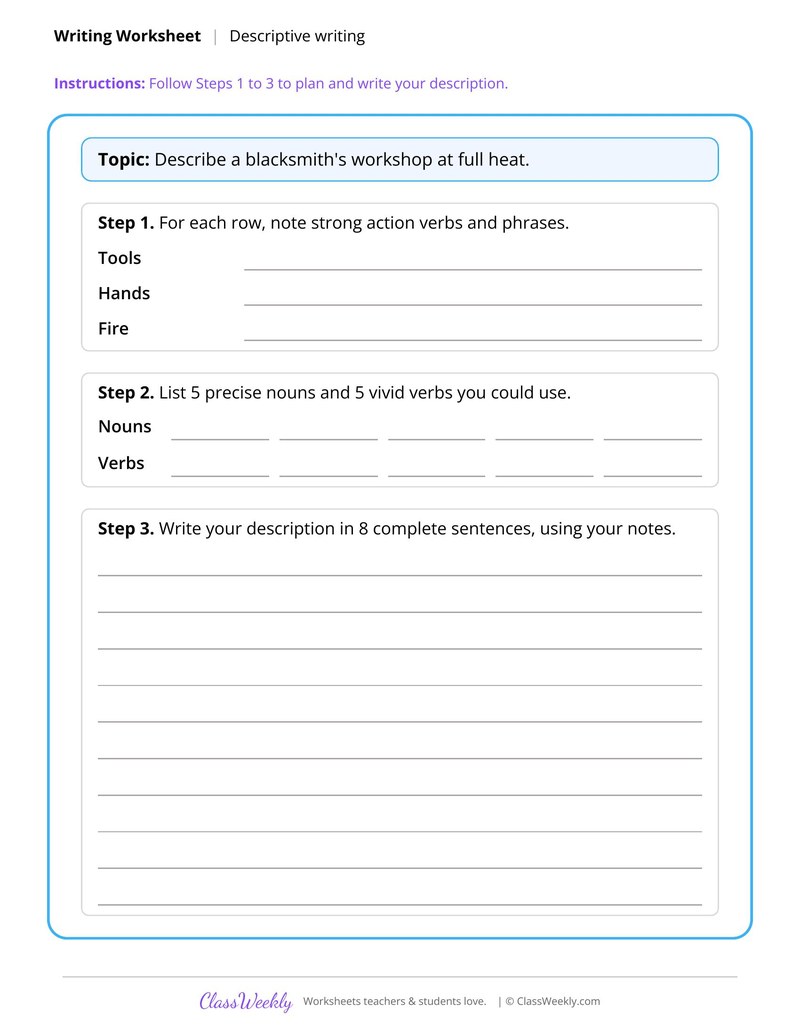
Describe a Workshop With Strong Verbs
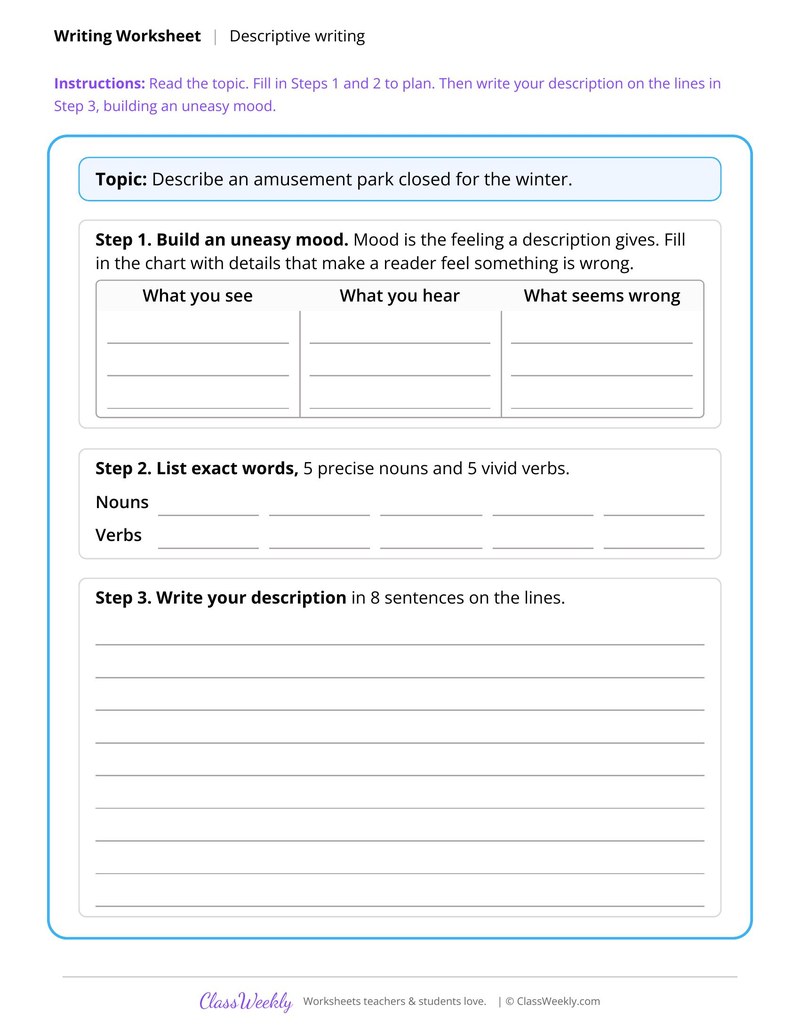
Create Mood in an Empty Amusement Park
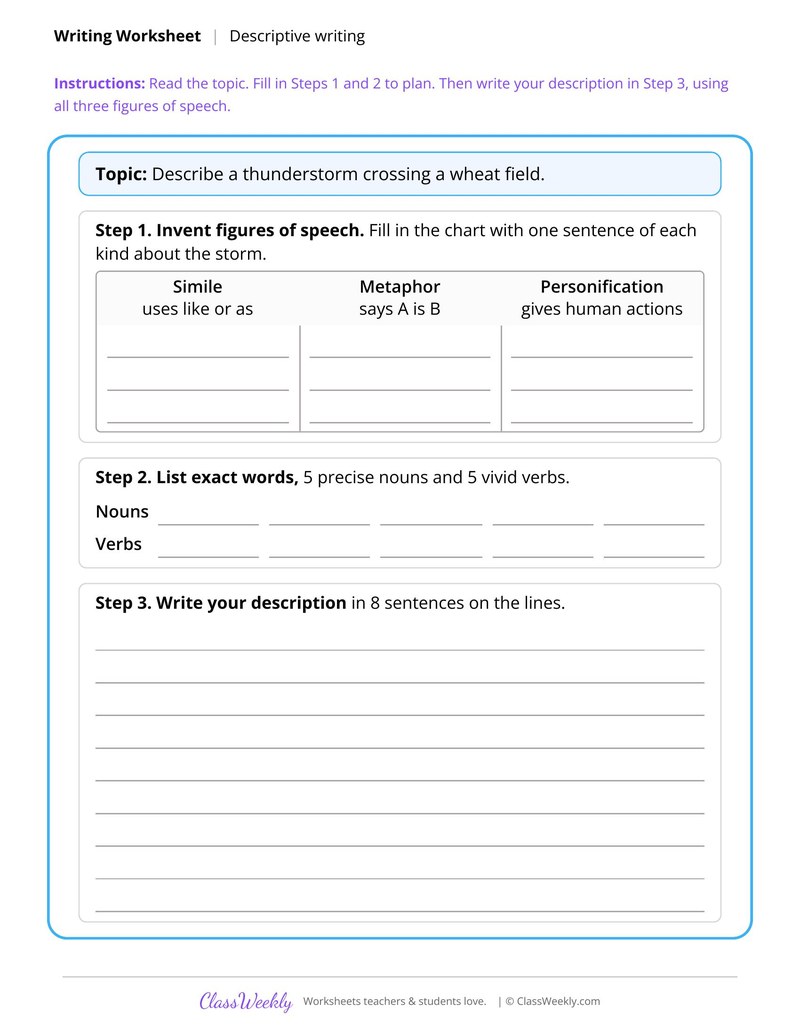
Use Figurative Language to Describe a Storm
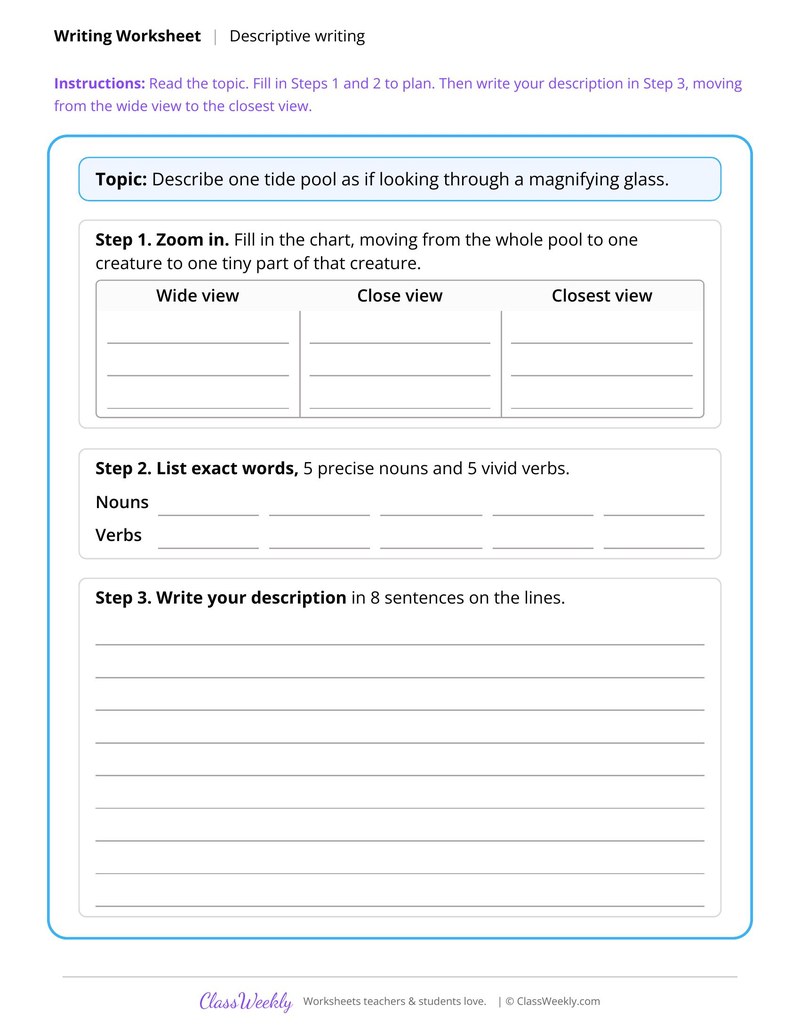
Zoom In on a Tide Pool
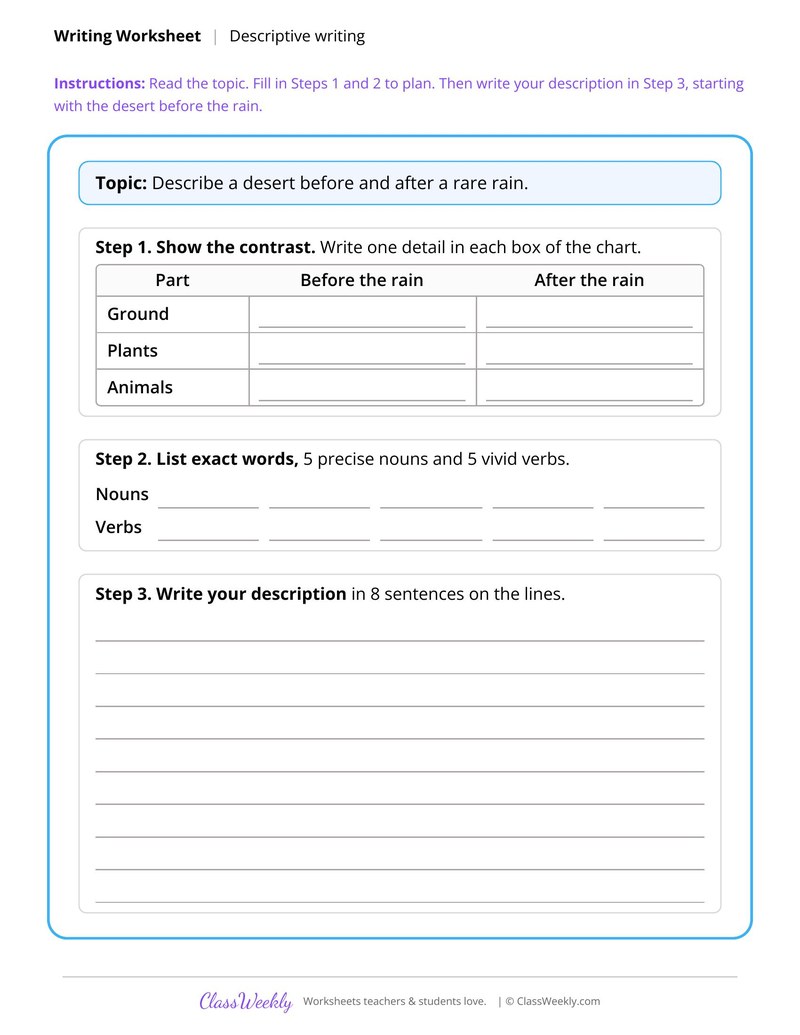
Show Contrast in a Desert After Rain
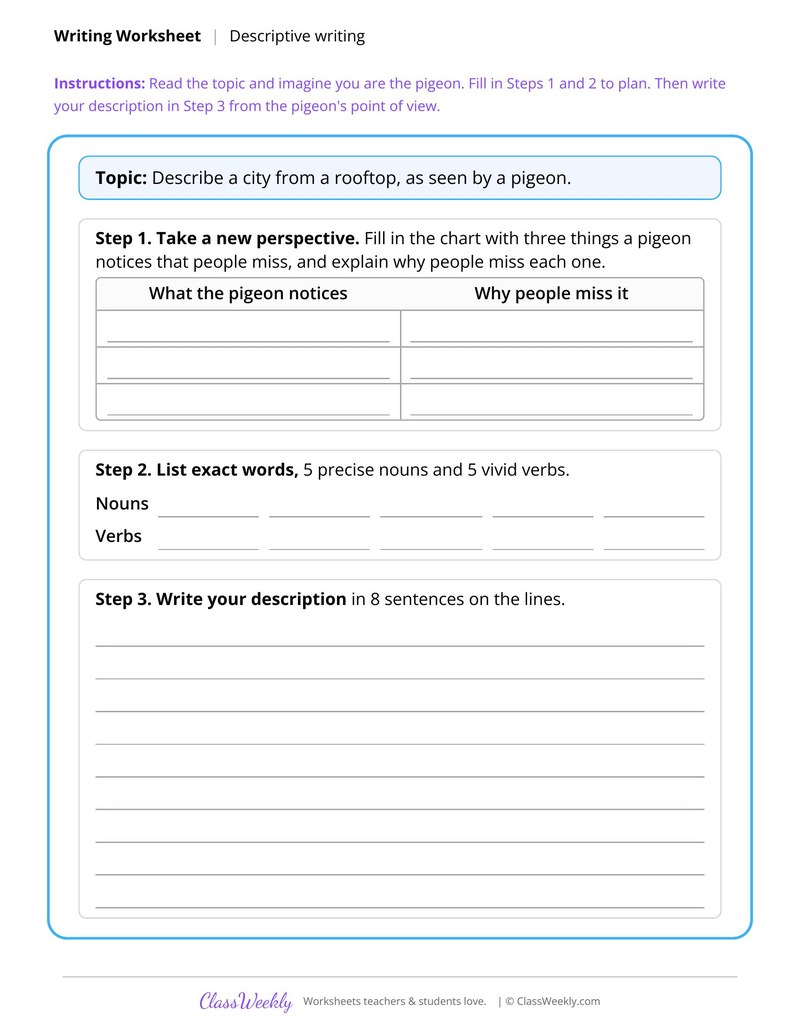
Describe a Rooftop View From a New Perspective
Curriculum Links
Common Core State Standards
Writing · 7th Grade
Standard: Write narratives to develop real or imagined experiences or events using effective technique, relevant descriptive details, and well-structured event sequences.
View all W.7.3 worksheets →Find this in the curriculum
Browse the grade, subject, and topic this belongs to.
FAQ
How do I use this creative writing worksheet?
⌄
Choose the sheet that matches the season or the technique you are teaching. Students plan in Step 1 and write in full sentences. Finish with the rubric for self and peer review.
What does this worksheet teach?
⌄
Tell how a spill, wrong turn or broken tool leads a character to an unexpected discovery. The directions on the page read: Write a phrase in each row of the chart. Then write your story in Step 2.
Can I use this creative writing worksheet for homeschool or classroom?
⌄
Yes, both. We made it for 7th grade narrative writing, and it works the same at home or at school. At home, a student can work through it alone and then go over it with you, which shows quickly what is solid and what needs another look. In class it works as independent practice, homework or a warm-up, and you can print one copy or a full set.
How do you plan a short story?
⌄
Decide on the characters, the problem and the events in order, then write. Each sheet here has a Step 1 planner, such as the clue chart on Back to School Mystery With a Clue Chart.
What story techniques do these sheets teach?
⌄
They include dialogue, a narrator's point of view, a twist ending, a story told in reverse, time stamps, field notes, a story within a story and a tall tale.
Can I use a rubric with these stories?
⌄
Yes. Narrative Writing Rubric With Self and Peer Scores has levels 1 to 4 for point of view, plot and pacing, dialogue and sensory language, with columns for self, peer and teacher.
Do these sheets have answer keys?
⌄
No. Every story is the student's own invention.
Ratings & Reviews
No reviews yet. Be the first to share what you think.
Reviews are for ClassWeekly members.
Make a Request
Spotted something to fix, or want a worksheet we don't have yet? Tell us and we'll make it.
Worksheet Details
| Grade | 7th Grade |
| Subject | Grammar & Writing |
| Topic | Narrative Writing |
| Standard | W.7.3 |
| Pages | 1 page |
| Difficulty | Medium |
What is ClassWeekly?
ClassWeekly offers free worksheets and printable learning resources for kids, from preschool up. All worksheets are aligned to Common Core, NGSS, and C3 Framework standards and designed by educators. Become a member to access the full library and download unlimited PDFs.
Describe a Harbor at Dawn Using Spatial Order
Describe a Night Market With All Five Senses
Describe a Workshop With Strong Verbs
Create Mood in an Empty Amusement Park
Use Figurative Language to Describe a Storm
Zoom In on a Tide Pool
Show Contrast in a Desert After Rain
Describe a Rooftop View From a New Perspective