Expand Sentences With Relative Clauses
Written by Adi Ackerman, Head Teacher
"Expand Sentences With Relative Clauses" is written for 7th Grade (Ages 12-13), and it covers Common Core L.7.1.C. A 6th grader who is already steady on sentences can use it too, and an older student can use it as a short review.
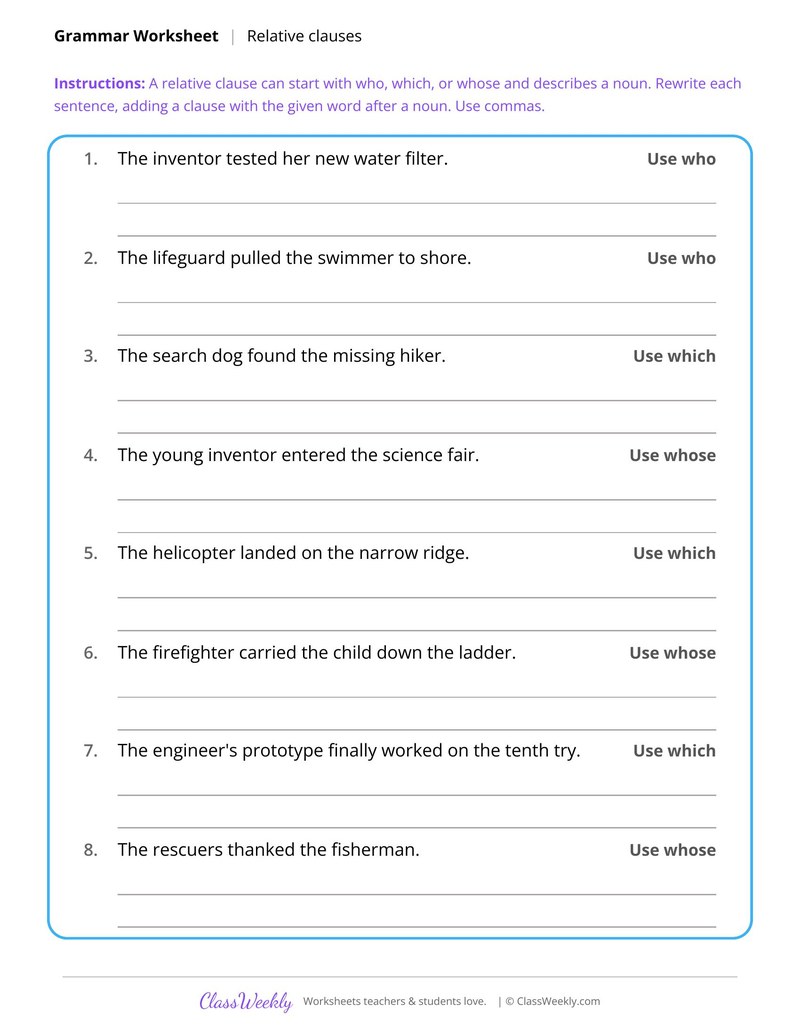
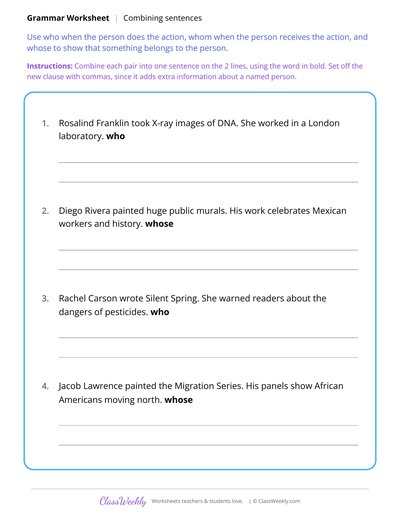
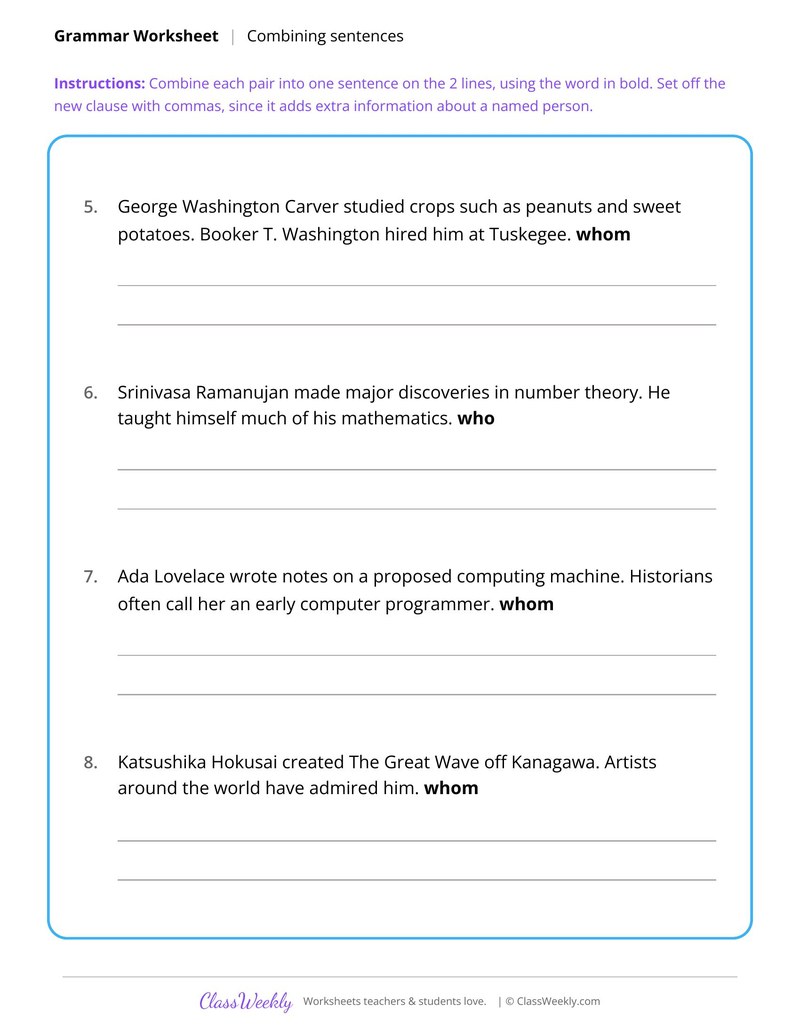
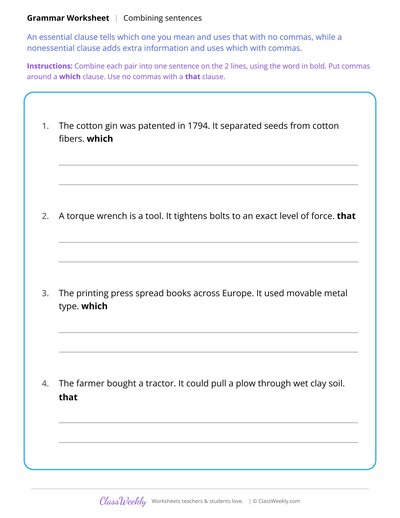
7th grade grammar worksheet: add who, which and whose clauses with commas, about an inventor, a lifeguard and a search dog. Answer key included. Part of our writing varied sentences collection. Aligned to Common Core standards.
How do I use this worksheet?
Teach one structure at a time and have students read their sentences aloud. Compare an appositive at the start, in the middle and at the end to show how placement changes the rhythm.
What students will practice
- Students will add a relative clause that begins with who, which or whose after a noun.
- Students will choose the right relative word for a person or a thing.
- Students will set off the clause with commas.
Curriculum Links
Common Core State Standards
Language · 7th Grade
Standard: Place phrases and clauses within a sentence, recognizing and correcting misplaced and dangling modifiers.
View all L.7.1.C worksheets →Find this in the curriculum
Browse the grade, subject, and topic this belongs to.
FAQ
How do I use this writing varied sentences worksheet?
⌄
Teach one structure at a time and have students read their sentences aloud. Compare an appositive at the start, in the middle and at the end to show how placement changes the rhythm.
What does this worksheet teach?
⌄
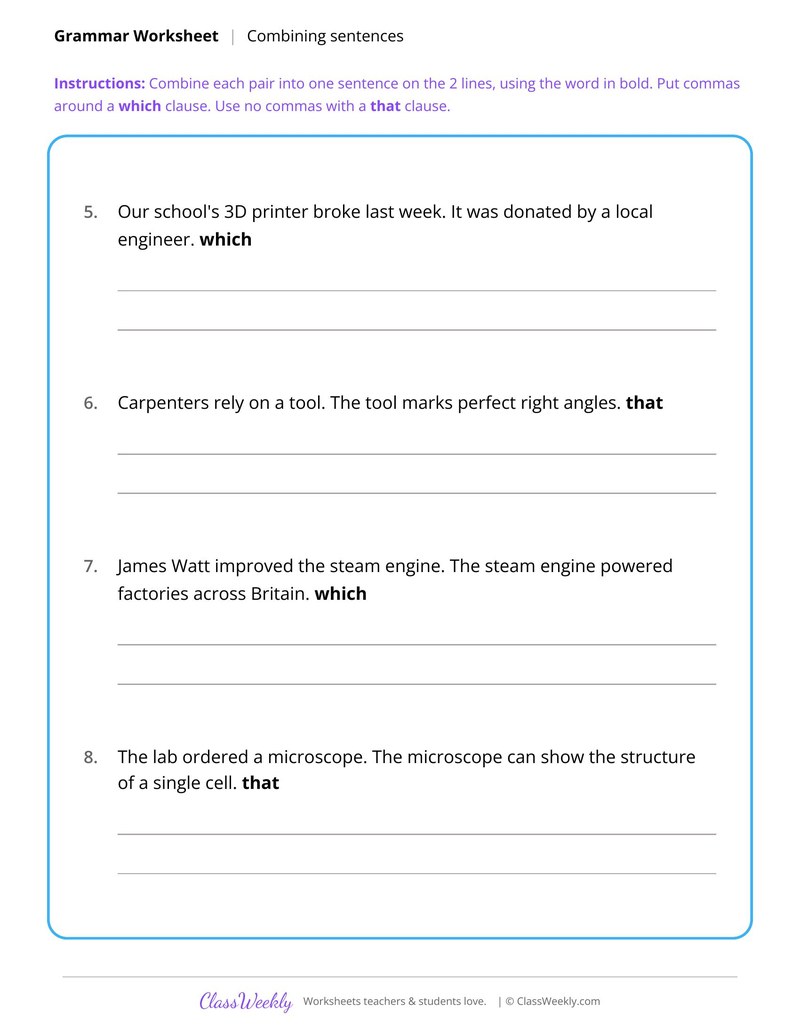
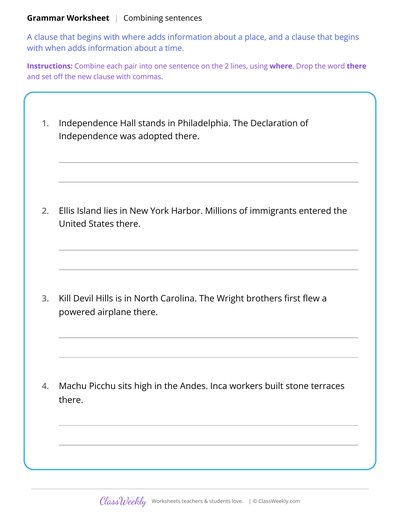
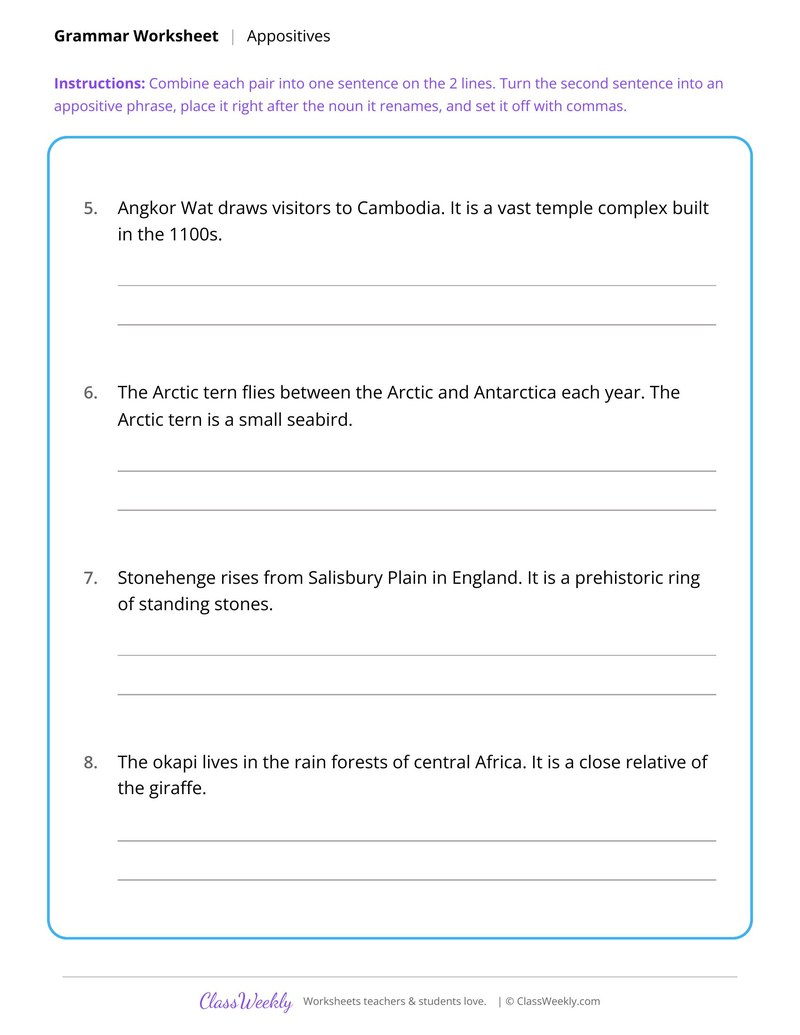
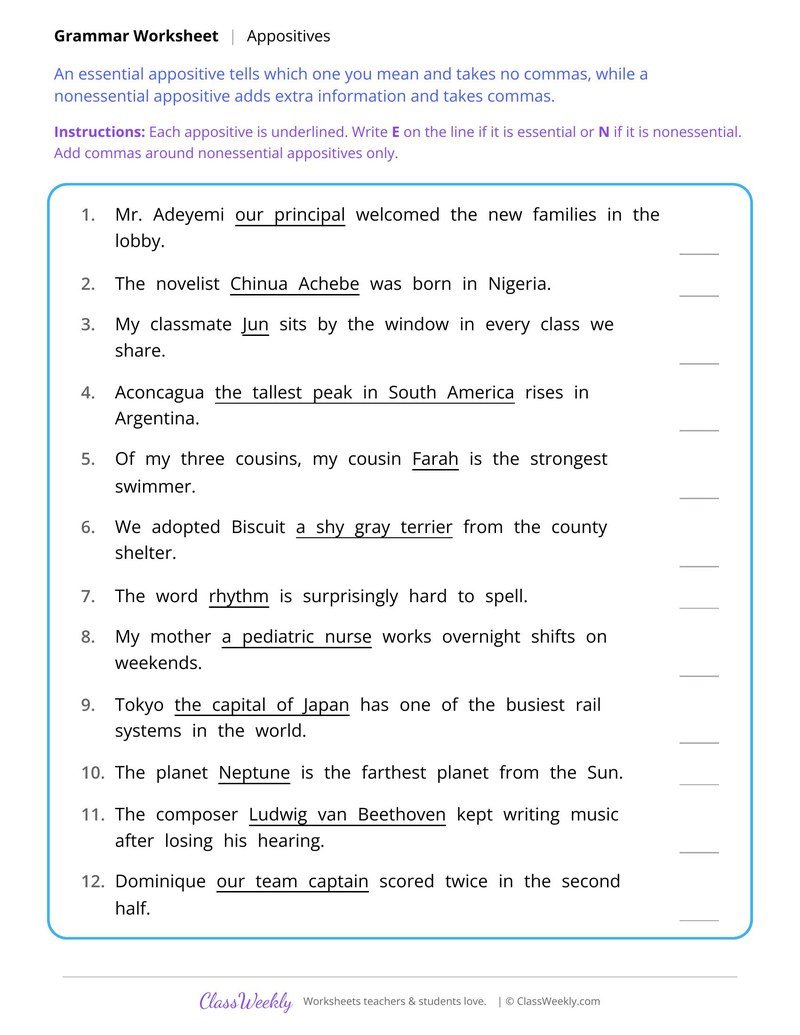
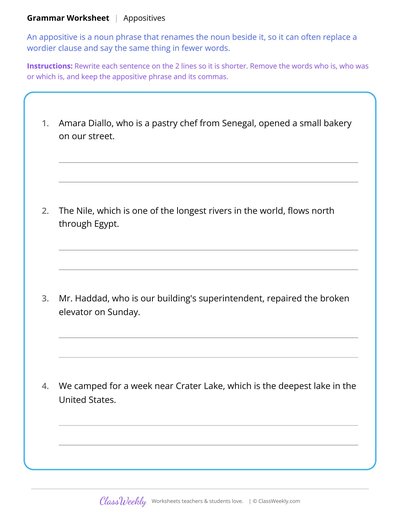
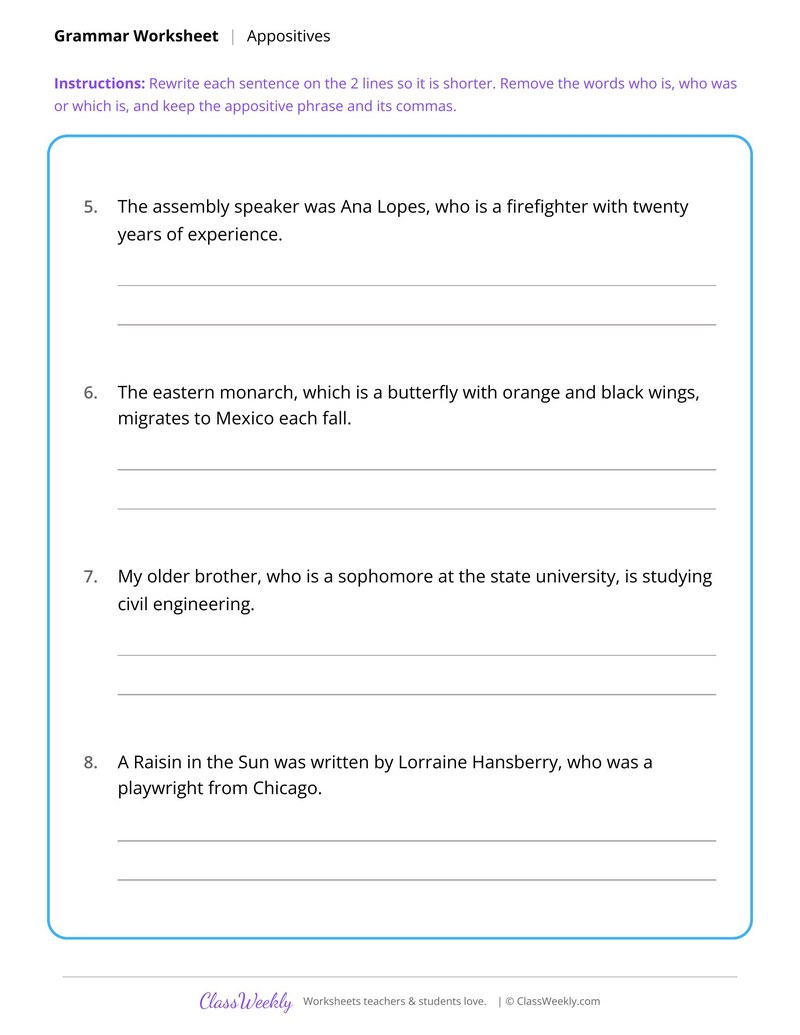
Add who, which and whose clauses with commas, about an inventor, a lifeguard and a search dog. The directions on the page read: A relative clause can start with who, which, or whose and describes a noun. Rewrite each sentence, adding a clause with the given word after a noun. Use commas. An answer key is included.
Can I use this writing varied sentences worksheet for homeschool or classroom?
⌄
Yes, both. We made it for 7th grade sentences, and it works the same at home or at school. At home, a student can work through it alone and then go over it with you, which shows quickly what is solid and what needs another look. In class it works as independent practice, homework or a warm-up, and you can print one copy or a full set.
How do you vary sentence structure?
⌄
Add phrases and clauses, change how sentences begin and combine short sentences. The sheets here add participial phrases, adverb clauses, relative clauses and appositives, and they move prepositional phrases to the start of a sentence.
What is an appositive?
⌄
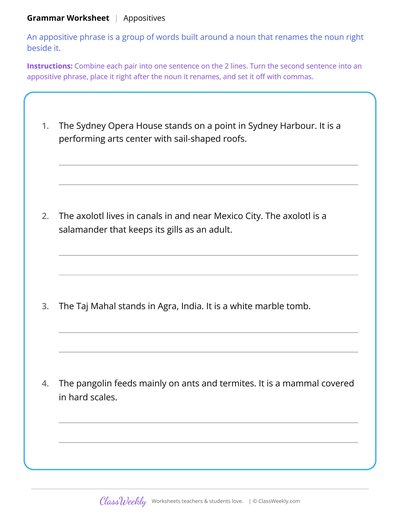
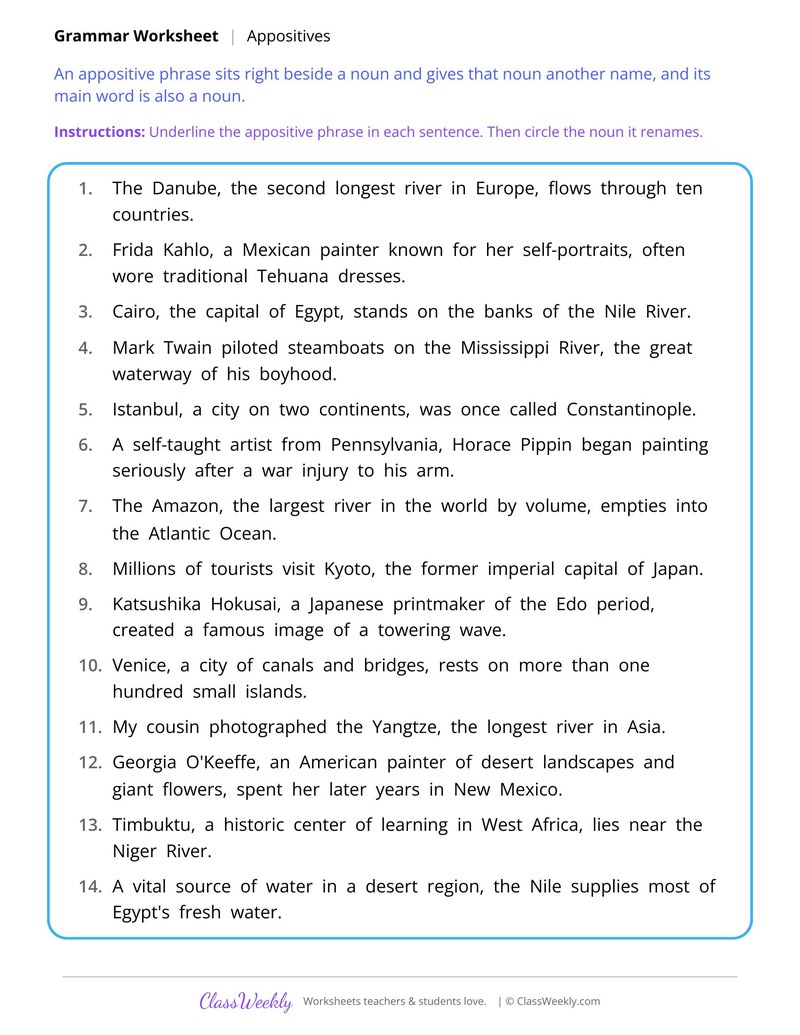
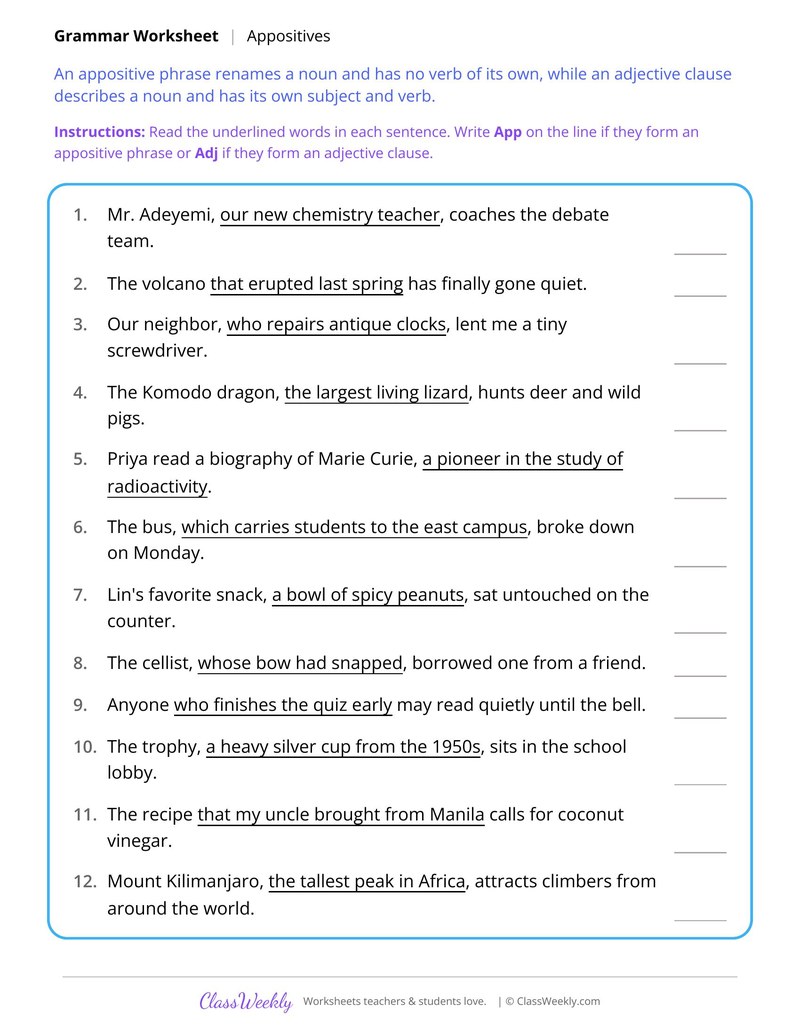
An appositive is a noun phrase that renames a noun beside it. It can open a sentence, sit in the middle between two commas or end the sentence. Three sheets here practice each position with fact pairs about games, film jobs and composers.
What is an adverb clause?
⌄
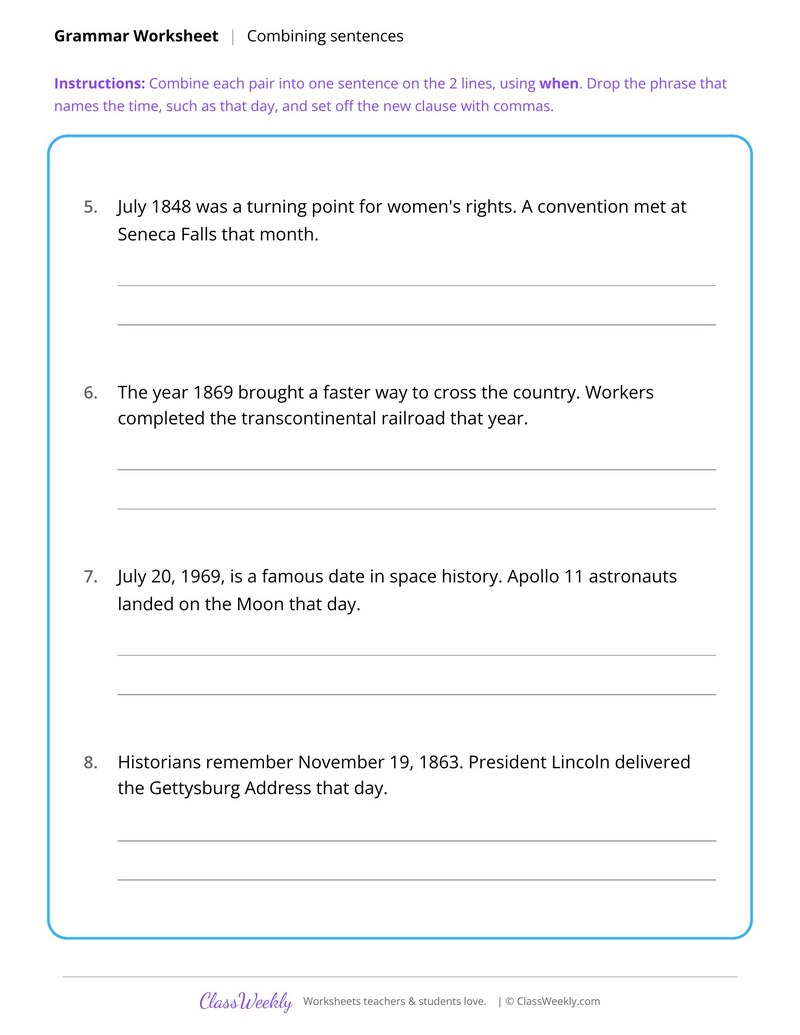
An adverb clause tells when, why or under what condition something happens. Add Adverb Clauses to Sentences gives starting words such as when, because and unless for time, reason and condition.
What is a relative clause?
⌄
A relative clause begins with who, which or whose and describes a noun. Add Relative Clauses to Sentences has students add one after a noun and set it off with commas.
Ratings & Reviews
No reviews yet. Be the first to share what you think.
Reviews are for ClassWeekly members.
Make a Request
Spotted something to fix, or want a worksheet we don't have yet? Tell us and we'll make it.
Worksheet Details
| Grade | 7th Grade |
| Subject | Grammar & Writing |
| Topic | Sentences |
| Standard | L.7.1.C |
| Pages | 1 page |
| Difficulty | Medium |
Learn More
What is ClassWeekly?
ClassWeekly offers free worksheets and printable learning resources for kids, from preschool up. All worksheets are aligned to Common Core, NGSS, and C3 Framework standards and designed by educators. Become a member to access the full library and download unlimited PDFs.