Surface Area of Stacked and L-Shaped Solids
Written by Adi Ackerman, Head Teacher
"Surface Area of Stacked and L-Shaped Solids" is written for 7th Grade (Ages 12-13), and it covers Common Core 7.G.B.6. A 6th grader who is already steady on geometry can use it too, and an older student can use it as a short review.
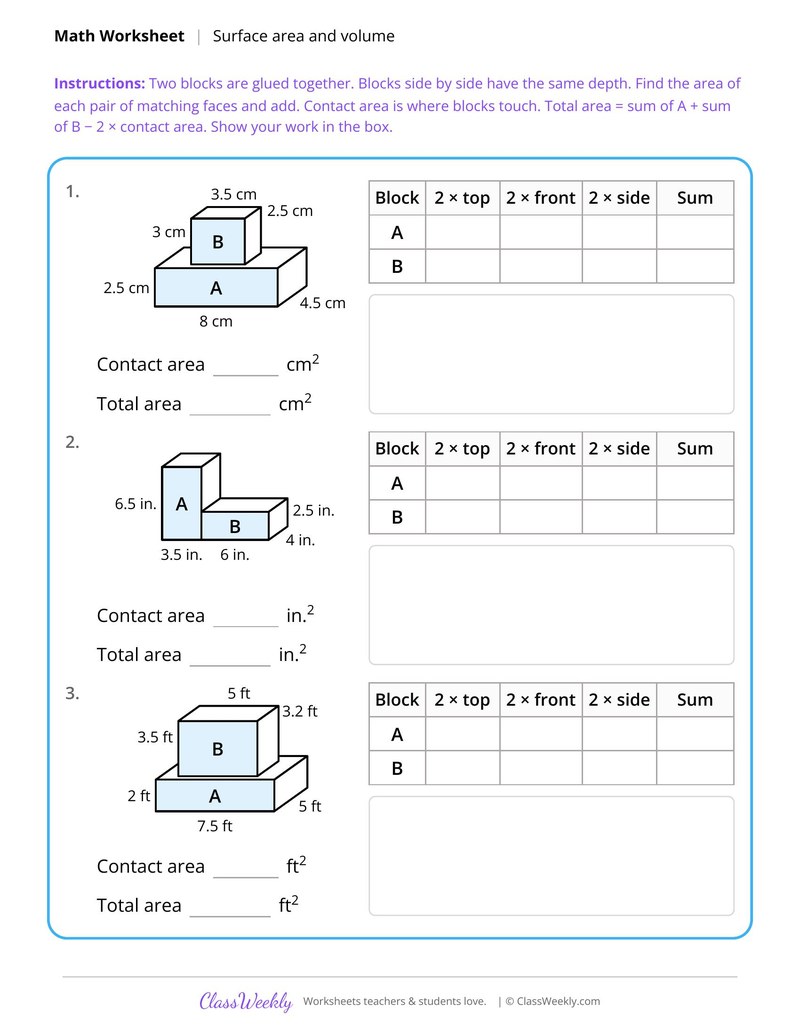
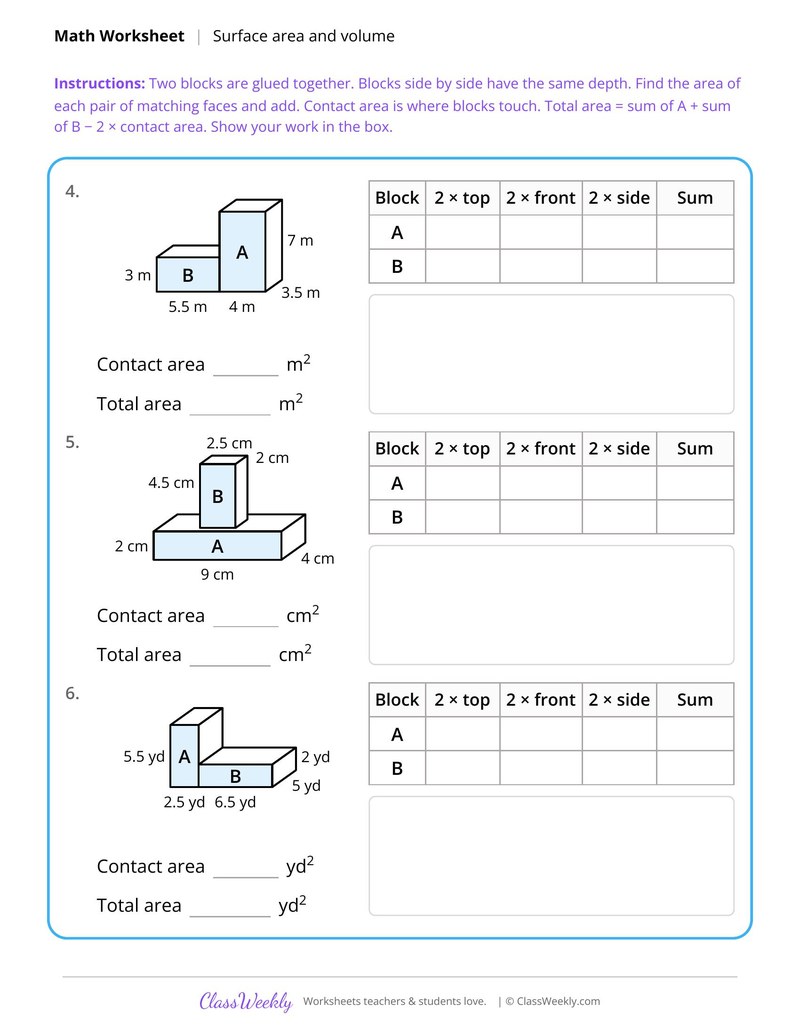
2 pages in this set
7th grade math worksheet: find the surface area of two glued blocks by adding both blocks and subtracting twice the contact area. Answer key included. Part of our surface area and volume geometry collection. Aligned to Common Core standards.
How do I use this worksheet?
Begin with the face-by-face sheets, then use the nets and formula sheets. The paint and wrap sheet suits a project or review day.
What students will practice
- Students will find the face areas of each of two glued blocks.
- Students will find the contact area where the blocks touch.
- Students will subtract 2 times the contact area from the sum to get the total area.
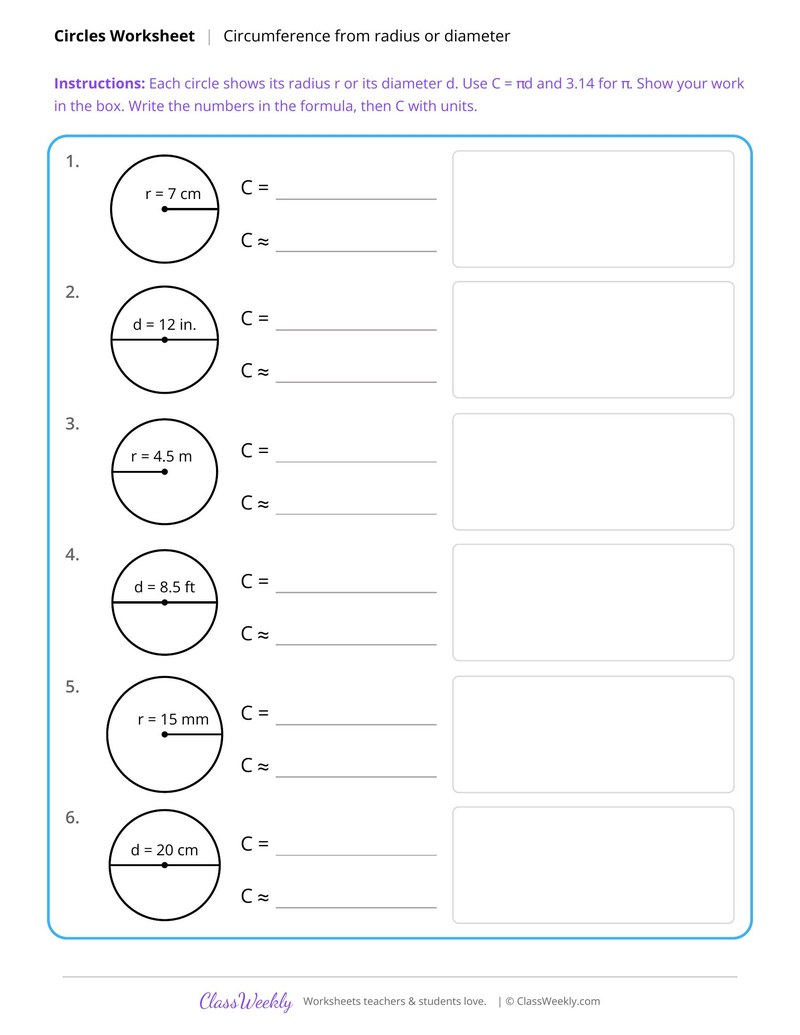
Circumference From Radius or Diameter
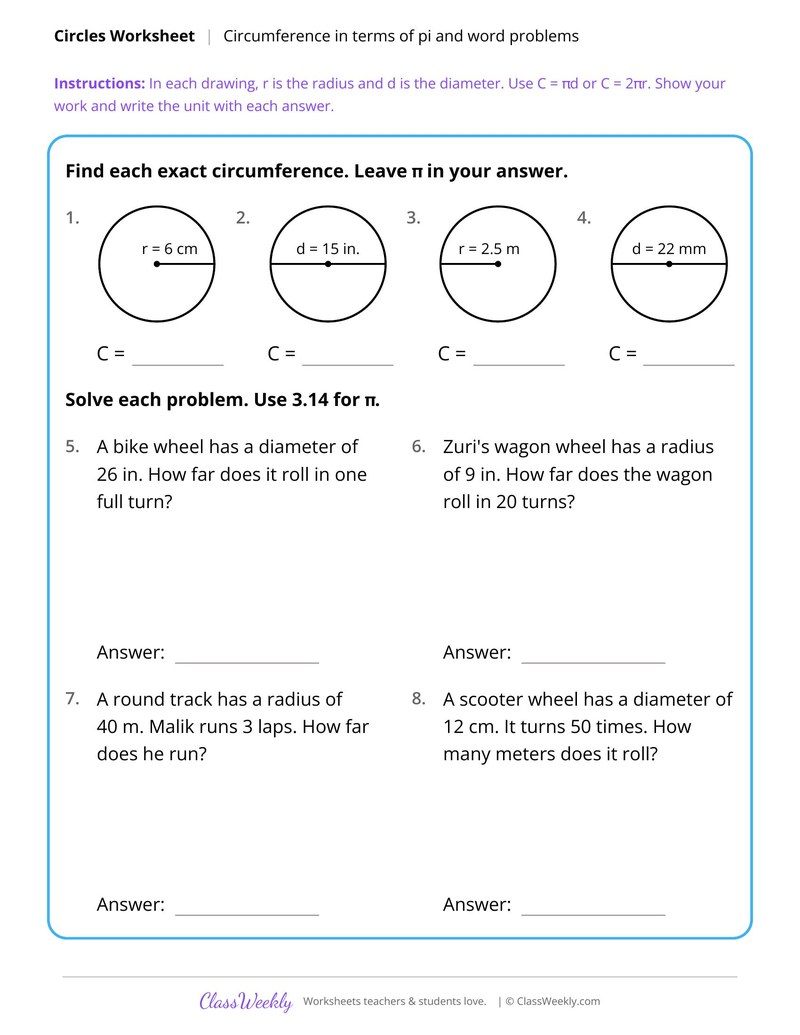
Circumference in Terms of Pi and Word Problems
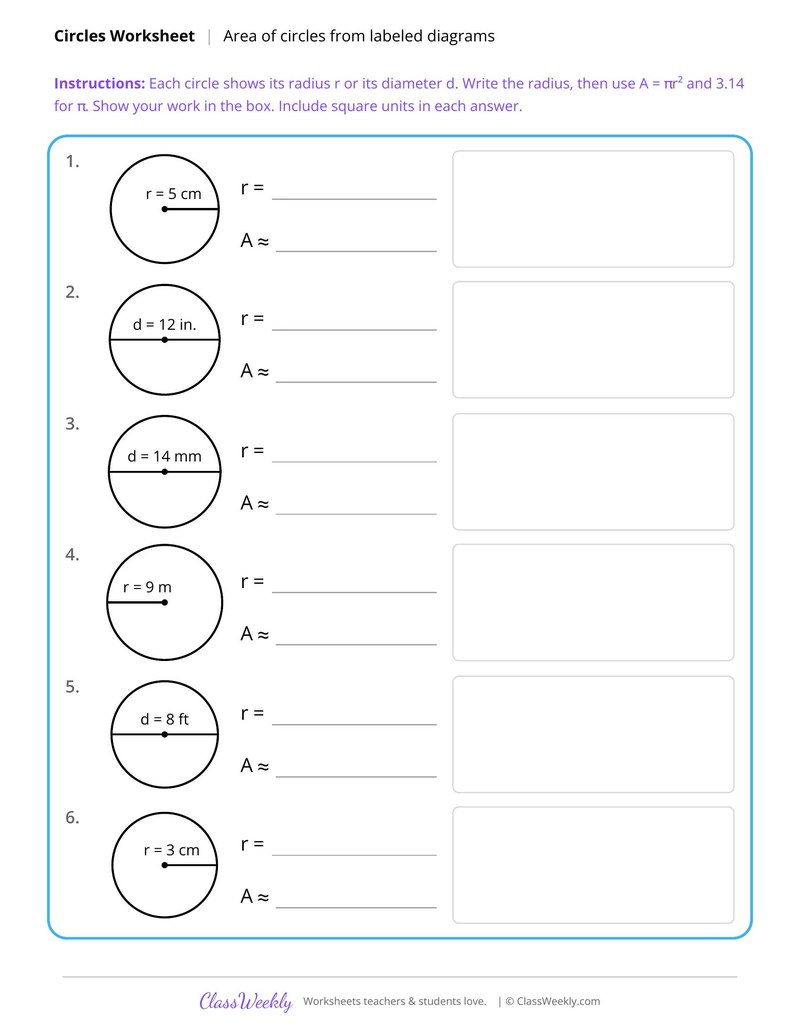
Area of Circles From Labeled Diagrams
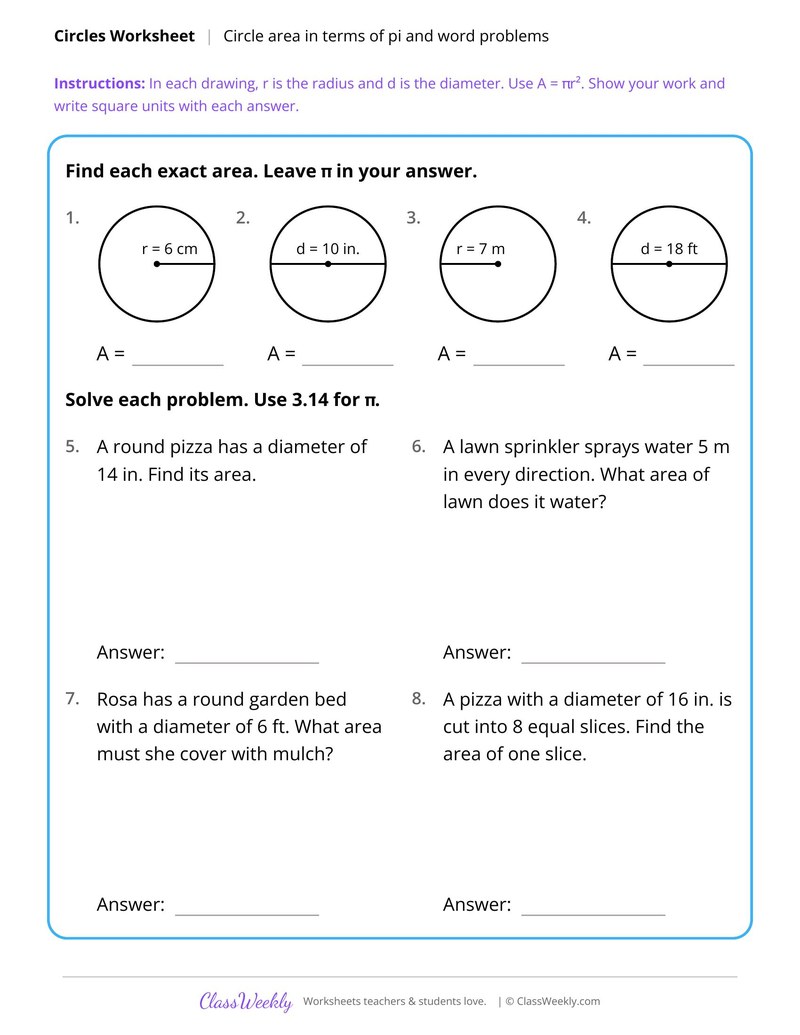
Circle Area in Terms of Pi and Word Problems
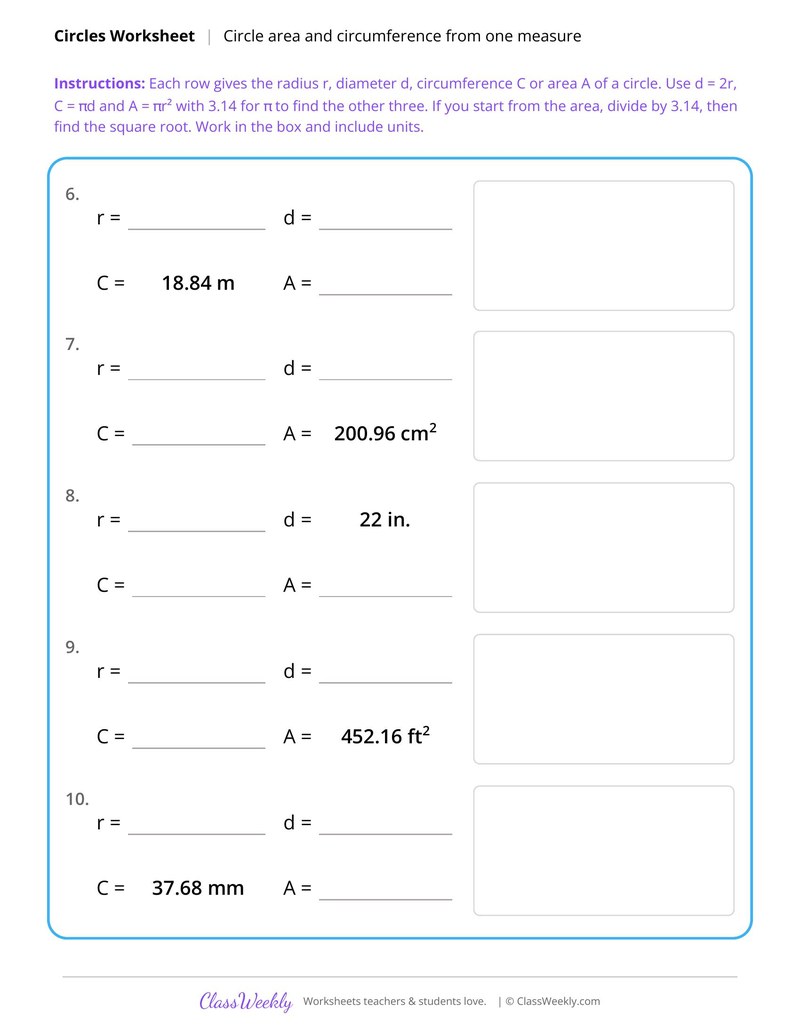
Circle Area and Circumference From One Measure
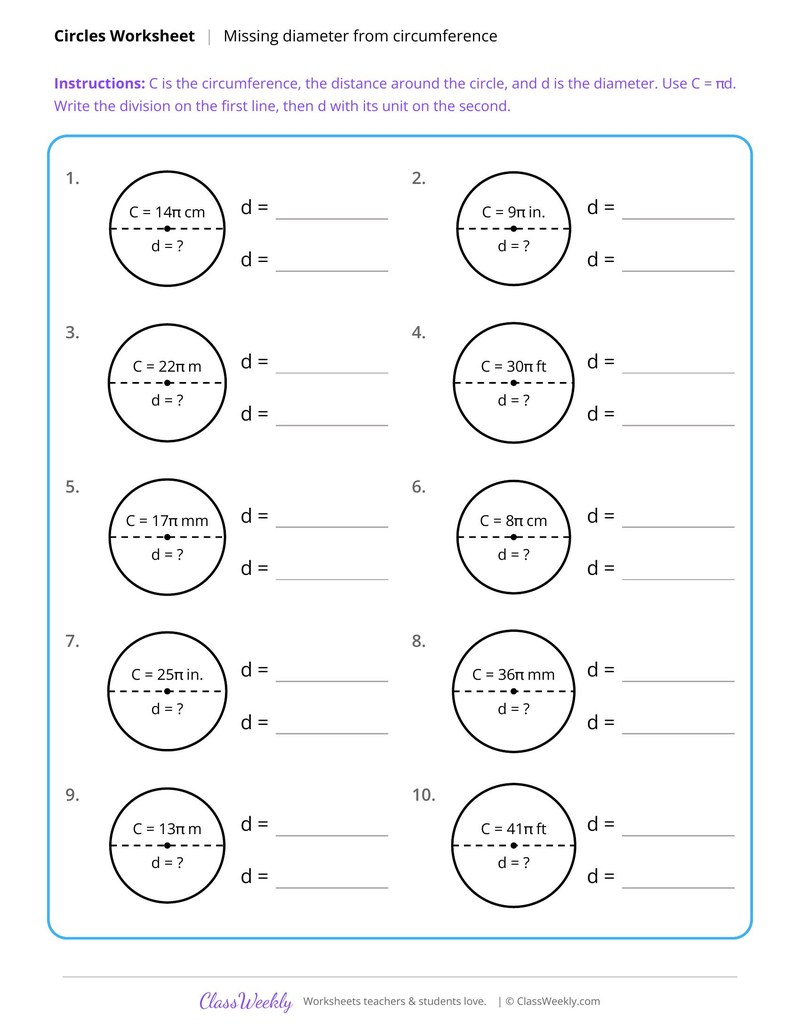
Missing Diameter From Whole-Number Circumferences
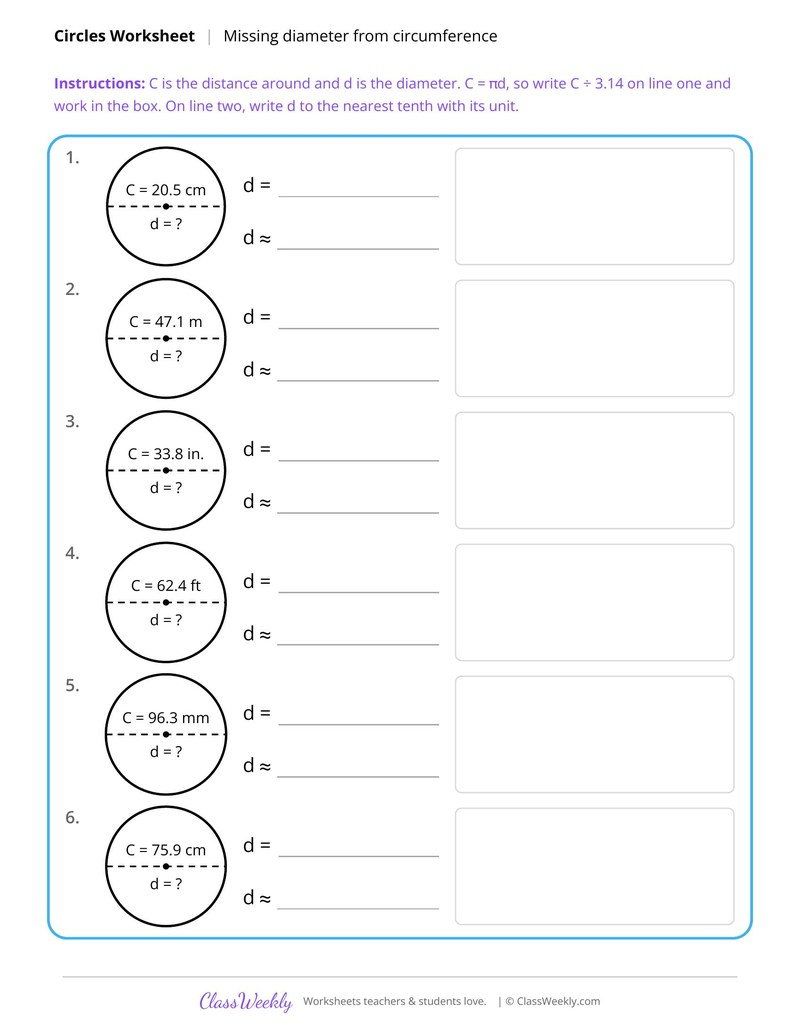
Missing Diameter From Decimal Circumferences
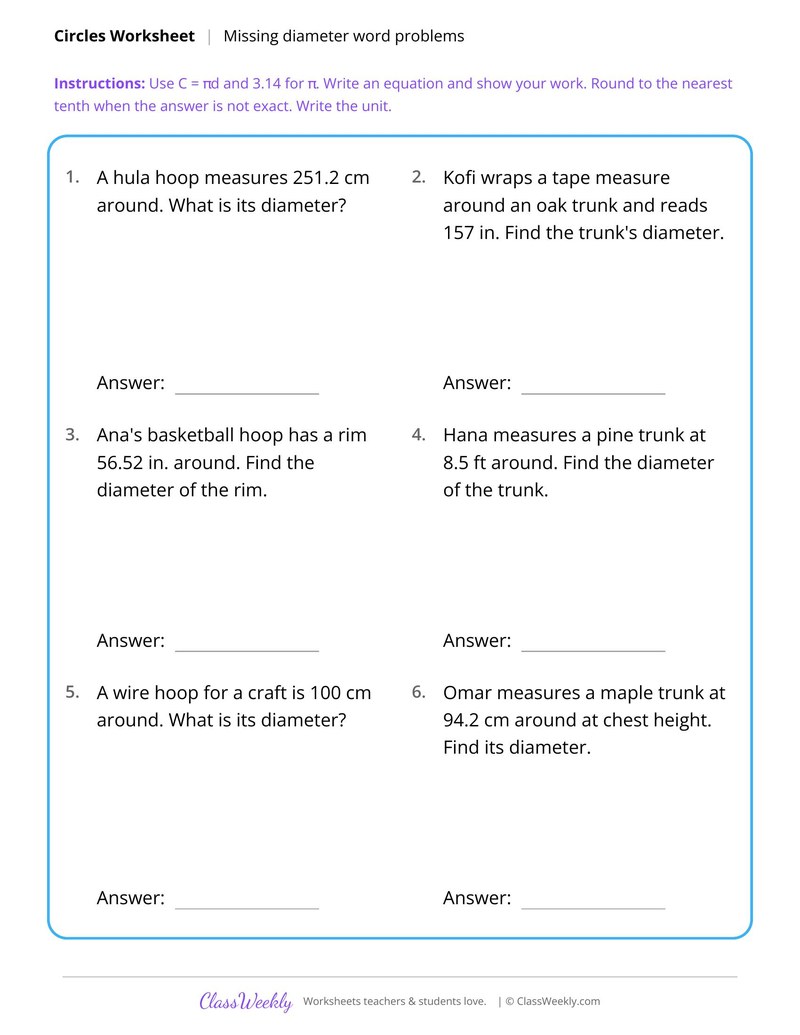
Missing Diameter Word Problems From Circumference
Curriculum Links
Common Core State Standards
Geometry · 7th Grade
Standard: Solve real-world and mathematical problems involving area, volume and surface area of two- and three-dimensional objects composed of triangles, quadrilaterals, polygons, cubes, and right prisms.
View all 7.G.B.6 worksheets →Find this in the curriculum
Browse the grade, subject, and topic this belongs to.
FAQ
How do I use this surface area and volume worksheet?
⌄
Begin with the face-by-face sheets, then use the nets and formula sheets. The paint and wrap sheet suits a project or review day.
What does this worksheet teach?
⌄
Find the surface area of two glued blocks by adding both blocks and subtracting twice the contact area. The directions on the page read: Two blocks are glued together. Blocks side by side have the same depth. Find the area of each pair of matching faces and add. Contact area is where blocks touch. Total area = sum of A + sum of B − 2 × contact area. Show your work in the box. An answer key is included.
Can I use this surface area and volume worksheet for homeschool or classroom?
⌄
Yes, both. We made it for 7th grade geometry, and it works the same at home or at school. At home, a student can work through it alone and then go over it with you, which shows quickly what is solid and what needs another look. In class it works as independent practice, homework or a warm-up, and you can print one copy or a full set.
How do you find the surface area of a prism?
⌄
Find the area of every face and add them. For a rectangular prism, that means six faces, or use SA = 2lw + 2lh + 2wh.
How do you find the volume of a right prism?
⌄
Find the area of the base B, then multiply by the prism height h, so V = Bh. The Volume of Right Prisms With Polygon Bases worksheet practices this.
How do nets help with surface area?
⌄
A net shows every face of a solid laid flat, so students can find each face area and add them. The nets worksheets cover triangular prisms, pyramids and trapezoidal prisms.
Do these worksheets have answer keys?
⌄
Yes. All 14 worksheets in this group have answer keys.
Ratings & Reviews
No reviews yet. Be the first to share what you think.
Reviews are for ClassWeekly members.
Make a Request
Spotted something to fix, or want a worksheet we don't have yet? Tell us and we'll make it.
What is ClassWeekly?
ClassWeekly offers free worksheets and printable learning resources for kids, from preschool up. All worksheets are aligned to Common Core, NGSS, and C3 Framework standards and designed by educators. Become a member to access the full library and download unlimited PDFs.
Circumference From Radius or Diameter
Circumference in Terms of Pi and Word Problems
Area of Circles From Labeled Diagrams
Circle Area in Terms of Pi and Word Problems
Circle Area and Circumference From One Measure
Missing Diameter From Whole-Number Circumferences
Missing Diameter From Decimal Circumferences
Missing Diameter Word Problems From Circumference