Compare Rational Numbers on a Number Line
Written by Adi Ackerman, Head Teacher
"Compare Rational Numbers on a Number Line" is written for 6th Grade (Ages 11-12), and it covers Common Core 6.NS.C.6.C. If your student is a year younger but already steady on integers, the page still works. You may just need to read the instructions out loud. And if they are older and positive and negative numbers never quite stuck, this is a short review rather than busywork.
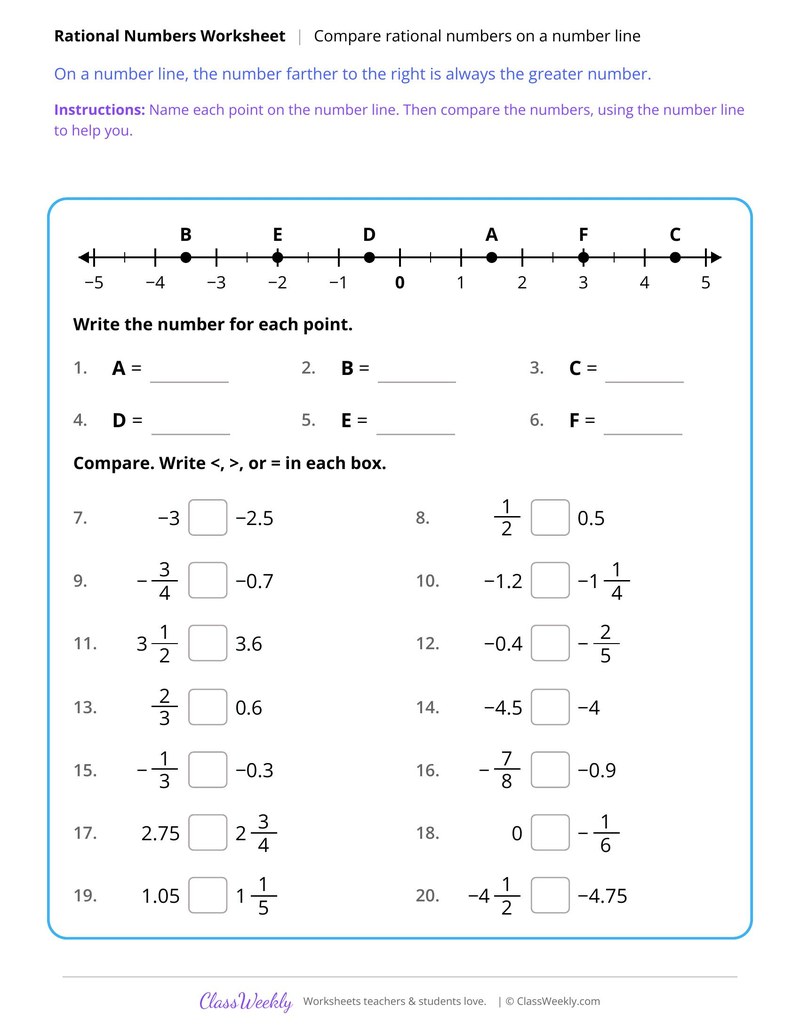
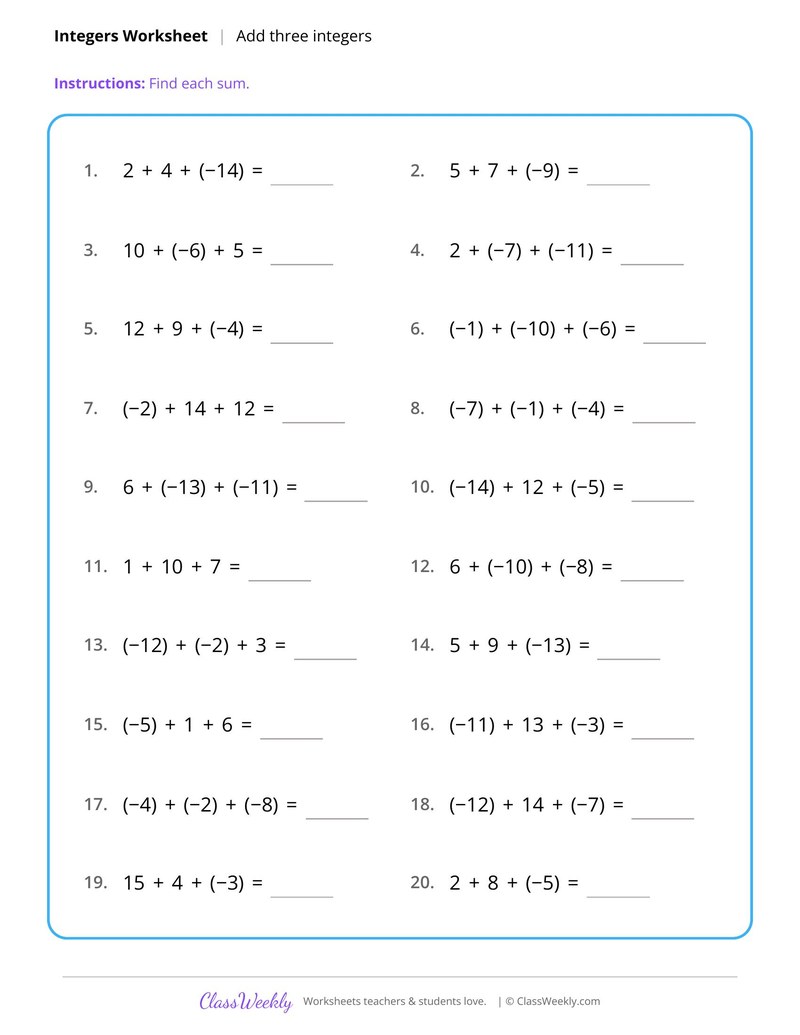
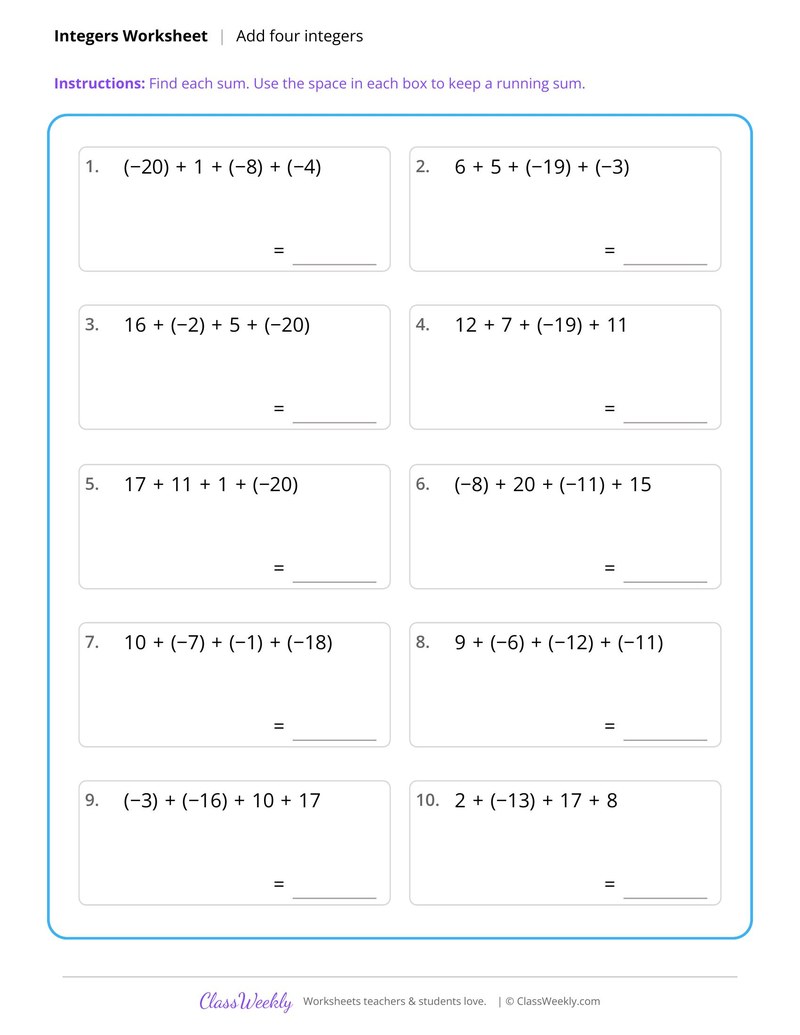
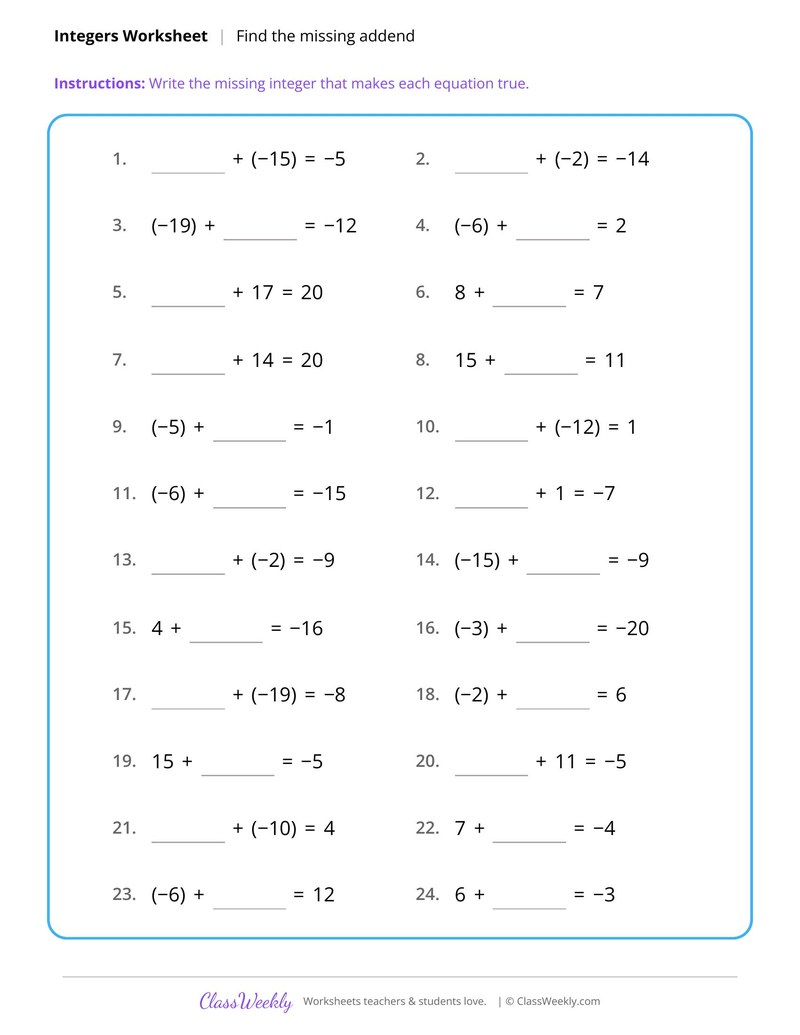
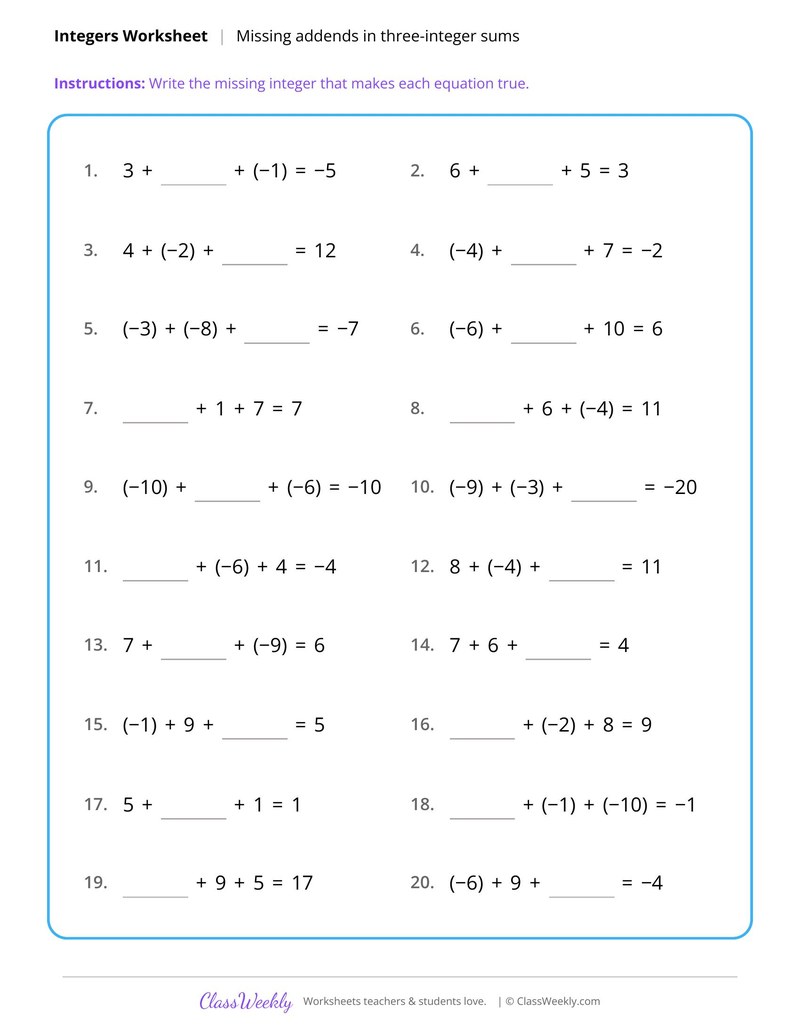
6th grade math worksheet: name 6 points on a number line and compare 14 pairs like negative 3/4 and negative 0.7. Answer key included. Part of our positive and negative numbers integers collection. Aligned to Common Core standards.
How do I use this worksheet?
Start with Positive and Negative Numbers in Real Life to give the signs meaning. Then use the number line pages, and finish with the word problem pages, letting students sketch a number line if they need one.
What students will practice
- Students will name 6 points on a negative 5 to 5 number line, such as negative 3.5.
- Students will compare 14 pairs of rational numbers with less than, greater than or equal.
- Students will compare fractions and decimals, such as 2.75 and 2 3/4.
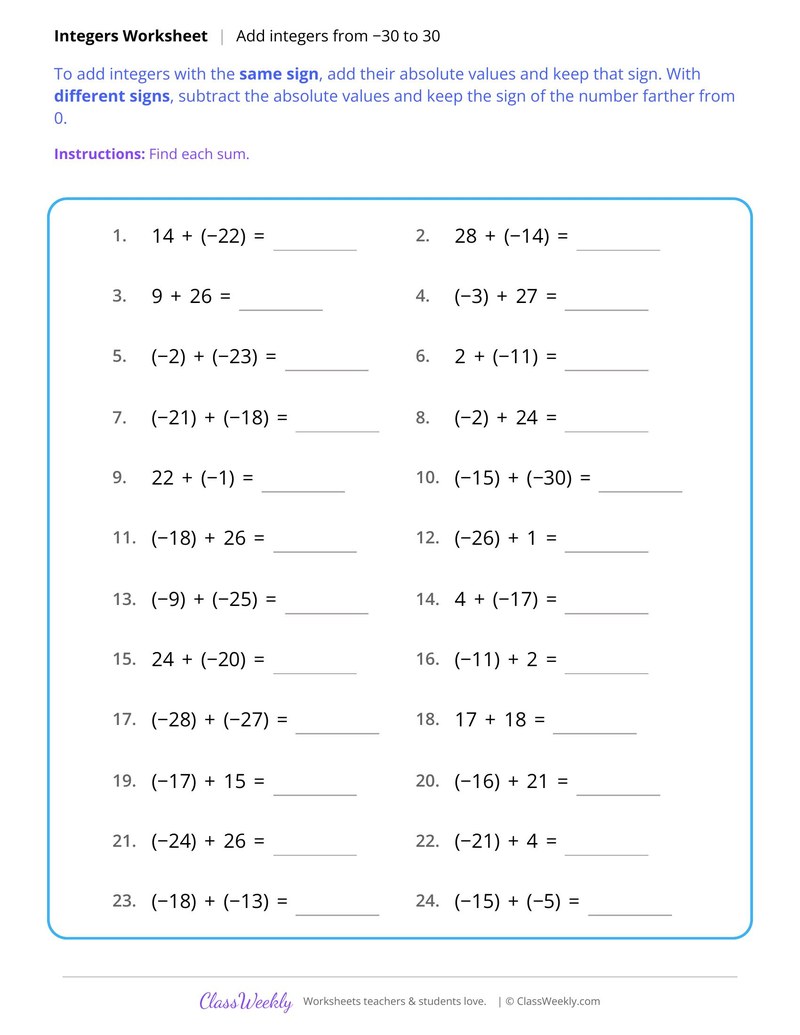
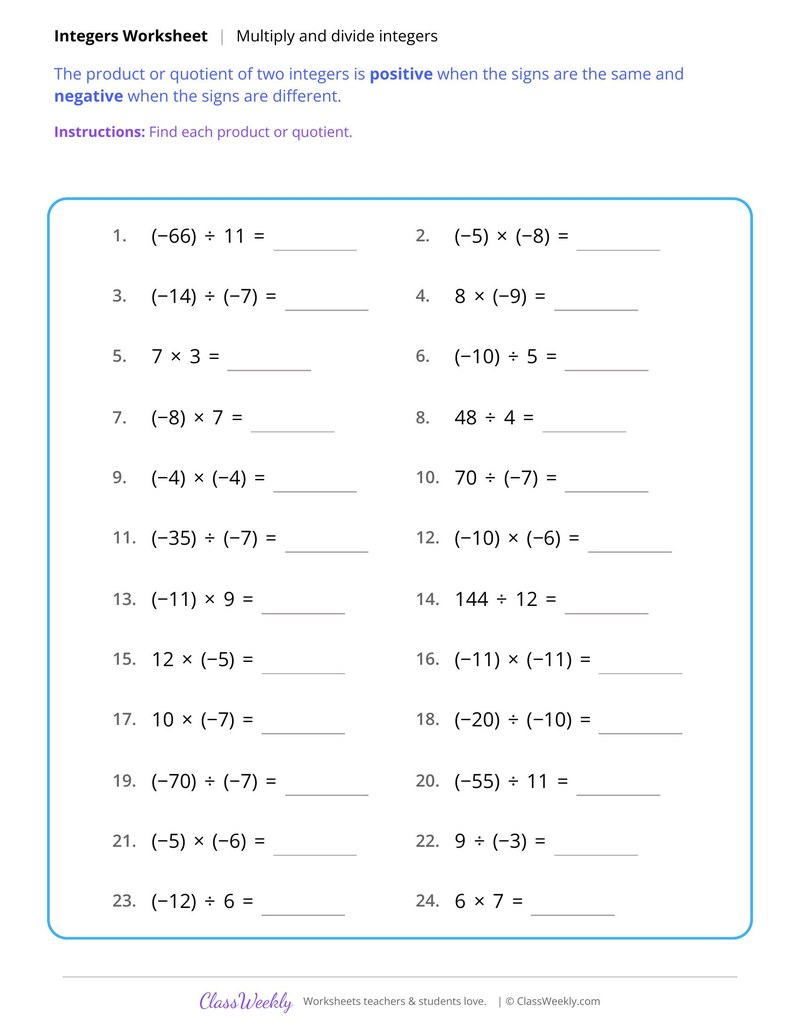
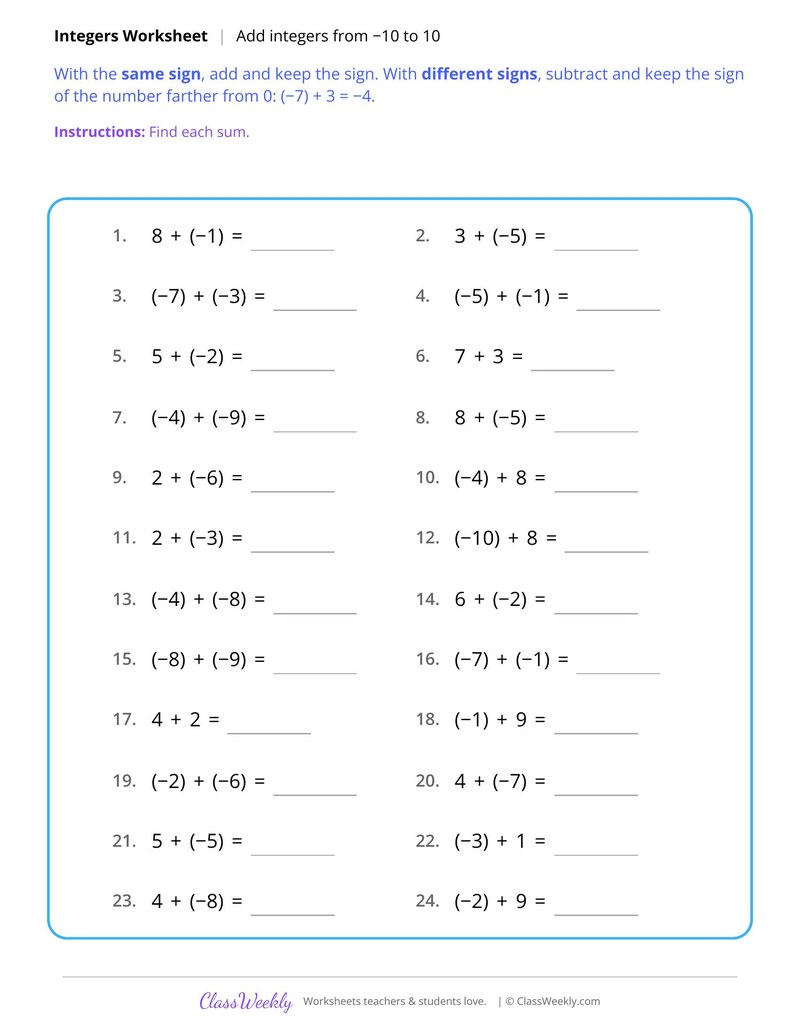
Curriculum Links
Common Core State Standards
The Number System · 6th Grade
Standard: Find and position integers and other rational numbers on a horizontal or vertical number line diagram; find and position pairs of integers and other rational numbers on a coordinate plane.
View all 6.NS.C.6.C worksheets →Find this in the curriculum
Browse the grade, subject, and topic this belongs to.
FAQ
How do I use this positive and negative numbers worksheet?
⌄
Start with Positive and Negative Numbers in Real Life to give the signs meaning. Then use the number line pages, and finish with the word problem pages, letting students sketch a number line if they need one.
What does this worksheet teach?
⌄
Name 6 points on a number line and compare 14 pairs like negative 3/4 and negative 0.7. On a number line, the number farther to the right is always the greater number. The directions on the page read: Name each point on the number line. Then compare the numbers, using the number line to help you. An answer key is included.
Can I use this positive and negative numbers worksheet for homeschool or classroom?
⌄
Yes, both. We made it for 6th Grade integers, and the page works the same whether it lands on a kitchen table or a center rotation. At home, most families go through it together and talk the answers out loud, and that talking is where most of the learning happens with positive and negative numbers. In class it runs well as independent work while you pull a small group. Print one copy or thirty, whichever the day needs.
How do I introduce a number line to a five year old?
⌄
Treat it as a path rather than a picture: your child puts a finger on a number and hops along it, saying each number as they land. Hopping physically is what makes the line make sense. Reading it as a diagram comes much later.
Why use a number line instead of counting objects?
⌄
Objects show how many. A number line shows order and distance, which objects cannot. It is the first tool that makes the gap between numbers visible, and it becomes essential for skip counting, comparison, and later for negative numbers and fractions.
My child counts the marks instead of the hops. Is that a problem?
⌄
It is the classic number line mistake and worth correcting gently. Count the jumps between numbers, not the numbers themselves. Saying "hop" out loud with each move usually fixes it within a session or two.
How do positive and negative numbers show up in real life?
⌄
They describe opposite directions or values from 0. A deposit of $40 is 40 and a withdrawal of $25 is −25, and 5 degrees below zero is −5. Positive and Negative Numbers in Real Life also asks what 0 means, such as sea level for a diver.
How do you order rational numbers from least to greatest?
⌄
Place them on a number line and read from left to right. For −3, 2.5, 1/2, −0.75 and 3 3/4 the order is −3 < −0.75 < 1/2 < 2.5 < 3 3/4.
How do you compare two negative numbers?
⌄
The number closer to 0 is greater. So −1.2 is greater than −1 1/4, and −7/8 is greater than −0.9, because they sit farther to the right on the number line.
How do you solve integer word problems?
⌄
Write rises and gains as positive numbers and drops and losses as negative numbers, then add. A diver at −35 feet swims down 12 feet and up 20 feet, so her elevation is −27 feet.
Ratings & Reviews
No reviews yet. Be the first to share what you think.
Reviews are for ClassWeekly members.
Make a Request
Spotted something to fix, or want a worksheet we don't have yet? Tell us and we'll make it.
What is ClassWeekly?
ClassWeekly offers free worksheets and printable learning resources for kids, from preschool up. All worksheets are aligned to Common Core, NGSS, and C3 Framework standards and designed by educators. Become a member to access the full library and download unlimited PDFs.