Earthquake Hazard Maps and Probability
Written by Adi Ackerman, Head Teacher
"Earthquake Hazard Maps and Probability" is written for 7th Grade (Ages 12-13), and it covers NGSS MS-ESS3-2. A 6th grader who is already steady on Earth science can use it too, and an older student can use it as a short review.
2 pages in this set
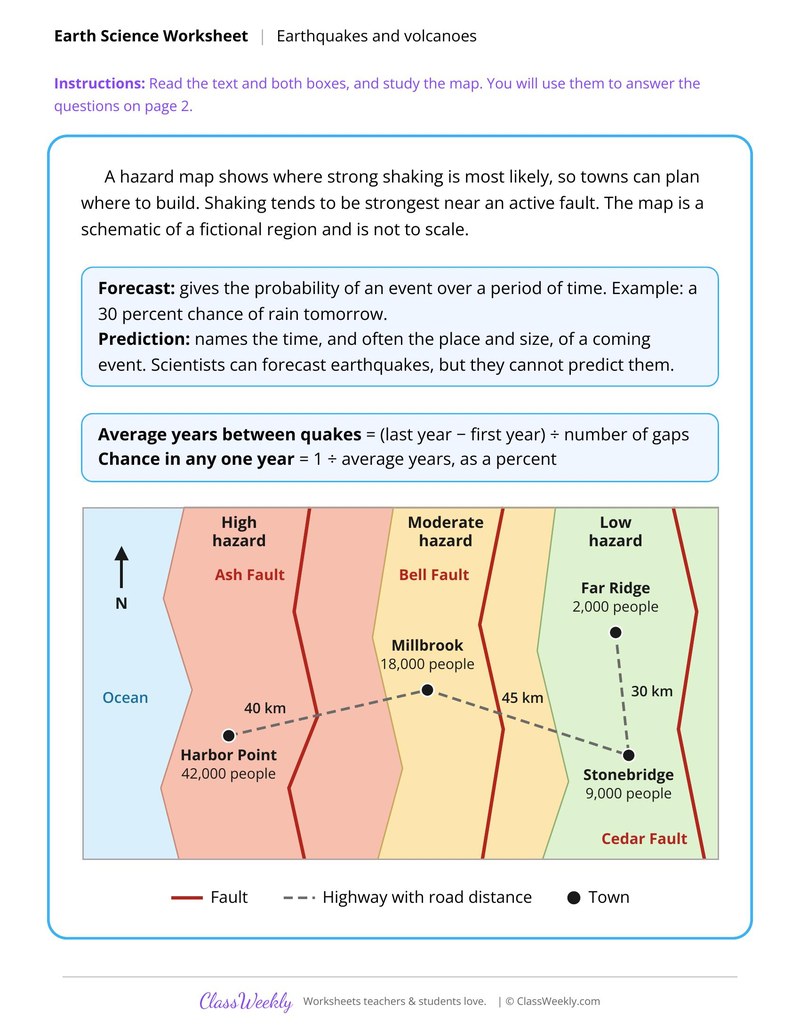
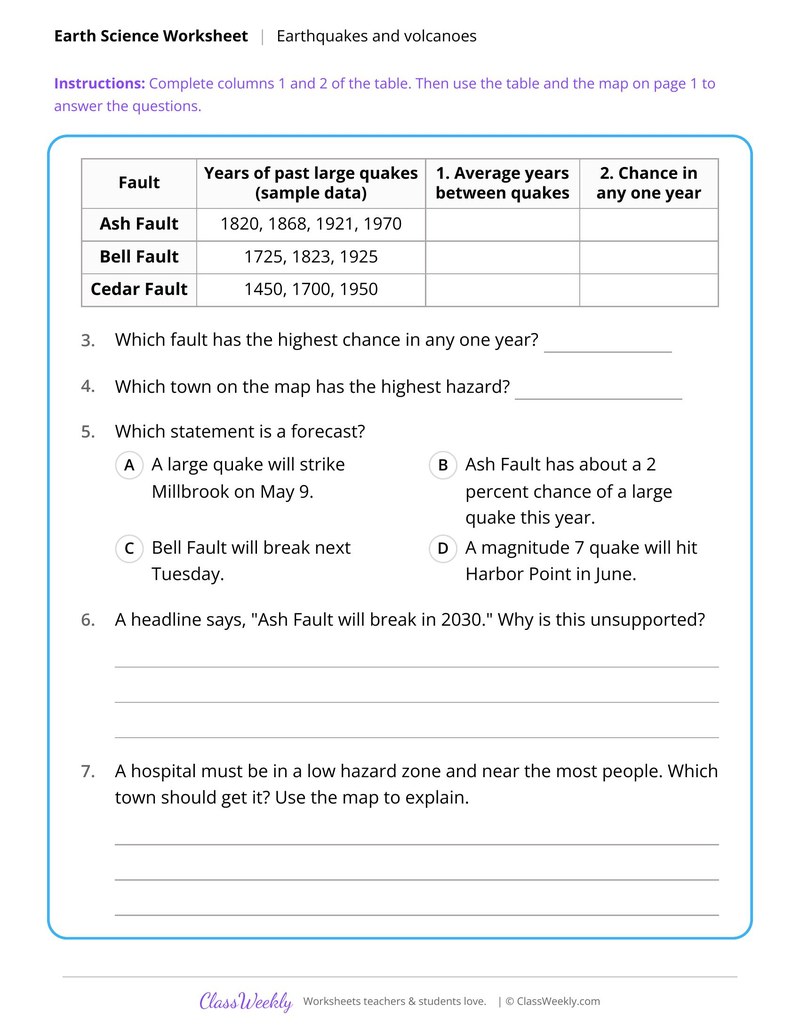
7th grade science worksheet: find average years between large quakes on three faults, then turn them into yearly chances. Answer key included. Part of our Earth's layers and plate tectonics collection. Aligned to NGSS standards.
How do I use this worksheet?
Seismic Waves Reveal Earth's Interior is a good opening, and Classify Boundaries From Plate Motion Arrows gives students the vocabulary for the mountain sheets. The earthquake hazard sheet uses a fictional region, so it works on its own.
What students will practice
- Students will tell a forecast from a prediction and explain why scientists can forecast earthquakes but not predict them.
- Students will find the average years between large quakes for three faults from lists of past dates.
- Students will turn each average into a chance in any one year and compare faults on a hazard map.
Correlate Rock Layers Using Index Fossils
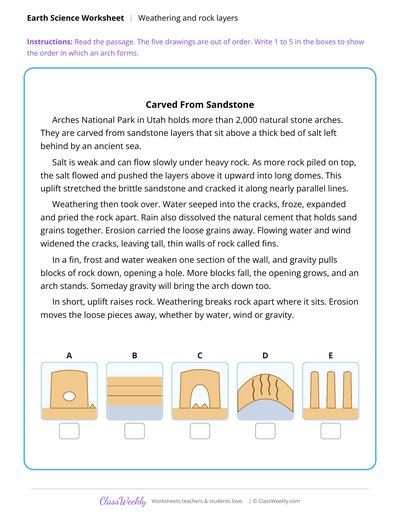
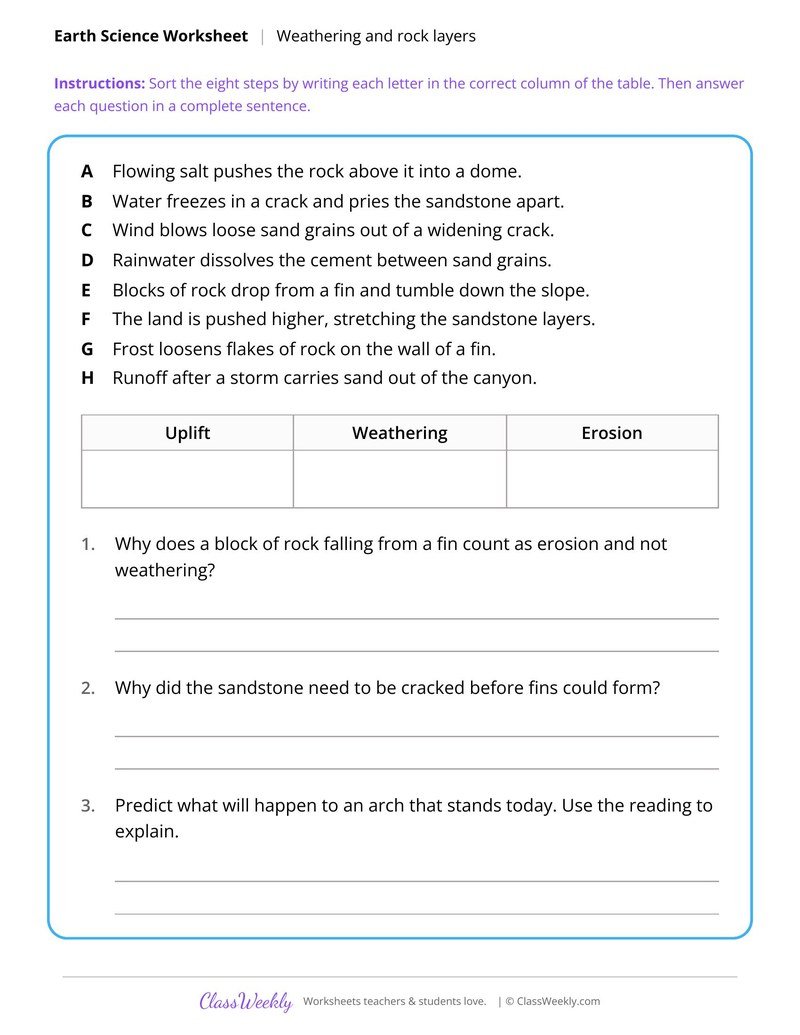
How Sandstone Arches Form
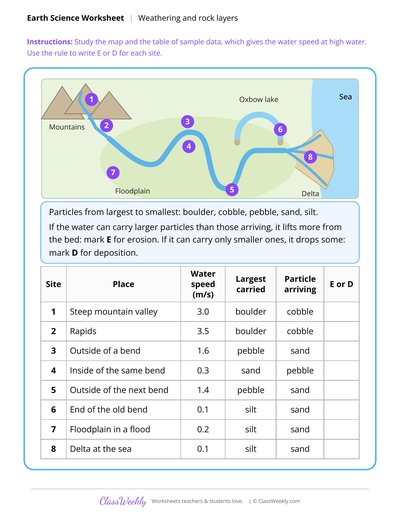
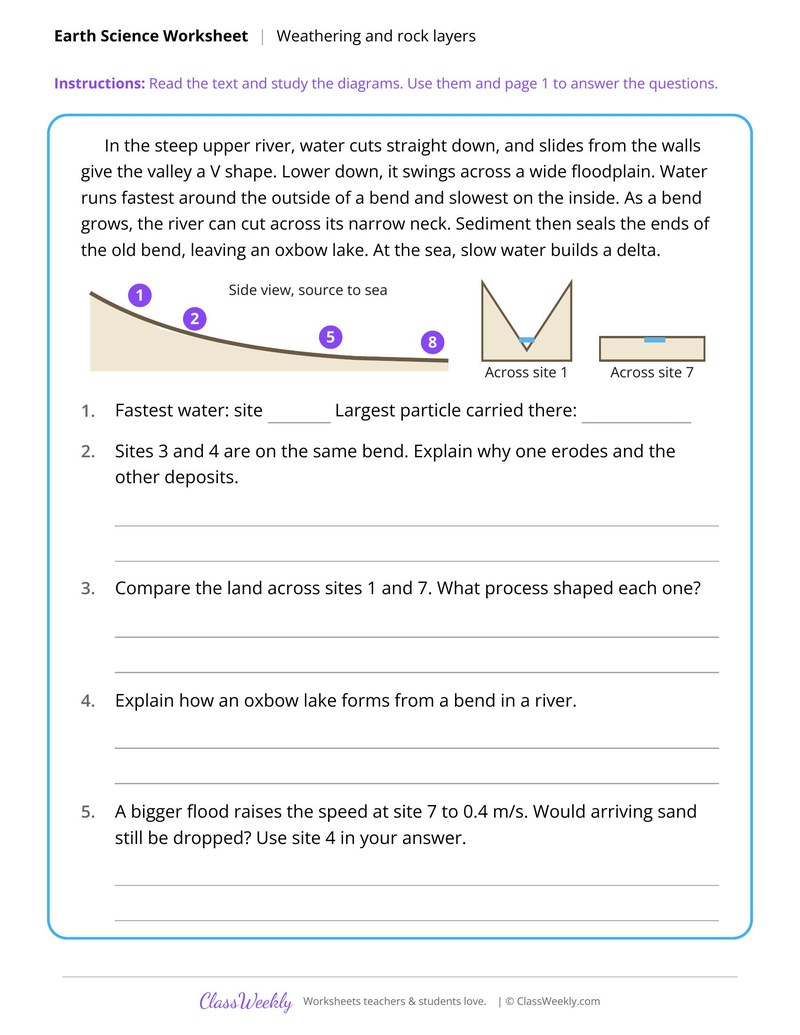
River Processes From Source to Delta
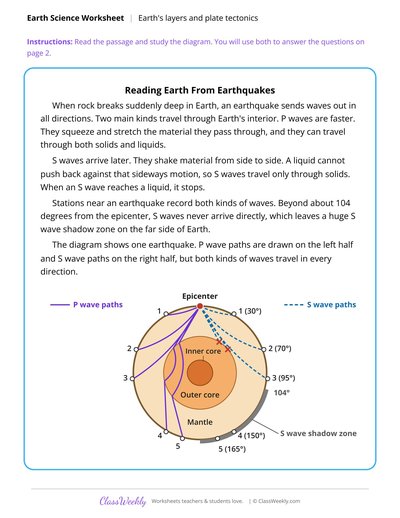
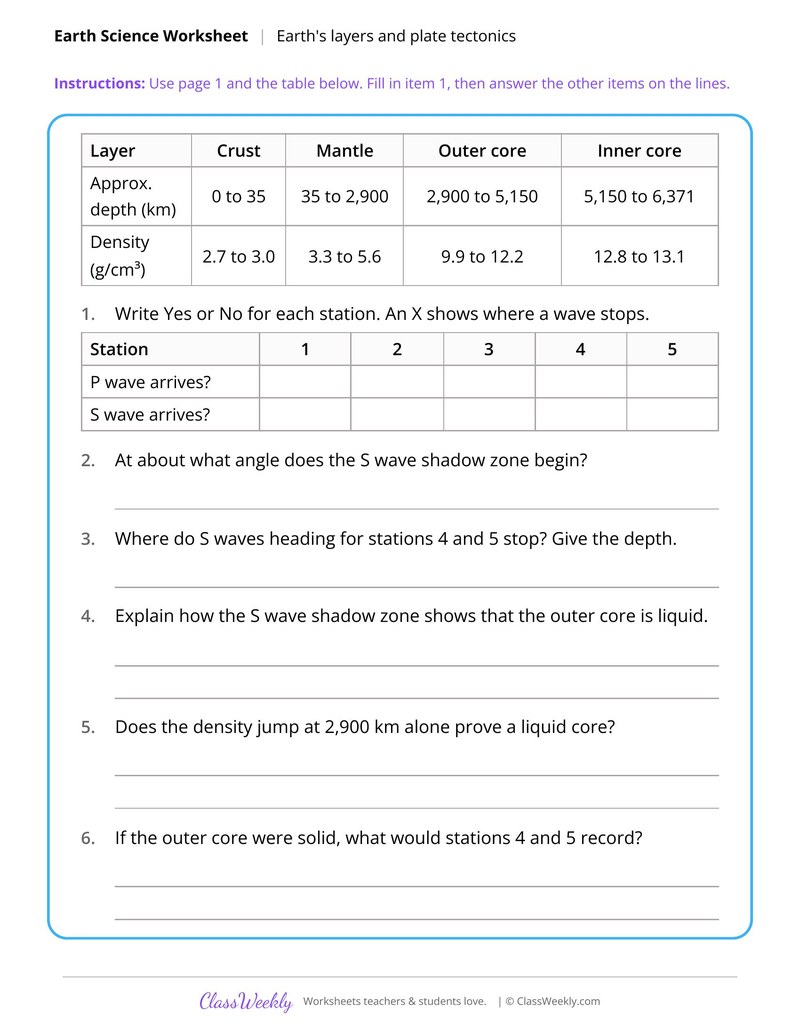
Seismic Waves Reveal Earth's Interior
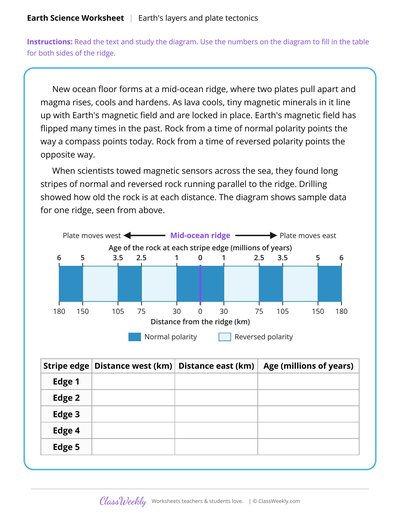
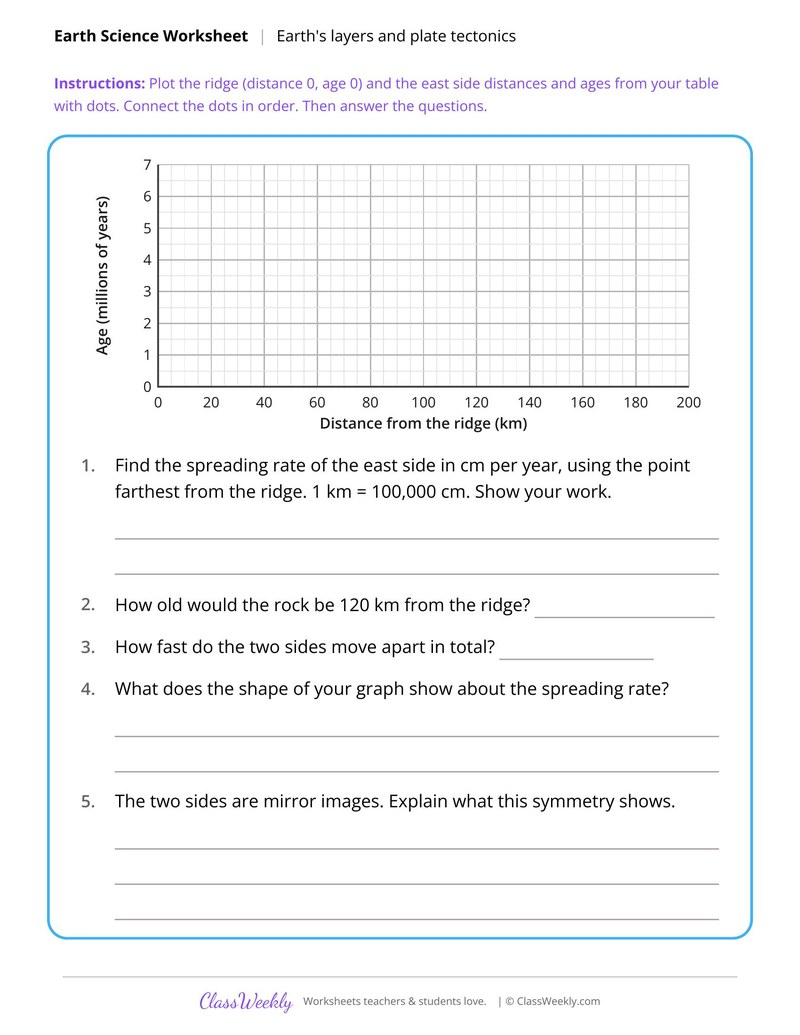
Seafloor Age and Magnetic Stripe Evidence
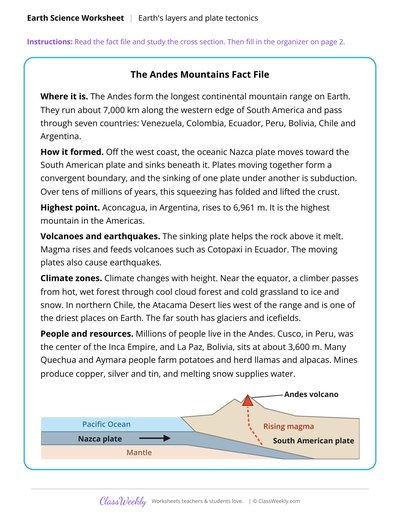
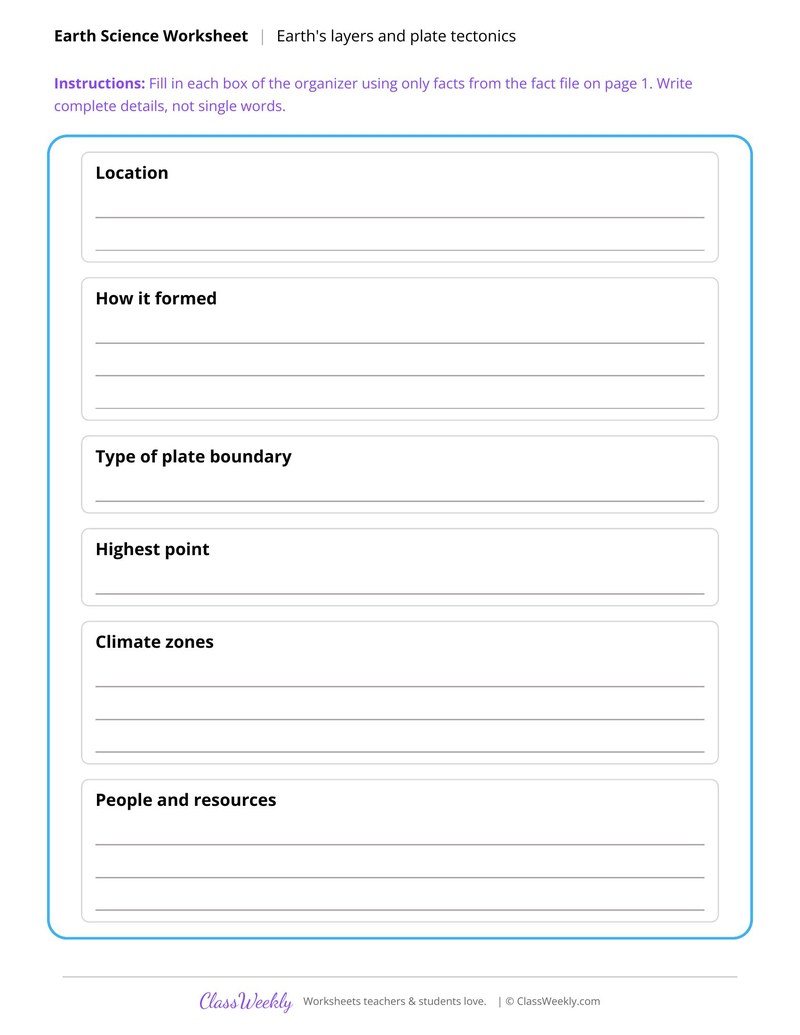
Andes Mountain Range Fact File Organizer
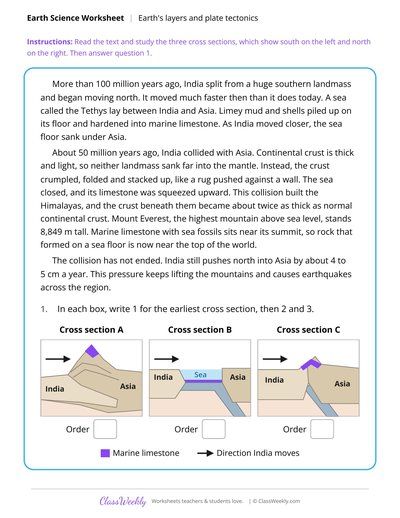
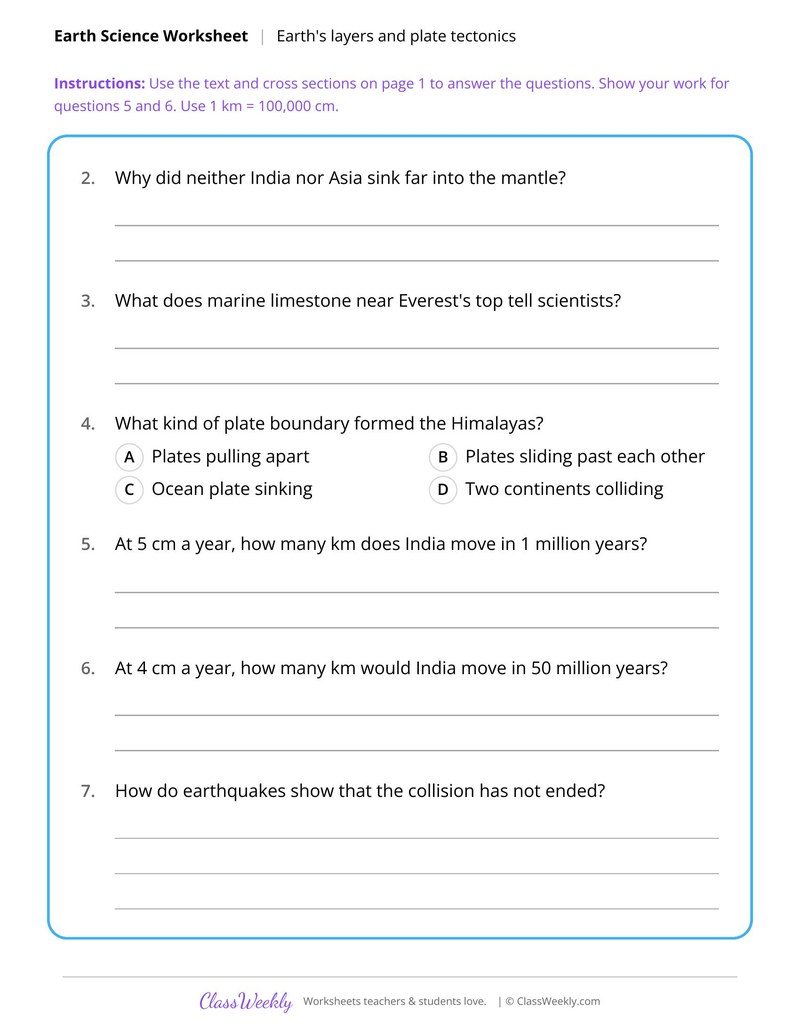
Continental Collision and the Himalayas
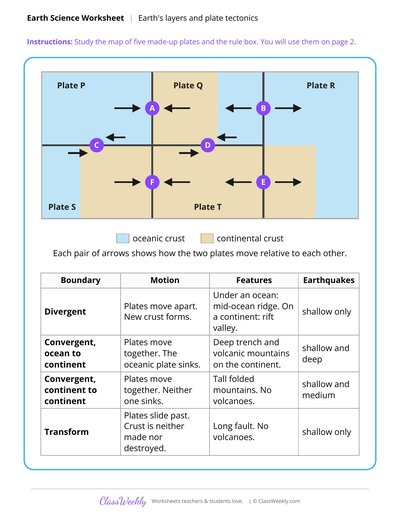
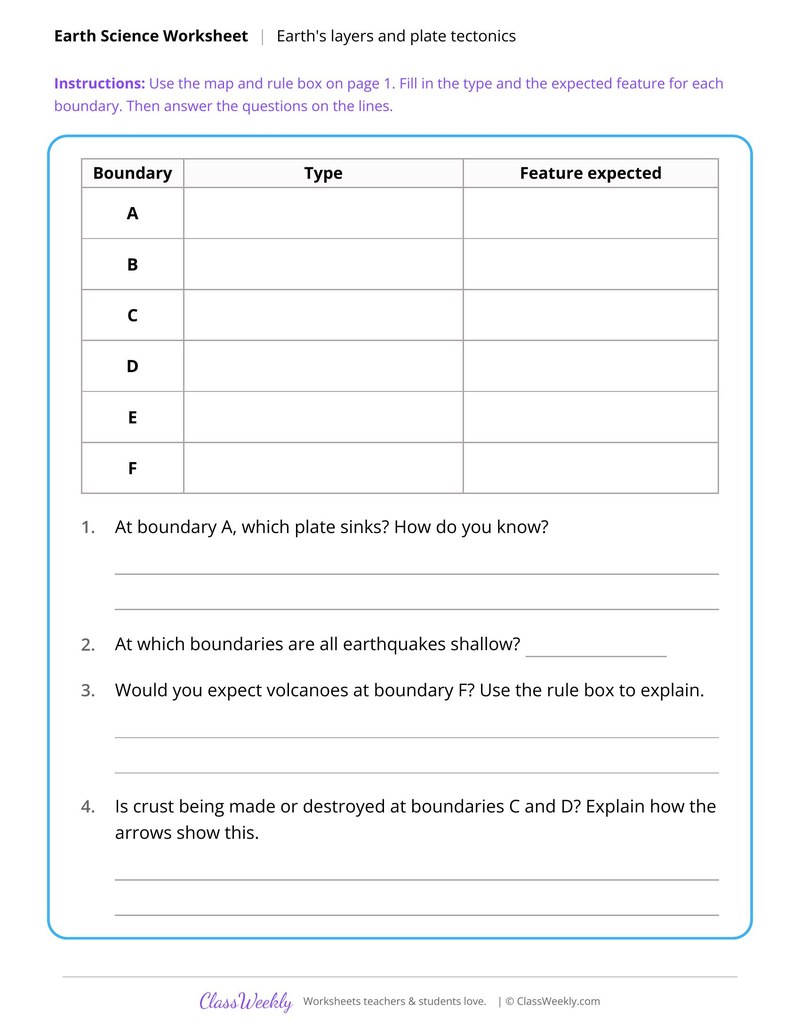
Classify Boundaries From Plate Motion Arrows
Curriculum Links
Next Generation Science Standards
Science · 7th Grade
Find this in the curriculum
Browse the grade, subject, and topic this belongs to.
FAQ
How do I use this Earth's layers and plate tectonics worksheet?
⌄
Seismic Waves Reveal Earth's Interior is a good opening, and Classify Boundaries From Plate Motion Arrows gives students the vocabulary for the mountain sheets. The earthquake hazard sheet uses a fictional region, so it works on its own.
What does this worksheet teach?
⌄
Find average years between large quakes on three faults, then turn them into yearly chances. The directions on the page read: Read the text and both boxes, and study the map. You will use them to answer the questions on page 2. An answer key is included.
Can I use this Earth's layers and plate tectonics worksheet for homeschool or classroom?
⌄
Yes, both. We made it for 7th grade Earth science, and it works the same at home or at school. At home, a student can work through it alone and then go over it with you, which shows quickly what is solid and what needs another look. In class it works as independent practice, homework or a warm-up, and you can print one copy or a full set.
How do seismic waves show what is inside Earth?
⌄
P waves travel through solids and liquids, but S waves travel only through solids. Where waves arrive or stop tells scientists which layers are solid or liquid. Seismic Waves Reveal Earth's Interior also gives depth and density for each layer.
How does seafloor age support plate tectonics?
⌄
New ocean floor forms at a mid-ocean ridge, and rock farther from the ridge is older. Magnetic minerals in cooling lava lock in Earth's magnetic field, leaving stripes of normal and reversed polarity. Seafloor Age and Magnetic Stripe Evidence has students graph age against distance.
How did the Himalayas form?
⌄
India moved north and collided with Asia about 50 million years ago. Continental crust is thick and light, so neither plate sank far into the mantle. Continental Collision and the Himalayas uses three cross sections.
What is the difference between a forecast and a prediction?
⌄
A forecast gives the probability of an event over a period of time. A prediction names the time and often the place and size of a coming event. Earthquake Hazard Maps and Probability explains why scientists can forecast earthquakes but not predict them.
Ratings & Reviews
No reviews yet. Be the first to share what you think.
Reviews are for ClassWeekly members.
Make a Request
Spotted something to fix, or want a worksheet we don't have yet? Tell us and we'll make it.
Worksheet Details
| Grade | 7th Grade |
| Subject | Science |
| Topic | Earth Science |
| Standard | MS-ESS3-2 |
| Pages | 2 pages |
| Difficulty | Medium |
What is ClassWeekly?
ClassWeekly offers free worksheets and printable learning resources for kids, from preschool up. All worksheets are aligned to Common Core, NGSS, and C3 Framework standards and designed by educators. Become a member to access the full library and download unlimited PDFs.
Correlate Rock Layers Using Index Fossils
How Sandstone Arches Form
River Processes From Source to Delta
Seismic Waves Reveal Earth's Interior
Seafloor Age and Magnetic Stripe Evidence
Andes Mountain Range Fact File Organizer
Continental Collision and the Himalayas
Classify Boundaries From Plate Motion Arrows