Correlate Rock Layers Using Index Fossils
Written by Adi Ackerman, Head Teacher
"Correlate Rock Layers Using Index Fossils" is written for 7th Grade (Ages 12-13), and it covers NGSS MS-ESS1-4. A 6th grader who is already steady on Earth science can use it too, and an older student can use it as a short review.
2 pages in this set
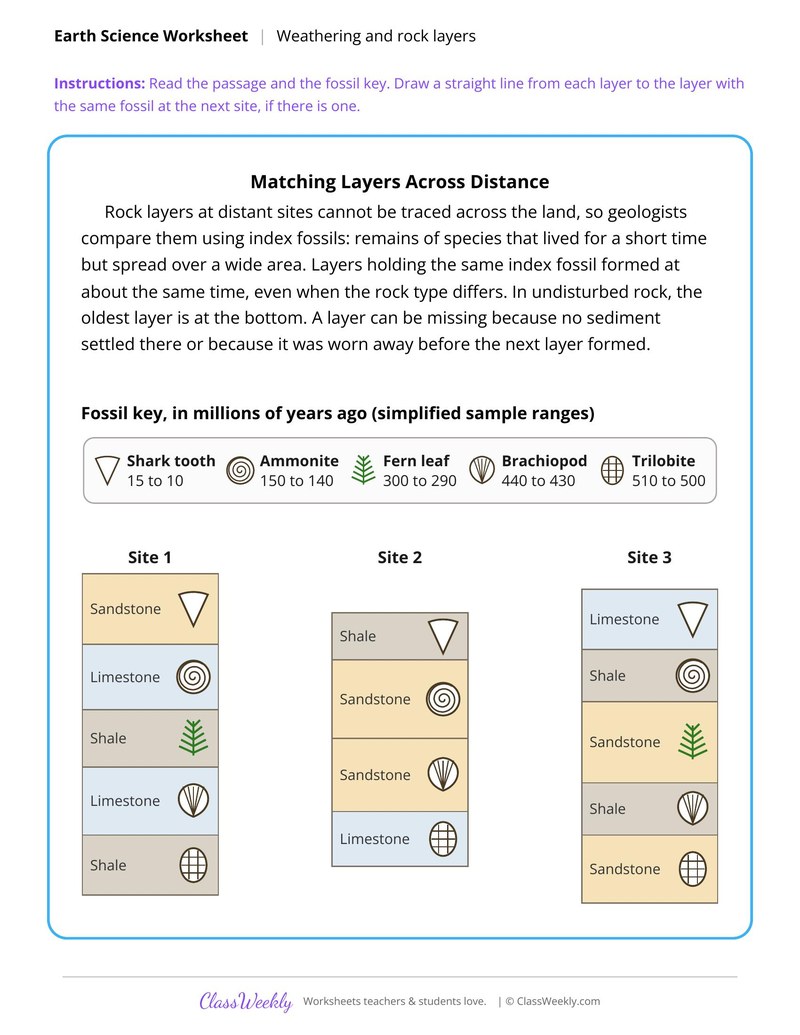
7th grade science worksheet: match rock layers across sites by index fossils, then find the missing layer and what happened there. Answer key included. Part of our weathering and rock layers earth science collection. Aligned to NGSS standards.
How do I use this worksheet?
Start with Correlate Rock Layers Using Index Fossils to build rock layer vocabulary, then use the arch and river sheets for processes. Each sheet has a passage on page 1 that students can reread.
What students will practice
- Students will explain why geologists use index fossils to compare rock layers at distant sites.
- Students will draw lines between layers that hold the same fossil at the next site.
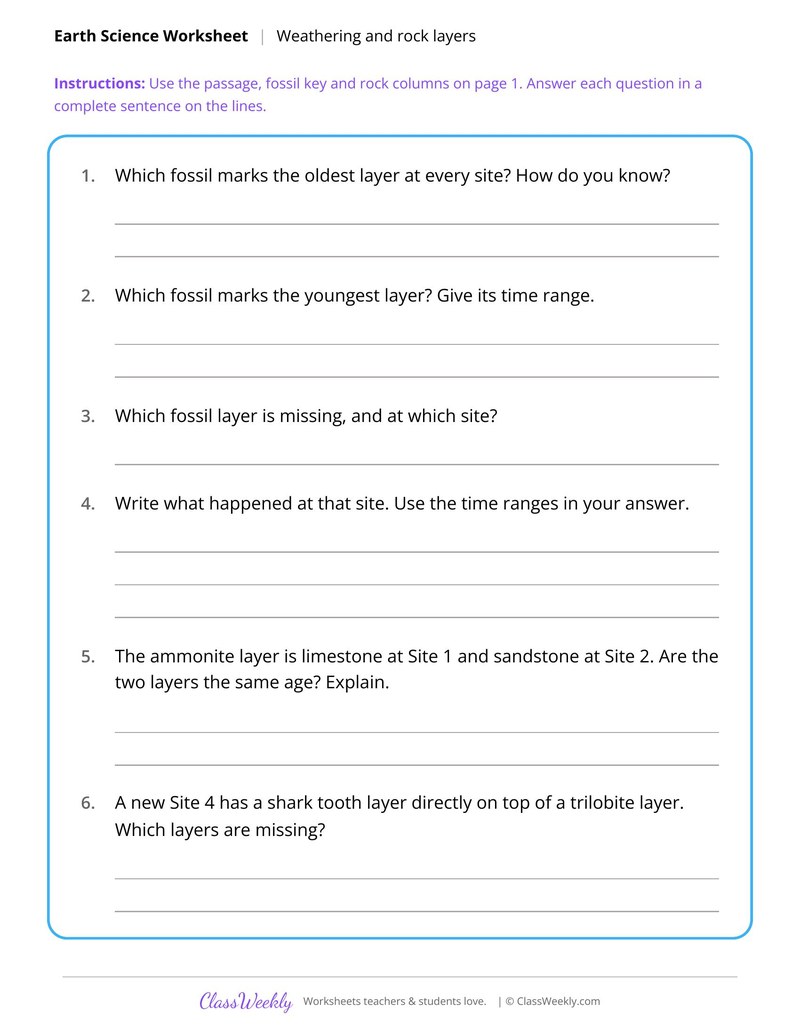
- Students will identify the oldest layer, the youngest layer and a missing layer, and tell what may have happened.
How Sandstone Arches Form
River Processes From Source to Delta
Seismic Waves Reveal Earth's Interior
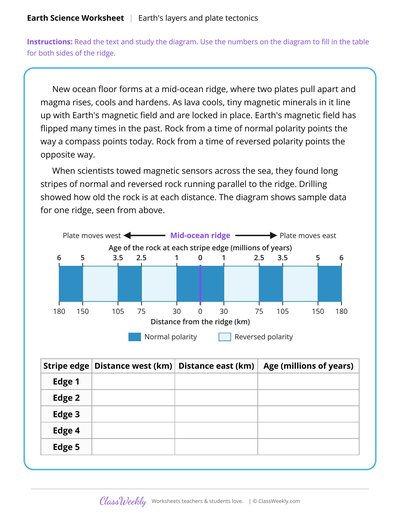
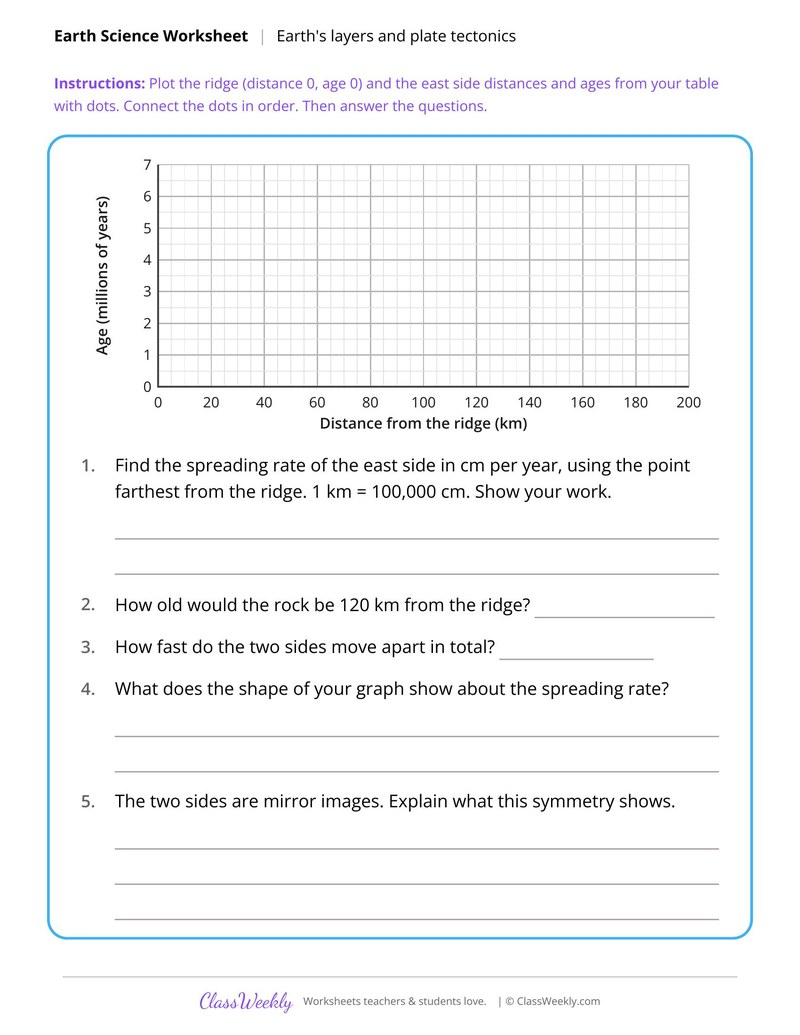
Seafloor Age and Magnetic Stripe Evidence
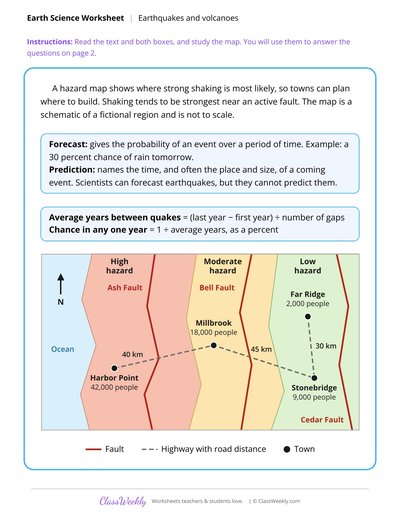
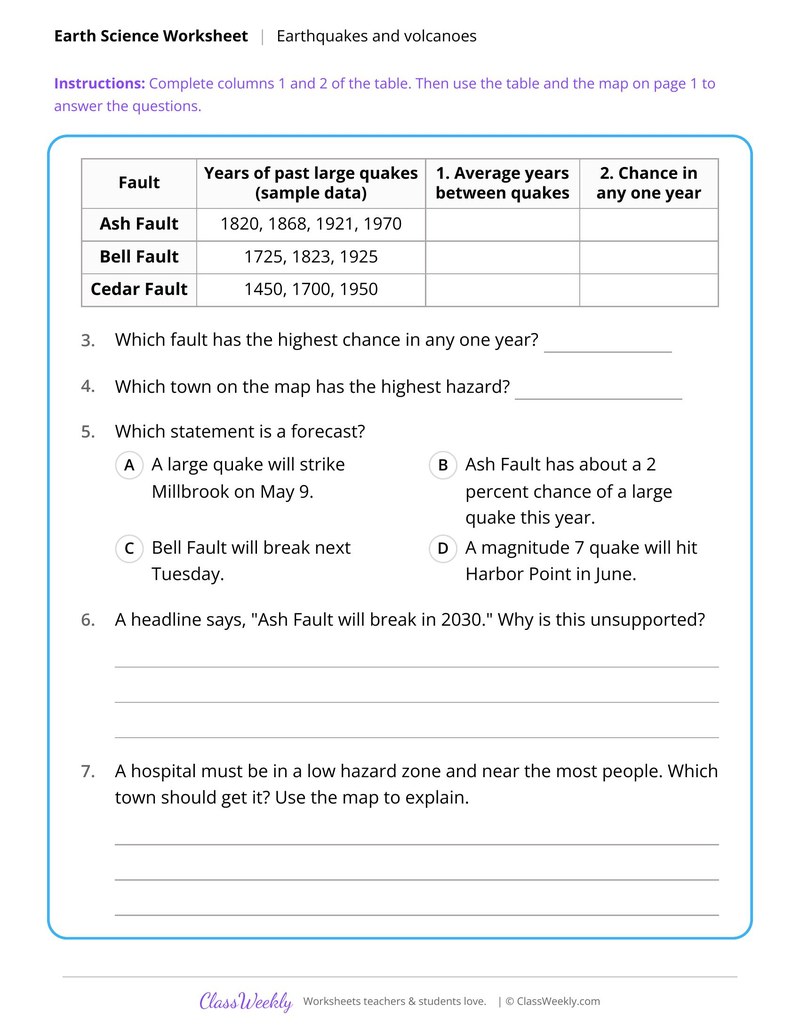
Earthquake Hazard Maps and Probability
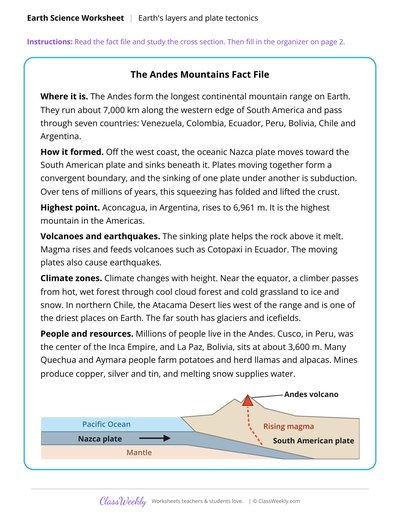
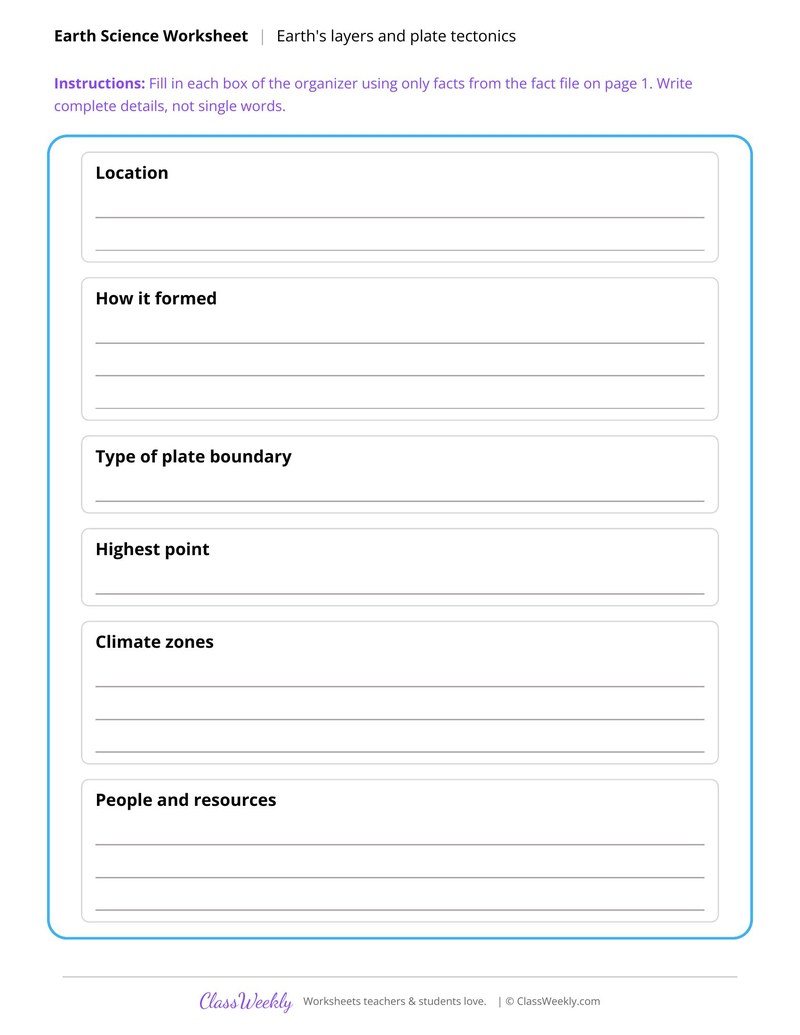
Andes Mountain Range Fact File Organizer
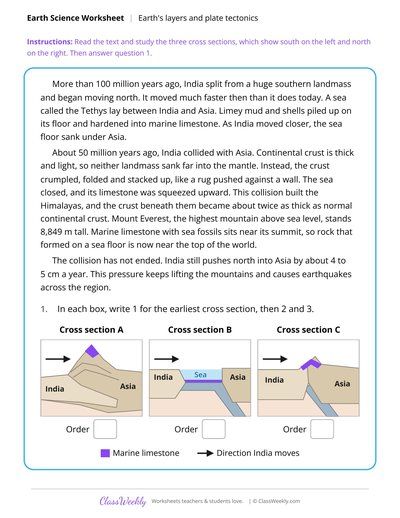
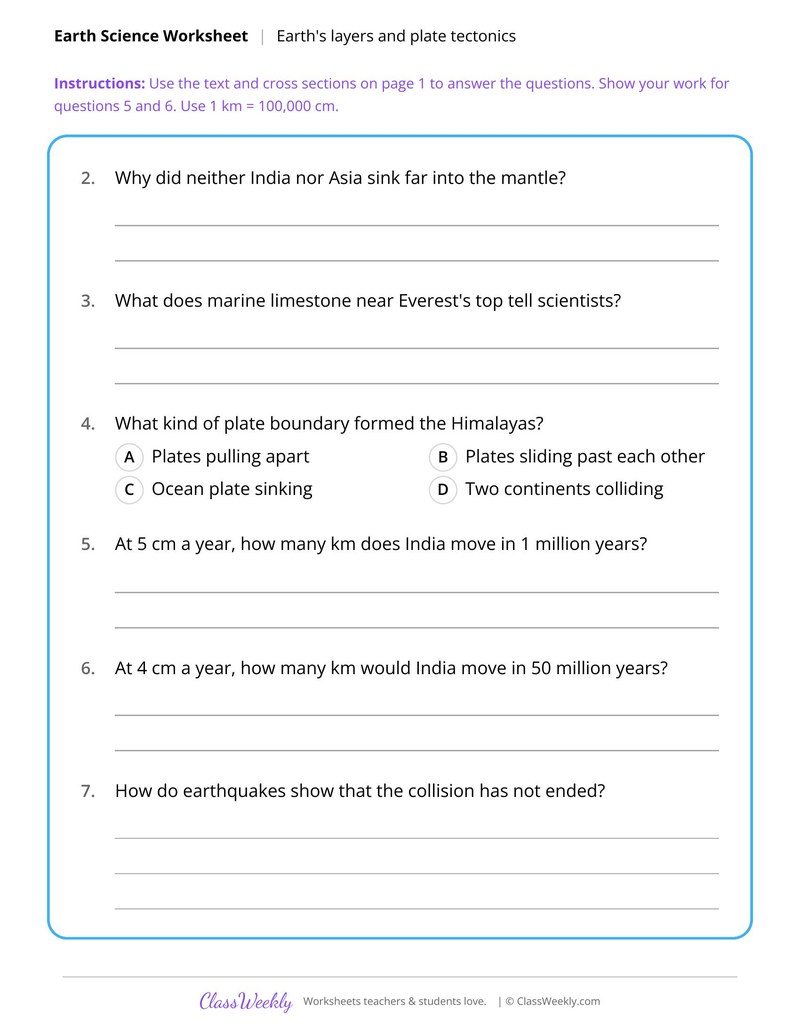
Continental Collision and the Himalayas
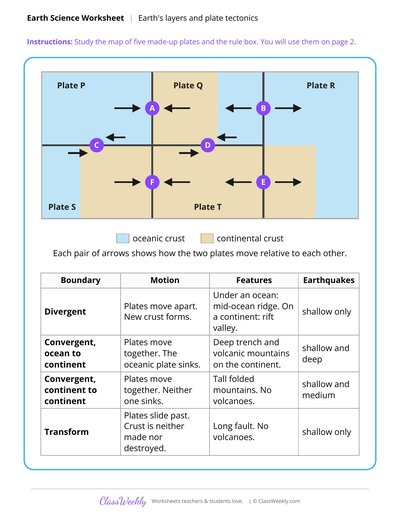
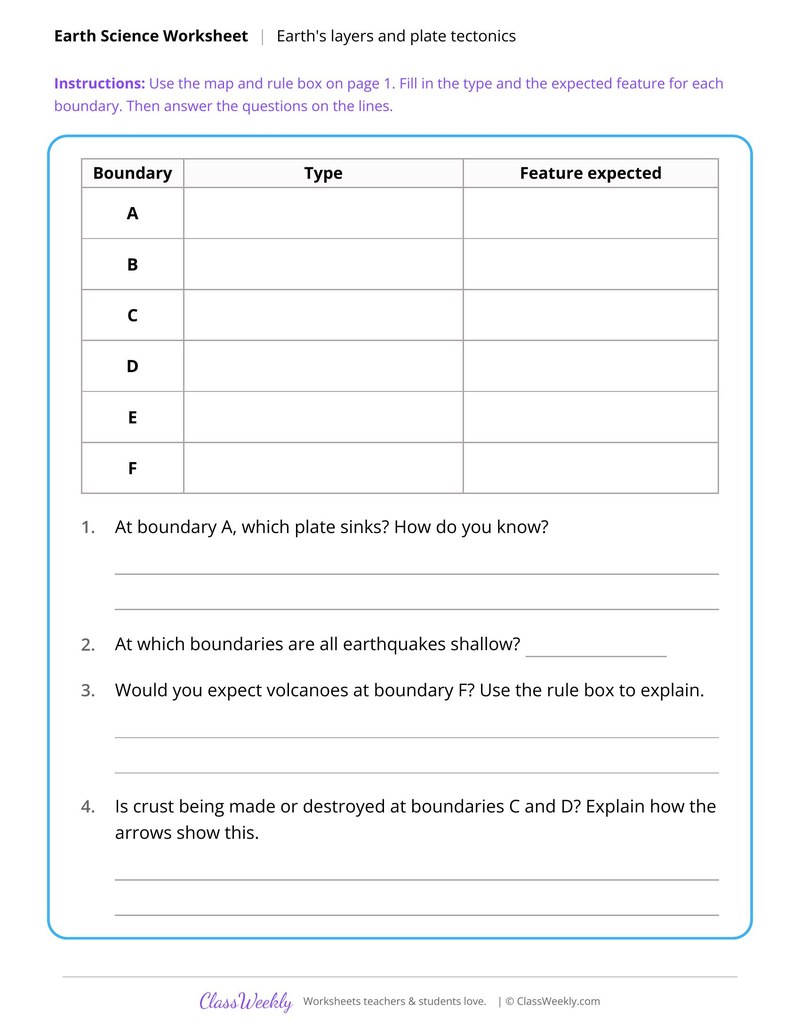
Classify Boundaries From Plate Motion Arrows
Curriculum Links
Next Generation Science Standards
Science · 7th Grade
Find this in the curriculum
Browse the grade, subject, and topic this belongs to.
FAQ
How do I use this weathering and rock layers worksheet?
⌄
Start with Correlate Rock Layers Using Index Fossils to build rock layer vocabulary, then use the arch and river sheets for processes. Each sheet has a passage on page 1 that students can reread.
What does this worksheet teach?
⌄
Match rock layers across sites by index fossils, then find the missing layer and what happened there. The directions on the page read: Read the passage and the fossil key. Draw a straight line from each layer to the layer with the same fossil at the next site, if there is one. An answer key is included.
Can I use this weathering and rock layers worksheet for homeschool or classroom?
⌄
Yes, both. We made it for 7th grade Earth science, and it works the same at home or at school. At home, a student can work through it alone and then go over it with you, which shows quickly what is solid and what needs another look. In class it works as independent practice, homework or a warm-up, and you can print one copy or a full set.
What is an index fossil?
⌄
It is a fossil of a species that lived for a short time but spread over a wide area. Layers that hold the same index fossil formed at about the same time. Correlate Rock Layers Using Index Fossils has students match layers and find one that is missing.
How does a sandstone arch form?
⌄
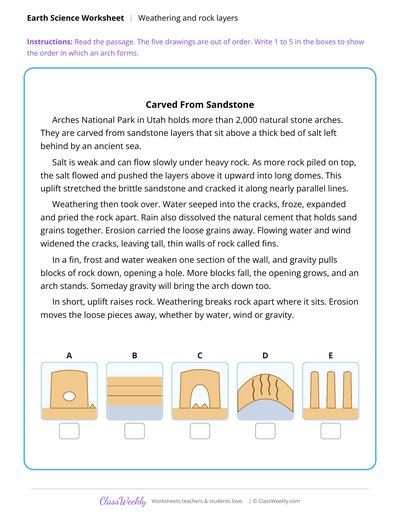
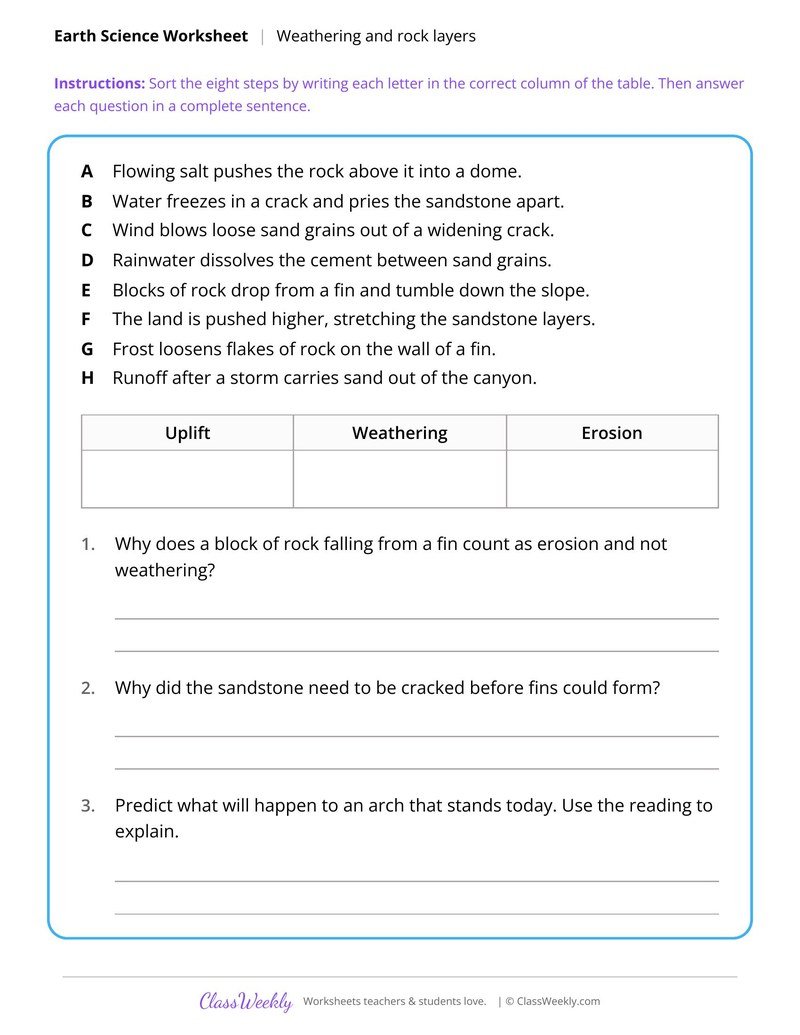
Flowing salt pushes the layers above it into domes and cracks the sandstone. Water, frost and wind then widen the cracks over time. How Sandstone Arches Form has students order five drawings and sort eight steps.
How do rivers erode and deposit material?
⌄
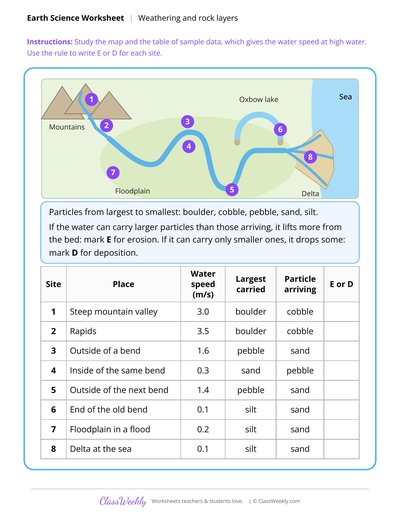
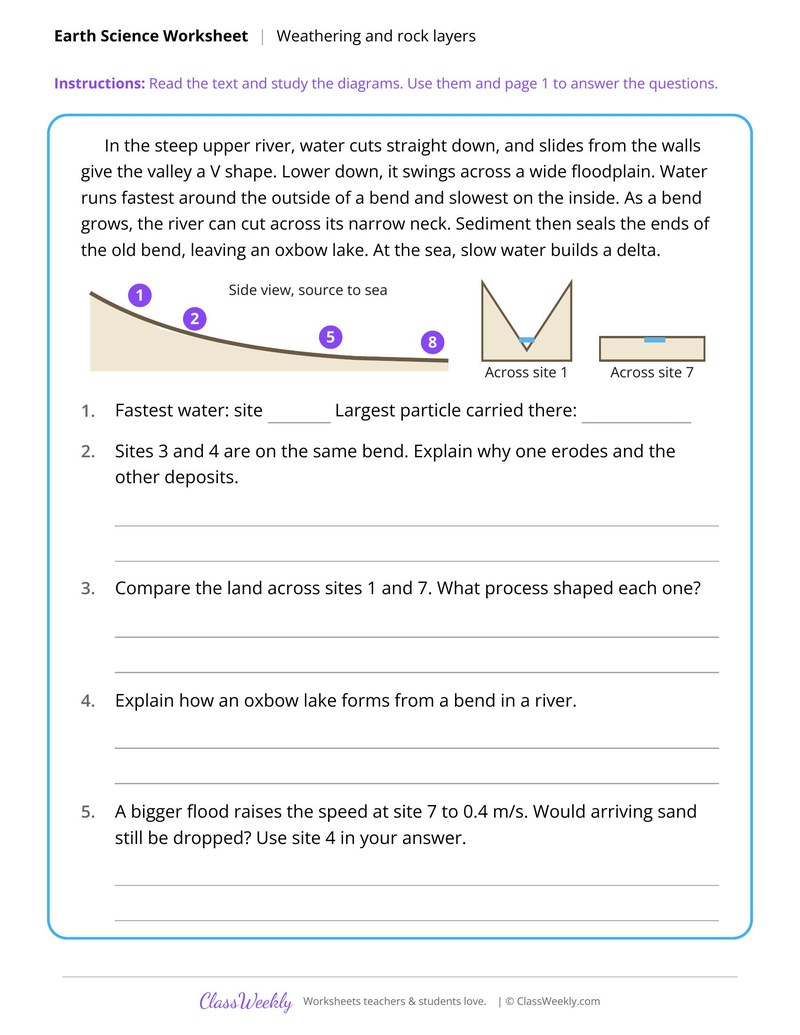
Fast water can carry large particles, so a river lifts more from the bed. Slower water carries only smaller ones and drops some. River Processes From Source to Delta has students mark E or D at eight sites.
Ratings & Reviews
No reviews yet. Be the first to share what you think.
Reviews are for ClassWeekly members.
Make a Request
Spotted something to fix, or want a worksheet we don't have yet? Tell us and we'll make it.
Worksheet Details
| Grade | 7th Grade |
| Subject | Science |
| Topic | Earth Science |
| Standard | MS-ESS1-4 |
| Pages | 2 pages |
| Difficulty | Medium |
What is ClassWeekly?
ClassWeekly offers free worksheets and printable learning resources for kids, from preschool up. All worksheets are aligned to Common Core, NGSS, and C3 Framework standards and designed by educators. Become a member to access the full library and download unlimited PDFs.
How Sandstone Arches Form
River Processes From Source to Delta
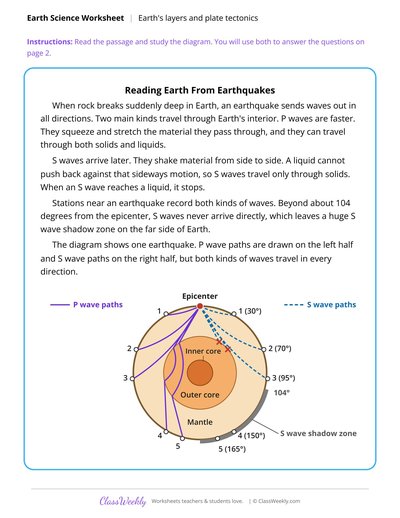
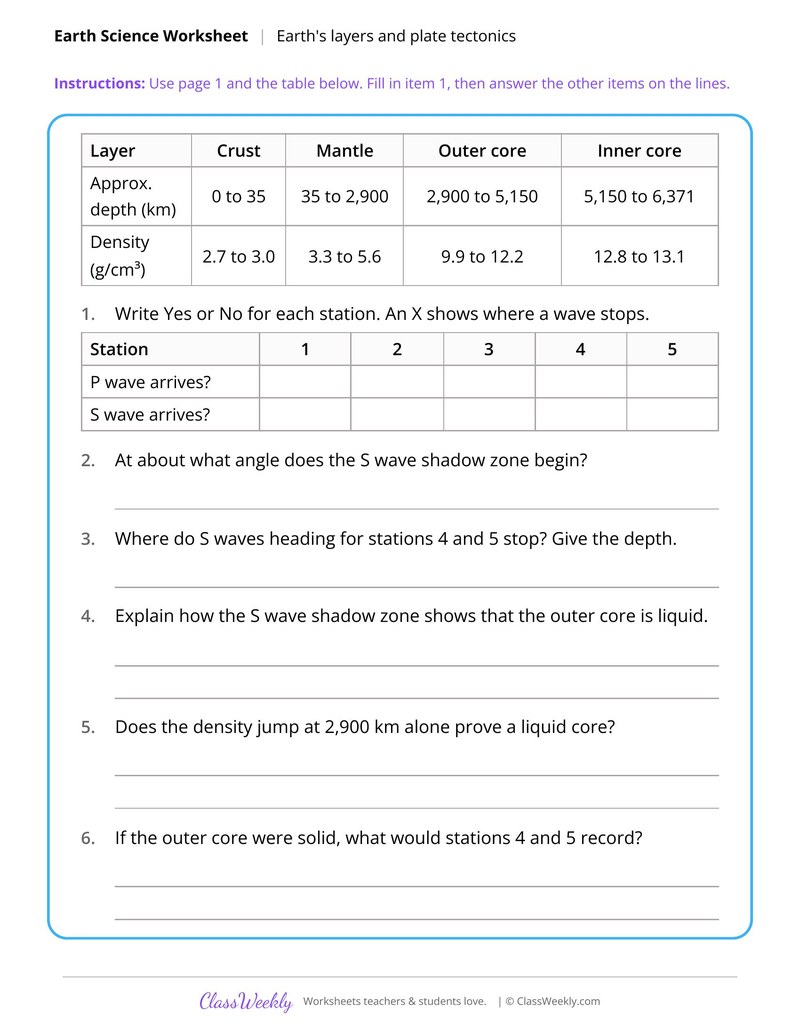
Seismic Waves Reveal Earth's Interior
Seafloor Age and Magnetic Stripe Evidence
Earthquake Hazard Maps and Probability
Andes Mountain Range Fact File Organizer
Continental Collision and the Himalayas
Classify Boundaries From Plate Motion Arrows