Forces on a Basketball on Earth and the Moon
Written by Adi Ackerman, Head Teacher
"Forces on a Basketball on Earth and the Moon" is written for 7th Grade (Ages 12-13), and it covers NGSS MS-PS2-2. A 6th grader who is already steady on forces and motion can use it too, and an older student can use it as a short review.
2 pages in this set
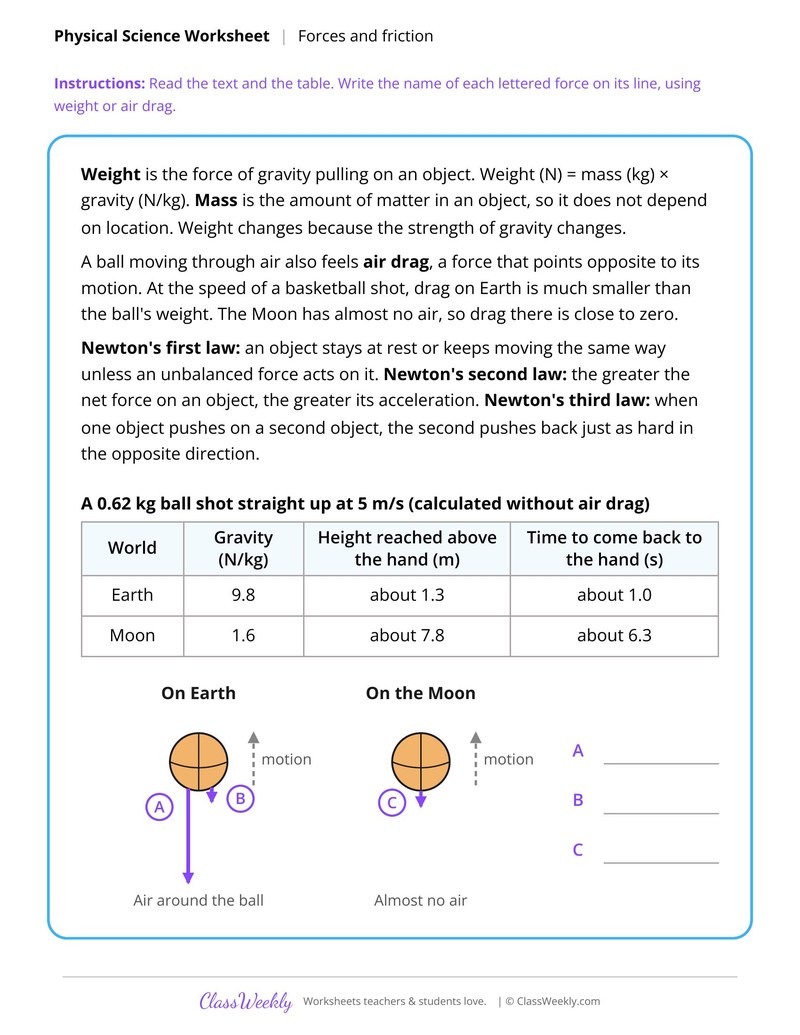
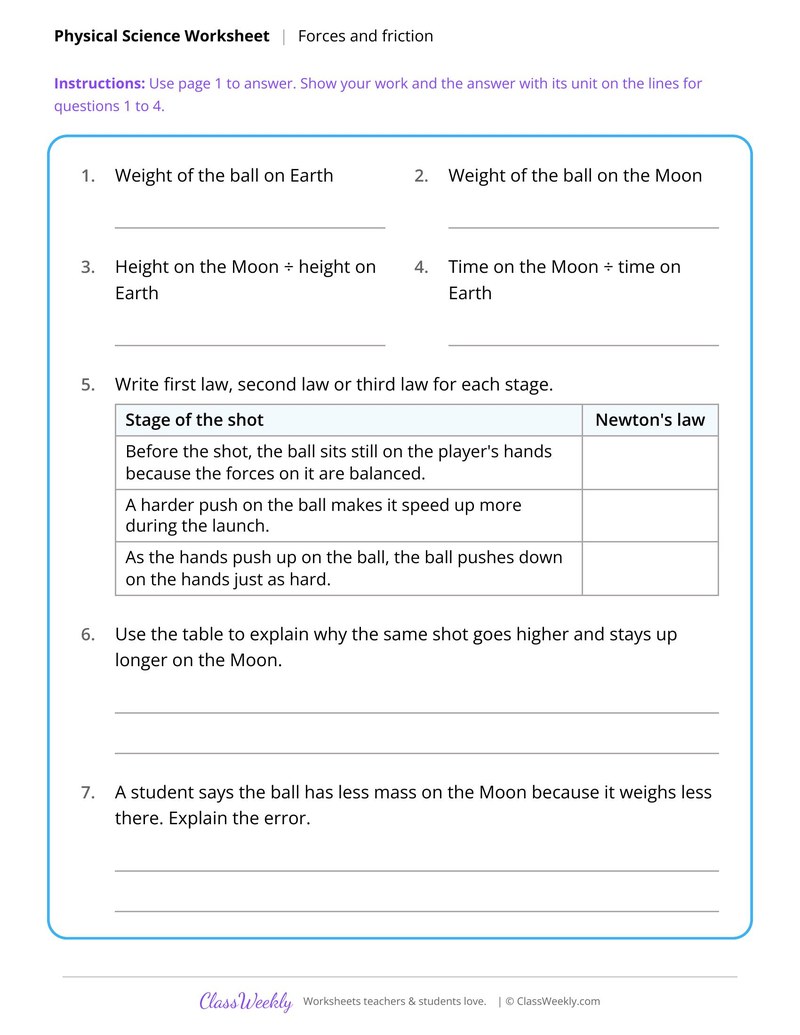
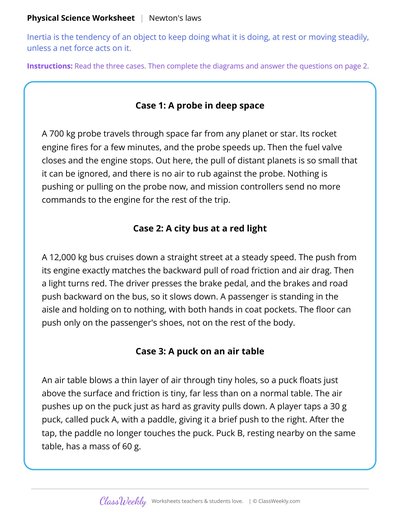
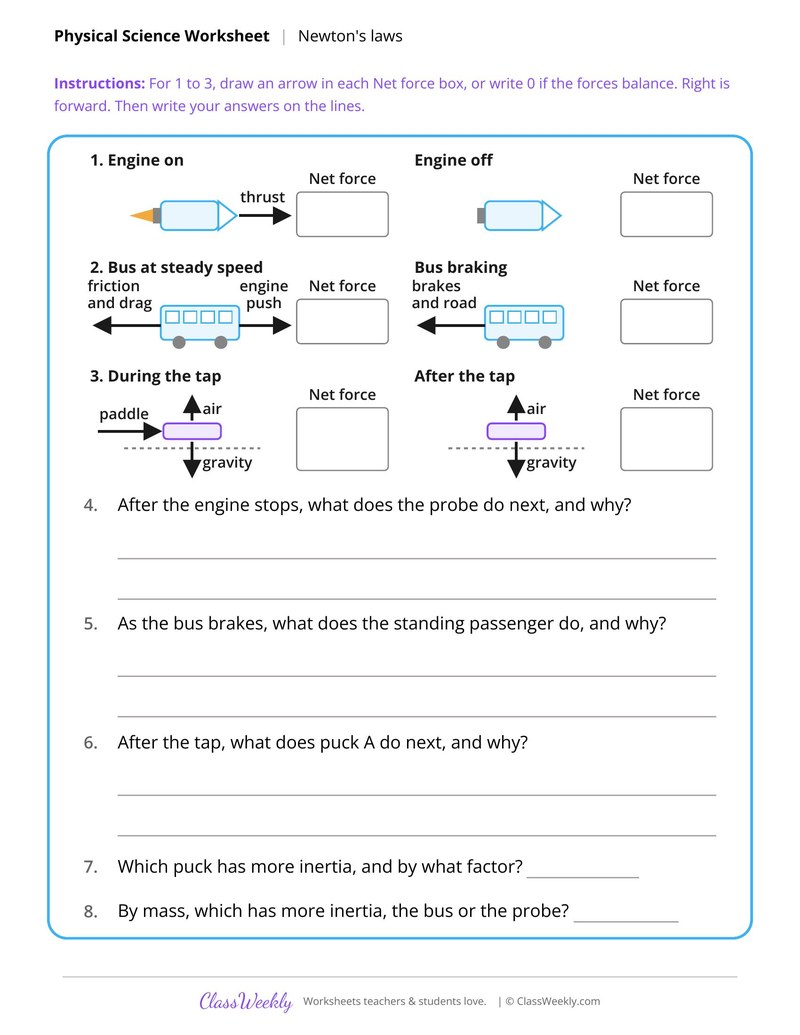
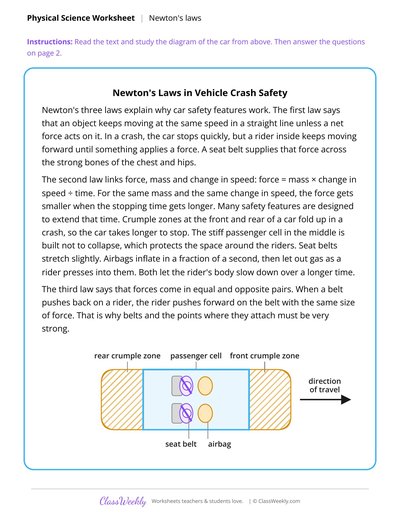
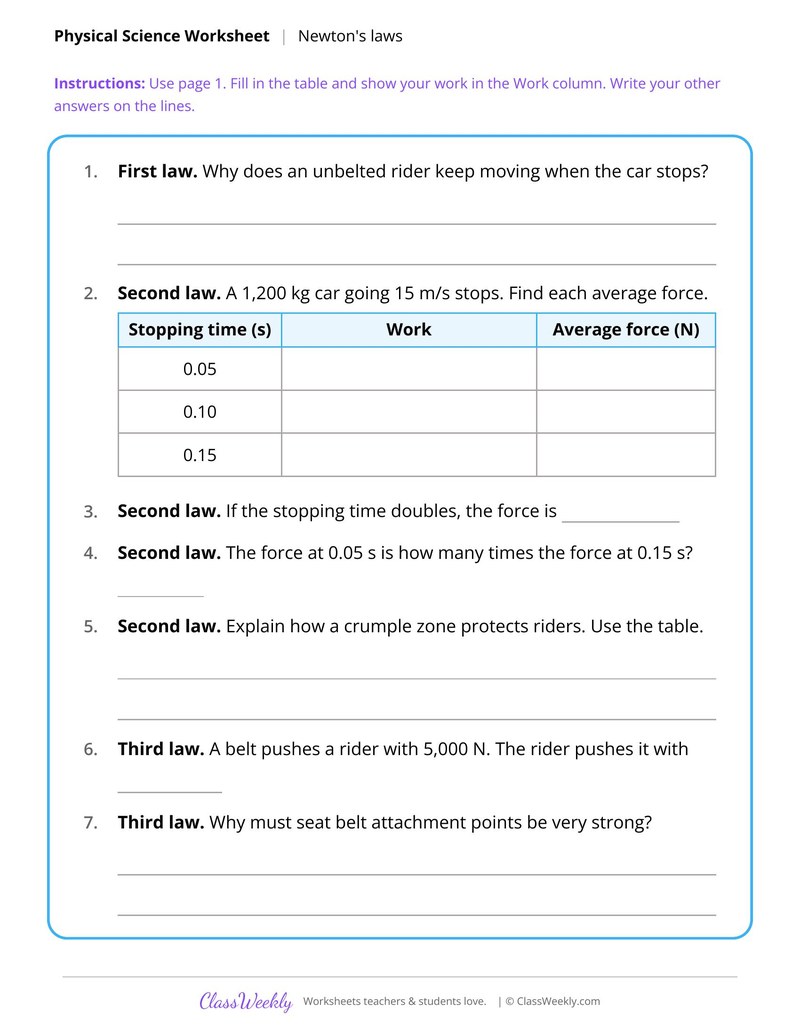
7th grade science worksheet: compare a basketball's weight and shot on Earth and the Moon and match shot stages to Newton's laws. Answer key included. Part of our forces and friction collection. Aligned to NGSS standards.
How do I use this worksheet?
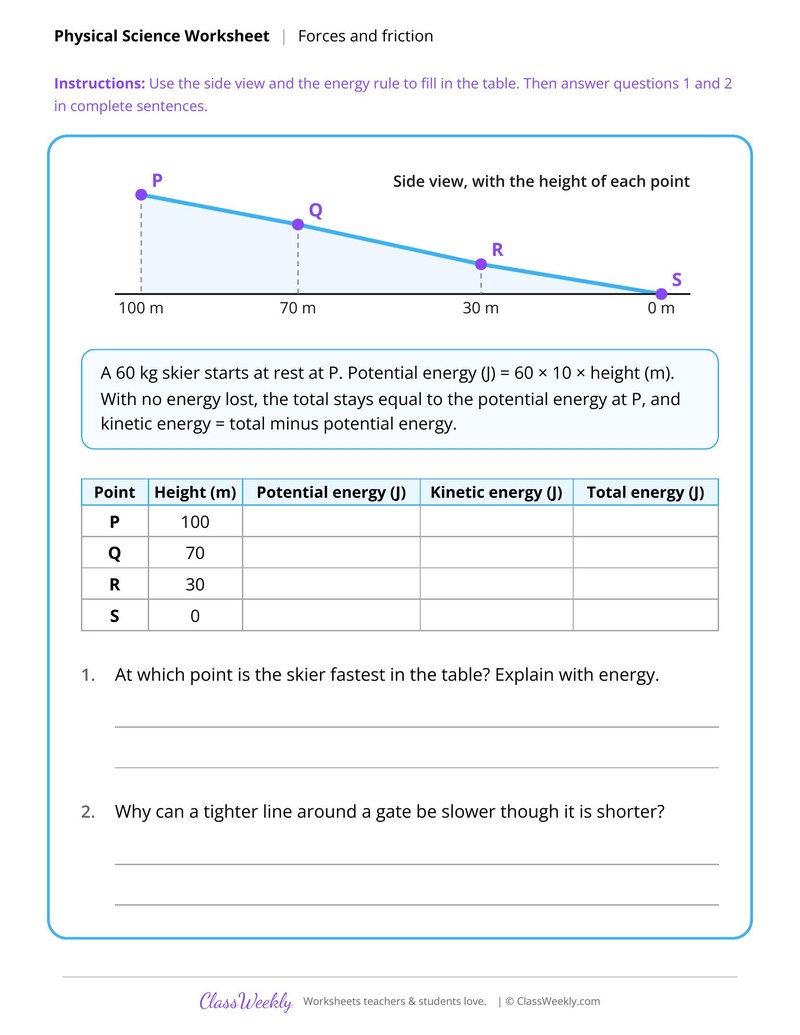
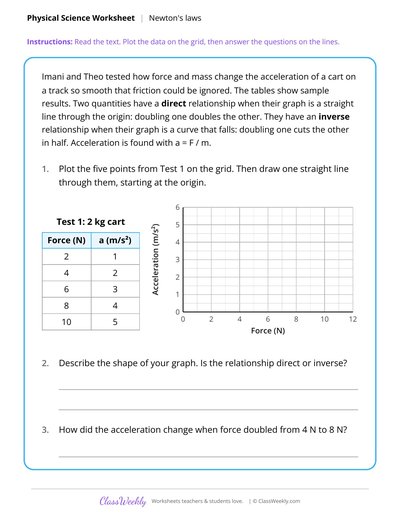
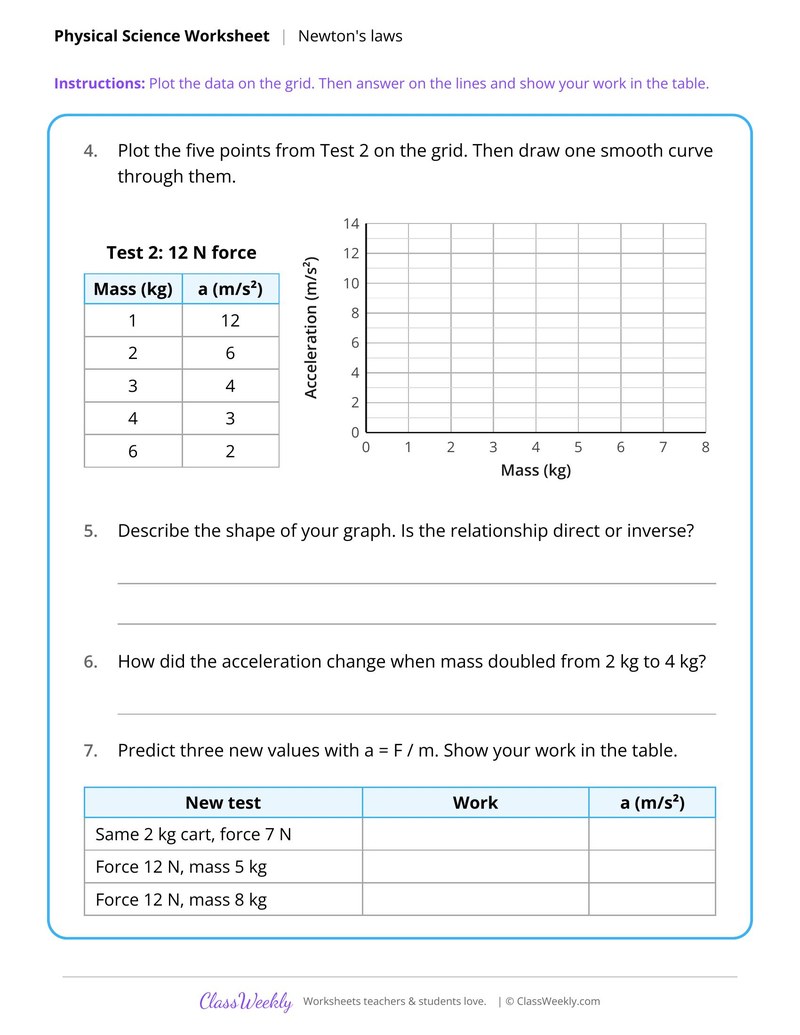
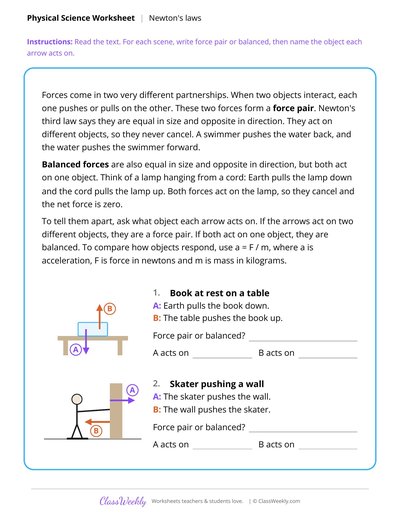
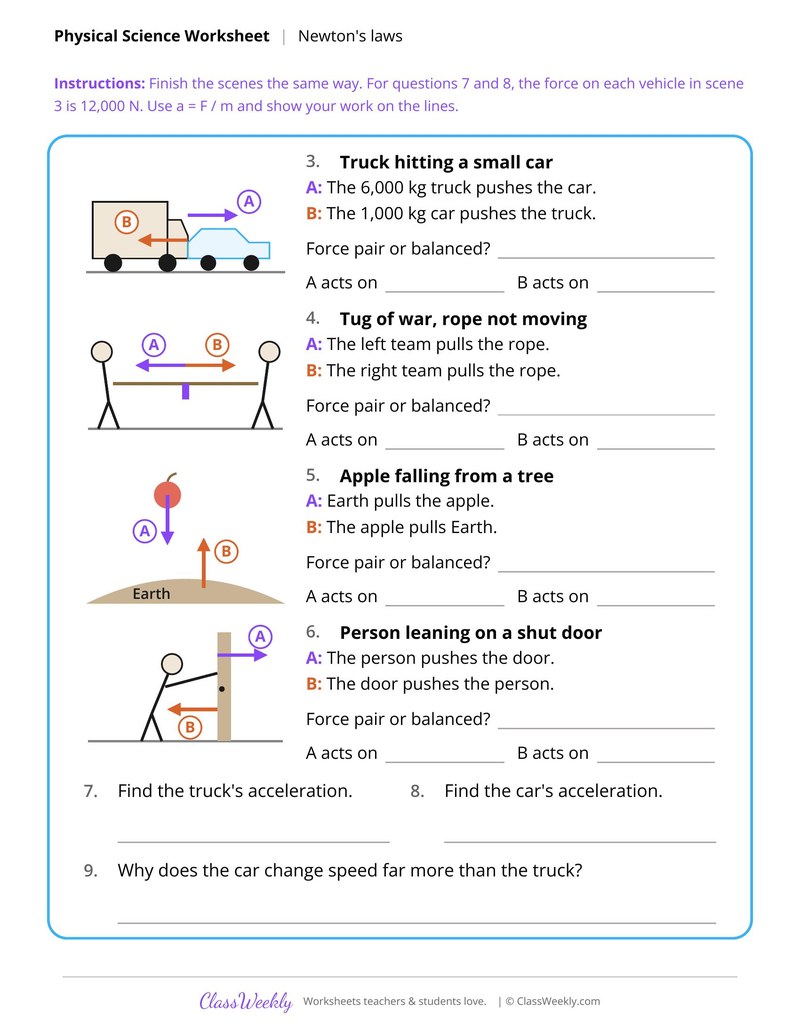
Use the basketball sheet when teaching weight and gravity, and the slalom sheet when students need to practice net force arrows and energy tables.
What students will practice
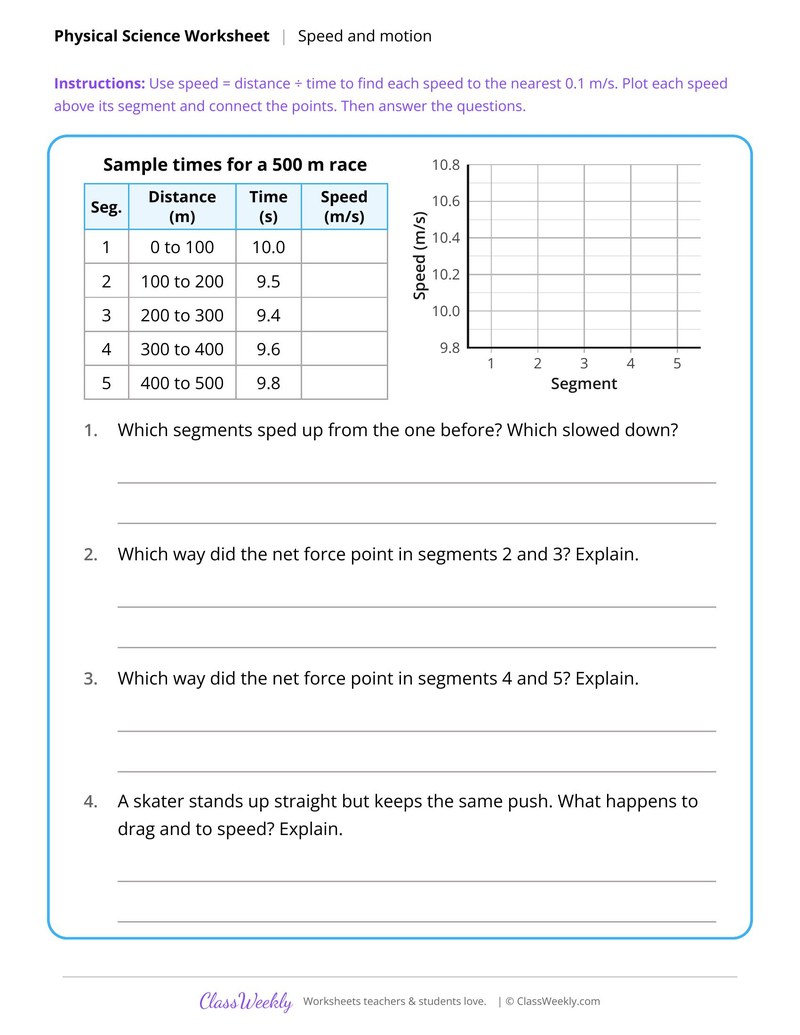
- Students will tell mass from weight and calculate a ball's weight on Earth and on the Moon.
- Students will compare the height and time of a shot on the Moon with those on Earth.
- Students will match each stage of the shot to Newton's first, second or third law.
Curriculum Links
Next Generation Science Standards
Science · 7th Grade
Find this in the curriculum
Browse the grade, subject, and topic this belongs to.
FAQ
How do I use this forces and friction worksheet?
⌄
Use the basketball sheet when teaching weight and gravity, and the slalom sheet when students need to practice net force arrows and energy tables.
What does this worksheet teach?
⌄
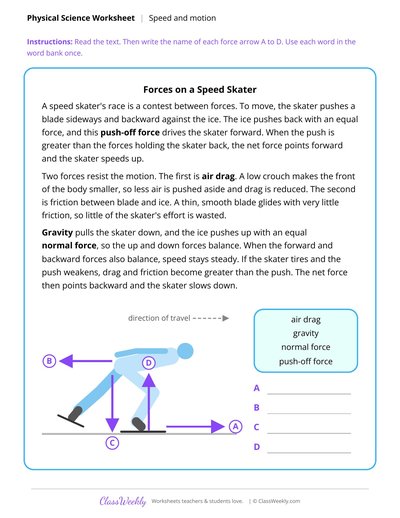
Compare a basketball's weight and shot on Earth and the Moon and match shot stages to Newton's laws. The directions on the page read: Read the text and the table. Write the name of each lettered force on its line, using weight or air drag. An answer key is included.
Can I use this forces and friction worksheet for homeschool or classroom?
⌄
Yes, both. We made it for 7th grade forces and motion, and it works the same at home or at school. At home, a student can work through it alone and then go over it with you, which shows quickly what is solid and what needs another look. In class it works as independent practice, homework or a warm-up, and you can print one copy or a full set.
What is the difference between mass and weight?
⌄
Mass is the amount of matter in an object and does not depend on location. Weight is the force of gravity, found by mass times gravity in N/kg, so it changes on the Moon.
What does air drag do?
⌄
Air drag is a force that points opposite to the motion of an object moving through air. The Moon has almost no air, so drag there is close to zero.
How do you find the net force on a skier?
⌄
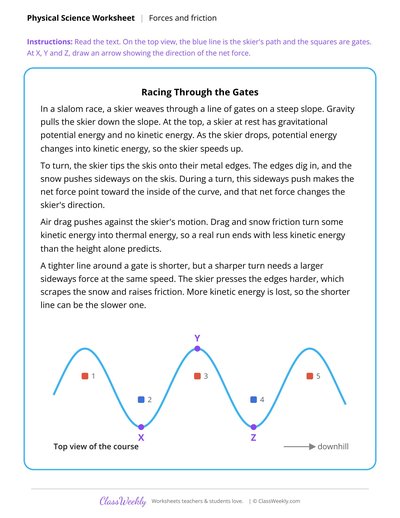
Add the forces as arrows, taking direction into account. In the slalom sheet, gravity pulls down the slope and the snow pushes back on the skis' edges, which turns the skier.
Ratings & Reviews
No reviews yet. Be the first to share what you think.
Reviews are for ClassWeekly members.
Make a Request
Spotted something to fix, or want a worksheet we don't have yet? Tell us and we'll make it.
Worksheet Details
| Grade | 7th Grade |
| Subject | Science |
| Topic | Forces and Motion |
| Standard | MS-PS2-2 |
| Pages | 2 pages |
| Difficulty | Medium |
What is ClassWeekly?
ClassWeekly offers free worksheets and printable learning resources for kids, from preschool up. All worksheets are aligned to Common Core, NGSS, and C3 Framework standards and designed by educators. Become a member to access the full library and download unlimited PDFs.