Inertia Case Studies in Motion
Written by Adi Ackerman, Head Teacher
"Inertia Case Studies in Motion" is written for 7th Grade (Ages 12-13). A 6th grader who is already steady on forces and motion can use it too, and an older student can use it as a short review.
2 pages in this set
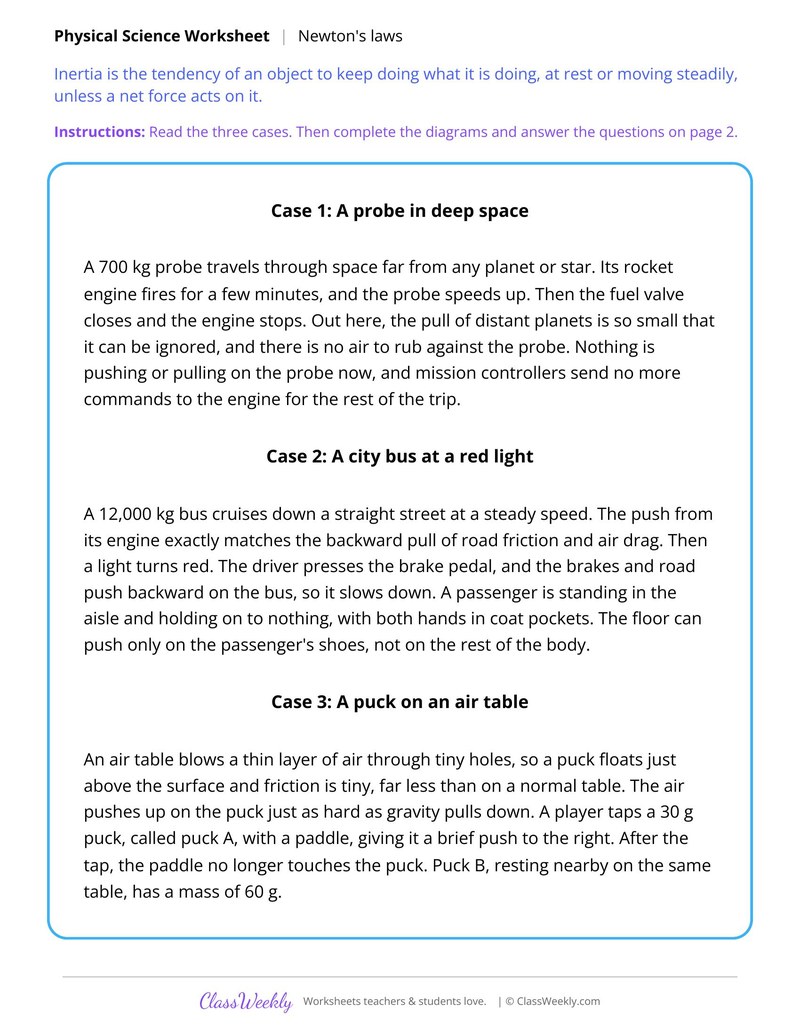
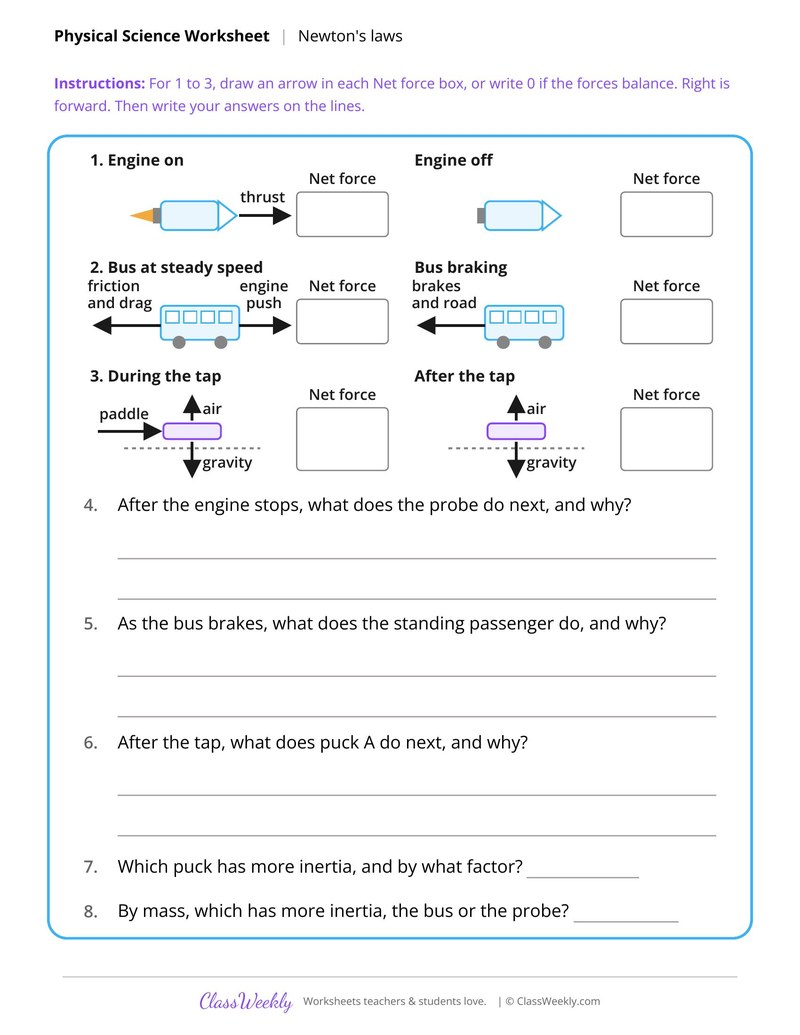
7th grade science worksheet: apply inertia to a deep space probe and a bus by drawing net force arrows for each case. Answer key included. Part of our Newton's laws forces and motion collection.
How do I use this worksheet?
Teach each law with its sheet, then use Force Pairs Versus Balanced Forces to clear up the most common confusion. Use the crash sheet as a capstone that uses all three laws.
What students will practice
- Students will explain inertia using a probe in deep space with its engine off.
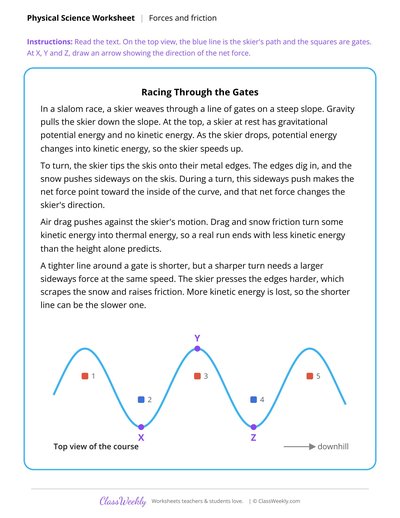
- Students will draw net force arrows, or write 0, for objects speeding up, slowing and moving steadily.
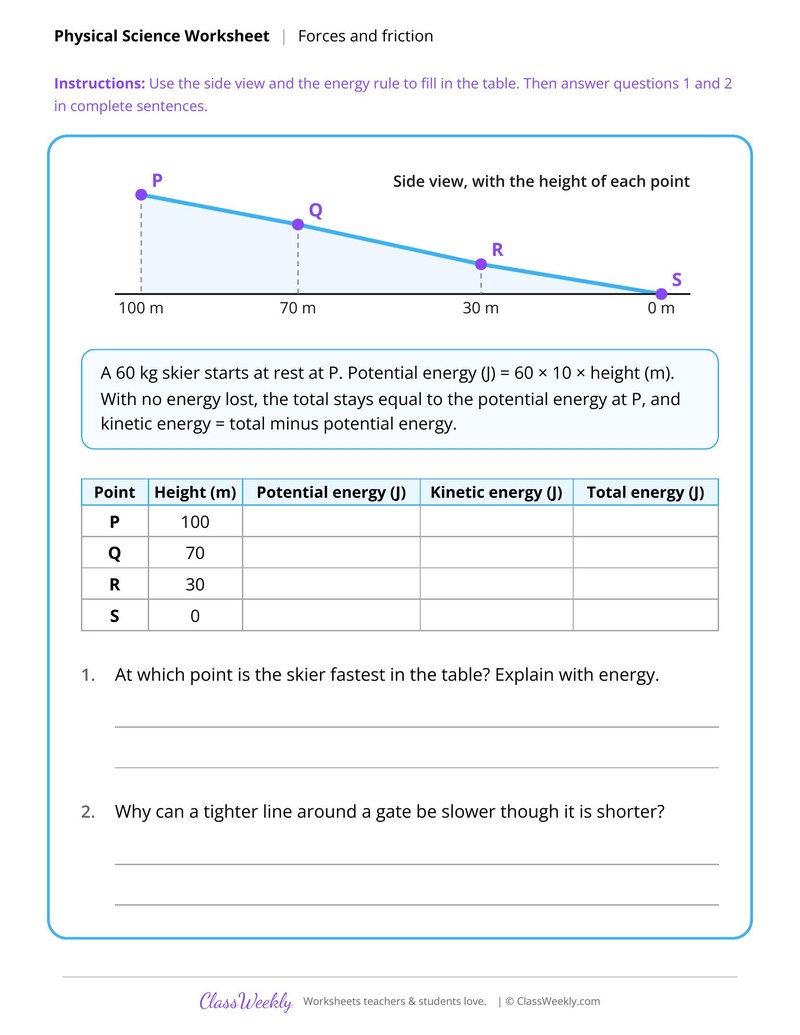
- Students will use balanced and unbalanced forces to explain why motion does or does not change.
Curriculum Links
Find this in the curriculum
Browse the grade, subject, and topic this belongs to.
FAQ
How do I use this Newton's laws worksheet?
⌄
Teach each law with its sheet, then use Force Pairs Versus Balanced Forces to clear up the most common confusion. Use the crash sheet as a capstone that uses all three laws.
What does this worksheet teach?
⌄
Apply inertia to a deep space probe and a bus by drawing net force arrows for each case. Inertia is the tendency of an object to keep doing what it is doing, at rest or moving steadily, unless a net force acts on it. The directions on the page read: Read the three cases. Then complete the diagrams and answer the questions on page 2. An answer key is included.
Can I use this Newton's laws worksheet for homeschool or classroom?
⌄
Yes, both. We made it for 7th grade forces and motion, and it works the same at home or at school. At home, a student can work through it alone and then go over it with you, which shows quickly what is solid and what needs another look. In class it works as independent practice, homework or a warm-up, and you can print one copy or a full set.
What is Newton's first law?
⌄
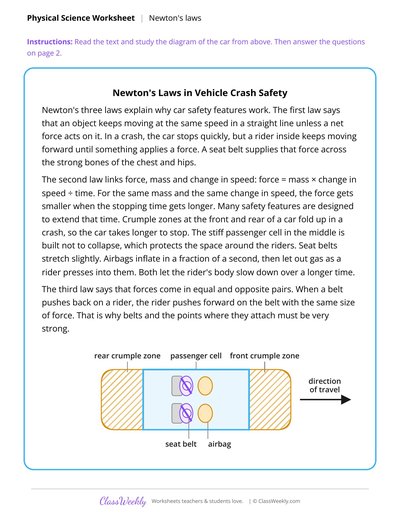
An object keeps moving at the same speed in a straight line, or stays at rest, unless a net force acts on it. In a crash, an unbelted rider keeps moving until something applies a force.
What is Newton's second law?
⌄
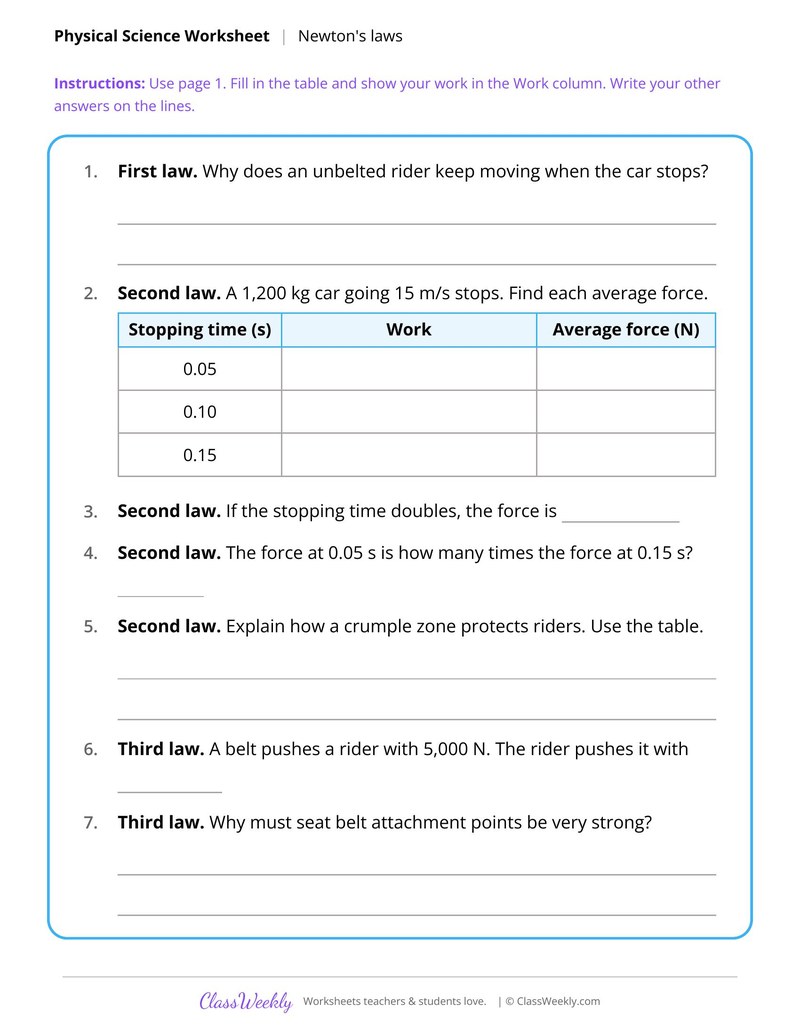
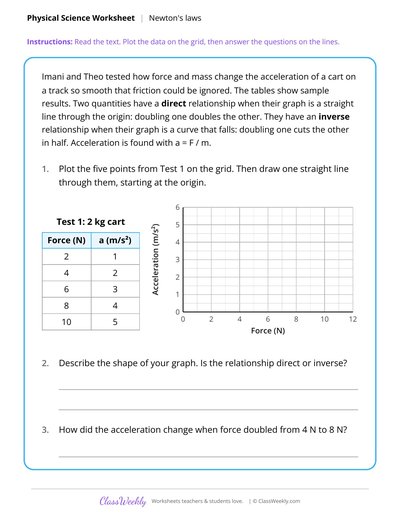
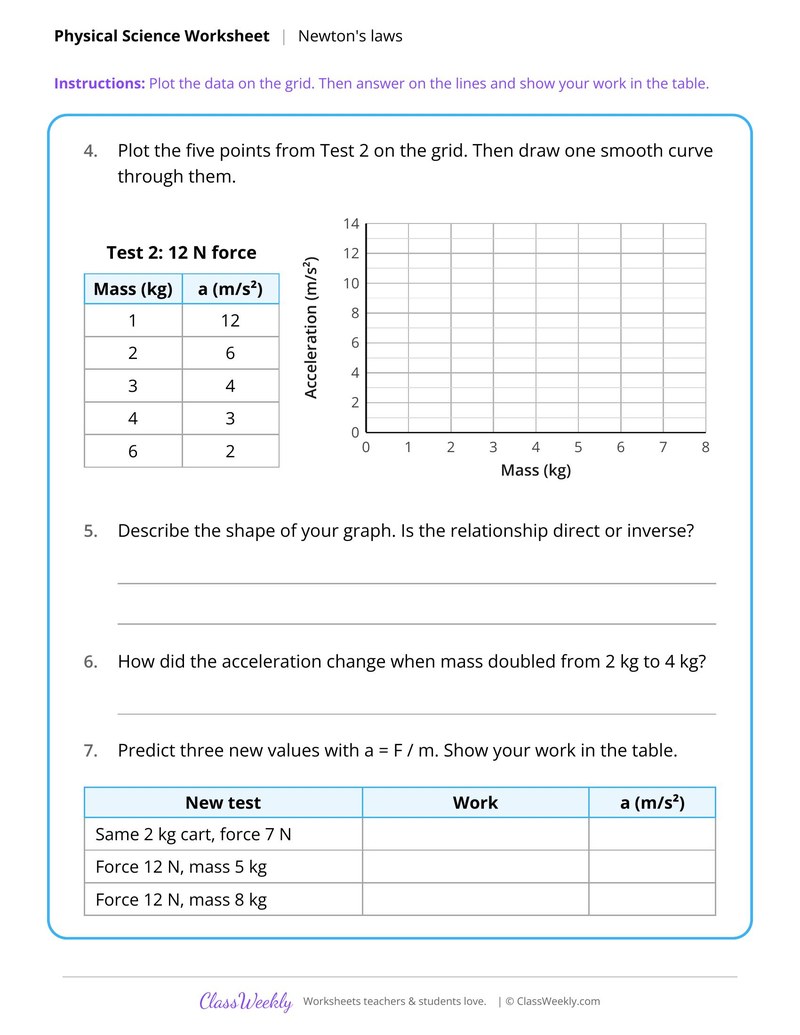
The acceleration of an object depends on the net force and the mass, a = F / m. A bigger force gives more acceleration, and a bigger mass gives less.
What is Newton's third law?
⌄
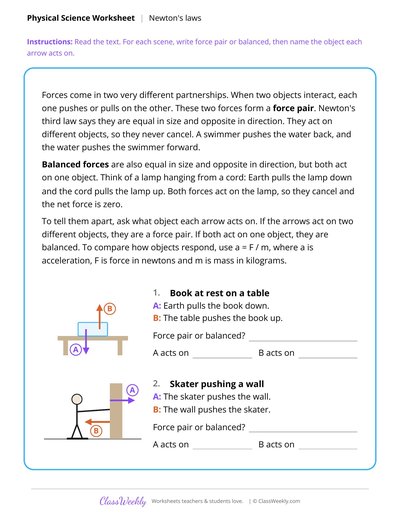
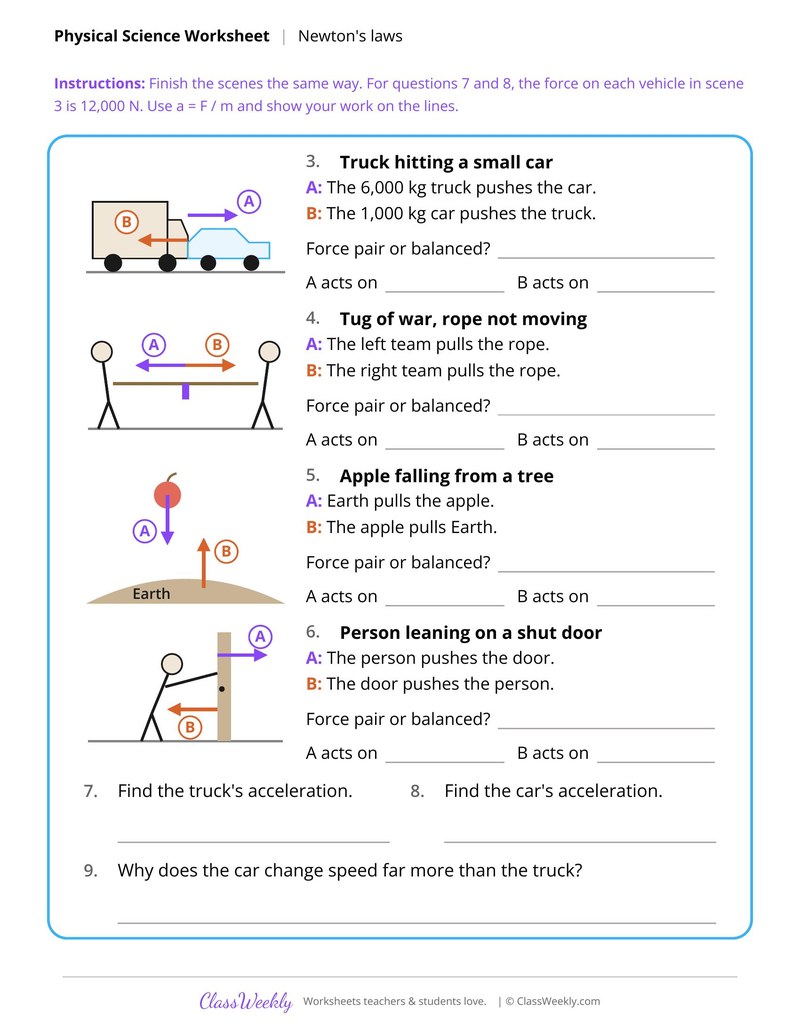
When two objects interact, they push on each other with forces equal in size and opposite in direction. These forces act on different objects, so they never cancel.
Ratings & Reviews
No reviews yet. Be the first to share what you think.
Reviews are for ClassWeekly members.
Make a Request
Spotted something to fix, or want a worksheet we don't have yet? Tell us and we'll make it.
Worksheet Details
| Grade | 7th Grade |
| Subject | Science |
| Topic | Forces and Motion |
| Pages | 2 pages |
| Difficulty | Medium |
What is ClassWeekly?
ClassWeekly offers free worksheets and printable learning resources for kids, from preschool up. All worksheets are aligned to Common Core, NGSS, and C3 Framework standards and designed by educators. Become a member to access the full library and download unlimited PDFs.