Lab Safety Agreement With Reasons
Written by Adi Ackerman, Head Teacher
"Lab Safety Agreement With Reasons" is written for 7th Grade (Ages 12-13). A 6th grader who is already steady on scientific method can use it too, and an older student can use it as a short review.
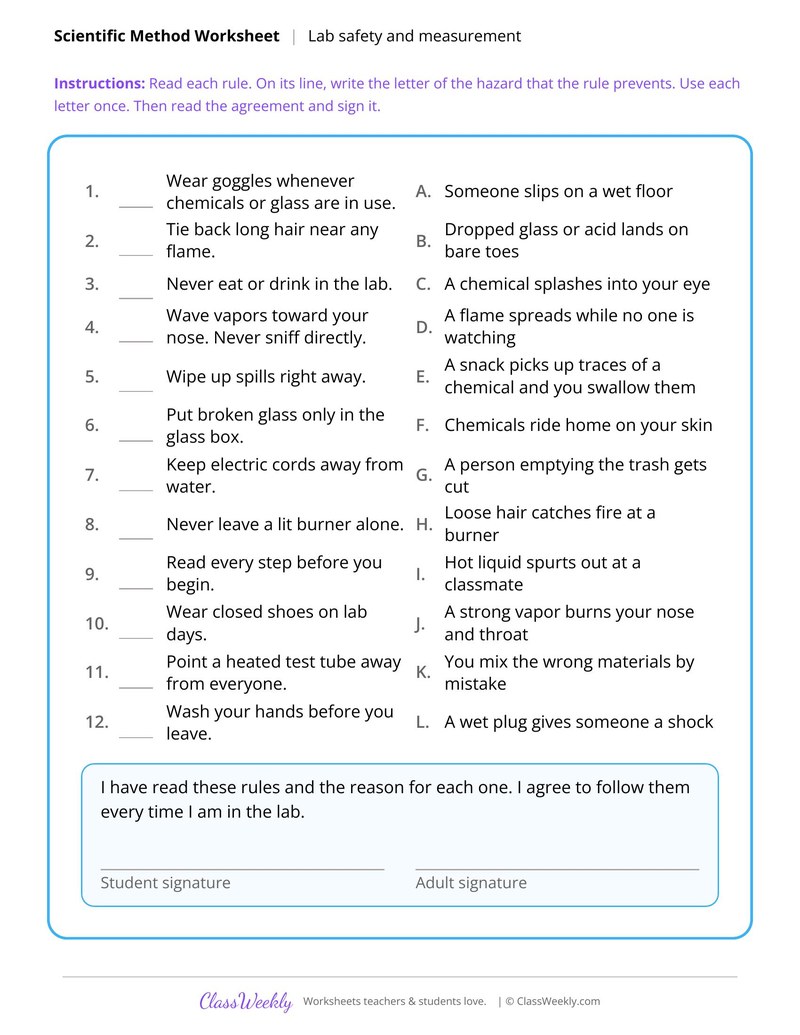
7th grade science worksheet: match lab safety rules to the hazards they prevent, then read and sign a safety agreement. Answer key included. Part of our lab safety and measurement scientific method collection.
How do I use this worksheet?
Use the three incident report sheets as a set near the start of a lab unit, and give Lab Safety Agreement With Reasons on the first day. The one page sheets work well as warm-ups or quick assessments.
What students will practice
- Students will match each lab rule to the hazard it prevents, using each letter once.
- Students will connect rules such as wearing goggles and tying back hair to the harm they prevent.
- Students will read a lab safety agreement and sign it.
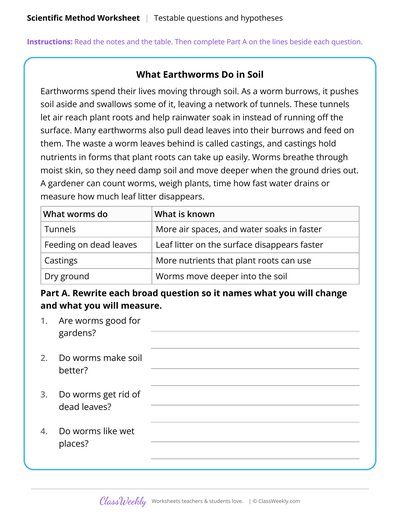
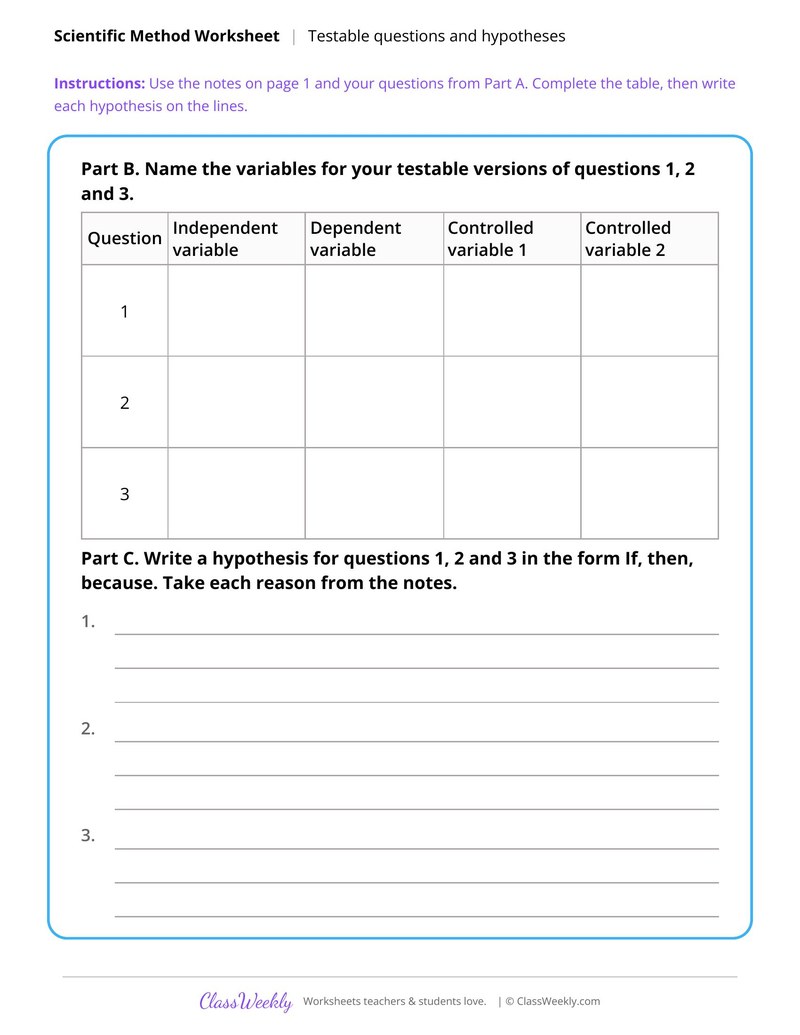
Turn a Question Into a Testable Hypothesis
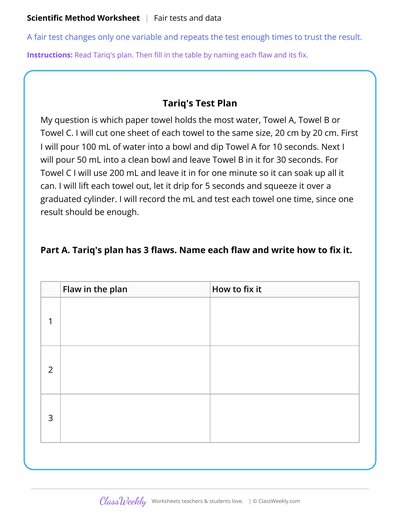
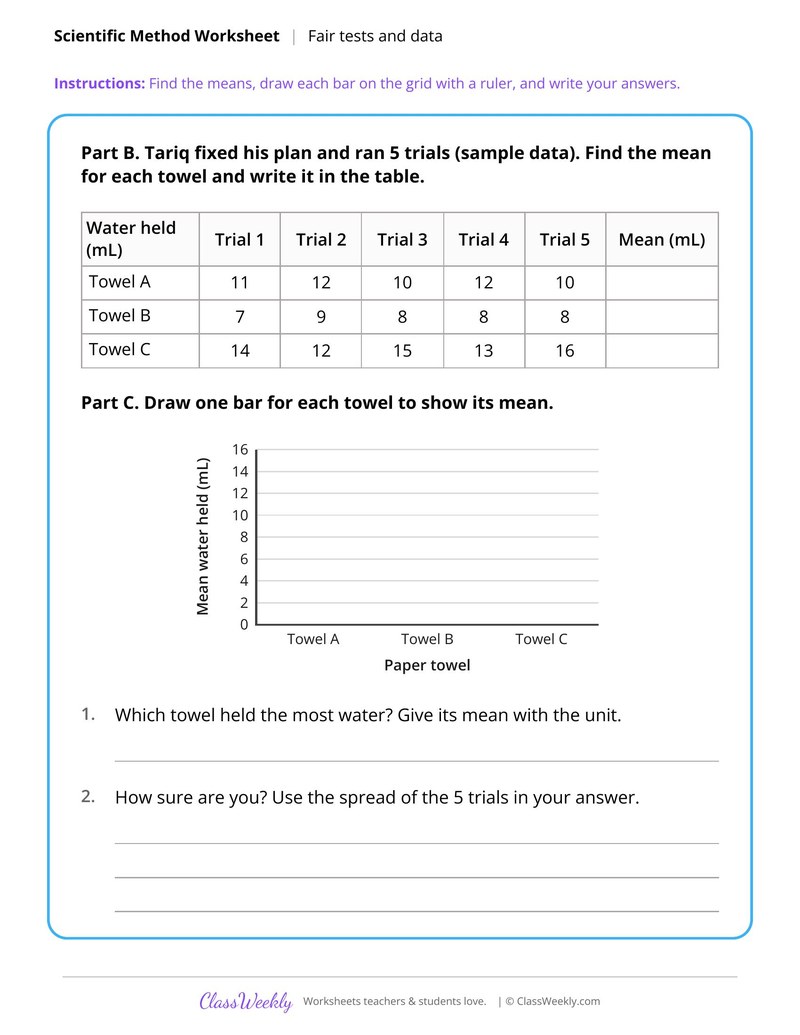
Plan a Fair Test and Analyze Its Data
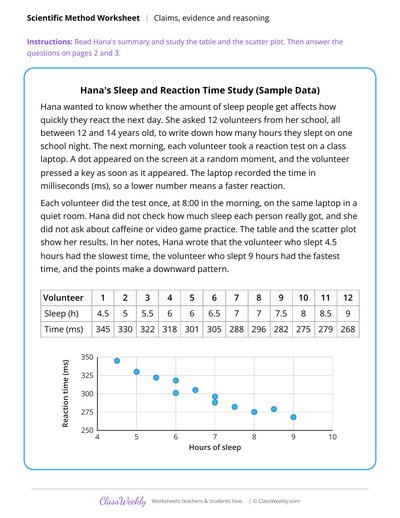
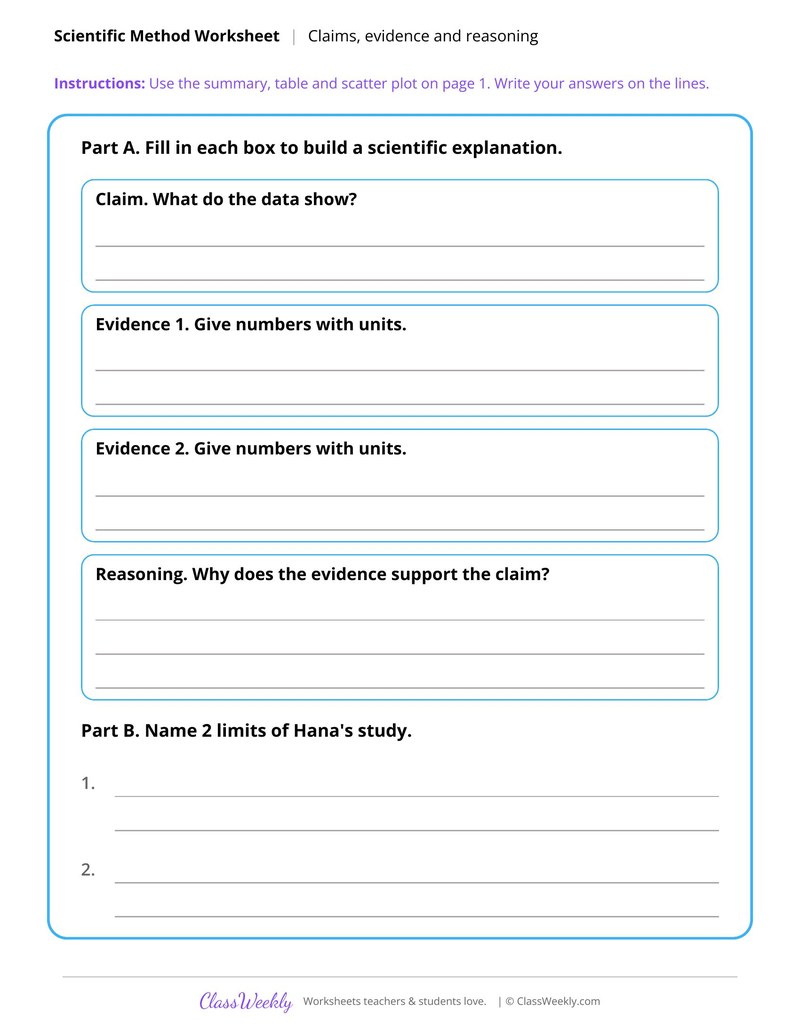
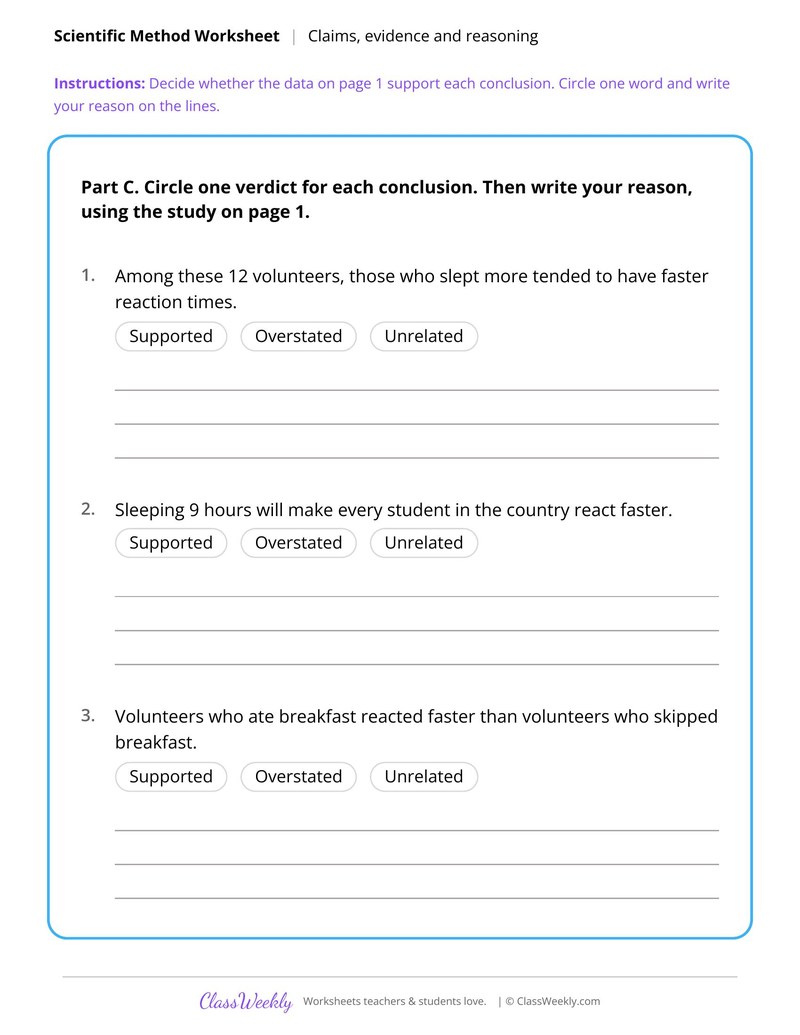
Draw a Conclusion From Claim and Evidence
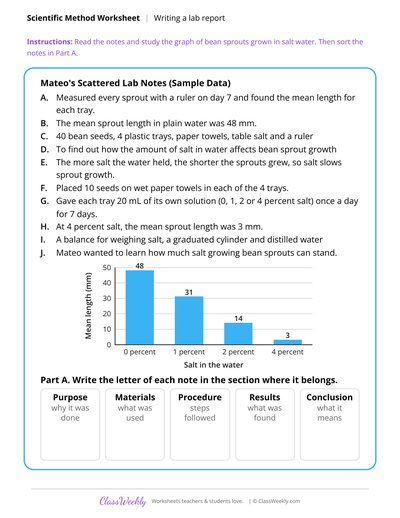
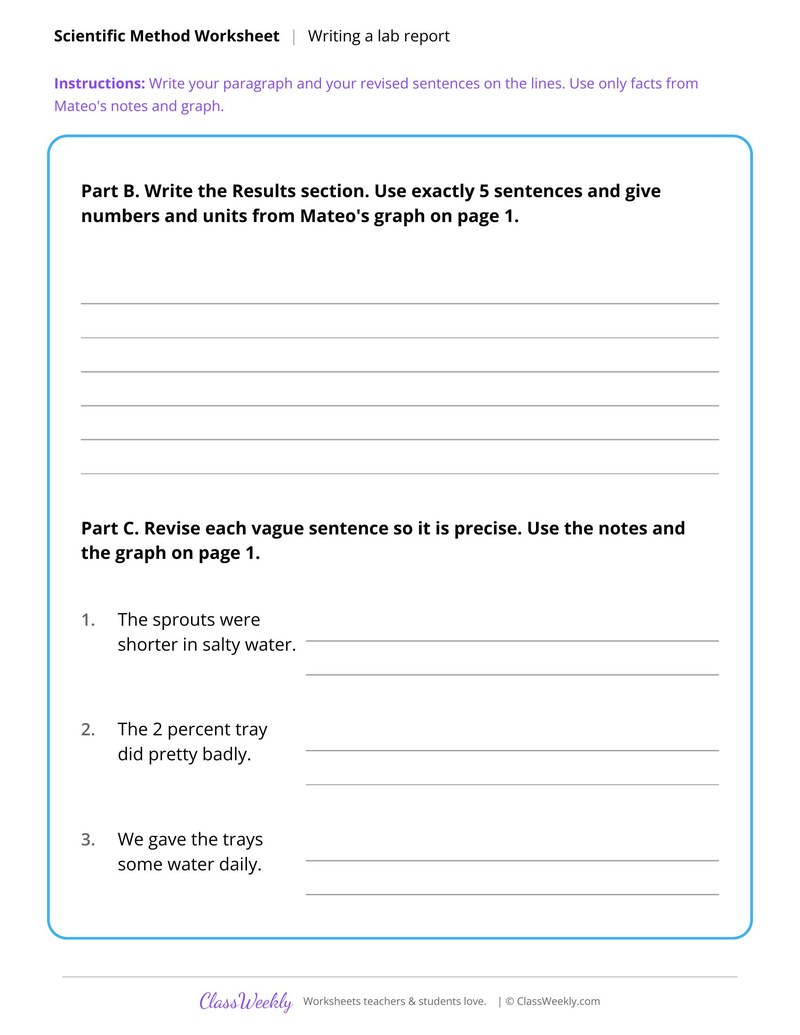
Write a Lab Report Results Section
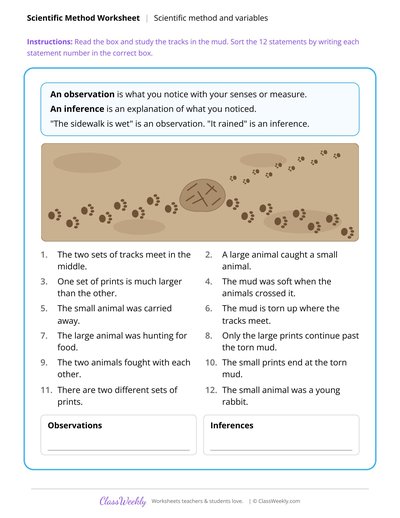
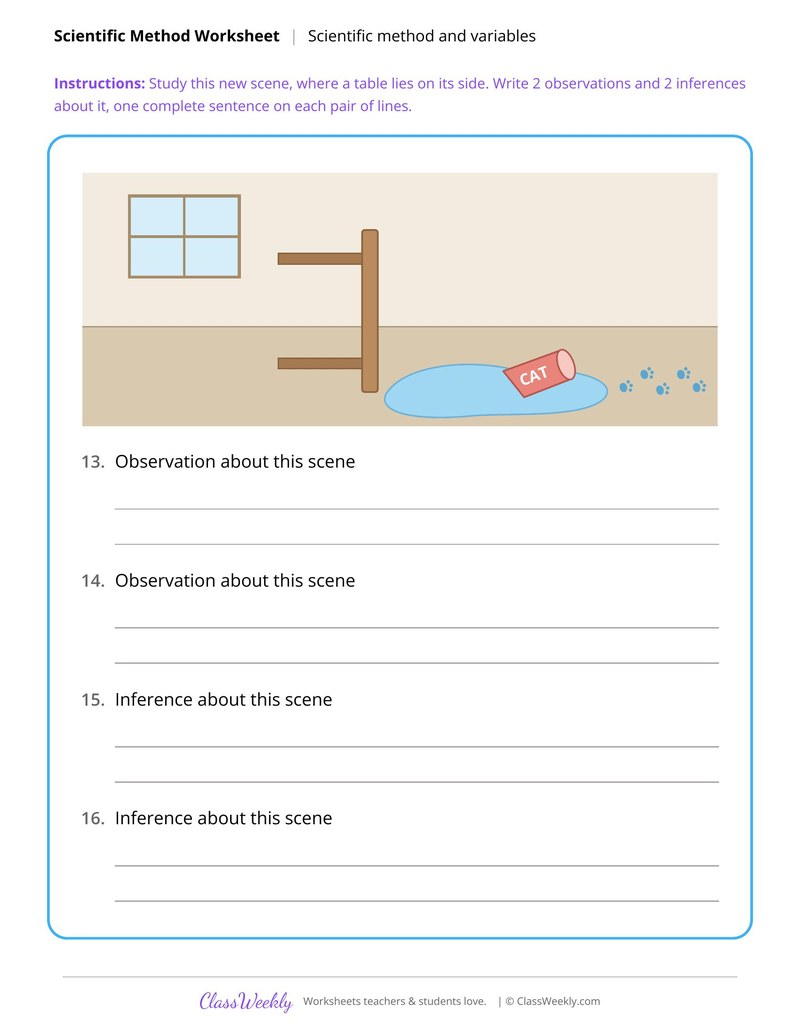
Separate Observations From Inferences
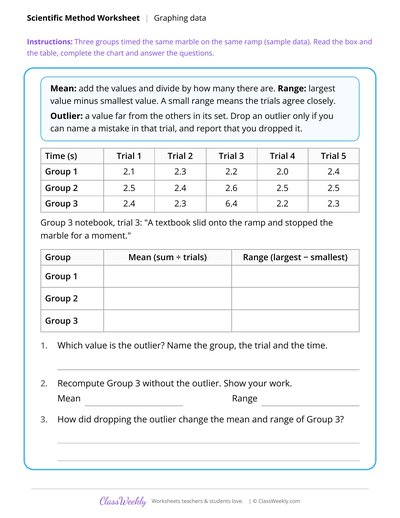
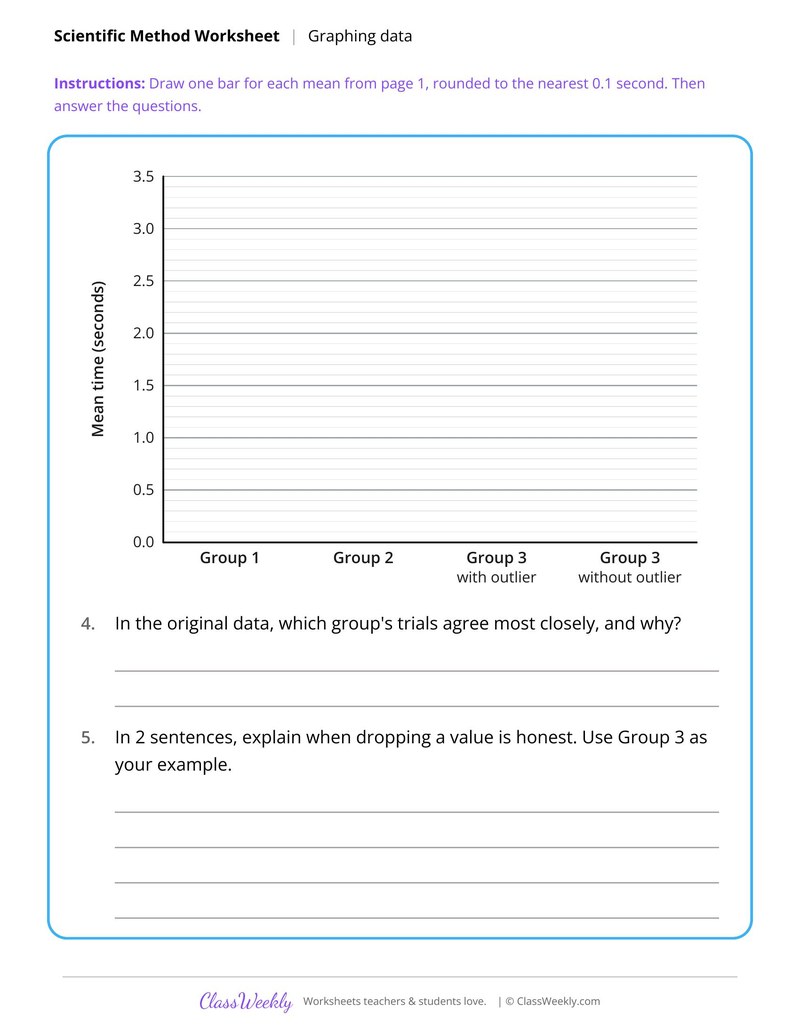
Analyze Repeated Trials and Outliers
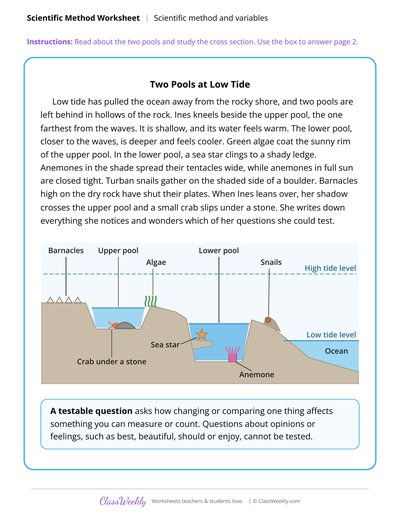
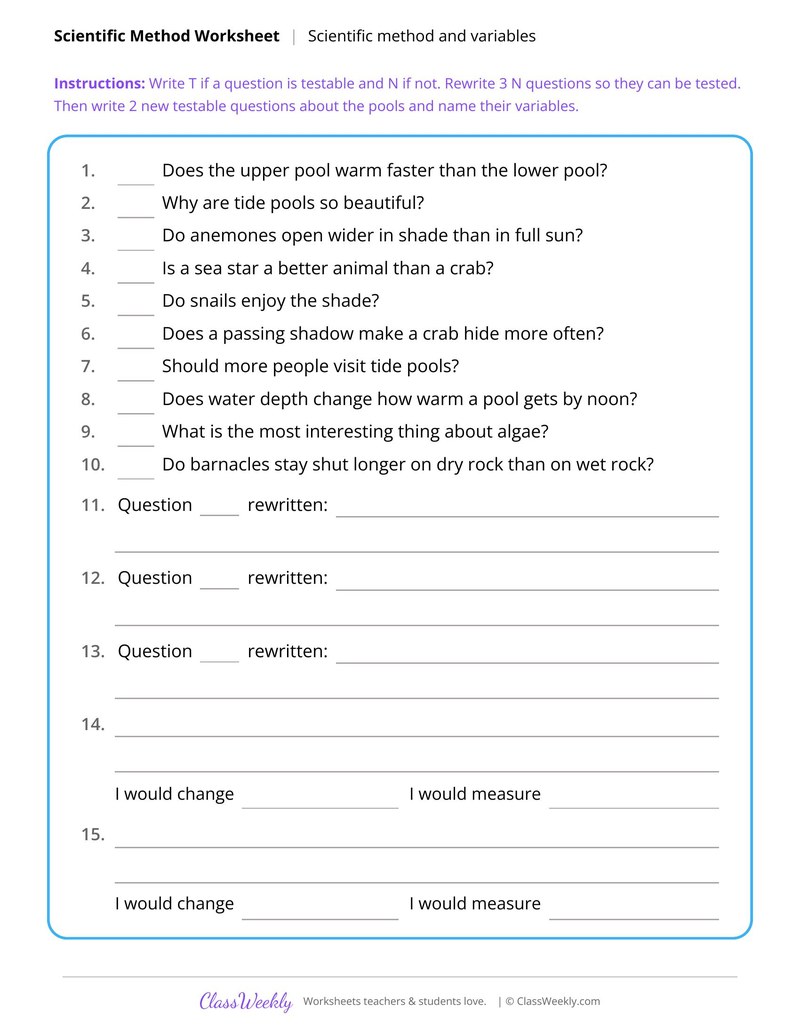
Turn Observations Into Testable Questions
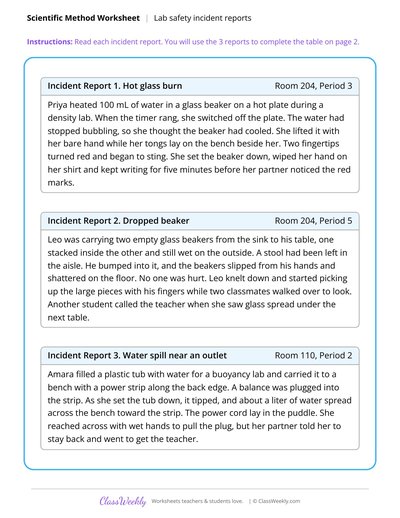
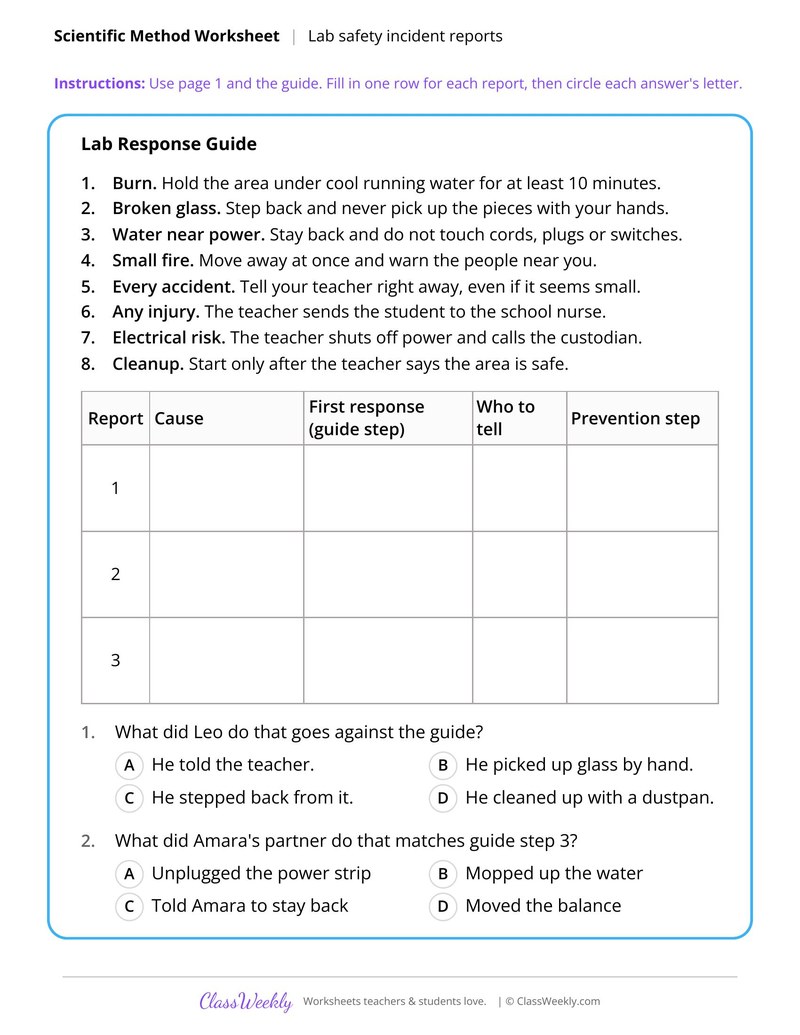
Lab Incident Reports on Accidents
Curriculum Links
Find this in the curriculum
Browse the grade, subject, and topic this belongs to.
FAQ
How do I use this lab safety and measurement worksheet?
⌄
Use the three incident report sheets as a set near the start of a lab unit, and give Lab Safety Agreement With Reasons on the first day. The one page sheets work well as warm-ups or quick assessments.
What does this worksheet teach?
⌄
Match lab safety rules to the hazards they prevent, then read and sign a safety agreement. The directions on the page read: Read each rule. On its line, write the letter of the hazard that the rule prevents. Use each letter once. Then read the agreement and sign it. An answer key is included.
Can I use this lab safety and measurement worksheet for homeschool or classroom?
⌄
Yes, both. We made it for 7th grade scientific method, and it works the same at home or at school. At home, a student can work through it alone and then go over it with you, which shows quickly what is solid and what needs another look. In class it works as independent practice, homework or a warm-up, and you can print one copy or a full set.
How should you dispose of broken glass in a lab?
⌄
Broken or cracked glassware goes in a broken glass box, because a trash bag would tear and cut the carrier. Sort Lab Waste by Disposal Route lists the rule for each route.
Why do labs have safety rules?
⌄
Each rule prevents a specific hazard, such as a chemical splash into an eye. Lab Safety Agreement With Reasons has students match each rule to the hazard it prevents and then sign an agreement.
How do you find the total magnification of a microscope?
⌄
Multiply the power of the eyepiece by the power of the objective lens. Microscope Magnification and Field of View also shows that the field of view shrinks as power rises.
How do you choose the right lab tool?
⌄
Match the tool to how accurate the measurement must be. A graduated cylinder measures liquid volume accurately, while a beaker's marks are rough. Select Lab Equipment for Each Procedure has students order tools for each procedure.
Ratings & Reviews
No reviews yet. Be the first to share what you think.
Reviews are for ClassWeekly members.
Make a Request
Spotted something to fix, or want a worksheet we don't have yet? Tell us and we'll make it.
Worksheet Details
| Grade | 7th Grade |
| Subject | Science |
| Topic | Scientific Method |
| Pages | 1 page |
| Difficulty | Medium |
What is ClassWeekly?
ClassWeekly offers free worksheets and printable learning resources for kids, from preschool up. All worksheets are aligned to Common Core, NGSS, and C3 Framework standards and designed by educators. Become a member to access the full library and download unlimited PDFs.
Turn a Question Into a Testable Hypothesis
Plan a Fair Test and Analyze Its Data
Draw a Conclusion From Claim and Evidence
Write a Lab Report Results Section
Separate Observations From Inferences
Analyze Repeated Trials and Outliers
Turn Observations Into Testable Questions
Lab Incident Reports on Accidents