Tariff Rates From 1816 to 1860
Written by Adi Ackerman, Head Teacher
"Tariff Rates From 1816 to 1860" is written for 8th Grade (Ages 13-14), and it covers C3 Framework D2.Eco.15.6-8. A 7th grader who is already steady on Economics and Money can use it too, and an older student can use it as a short review.
2 pages in this set
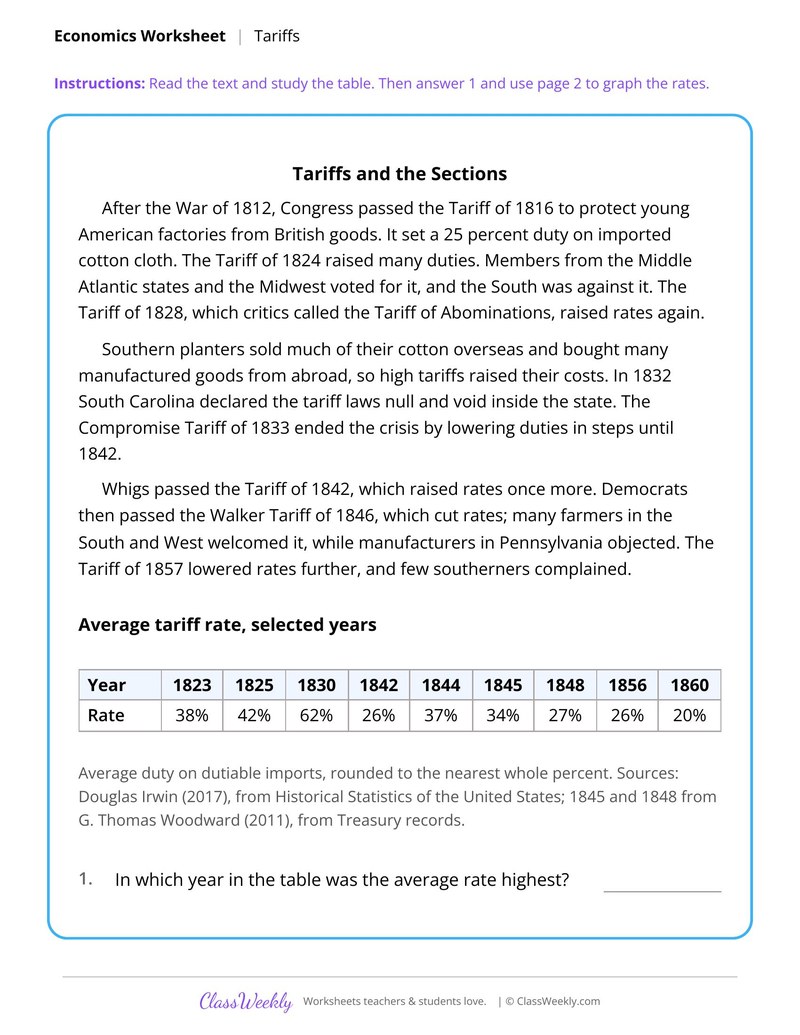
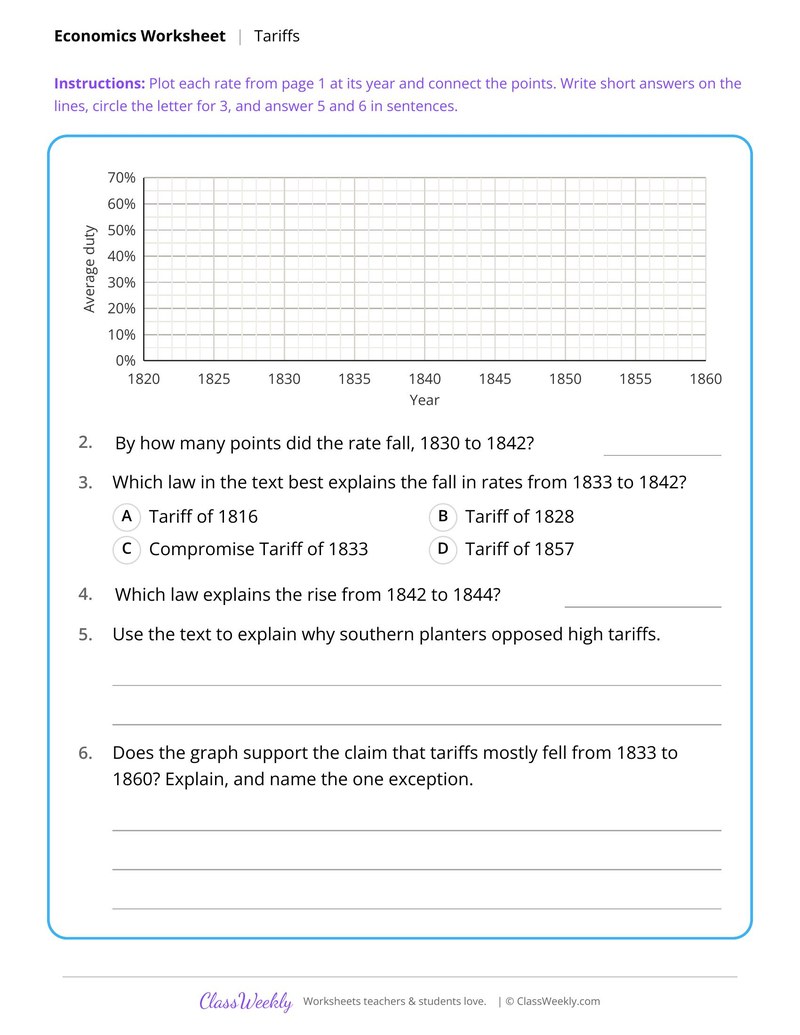
8th grade social studies worksheet: graph average tariff rates to 1860 and link the changes to laws like the Compromise Tariff. Answer key included. Part of our taxes and what they fund economics and money collection. Aligned to C3 Framework standards.
How do I use this worksheet?
Begin with the tax sort to set the vocabulary. Pair the tariff graph with the tax sort, and save the war funding sheet for the Civil War unit.
What students will practice
- Students will plot average tariff rates from 1820 to 1860 on a line graph.
- Students will link rises and falls in the rate to tariff laws in the text.
- Students will explain why southern planters opposed high tariffs.
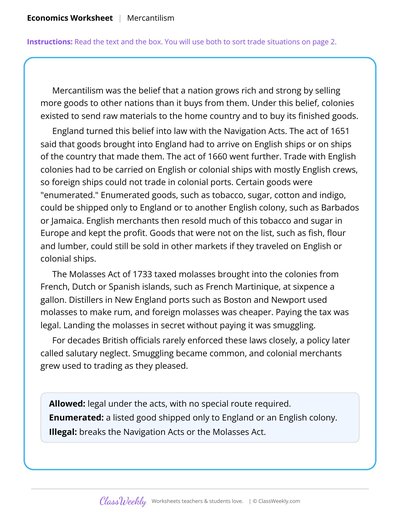
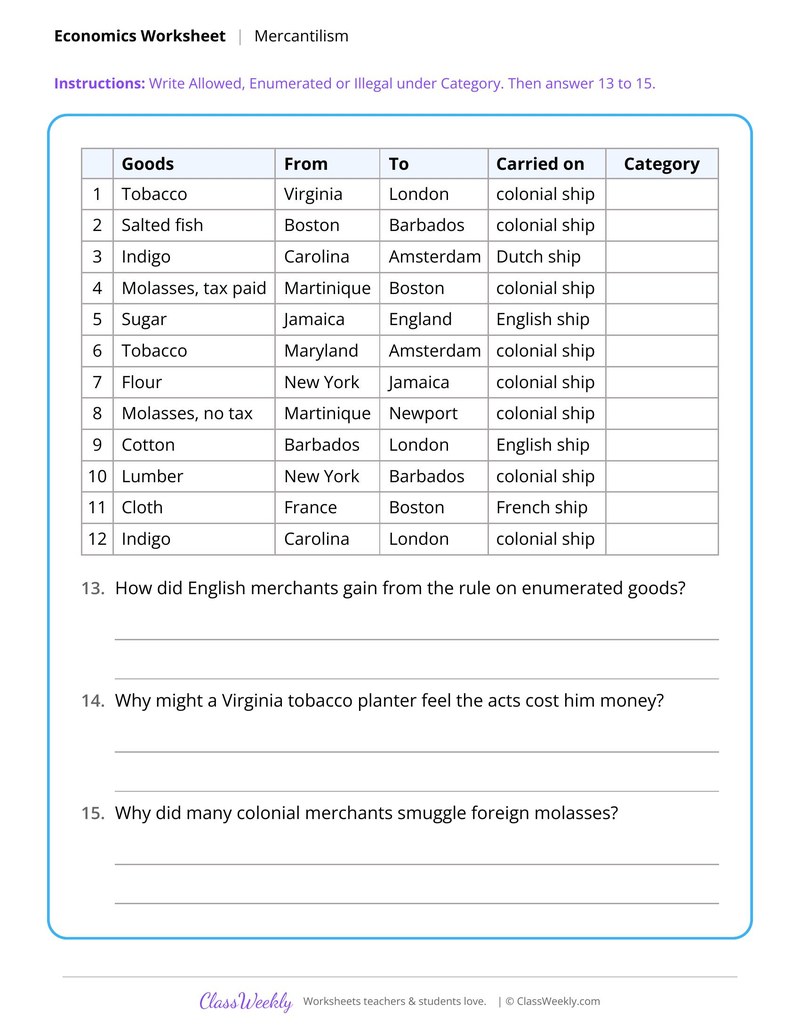
Mercantilism and the Navigation Acts
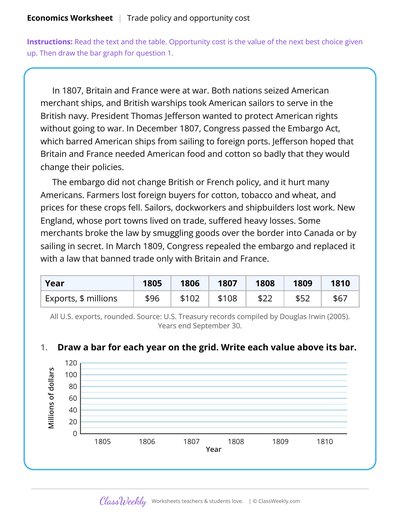
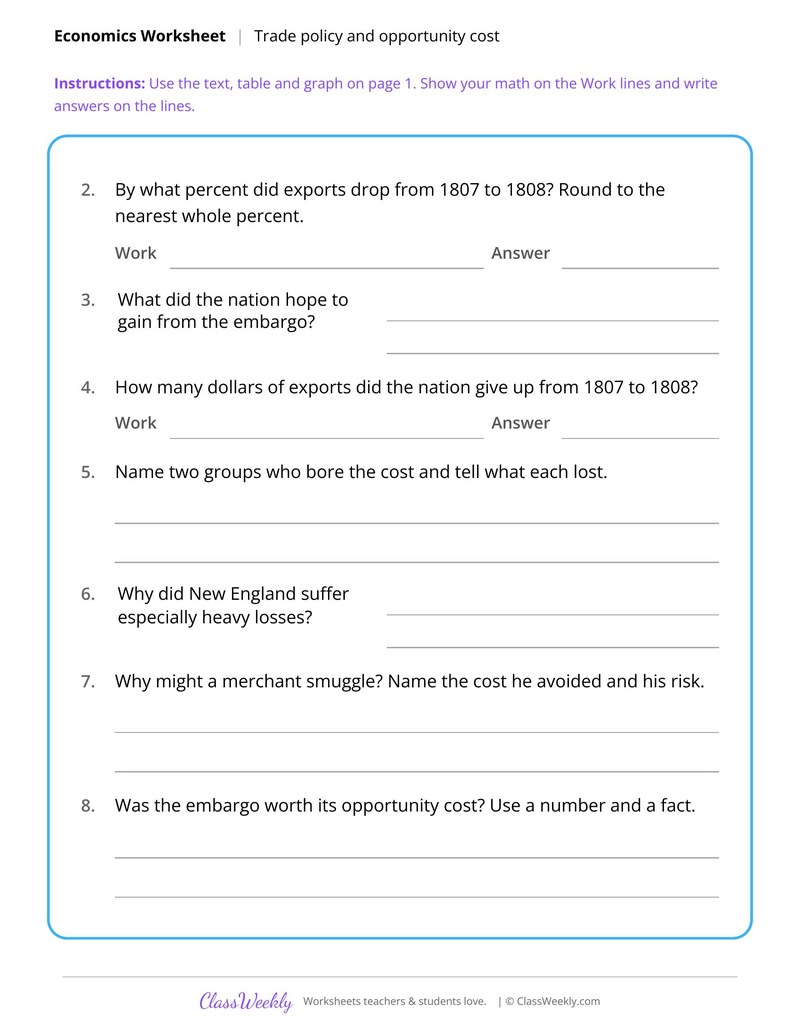
The Embargo of 1807 and Its Cost
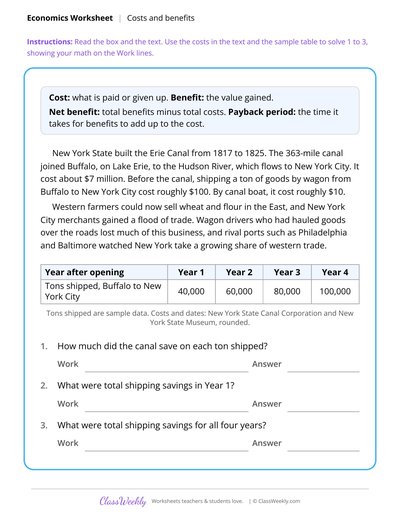
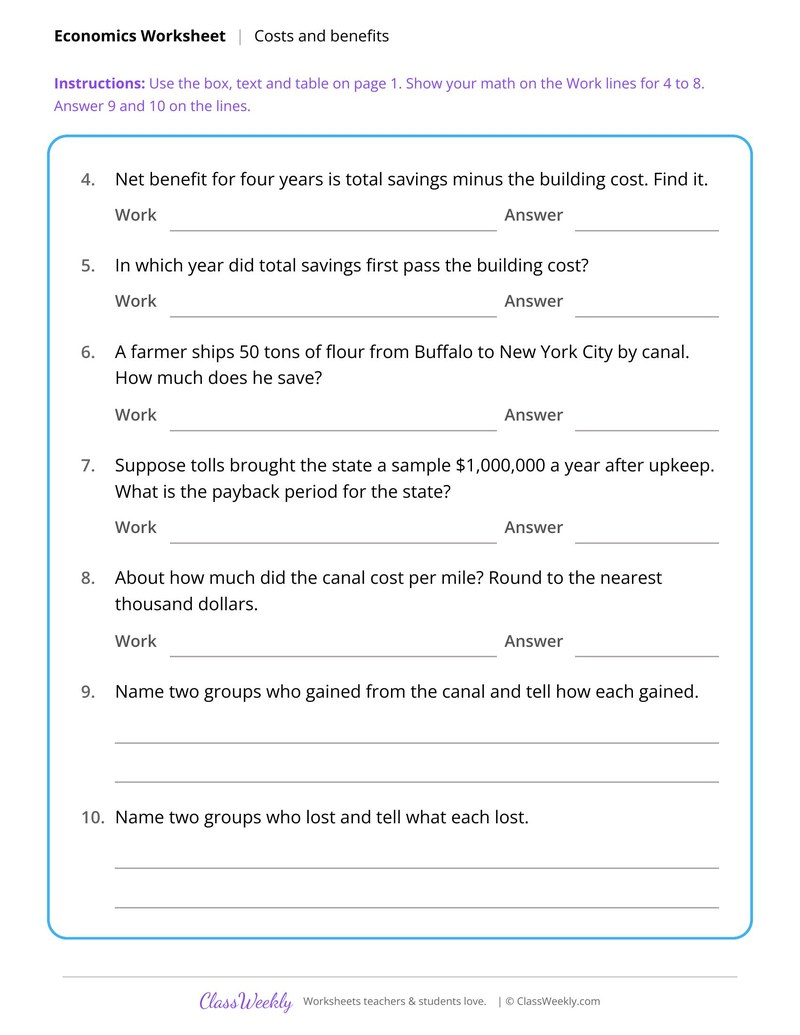
Costs and Benefits of the Erie Canal
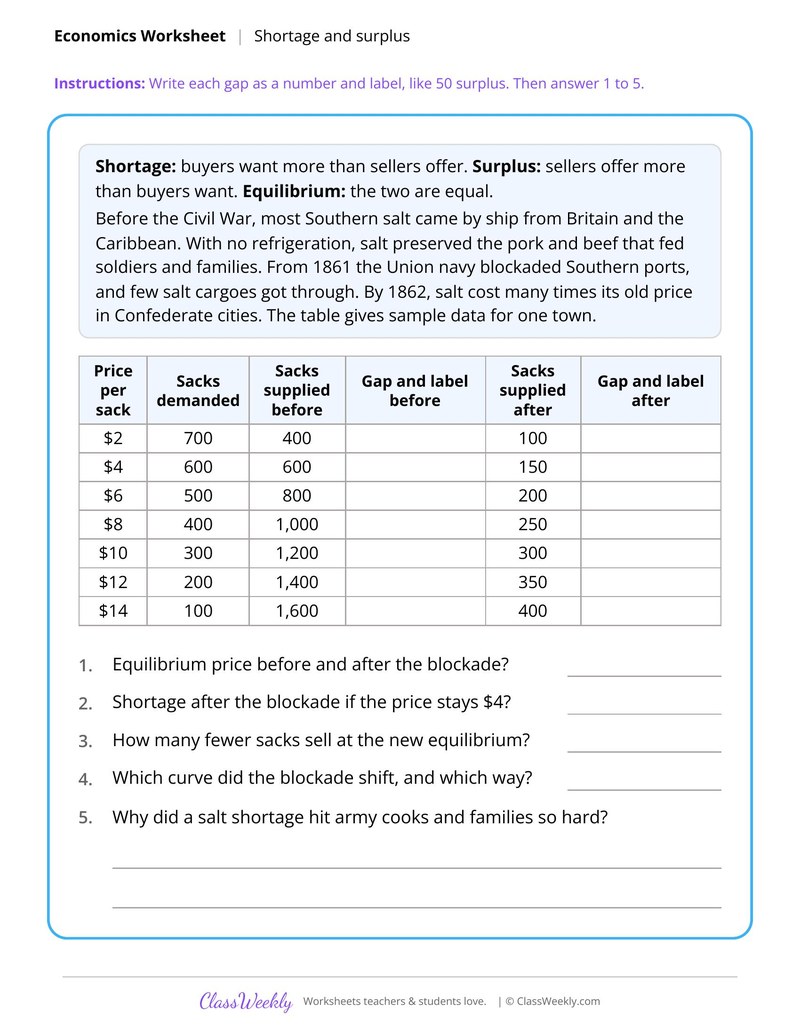
Shortage and Surplus in a Confederate Salt Market
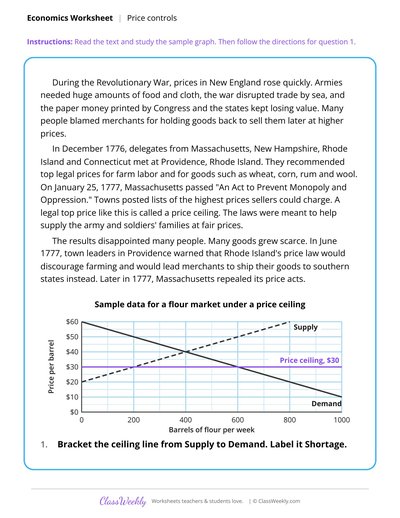
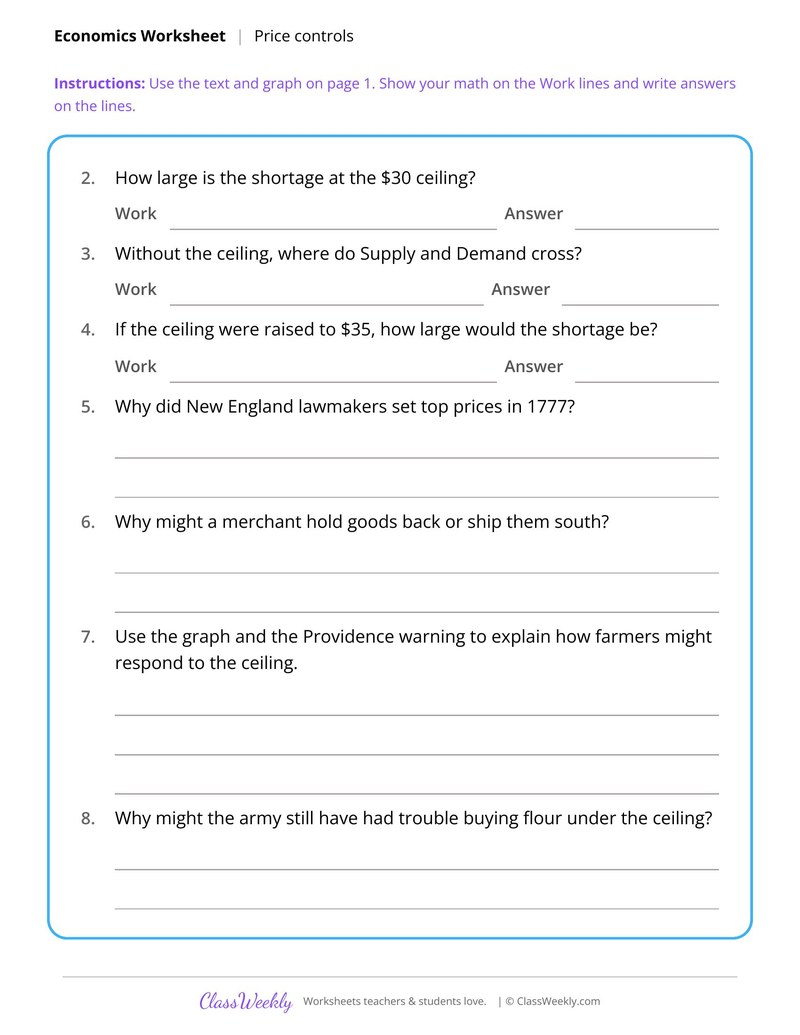
Price Controls During the American Revolution
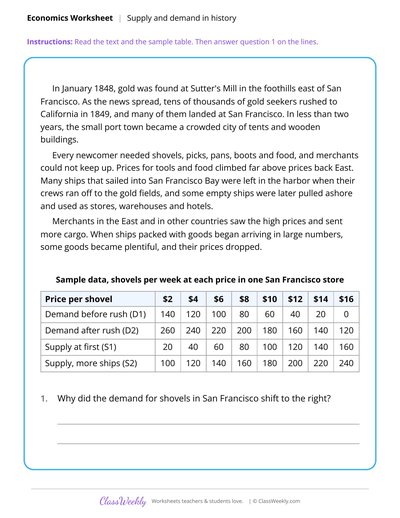
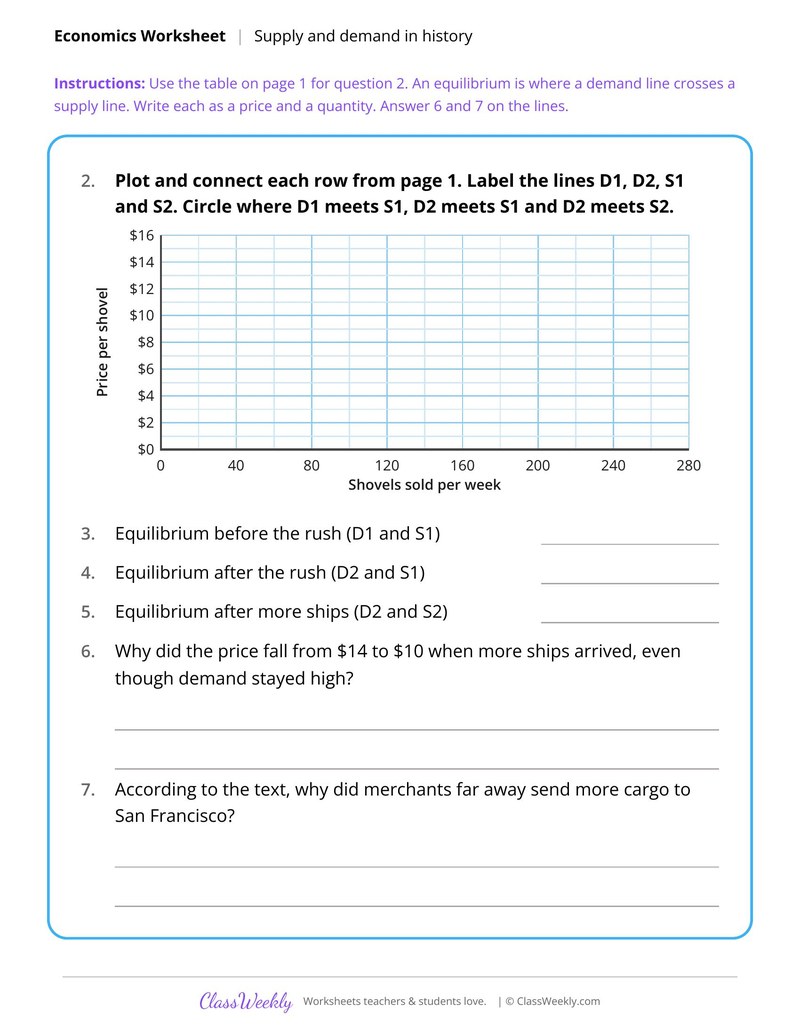
Supply and Demand in Gold Rush San Francisco
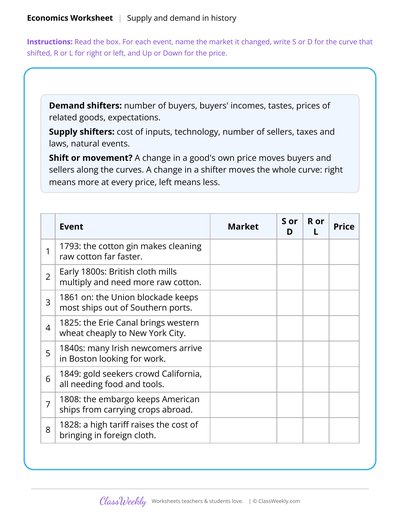
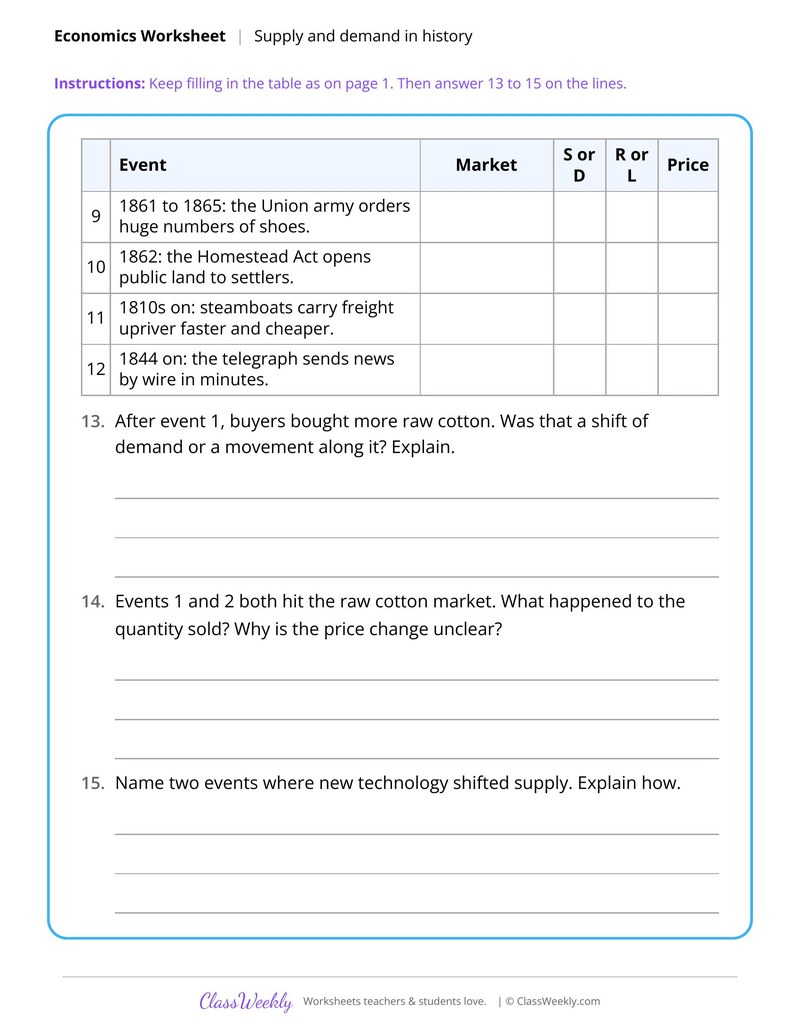
Supply or Demand Shifts in American History
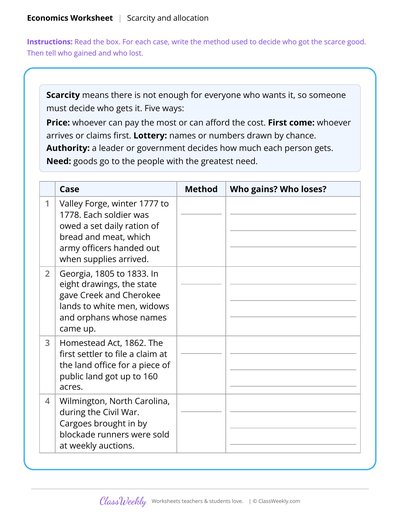
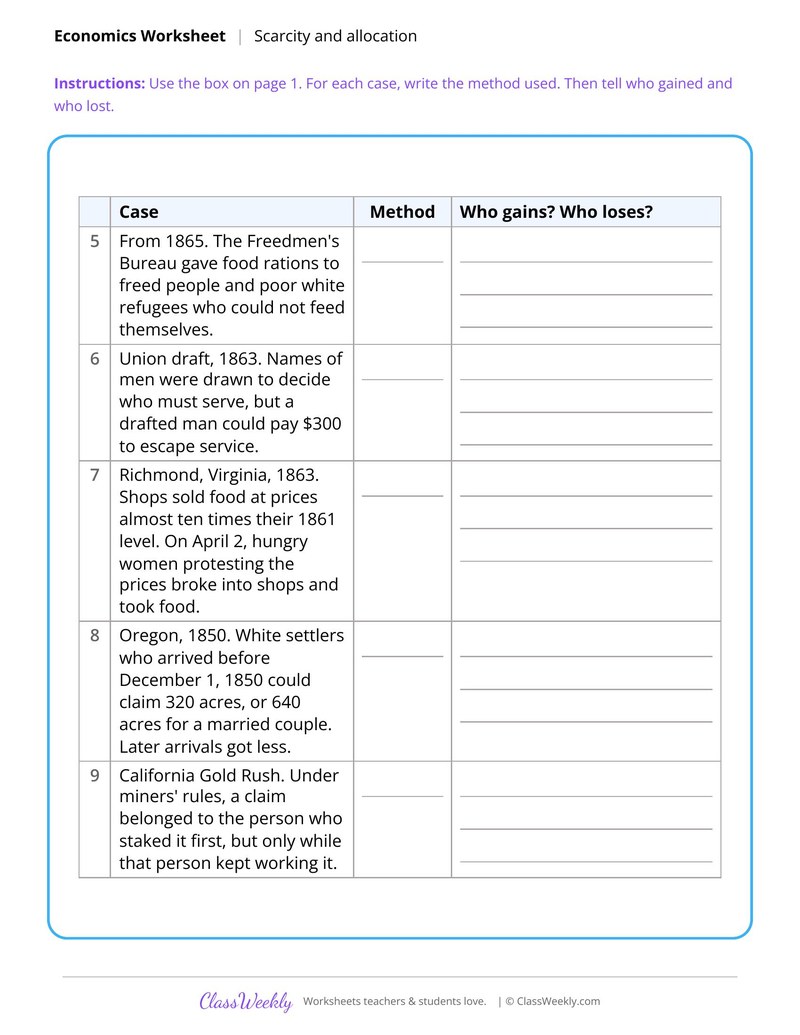
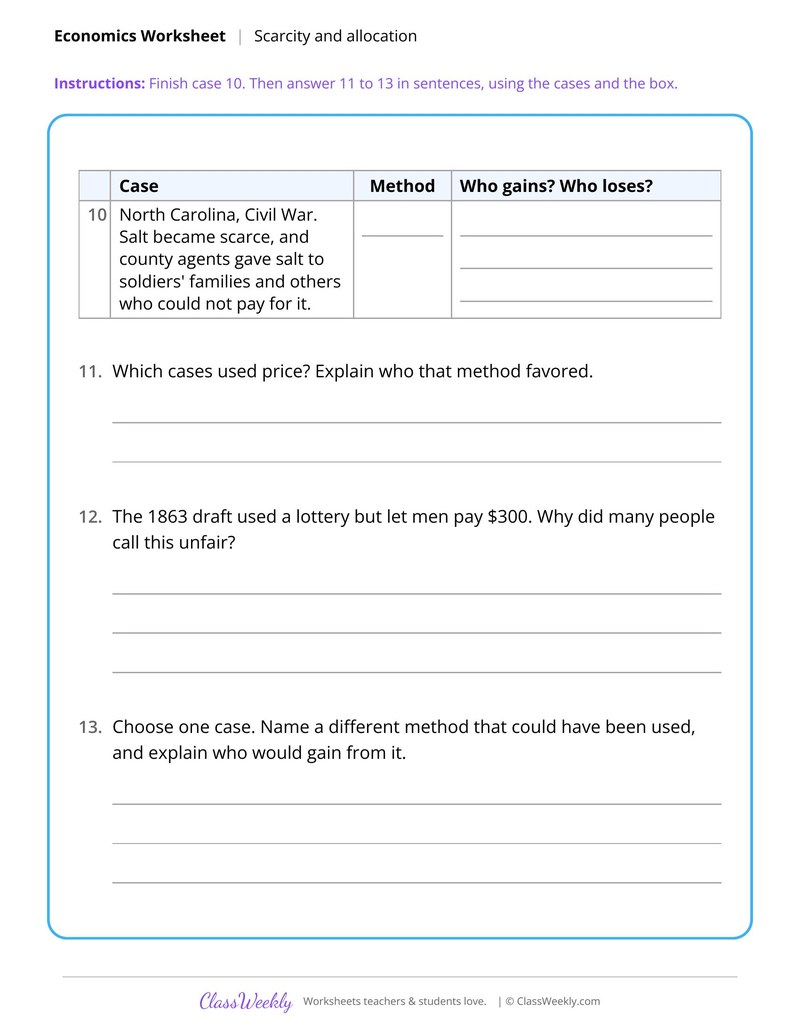
Scarcity and Rationing in American History
Curriculum Links
C3 Framework for Social Studies State Standards
Social Studies · 8th Grade
Find this in the curriculum
Browse the grade, subject, and topic this belongs to.
FAQ
How do I use this taxes and what they fund worksheet?
⌄
Begin with the tax sort to set the vocabulary. Pair the tariff graph with the tax sort, and save the war funding sheet for the Civil War unit.
What does this worksheet teach?
⌄
Graph average tariff rates to 1860 and link the changes to laws like the Compromise Tariff. The directions on the page read: Read the text and study the table. Then answer 1 and use page 2 to graph the rates. An answer key is included.
Can I use this taxes and what they fund worksheet for homeschool or classroom?
⌄
Yes, both. We made it for 8th grade Economics and Money, and it works the same at home or at school. At home, a student can work through it alone and then go over it with you, which shows quickly what is solid and what needs another look. In class it works as independent practice, homework or a warm-up, and you can print one copy or a full set.
What is the difference between a tariff and an excise tax?
⌄
A tariff is a tax on goods brought in from other countries, collected at ports. An excise is a tax on making, selling or owning a certain item at home.
What was the Tariff of Abominations?
⌄
It was the critics' name for the Tariff of 1828, which raised rates again. Southern planters bought many goods from abroad, so high tariffs raised their costs.
How did the Union pay for the Civil War?
⌄
The Union taxed, borrowed by selling bonds and printed greenbacks. The Revenue Act of 1861 created the first federal income tax, 3 percent on incomes over $800.
Ratings & Reviews
No reviews yet. Be the first to share what you think.
Reviews are for ClassWeekly members.
Make a Request
Spotted something to fix, or want a worksheet we don't have yet? Tell us and we'll make it.
Worksheet Details
| Grade | 8th Grade |
| Subject | Social Studies |
| Topic | Economics and Money |
| Standard | D2.Eco.15.6-8 |
| Pages | 2 pages |
| Difficulty | Medium |
What is ClassWeekly?
ClassWeekly offers free worksheets and printable learning resources for kids, from preschool up. All worksheets are aligned to Common Core, NGSS, and C3 Framework standards and designed by educators. Become a member to access the full library and download unlimited PDFs.
Mercantilism and the Navigation Acts
The Embargo of 1807 and Its Cost
Costs and Benefits of the Erie Canal
Shortage and Surplus in a Confederate Salt Market
Price Controls During the American Revolution
Supply and Demand in Gold Rush San Francisco
Supply or Demand Shifts in American History
Scarcity and Rationing in American History