Use Colons in Formal Writing
Written by Adi Ackerman, Head Teacher
"Use Colons in Formal Writing" is written for 7th Grade (Ages 12-13), and it covers Common Core L.7.2. A 6th grader who is already steady on punctuation can use it too, and an older student can use it as a short review.
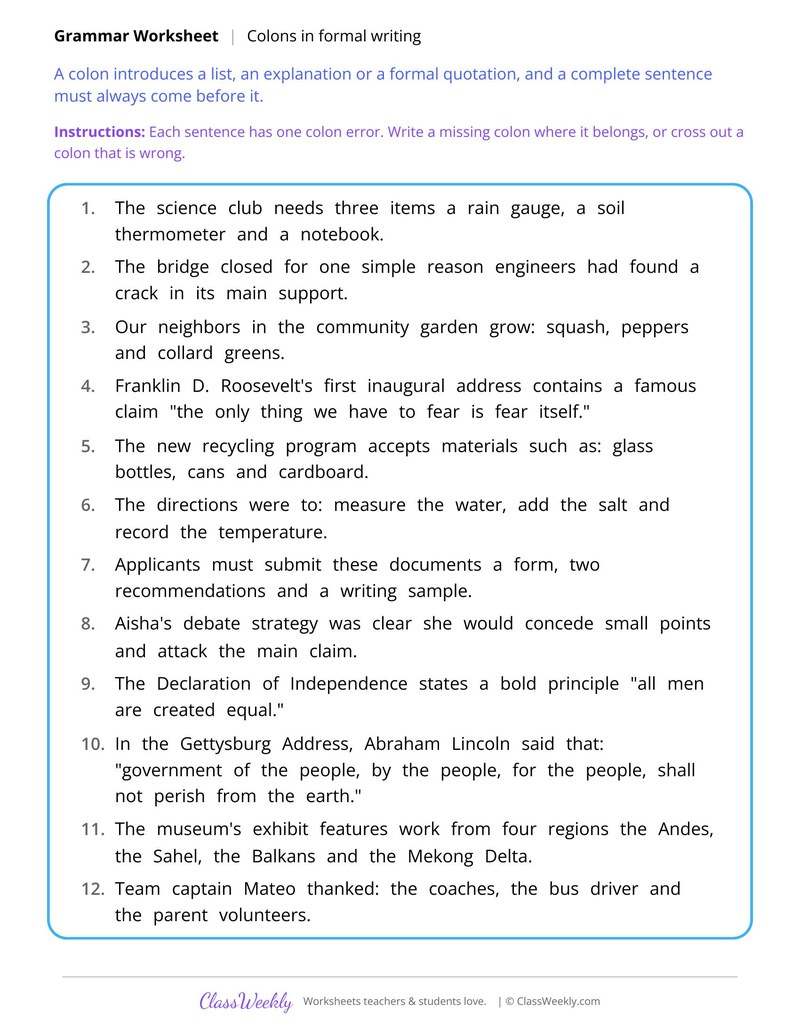
7th grade grammar worksheet: add or cross out colons in sentences that introduce lists and explanations. Answer key included. Part of our semicolons, colons and hyphens punctuation collection. Aligned to Common Core standards.
How do I use this worksheet?
Teach colons and clause semicolons first, then semicolons in lists. Save the conjunctive adverb sheets for last, since they need both a semicolon and a comma.
What students will practice
- Students will add a missing colon after a complete sentence.
- Students will cross out a colon that interrupts a sentence.
- Students will tell when a colon introduces a list, an explanation or a quotation.
Curriculum Links
Common Core State Standards
Language · 7th Grade
Standard: Demonstrate command of the conventions of standard English capitalization, punctuation, and spelling when writing.
View all L.7.2 worksheets →Find this in the curriculum
Browse the grade, subject, and topic this belongs to.
FAQ
How do I use this semicolons, colons and hyphens worksheet?
⌄
Teach colons and clause semicolons first, then semicolons in lists. Save the conjunctive adverb sheets for last, since they need both a semicolon and a comma.
What does this worksheet teach?
⌄
Add or cross out colons in sentences that introduce lists and explanations. A colon introduces a list, an explanation or a formal quotation, and a complete sentence must always come before it. The directions on the page read: Each sentence has one colon error. Write a missing colon where it belongs, or cross out a colon that is wrong. An answer key is included.
Can I use this semicolons, colons and hyphens worksheet for homeschool or classroom?
⌄
Yes, both. We made it for 7th grade punctuation, and it works the same at home or at school. At home, a student can work through it alone and then go over it with you, which shows quickly what is solid and what needs another look. In class it works as independent practice, homework or a warm-up, and you can print one copy or a full set.
When do you use a semicolon instead of a comma?
⌄
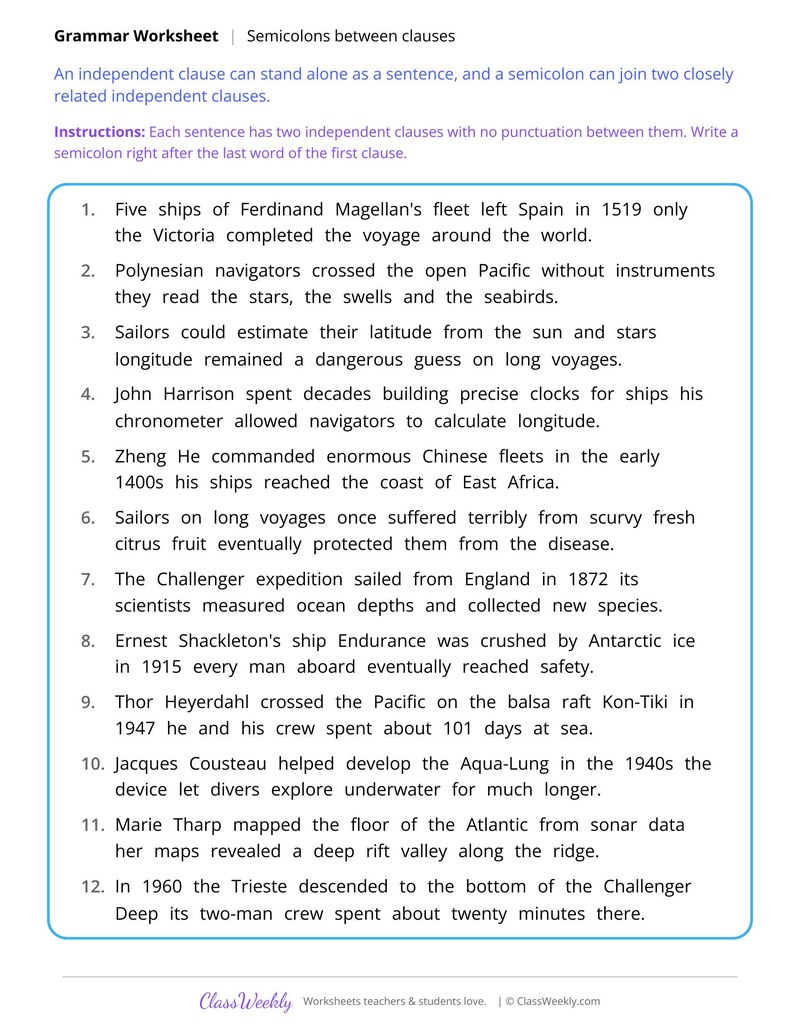
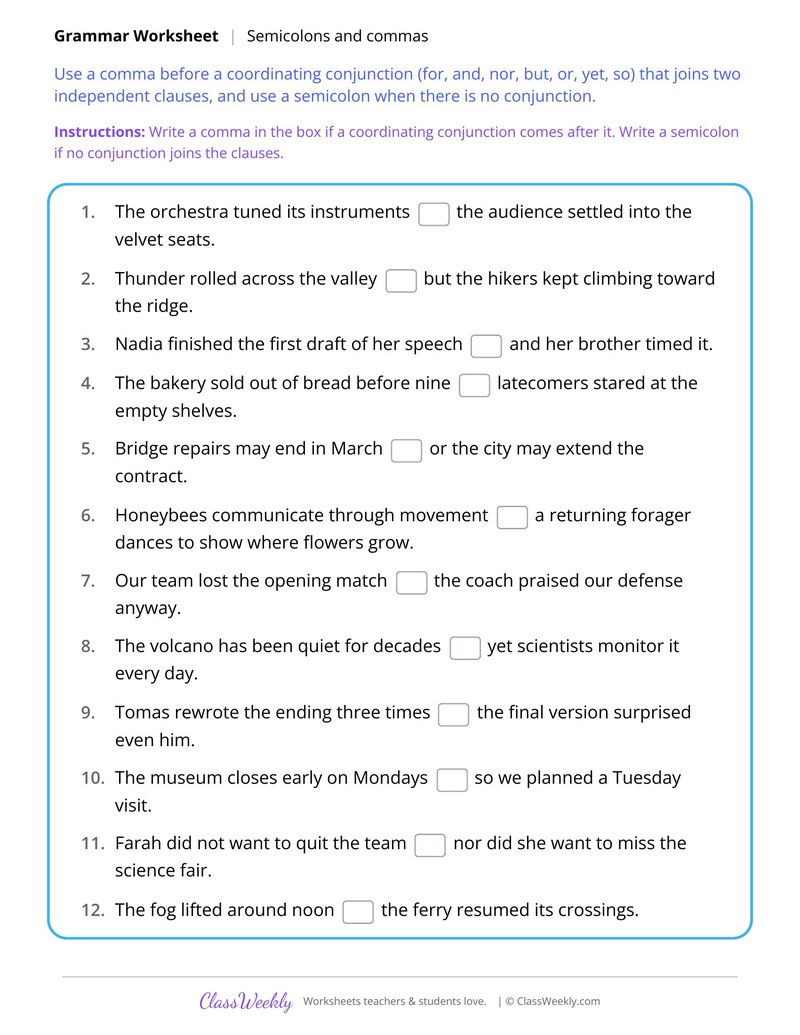
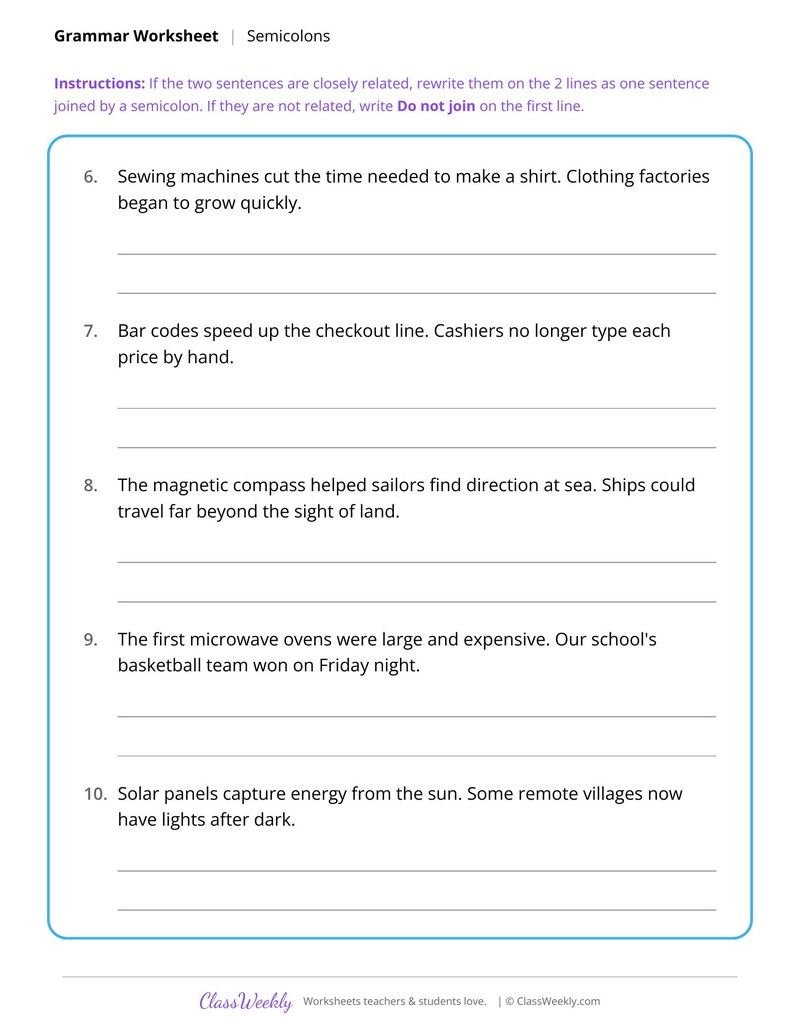
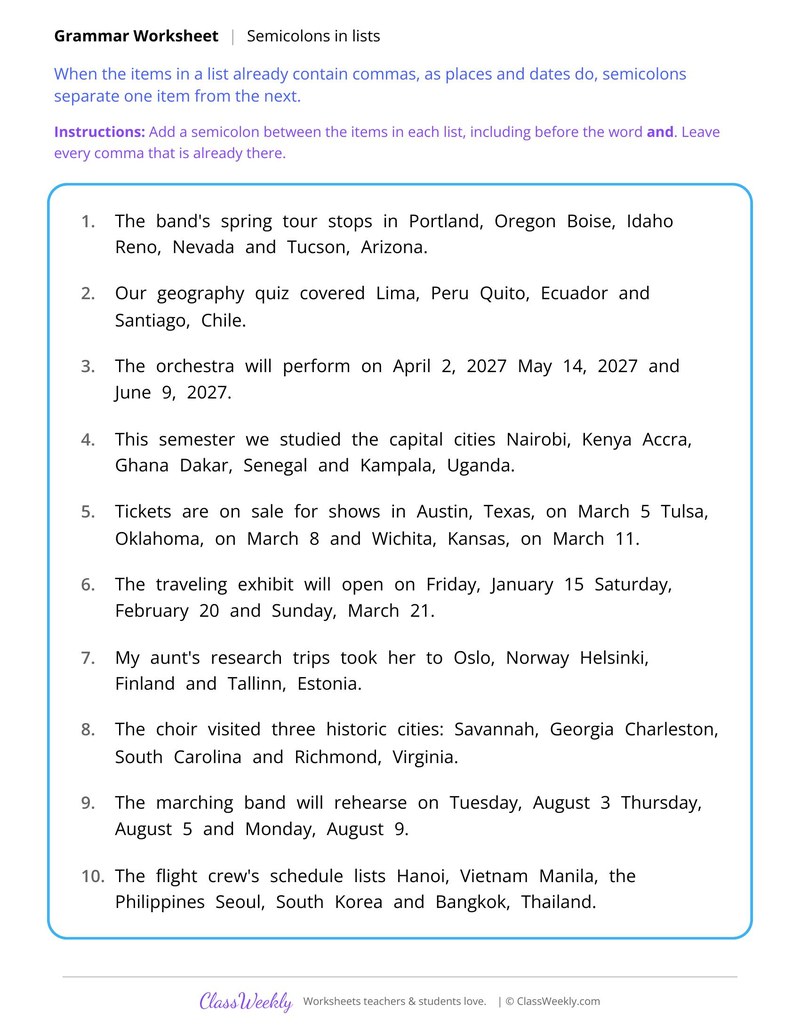
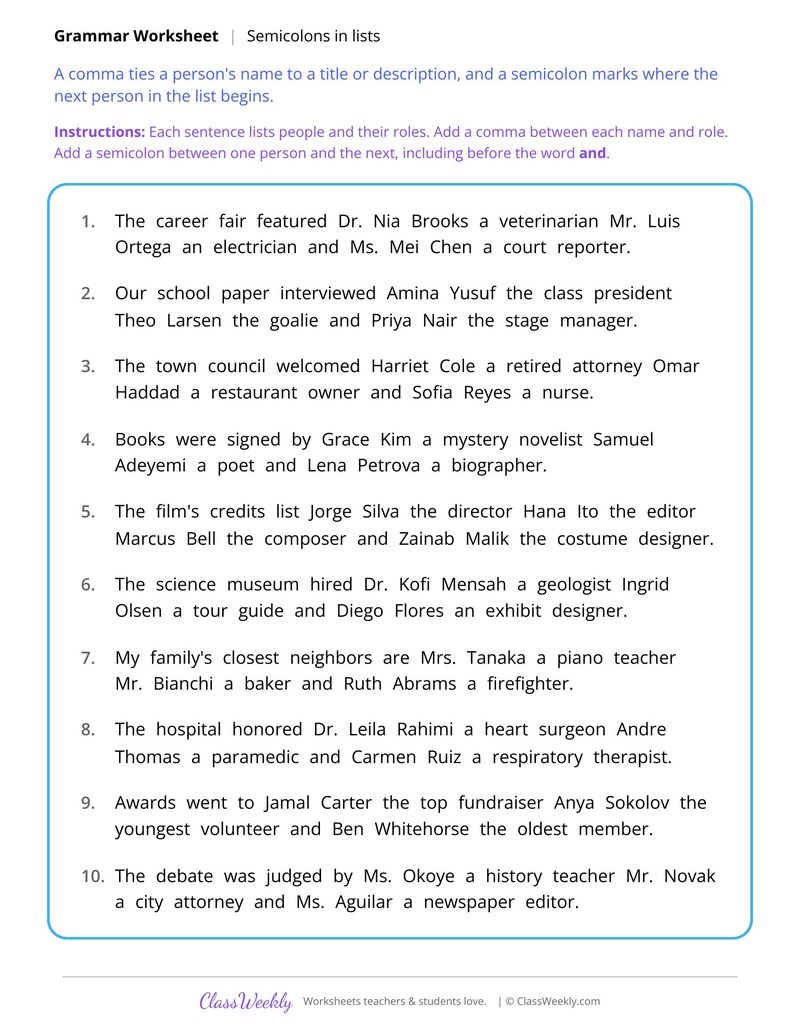
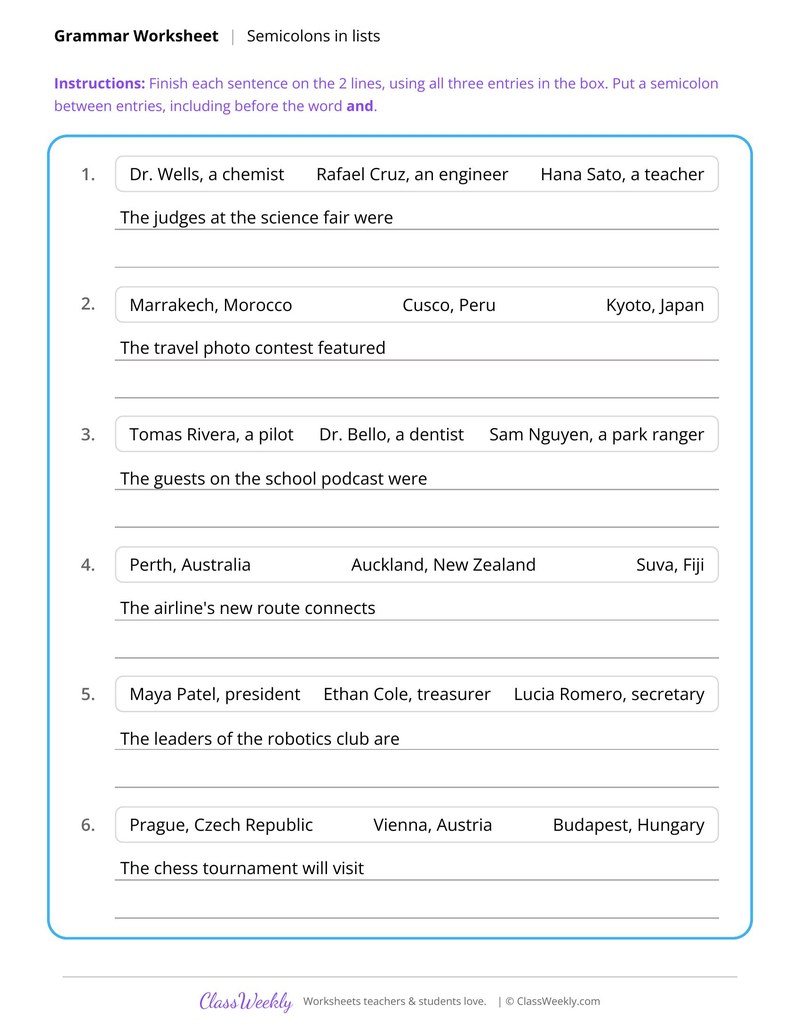
Use a comma before a coordinating conjunction that joins two independent clauses, and use a semicolon when no conjunction joins them. Semicolon or Comma Between Clauses has students write one or the other in a box. A semicolon also separates list items that contain commas.
How do you punctuate however and therefore?
⌄
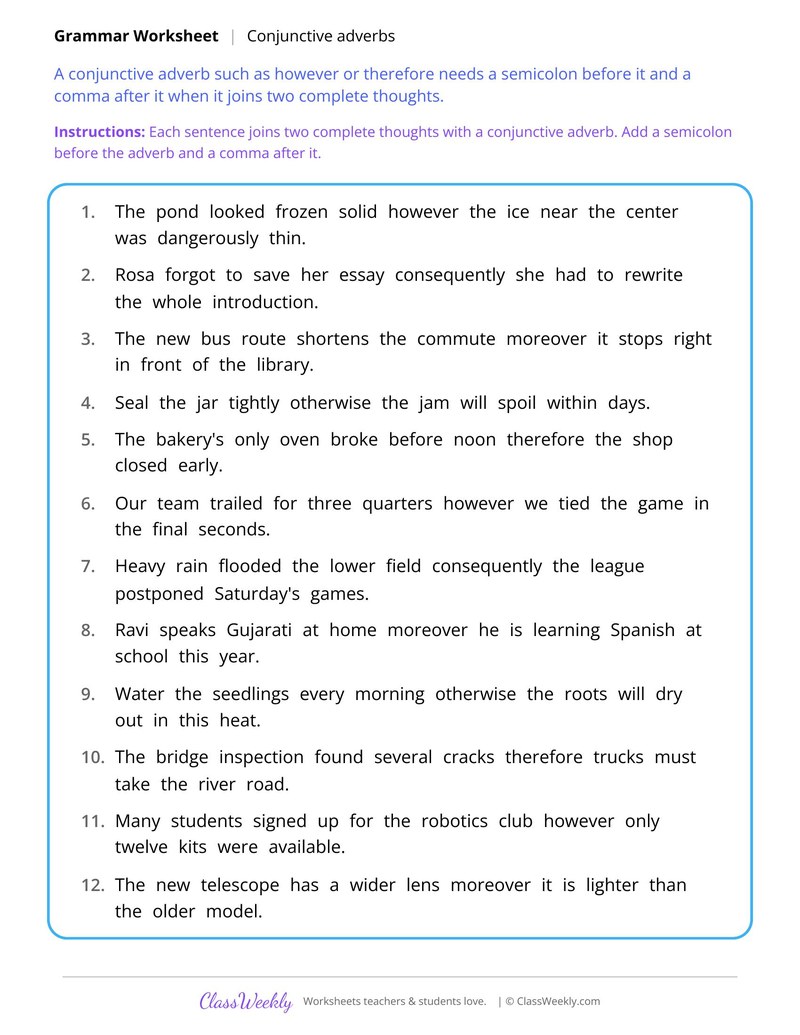
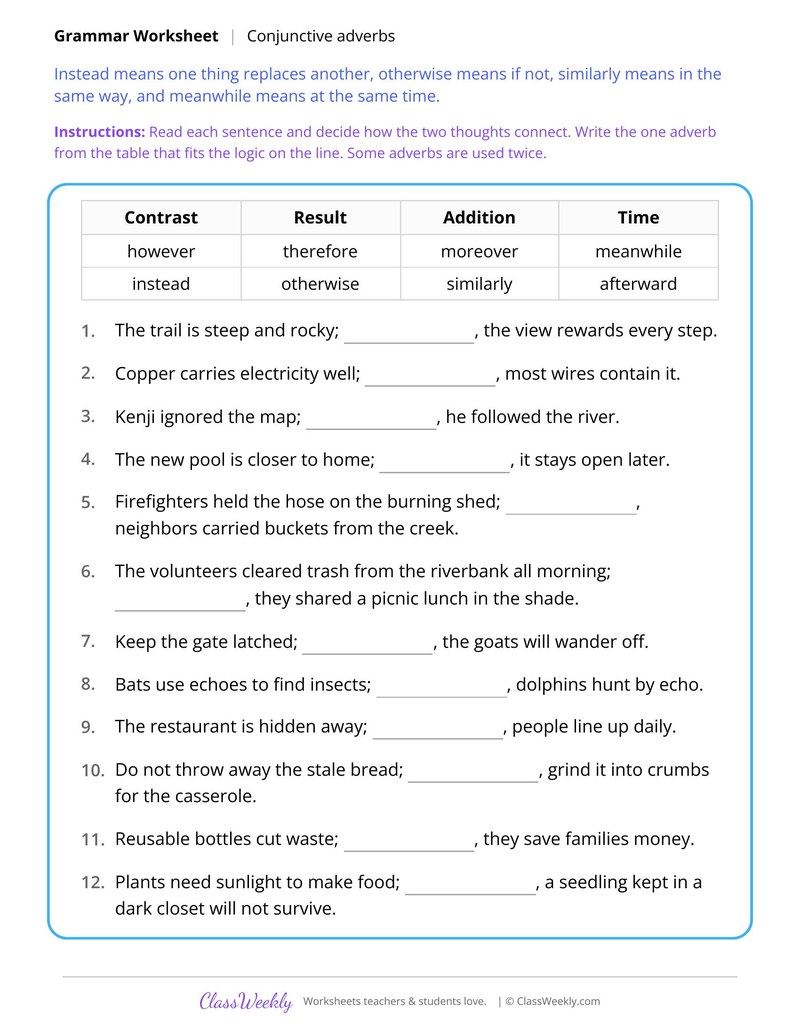
When a conjunctive adverb joins two complete thoughts, it takes a semicolon before it and a comma after it. Punctuate Conjunctive Adverbs gives sentences with however and consequently. Students add both marks.
When is a colon used?
⌄
A colon introduces a list, an explanation or a formal quotation, and a complete sentence must always come before it. Use Colons in Formal Writing asks students to add a missing colon or cross out a wrong one.
Should a compound modifier have a hyphen?
⌄
Hyphenate it before the noun, as in a well-rehearsed concert, and leave the hyphen out after the noun. Never hyphenate after an ly word. Hyphenate Before the Noun, Not After gives students both forms to choose between.
Ratings & Reviews
No reviews yet. Be the first to share what you think.
Reviews are for ClassWeekly members.
Make a Request
Spotted something to fix, or want a worksheet we don't have yet? Tell us and we'll make it.
Worksheet Details
| Grade | 7th Grade |
| Subject | Grammar & Writing |
| Topic | Punctuation |
| Standard | L.7.2 |
| Pages | 1 page |
| Difficulty | Medium |
Learn More
What is ClassWeekly?
ClassWeekly offers free worksheets and printable learning resources for kids, from preschool up. All worksheets are aligned to Common Core, NGSS, and C3 Framework standards and designed by educators. Become a member to access the full library and download unlimited PDFs.