Consonant Blends
Written by Adi Ackerman, Head Teacher
"Consonant Blends" is written for Kindergarten (Ages 5-6), and it covers Common Core RF.K.3.A. If your little one is a year younger but already steady on consonants, the page still works. You may just need to read the instructions out loud. And if they are older and blends never quite stuck, this is a short review rather than busywork.


2 pages in this set
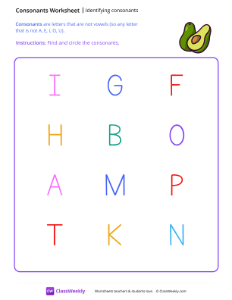
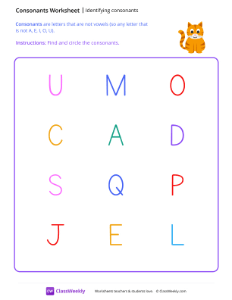
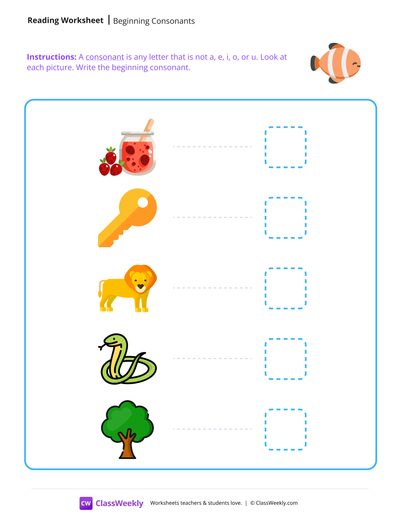
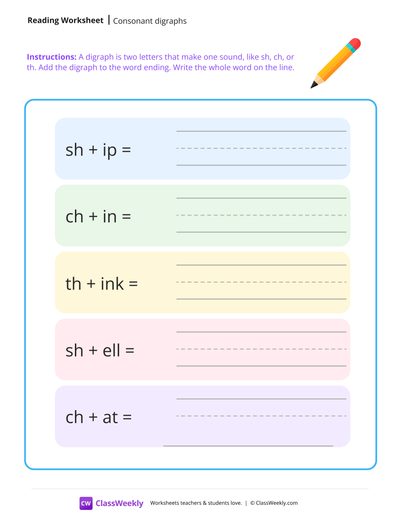
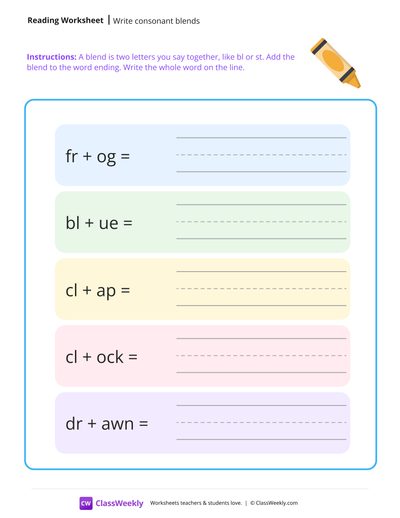
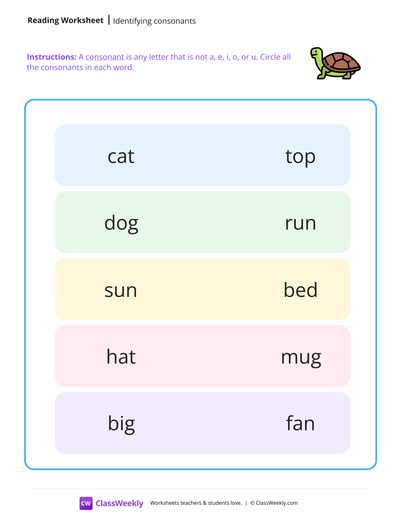
Free printable kindergarten consonant blends worksheet. Students practice reading and writing words with beginning consonant blends like bl, cr, and st. Part of our blends consonants collection. Aligned to Common Core standards.
How do I use this worksheet?
Begin with a shared reading or oral warm-up that highlights blends so students hear and see the skill in context before practicing it independently. Have students work through it with your modeling first (do the first item together on the board), then try the rest with a partner, especially for phonics-based tasks where saying an answer aloud first helps. After completing the worksheet, use one or two examples from the page to start a discussion: "Where else have you seen this in your reading?" These blends worksheets are ideal for use during small group reading time, as independent center work, or as a homework activity.
What students will practice
- Students will identify and apply blends knowledge to decode and comprehend grade-level text.
- Students will recognize patterns and rules related to blends in spoken and written language.
- Students will build fluency and confidence with blends through listening, speaking, and early decoding.







Curriculum Links
Common Core State Standards
Reading: Foundational Skills · Kindergarten
Standard: Demonstrate basic knowledge of one-to-one letter-sound correspondences by producing the primary sound or many of the most frequent sounds for each consonant.
View all RF.K.3.A worksheets →Find this in the curriculum
Browse the grade, subject, and topic this belongs to.
FAQ
How do I use this blends worksheet?
⌄
Begin with a shared reading or oral warm-up that highlights blends so students hear and see the skill in context before practicing it independently. Have students work through it with your modeling first (do the first item together on the board), then try the rest with a partner, especially for phonics-based tasks where saying an answer aloud first helps. After completing the worksheet, use one or two examples from the page to start a discussion: "Where else have you seen this in your reading?" These blends worksheets are ideal for use during small group reading time, as independent center work, or as a homework activity.
What does this worksheet teach?
⌄
These blends worksheets for Kindergarten give students focused practice with one of the key skills in early literacy. Students read, identify, and respond to blends through a variety of activities designed for their grade level. Our consonants worksheets build both decoding skills and reading comprehension, helping students connect what they practice on paper to the books they read every day. Regular practice with blends strengthens the reading skills that Kindergarten students need to become confident, independent readers.
Can I use this blends worksheet for homeschool or classroom?
⌄
Yes, both. We made it for Kindergarten consonants, and the page works the same whether it lands on a kitchen table or a center rotation. At home, most families go through it together and talk the answers out loud, and that talking is where most of the learning happens with blends. In class it runs well as independent work while you pull a small group. Print one copy or thirty, whichever the day needs.
What are consonant blends and why do kindergartners need to learn them?
⌄
Consonant blends are two or three consonants that appear together in a word, with each letter's sound still heard - for example, 'fl' in 'flag' or 'st' in 'stop.' Learning blends helps kindergartners decode unfamiliar words more quickly, which is a critical step toward reading fluency. Without blend recognition, children often struggle to read words that go beyond simple CVC (consonant-vowel-consonant) patterns.
When do children typically start learning consonant blends?
⌄
Most children begin working with consonant blends in the second half of kindergarten, once they have a solid grasp of individual letter sounds. Some early readers encounter blends as early as mid-year, while others pick them up in first grade. The pace depends on phonemic awareness development and prior exposure to phonics instruction.
How can I use consonant blend worksheets at home or in the classroom?
⌄
Use these worksheets during daily 10-15 minute phonics practice sessions. At home, parents can say each blend aloud together with the child before completing the activity. In class, teachers can use them as warm-ups, literacy center tasks, or independent practice following a mini-lesson on a specific blend group.
Do consonant blend worksheets align with Common Core standards?
⌄
Yes. Consonant blends fall under the Common Core ELA standard RF.K.3, which asks kindergartners to know and apply grade-level phonics and word analysis skills when decoding words. Worksheets that focus on initial blends directly support this standard.
What consonant sounds should kindergarteners learn?
⌄
Kindergarteners should learn the sounds associated with all 21 consonant letters, including digraphs (sh, ch, th, wh) that are introduced later in the year (CCSS RF.K.3). The focus is on the most common sound for each consonant. Letters with multiple sounds (c, g, s) are typically taught one sound at a time to avoid confusion.
How do you teach consonant sounds to kindergarteners?
⌄
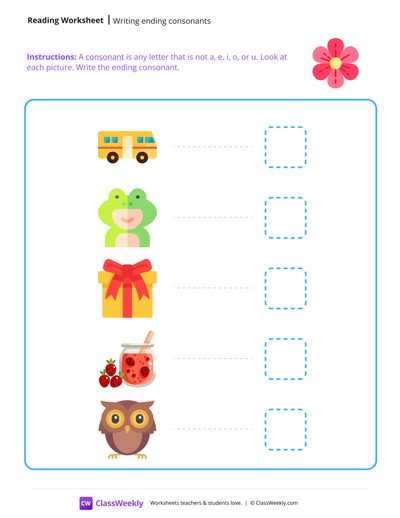
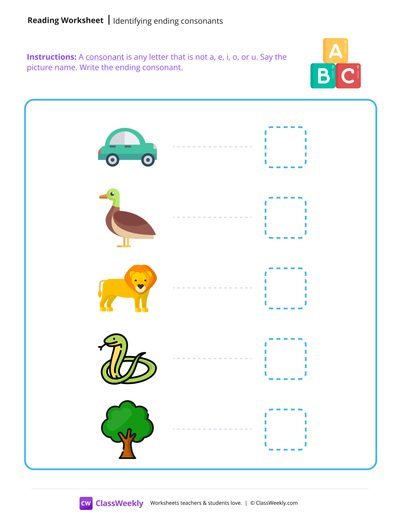
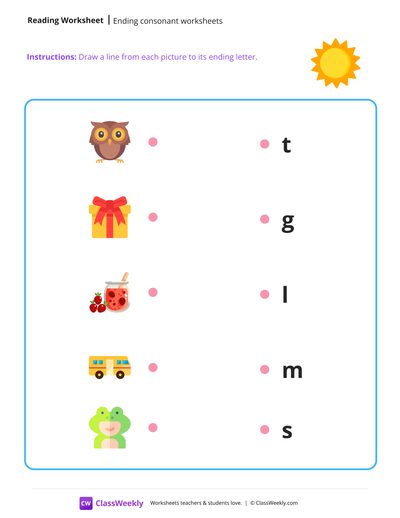
Introduce consonants one or two at a time using keyword pictures and letter-sound cards. Multisensory activities (tracing in sand while saying the sound, sorting pictures by beginning consonant) accelerate learning. Practice beginning, then ending, then middle consonant positions in sequence. Worksheets that ask students to identify the consonant sound at a specific position in a word build phonics skills.
What are consonant digraphs and when are they introduced in kindergarten?
⌄
Consonant digraphs are two letters that together represent one sound: sh (ship), ch (chin), th (thick), wh (when), ck (back). They are typically introduced in the second half of kindergarten after students have solid single-consonant knowledge (CCSS RF.K.3b). Digraphs are important because they appear in many high-frequency words kindergarteners encounter in early reading.
Ratings & Reviews
No reviews yet. Be the first to share what you think.
Reviews are for ClassWeekly members.
Make a Request
Spotted something to fix, or want a worksheet we don't have yet? Tell us and we'll make it.
Worksheet Details
| Grade | Kindergarten |
| Subject | Reading |
| Topic | Consonants |
| Standard | RF.K.3.A |
| Pages | 2 pages |
| Difficulty | Medium |
Learn More
What is ClassWeekly?
ClassWeekly offers free worksheets and printable learning resources for kids in preschool to grade 5. All worksheets are aligned to Common Core, NGSS, and C3 Framework standards and designed by educators. Become a member to access the full library and download unlimited PDFs.