Final Temperatures When Hot and Cold Water Mix
Written by Adi Ackerman, Head Teacher
"Final Temperatures When Hot and Cold Water Mix" is written for 8th Grade (Ages 13-14), and it covers NGSS MS-PS3-4. A 7th grader who is already steady on energy can use it too, and an older student can use it as a short review.
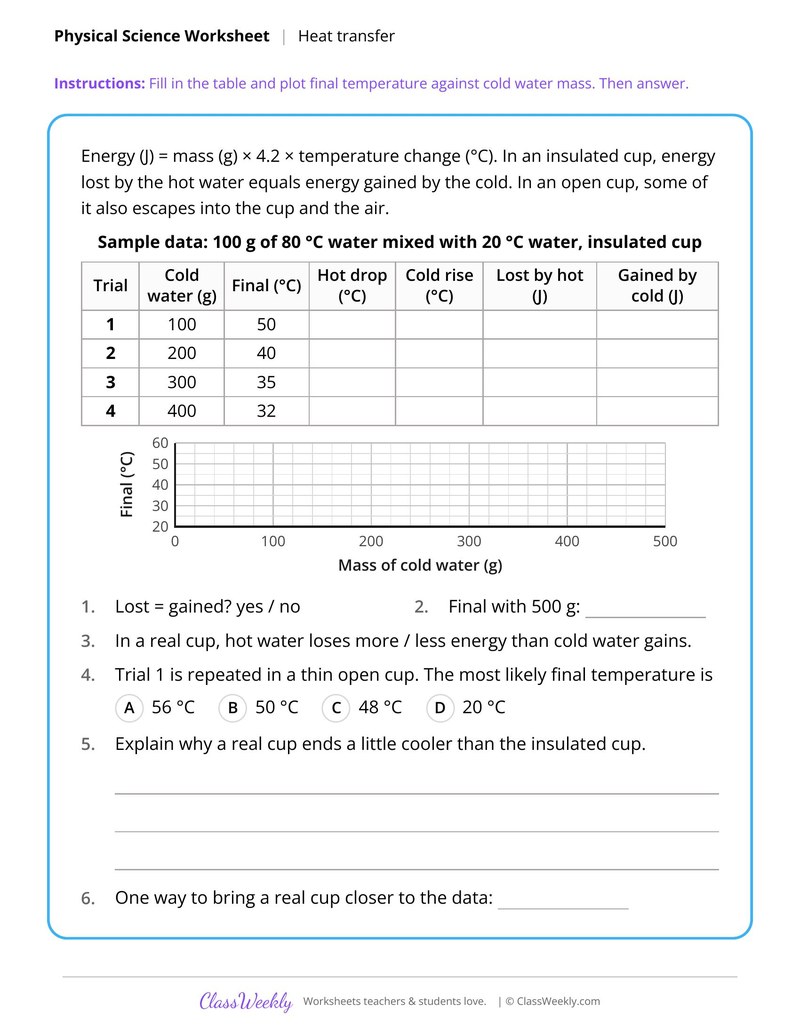
8th grade science worksheet: find energy lost and gained when 80 °C water mixes with 20 °C water and graph the final temperatures. Answer key included. Part of our heat transfer energy collection. Aligned to NGSS standards.
How do I use this worksheet?
Begin with Temperature Versus Thermal Energy to set the vocabulary, then move to the two calculation sheets. Use the vacuum bottle and solar heater sheets as design discussions.
What students will practice
- Students will calculate energy lost by hot water and gained by cold water with mass × 4.2 × change.
- Students will plot final temperature against cold water mass and predict the result for 500 g.
- Students will compare an insulated cup with an open cup that lets energy escape into the air.
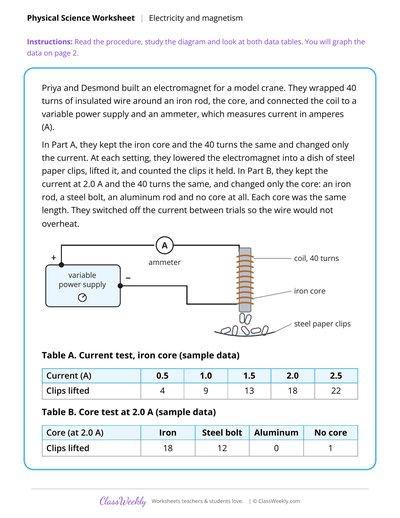
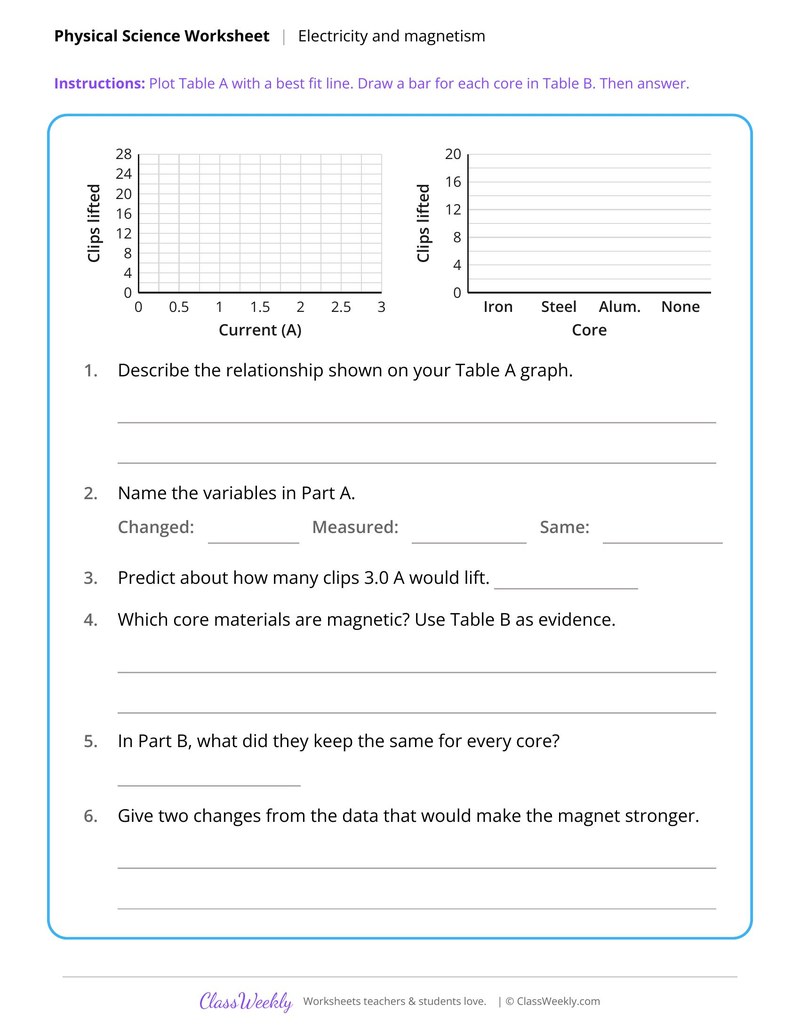
Electromagnet Current and Core Material Test
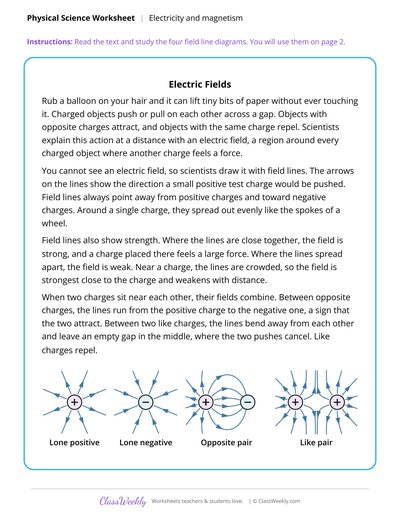
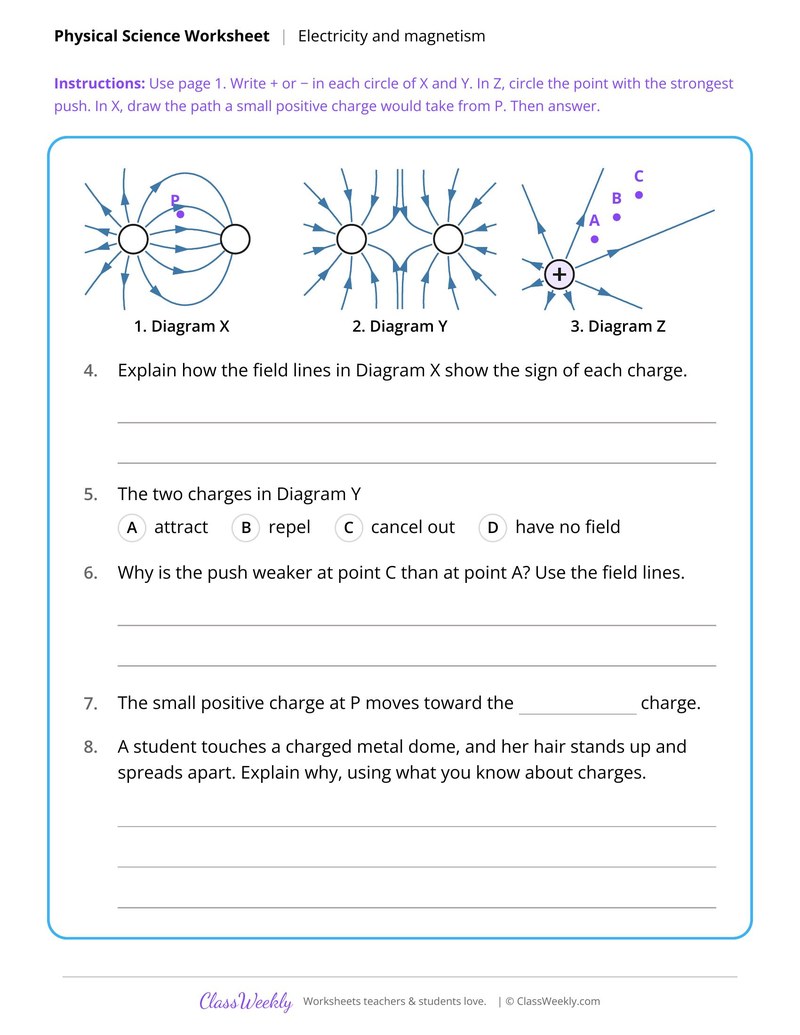
Electric Fields and Field Line Diagrams
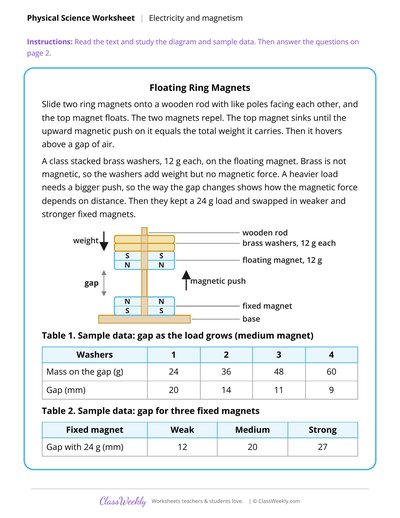
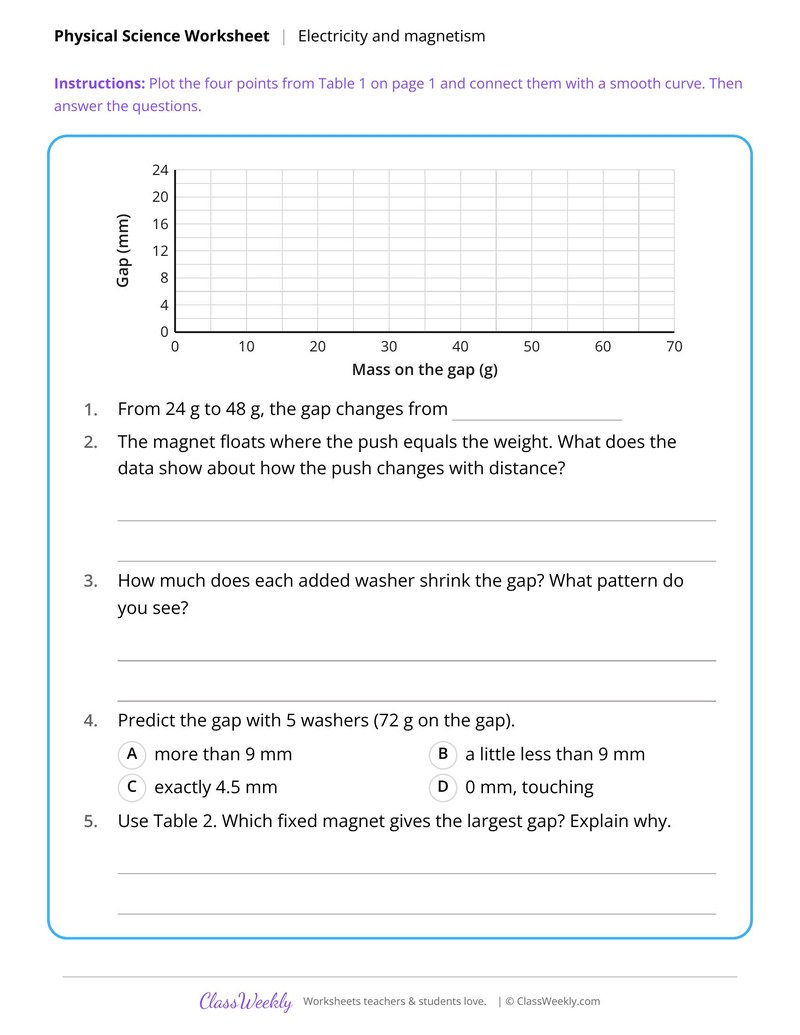
Floating Ring Magnet Gap Data
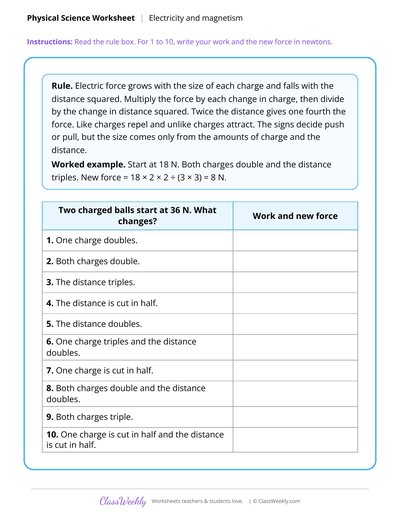
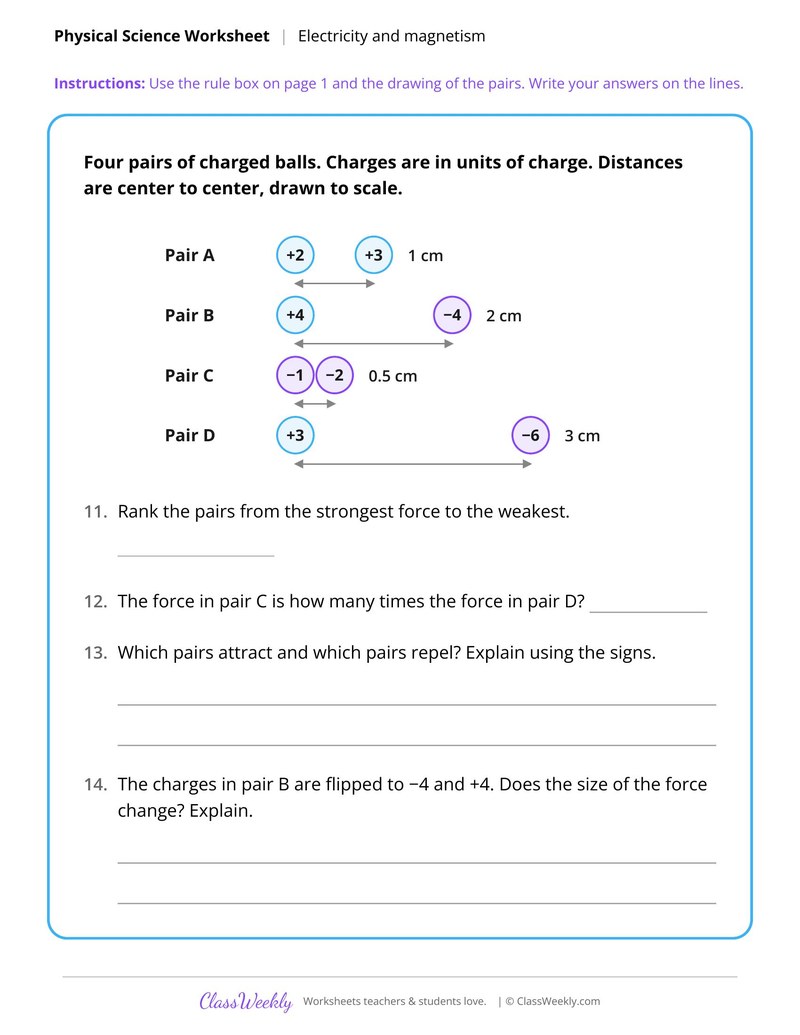
How Charge and Distance Change Electric Force
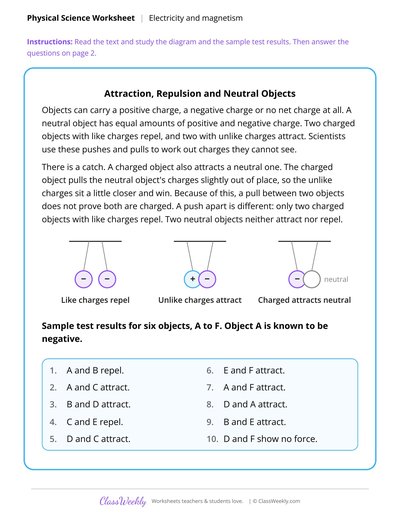
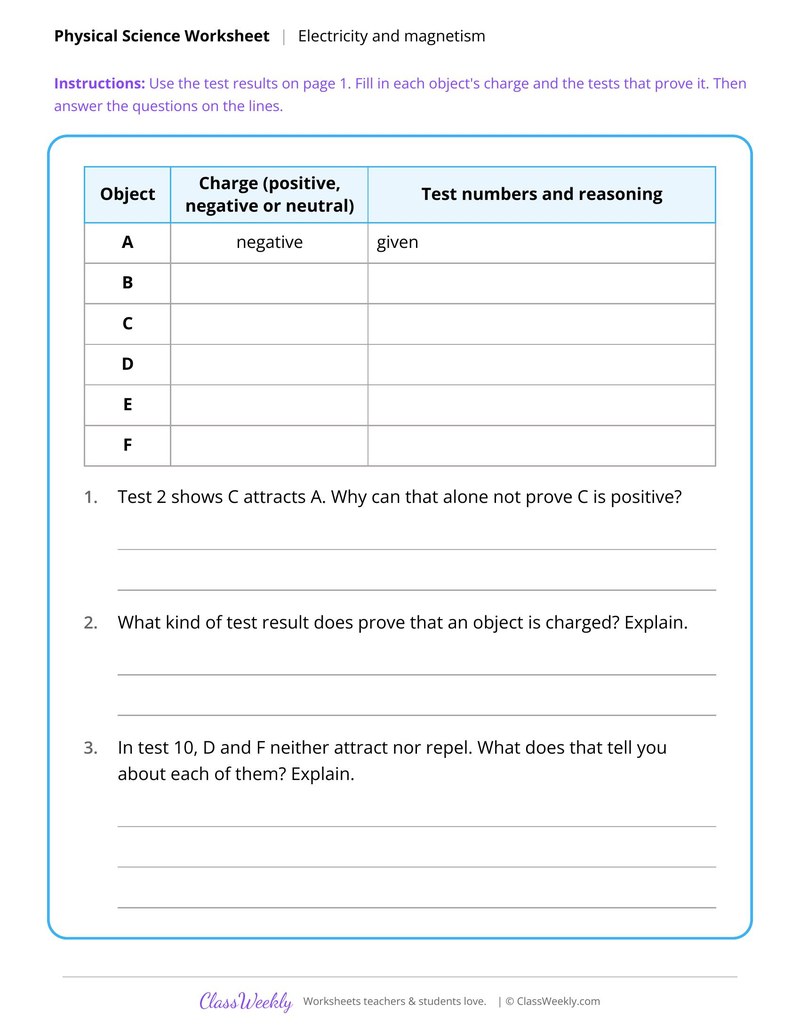
Deduce Charges From Attraction and Repulsion Tests
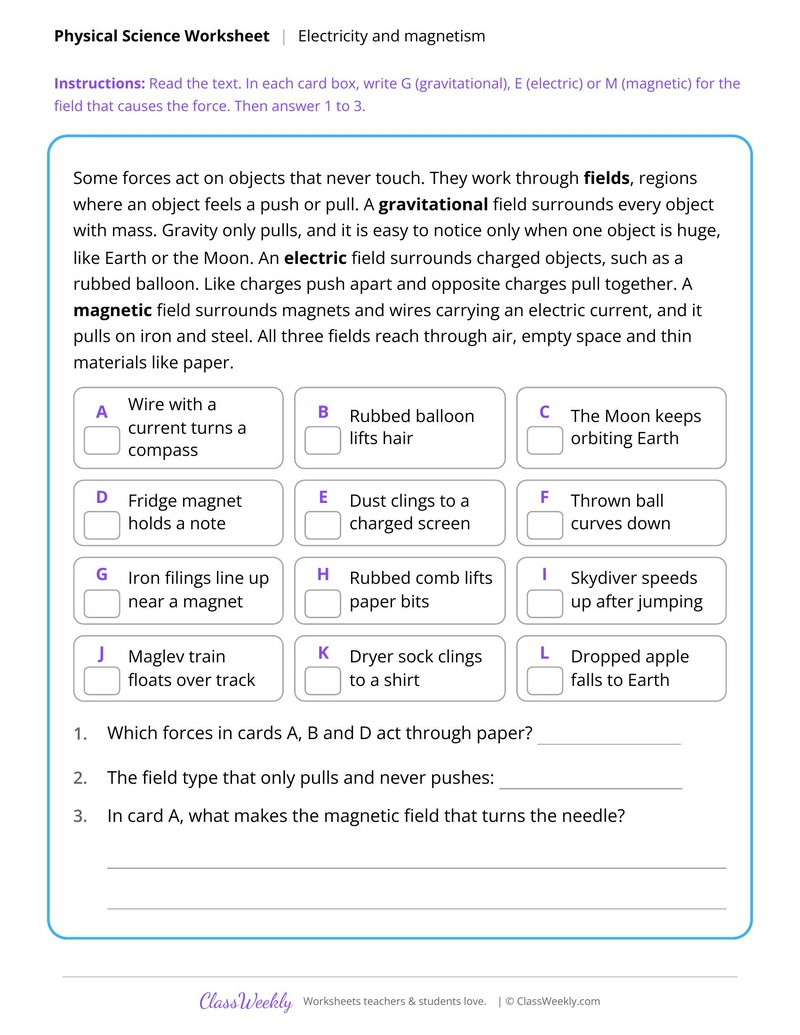
Sort Forces by Field Type
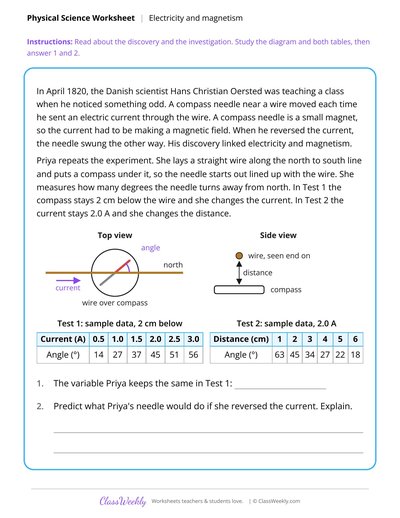
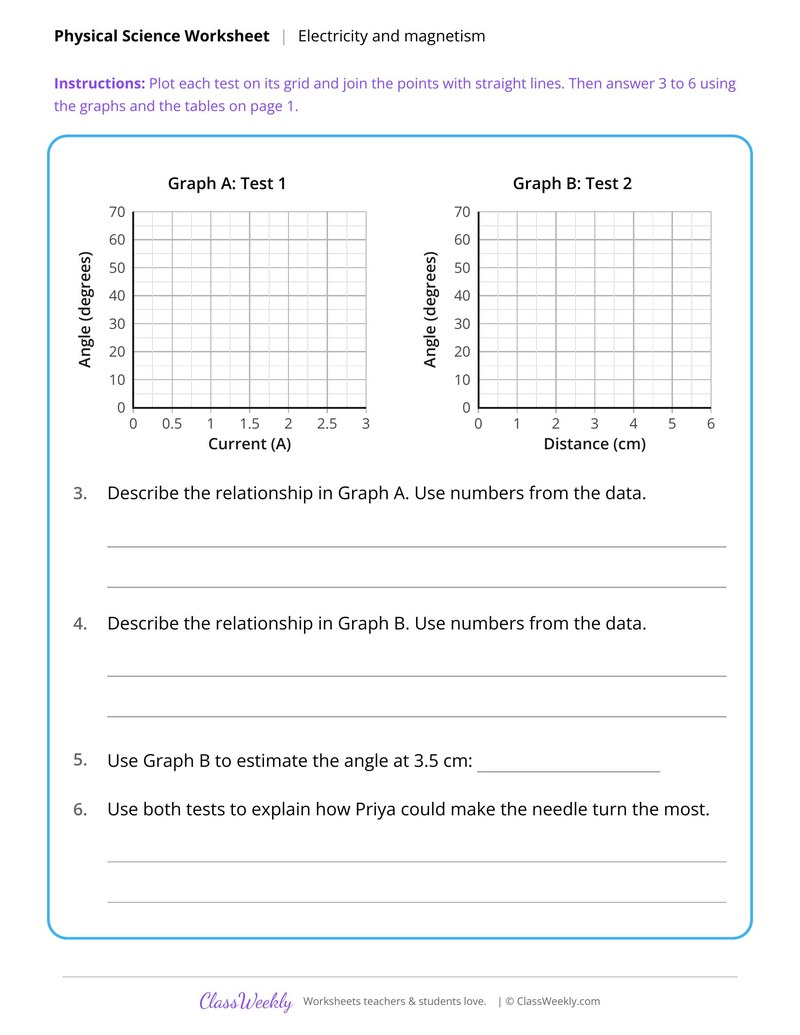
Compass Deflection Near a Wire Carrying Current
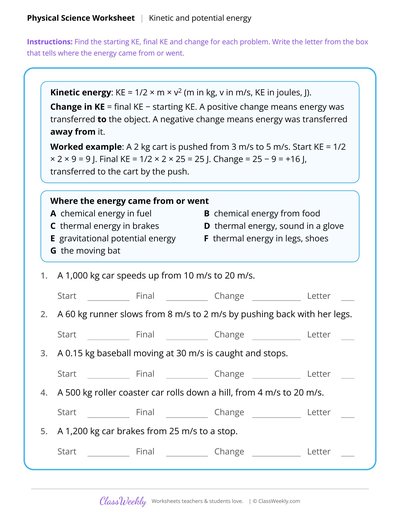
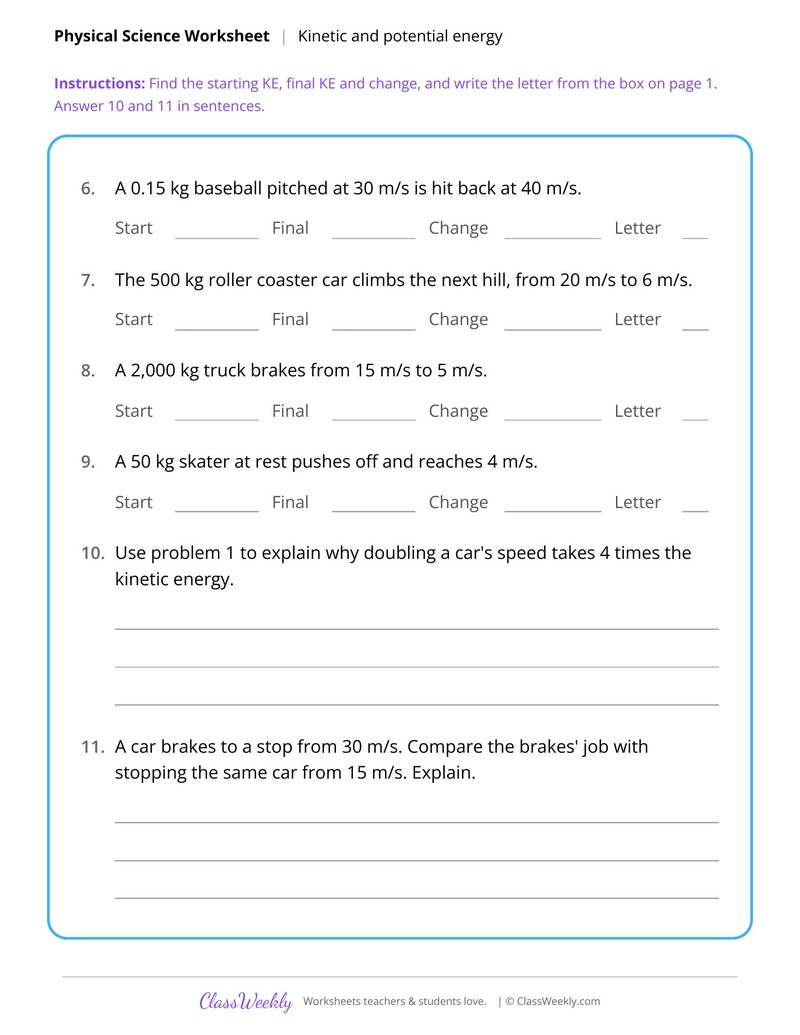
Calculate Changes in Kinetic Energy
Curriculum Links
Next Generation Science Standards
Science · 8th Grade
Find this in the curriculum
Browse the grade, subject, and topic this belongs to.
FAQ
How do I use this heat transfer worksheet?
⌄
Begin with Temperature Versus Thermal Energy to set the vocabulary, then move to the two calculation sheets. Use the vacuum bottle and solar heater sheets as design discussions.
What does this worksheet teach?
⌄
Find energy lost and gained when 80 °C water mixes with 20 °C water and graph the final temperatures. The directions on the page read: Fill in the table and plot final temperature against cold water mass. Then answer. An answer key is included.
Can I use this heat transfer worksheet for homeschool or classroom?
⌄
Yes, both. We made it for 8th grade energy, and it works the same at home or at school. At home, a student can work through it alone and then go over it with you, which shows quickly what is solid and what needs another look. In class it works as independent practice, homework or a warm-up, and you can print one copy or a full set.
What is the difference between temperature and thermal energy?
⌄
Temperature measures the average kinetic energy of the particles in a sample. Thermal energy is the total kinetic energy of all the particles, so it depends on how many there are. A bathtub of warm water has more thermal energy than a cup of hot tea.
How do you calculate thermal energy with specific heat?
⌄
Multiply mass by specific heat by temperature change. For example, warming 50 g of copper by 10 °C takes 50 × 0.39 × 10 = 195 J. Calculate Thermal Energy With Specific Heat gives values for water, aluminum, iron and copper.
How does a vacuum bottle keep drinks hot?
⌄
The vacuum gap blocks conduction and convection, and the shiny surface reflects radiation. Poor conductors such as the stopper and base support slow conduction further. How a Vacuum Bottle Blocks Heat Transfer compares cocoa in a vacuum bottle, a foam cup and a mug.
Ratings & Reviews
No reviews yet. Be the first to share what you think.
Reviews are for ClassWeekly members.
Make a Request
Spotted something to fix, or want a worksheet we don't have yet? Tell us and we'll make it.
Learn More
What is ClassWeekly?
ClassWeekly offers free worksheets and printable learning resources for kids, from preschool up. All worksheets are aligned to Common Core, NGSS, and C3 Framework standards and designed by educators. Become a member to access the full library and download unlimited PDFs.
Electromagnet Current and Core Material Test
Electric Fields and Field Line Diagrams
Floating Ring Magnet Gap Data
How Charge and Distance Change Electric Force
Deduce Charges From Attraction and Repulsion Tests
Sort Forces by Field Type
Compass Deflection Near a Wire Carrying Current
Calculate Changes in Kinetic Energy