Compare Gene Editing, Cloning and Breeding
Written by Adi Ackerman, Head Teacher
"Compare Gene Editing, Cloning and Breeding" is written for 8th Grade (Ages 13-14), and it covers NGSS MS-LS4-5. A 7th grader who is already steady on living things can use it too, and an older student can use it as a short review.
2 pages in this set
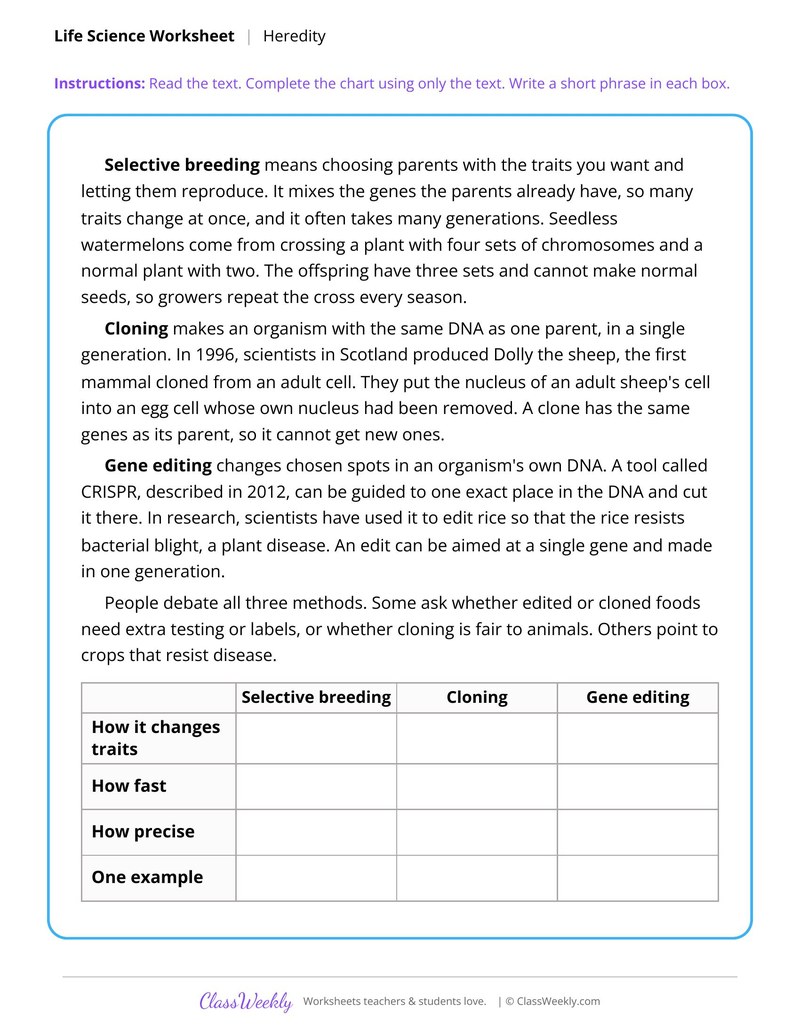
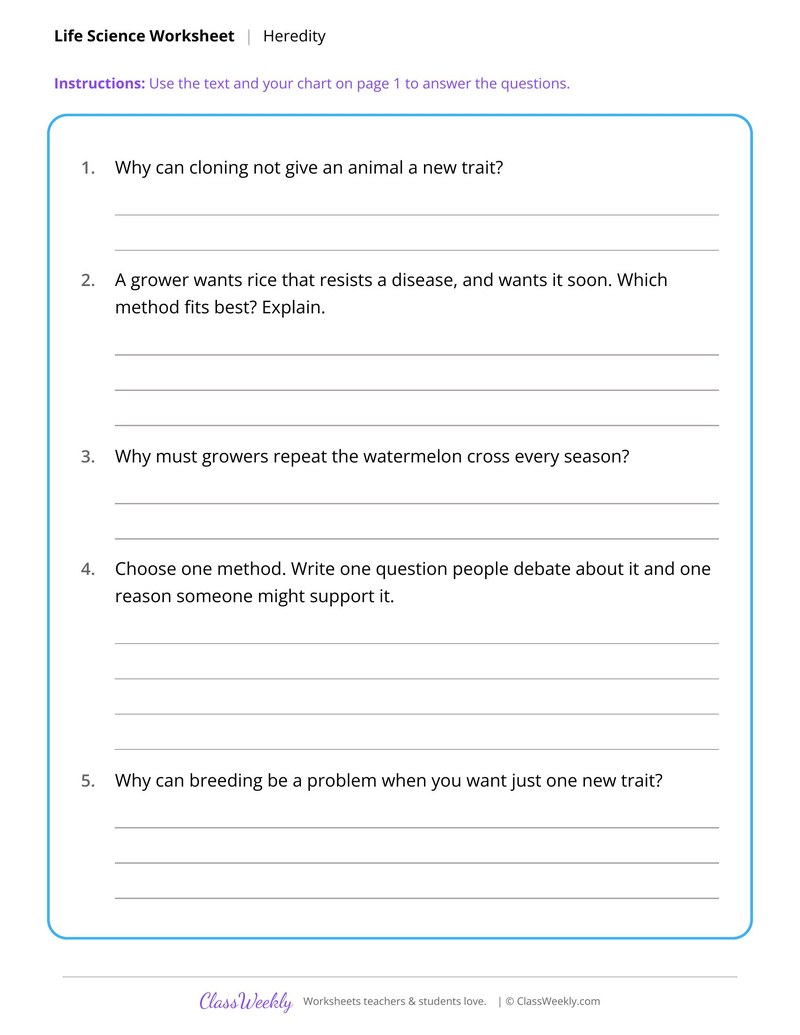
8th grade science worksheet: compare selective breeding, cloning and gene editing, from seedless watermelons to Dolly the sheep. Answer key included. Part of our heredity living things collection. Aligned to NGSS standards.
How do I use this worksheet?
Start with Zoom From Chromosome to Gene to Allele and Label DNA Bases and Copy a Strand to build vocabulary. Then teach mutations, then crosses and pedigrees, and save the DNA profile cases for the end of the unit.
What students will practice
- Students will compare how fast and how precisely three methods change traits.
- Students will explain why a clone cannot gain a new trait.
- Students will choose a method for a disease resistant rice crop and justify it.
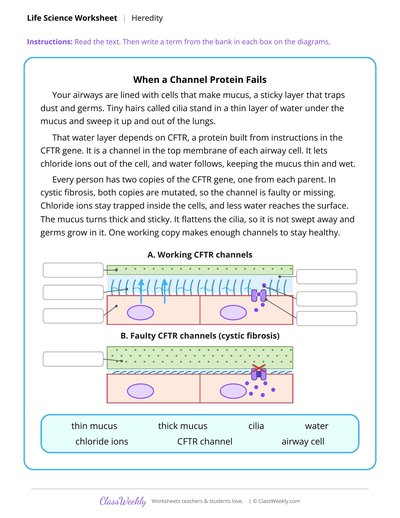
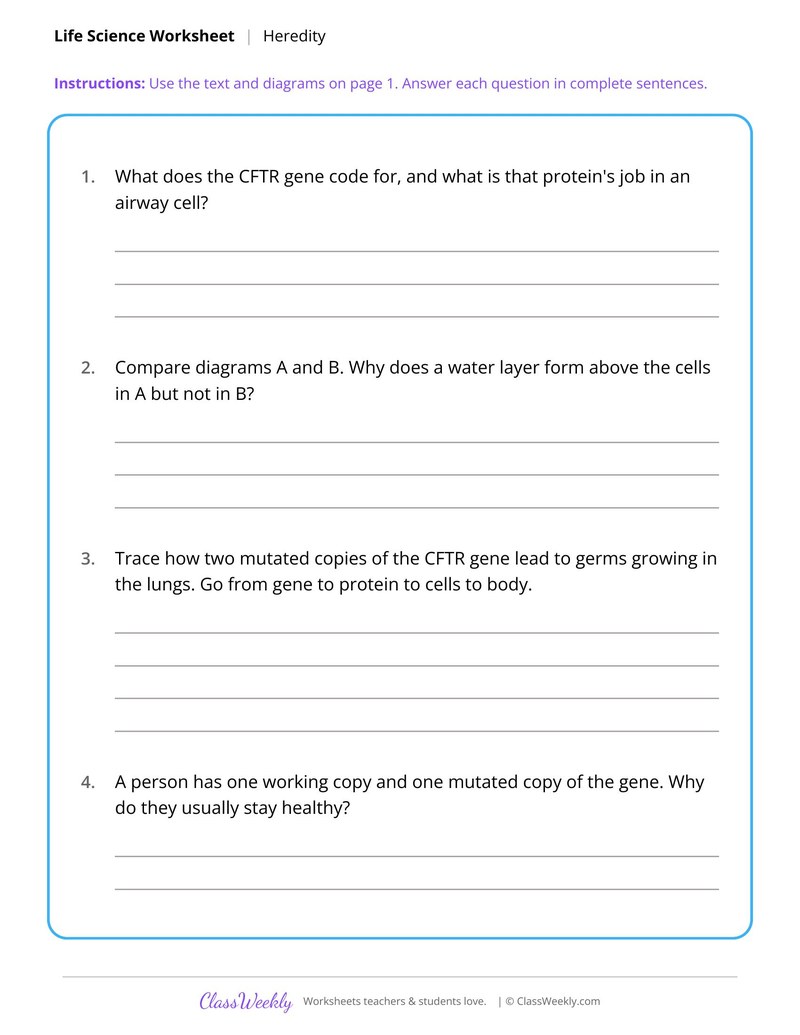
How a Gene Mutation Affects the Airways
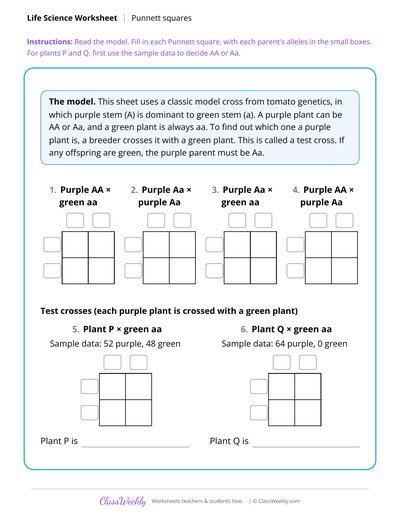
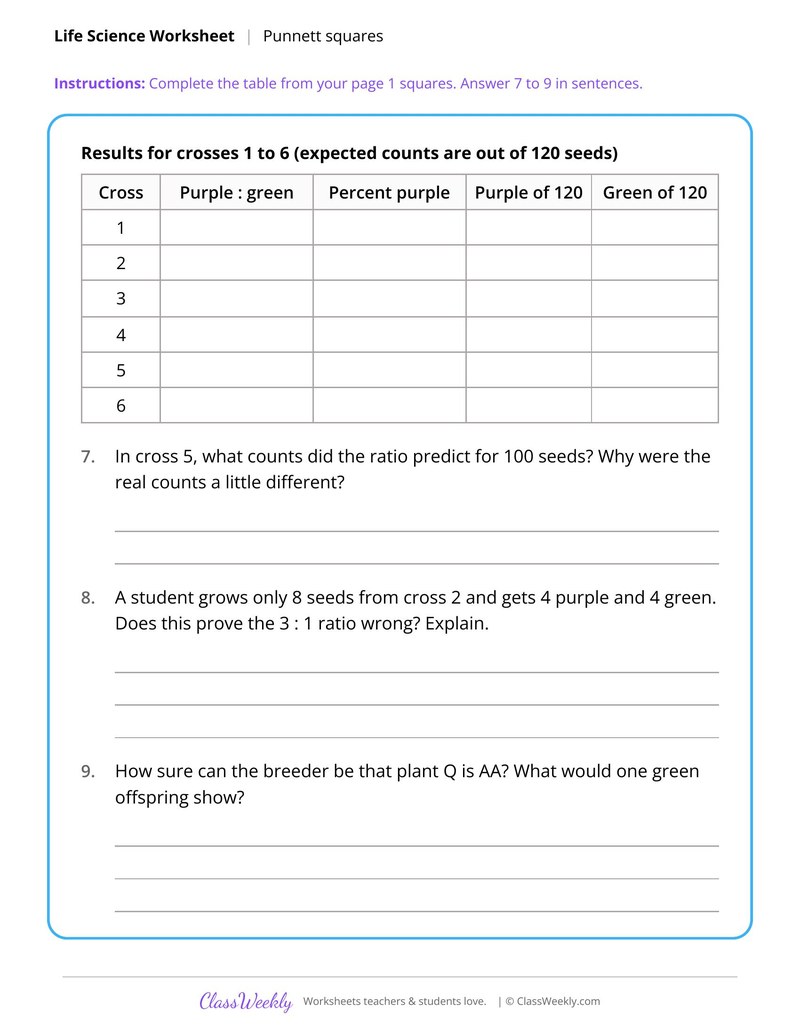
Test Crosses and Expected Offspring Counts
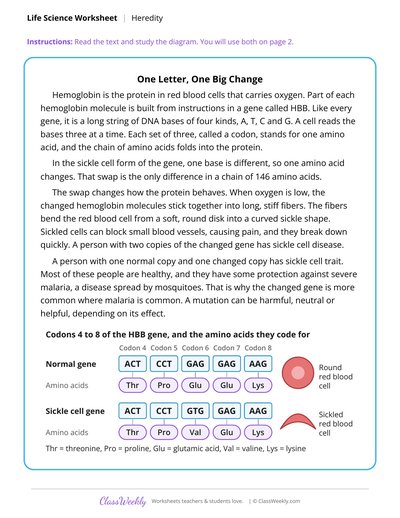
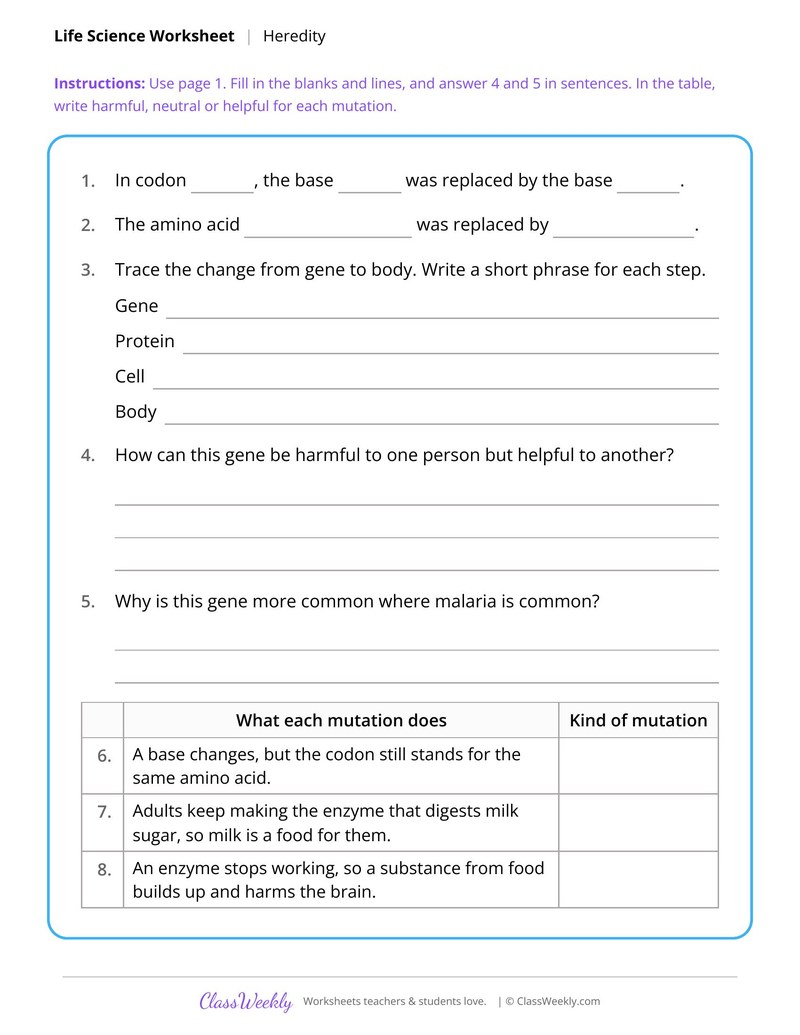
One Base Change and the Sickle Cell Trait
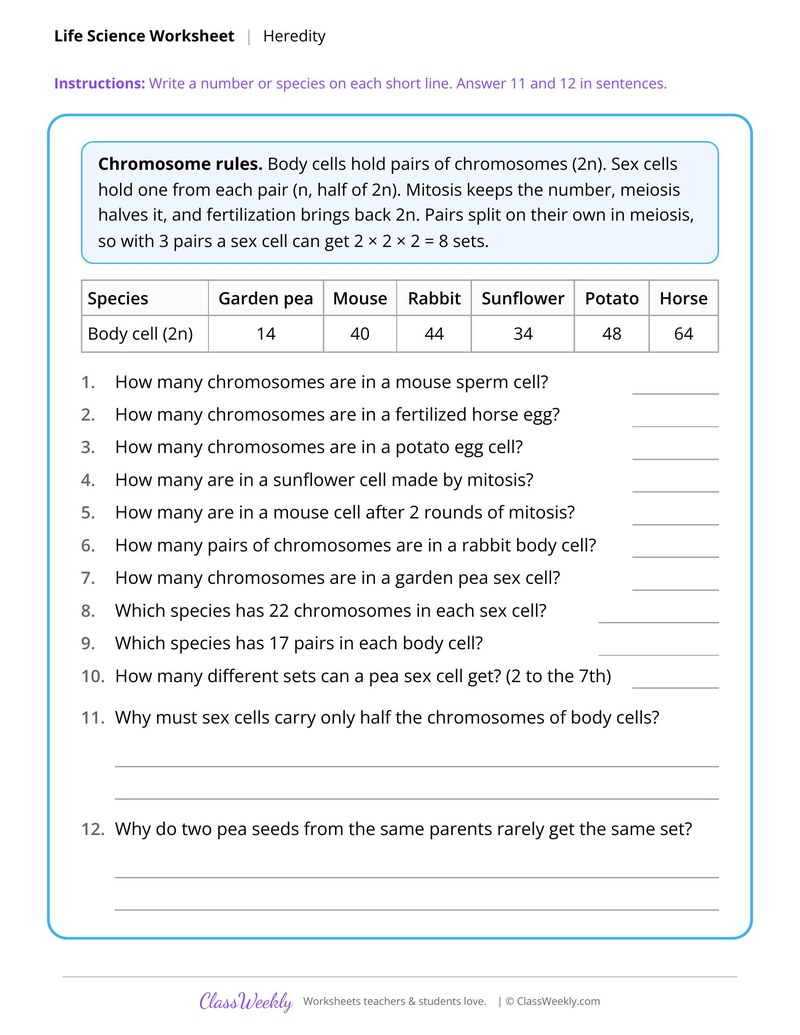
Chromosome Numbers in Mitosis and Meiosis
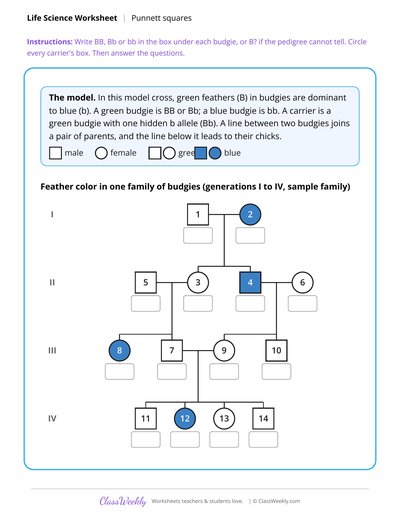
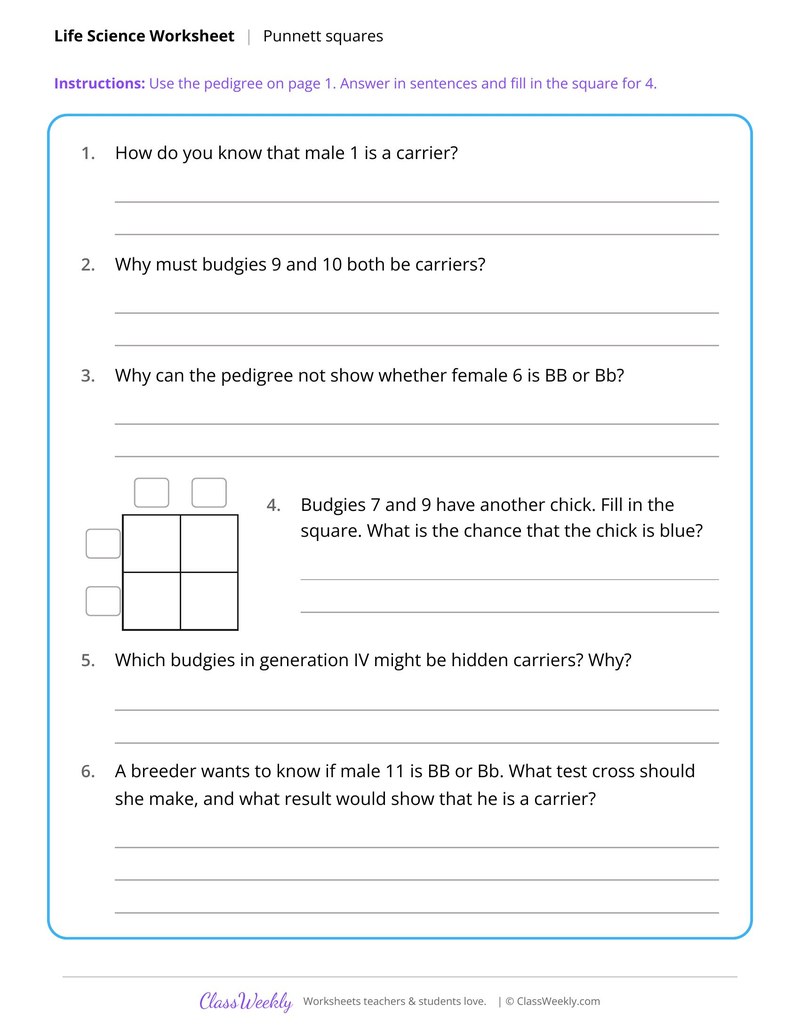
Find Carriers in a Budgie Feather Pedigree
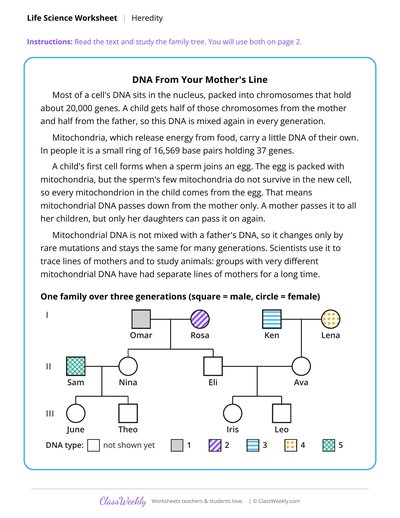
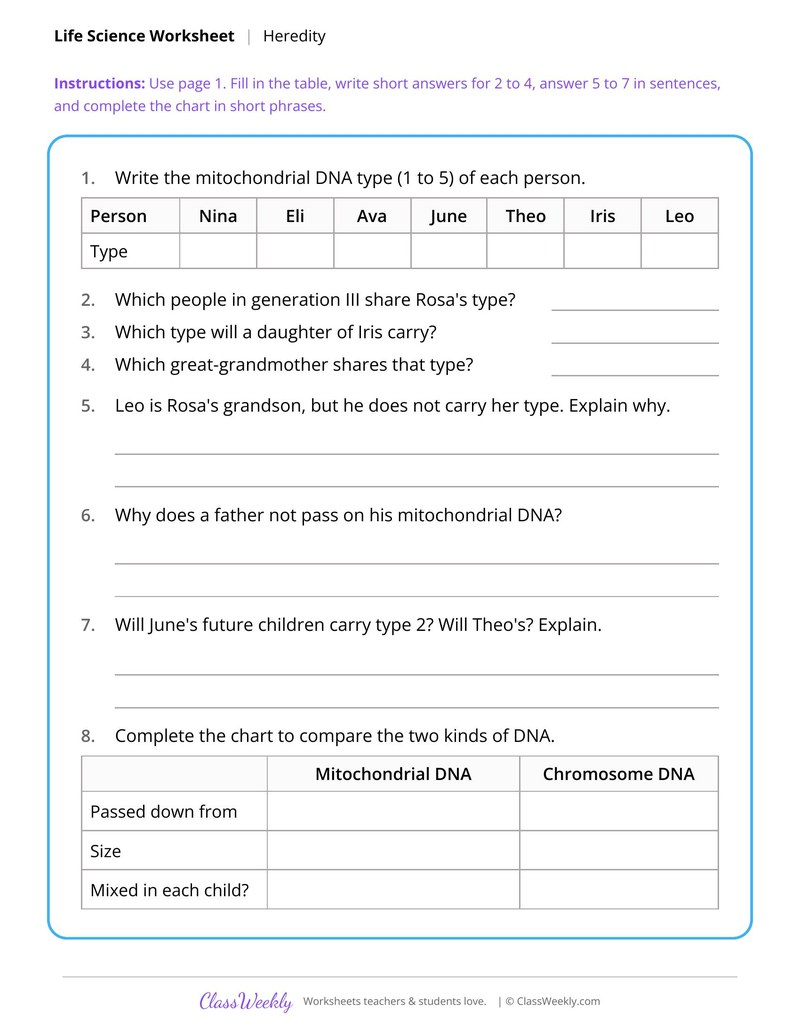
Mitochondrial DNA Passed Down From Mothers
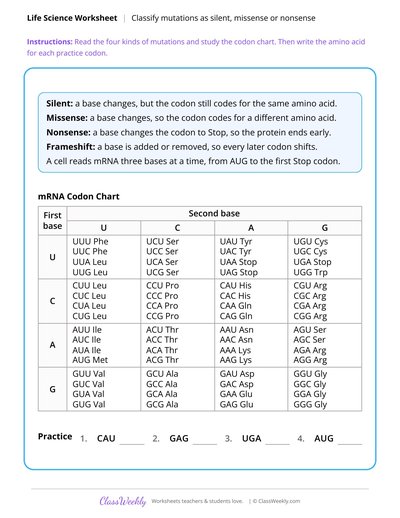
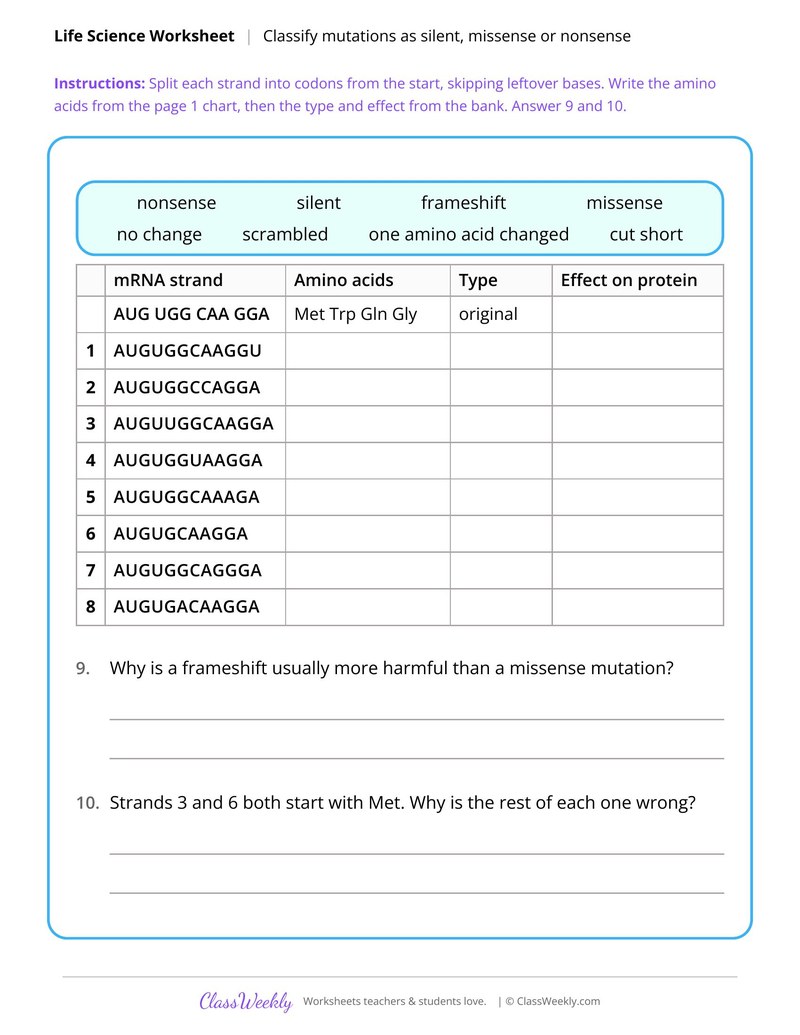
Classify Mutations as Silent, Missense or Nonsense
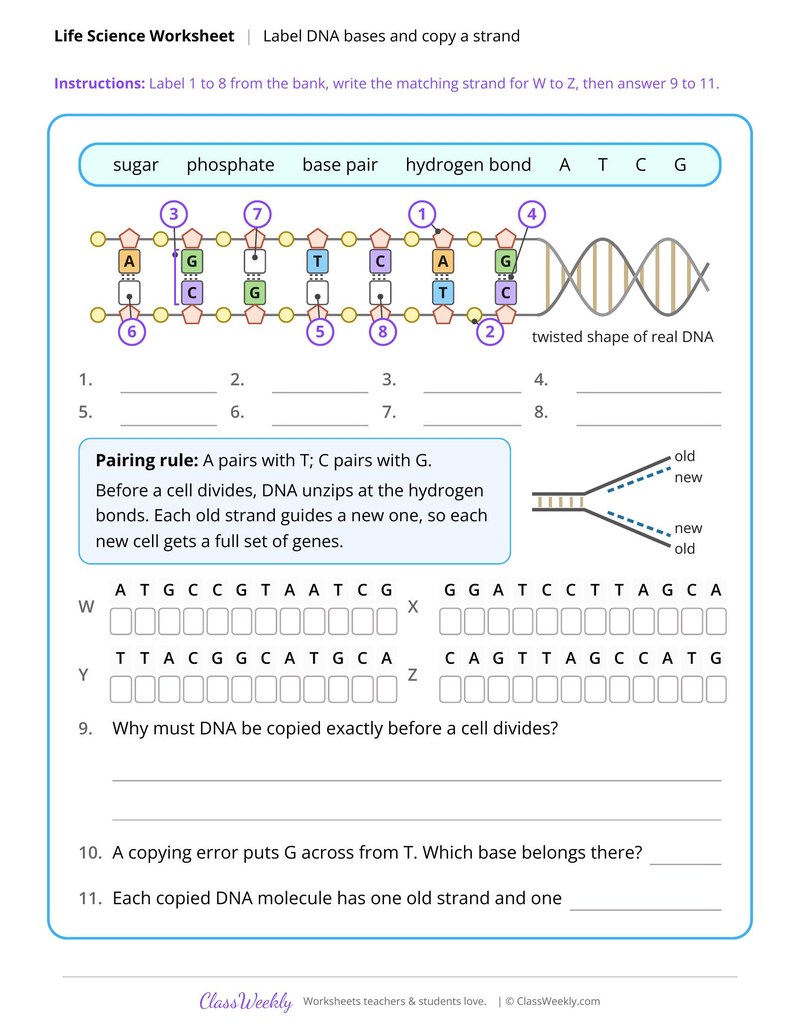
Label DNA Bases and Copy a Strand
Curriculum Links
Next Generation Science Standards
Science · 8th Grade
Find this in the curriculum
Browse the grade, subject, and topic this belongs to.
FAQ
How do I use this heredity worksheet?
⌄
Start with Zoom From Chromosome to Gene to Allele and Label DNA Bases and Copy a Strand to build vocabulary. Then teach mutations, then crosses and pedigrees, and save the DNA profile cases for the end of the unit.
What does this worksheet teach?
⌄
Compare selective breeding, cloning and gene editing, from seedless watermelons to Dolly the sheep. The directions on the page read: Read the text. Complete the chart using only the text. Write a short phrase in each box. An answer key is included.
Can I use this heredity worksheet for homeschool or classroom?
⌄
Yes, both. We made it for 8th grade living things, and it works the same at home or at school. At home, a student can work through it alone and then go over it with you, which shows quickly what is solid and what needs another look. In class it works as independent practice, homework or a warm-up, and you can print one copy or a full set.
What is a test cross?
⌄
A test cross mates an organism showing the dominant trait with one showing the recessive trait. If any offspring show the recessive trait, the parent must carry a hidden recessive allele. Test Crosses and Expected Offspring Counts uses purple and green tomato stems to practice this.
How do DNA profiles identify a person or a variety?
⌄
At certain spots, a short piece of DNA repeats a different number of times in different individuals. Each one has two counts at each spot, one from each parent, and samples match only if every count matches. Match STR Repeat Counts in a Missing Bike Case and Use DNA Profiles to Find a Grape Variety's Parents both use this rule.
Why is mitochondrial DNA passed down only from mothers?
⌄
Every mitochondrion in a child comes from the egg, because the sperm's few mitochondria do not survive in the new cell. A mother passes it to all her children, but only her daughters pass it on again. Mitochondrial DNA Passed Down From Mothers traces it through a family tree.
Ratings & Reviews
No reviews yet. Be the first to share what you think.
Reviews are for ClassWeekly members.
Make a Request
Spotted something to fix, or want a worksheet we don't have yet? Tell us and we'll make it.
Worksheet Details
| Grade | 8th Grade |
| Subject | Science |
| Topic | Living Things |
| Standard | MS-LS4-5 |
| Pages | 2 pages |
| Difficulty | Medium |
Learn More
What is ClassWeekly?
ClassWeekly offers free worksheets and printable learning resources for kids, from preschool up. All worksheets are aligned to Common Core, NGSS, and C3 Framework standards and designed by educators. Become a member to access the full library and download unlimited PDFs.
How a Gene Mutation Affects the Airways
Test Crosses and Expected Offspring Counts
One Base Change and the Sickle Cell Trait
Chromosome Numbers in Mitosis and Meiosis
Find Carriers in a Budgie Feather Pedigree
Mitochondrial DNA Passed Down From Mothers
Classify Mutations as Silent, Missense or Nonsense
Label DNA Bases and Copy a Strand