Sexual Selection and Showy Traits
Written by Adi Ackerman, Head Teacher
"Sexual Selection and Showy Traits" is written for 8th Grade (Ages 13-14), and it covers NGSS MS-LS1-4. A 7th grader who is already steady on living things can use it too, and an older student can use it as a short review.
2 pages in this set
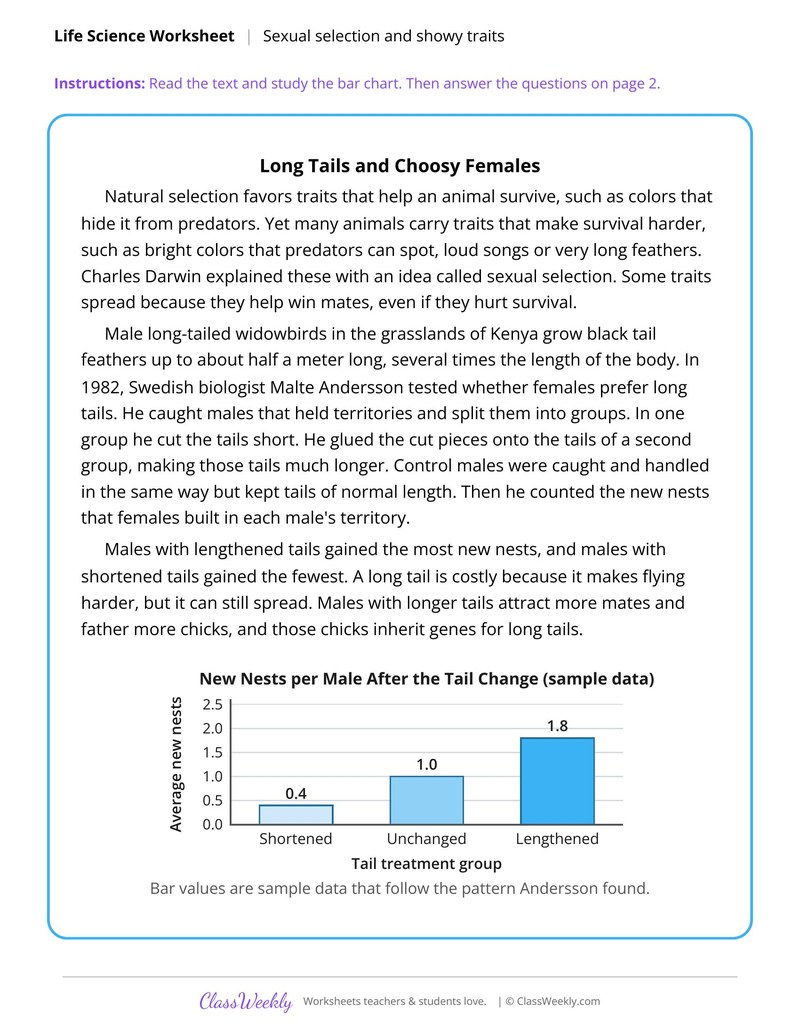
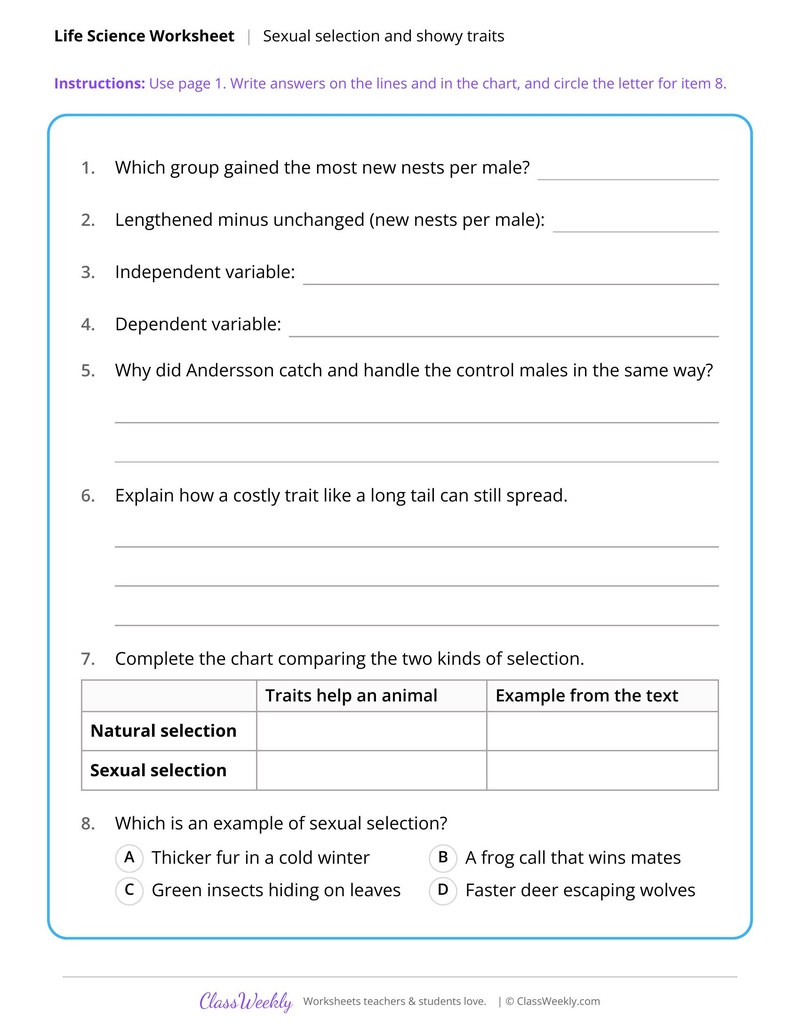
8th grade science worksheet: read Andersson's long tailed widowbird experiment and compare natural and sexual selection. Answer key included. Part of our natural selection and adaptations living things collection. Aligned to NGSS standards.
How do I use this worksheet?
Teach the evidence sheets first, starting with the brains and embryos, then the fossil timelines. Finish with the data sheets on mice, anoles and beetles so students see selection happen in numbers.
What students will practice
- Students will read a bar chart of new nests per male for each tail group.
- Students will name the independent and dependent variables in the experiment.
- Students will explain how a costly trait can still spread through sexual selection.
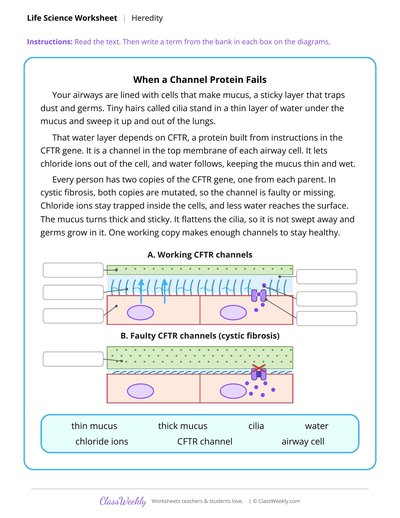
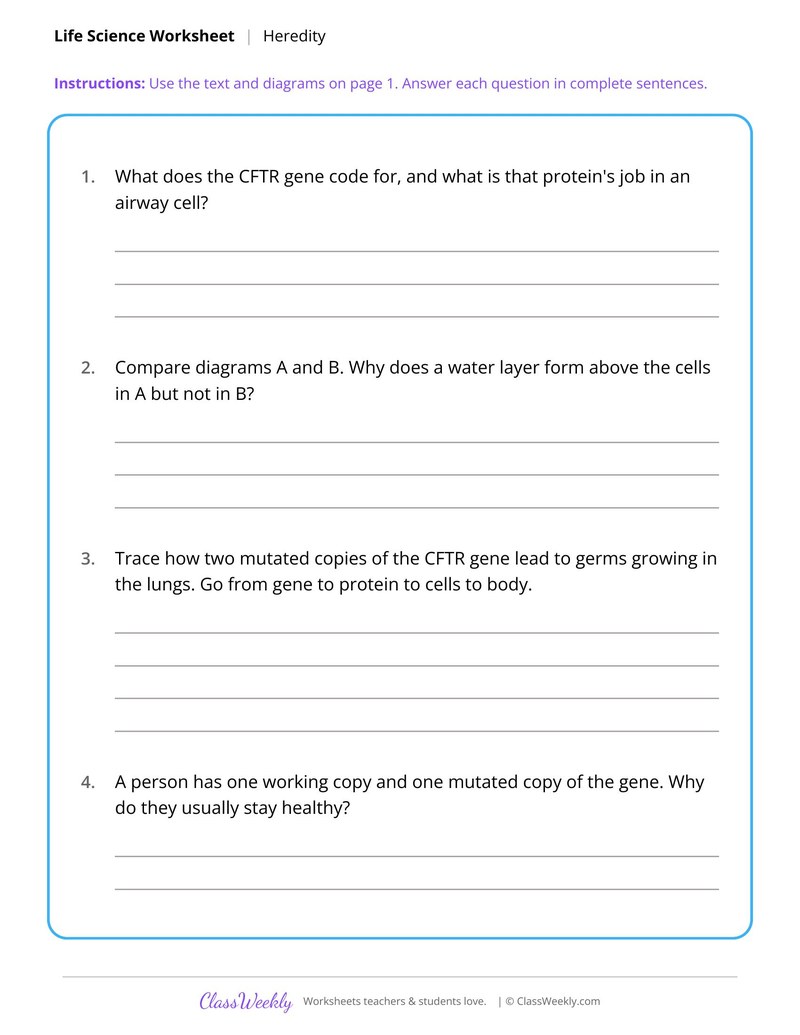
How a Gene Mutation Affects the Airways
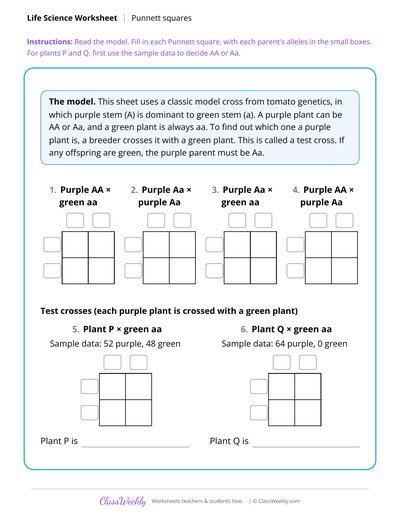
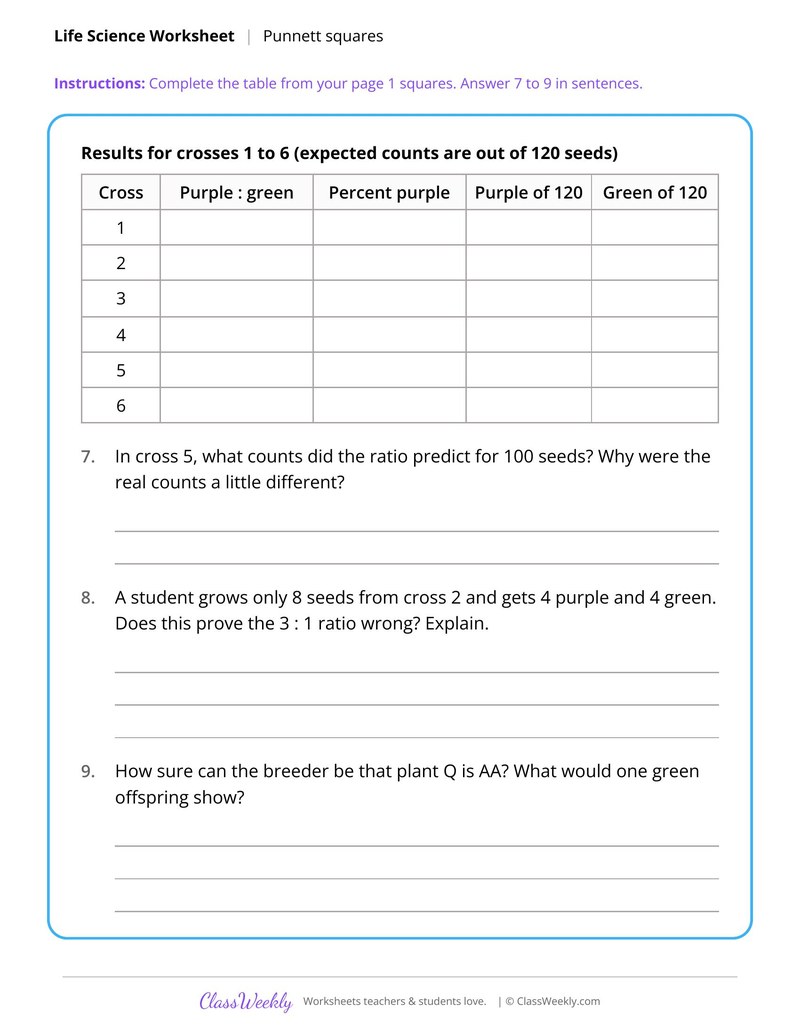
Test Crosses and Expected Offspring Counts
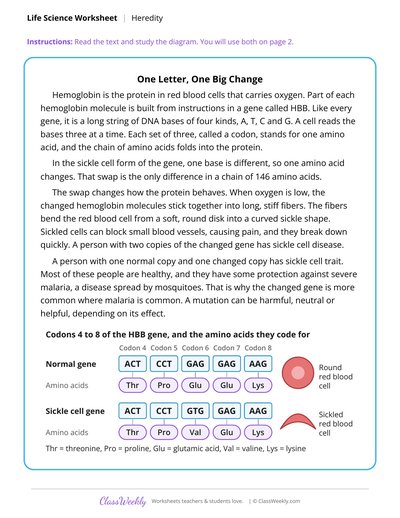
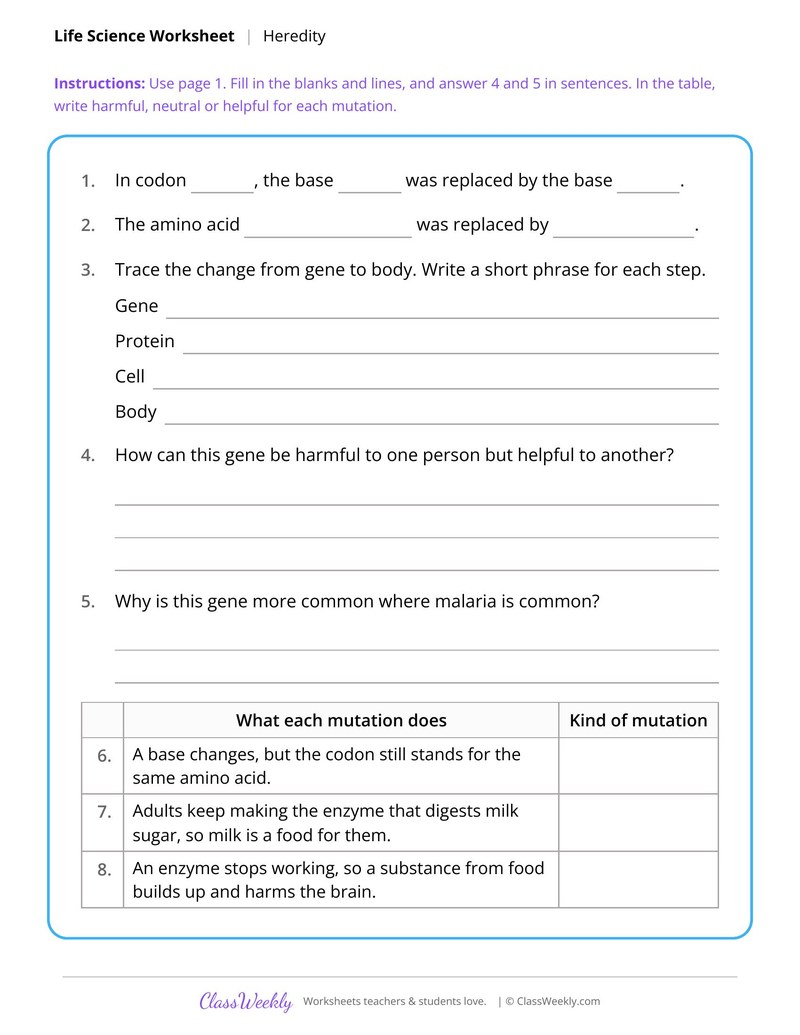
One Base Change and the Sickle Cell Trait
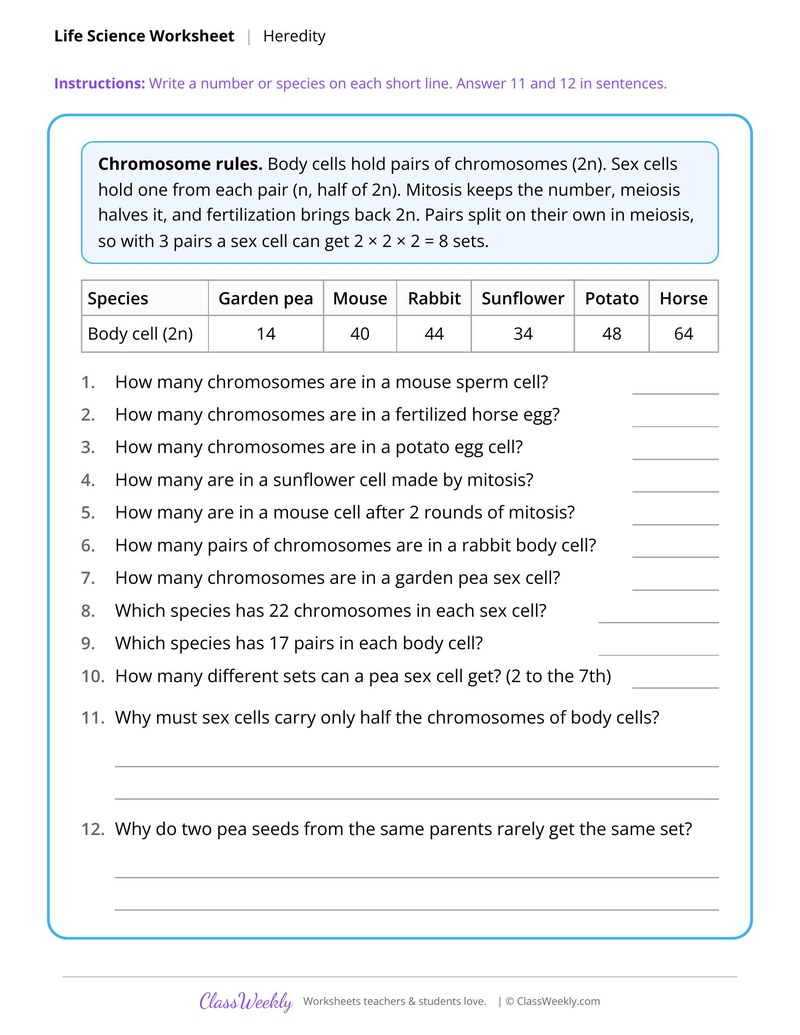
Chromosome Numbers in Mitosis and Meiosis
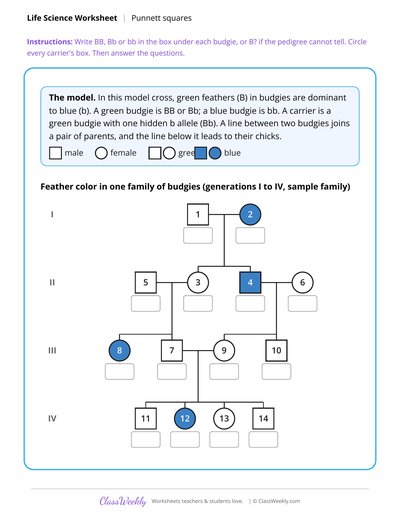
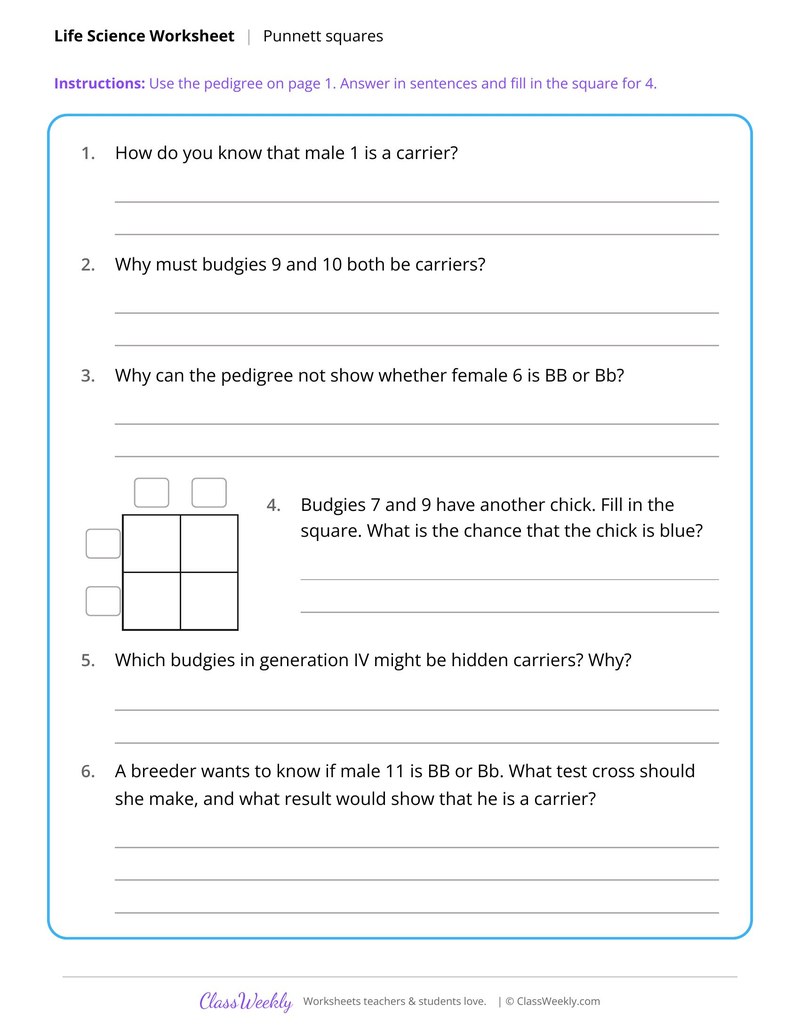
Find Carriers in a Budgie Feather Pedigree
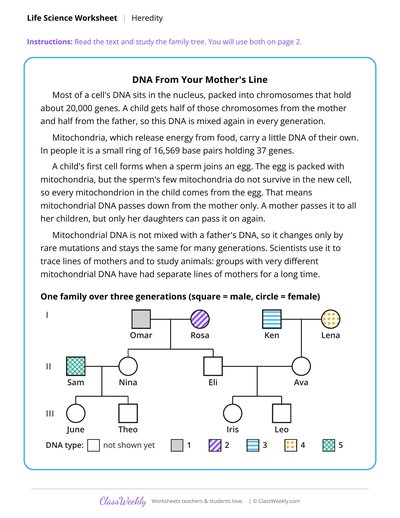
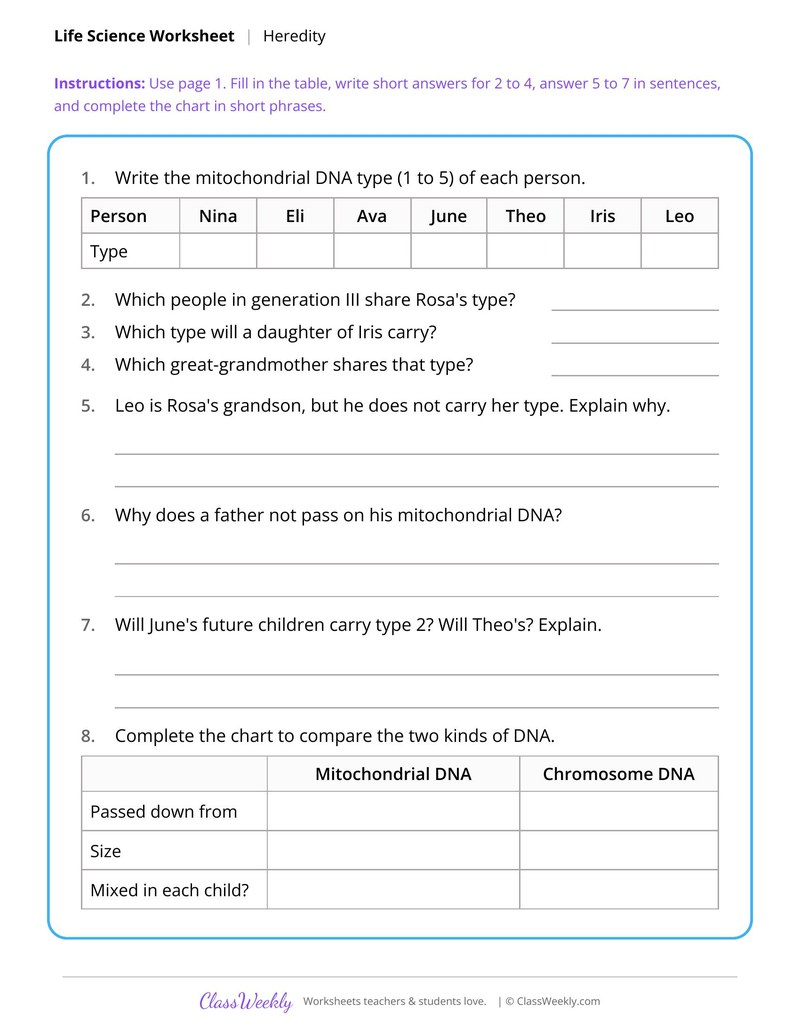
Mitochondrial DNA Passed Down From Mothers
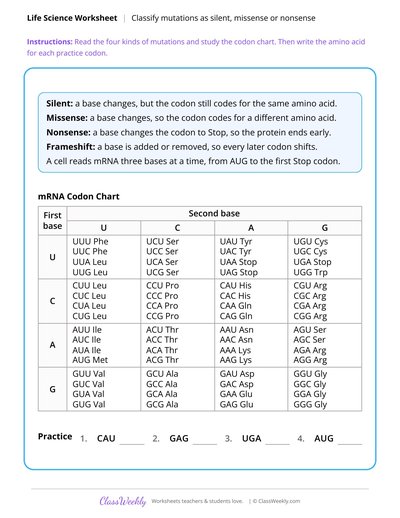
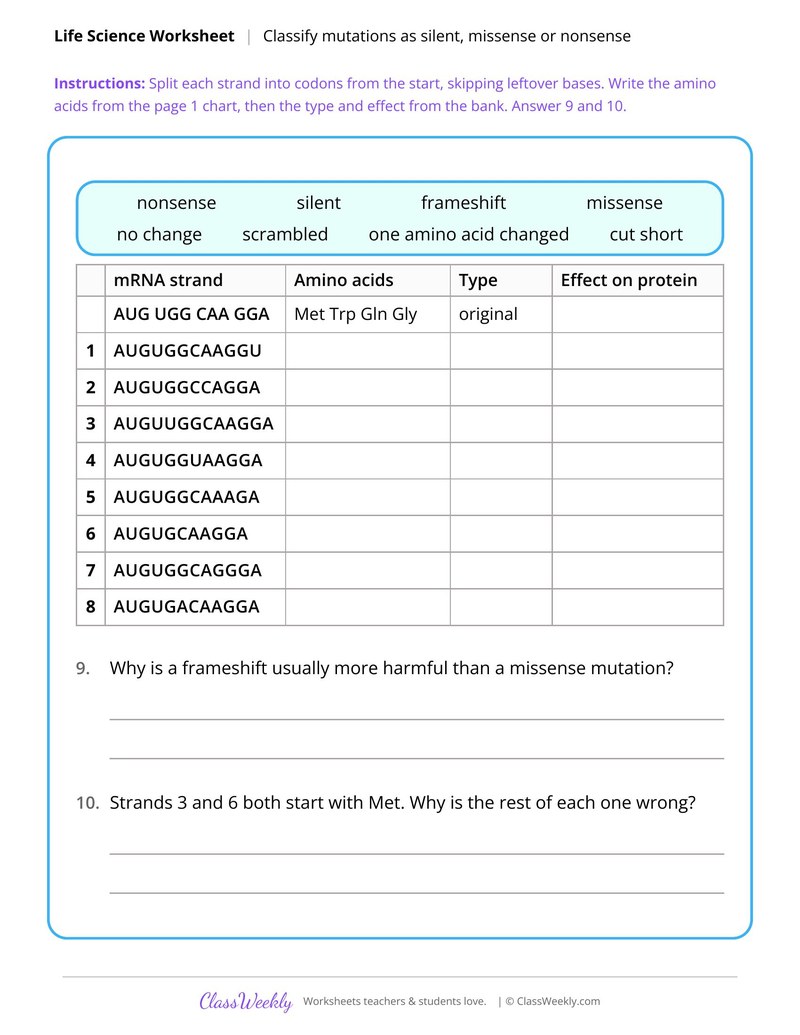
Classify Mutations as Silent, Missense or Nonsense
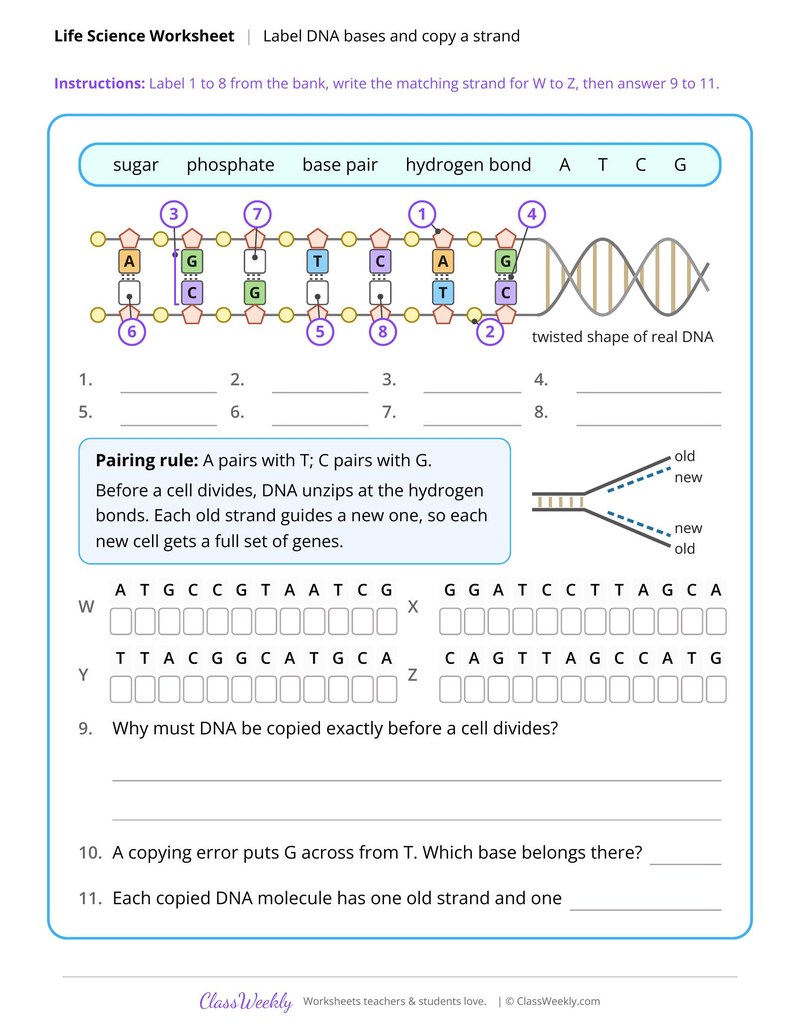
Label DNA Bases and Copy a Strand
Curriculum Links
Next Generation Science Standards
Science · 8th Grade
Find this in the curriculum
Browse the grade, subject, and topic this belongs to.
FAQ
How do I use this natural selection and adaptations worksheet?
⌄
Teach the evidence sheets first, starting with the brains and embryos, then the fossil timelines. Finish with the data sheets on mice, anoles and beetles so students see selection happen in numbers.
What does this worksheet teach?
⌄
Read Andersson's long tailed widowbird experiment and compare natural and sexual selection. The directions on the page read: Read the text and study the bar chart. Then answer the questions on page 2. An answer key is included.
Can I use this natural selection and adaptations worksheet for homeschool or classroom?
⌄
Yes, both. We made it for 8th grade living things, and it works the same at home or at school. At home, a student can work through it alone and then go over it with you, which shows quickly what is solid and what needs another look. In class it works as independent practice, homework or a warm-up, and you can print one copy or a full set.
What is a vestigial structure?
⌄
A vestigial structure is a body part that is much smaller or less used than the same part in related animals. Python hip bones, the human tailbone and kiwi wings are examples. Vestigial Structures as Evidence of Ancestry asks what each part suggests about ancestors.
What is sexual selection?
⌄
Sexual selection spreads traits that help an animal win mates, even when those traits make survival harder. Sexual Selection and Showy Traits follows a field experiment with long-tailed widowbirds in which males with lengthened tails gained the most new nests.
How do you show natural selection with data?
⌄
Track how common a trait or allele is over several generations and graph it. Rock Pocket Mouse Fur Color Over Generations graphs dark mice on lava and on sand, and Calculate Allele Percents in a Beetle Population counts alleles in 100 beetles each generation.
Ratings & Reviews
No reviews yet. Be the first to share what you think.
Reviews are for ClassWeekly members.
Make a Request
Spotted something to fix, or want a worksheet we don't have yet? Tell us and we'll make it.
Worksheet Details
| Grade | 8th Grade |
| Subject | Science |
| Topic | Living Things |
| Standard | MS-LS1-4 |
| Pages | 2 pages |
| Difficulty | Medium |
Learn More
What is ClassWeekly?
ClassWeekly offers free worksheets and printable learning resources for kids, from preschool up. All worksheets are aligned to Common Core, NGSS, and C3 Framework standards and designed by educators. Become a member to access the full library and download unlimited PDFs.
How a Gene Mutation Affects the Airways
Test Crosses and Expected Offspring Counts
One Base Change and the Sickle Cell Trait
Chromosome Numbers in Mitosis and Meiosis
Find Carriers in a Budgie Feather Pedigree
Mitochondrial DNA Passed Down From Mothers
Classify Mutations as Silent, Missense or Nonsense
Label DNA Bases and Copy a Strand