Label a Flower and Trace Pollen to Seed
Written by Adi Ackerman, Head Teacher
"Label a Flower and Trace Pollen to Seed" is written for 8th Grade (Ages 13-14), and it covers NGSS MS-LS1-4. A 7th grader who is already steady on living things can use it too, and an older student can use it as a short review.
2 pages in this set
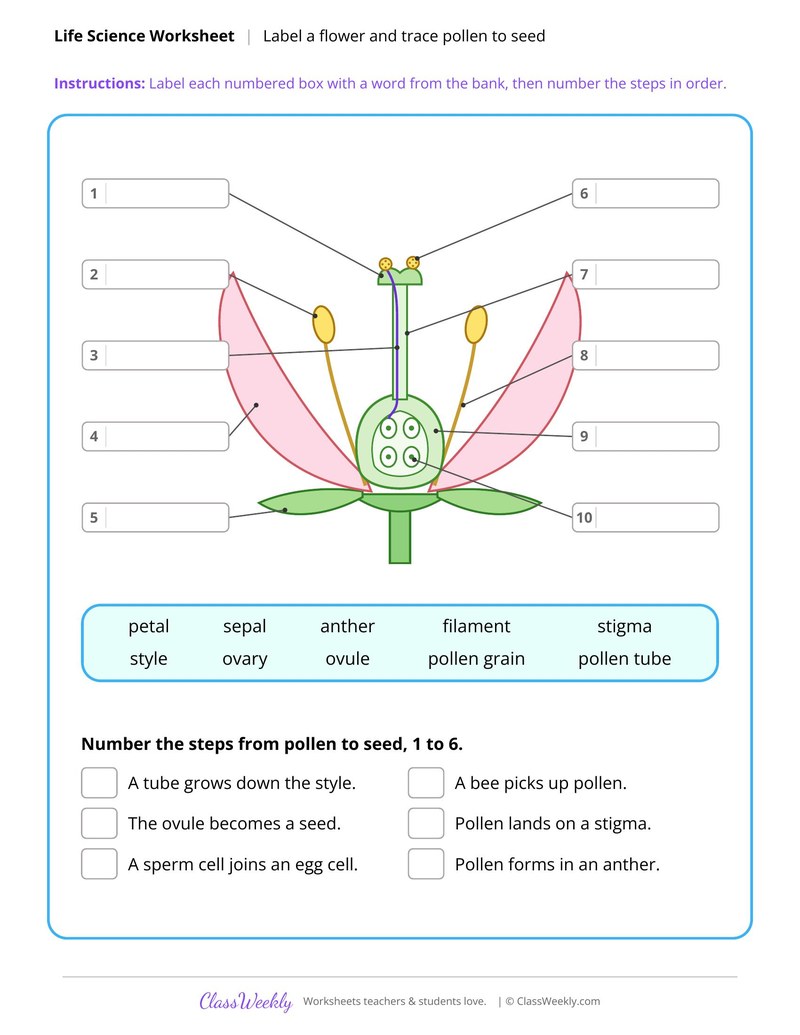
8th grade science worksheet: label ten flower parts from petal to pollen tube and order the steps from pollen to seed. Answer key included. Part of our reproduction and plant growth living things collection. Aligned to NGSS standards.
How do I use this worksheet?
Use the sorting sheet to introduce asexual and sexual reproduction, then the banana sheet to show why variation matters. The flower and turtle sheets fit plant and animal lessons.
What students will practice
- Students will label petal, sepal, anther, stigma, ovary and other flower parts.
- Students will order the steps from pollen forming to a seed.
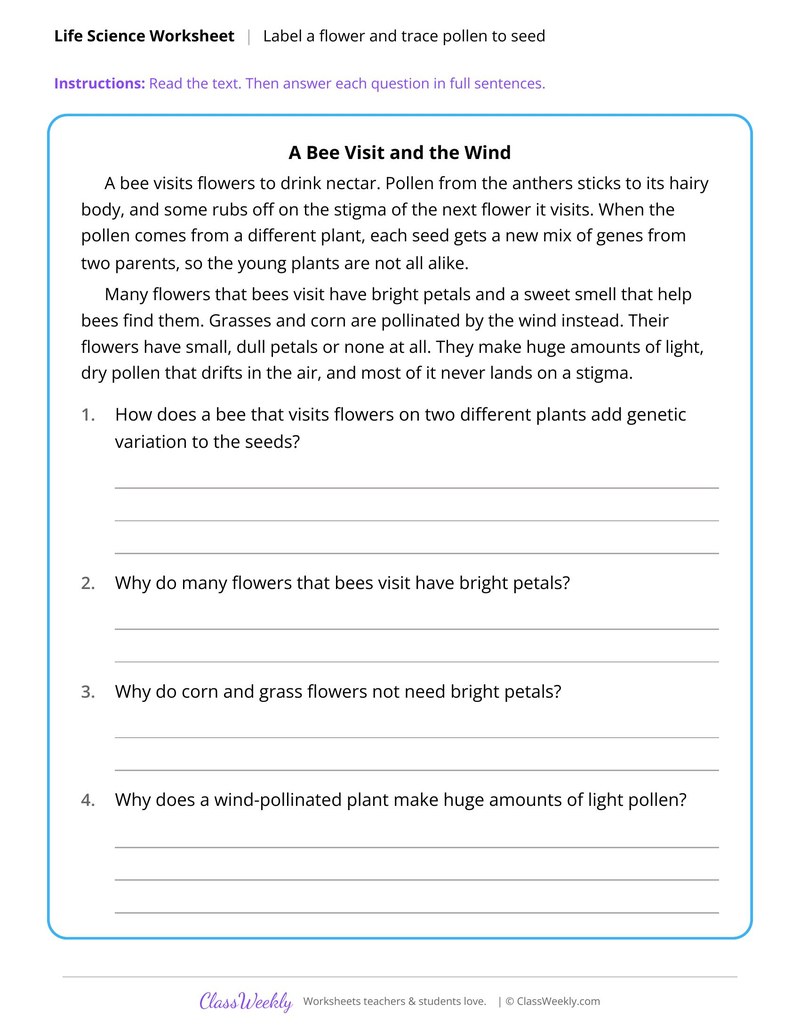
- Students will compare flowers pollinated by bees with those pollinated by wind.
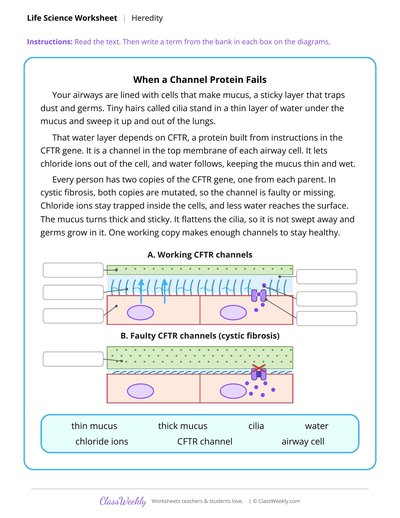
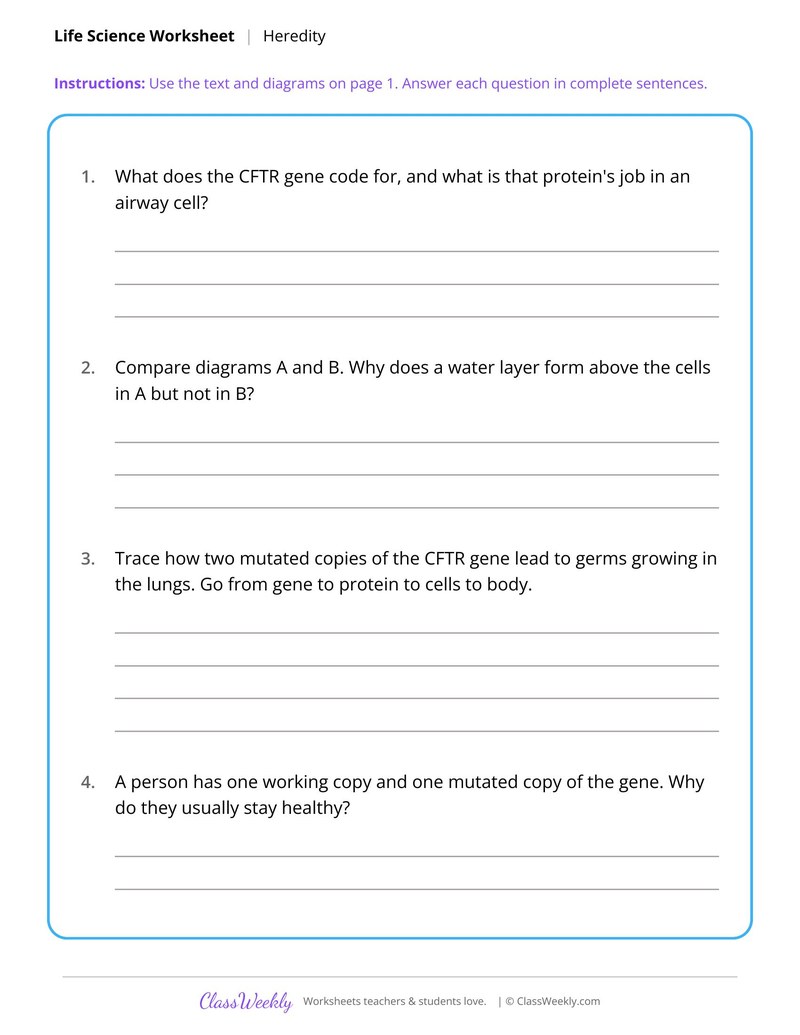
How a Gene Mutation Affects the Airways
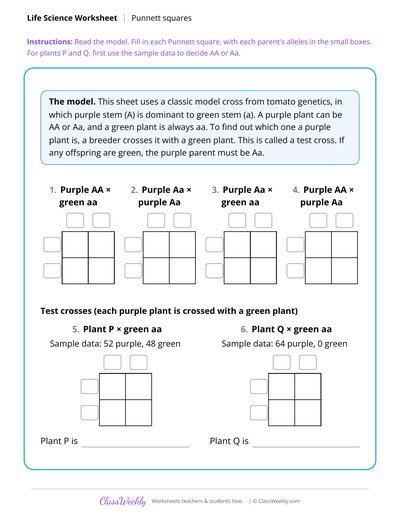
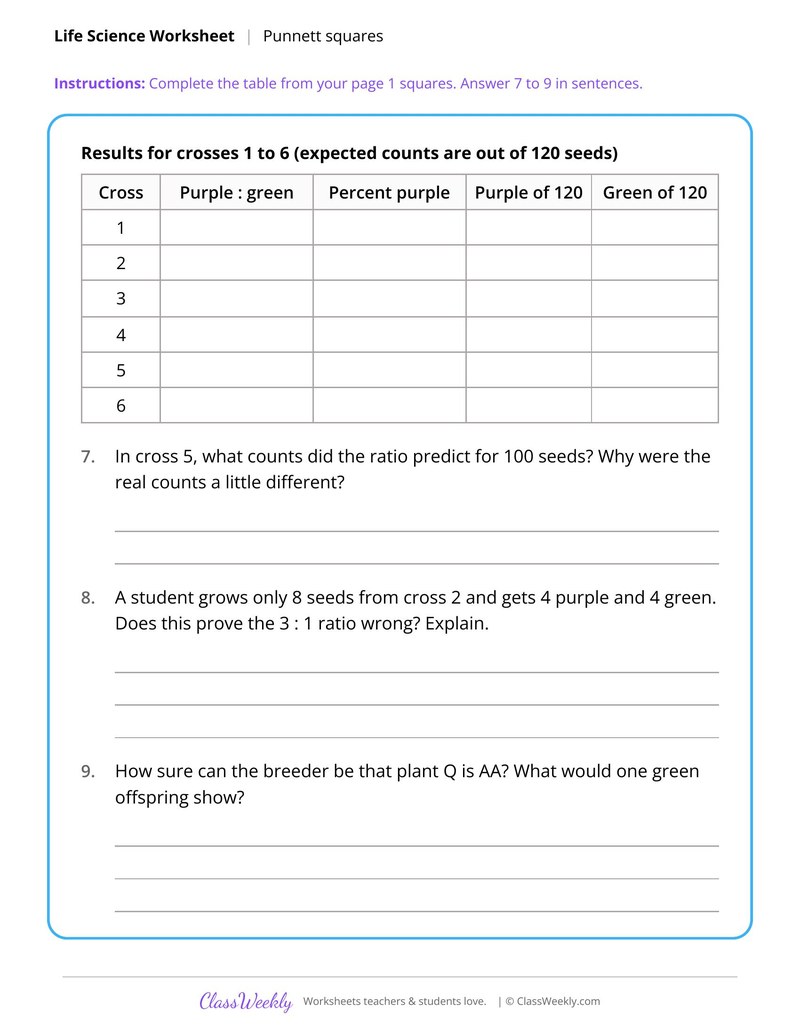
Test Crosses and Expected Offspring Counts
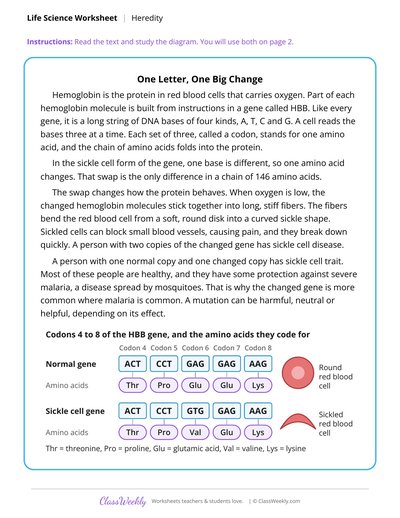
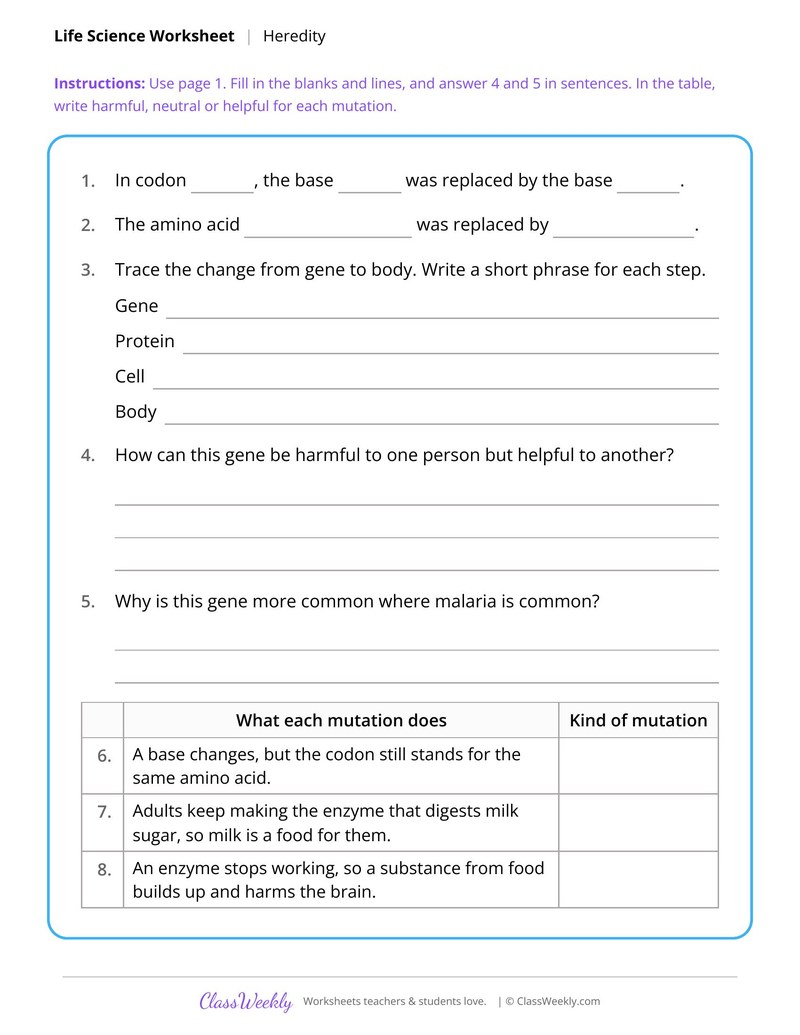
One Base Change and the Sickle Cell Trait
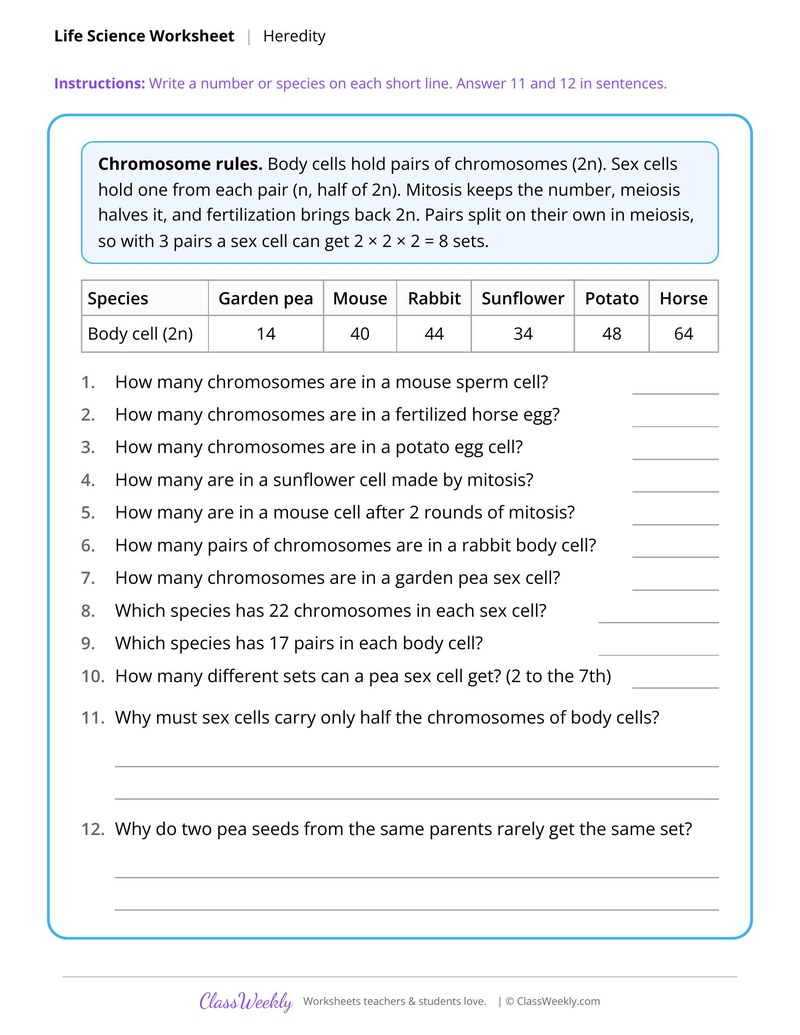
Chromosome Numbers in Mitosis and Meiosis
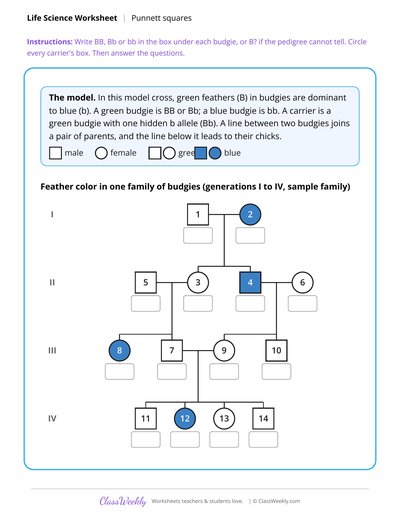
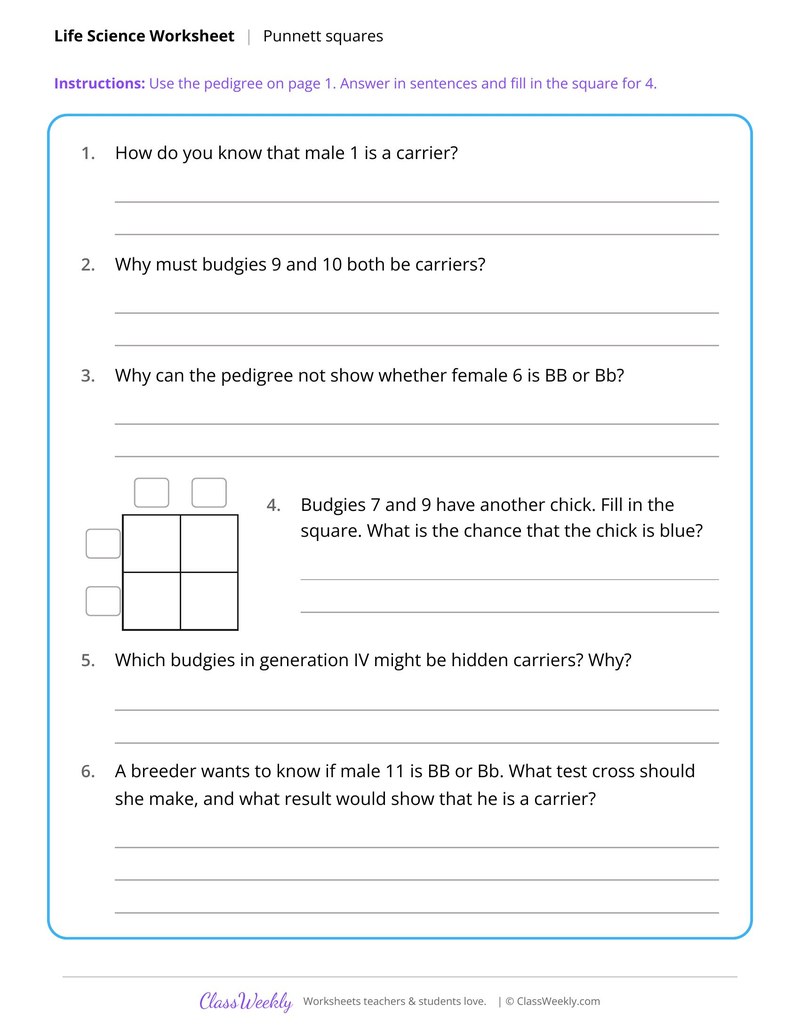
Find Carriers in a Budgie Feather Pedigree
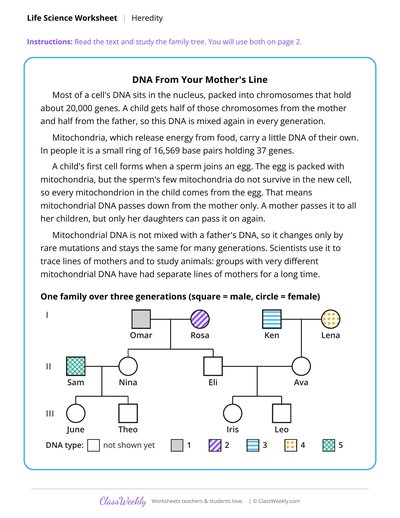
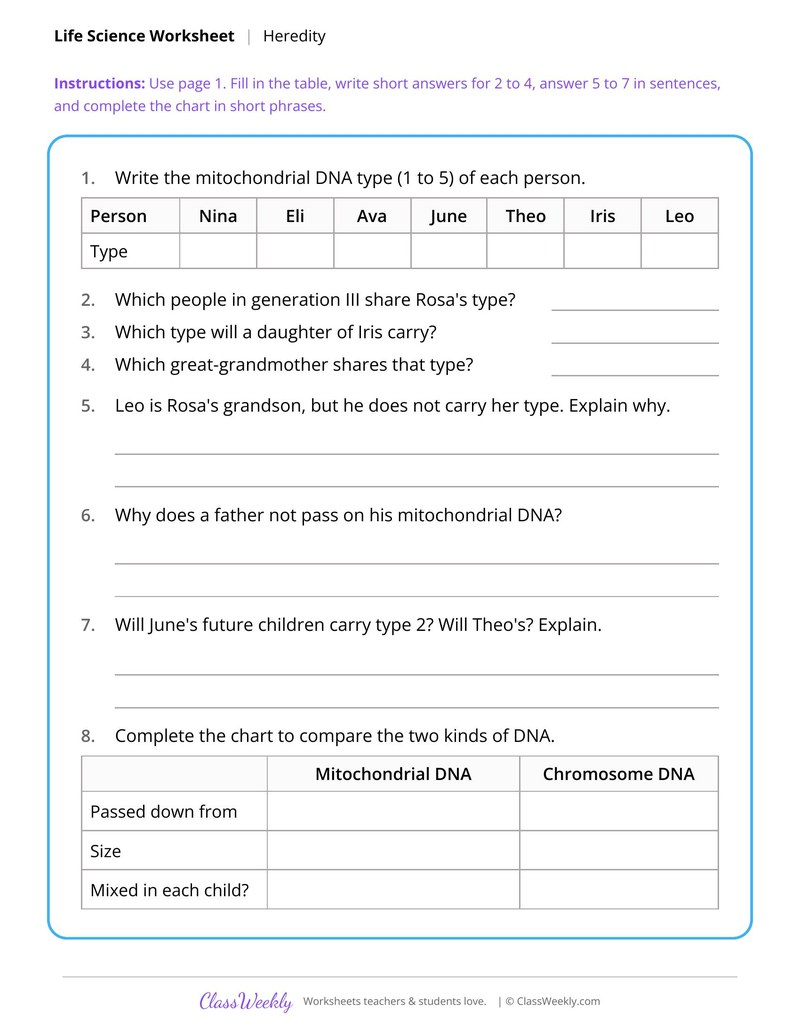
Mitochondrial DNA Passed Down From Mothers
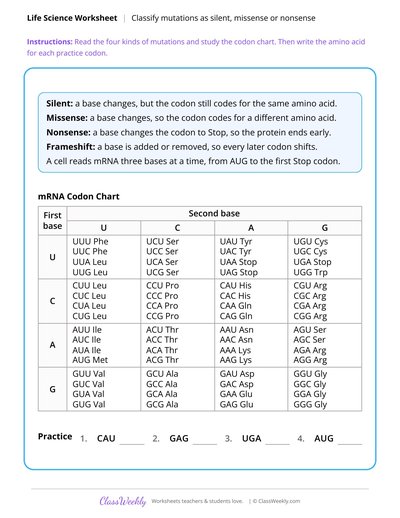
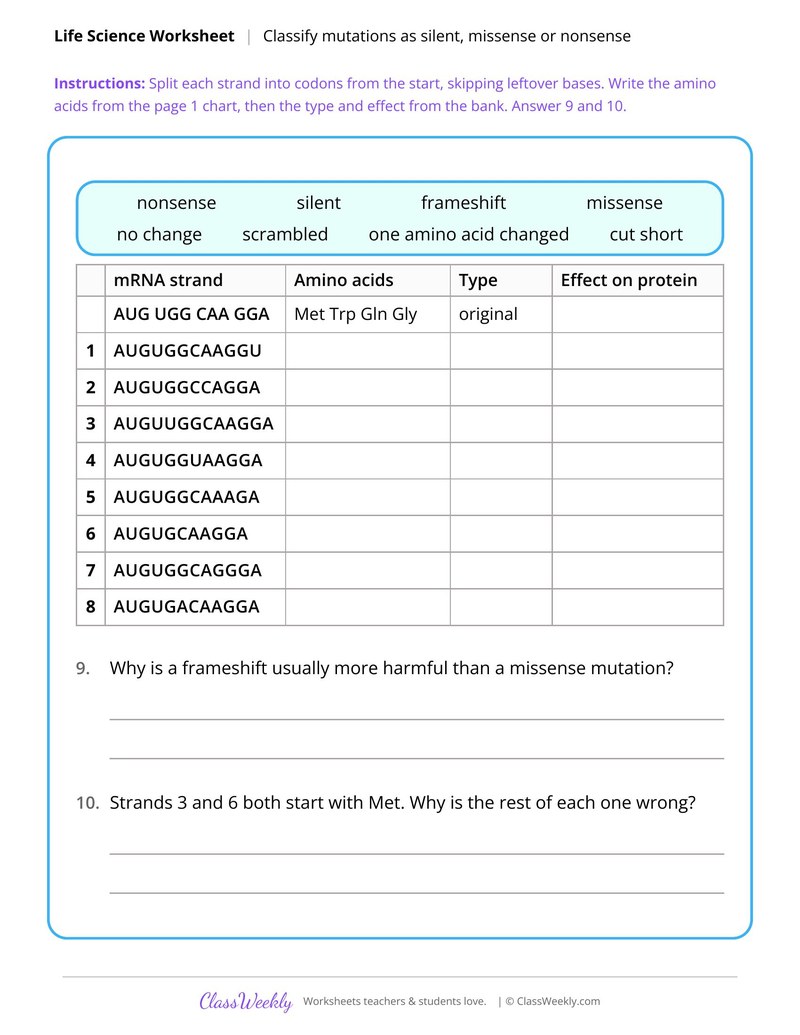
Classify Mutations as Silent, Missense or Nonsense
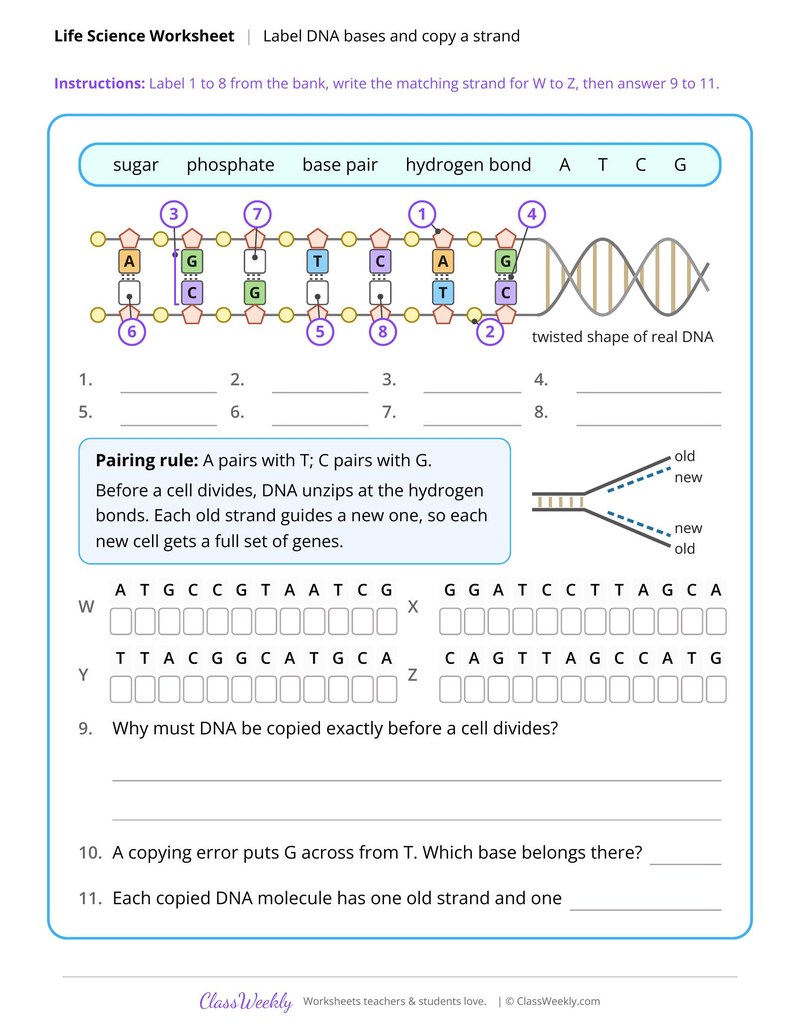
Label DNA Bases and Copy a Strand
Curriculum Links
Next Generation Science Standards
Science · 8th Grade
Find this in the curriculum
Browse the grade, subject, and topic this belongs to.
FAQ
How do I use this reproduction and plant growth worksheet?
⌄
Use the sorting sheet to introduce asexual and sexual reproduction, then the banana sheet to show why variation matters. The flower and turtle sheets fit plant and animal lessons.
What does this worksheet teach?
⌄
Label ten flower parts from petal to pollen tube and order the steps from pollen to seed. The directions on the page read: Label each numbered box with a word from the bank, then number the steps in order. An answer key is included.
Can I use this reproduction and plant growth worksheet for homeschool or classroom?
⌄
Yes, both. We made it for 8th grade living things, and it works the same at home or at school. At home, a student can work through it alone and then go over it with you, which shows quickly what is solid and what needs another look. In class it works as independent practice, homework or a warm-up, and you can print one copy or a full set.
What is the difference between asexual and sexual reproduction?
⌄
Asexual reproduction uses one parent, so the offspring are identical copies of its genes. Sexual reproduction mixes genes from two parents, so each offspring differs. Sort Cases by Variation in Offspring has students sort cases from garlic cloves to panda cubs.
Why are banana clones at risk from disease?
⌄
Every Cavendish plant is grown from a piece of a parent, so all of them have the same genes. A disease that kills one plant can kill them all, as Panama disease did to Gros Michel bananas. Banana Clones and the Risk of No Variation explains this risk.
How does temperature affect turtle hatchlings?
⌄
Slider turtles have no sex chromosomes, so the soil temperature during incubation decides whether a hatchling is male or female. In the sample data on Incubation Temperature and Turtle Hatchlings, warmer nests hatch more females.
Ratings & Reviews
No reviews yet. Be the first to share what you think.
Reviews are for ClassWeekly members.
Make a Request
Spotted something to fix, or want a worksheet we don't have yet? Tell us and we'll make it.
Worksheet Details
| Grade | 8th Grade |
| Subject | Science |
| Topic | Living Things |
| Standard | MS-LS1-4 |
| Pages | 2 pages |
| Difficulty | Medium |
Learn More
What is ClassWeekly?
ClassWeekly offers free worksheets and printable learning resources for kids, from preschool up. All worksheets are aligned to Common Core, NGSS, and C3 Framework standards and designed by educators. Become a member to access the full library and download unlimited PDFs.
How a Gene Mutation Affects the Airways
Test Crosses and Expected Offspring Counts
One Base Change and the Sickle Cell Trait
Chromosome Numbers in Mitosis and Meiosis
Find Carriers in a Budgie Feather Pedigree
Mitochondrial DNA Passed Down From Mothers
Classify Mutations as Silent, Missense or Nonsense
Label DNA Bases and Copy a Strand