Sea Star Loss and the Kelp Forest Chain
Written by Adi Ackerman, Head Teacher
"Sea Star Loss and the Kelp Forest Chain" is written for 7th Grade (Ages 12-13), and it covers NGSS MS-LS2-4. A 6th grader who is already steady on ecosystems can use it too, and an older student can use it as a short review.
2 pages in this set
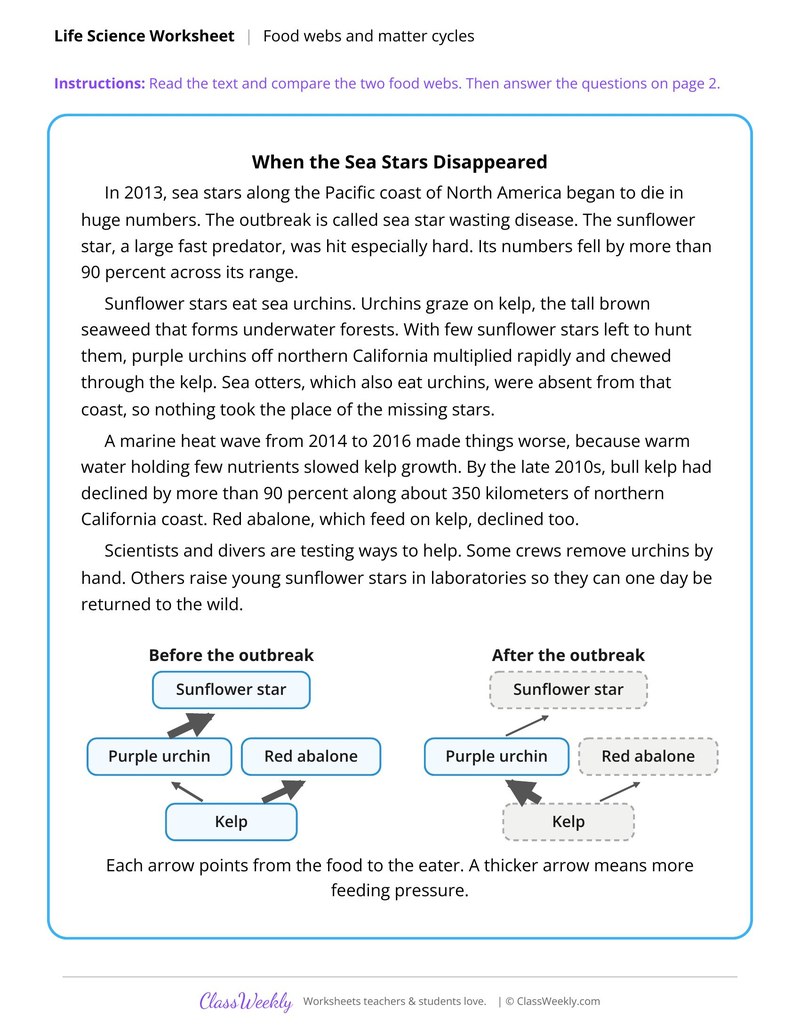
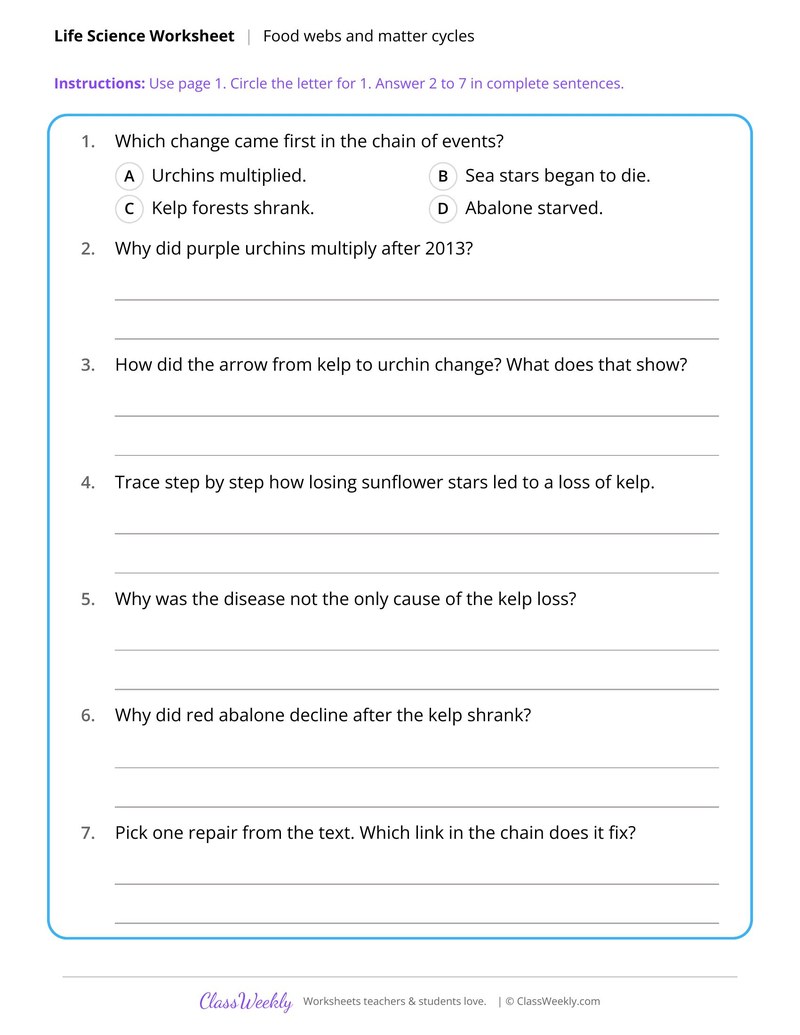
7th grade science worksheet: trace how losing sunflower stars let urchins multiply and shrink kelp forests, using two food webs. Answer key included. Part of our food webs and matter cycles ecosystems collection. Aligned to NGSS standards.
How do I use this worksheet?
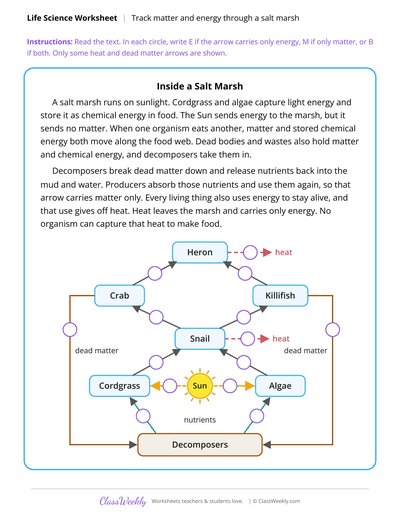
Use the salt marsh sheet to teach energy and matter, and then the kelp forest sheet to practice cause and effect in a food web.
What students will practice
- Students will compare two food webs from before and after sea star wasting disease.
- Students will trace step by step how losing sunflower stars changed urchins, kelp and abalone.
- Students will explain how an arrow in a food web can change in strength.
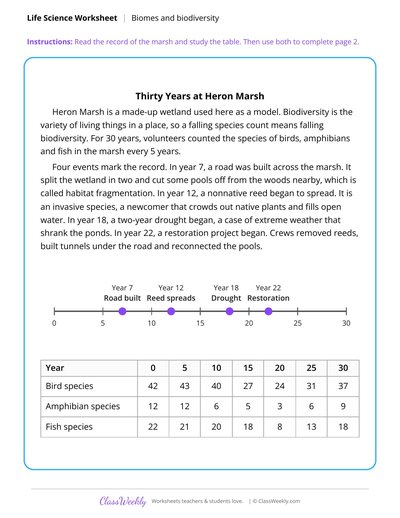
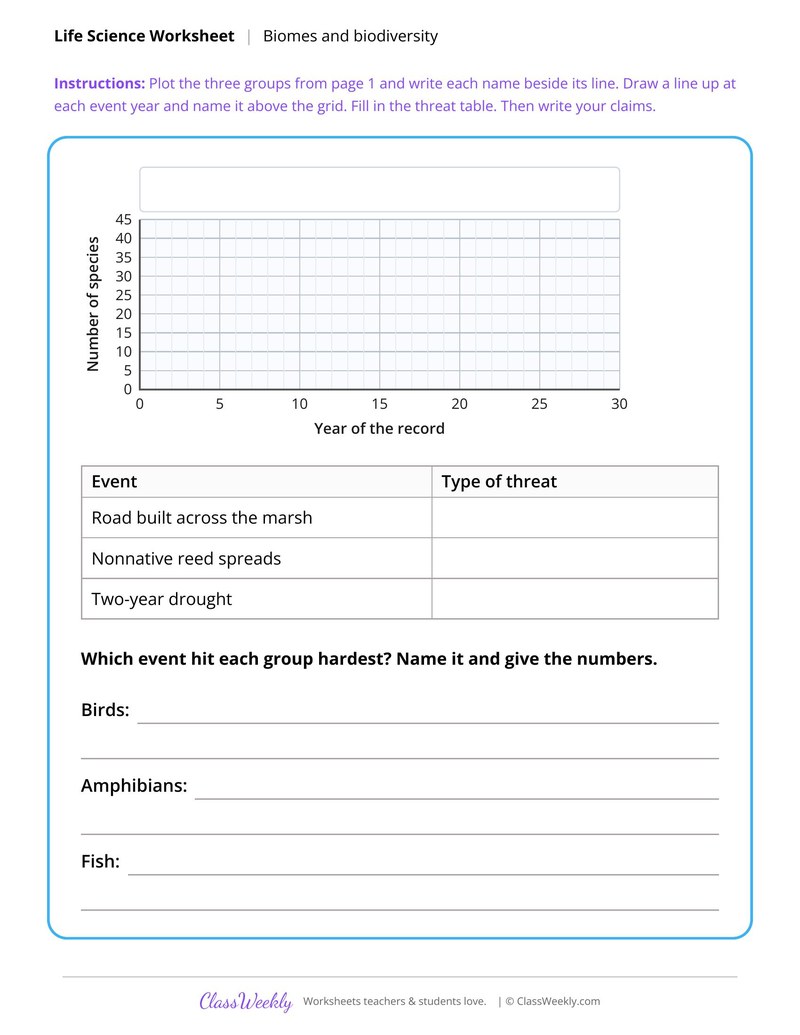
Trace Threats to a Wetland's Biodiversity
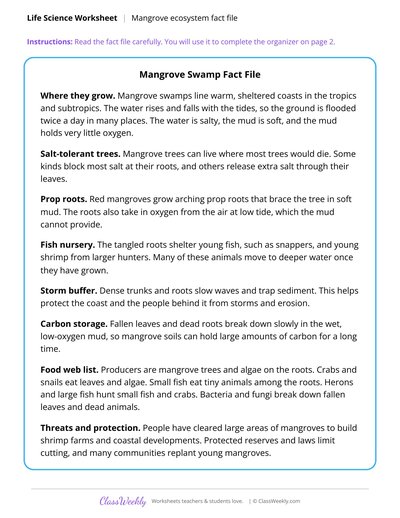
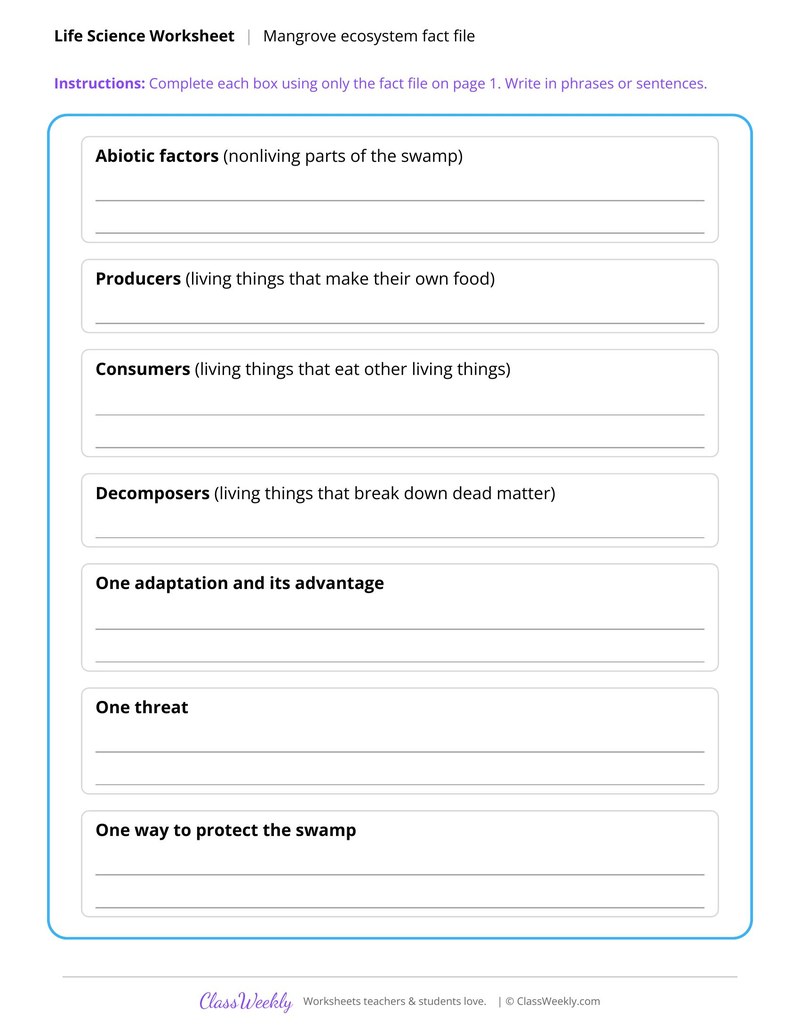
Mangrove Ecosystem Fact File Organizer
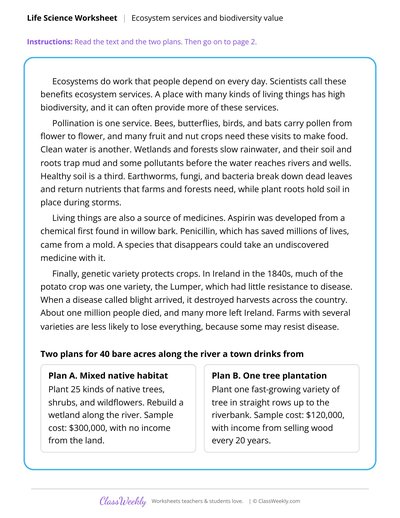
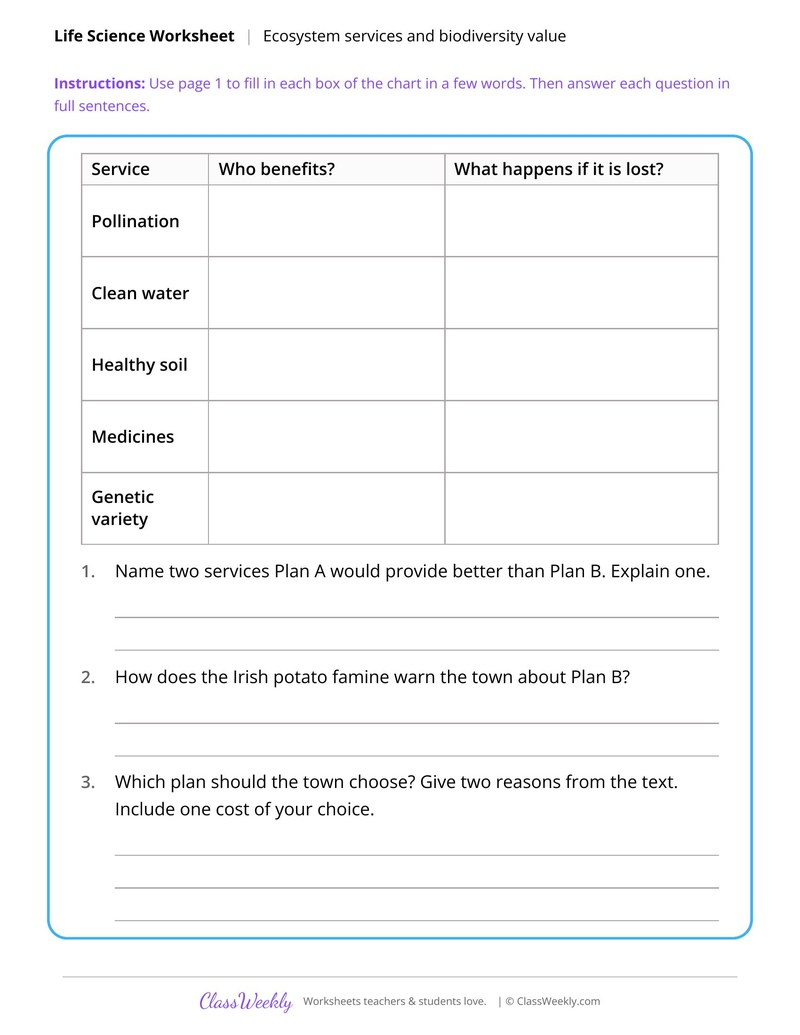
Ecosystem Services and Biodiversity Value
Track Matter and Energy Through a Salt Marsh
Vernal Pools and Amphibian Survival
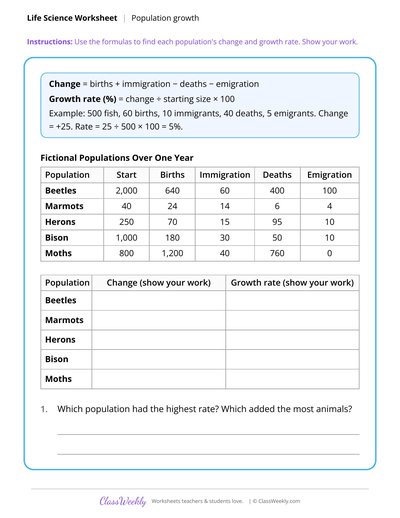
Calculate Population Growth From Rates
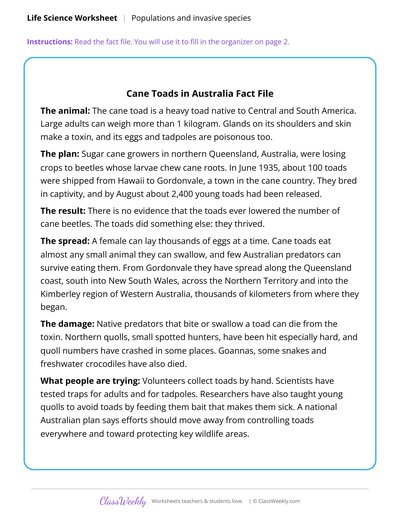
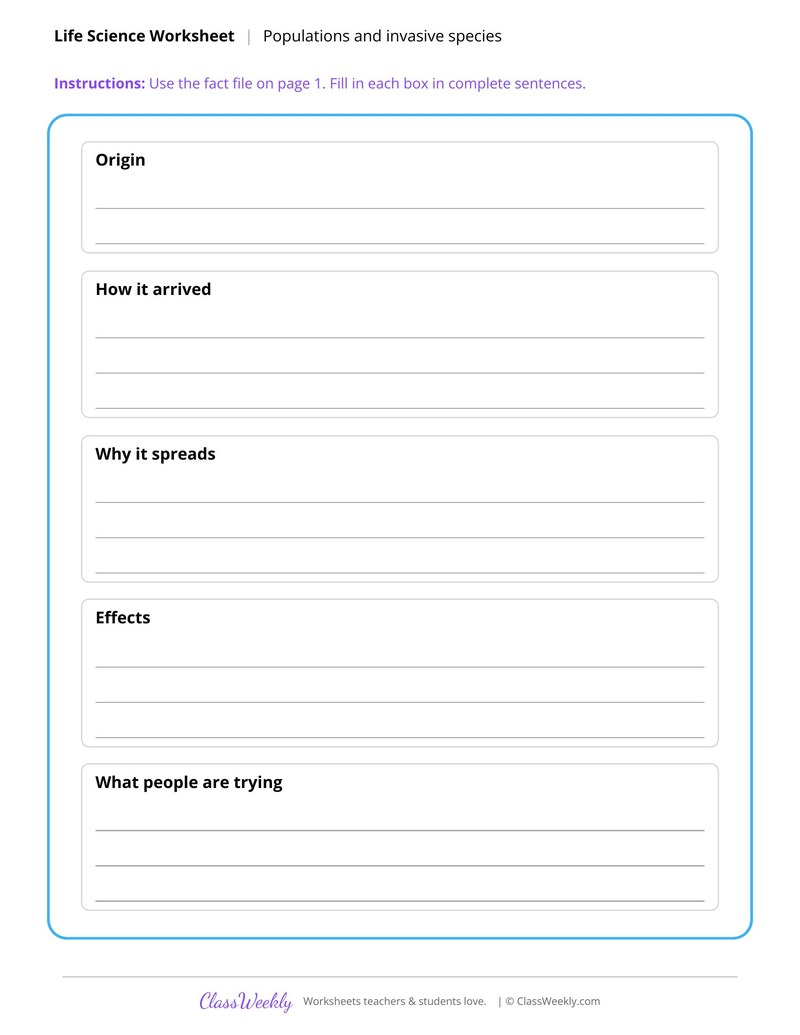
Invasive Species Fact File Organizer
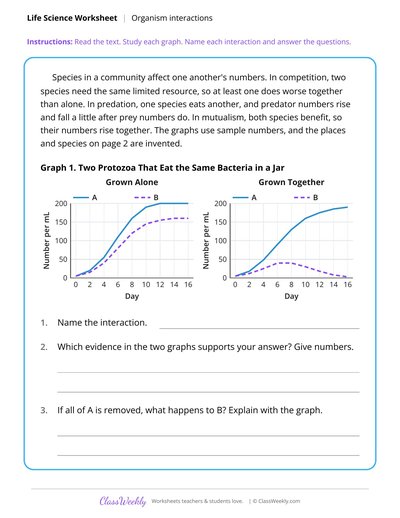
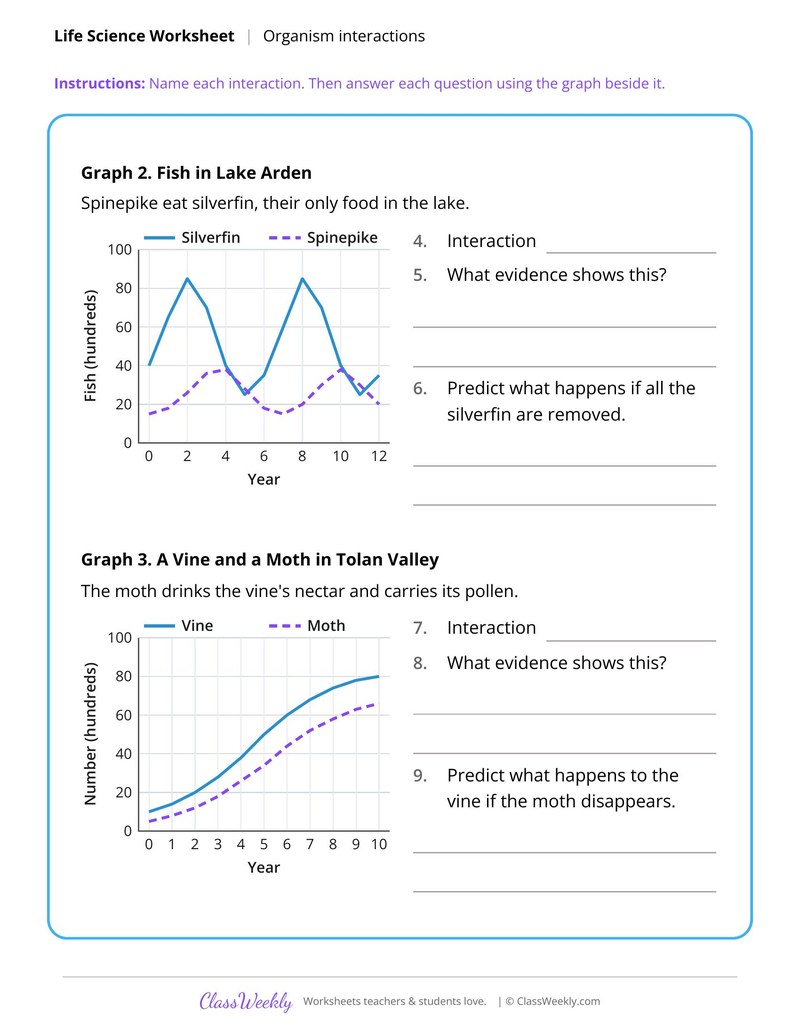
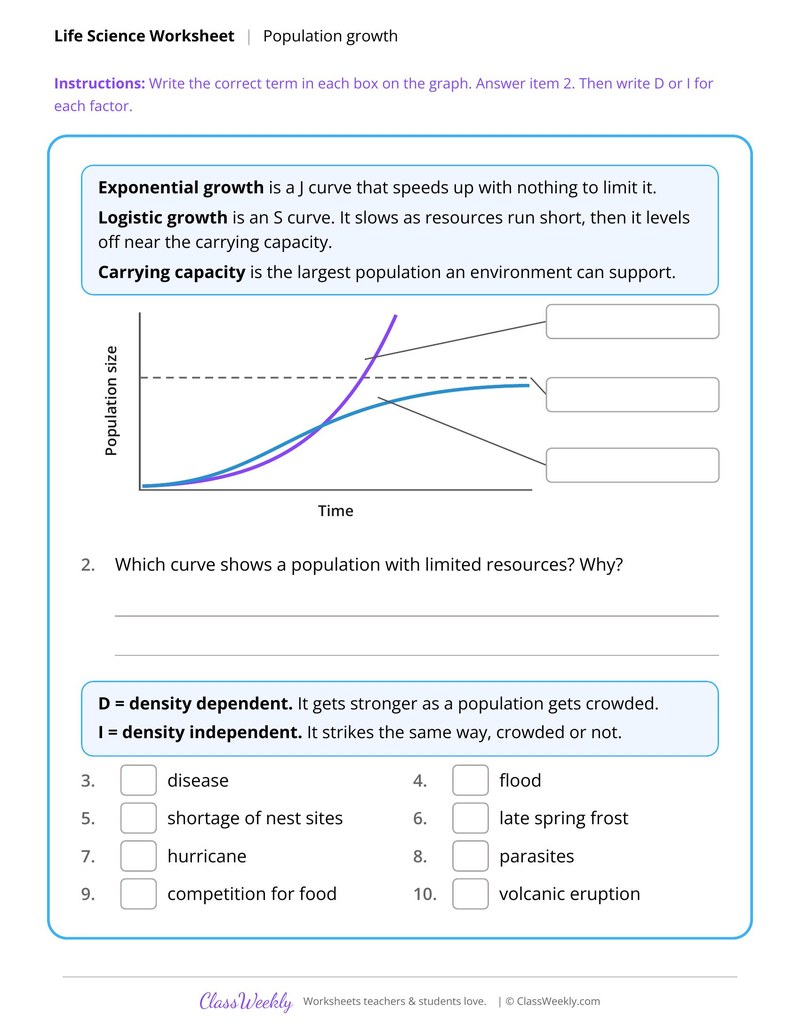
Analyze Organism Interactions From Population Graphs
Curriculum Links
Next Generation Science Standards
Science · 7th Grade
Find this in the curriculum
Browse the grade, subject, and topic this belongs to.
FAQ
How do I use this food webs and matter cycles worksheet?
⌄
Use the salt marsh sheet to teach energy and matter, and then the kelp forest sheet to practice cause and effect in a food web.
What does this worksheet teach?
⌄
Trace how losing sunflower stars let urchins multiply and shrink kelp forests, using two food webs. The directions on the page read: Read the text and compare the two food webs. Then answer the questions on page 2. An answer key is included.
Can I use this food webs and matter cycles worksheet for homeschool or classroom?
⌄
Yes, both. We made it for 7th grade ecosystems, and it works the same at home or at school. At home, a student can work through it alone and then go over it with you, which shows quickly what is solid and what needs another look. In class it works as independent practice, homework or a warm-up, and you can print one copy or a full set.
What happens to a food web when a predator disappears?
⌄
On the kelp sheet, sunflower stars fell by more than 90 percent, urchins multiplied and kelp forests shrank.
Does the Sun send matter to an ecosystem?
⌄
No. The Sun sends energy to a marsh, but it sends no matter. Matter and stored chemical energy move together when one organism eats another.
How much energy passes to the next level?
⌄
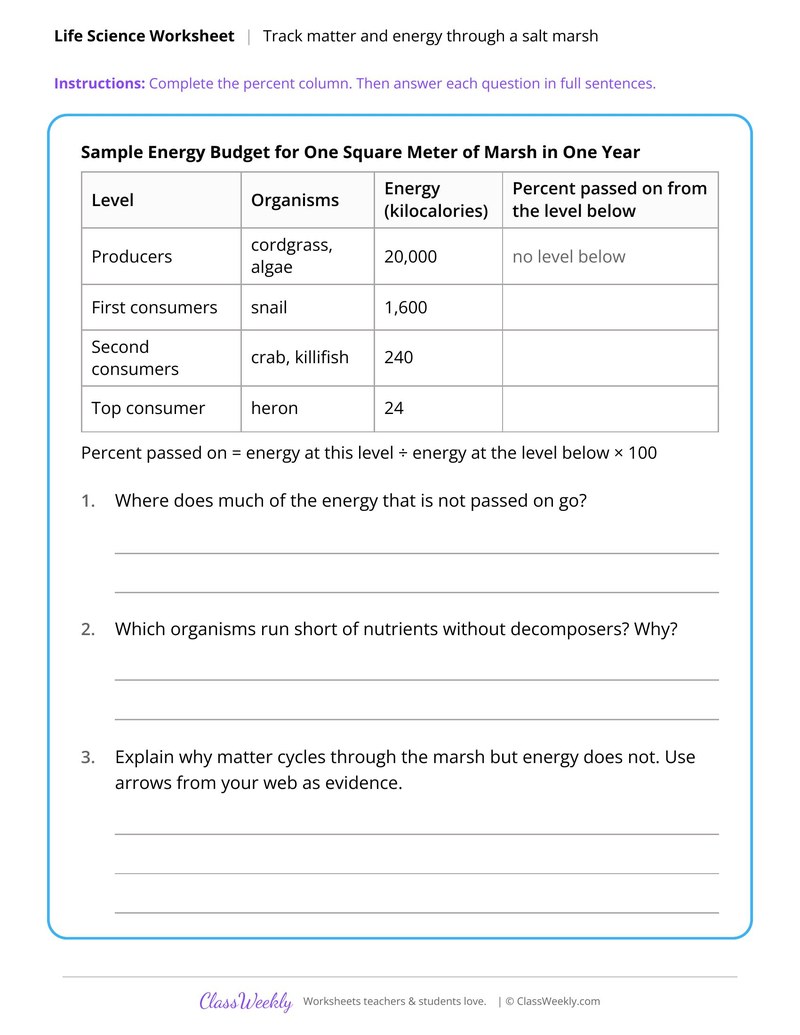
The salt marsh sheet gives a sample energy budget, and students find the percent passed on at each level.
Ratings & Reviews
No reviews yet. Be the first to share what you think.
Reviews are for ClassWeekly members.
Make a Request
Spotted something to fix, or want a worksheet we don't have yet? Tell us and we'll make it.
Worksheet Details
| Grade | 7th Grade |
| Subject | Science |
| Topic | Ecosystems |
| Standard | MS-LS2-4 |
| Pages | 2 pages |
| Difficulty | Medium |
Learn More
What is ClassWeekly?
ClassWeekly offers free worksheets and printable learning resources for kids, from preschool up. All worksheets are aligned to Common Core, NGSS, and C3 Framework standards and designed by educators. Become a member to access the full library and download unlimited PDFs.
Trace Threats to a Wetland's Biodiversity
Mangrove Ecosystem Fact File Organizer
Ecosystem Services and Biodiversity Value
Track Matter and Energy Through a Salt Marsh
Vernal Pools and Amphibian Survival
Calculate Population Growth From Rates
Invasive Species Fact File Organizer
Analyze Organism Interactions From Population Graphs