Label the Plant Cell
Written by Adi Ackerman, Head Teacher
"Label the Plant Cell" is written for 6th Grade (Ages 11-12), and it covers NGSS MS-LS1-2. If your student is a year younger but already steady on living things, the page still works. You may just need to read the instructions out loud. And if they are older and cells never quite stuck, this is a short review rather than busywork.
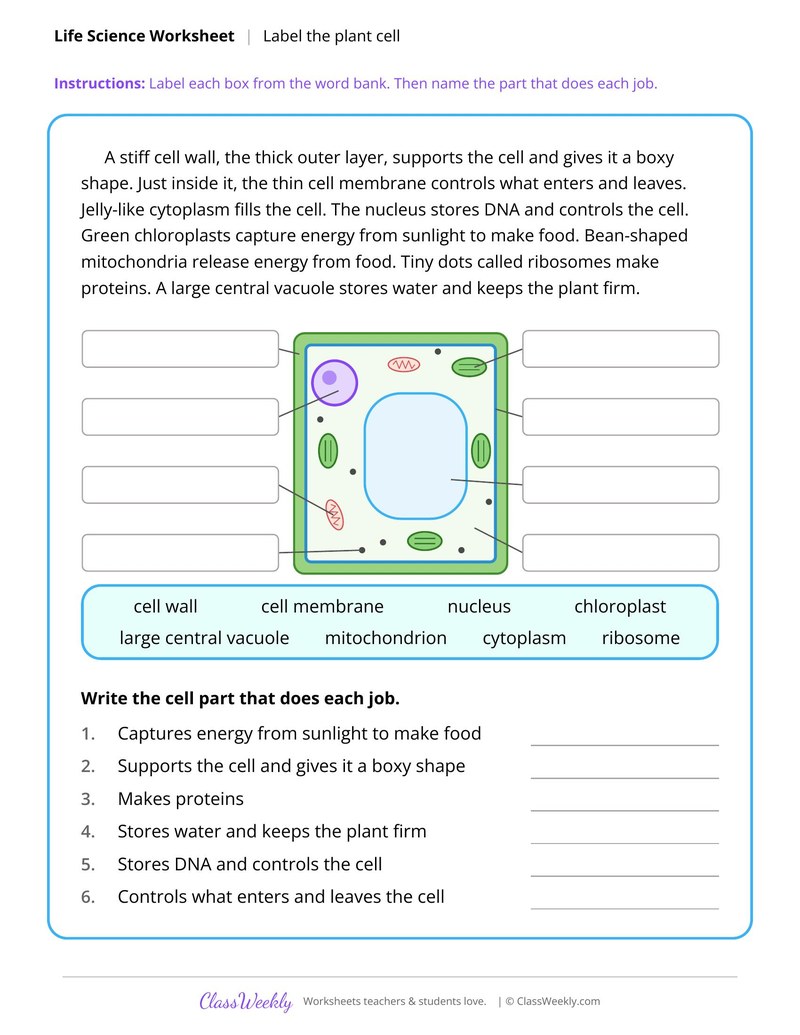
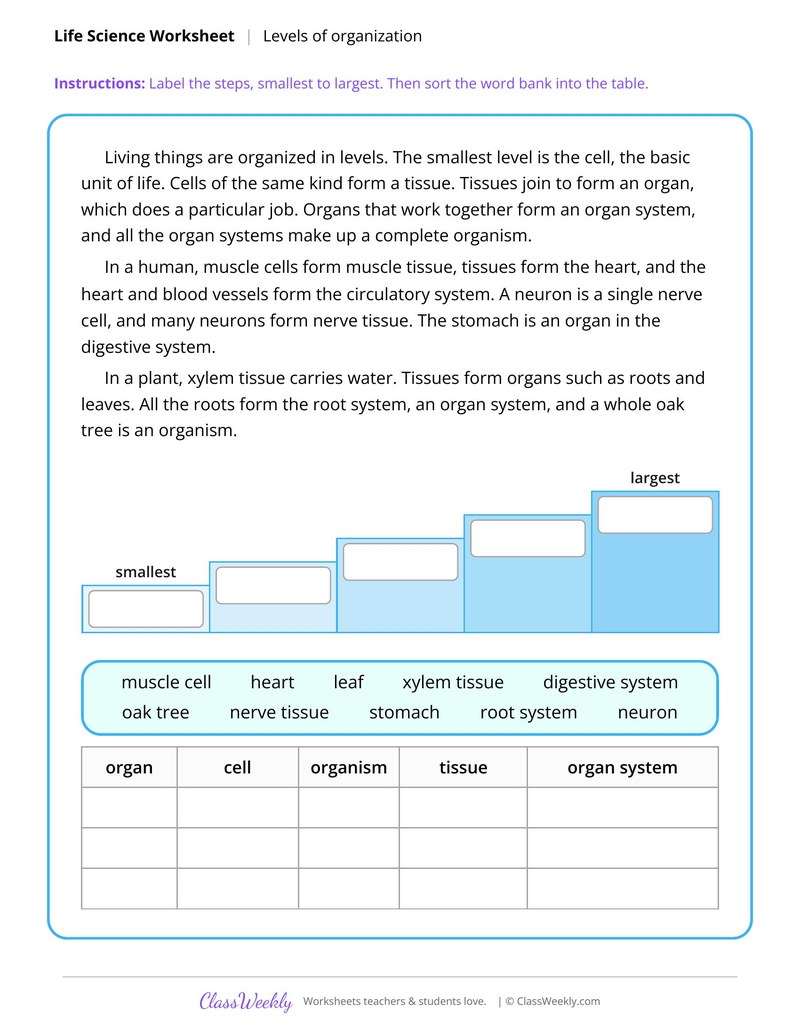
6th grade science worksheet: label eight parts of a plant cell, from the cell wall to the ribosome, then match parts to six jobs. Answer key included. Part of our cells living things collection. Aligned to NGSS standards.
How do I use this worksheet?
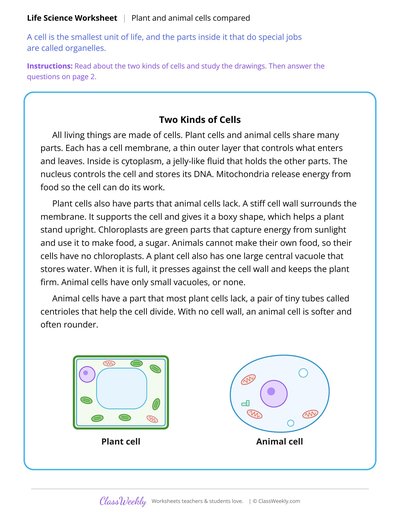
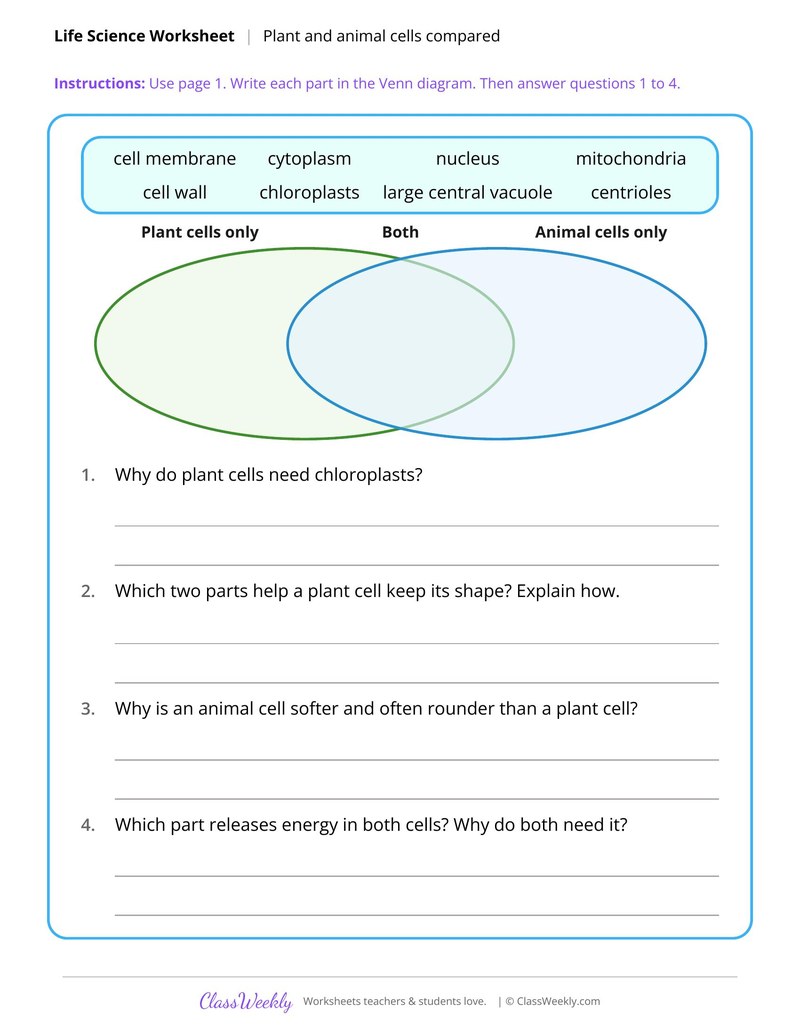
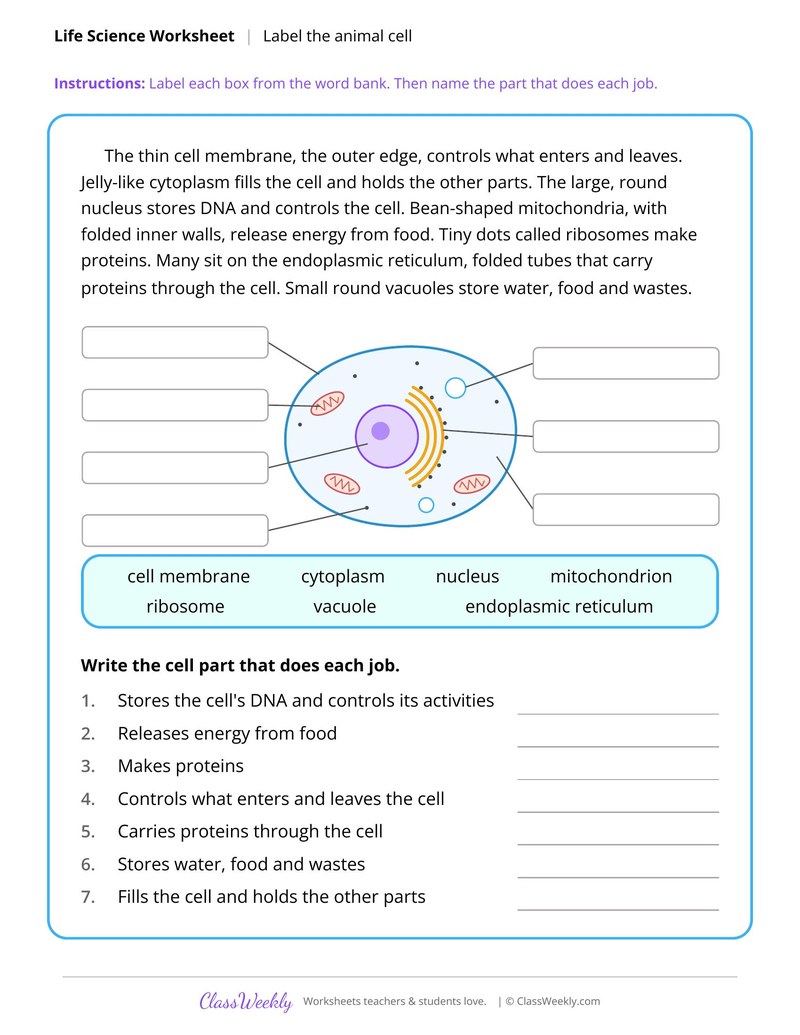
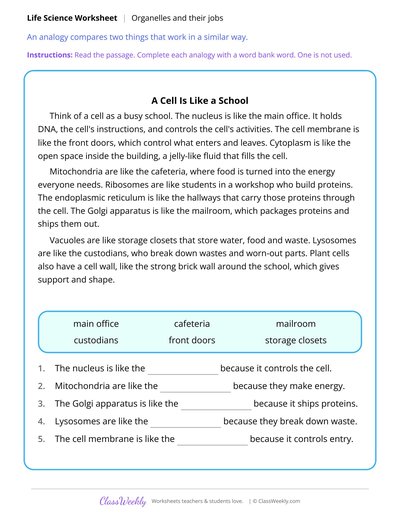
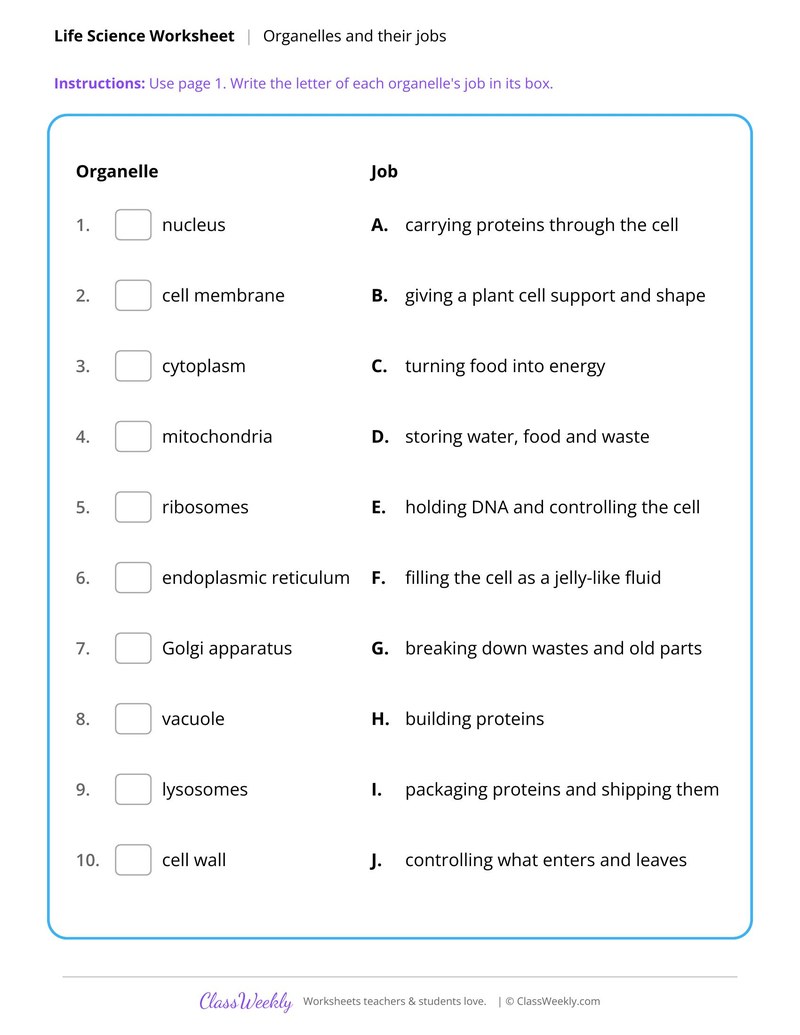
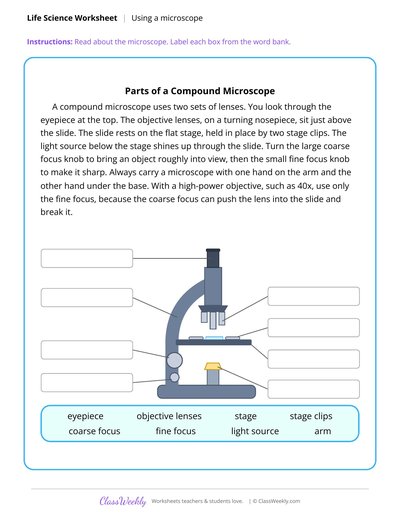
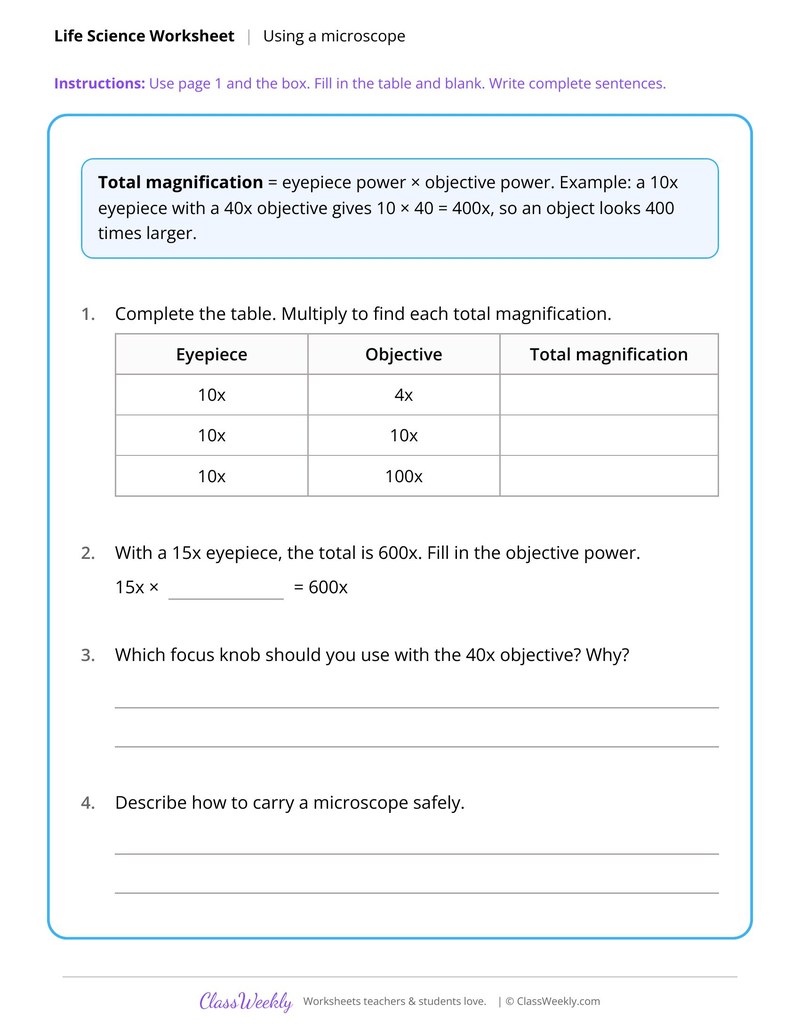
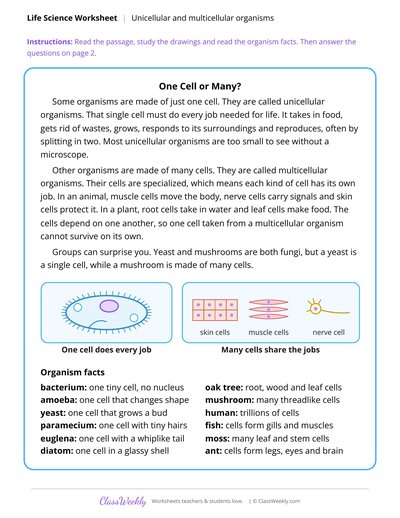
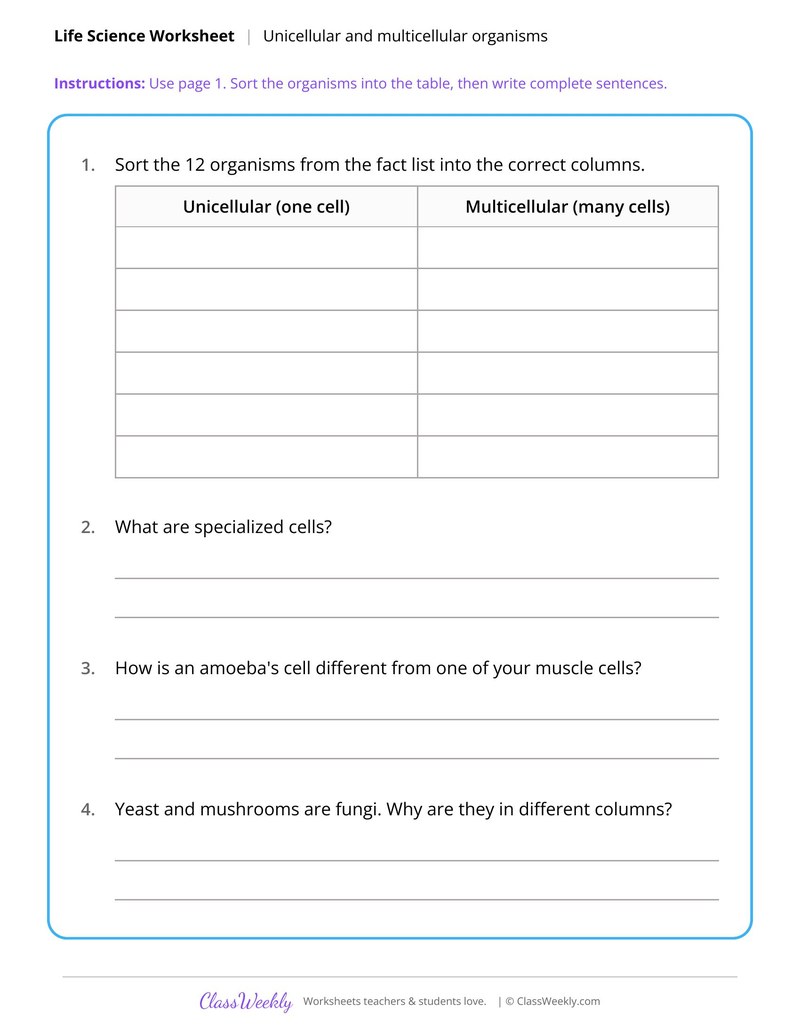
Start with Plant and Animal Cells Compared so students meet the main parts, then use the two labeling sheets as practice. Save Cell Theory and Using a Microscope for the days around a microscope lab.
What students will practice
- Students will label eight parts of a plant cell on a diagram from a word bank.
- Students will name the part that captures energy from sunlight to make food.
- Students will match the cell wall, central vacuole and other parts to six jobs.
Curriculum Links
Next Generation Science Standards
Science · 6th Grade
Find this in the curriculum
Browse the grade, subject, and topic this belongs to.
FAQ
How do I use this cells worksheet?
⌄
Start with Plant and Animal Cells Compared so students meet the main parts, then use the two labeling sheets as practice. Save Cell Theory and Using a Microscope for the days around a microscope lab.
What does this worksheet teach?
⌄
Label eight parts of a plant cell, from the cell wall to the ribosome, then match parts to six jobs. The directions on the page read: Label each box from the word bank. Then name the part that does each job. An answer key is included.
Can I use this cells worksheet for homeschool or classroom?
⌄
Yes, both. We made it for 6th Grade living things, and the page works the same whether it lands on a kitchen table or a center rotation. At home, most families go through it together and talk the answers out loud, and that talking is where most of the learning happens with cells. In class it runs well as independent work while you pull a small group. Print one copy or thirty, whichever the day needs.
What is the difference between plant and animal cells?
⌄
Plant cells have a stiff cell wall, chloroplasts and one large central vacuole. Animal cells have no cell wall and only small vacuoles or none, and they have centrioles that most plant cells lack. Plant and Animal Cells Compared has students sort these parts into a Venn diagram.
What are the three parts of cell theory?
⌄
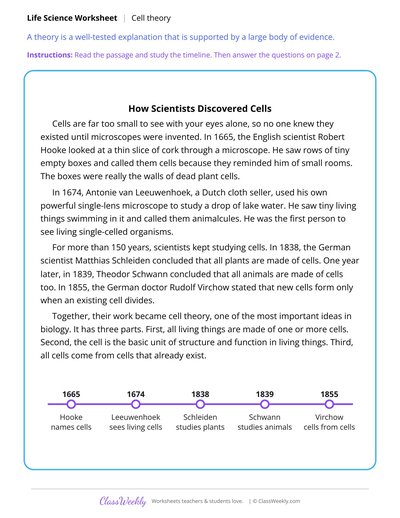
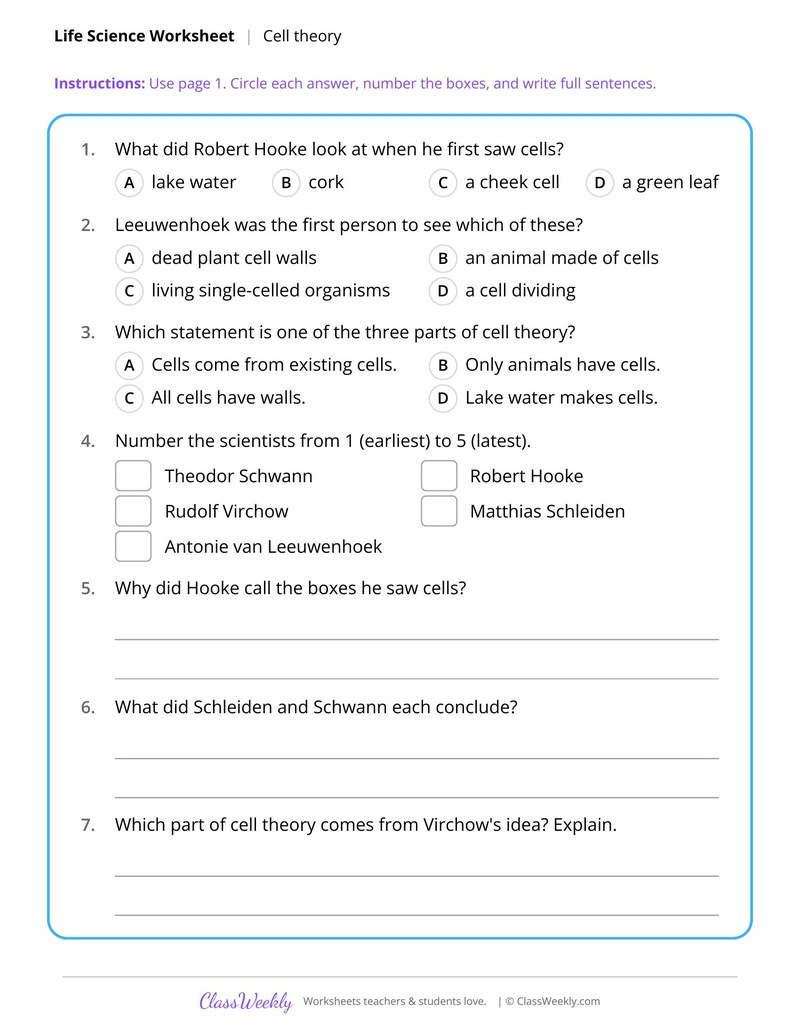
All living things are made of one or more cells, the cell is the basic unit of structure and function in living things, and all cells come from cells that already exist. The Cell Theory sheet traces these ideas through Hooke, Leeuwenhoek, Schleiden, Schwann and Virchow.
How do you calculate total magnification on a microscope?
⌄
Multiply the eyepiece power by the objective power. A 10x eyepiece with a 40x objective gives 400x. Using a Microscope has students complete a table of these products and work backward from a 600x total.
Ratings & Reviews
No reviews yet. Be the first to share what you think.
Reviews are for ClassWeekly members.
Make a Request
Spotted something to fix, or want a worksheet we don't have yet? Tell us and we'll make it.
Worksheet Details
| Grade | 6th Grade |
| Subject | Science |
| Topic | Living Things |
| Standard | MS-LS1-2 |
| Pages | 1 page |
| Difficulty | Medium |
Learn More
What is ClassWeekly?
ClassWeekly offers free worksheets and printable learning resources for kids, from preschool up. All worksheets are aligned to Common Core, NGSS, and C3 Framework standards and designed by educators. Become a member to access the full library and download unlimited PDFs.