Draw in the Middle Box
Written by Adi Ackerman, Head Teacher
"Draw in the Middle Box" is written for Kindergarten (Ages 5-6), and it covers Common Core K.G.A.1. If your little one is a year younger but already steady on position, the page still works. You may just need to read the instructions out loud. And if they are older and left right never quite stuck, this is a short review rather than busywork.
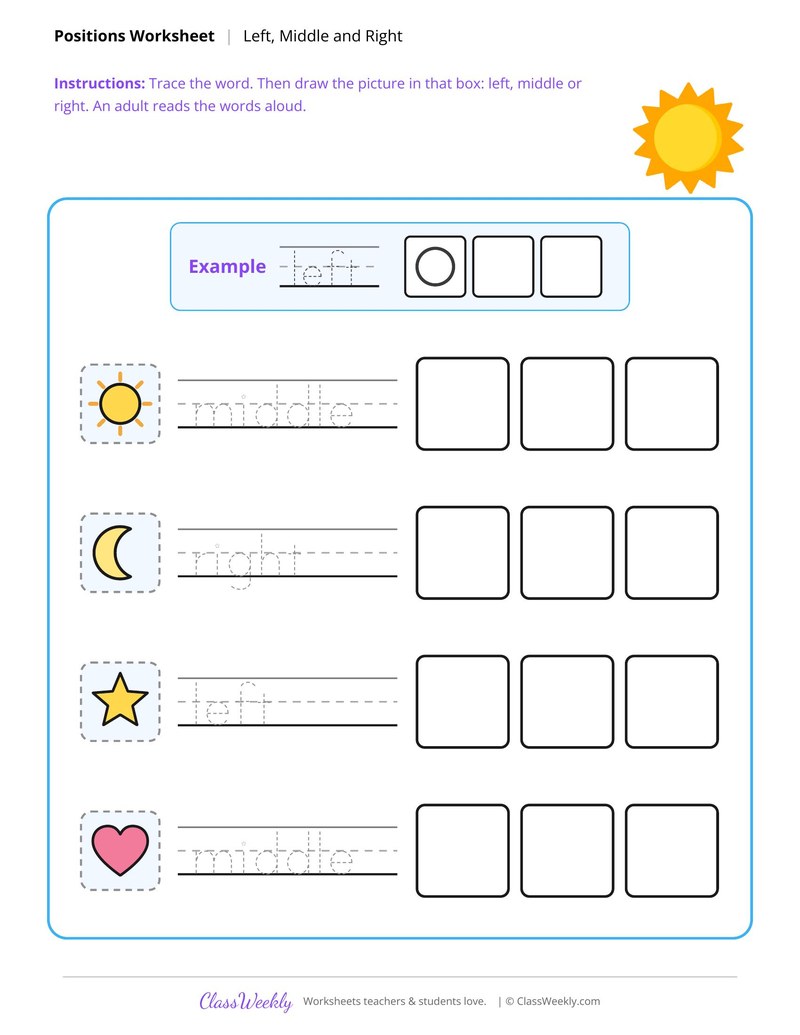
Kindergarten math worksheet: trace left, middle or right, then draw the picture in that box. Part of our left right position collection. Aligned to Common Core standards.
How do I use this worksheet?
Before handing out the worksheet, briefly introduce the concept with a short oral warm-up or a visual model on the board. Let students work through it with your modeling first (do the first item together on the board), then try the rest with a partner, encouraging them to talk through their thinking: "What strategy are you using? How do you know that is right?" After completing the worksheet, review any missed problems together and discuss the reasoning rather than just the answer. For extra support, let students use manipulatives or draw pictures alongside the written problems. These left right worksheets work well as daily practice, homework, or a focused review activity.
What students will practice
- Students will trace the words left, middle and right.
- Students will find the box that matches the word.
- Students will draw the picture in the left, middle or right box.
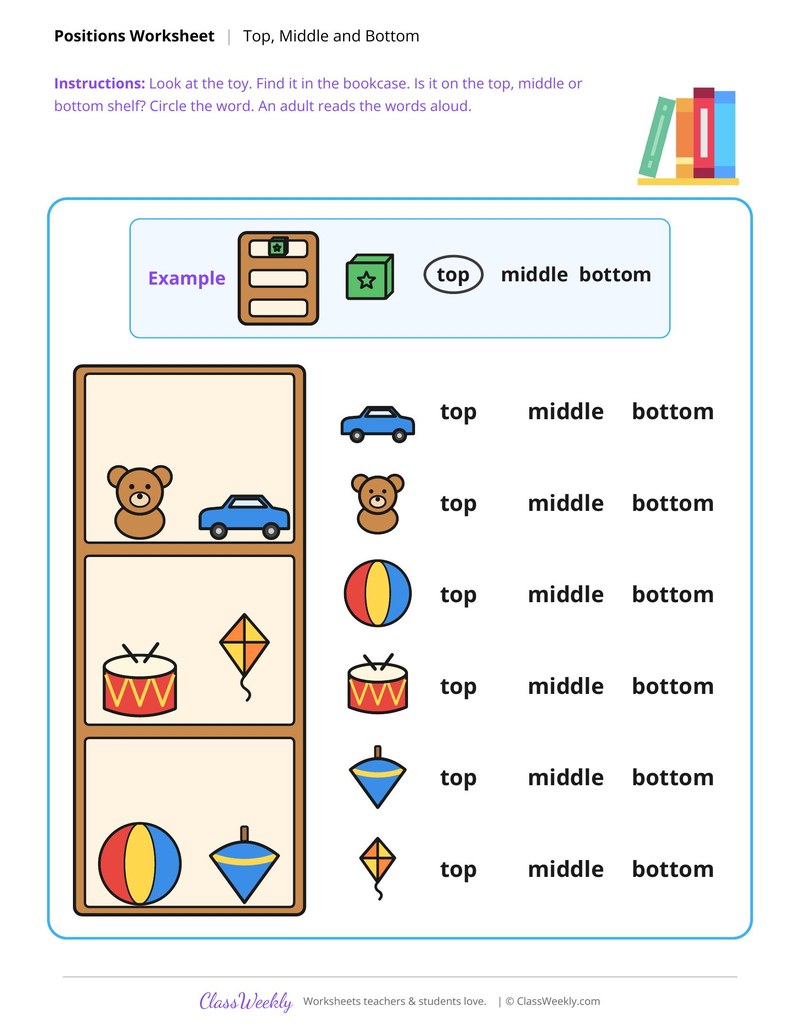
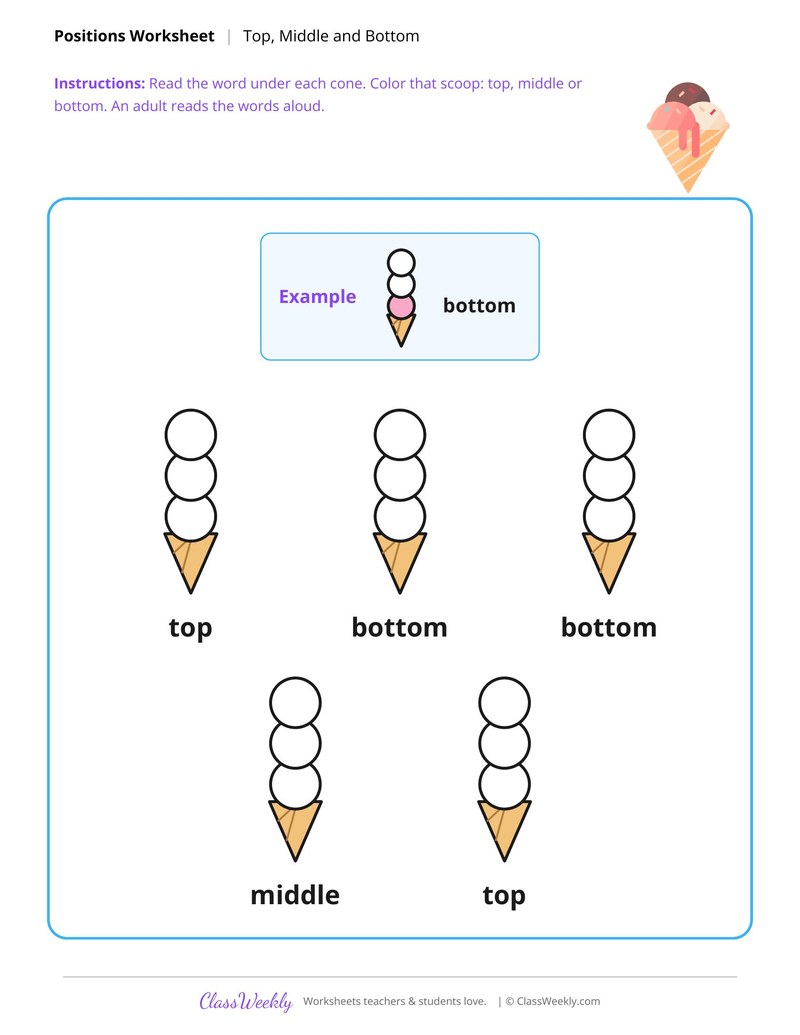
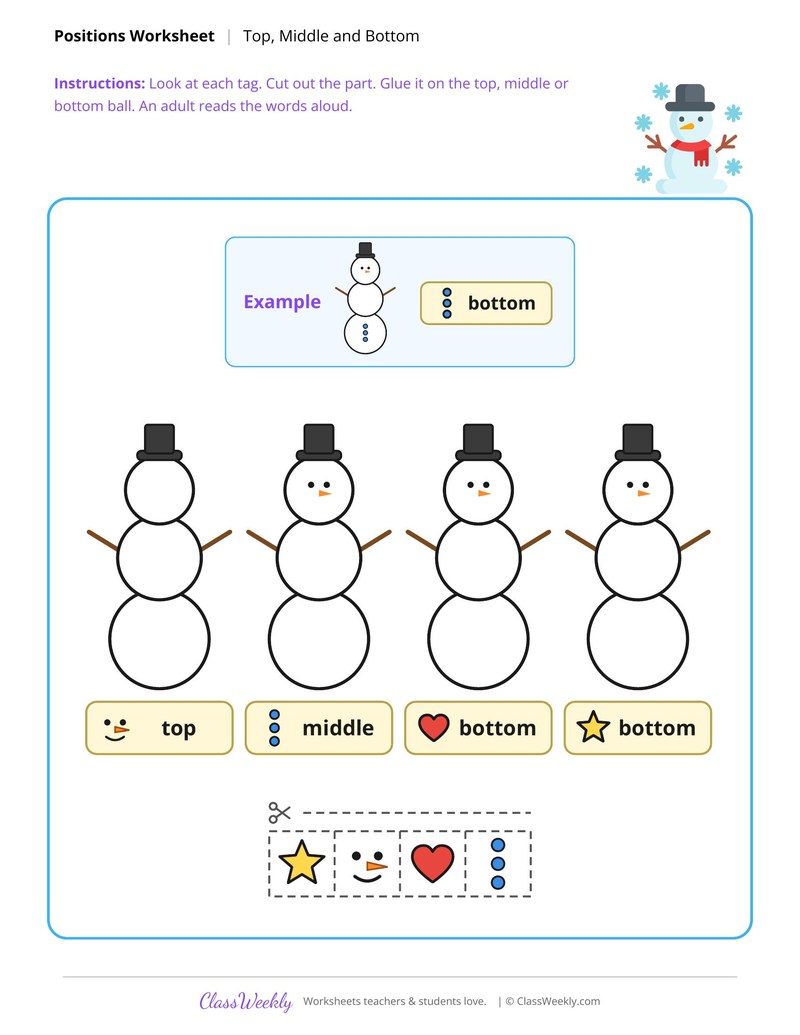


Curriculum Links
Common Core State Standards
Geometry · Kindergarten
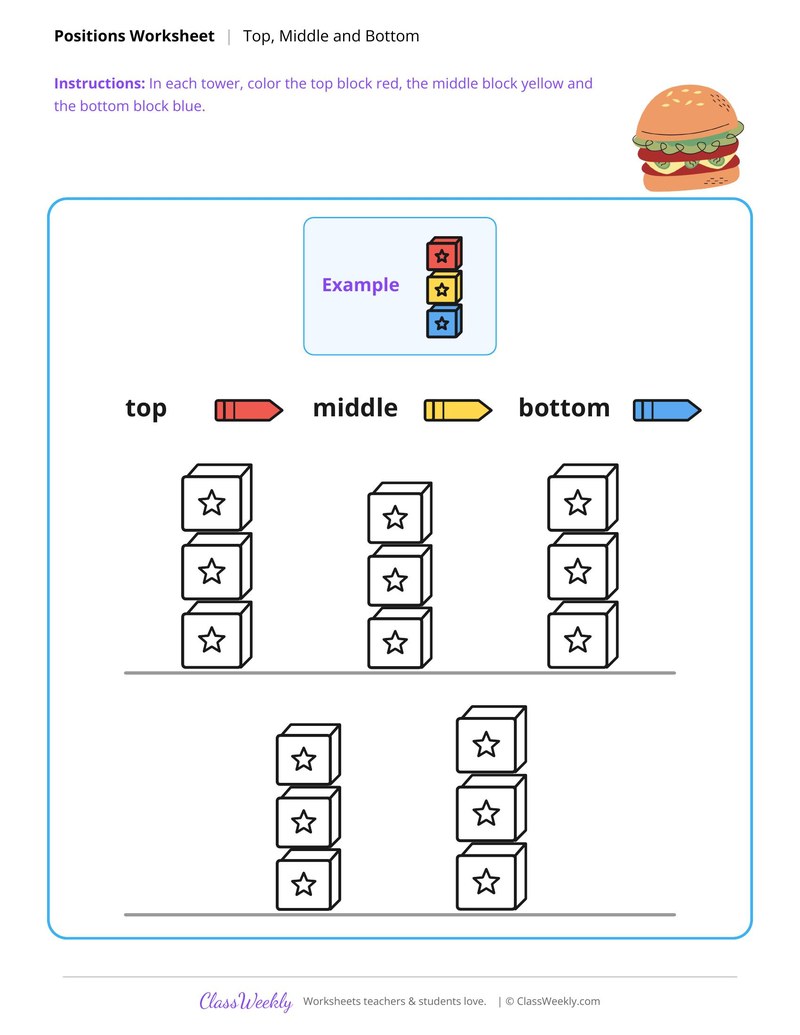
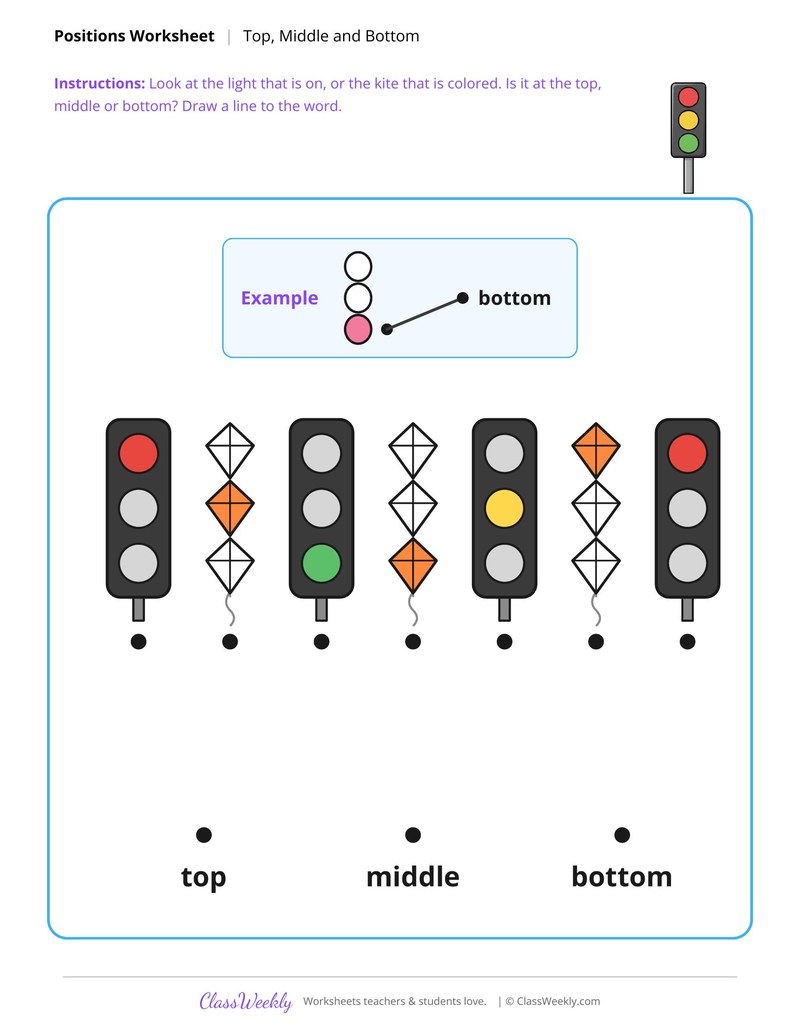
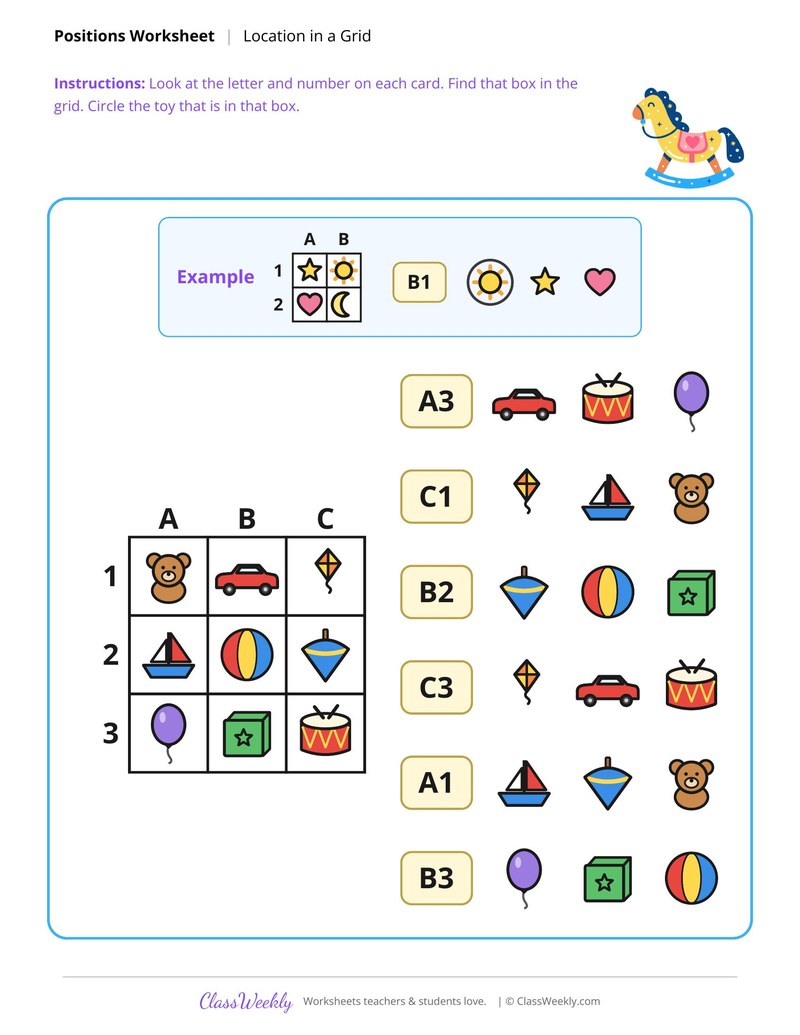
Standard: Describe objects in the environment using names of shapes, and describe the relative positions of these objects using terms such as above, below, beside, in front of, behind, and next to.
View all K.G.A.1 worksheets →Find this in the curriculum
Browse the grade, subject, and topic this belongs to.
FAQ
How do I use this left right worksheet?
⌄
Before handing out the worksheet, briefly introduce the concept with a short oral warm-up or a visual model on the board. Let students work through it with your modeling first (do the first item together on the board), then try the rest with a partner, encouraging them to talk through their thinking: "What strategy are you using? How do you know that is right?" After completing the worksheet, review any missed problems together and discuss the reasoning rather than just the answer. For extra support, let students use manipulatives or draw pictures alongside the written problems. These left right worksheets work well as daily practice, homework, or a focused review activity.
What does this worksheet teach?
⌄
Trace left, middle or right, then draw the picture in that box. The directions on the page read: Trace the word. Then draw the picture in that box: left, middle or right. An adult reads the words aloud. The page opens with a worked example.
Can I use this left right worksheet for homeschool or classroom?
⌄
Yes, both. We made it for Kindergarten position, and the page works the same whether it lands on a kitchen table or a center rotation. At home, most families go through it together and talk the answers out loud, and that talking is where most of the learning happens with left right. In class it runs well as independent work while you pull a small group. Print one copy or thirty, whichever the day needs.
What are position words?
⌄
Words that say where something is: draw in the middle box. They are the earliest geometry vocabulary children meet, long before shapes get formal names.
Why do position words matter in math?
⌄
Because so much later instruction depends on them. A child who cannot follow "draw a line below the box" will get the answer wrong for reasons that have nothing to do with the math. Position words are also the first step into spatial reasoning and geometry.
How do I practice position words away from the page?
⌄
Use them out loud all day: put your cup near the sink, look inside the drawer, your shoes are under the bed. Position words are learned through being used, and a worksheet works best as practice for language your child is already hearing.
What position words should kindergarteners know?
⌄
CCSS K.G.A.1 expects kindergarteners to describe where objects are with words such as above, below, beside, in front of, behind and next to. Most programs also teach inside and outside, left and right, and top, middle and bottom. These worksheets cover all of them.
How do you teach position words to a kindergartener?
⌄
Act each word out first with a toy and a box. Then move to paper, where children circle, color, draw and glue pictures in the right place. On many pages an adult reads the position words aloud.
How does learning position words help with other subjects?
⌄
Position words help children follow directions, describe shapes and read maps and grids later on. A child who can tell behind from in front of finds many classroom directions easier.
Do these position worksheets have answer keys?
⌄
Most of them do. Drawing pages and a few coloring pages are open ended, so they come without a key.
Ratings & Reviews
No reviews yet. Be the first to share what you think.
Reviews are for ClassWeekly members.
Make a Request
Spotted something to fix, or want a worksheet we don't have yet? Tell us and we'll make it.
Worksheet Details
| Grade | Kindergarten |
| Subject | Math |
| Topic | Position |
| Standard | K.G.A.1 |
| Pages | 1 page |
| Difficulty | Medium |
What is ClassWeekly?
ClassWeekly offers free worksheets and printable learning resources for kids, from preschool up. All worksheets are aligned to Common Core, NGSS, and C3 Framework standards and designed by educators. Become a member to access the full library and download unlimited PDFs.