Draw Both Meanings
Written by Adi Ackerman, Head Teacher
"Draw Both Meanings" is written for 2nd Grade (Ages 7-8), and it covers Common Core L.2.4. If your little one is a year younger but already steady on homonyms, homophones and word usage, the page still works. You may just need to read the instructions out loud. And if they are older and multiple meaning words never quite stuck, this is a short review rather than busywork.
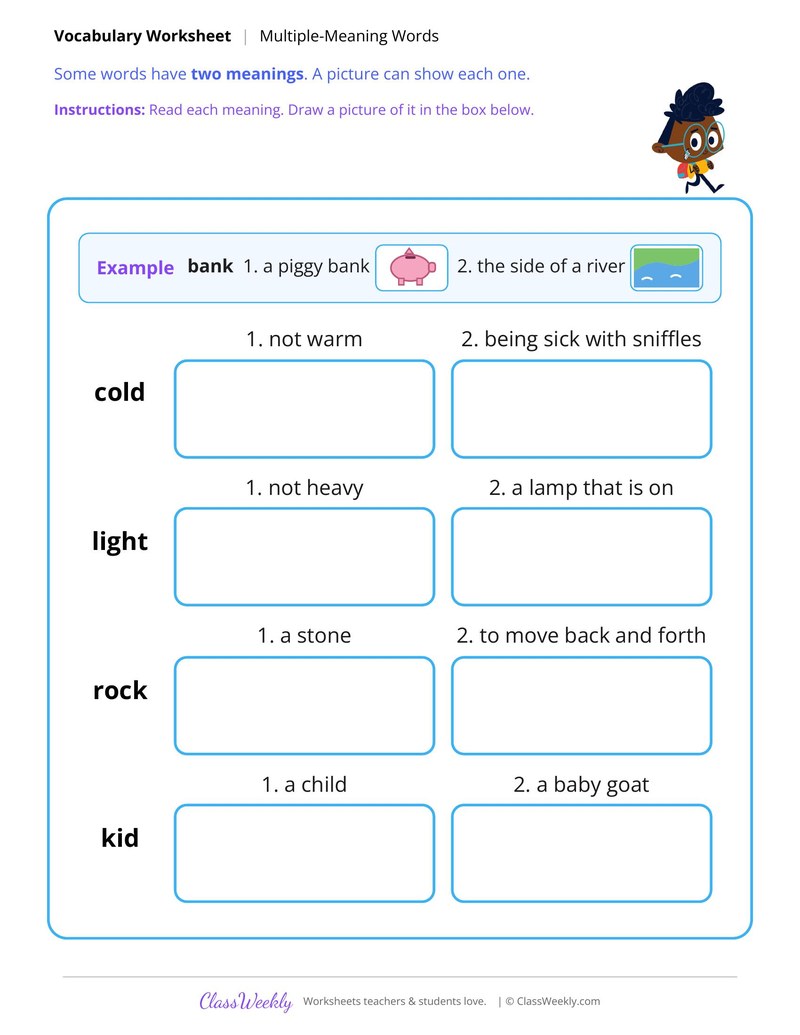
2nd grade vocabulary worksheet: draw both meanings of 5 words like bank, light and kid in the boxes. Part of our multiple meaning words homonyms, homophones and word usage collection. Aligned to Common Core standards.
How do I use this worksheet?
Introduce multiple meaning words with a quick real-world example, then let students work through it independently after a quick group example, checking in with a partner if they get stuck, talking through their thinking as they go rather than working silently. When reviewing answers, ask students to use the word in their own sentence, not just confirm the answer, so the word sticks beyond the page. These multiple meaning words worksheets work well as a warm-up before reading time, an independent center activity, or a quick homework assignment.
What students will practice
- Students will read two meanings for words like cold and rock.
- Students will draw a picture for each meaning in its box.
- Students will show that kid can mean a child or a baby goat.
Curriculum Links
Common Core State Standards
Language · 2nd Grade
Standard: Determine or clarify the meaning of unknown and multiple-meaning words and phrases based on grade 2 reading and content, choosing flexibly from an array of strategies.
View all L.2.4 worksheets →Find this in the curriculum
Browse the grade, subject, and topic this belongs to.
FAQ
How do I use this multiple meaning words worksheet?
⌄
Introduce multiple meaning words with a quick real-world example, then let students work through it independently after a quick group example, checking in with a partner if they get stuck, talking through their thinking as they go rather than working silently. When reviewing answers, ask students to use the word in their own sentence, not just confirm the answer, so the word sticks beyond the page. These multiple meaning words worksheets work well as a warm-up before reading time, an independent center activity, or a quick homework assignment.
What does this worksheet teach?
⌄
Draw both meanings of 5 words like bank, light and kid in the boxes. The directions on the page read: Read each meaning. Draw a picture of it in the box below. The page opens with a worked example.
Can I use this multiple meaning words worksheet for homeschool or classroom?
⌄
Yes, both. We made it for 2nd Grade homonyms, homophones and word usage, and the page works the same whether it lands on a kitchen table or a center rotation. At home, most families go through it together and talk the answers out loud, and that talking is where most of the learning happens with multiple meaning words. In class it runs well as independent work while you pull a small group. Print one copy or thirty, whichever the day needs.
What's the difference between multiple meaning words and homophones?
⌄
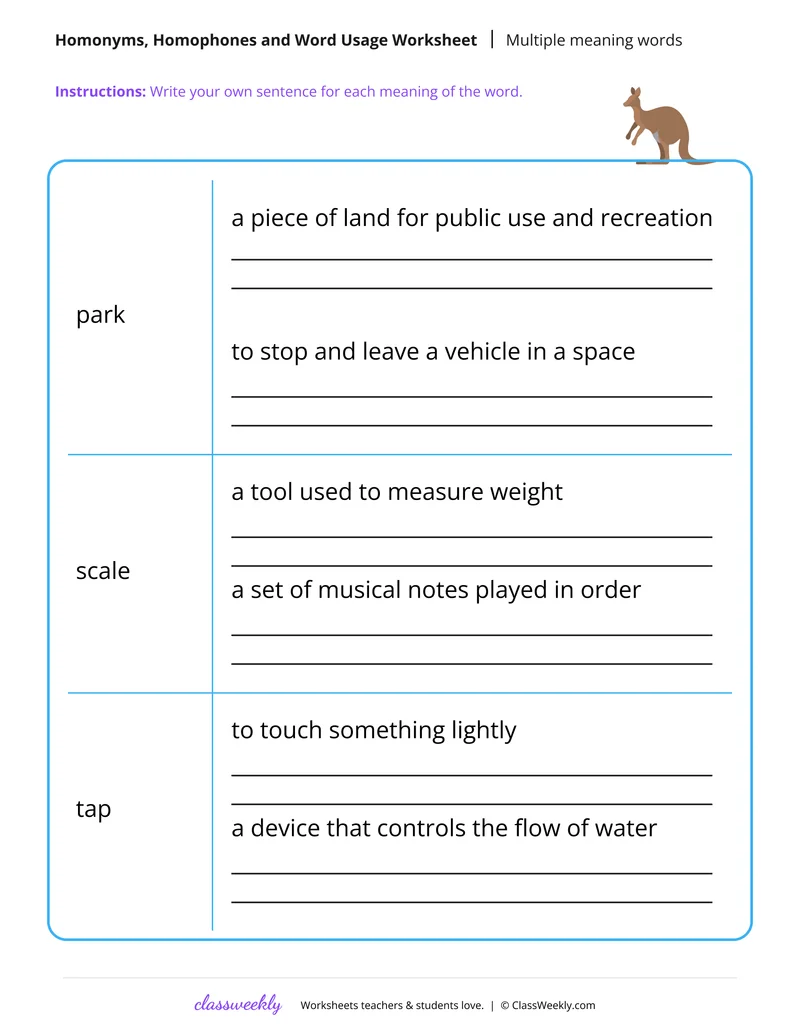
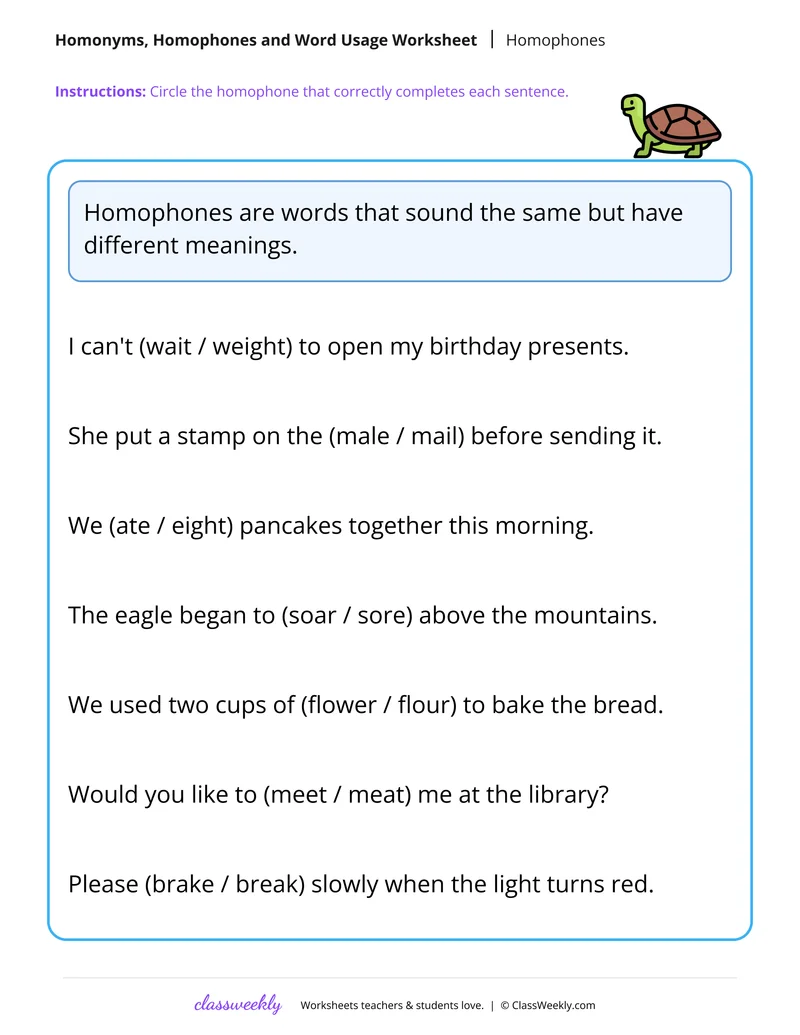
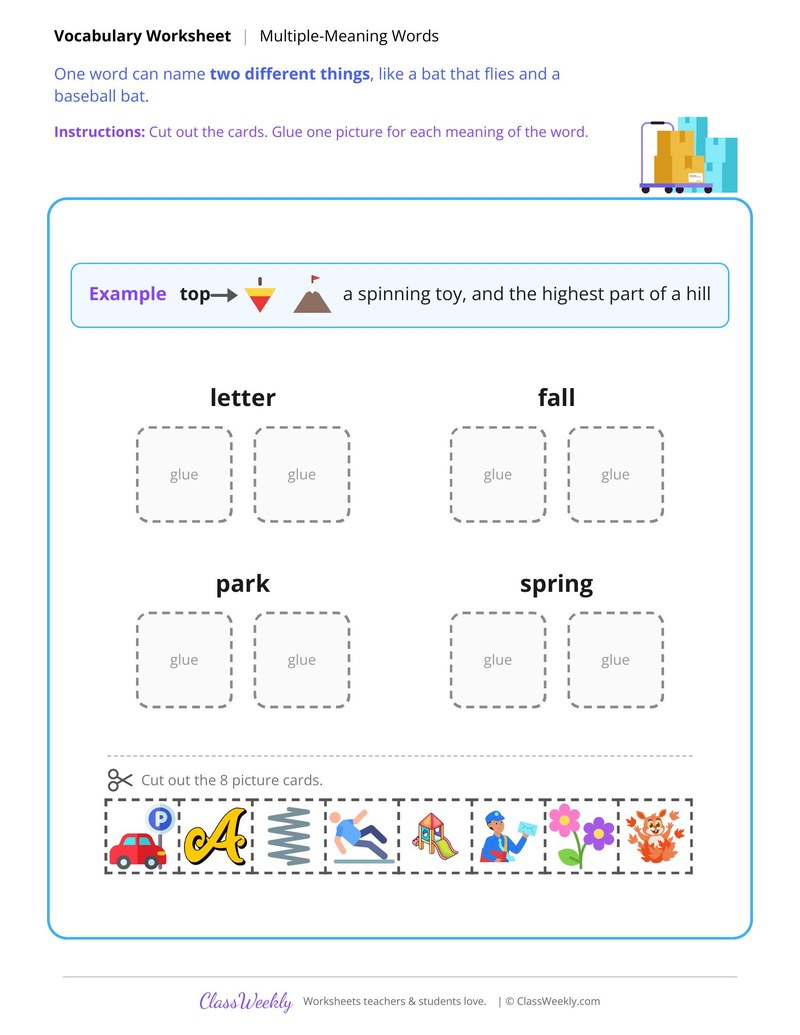
Multiple meaning words are spelled and said the same but mean different things, like park, a place to play, and park, to stop a car. Homophones sound the same but are spelled differently, like flower and flour. In both cases the sentence, not the sound, tells you the meaning.
What are examples of multiple meaning words for 2nd grade?
⌄
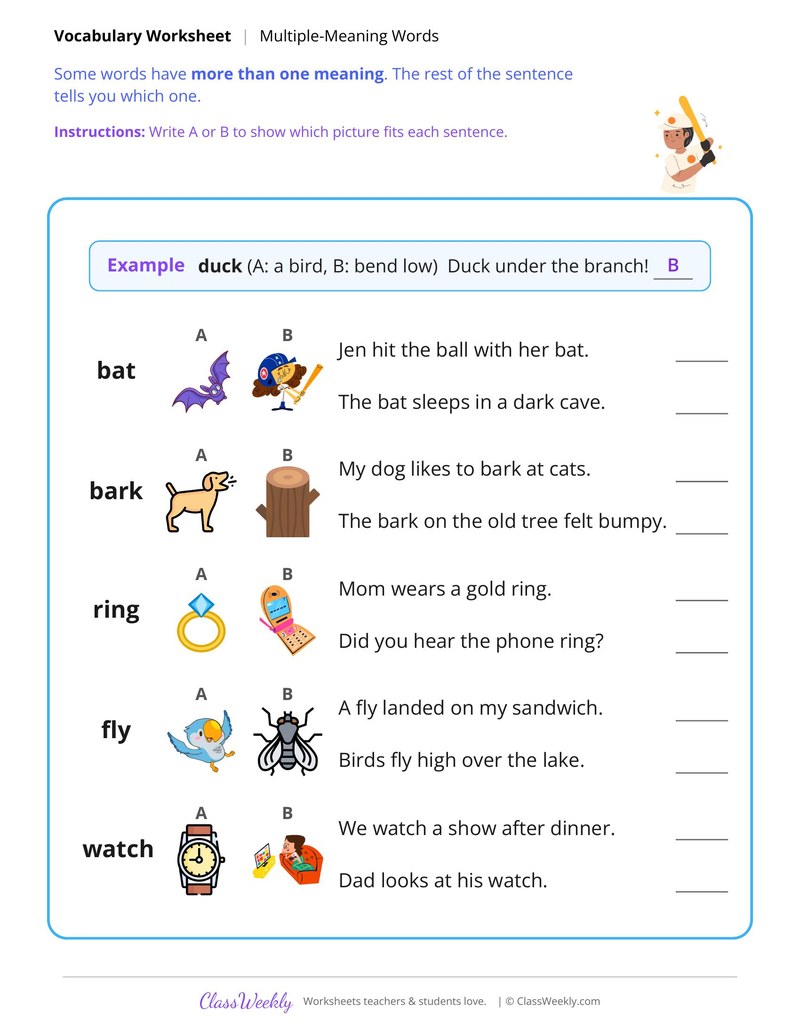
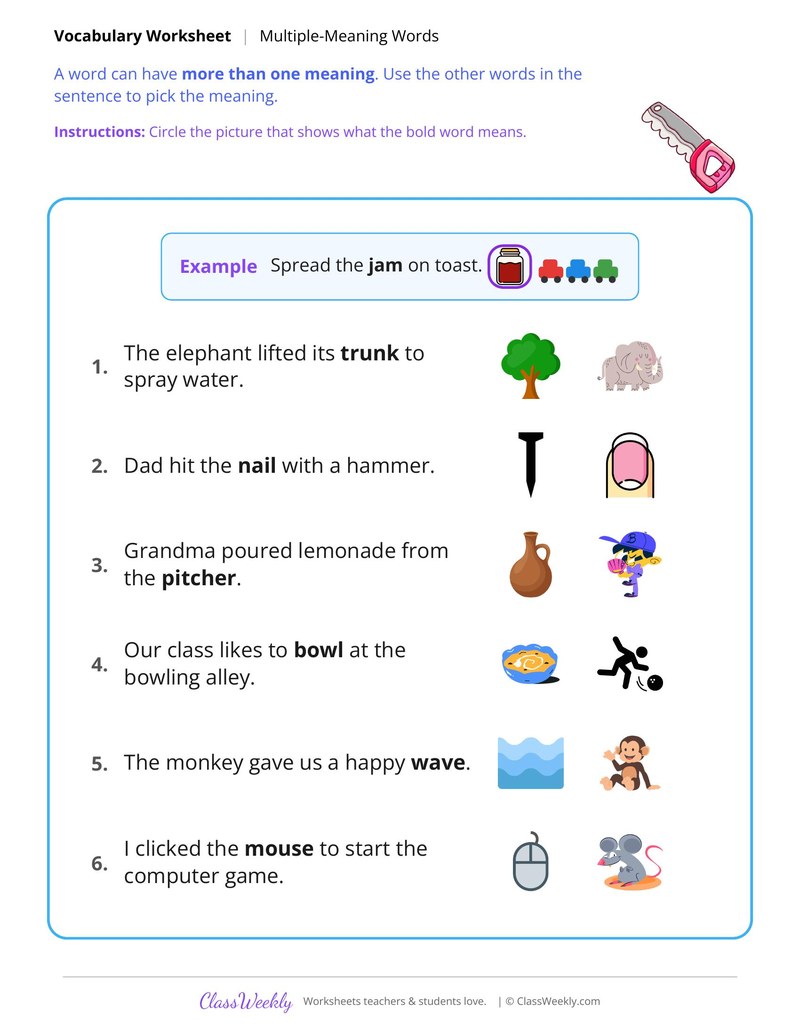
The sheets use words like bat, bark, ring, fly, watch, trunk, nail, pitcher, letter, fall, park and spring. Each one comes with pictures, so your child can see both meanings and match the right one to a sentence.
How can I help my child choose the right meaning?
⌄
Read the full sentence out loud and ask which picture makes sense with the other words. In The bat sleeps in a dark cave, the words sleeps and cave point to the animal, not the baseball bat.
Why is There Is or There Are in this topic?
⌄
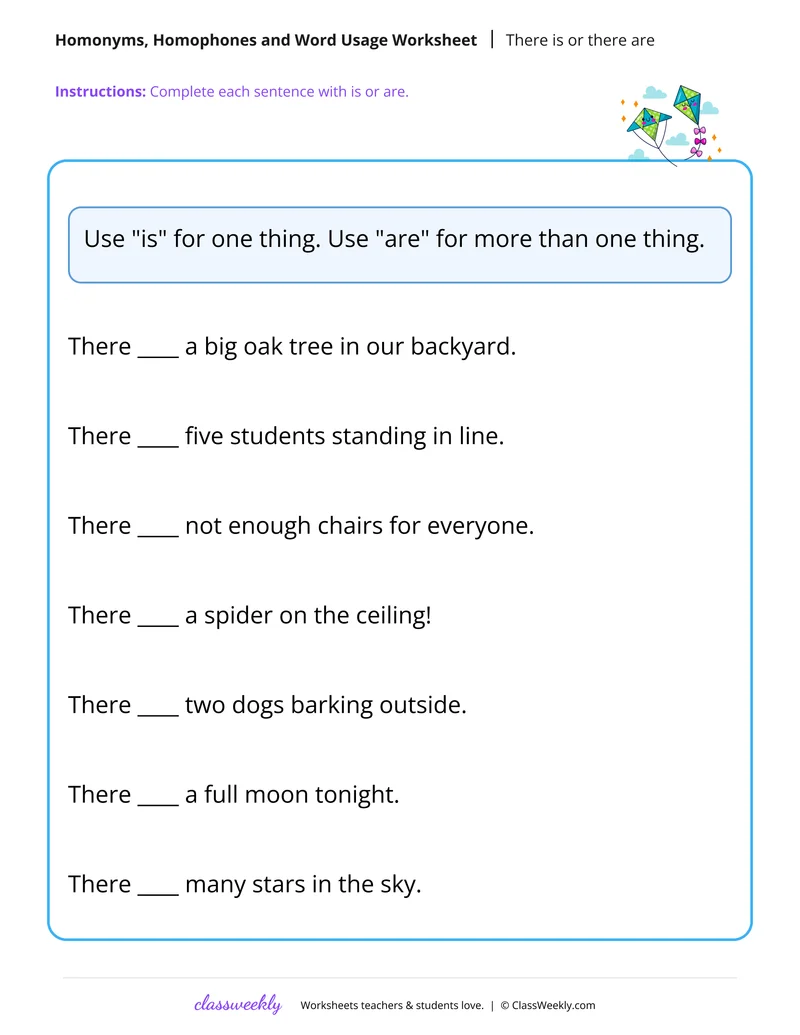
It asks the same question as the rest of the topic: which word fits this sentence? Is goes with one thing and are goes with more than one, so your child reads for meaning before choosing.
Ratings & Reviews
No reviews yet. Be the first to share what you think.
Reviews are for ClassWeekly members.
Make a Request
Spotted something to fix, or want a worksheet we don't have yet? Tell us and we'll make it.
Worksheet Details
| Grade | 2nd Grade |
| Subject | Vocabulary |
| Topic | Homonyms, Homophones and Word Usage |
| Standard | L.2.4 |
| Pages | 1 page |
| Difficulty | Medium |
What is ClassWeekly?
ClassWeekly offers free worksheets and printable learning resources for kids, from preschool up. All worksheets are aligned to Common Core, NGSS, and C3 Framework standards and designed by educators. Become a member to access the full library and download unlimited PDFs.