2nd Grade · Science · 2.MD.A.3, 2.MD.A.1
Measuring in Science Lesson Plan for 2nd Grade
A ready-to-teach measuring in science lesson for 2nd Grade, built around units of time and length, unit short forms, and choosing the best length tool. Print the plan, print the practice pages, and you are set.
Approximately 45 minutes
Learning objective
- Choose seconds, minutes or hours for everyday events
- Pick days, weeks, months or years for longer times
- Order units of time from shortest to longest
Materials
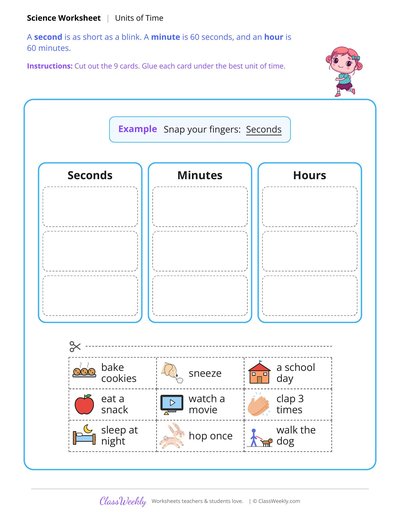
- Seconds, Minutes or Hours Cut and Glue
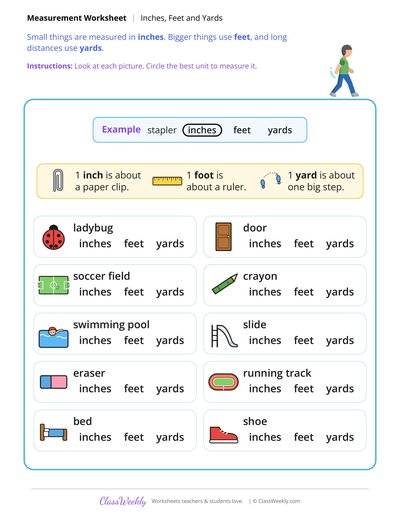
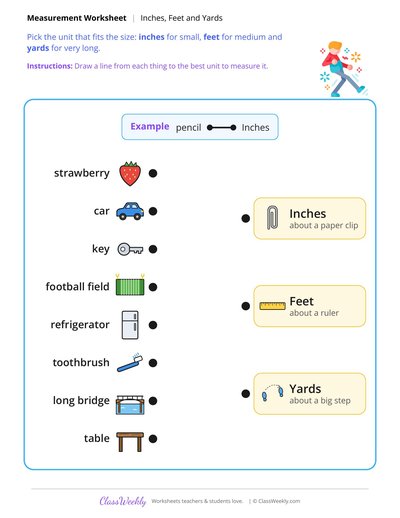
- Inches, Feet or Yards? Circle
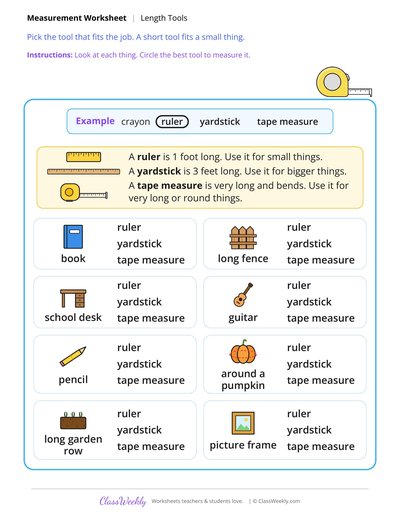
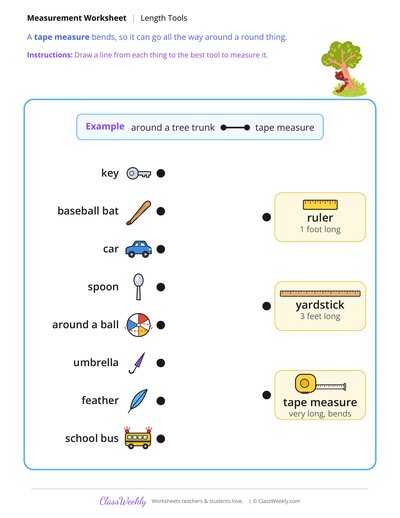
- Ruler, Yardstick or Tape Measure? Circle
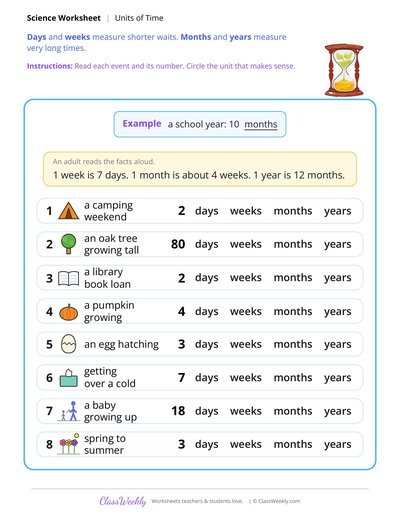
- Days, Weeks, Months or Years?
- Match Things to the Best Unit
- Match the Thing to the Tool
- Pencils, and whiteboard space for the modeled examples
Lesson steps
1. Ask the question (5 min)
Bring the real tool: a ruler, a clock, coins, a tally chart. Ask what measuring in science is used for before what it is called.
2. Explore (12 min)
Model measuring in science with the actual object, reading it aloud twice. Deliberately misread it once so students learn that checking is part of the method.
3. Explain (10 min)
Now give the vocabulary and the explanation for measuring in science. Tie it directly back to what students just observed and to the predictions on the board. Name which predictions held up.
4. Independent practice (you do) (13 min)
Hand out "Seconds, Minutes or Hours Cut and Glue". Students record what they learned and answer the questions independently. Circulate and press for "how do you know?"
5. Extend the thinking (5 min)
Ask where else measuring in science shows up outside the classroom. Collect two or three examples and leave the question open for tomorrow.
Check for understanding
Ask students to explain measuring in science to a partner in one sentence, then write that sentence down. Collect the sentences: they show you exactly which part of the idea did not land.
Differentiation
Extra support. Students who stall: pull them into a small group and rebuild measuring in science with concrete materials or a simpler text before asking for the written work again. Do not send the page home as homework, it will just rehearse the misunderstanding.
Extension. Students who finish early: ask them to write their own measuring in science problem for a partner to solve, then check the partner's work. Creating a problem is harder than solving one and it surfaces whether they really understand measuring in science.
Skills covered in this lesson
Units of time · Units of length · Measuring tools