Poem Forms Mini Book
Written by Adi Ackerman, Head Teacher
"Poem Forms Mini Book" is written for 3rd Grade to 5th Grade (Ages 8-11). It also works a grade below or above: younger children can use it with an adult reading it aloud, and older ones as a quick refresher.
2 pages in this set
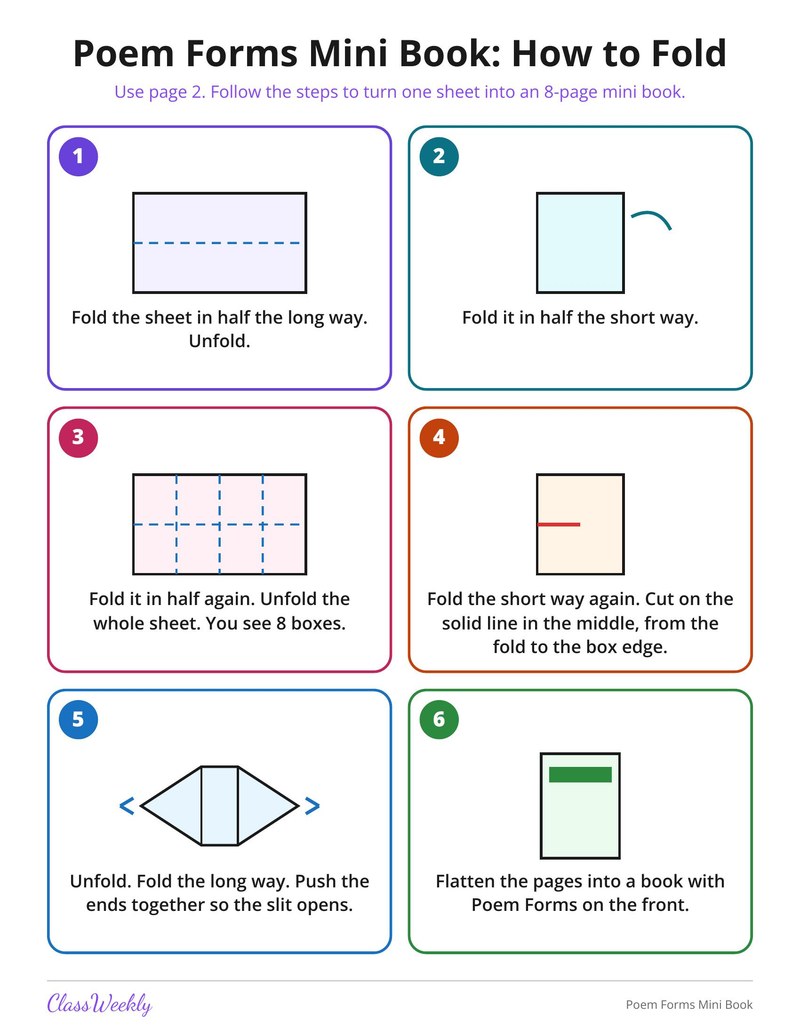
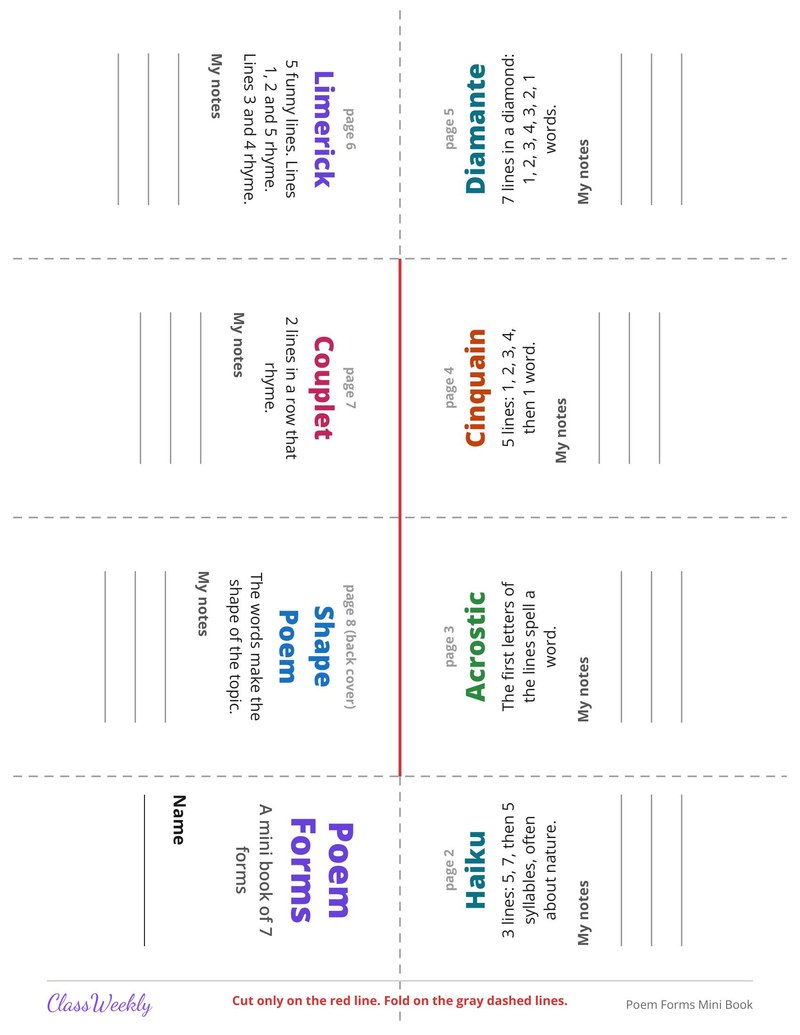
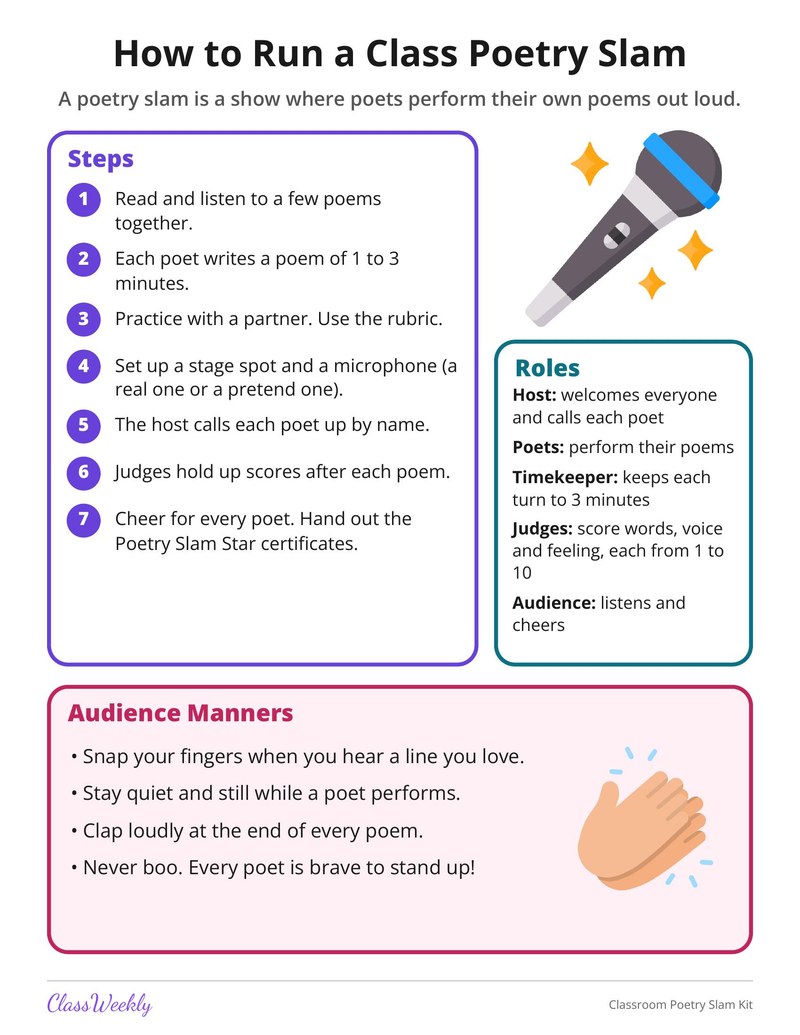
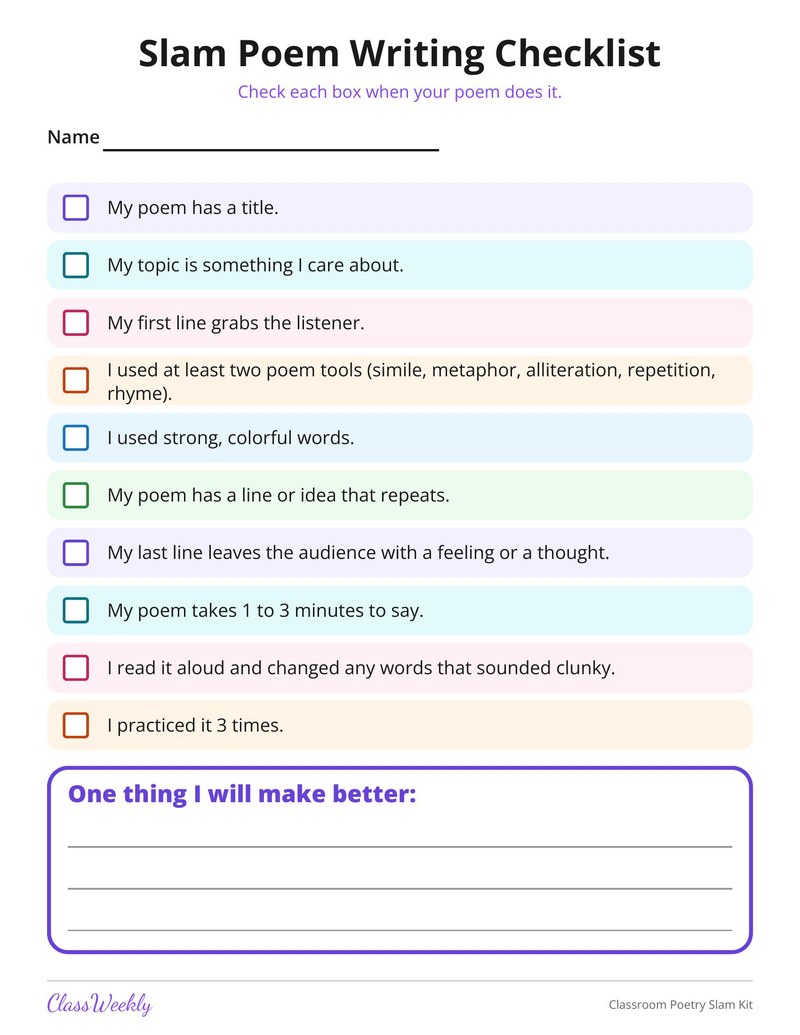
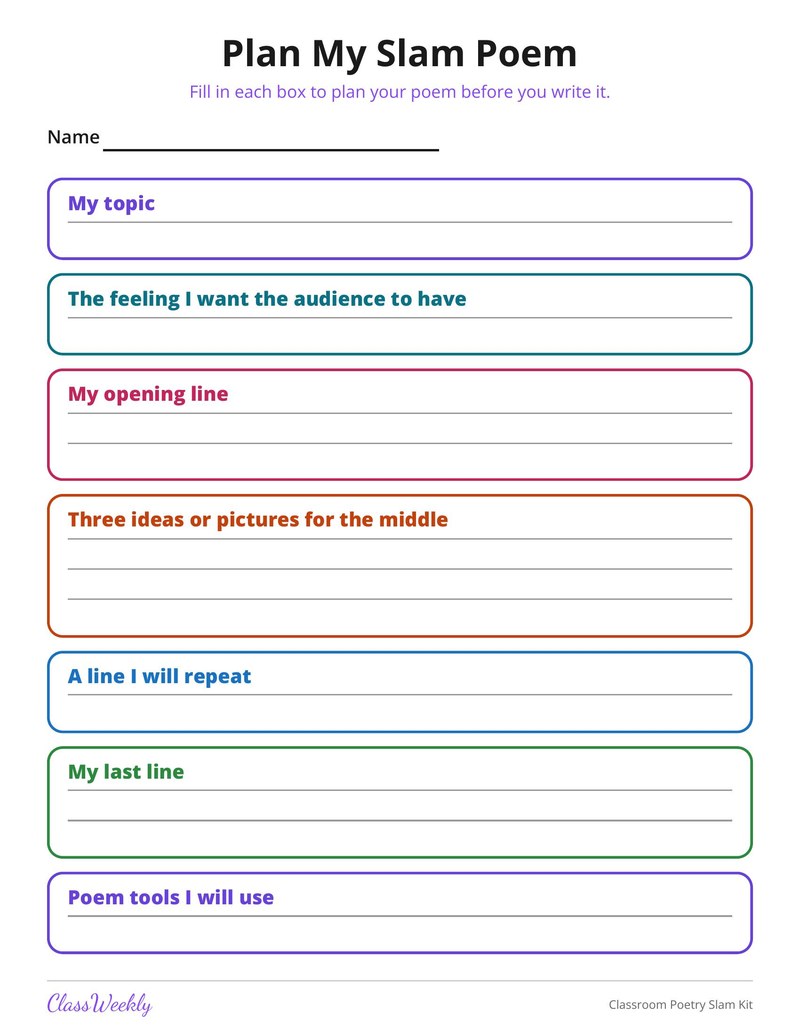
Poem forms mini book for 3rd to 5th grade: fold one sheet into an 8-page book on haiku, acrostic, cinquain, diamante, limerick, couplet and shape poems. Part of our Poetry Month graphic organizers collection.
More Poetry Month activitiesPoetry Month 2027: dates and teaching guide
How do I use this resource?
Fold the books together as a class, then have children add an example line for each form in the notes space. It makes a handy pocket guide while writing.
What students will practice
- Helps 3rd to 5th grade students read, write and perform poems during Poetry Month, from rhyme and syllables to haiku and cinquain.
- Helps students plan, organize what they find out and write about it in their own words.
- Made for 3rd to 5th grade, and prints on US Letter paper for a lesson, a center or home.
Curriculum Links
Find this in the curriculum
Browse the grade, subject, and topic this belongs to.
FAQ
How do I use the Poem Forms Mini Book?
⌄
Fold the books together as a class, then have children add an example line for each form in the notes space. It makes a handy pocket guide while writing.
What is the Poem Forms Mini Book?
⌄
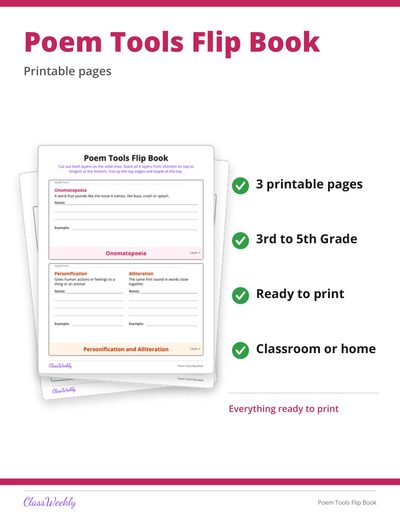
Two pages. Page 1 shows 6 illustrated steps to fold and cut the sheet. Page 2 is the mini book, with a Poem Forms cover, then one panel each for haiku, acrostic, cinquain, diamante, limerick, couplet and shape poem, each with its rule and My notes lines.
Can I use the Poem Forms Mini Book at home and in the classroom?
⌄
Yes. We made it for 3rd Grade to 5th Grade graphic organizers, and it works the same at home or at school. Families print it for one child and keep it where they will use it every day. Teachers print a copy per student or one for the whole room, whichever the day needs.
What is a graphic organizer and when should students use one?
⌄
A graphic organizer is a visual space that helps students sort and connect their ideas before they write, compare, sequence, or plan. Students use them to plan a piece of writing, compare two things, order events, brainstorm, or take notes. Making thinking visible helps students see connections and relationships they might otherwise miss.
What types of graphic organizers are included?
⌄
The set includes Venn diagrams for comparing, flow charts and storyboards for sequencing, webs for brainstorming, and tables and planning frames for gathering information. They work across reading, writing, math, science, and social studies.
How do I teach students to use a graphic organizer?
⌄
Fill one in together as a class the first time so students see how each box works, then let them complete their own for a book, topic, or writing plan. A completed organizer becomes a plan students can write from, turning scattered ideas into structured work. Match the organizer to the thinking you want: a Venn diagram to compare, a flow chart to sequence, a web to brainstorm.
Are these graphic organizers free to download?
⌄
Yes. Every organizer prints on standard 8.5x11 paper, and downloads are included with a ClassWeekly free trial. Parents can use a simple organizer to help a child plan a story, study for a test, or compare two options side by side.
Ratings & Reviews
No reviews yet. Be the first to share what you think.
Reviews are for ClassWeekly members.
Make a Request
Spotted something to fix, or want a resource we don't have yet? Tell us and we'll make it.
Resource Details
| Grade | 3rd Grade to 5th Grade |
| Subject | Resources |
| Topic | Graphic Organizers |
| Pages | 2 pages |
| Difficulty | Medium |
What is ClassWeekly?
ClassWeekly offers free worksheets and printable learning resources for kids, from preschool up. All worksheets are aligned to Common Core, NGSS, and C3 Framework standards and designed by educators. Become a member to access the full library and download unlimited PDFs.