Slide and Say, Then Write
Written by Adi Ackerman, Head Teacher
"Slide and Say, Then Write" is written for 1st Grade (Ages 6-7), and it covers Common Core RF.1.2.B. If your little one is a year younger but already steady on phonics, the page still works. You may just need to read the instructions out loud. And if they are older and blending sounds never quite stuck, this is a short review rather than busywork.
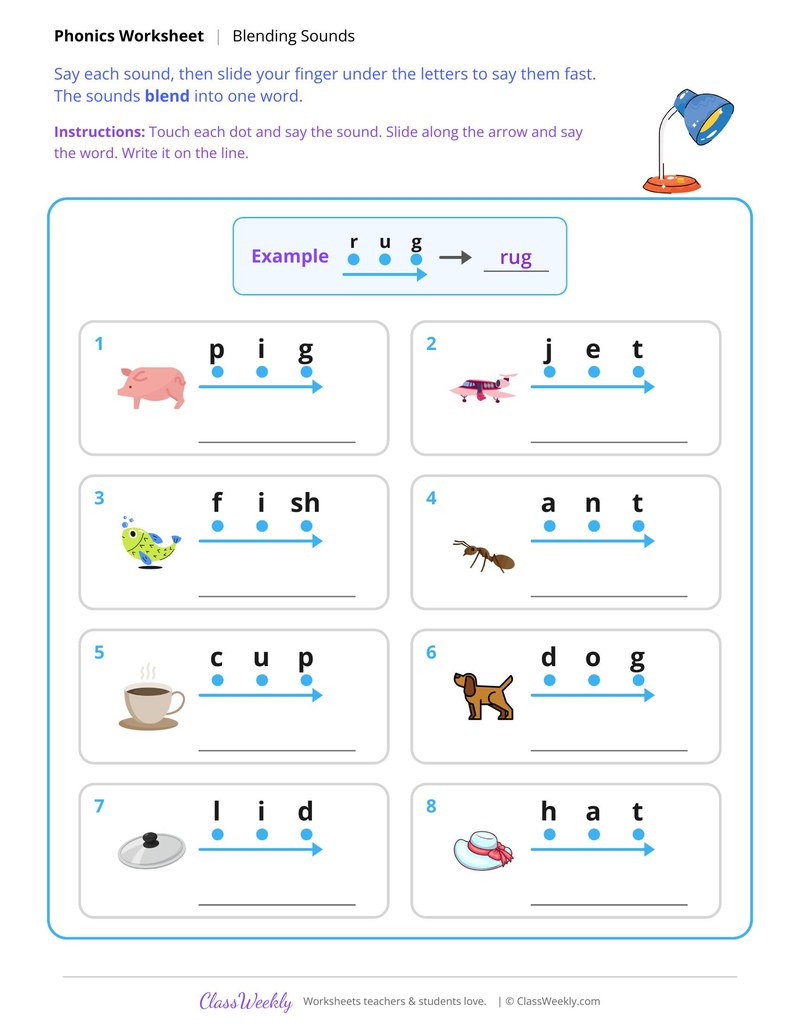
1st grade reading worksheet: touch each dot to say sounds like p, i, g, slide to blend the word and write it on the line. Answer key included. Part of our blending sounds phonics collection. Aligned to Common Core standards.
How do I use this worksheet?
Begin with a shared reading or oral warm-up that highlights blending sounds so students hear and see the skill in context before practicing it independently. Have students work through the first item together as a class, then finish the rest independently or with a partner, especially for phonics-based tasks where saying an answer aloud first helps. After completing the worksheet, use one or two examples from the page to start a discussion: "Where else have you seen this in your reading?" These blending sounds worksheets are ideal for use during small group reading time, as independent center work, or as a homework activity.
What students will practice
- Students will touch each dot and say sounds like j, e, t.
- Students will slide along the arrow to blend words like jet, fish and cup.
- Students will write each blended word on the line.
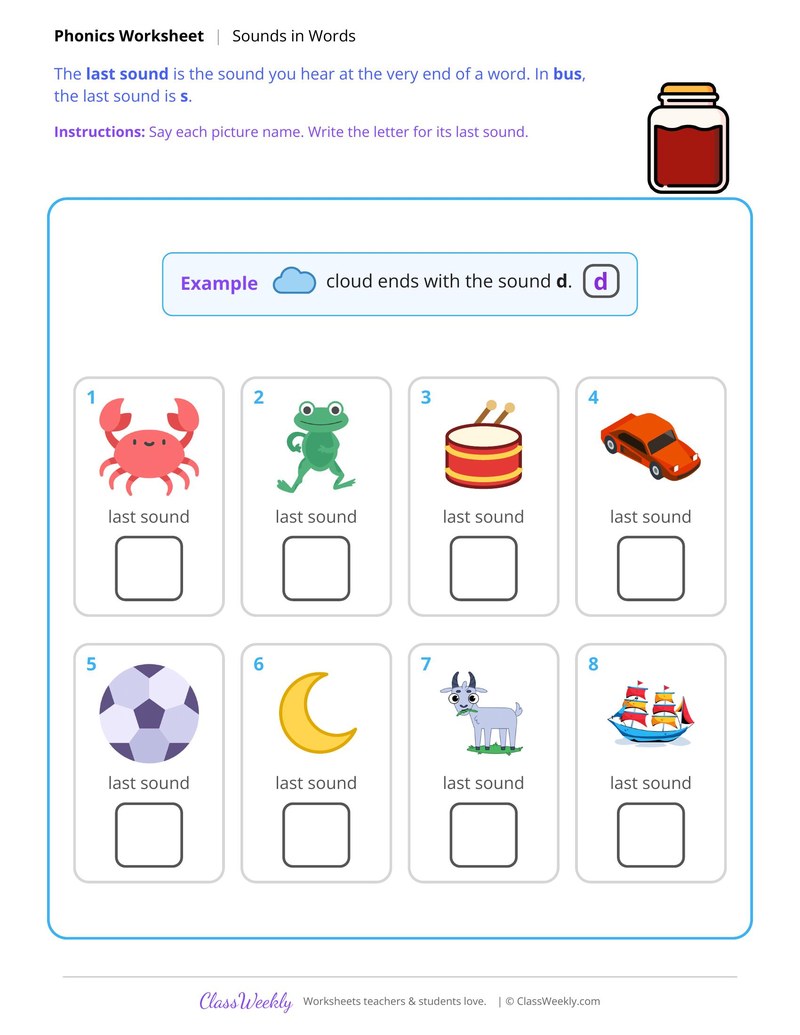
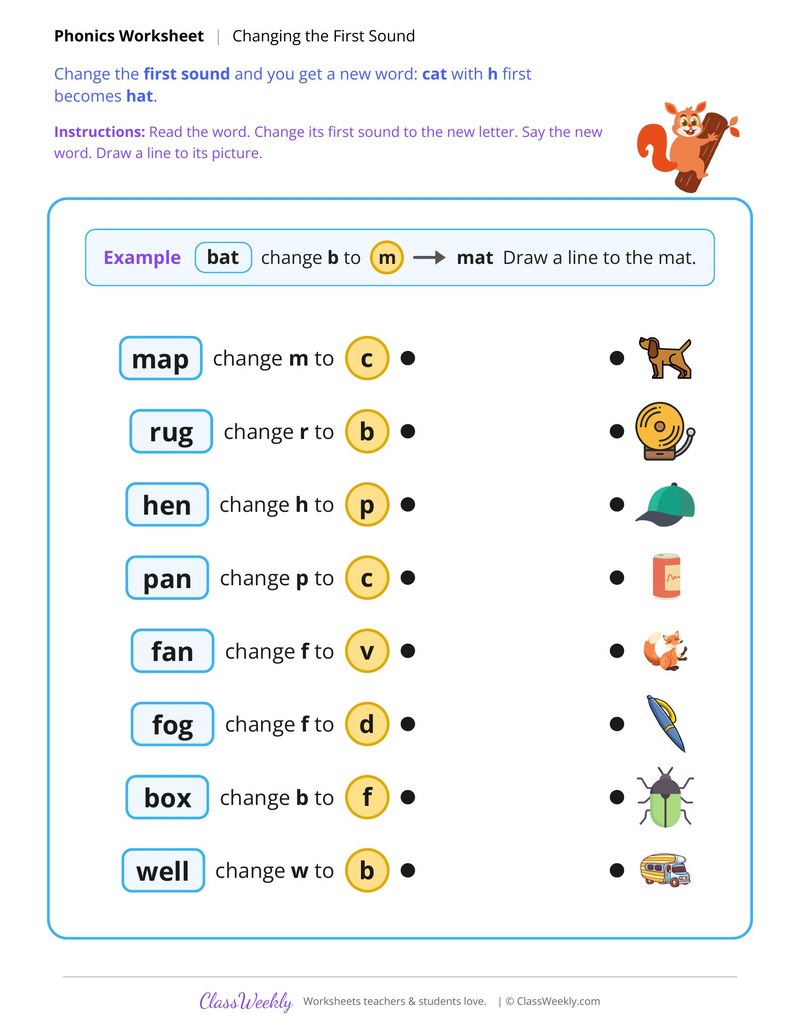
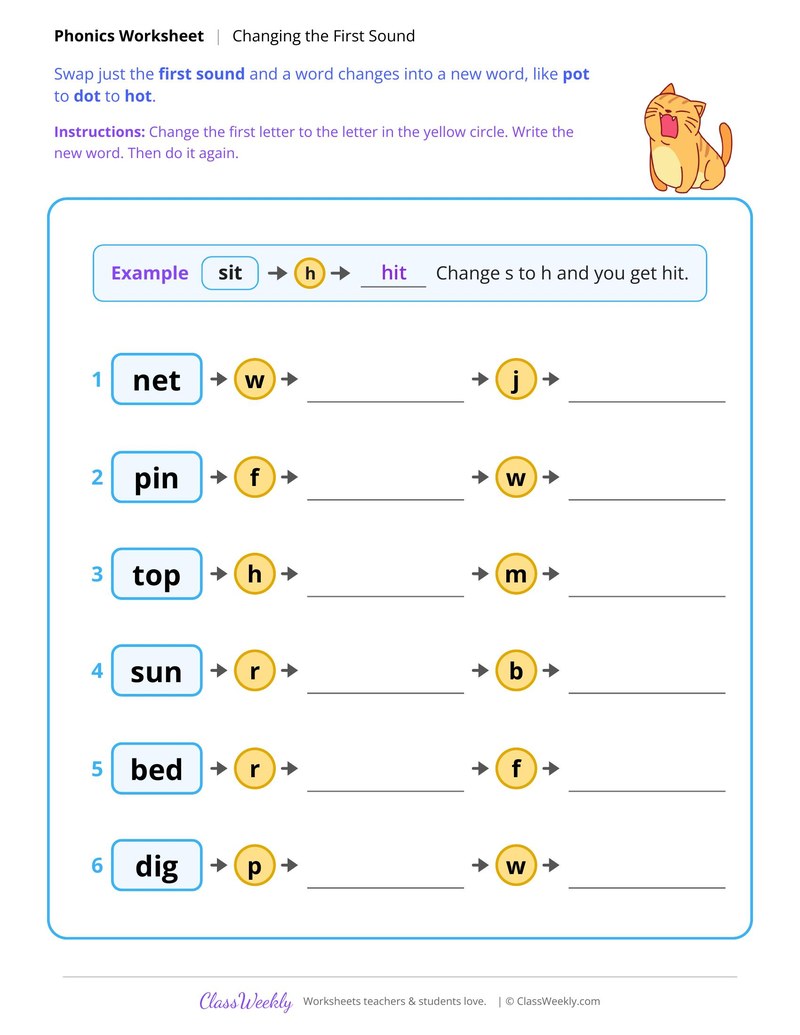
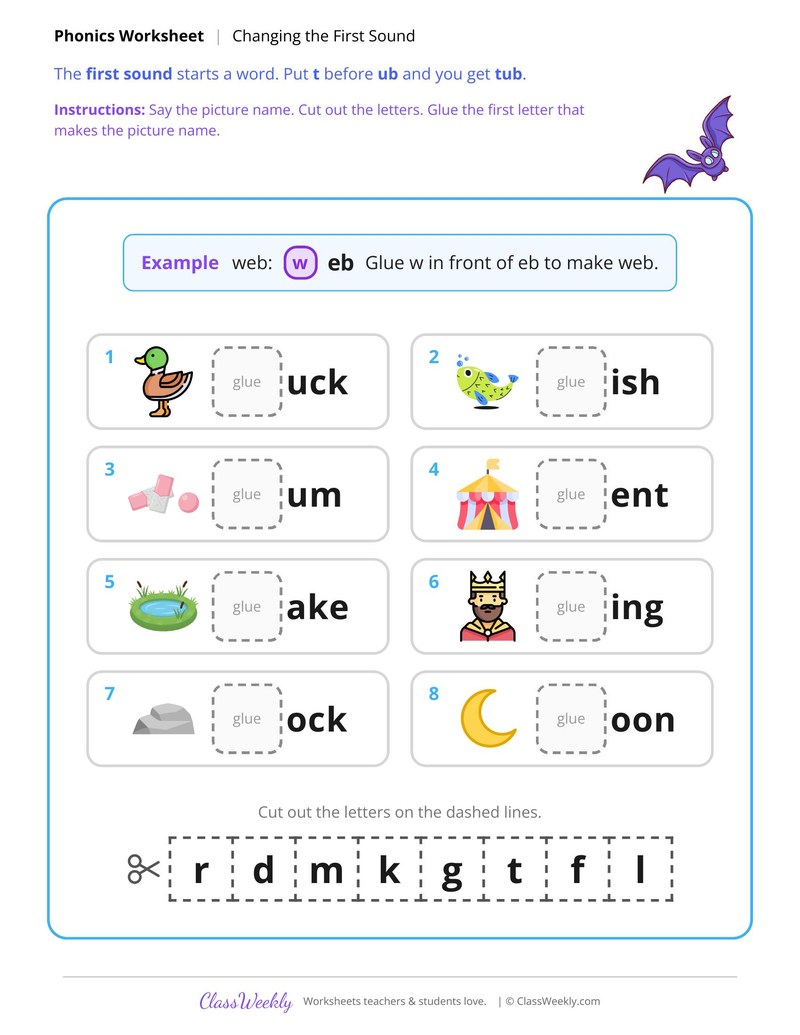
Curriculum Links
Common Core State Standards
Reading: Foundational Skills · 1st Grade
Standard: Orally produce single-syllable words by blending sounds (phonemes), including consonant blends.
View all RF.1.2.B worksheets →Find this in the curriculum
Browse the grade, subject, and topic this belongs to.
FAQ
How do I use this blending sounds worksheet?
⌄
Begin with a shared reading or oral warm-up that highlights blending sounds so students hear and see the skill in context before practicing it independently. Have students work through the first item together as a class, then finish the rest independently or with a partner, especially for phonics-based tasks where saying an answer aloud first helps. After completing the worksheet, use one or two examples from the page to start a discussion: "Where else have you seen this in your reading?" These blending sounds worksheets are ideal for use during small group reading time, as independent center work, or as a homework activity.
What does this worksheet teach?
⌄
Touch each dot to say sounds like p, i, g, slide to blend the word and write it on the line. The directions on the page read: Touch each dot and say the sound. Slide along the arrow and say the word. Write it on the line. The page opens with a worked example, and an answer key is included.
Can I use this blending sounds worksheet for homeschool or classroom?
⌄
Yes, both. We made it for 1st Grade phonics, and the page works the same whether it lands on a kitchen table or a center rotation. At home, most families go through it together and talk the answers out loud, and that talking is where most of the learning happens with blending sounds. In class it runs well as independent work while you pull a small group. Print one copy or thirty, whichever the day needs.
What is sound blending and why is it a key skill for 1st grade readers?
⌄
Blending is the ability to combine separately heard sounds into a whole word - when students encounter an unfamiliar word in print, they decode each sound and blend them to read the word.
What types of words appear in 1st grade sound blending worksheets?
⌄
Worksheets typically begin with simple CVC words (cat, hop, lid) and progress to words with consonant blends (flat, trip, clam) as students' phonics knowledge grows.
How can parents support blending sounds practice at home?
⌄
Parents can play a 'say it slow, say it fast' game - slowly pronouncing each sound (/s/ /u/ /n/) and asking the child to blend them into the whole word (sun) - requiring no materials.
What phonics skills are taught in 1st grade?
⌄
1st graders blend and change sounds in short words, read CVC words like cat, and learn silent e words like cape and vowel teams like ai, ee and oa. They also read r-controlled vowels like ar and or and diphthongs like oi and ow (RF.1.3).
How is a silent e word different from a vowel team word?
⌄
In a silent e word, like cape or kite, the e at the end makes no sound and makes the first vowel say its name. In a vowel team word, like rain or boat, two vowels sit side by side and make one sound. Both are part of RF.1.3.C.
Why practice changing one sound in a word?
⌄
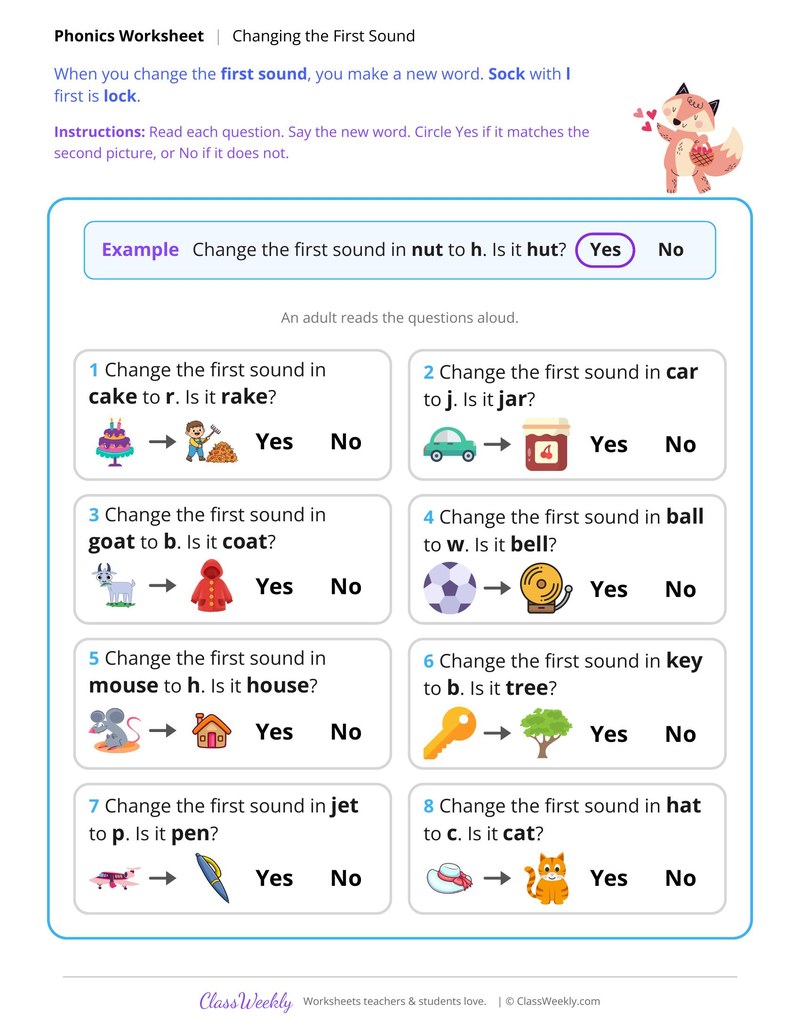
Changing one sound, like cat to hat or mud to mug, shows children that every sound in a word matters. Pages such as Change the End Sound Ladder have them change one letter at a time and write each word.
What is a diphthong?
⌄
A diphthong is a vowel sound that glides, spelled with pairs like oi and oy in coin and boy, or ou and ow in mouse and cow. The diphthong pages have children read, match and finish words with these pairs.
Do the phonics worksheets have answer keys?
⌄
Most phonics sheets come with an answer key, including every blending, sound change, silent e and vowel team page in the latest set.
Ratings & Reviews
No reviews yet. Be the first to share what you think.
Reviews are for ClassWeekly members.
Make a Request
Spotted something to fix, or want a worksheet we don't have yet? Tell us and we'll make it.
Learn More
What is ClassWeekly?
ClassWeekly offers free worksheets and printable learning resources for kids, from preschool up. All worksheets are aligned to Common Core, NGSS, and C3 Framework standards and designed by educators. Become a member to access the full library and download unlimited PDFs.