Compare Ways to Restore Cleared Forest Land
Written by Adi Ackerman, Head Teacher
"Compare Ways to Restore Cleared Forest Land" is written for 8th Grade (Ages 13-14), and it covers NGSS MS-LS2-5. A 7th grader who is already steady on ecosystems can use it too, and an older student can use it as a short review.
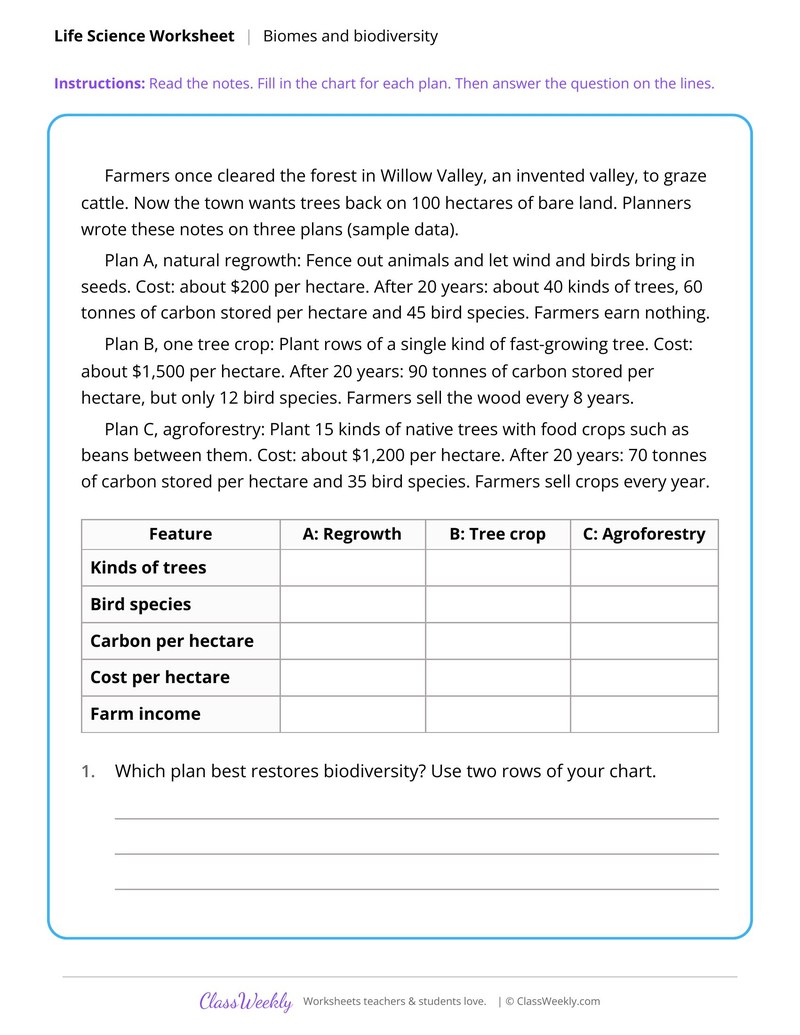
8th grade science worksheet: compare natural regrowth, a tree crop and agroforestry for 100 hectares of cleared land. Answer key included. Part of our biomes and biodiversity ecosystems collection. Aligned to NGSS standards.
How do I use this worksheet?
Use the coral reef organizer as a reading task, then let small groups each take one plan sheet. Have groups present their recommendation with numbers.
What students will practice
- Students will compare three forest plans by cost, kinds of trees, carbon stored and bird species.
- Students will fill in a chart from planning notes for Willow Valley.
- Students will recommend a plan and support it with the data.
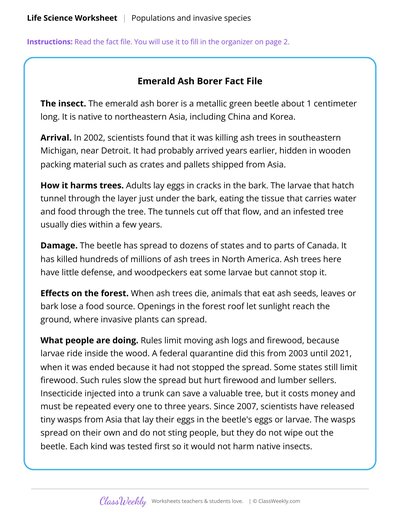
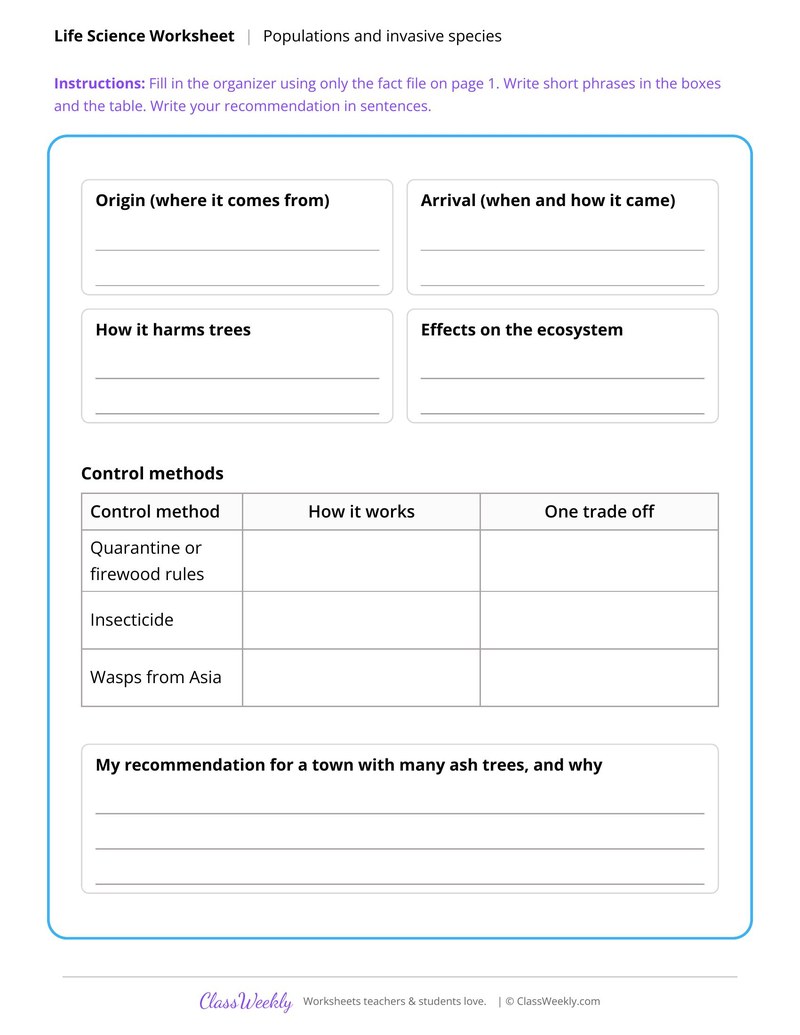
Emerald Ash Borer Fact File Organizer
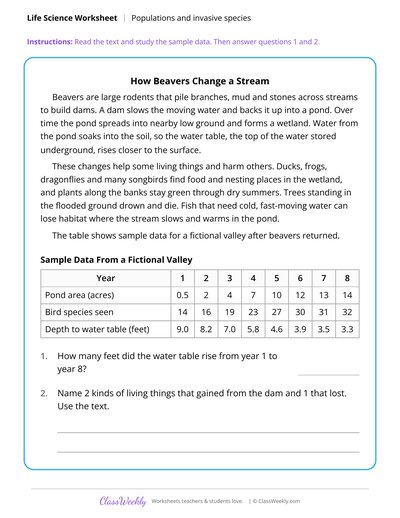
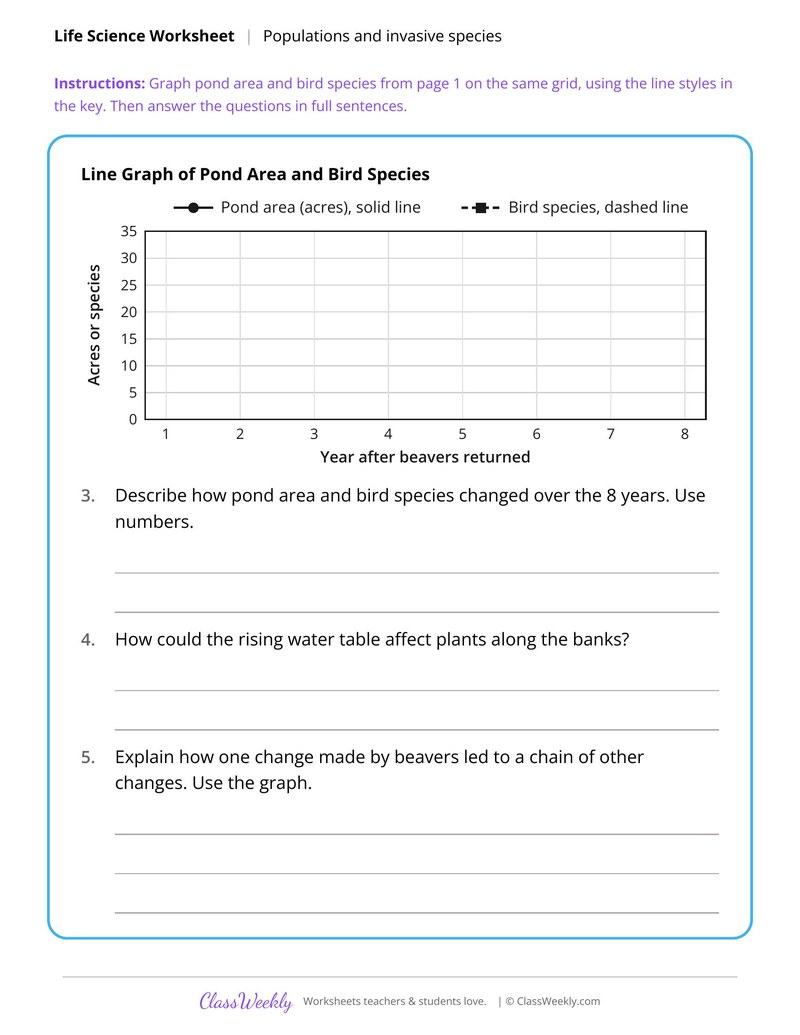
Beaver Dams and Stream Ecosystem Change
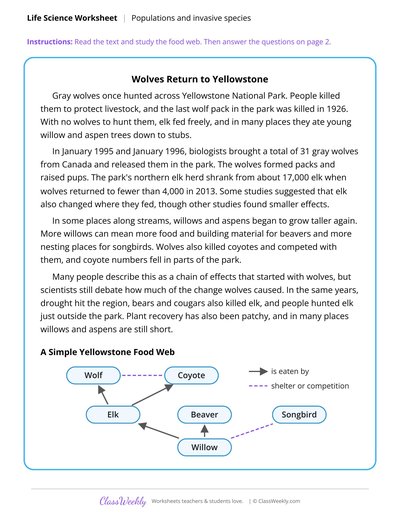
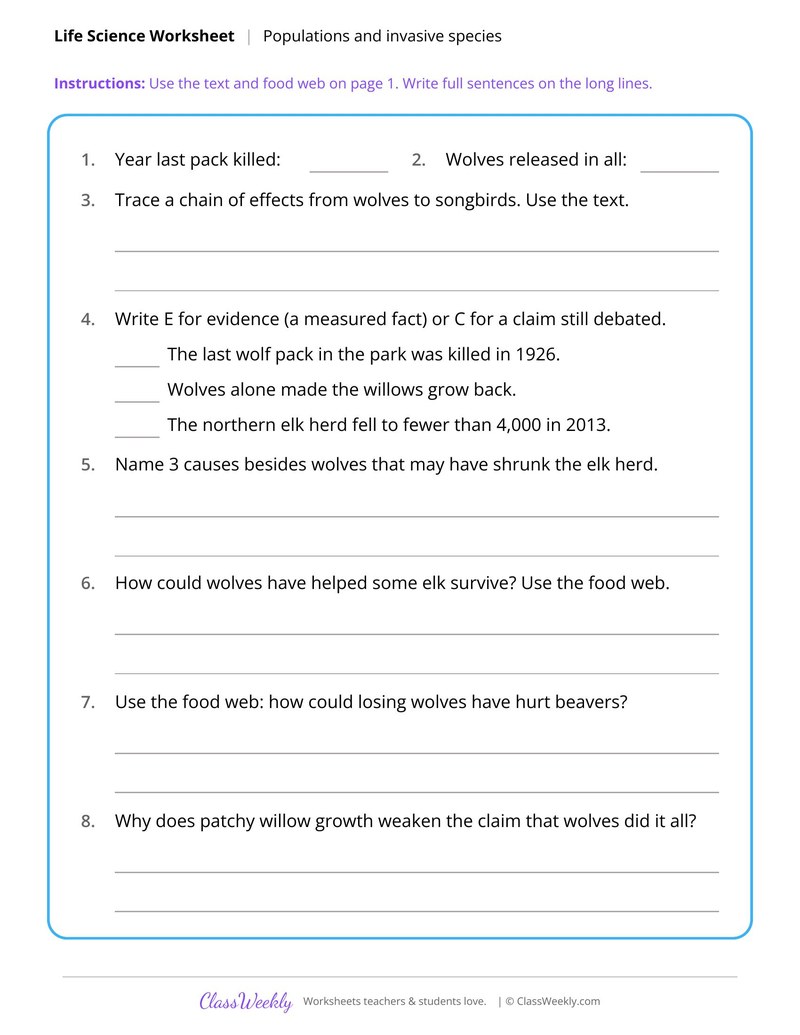
Wolves and Elk in Yellowstone Since 1995
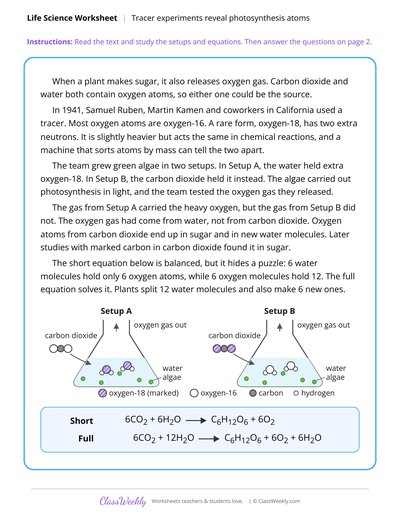
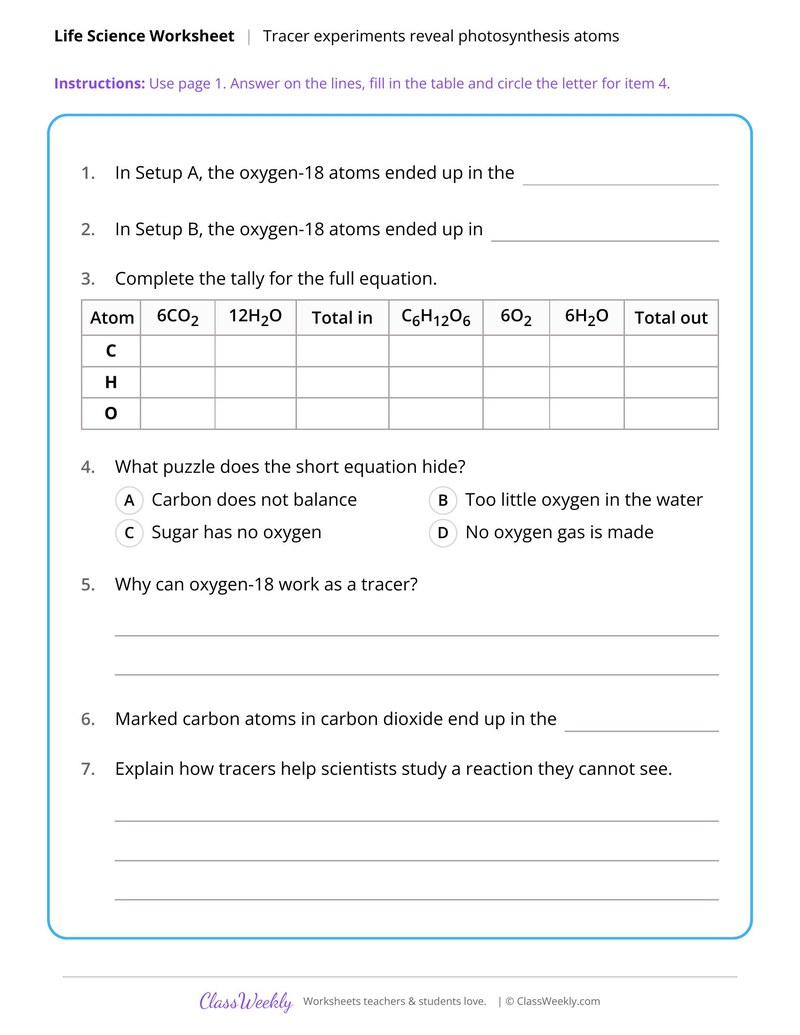
Tracer Experiments Reveal Photosynthesis Atoms
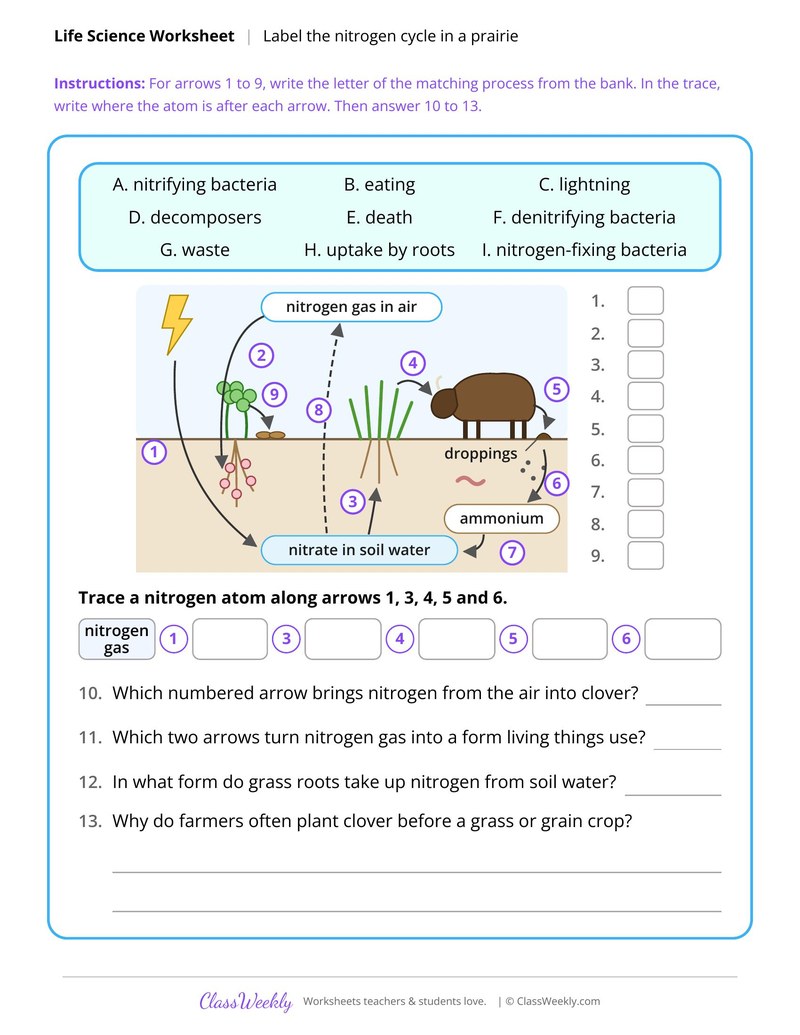
Label the Nitrogen Cycle in a Prairie
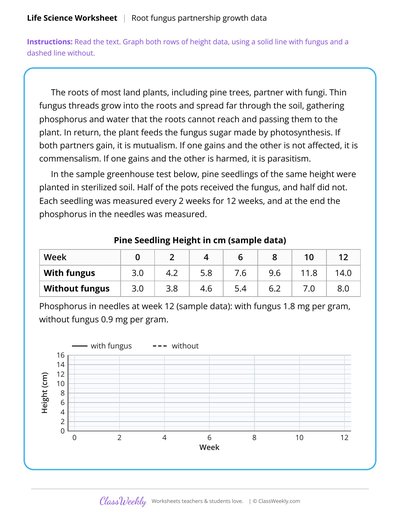
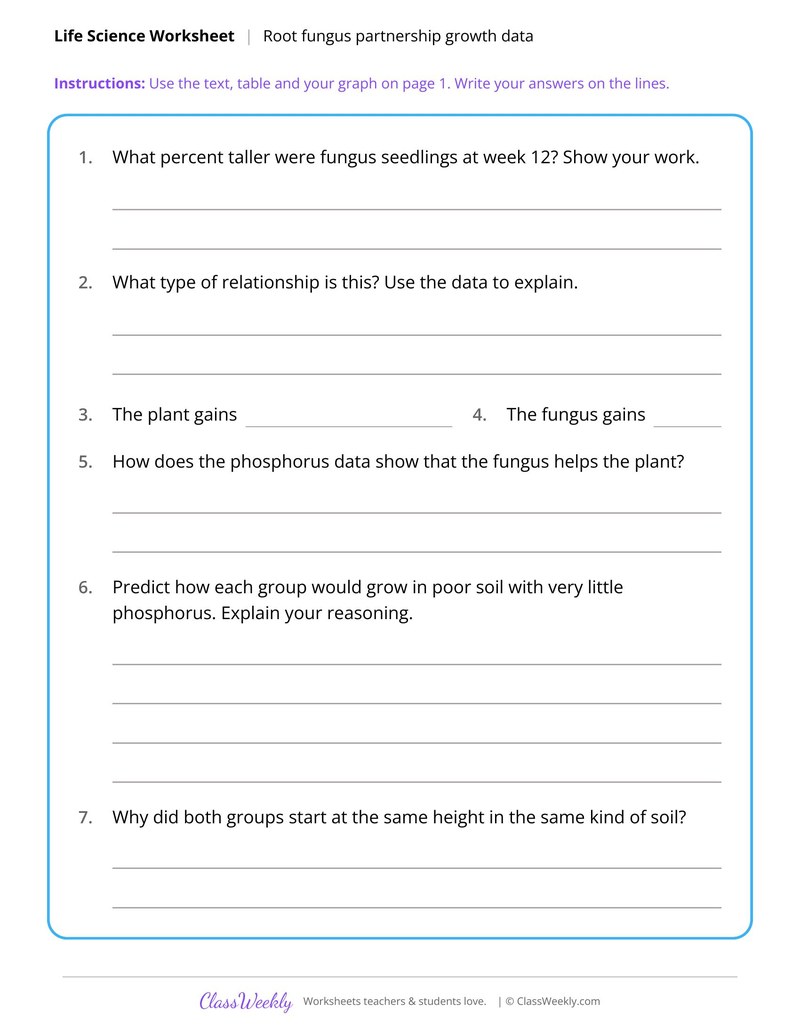
Root Fungus Partnership Growth Data
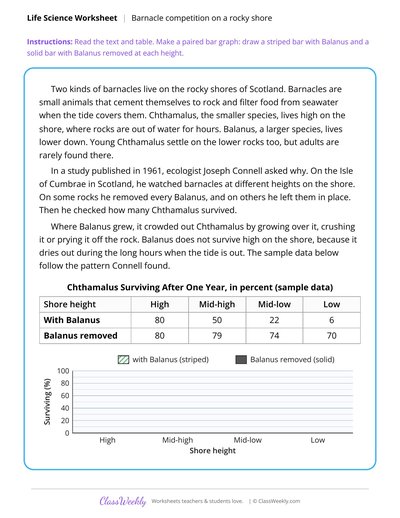
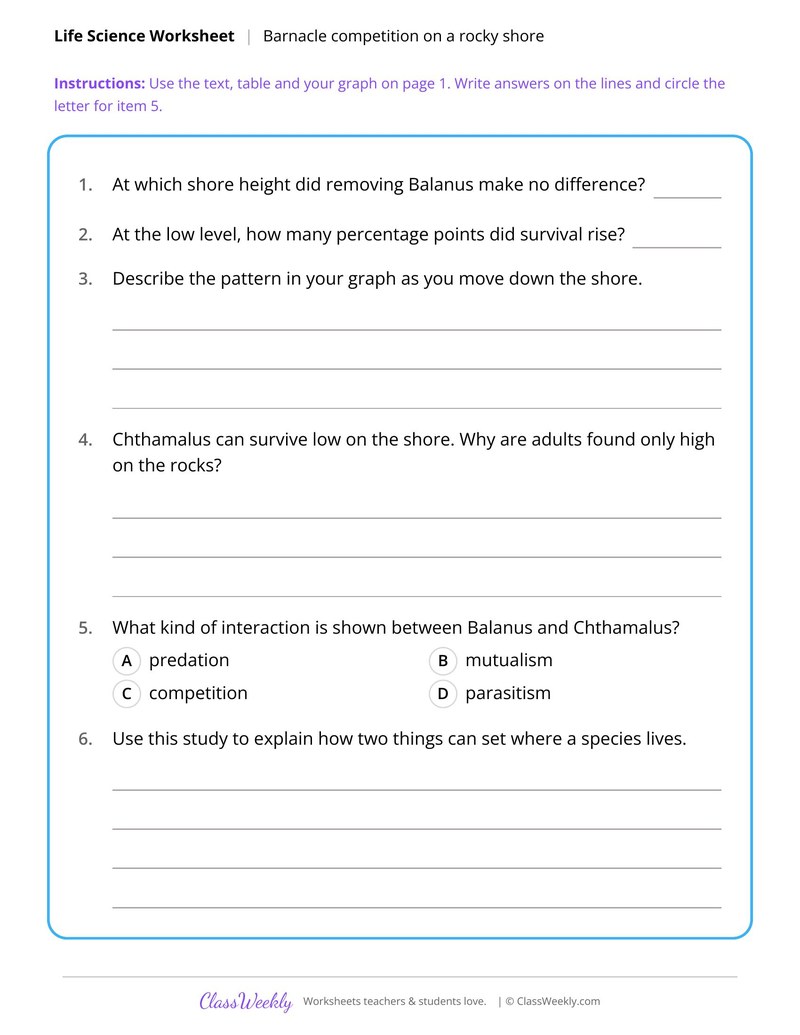
Barnacle Competition on a Rocky Shore
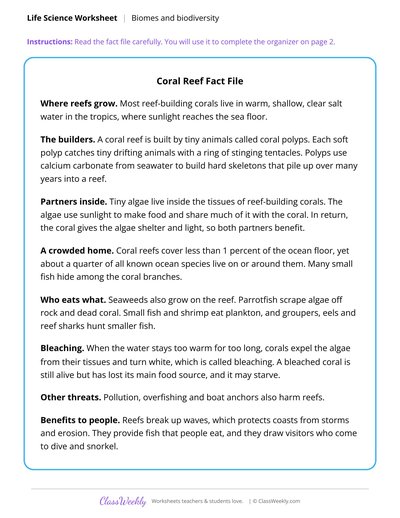
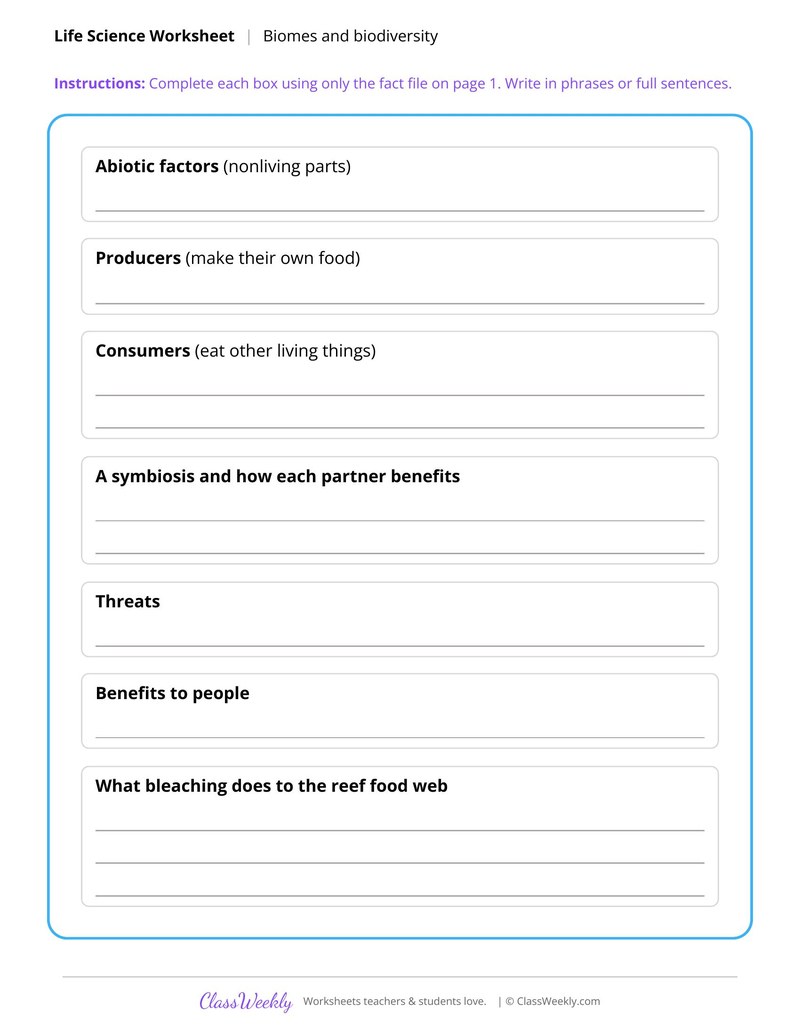
Coral Reef Ecosystem Fact File Organizer
Curriculum Links
Next Generation Science Standards
Science · 8th Grade
Find this in the curriculum
Browse the grade, subject, and topic this belongs to.
FAQ
How do I use this biomes and biodiversity worksheet?
⌄
Use the coral reef organizer as a reading task, then let small groups each take one plan sheet. Have groups present their recommendation with numbers.
What does this worksheet teach?
⌄
Compare natural regrowth, a tree crop and agroforestry for 100 hectares of cleared land. The directions on the page read: Read the notes. Fill in the chart for each plan. Then answer the question on the lines. An answer key is included.
Can I use this biomes and biodiversity worksheet for homeschool or classroom?
⌄
Yes, both. We made it for 8th grade ecosystems, and it works the same at home or at school. At home, a student can work through it alone and then go over it with you, which shows quickly what is solid and what needs another look. In class it works as independent practice, homework or a warm-up, and you can print one copy or a full set.
Why are coral reefs important?
⌄
Coral reefs cover less than 1 percent of the ocean floor, yet about a quarter of all known ocean species live on or around them. Coral polyps build the reef, and algae inside them make food. The fact file also covers threats such as bleaching.
Do wildlife crossings work?
⌄
In Banff National Park in Canada, fences and crossings cut collisions between vehicles and wildlife by more than 80 percent. The sheet's sample highway data show collisions dropping after crossings were finished. Students check the results against three county goals.
How do you choose between plans to protect biodiversity?
⌄
List the criteria, such as cost, species helped and what people gain, and compare each plan on each one. The forest and pollinator sheets have students fill in a chart before writing a recommendation. The best plan depends on which criteria matter most.
Ratings & Reviews
No reviews yet. Be the first to share what you think.
Reviews are for ClassWeekly members.
Make a Request
Spotted something to fix, or want a worksheet we don't have yet? Tell us and we'll make it.
Worksheet Details
| Grade | 8th Grade |
| Subject | Science |
| Topic | Ecosystems |
| Standard | MS-LS2-5 |
| Pages | 1 page |
| Difficulty | Medium |
Learn More
What is ClassWeekly?
ClassWeekly offers free worksheets and printable learning resources for kids, from preschool up. All worksheets are aligned to Common Core, NGSS, and C3 Framework standards and designed by educators. Become a member to access the full library and download unlimited PDFs.
Emerald Ash Borer Fact File Organizer
Beaver Dams and Stream Ecosystem Change
Wolves and Elk in Yellowstone Since 1995
Tracer Experiments Reveal Photosynthesis Atoms
Label the Nitrogen Cycle in a Prairie
Root Fungus Partnership Growth Data
Barnacle Competition on a Rocky Shore
Coral Reef Ecosystem Fact File Organizer