Tracer Experiments Reveal Photosynthesis Atoms
Written by Adi Ackerman, Head Teacher
"Tracer Experiments Reveal Photosynthesis Atoms" is written for 8th Grade (Ages 13-14), and it covers NGSS MS-LS1-6. A 7th grader who is already steady on ecosystems can use it too, and an older student can use it as a short review.
2 pages in this set
8th grade science worksheet: follow oxygen-18 through the 1941 algae experiments to find where photosynthesis oxygen comes from. Answer key included. Part of our food webs and matter cycles ecosystems collection. Aligned to NGSS standards.
How do I use this worksheet?
Use the tracer sheet to connect chemistry to living things, then use the nitrogen cycle as a labeling review. Ask students to say where an atom is after each step.
What students will practice
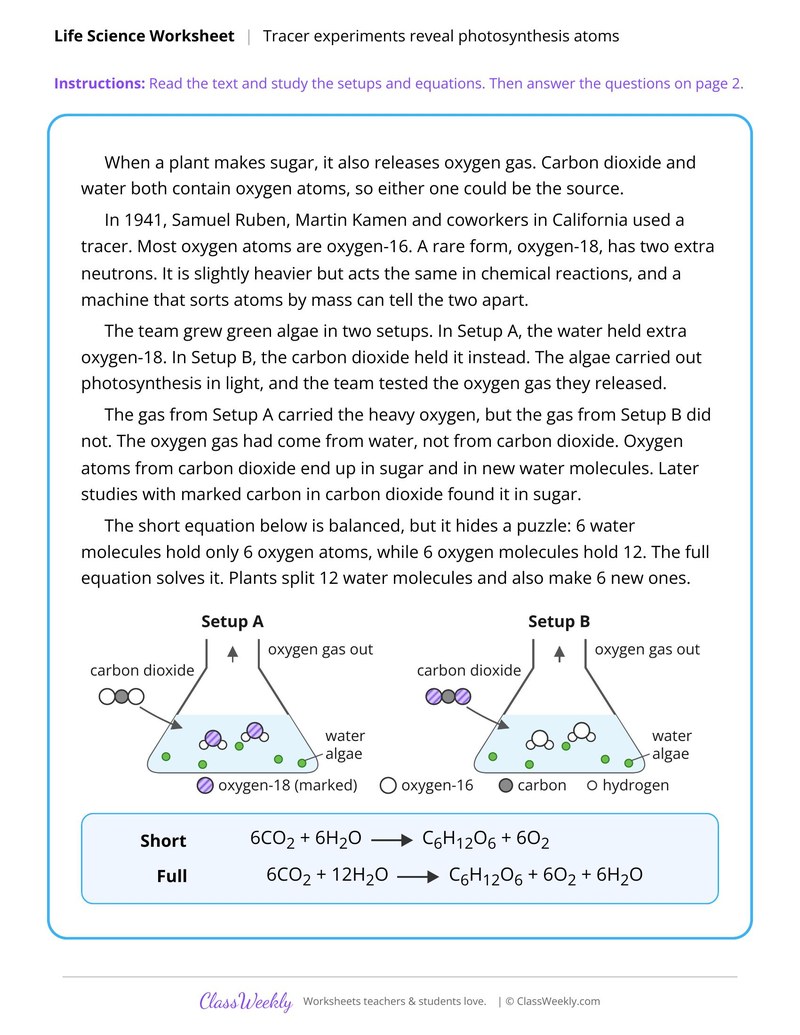
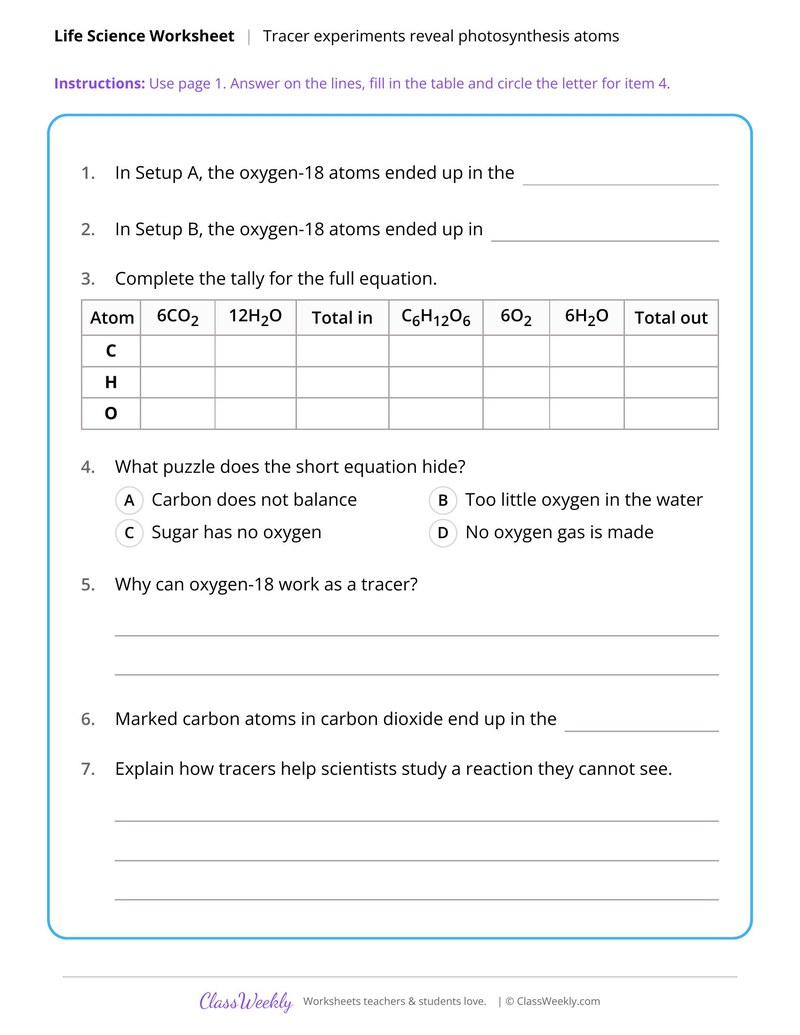
- Students will explain how oxygen-18 works as a tracer in photosynthesis experiments.
- Students will compare the results of the two setups to find the source of oxygen gas.
- Students will tally atoms on both sides of the photosynthesis equation.
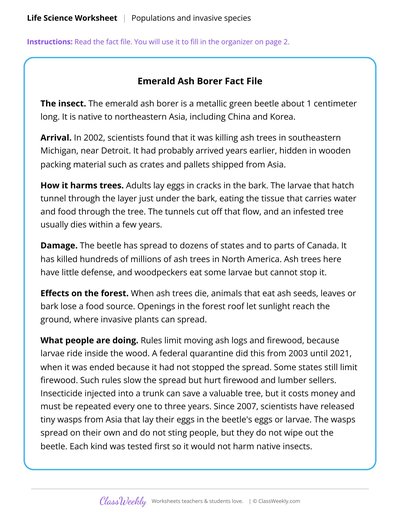
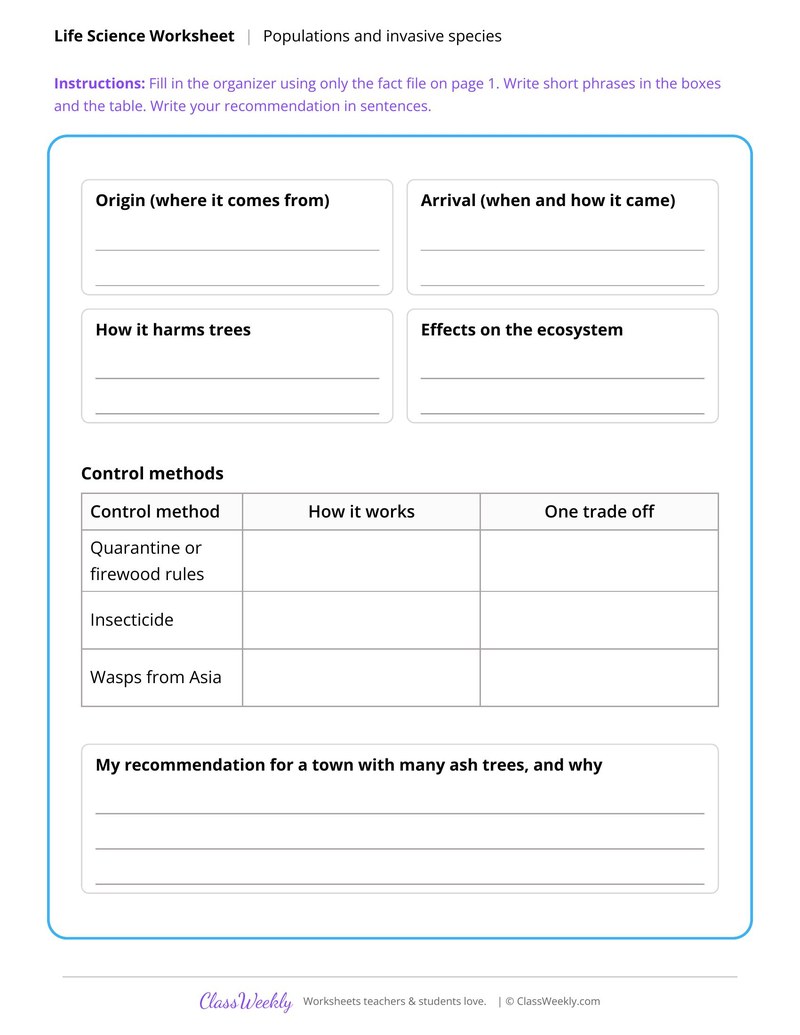
Emerald Ash Borer Fact File Organizer
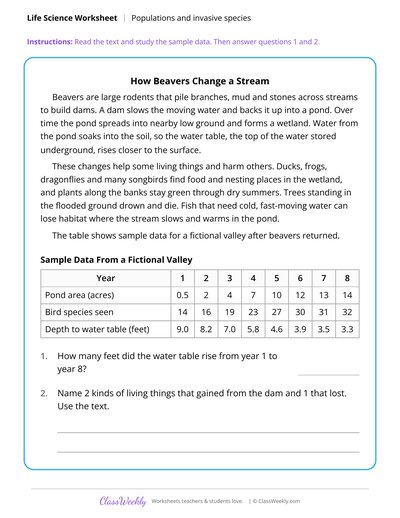
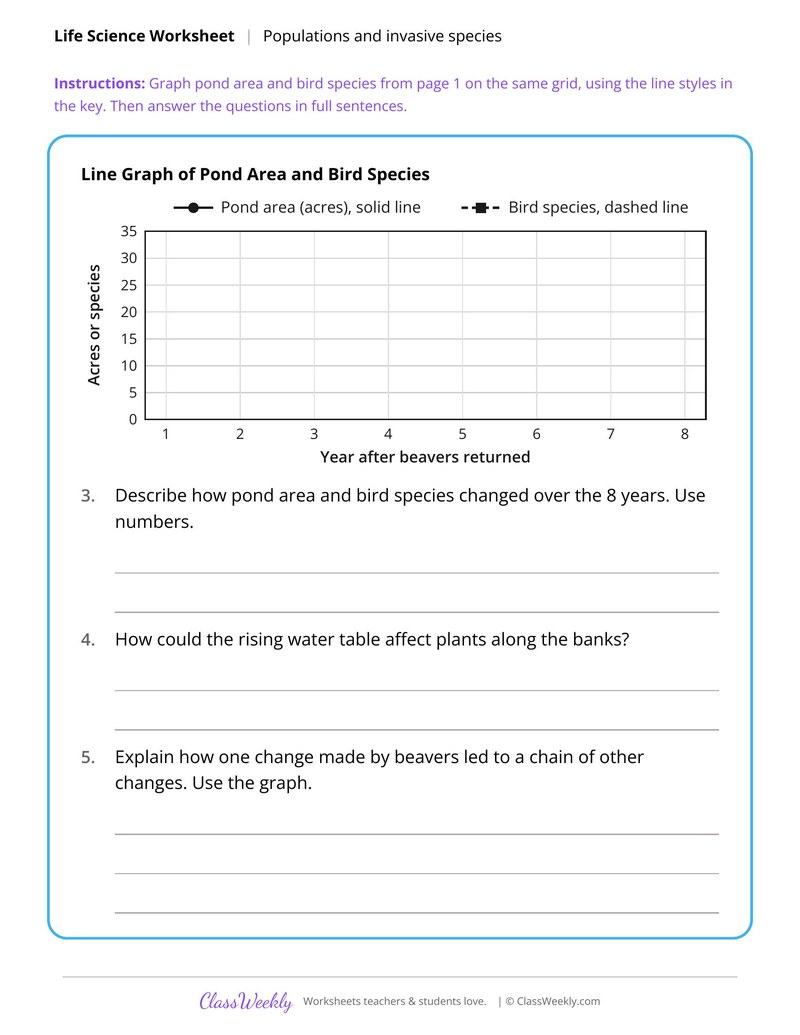
Beaver Dams and Stream Ecosystem Change
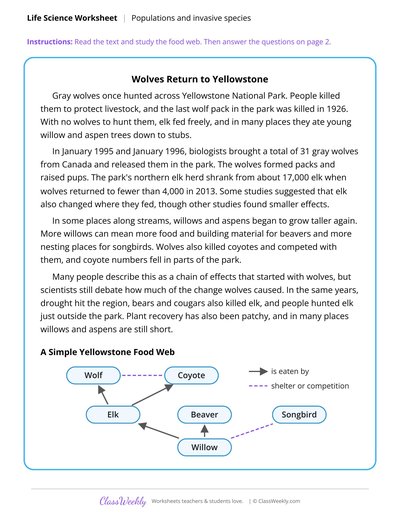
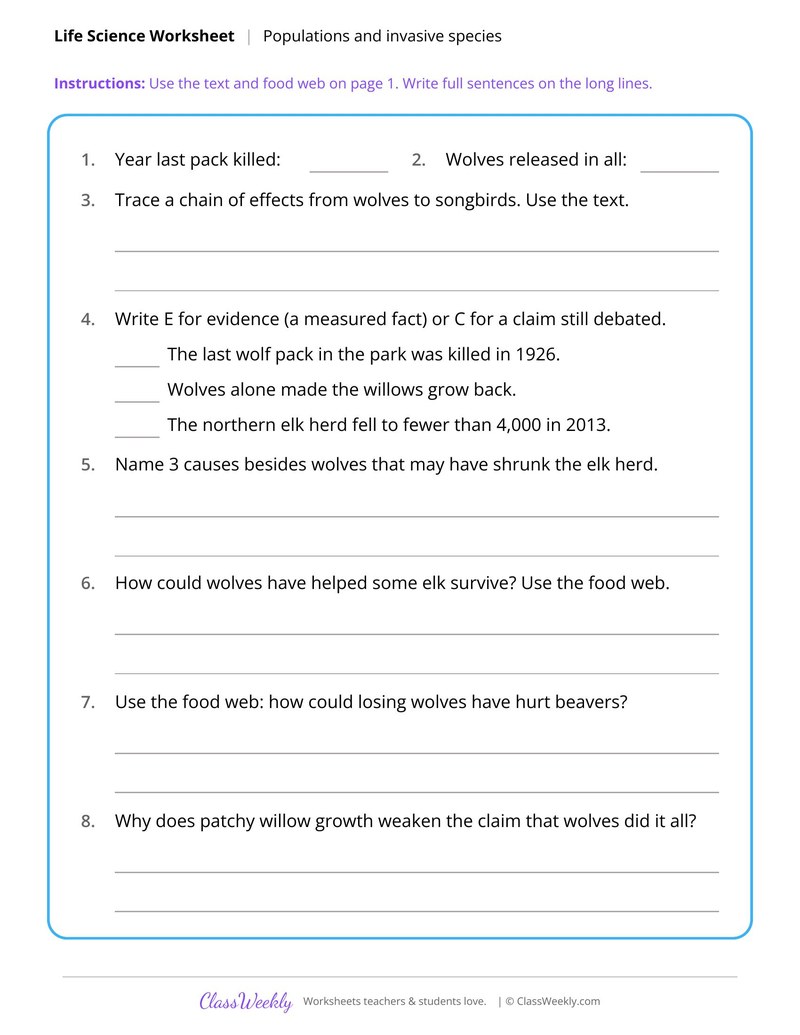
Wolves and Elk in Yellowstone Since 1995
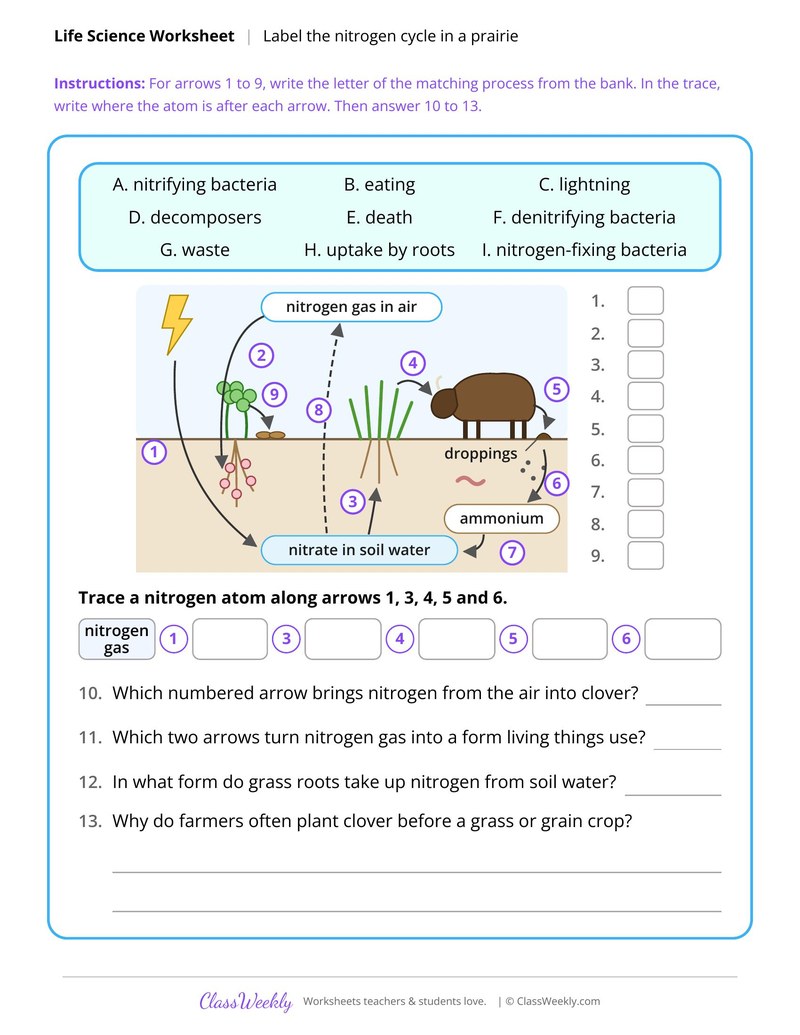
Label the Nitrogen Cycle in a Prairie
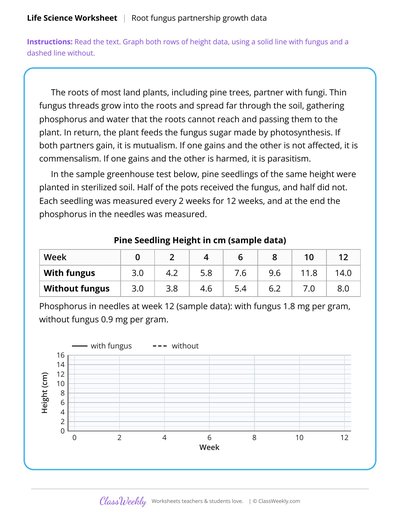
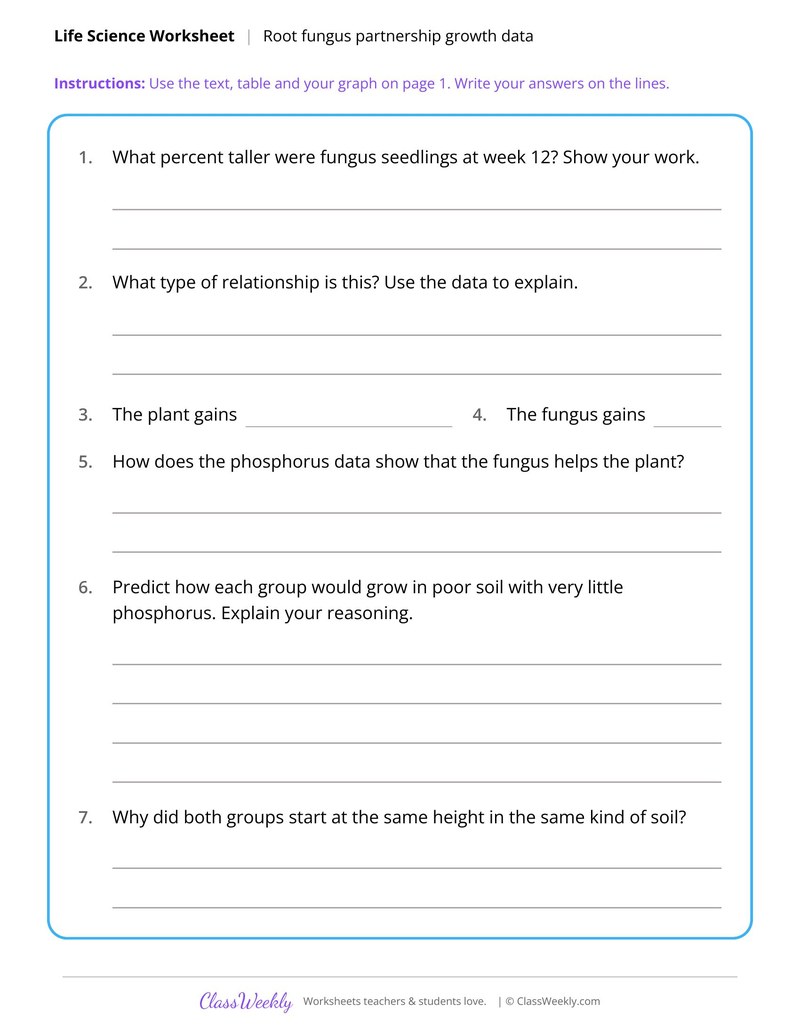
Root Fungus Partnership Growth Data
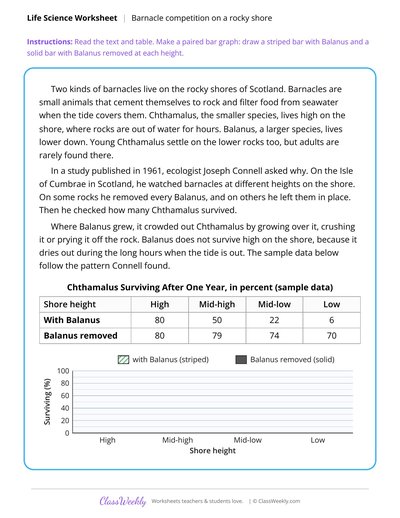
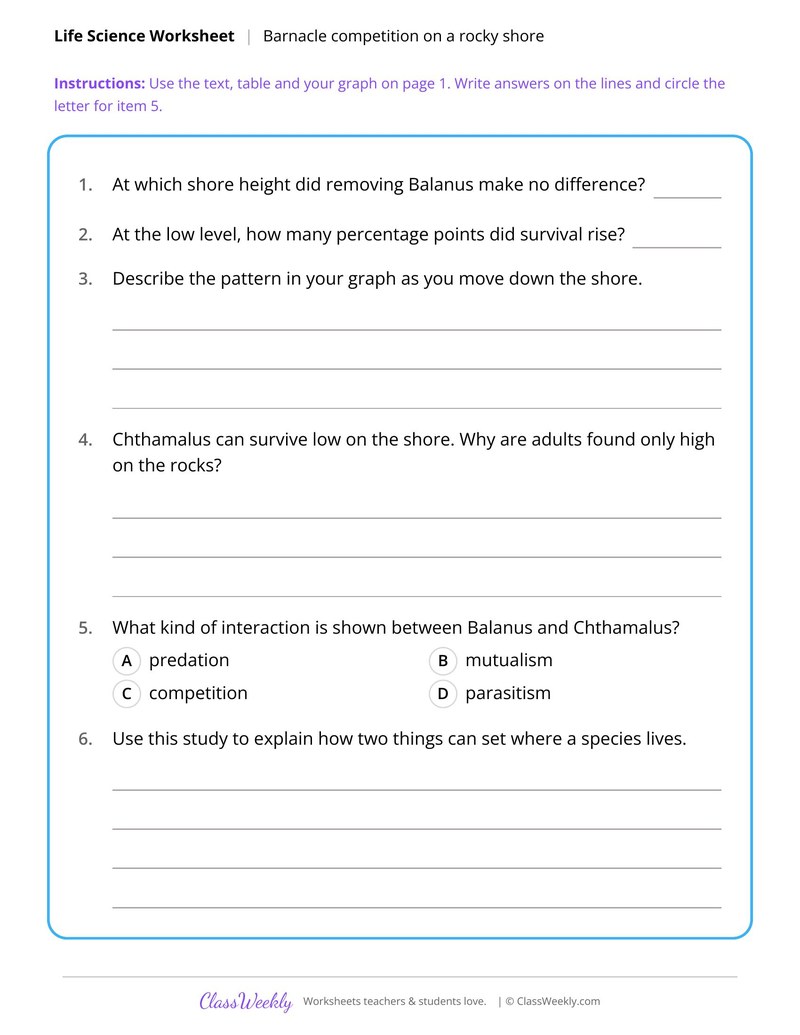
Barnacle Competition on a Rocky Shore
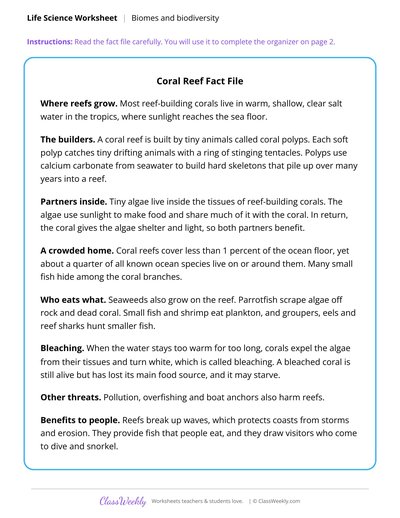
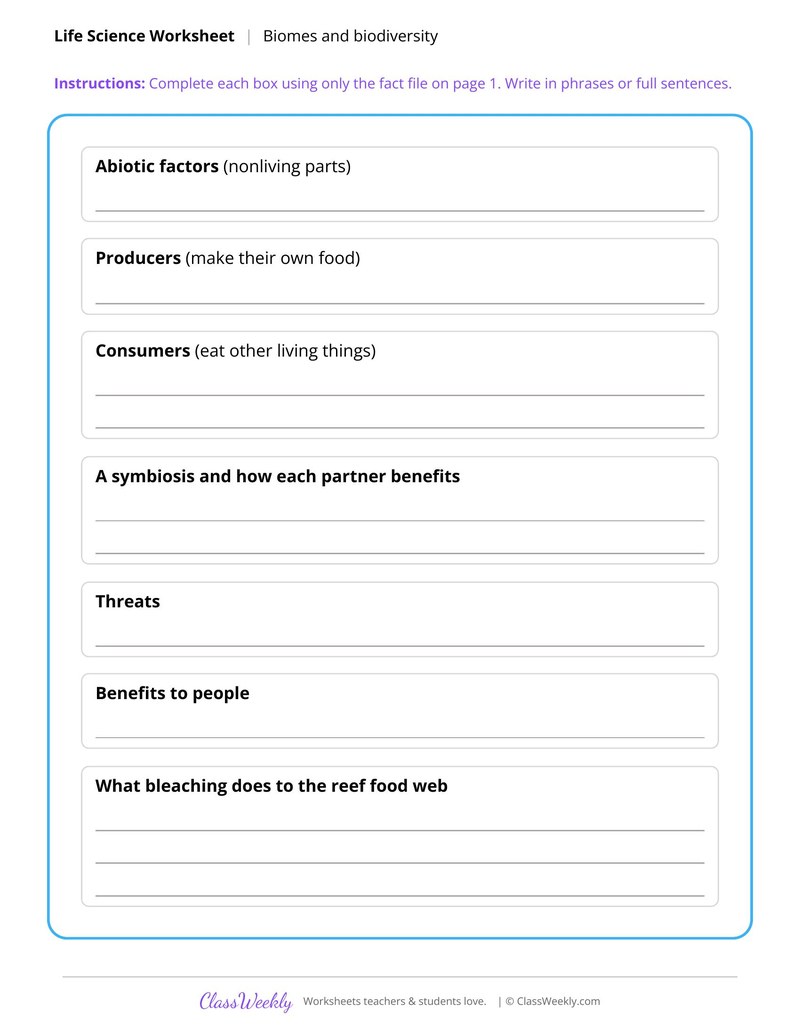
Coral Reef Ecosystem Fact File Organizer
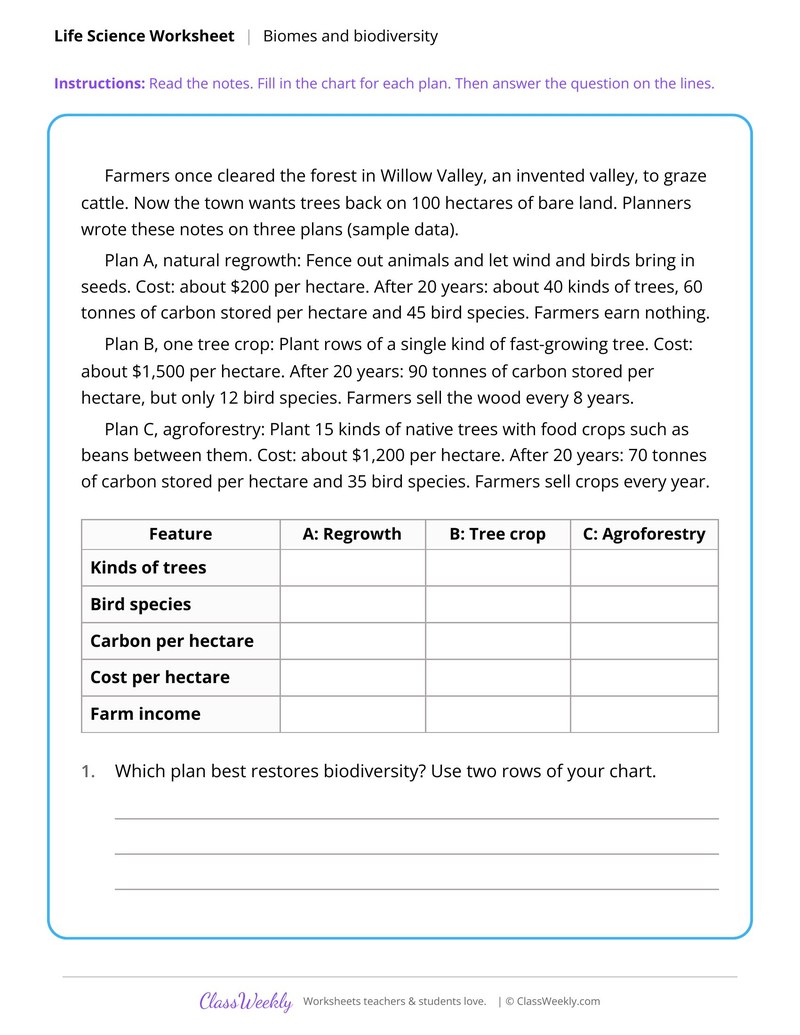
Compare Ways to Restore Cleared Forest Land
Curriculum Links
Next Generation Science Standards
Science · 8th Grade
Find this in the curriculum
Browse the grade, subject, and topic this belongs to.
FAQ
How do I use this food webs and matter cycles worksheet?
⌄
Use the tracer sheet to connect chemistry to living things, then use the nitrogen cycle as a labeling review. Ask students to say where an atom is after each step.
What does this worksheet teach?
⌄
Follow oxygen-18 through the 1941 algae experiments to find where photosynthesis oxygen comes from. The directions on the page read: Read the text and study the setups and equations. Then answer the questions on page 2. An answer key is included.
Can I use this food webs and matter cycles worksheet for homeschool or classroom?
⌄
Yes, both. We made it for 8th grade ecosystems, and it works the same at home or at school. At home, a student can work through it alone and then go over it with you, which shows quickly what is solid and what needs another look. In class it works as independent practice, homework or a warm-up, and you can print one copy or a full set.
Where does the oxygen released in photosynthesis come from?
⌄
It comes from water. In 1941, Samuel Ruben, Martin Kamen and coworkers gave algae water or carbon dioxide marked with oxygen-18 and tested the oxygen gas. The tracer sheet has students compare the two setups.
How does nitrogen get from the air into living things?
⌄
Nitrogen-fixing bacteria and lightning turn nitrogen gas into forms that plants can take up through their roots. Animals get nitrogen by eating plants, and decomposers return it to the soil. Label the Nitrogen Cycle in a Prairie maps these steps.
What is a tracer?
⌄
A tracer is a form of an atom that acts the same in reactions but can be told apart, such as oxygen-18, which is slightly heavier than oxygen-16. A machine that sorts atoms by mass shows where it ends up. That lets scientists follow atoms through a reaction.
Ratings & Reviews
No reviews yet. Be the first to share what you think.
Reviews are for ClassWeekly members.
Make a Request
Spotted something to fix, or want a worksheet we don't have yet? Tell us and we'll make it.
Worksheet Details
| Grade | 8th Grade |
| Subject | Science |
| Topic | Ecosystems |
| Standard | MS-LS1-6 |
| Pages | 2 pages |
| Difficulty | Medium |
Learn More
What is ClassWeekly?
ClassWeekly offers free worksheets and printable learning resources for kids, from preschool up. All worksheets are aligned to Common Core, NGSS, and C3 Framework standards and designed by educators. Become a member to access the full library and download unlimited PDFs.
Emerald Ash Borer Fact File Organizer
Beaver Dams and Stream Ecosystem Change
Wolves and Elk in Yellowstone Since 1995
Label the Nitrogen Cycle in a Prairie
Root Fungus Partnership Growth Data
Barnacle Competition on a Rocky Shore
Coral Reef Ecosystem Fact File Organizer
Compare Ways to Restore Cleared Forest Land