Beaver Dams and Stream Ecosystem Change
Written by Adi Ackerman, Head Teacher
"Beaver Dams and Stream Ecosystem Change" is written for 8th Grade (Ages 13-14), and it covers NGSS MS-LS2-4. A 7th grader who is already steady on ecosystems can use it too, and an older student can use it as a short review.
2 pages in this set
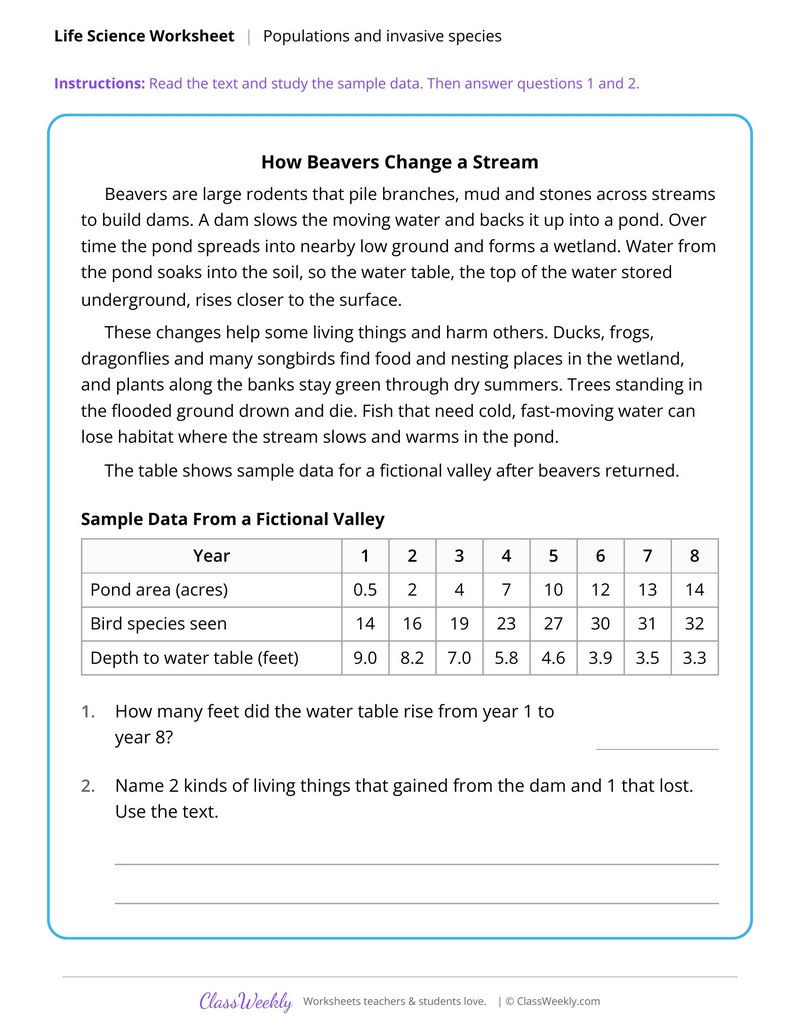
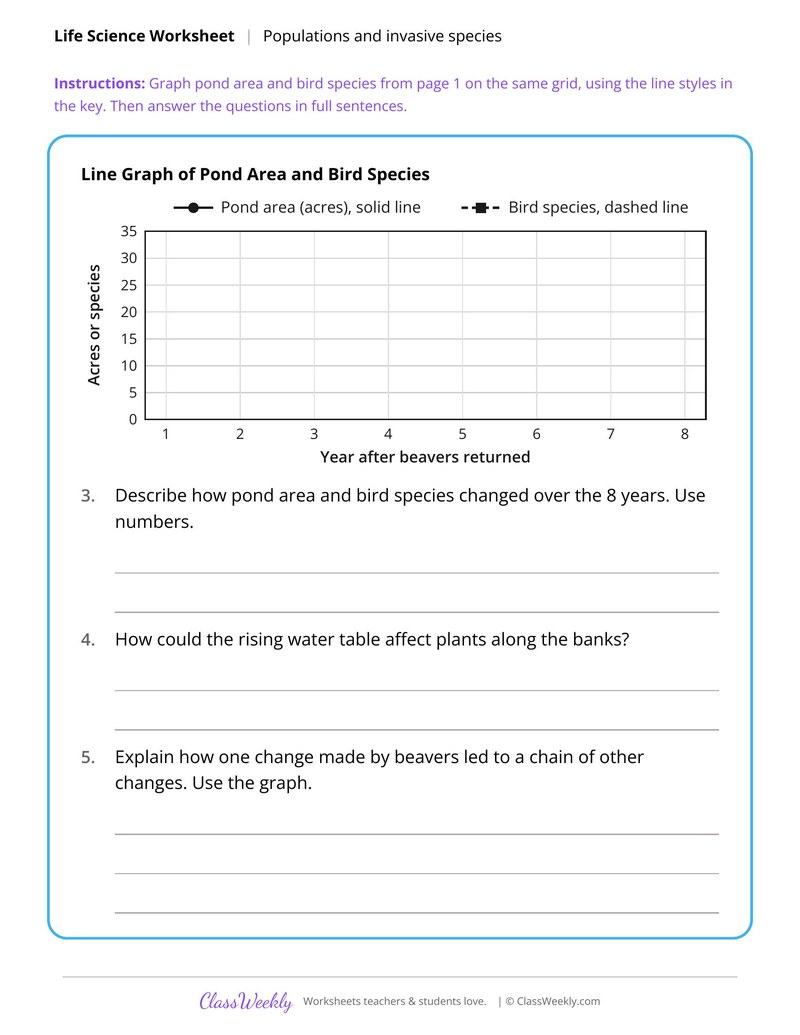
8th grade science worksheet: graph pond area and bird species after beavers return and explain which living things gain or lose. Answer key included. Part of our populations and invasive species ecosystems collection. Aligned to NGSS standards.
How do I use this worksheet?
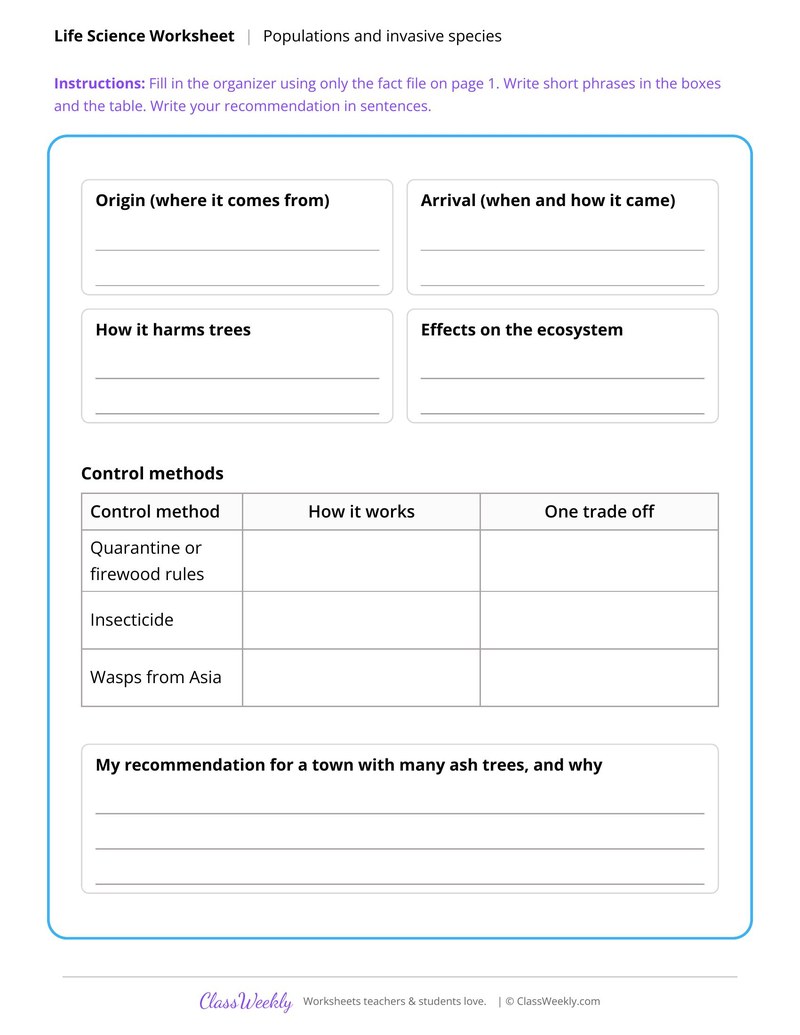
Use the fact file organizer as a reading task, then the beaver sheet as a graphing lab. Close with the Yellowstone sheet to discuss how scientists weigh evidence.
What students will practice
- Students will explain how a beaver dam forms a pond and raises the water table.
- Students will graph pond area and bird species on one grid over eight years.
- Students will describe which organisms gain and which lose habitat as the stream changes.
Emerald Ash Borer Fact File Organizer
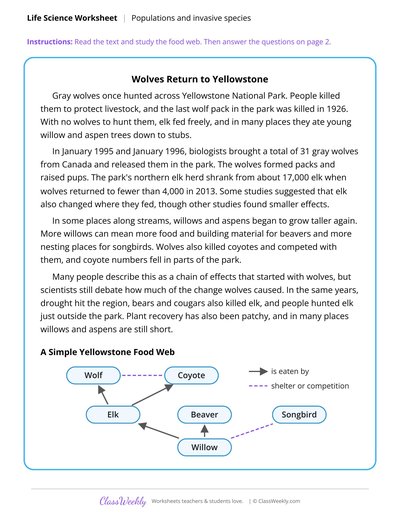
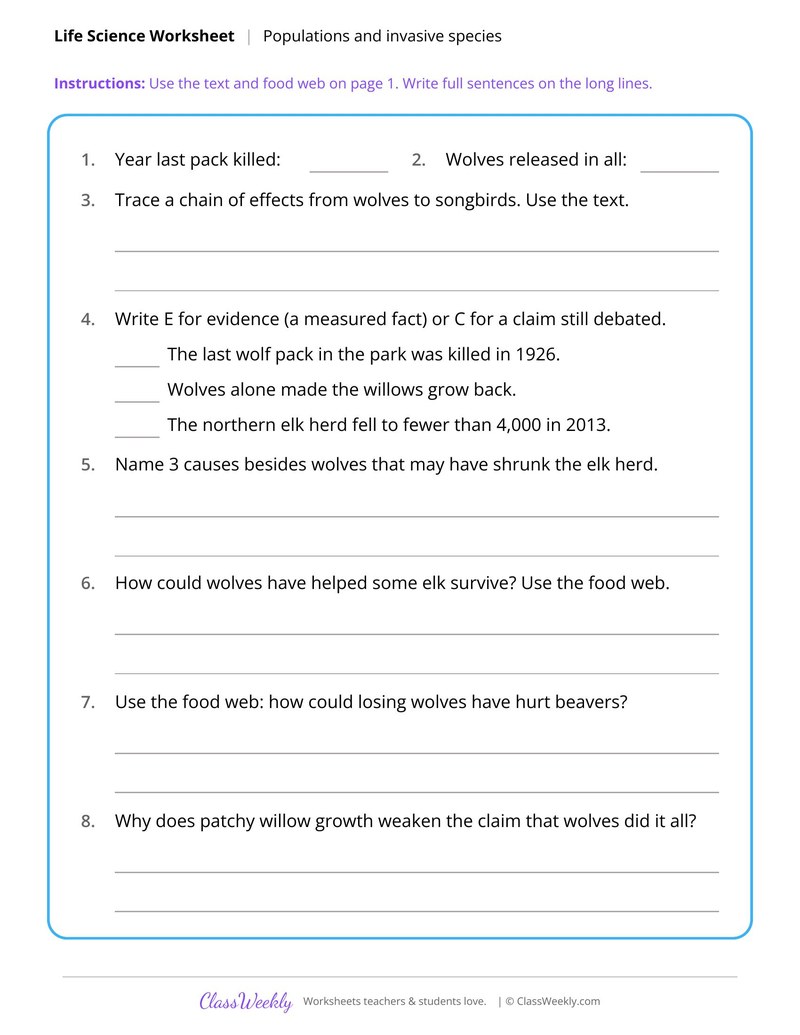
Wolves and Elk in Yellowstone Since 1995
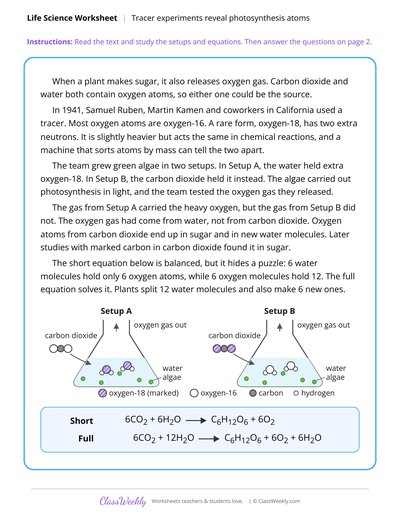
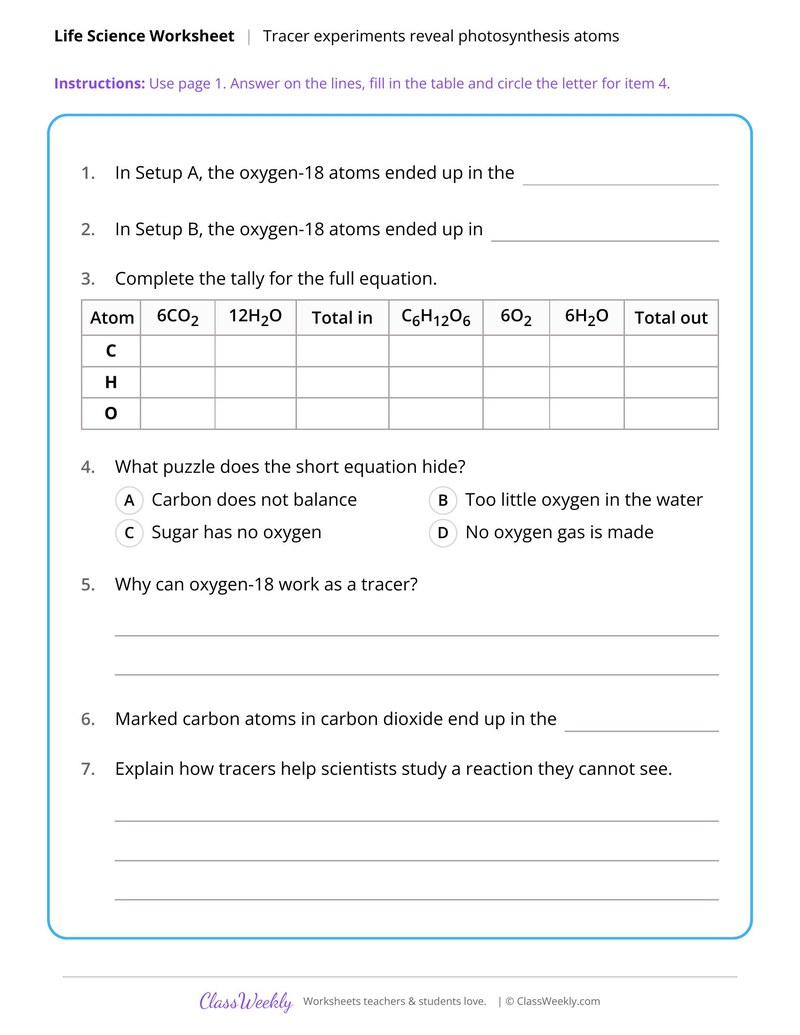
Tracer Experiments Reveal Photosynthesis Atoms
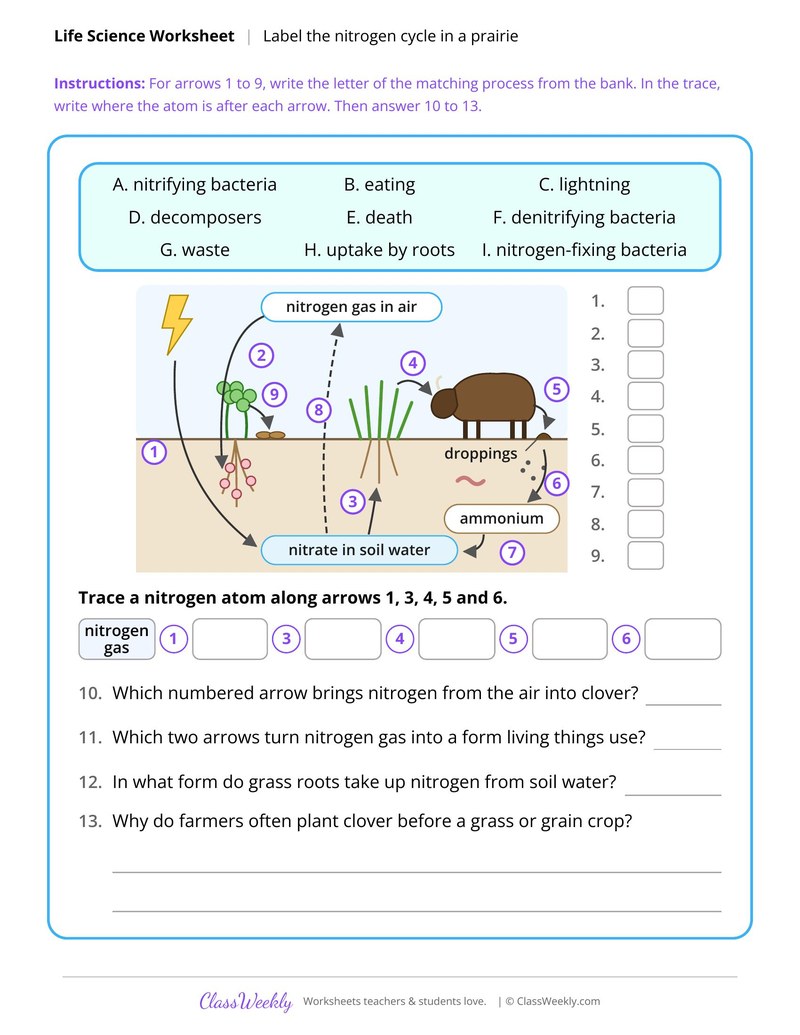
Label the Nitrogen Cycle in a Prairie
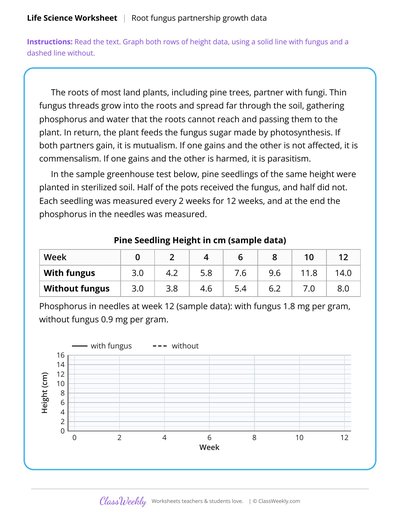
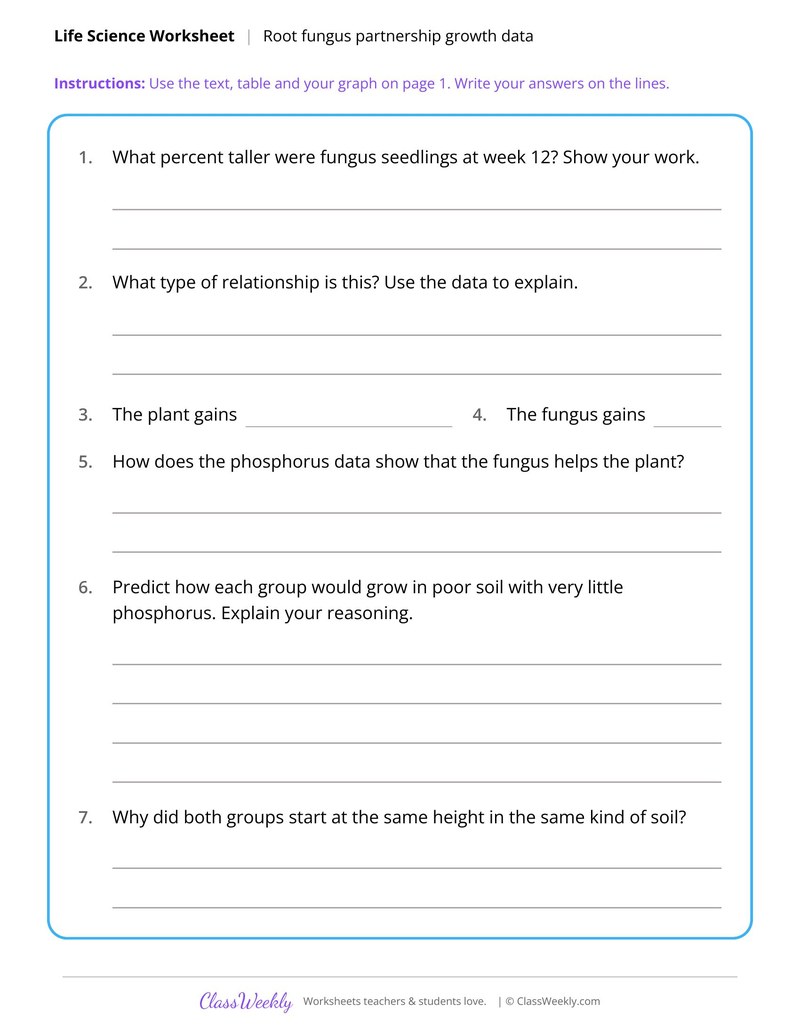
Root Fungus Partnership Growth Data
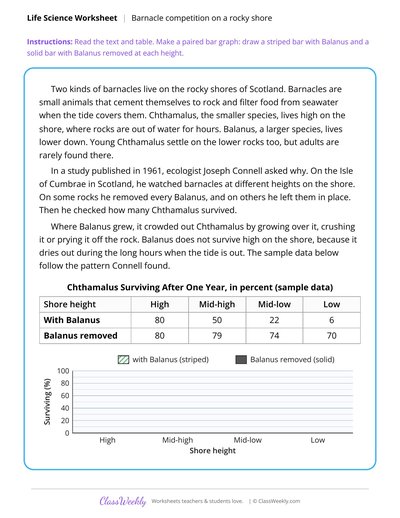
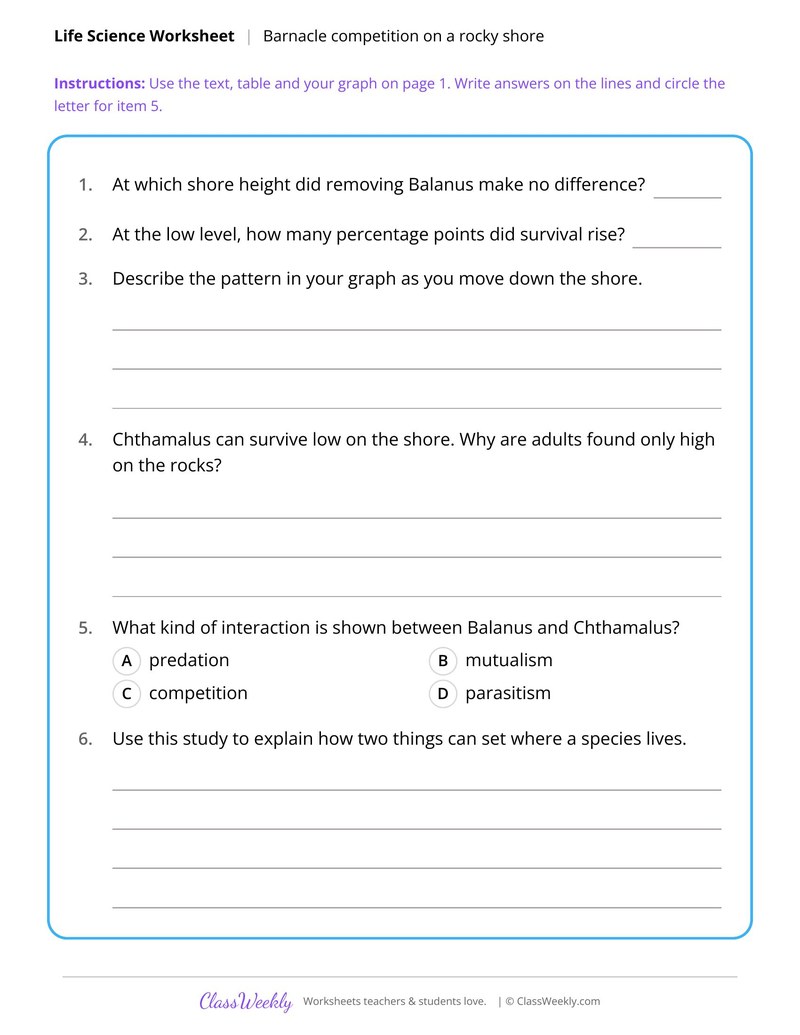
Barnacle Competition on a Rocky Shore
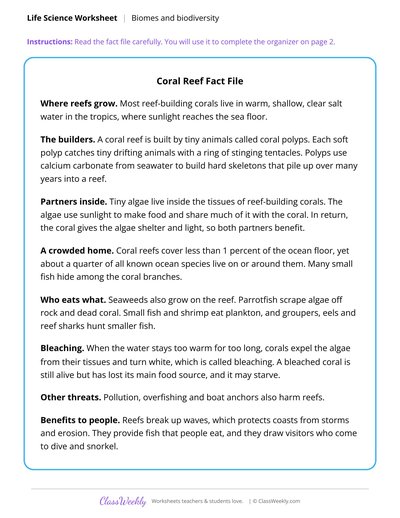
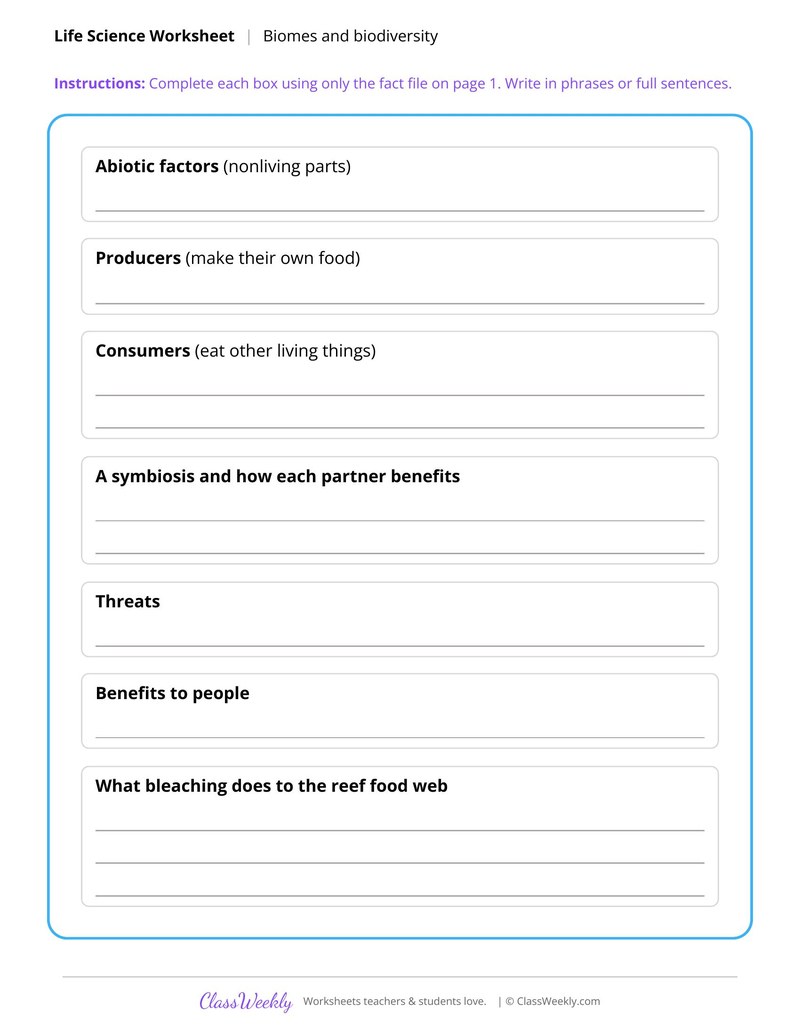
Coral Reef Ecosystem Fact File Organizer
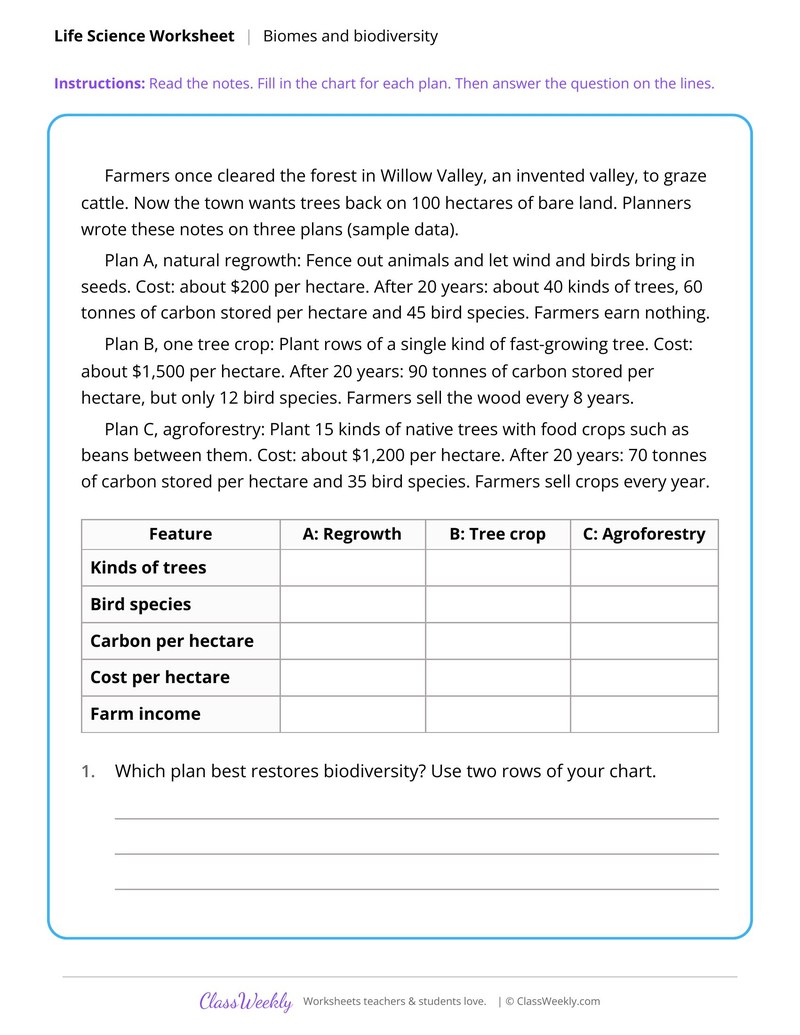
Compare Ways to Restore Cleared Forest Land
Curriculum Links
Next Generation Science Standards
Science · 8th Grade
Find this in the curriculum
Browse the grade, subject, and topic this belongs to.
FAQ
How do I use this populations and invasive species worksheet?
⌄
Use the fact file organizer as a reading task, then the beaver sheet as a graphing lab. Close with the Yellowstone sheet to discuss how scientists weigh evidence.
What does this worksheet teach?
⌄
Graph pond area and bird species after beavers return and explain which living things gain or lose. The directions on the page read: Read the text and study the sample data. Then answer questions 1 and 2. An answer key is included.
Can I use this populations and invasive species worksheet for homeschool or classroom?
⌄
Yes, both. We made it for 8th grade ecosystems, and it works the same at home or at school. At home, a student can work through it alone and then go over it with you, which shows quickly what is solid and what needs another look. In class it works as independent practice, homework or a warm-up, and you can print one copy or a full set.
How does the emerald ash borer kill trees?
⌄
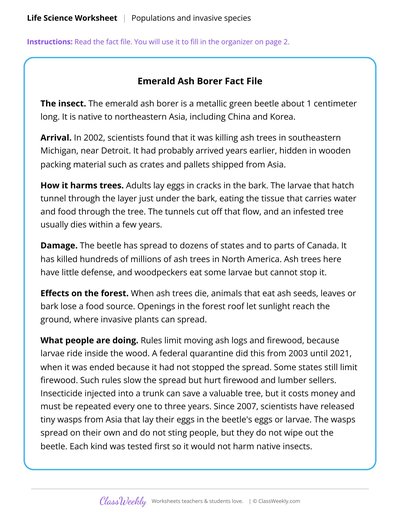
Its larvae tunnel through the layer just under the bark and eat the tissue that carries water and food through the tree. An infested tree usually dies within a few years. The fact file also covers how it likely arrived in wooden packing material.
How do beavers change a stream?
⌄
A beaver dam backs water into a pond that can spread into a wetland and raise the water table. Ducks, frogs and songbirds gain, while drowned trees and fish that need cold, fast water lose. The beaver sheet graphs pond area and bird species over eight years.
What is the difference between evidence and a debated claim?
⌄
Evidence is a measured fact, such as the elk herd falling to fewer than 4,000 in 2013. A debated claim is an idea scientists still argue about, such as wolves alone making willows grow back. The Yellowstone sheet asks students to sort statements this way.
Ratings & Reviews
No reviews yet. Be the first to share what you think.
Reviews are for ClassWeekly members.
Make a Request
Spotted something to fix, or want a worksheet we don't have yet? Tell us and we'll make it.
Worksheet Details
| Grade | 8th Grade |
| Subject | Science |
| Topic | Ecosystems |
| Standard | MS-LS2-4 |
| Pages | 2 pages |
| Difficulty | Medium |
Learn More
What is ClassWeekly?
ClassWeekly offers free worksheets and printable learning resources for kids, from preschool up. All worksheets are aligned to Common Core, NGSS, and C3 Framework standards and designed by educators. Become a member to access the full library and download unlimited PDFs.
Emerald Ash Borer Fact File Organizer
Wolves and Elk in Yellowstone Since 1995
Tracer Experiments Reveal Photosynthesis Atoms
Label the Nitrogen Cycle in a Prairie
Root Fungus Partnership Growth Data
Barnacle Competition on a Rocky Shore
Coral Reef Ecosystem Fact File Organizer
Compare Ways to Restore Cleared Forest Land