How We Use Natural Resources
Written by Adi Ackerman, Head Teacher
"How We Use Natural Resources" is written for 1st Grade (Ages 6-7). If your little one is a year younger but already steady on the environment, the page still works. You may just need to read the instructions out loud. And if they are older and natural resources never quite stuck, this is a short review rather than busywork.
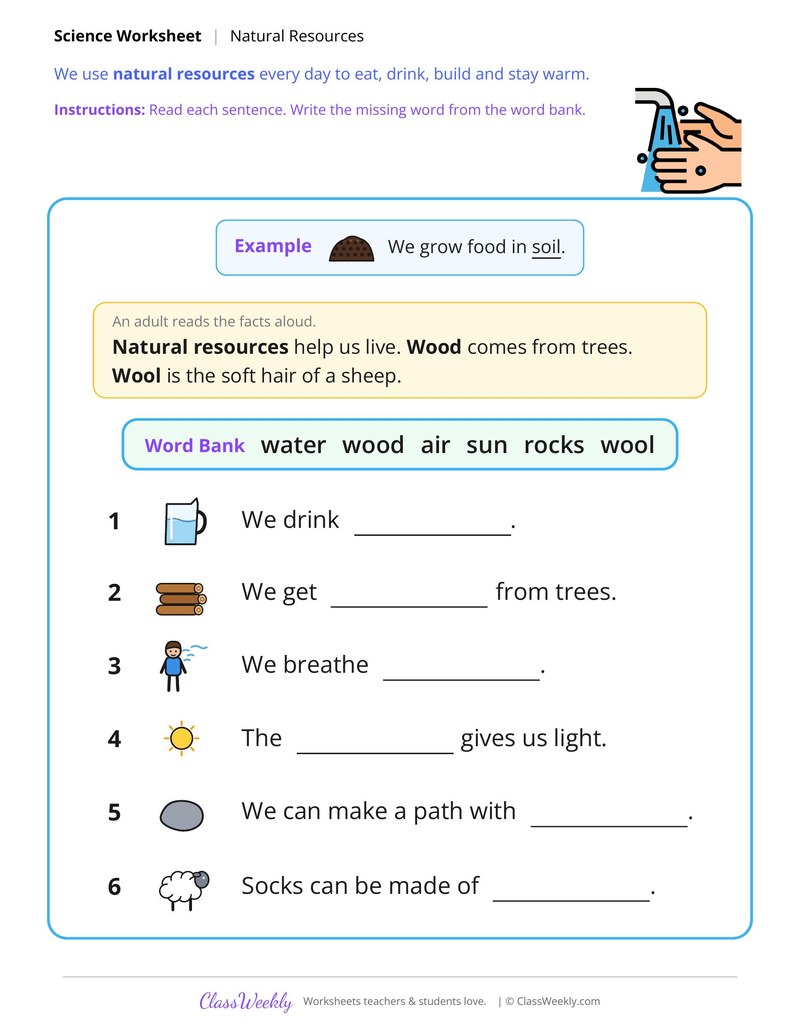
1st grade science worksheet: fill in water, wood, air, sun, rocks or wool to finish sentences about how we use nature. Answer key included. Part of our natural resources environment collection.
How do I use this worksheet?
Start with something students can look at or think about: a photo, a short video, a jar on the windowsill, or a question like "what do you already know about natural resources?" Then let them work through the first item together as a class, then finish the rest independently or with a partner, keeping a word bank or anchor chart in view so the vocabulary stays available. When you review, ask students how they knew, and let them point to the part of the diagram or reading that told them. These natural resources worksheets work well as a lead in before an investigation, as a way to capture what students noticed afterward, or as review before an assessment.
What students will practice
- Students will write the missing word from a word bank in six sentences.
- Students will explain that wool is the soft hair of a sheep.
- Students will describe how people use water, air and the sun every day.


Curriculum Links
Find this in the curriculum
Browse the grade, subject, and topic this belongs to.
FAQ
How do I use this natural resources worksheet?
⌄
Start with something students can look at or think about: a photo, a short video, a jar on the windowsill, or a question like "what do you already know about natural resources?" Then let them work through the first item together as a class, then finish the rest independently or with a partner, keeping a word bank or anchor chart in view so the vocabulary stays available. When you review, ask students how they knew, and let them point to the part of the diagram or reading that told them. These natural resources worksheets work well as a lead in before an investigation, as a way to capture what students noticed afterward, or as review before an assessment.
What does this worksheet teach?
⌄
Fill in water, wood, air, sun, rocks or wool to finish sentences about how we use nature. The directions on the page read: Read each sentence. Write the missing word from the word bank. The page opens with a worked example, and an answer key is included.
Can I use this natural resources worksheet for homeschool or classroom?
⌄
Yes, both. We made it for 1st Grade the environment, and the page works the same whether it lands on a kitchen table or a center rotation. At home, most families go through it together and talk the answers out loud, and that talking is where most of the learning happens with natural resources. In class it runs well as independent work while you pull a small group. Print one copy or thirty, whichever the day needs.
What does natural resources teach first graders?
⌄
First graders learn that natural resources are materials found in nature that living things, including people, depend on. They explore common resources like fresh water, clean air, soil, plants, and sunlight, and begin to understand that some resources are renewable while others are limited.
When do first graders learn about natural resources?
⌄
Natural resources are typically introduced in Grade 1 during an environment or earth science unit, often connected to discussions of habitats and sustainability. Teachers use familiar examples like wood in a pencil or water in a glass to make the concept concrete and relevant.
How can I use these worksheets at home?
⌄
Do a natural resources scavenger hunt around your home, identifying items made from wood, metal, water, or plant-based materials. Then complete the worksheet together and discuss where each resource originally came from.
What is a natural resource for 1st graders?
⌄
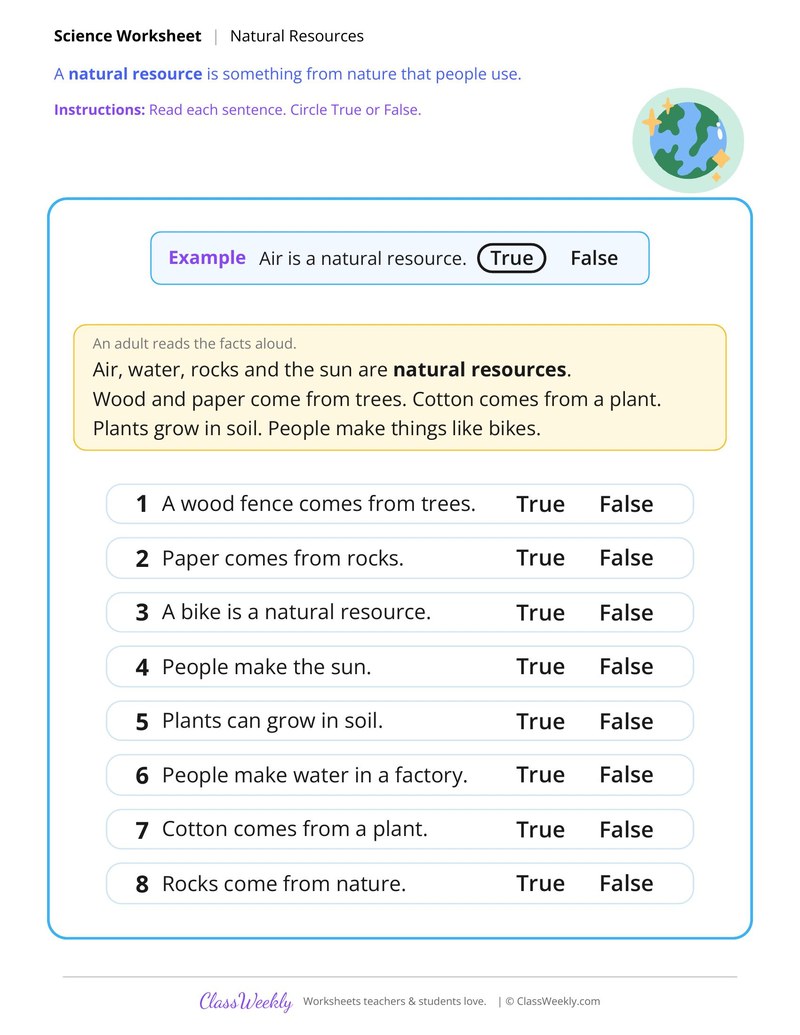
A natural resource is something from nature that people use, like air, water, rocks, trees and the sun. Wood and paper come from trees, glass is made from sand and cotton comes from a plant.
What do reduce, reuse and recycle mean?
⌄
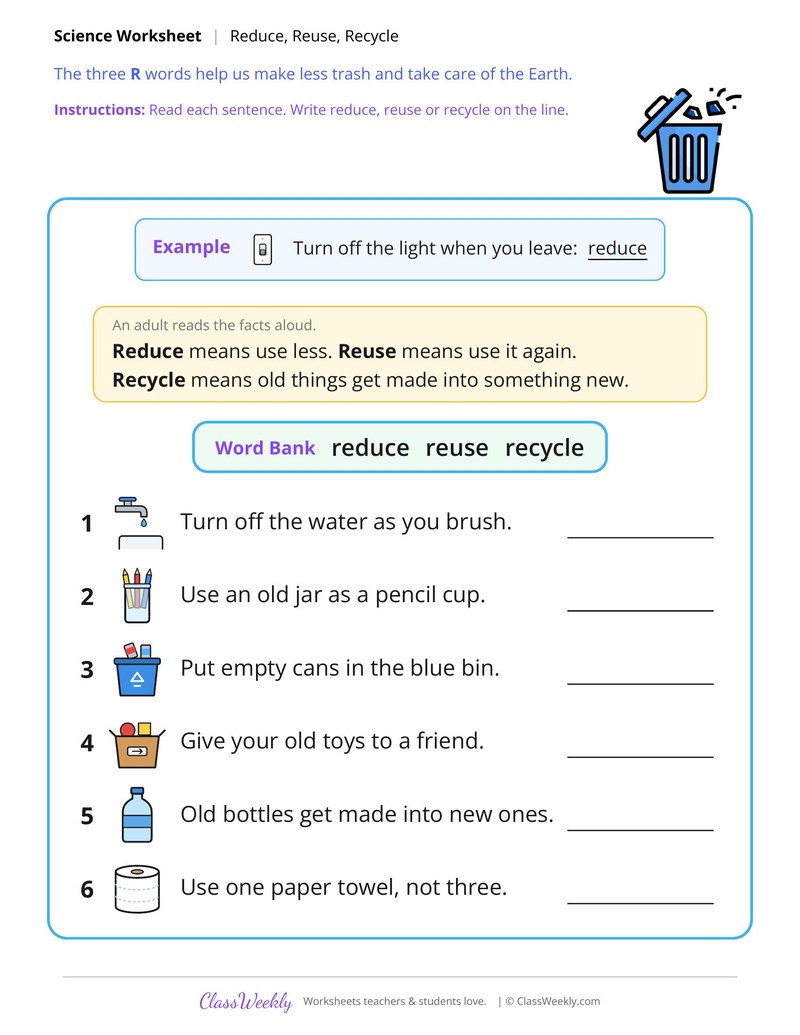
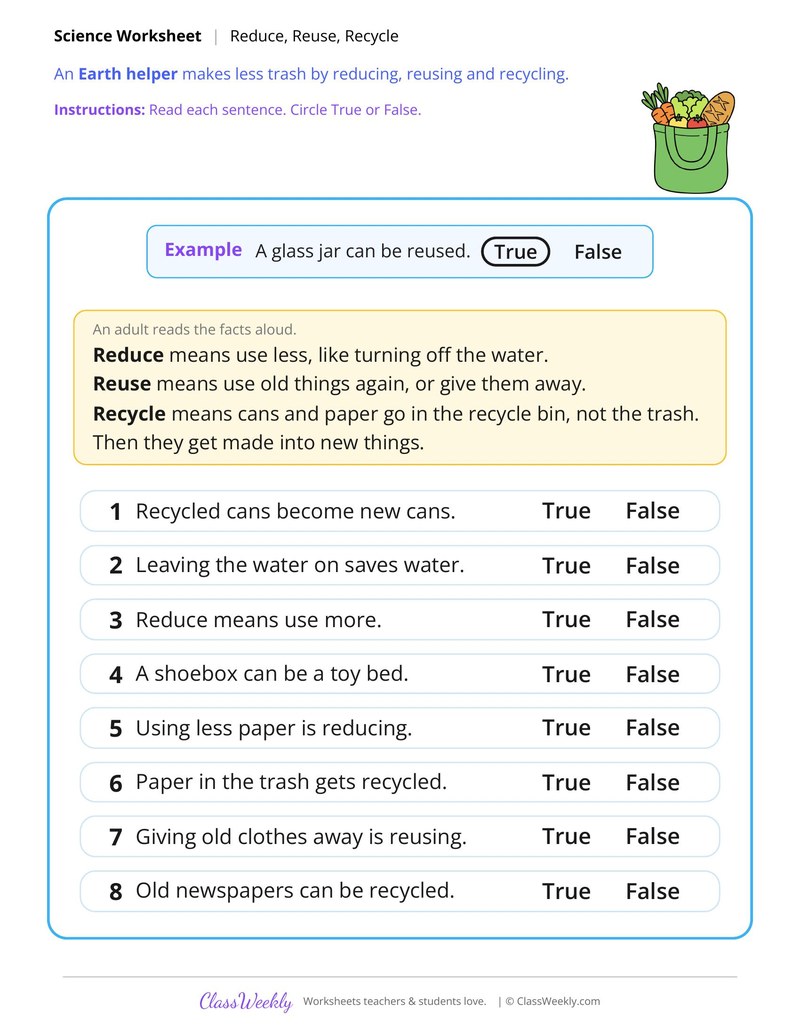
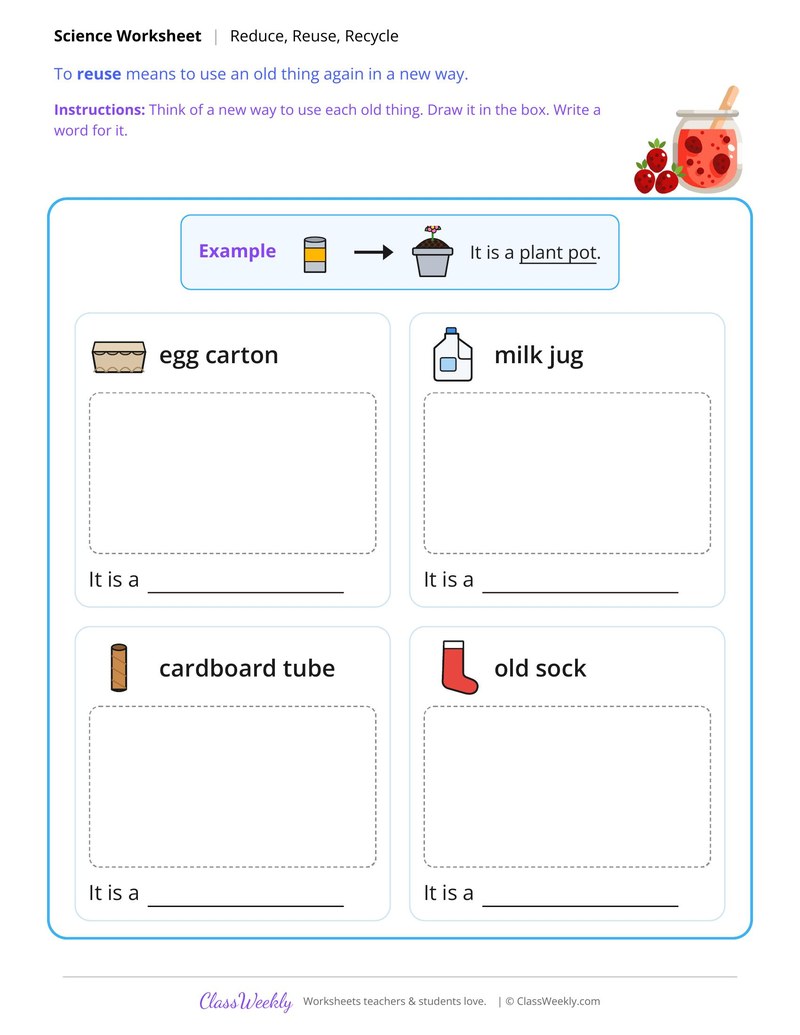
Reduce means use less, like turning off the water as you brush. Reuse means use an old thing again, like an old jar as a pencil cup. Recycle means cans, bottles and paper go in the recycle bin so they can be made into other things.
How do living things change their environment?
⌄
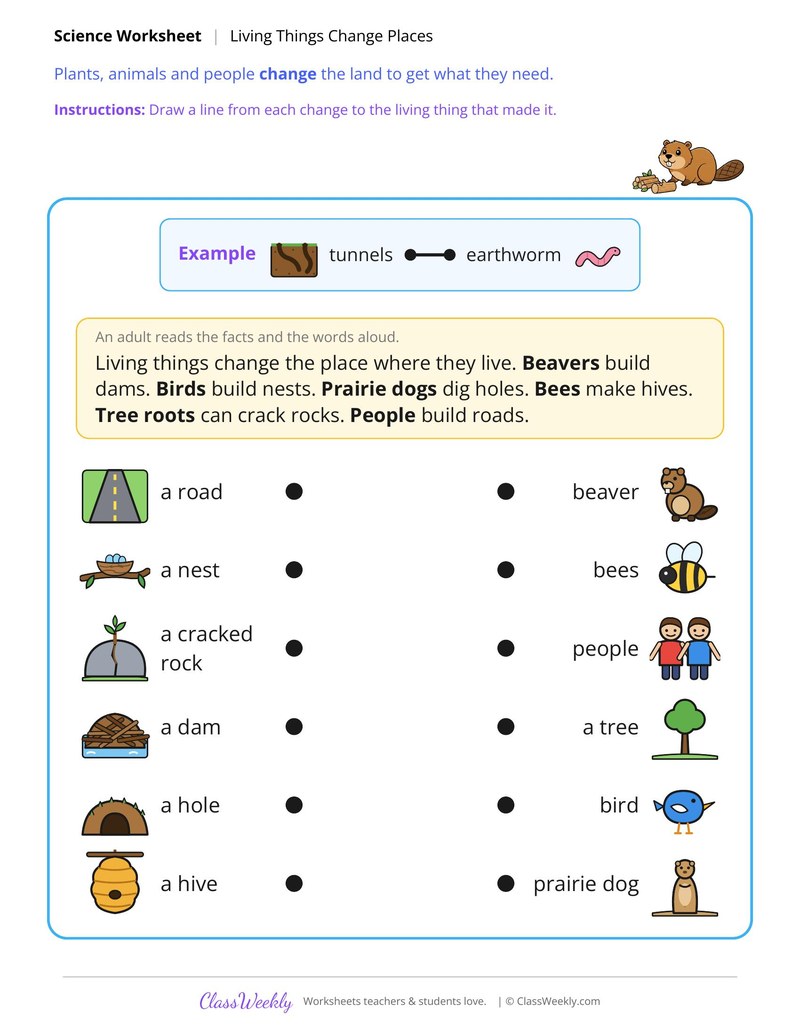
Beavers build dams, birds build nests, prairie dogs dig holes and bees make hives. Tree roots can crack rocks, and people build roads and plant gardens. Each change meets a need, like a safe home, food or a place to raise babies.
Do the environment worksheets come with answer keys?
⌄
Most sheets come with an answer key. The reuse drawing page has no key, since each child draws an idea of their own.
Ratings & Reviews
No reviews yet. Be the first to share what you think.
Reviews are for ClassWeekly members.
Make a Request
Spotted something to fix, or want a worksheet we don't have yet? Tell us and we'll make it.
Worksheet Details
| Grade | 1st Grade |
| Subject | Science |
| Topic | The Environment |
| Pages | 1 page |
| Difficulty | Medium |
What is ClassWeekly?
ClassWeekly offers free worksheets and printable learning resources for kids, from preschool up. All worksheets are aligned to Common Core, NGSS, and C3 Framework standards and designed by educators. Become a member to access the full library and download unlimited PDFs.