Month of Weather Picture Graph
Written by Adi Ackerman, Head Teacher
"Month of Weather Picture Graph" is written for 1st Grade (Ages 6-7). If your little one is a year younger but already steady on weather and seasons, the page still works. You may just need to read the instructions out loud. And if they are older and weather patterns never quite stuck, this is a short review rather than busywork.
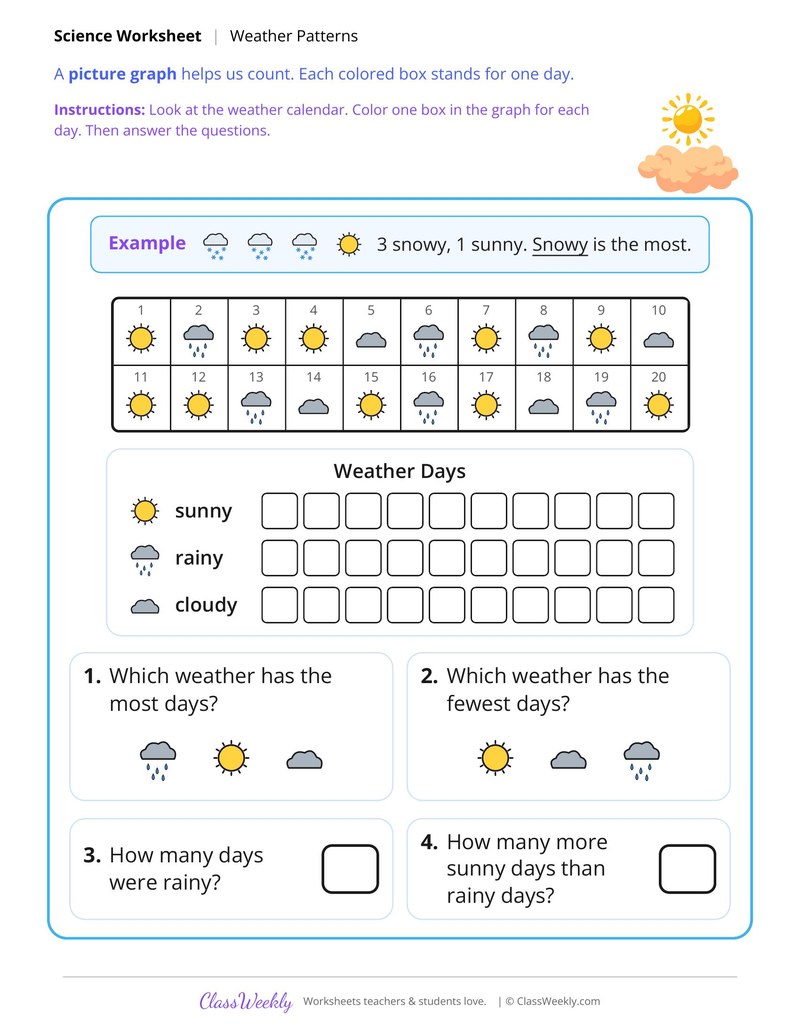
1st grade science worksheet: color a picture graph from a weather calendar, then find if sunny, rainy or cloudy has the most days. Answer key included. Part of our weather patterns collection.
How do I use this worksheet?
Start with something students can look at or think about: a photo, a short video, a jar on the windowsill, or a question like "what do you already know about weather patterns?" Then let them work through the first item together as a class, then finish the rest independently or with a partner, keeping a word bank or anchor chart in view so the vocabulary stays available. When you review, ask students how they knew, and let them point to the part of the diagram or reading that told them. These weather patterns worksheets work well as a lead in before an investigation, as a way to capture what students noticed afterward, or as review before an assessment.
What students will practice
- Students will color one box in a picture graph for each day of weather.
- Students will find which weather has the most and the fewest days.
- Students will compare sunny and rainy days to find how many more.
Curriculum Links
Find this in the curriculum
Browse the grade, subject, and topic this belongs to.
FAQ
How do I use this weather patterns worksheet?
⌄
Start with something students can look at or think about: a photo, a short video, a jar on the windowsill, or a question like "what do you already know about weather patterns?" Then let them work through the first item together as a class, then finish the rest independently or with a partner, keeping a word bank or anchor chart in view so the vocabulary stays available. When you review, ask students how they knew, and let them point to the part of the diagram or reading that told them. These weather patterns worksheets work well as a lead in before an investigation, as a way to capture what students noticed afterward, or as review before an assessment.
What does this worksheet teach?
⌄
Color a picture graph from a weather calendar, then find if sunny, rainy or cloudy has the most days. The directions on the page read: Look at the weather calendar. Color one box in the graph for each day. Then answer the questions. The page opens with a worked example, and an answer key is included.
Can I use this weather patterns worksheet for homeschool or classroom?
⌄
Yes, both. We made it for 1st Grade weather and seasons, and the page works the same whether it lands on a kitchen table or a center rotation. At home, most families go through it together and talk the answers out loud, and that talking is where most of the learning happens with weather patterns. In class it runs well as independent work while you pull a small group. Print one copy or thirty, whichever the day needs.
What does weather patterns teach first graders?
⌄
First graders learn that weather tends to follow repeating patterns, like rainy springs, hot summers, and cold winters, and that tracking weather over time reveals those patterns. They practice collecting simple weather data, creating graphs or charts, and drawing conclusions from what they observe.
When do first graders learn about weather patterns?
⌄
Weather patterns are typically explored after first graders have some experience identifying types of weather, usually mid-year in Grade 1. Classroom weather calendars accumulated over weeks give students real data to analyze.
How can I use these worksheets at home?
⌄
Keep a simple weather tally on the refrigerator for a week or two, recording sunny, cloudy, rainy, or other conditions each day. Then use the worksheet to look for patterns in the data together. Asking 'what do you think tomorrow's weather will be and why?' introduces the idea of prediction based on patterns.
What weather patterns do 1st graders learn?
⌄
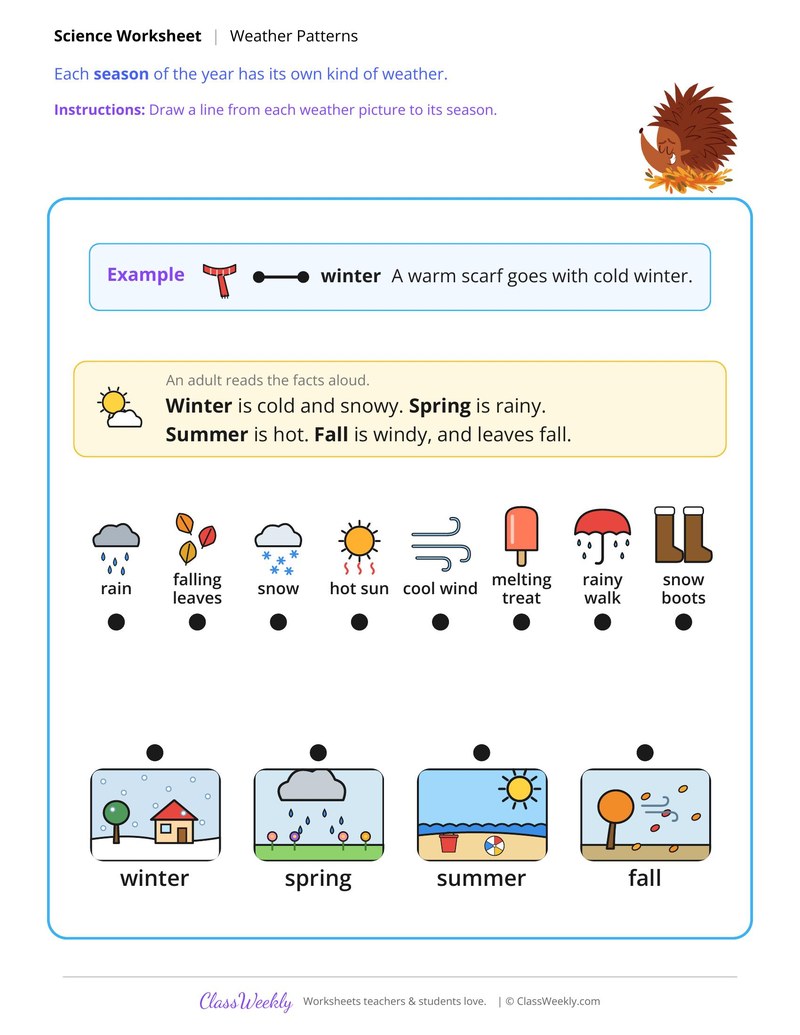
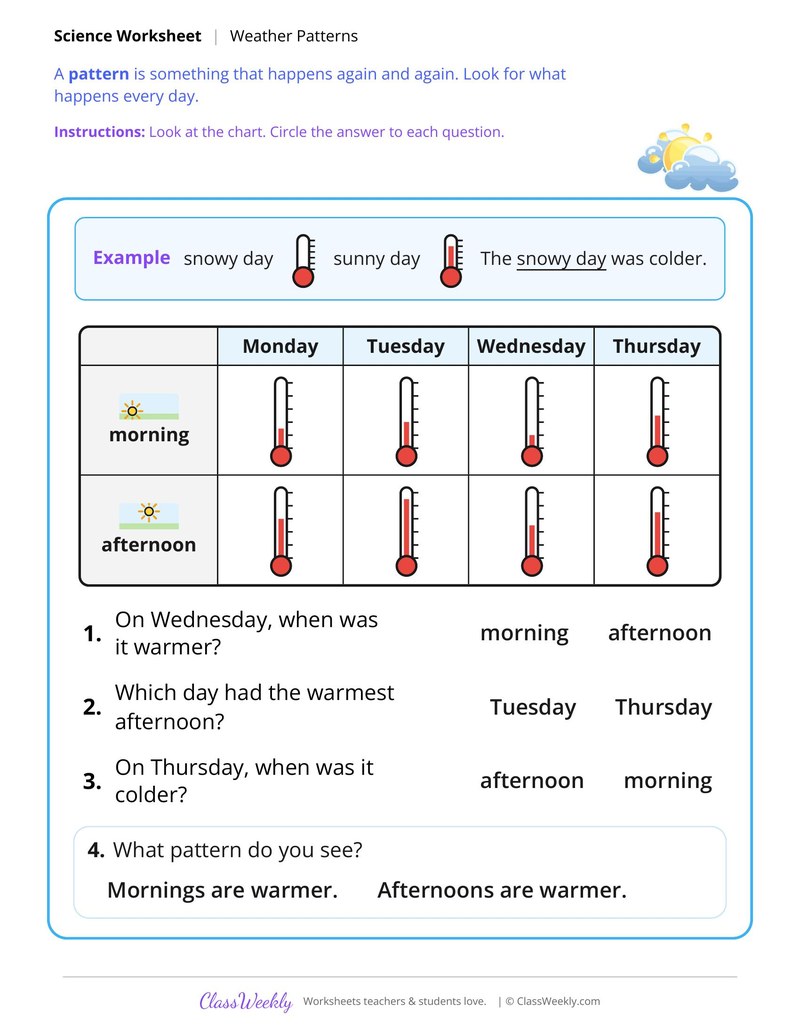
They see that each season has its own weather: winter is cold and snowy, spring is rainy, summer is hot and fall is windy. They also read a chart to find that afternoons are warmer than mornings and count weather days on a picture graph.
How do you teach tornado safety to 1st graders?
⌄
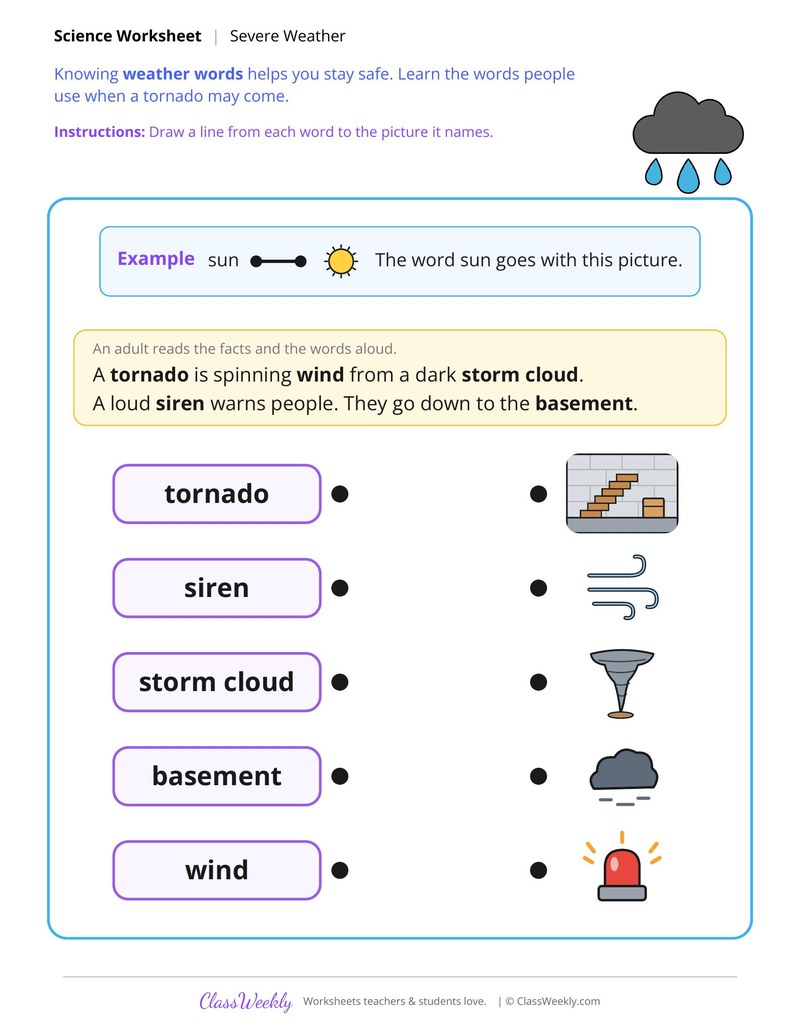
A siren warns people that a tornado may come. Go to the lowest floor, pick an inside room with no windows and cover your head. The tornado sheets have children sort safe places, fill in safety words and read a story about a class during a tornado warning.
What is a blizzard?
⌄
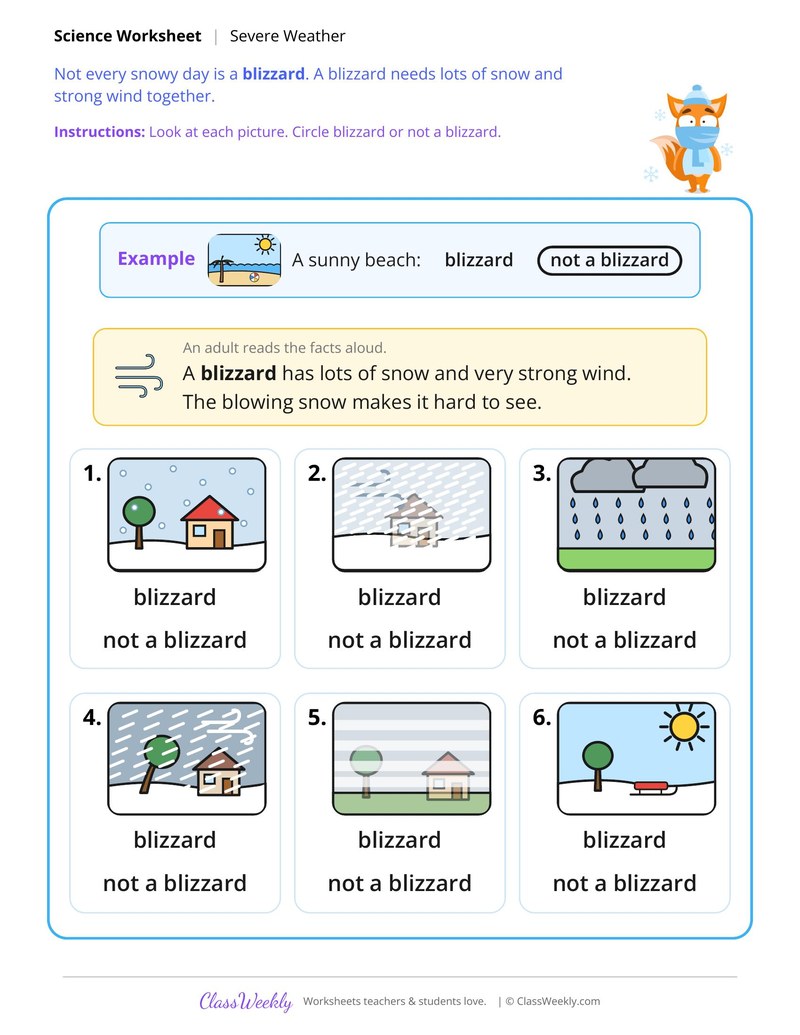
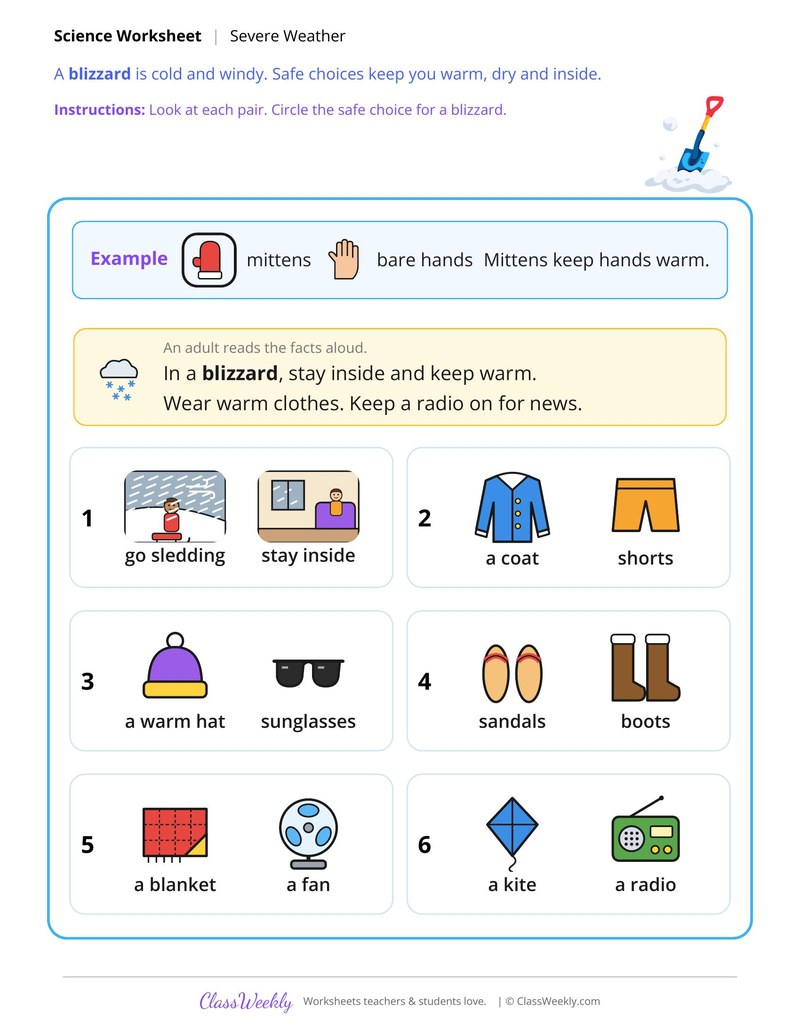
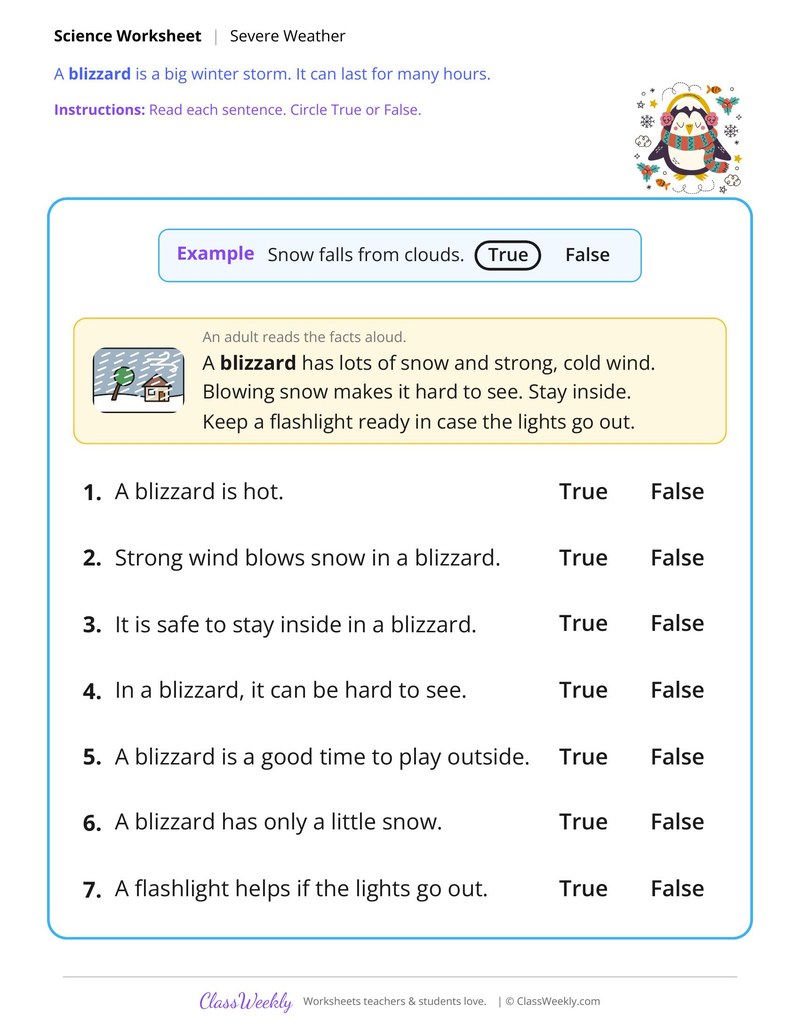
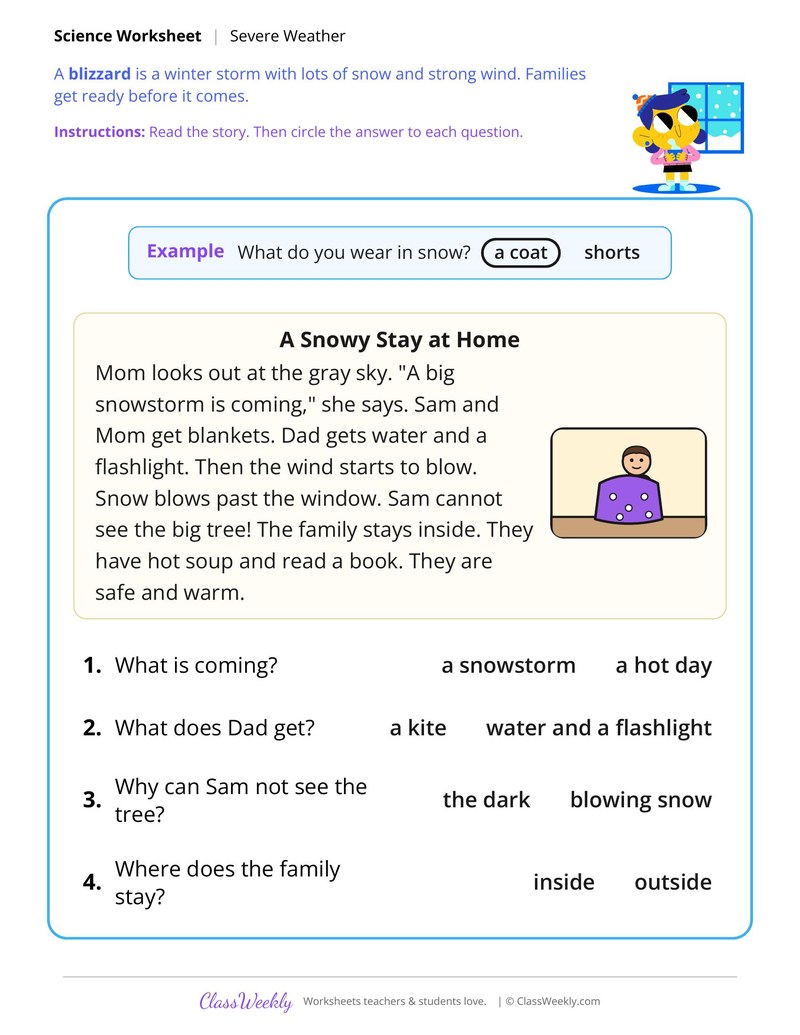
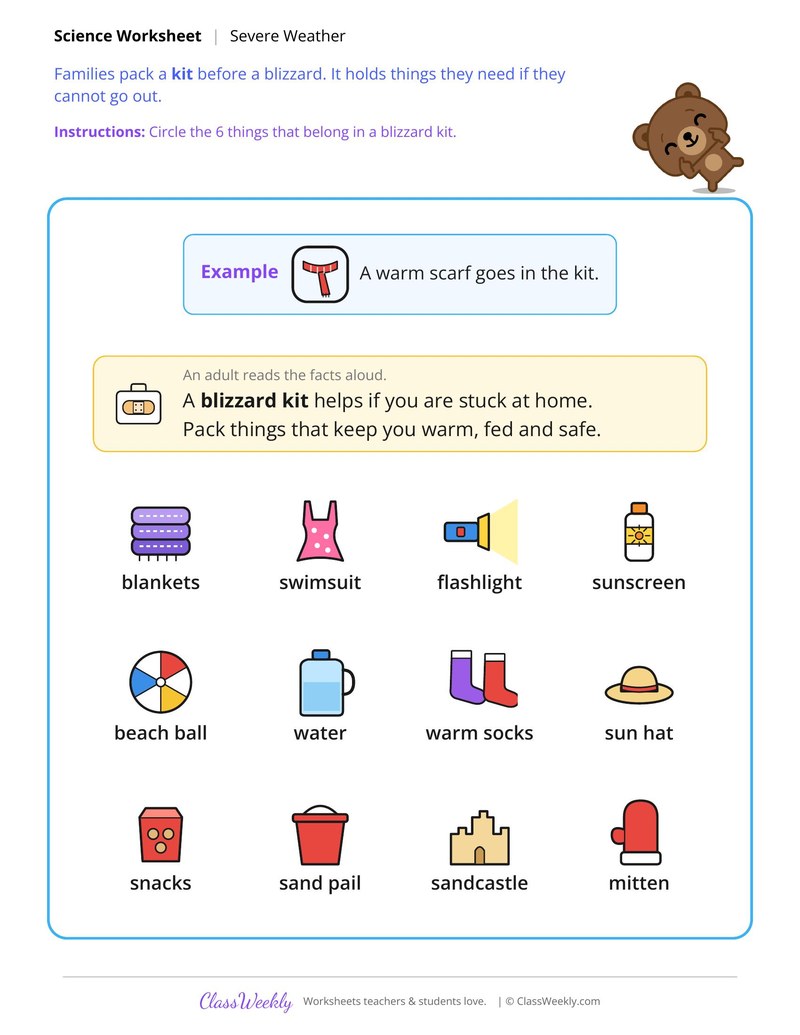
A blizzard is a big winter storm with lots of snow and very strong wind. Blowing snow makes it hard to see, so families stay inside and keep blankets, water, snacks and a flashlight ready.
What does a hurricane bring?
⌄
A hurricane is a huge storm that starts over the ocean. It brings strong wind, heavy rain, big waves and floods. Families get ready before it comes, stay inside during the storm and clean up after.
Ratings & Reviews
No reviews yet. Be the first to share what you think.
Reviews are for ClassWeekly members.
Make a Request
Spotted something to fix, or want a worksheet we don't have yet? Tell us and we'll make it.
Worksheet Details
| Grade | 1st Grade |
| Subject | Science |
| Topic | Weather and Seasons |
| Pages | 1 page |
| Difficulty | Medium |
Learn More
What is ClassWeekly?
ClassWeekly offers free worksheets and printable learning resources for kids, from preschool up. All worksheets are aligned to Common Core, NGSS, and C3 Framework standards and designed by educators. Become a member to access the full library and download unlimited PDFs.