Kindergarten · Science
Earth and Sky Lesson Plan for Kindergarten
A ready-to-teach earth and sky lesson for Kindergarten, built around earth materials, rocks and soils, the day and night sky, moon shapes and seasonal daylight. Print the plan, print the practice pages, and you are set.
Approximately 45 minutes
Learning objective
- Sort pictures into water, rock and soil
- Sort rocks by color, shine, texture and size
- Compare sand, clay and loam
Materials
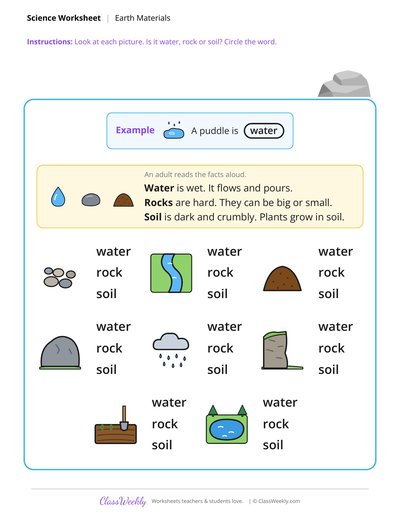
- Water Rock or Soil
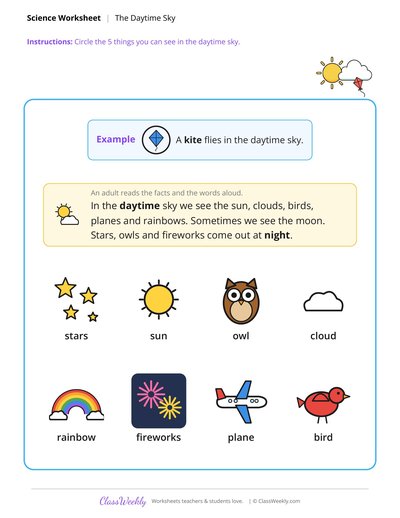
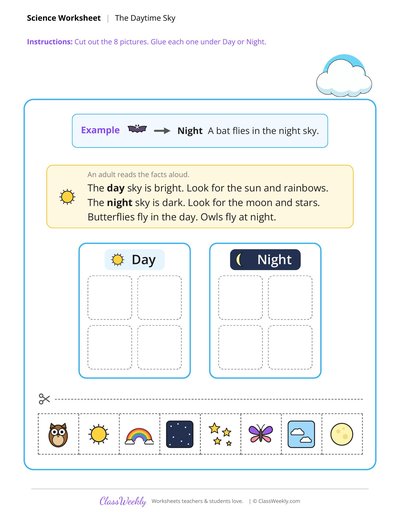
- What Do You See in the Daytime Sky
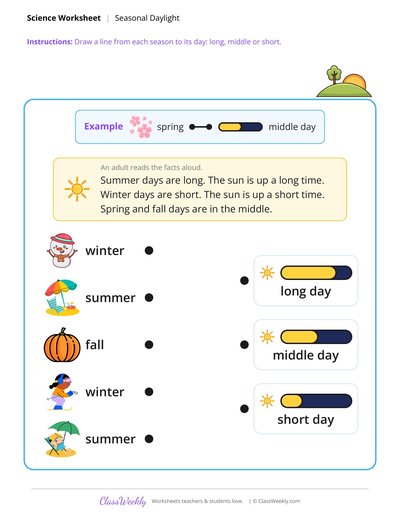
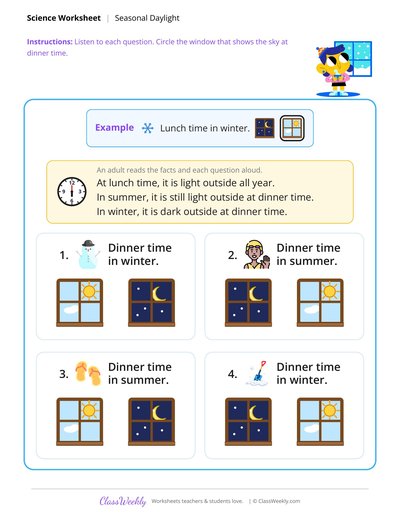
- Long Days or Short Days
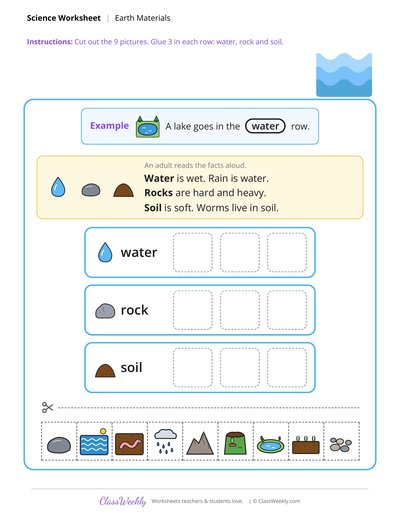
- Sort Earth Materials
- Day Sky or Night Sky
- Dark at Dinner Time
- Pencils, and whiteboard space for the modeled examples
Lesson steps
1. Ask the question (5 min)
Open with a question about earth and sky that students cannot answer yet. Take predictions and record them without correcting anything. Wrong predictions are the point: you will come back to them.
2. Explore (12 min)
Students investigate earth and sky through a hands-on activity, a demonstration, or a set of images. Their job is to notice and describe, not to be right yet.
3. Explain (10 min)
Now give the vocabulary and the explanation for earth and sky. Tie it directly back to what students just observed and to the predictions on the board. Name which predictions held up.
4. Independent practice (you do) (13 min)
Hand out "Water Rock or Soil". Students record what they learned and answer the questions independently. Circulate and press for "how do you know?"
5. Extend the thinking (5 min)
Ask where else earth and sky shows up outside the classroom. Collect two or three examples and leave the question open for tomorrow.
Check for understanding
Ask students to explain earth and sky to a partner in one sentence, then write that sentence down. Collect the sentences: they show you exactly which part of the idea did not land.
Differentiation
Extra support. Students who stall: pull them into a small group and rebuild earth and sky with concrete materials or a simpler text before asking for the written work again. Do not send the page home as homework, it will just rehearse the misunderstanding.
Extension. Students who finish early: ask them to write their own earth and sky problem for a partner to solve, then check the partner's work. Creating a problem is harder than solving one and it surfaces whether they really understand earth and sky.
Skills covered in this lesson
Rocks, soil and water · Day and night sky · Daylight and seasons